Comic Maker: Create Professional Comics Without Drawing Skills (April 2026)
2026-04-22
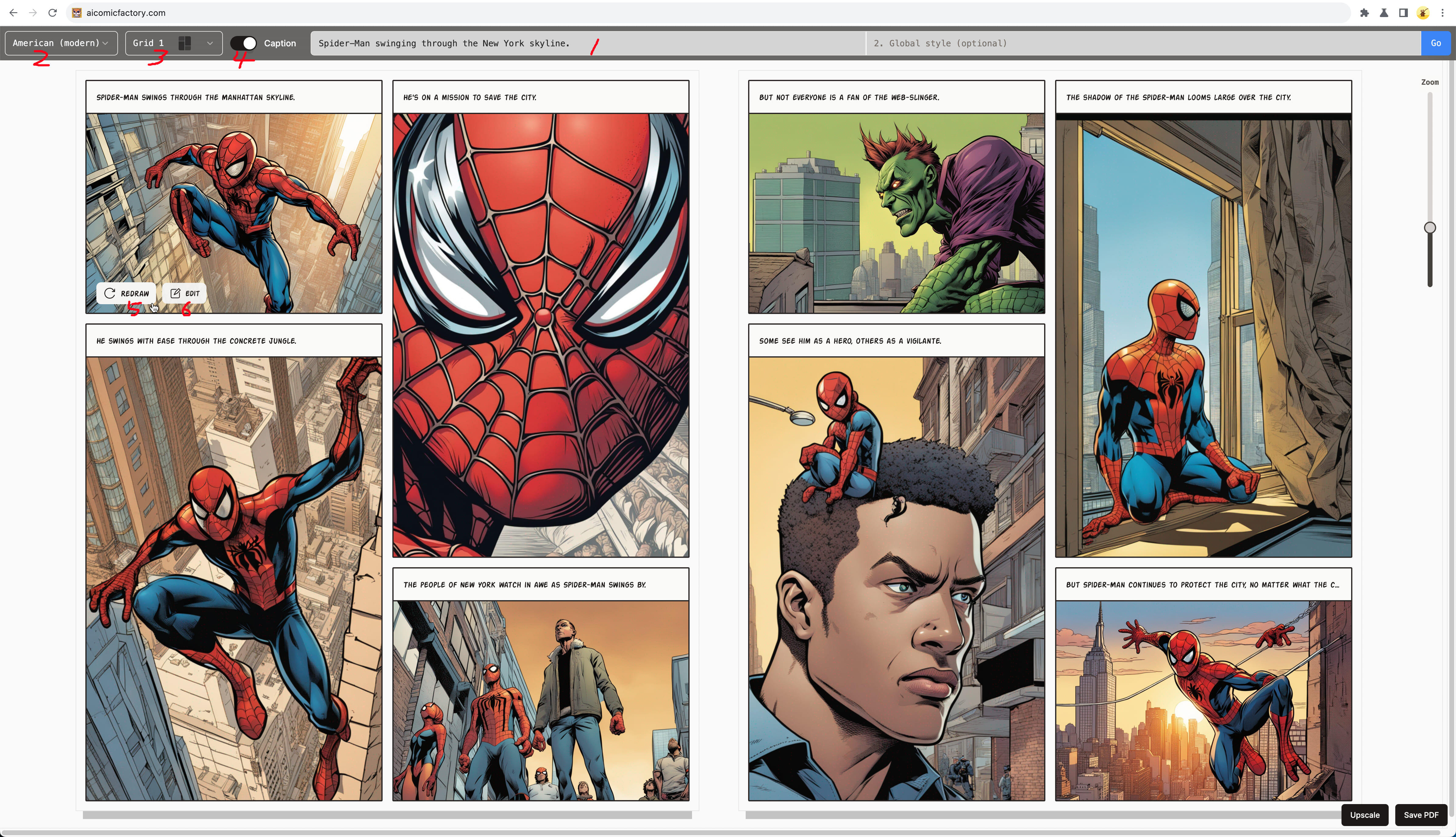
The comic maker has undergone a fundamental transformation in 2026. What once required years of artistic training, thousands of dollars in illustration costs, and months of production time is now accessible to anyone with a story to tell. The comics creator software market was valued at USD 1.2 billion in 2024 and is projected to reach USD 2.5 billion by 2033, growing at an 8.9% CAGR, while the AI-generated comic book market expanded from $1.15 billion in 2024 to $1.52 billion in 2025, achieving a 32.2% CAGR. Meanwhile, WEBTOON Entertainment has paid out more than $2.7 billion to creators over the past five years and plans to invest over $47 million in 2026 to support creator growth — proving that the audience and the monetization infrastructure are already in place.
The bottleneck was never demand. It was production.
- Character consistency across panels — the single biggest technical barrier — has been largely solved through identity embeddings and reference sheet systems
- Story-first workflows now script panel beats, dialogue, and pacing before generating visuals
- No drawing skills required — the text-to-comic segment led the market with approximately 52.3% share in 2025 precisely because of its accessibility
- Jenova's Comic Creator is the dedicated comic maker built for end-to-end visual storytelling — from script to finished page
Quick Answer: What Is a Comic Maker?
A comic maker is a tool that enables users to create comic strips, comic books, graphic novels, and sequential art — handling character design, panel layouts, dialogue placement, and visual storytelling either through manual design interfaces or AI-powered text-to-comic generation.
- 🎨 End-to-end comic production from script to finished page with character consistency — Comic Creator handles the full pipeline
- 📐 Dynamic panel layouts that adapt to narrative pacing — action sequences get diagonal compositions, emotional beats get full-page spreads
- 🗨️ Integrated speech bubbles with proper reading order, character-specific styling, and semantic bubble types
- 🧠 Persistent project memory that tracks characters, plot threads, and visual styles across sessions
The Problem: Why Making Comics Has Been So Hard
The comic book market reached $17.69 billion in 2025 and is projected to hit $27.01 billion by 2034. The webcomics market is valued at USD 9.98 billion in 2026, projected to reach USD 12.77 billion by 2030 at a 6.4% CAGR. Reader demand is massive and growing. But the supply side has been brutally constrained by three barriers that have historically locked out independent creators.
💰 Prohibitive Cost
Professional comic illustration typically costs $50–$300 per page. A standard 22-page comic runs $1,100–$6,600, and graphic novels can demand $5,000–$30,000 for artwork alone. For independent creators bootstrapping their first project, these costs are simply out of reach.
🎨 Multidisciplinary Skill Demands
As attorney Gamal Hennessy, who specializes in working with comic book creators, told CNN: "When you're an independent publisher it takes you four times as long to put out a comic as if you're, like, Marvel, DC or Image".
Comic creation requires mastery of character design, action choreography, background illustration, inking, coloring, lettering, and narrative construction — simultaneously. Solo creators face overwhelming workload and burnout.
🔄 The Character Consistency Problem
Until recently, maintaining identical facial features, clothing details, and proportions from one panel to the next was the single biggest technical barrier in AI-assisted comic creation. As Skywork's 2026 analysis noted: "Until 2025, if you asked for the 'best AI character generator for consistent characters,' the honest answer would have been: 'None.'" Over 60% of professionals using early AI art tools required extensive manual edits to fix character drift.
📱 Format Fragmentation
Creators must reformat stories for print, webtoon, and mobile platforms — each requiring unique layouts and visual logic. A page designed for Western print doesn't translate to vertical scroll webtoons, and neither works natively on mobile screens.
This is exactly what Comic Creator was built for.
Why Comic Creator Is the Best Comic Maker in 2026
The fundamental difference between Jenova's Comic Creator and other comic maker tools is architectural: it's a story-first, end-to-end comic production system — not a template editor, not a standalone image generator, and not a drawing app. While tools like Canva offer comic templates you fill manually, and general image generators like Midjourney produce individual panels you must assemble in separate software, the Comic Creator handles the entire pipeline from narrative scripting through character management to finished pages.
As Skywork's 2026 guide confirmed: "A dedicated comic tool offers an end-to-end workflow. It includes features for story generation, panel layouts, character management, and dialogue integration. A general image generator like Midjourney only creates individual images."
| Feature | Template Editors (Canva, Pixton) | General AI (Midjourney) | Comic Creator |
|---|---|---|---|
| Drawing skills needed | Minimal (drag-and-drop) | None (text prompts) | None (story-driven) |
| Character consistency | Manual tracking | Extremely difficult | Automated reference sheets |
| Panel layout | Pre-made templates | None — manual assembly | Narrative-driven composition |
| Speech bubbles | Basic shapes | None | Semantic bubble system |
| Story continuity | Not tracked | Not tracked | Persistent project memory |
| Dialogue integration | Manual text boxes | None | Integrated with reading order |
| AI model access | Limited or none | Single model | GPT-5.4, Claude Opus 4.6, Gemini 3.1 Pro Preview |
How Character Consistency Actually Works
The Comic Creator uses a reference image architecture. Before generating story pages, you create character reference sheets showing each character in neutral poses with locked-in visual details — eye color, hairstyle, clothing, distinguishing marks. These references load with every subsequent page generation, ensuring visual consistency across your entire project — even across 200+ pages.
This is the same approach that Skywork's 2026 analysis identifies as the key breakthrough: "Identity embeddings create a mathematical 'fingerprint' of a character, combined with reference systems where you create a character sheet that the AI uses for every panel."
Five Visual Style Templates
| Style | Best For | Visual Signature |
|---|---|---|
| Superhero/Action | Adventure, sci-fi, fantasy | Bold lines, dynamic poses, dramatic lighting |
| Noir/Crime | Detective, thriller, mystery | High contrast, deep shadows, cinematic composition |
| Slice-of-Life | Drama, comedy, romance | Clean lines, warm expressions, everyday settings |
| Horror | Suspense, supernatural, dark fantasy | Heavy inking, unsettling compositions, atmospheric detail |
| Cartoon/All-Ages | Kids' comics, humor, educational | Bright colors, expressive characters, simplified anatomy |
Example Prompts
"Create a character reference sheet for Detective Mara Chen: East Asian woman, mid-30s, sharp jawline, short asymmetric black hair with silver streak on the left side, dark gray trench coat, small scar above right eyebrow. Show front view, three-quarter view, and profile."
"Generate a 4-panel page: Panel 1 — Mara enters a dimly lit warehouse, hand on holster, expression cautious. Panel 2 — Close-up of her face as she notices something on the ground. Panel 3 — Wide shot revealing scattered documents and an overturned chair. Panel 4 — Mara crouches to pick up a photograph, expression shifting to recognition."
"Create a full comic page in noir style: Mara confronts the informant in a rain-soaked alley. Dramatic lighting, high contrast shadows. Include dialogue: Mara says 'You told me he was dead.' Informant responds 'I told you what I was paid to tell you.'"
Competitor Context
While tools like Canva offer the quickest path to simple comic layouts with drag-and-drop templates, as HitPaw's 2026 comparison noted: Canva has "limited AI comic generation" and is "best for beginners who want a simple comic strip maker for quick projects." For professional-grade sequential art with character consistency and narrative intelligence, the Comic Creator provides the only story-first workflow with multi-model access and no platform lock-in.
Try the Comic Creator free — no credit card required.
Related Agents You'll Also Like
🎨 Manga Creator — Japanese-Style Sequential Art
For creators working in manga conventions — right-to-left reading order, screentone integration, and the distinctive panel flow of shonen, shoujo, seinen, and josei storytelling. The Manga Creator handles character reference sheets with identity embedding, five professional art style templates, and persistent story state tracking across sessions.
- Right-to-left panel flow with authentic manga reading conventions
- Screentone and black-and-white optimization
- Persistent story state across 200+ page projects
📱 Webtoon Creator — Mobile-First Vertical Comics
Optimized for platforms like LINE Webtoon, Tapas, and Lezhin — where the webcomics market is valued at USD 8.76 billion in 2026. The Webtoon Creator handles vertical scroll rhythm, "thumb stop" placement, episode-based cliffhangers, and platform-ready exports.
- Scroll rhythm mapping for mobile engagement
- Full-color consistency across entire seasons
- Platform export presets for major webtoon distributors
✍️ Creative Fiction Writer — Story Development Partner
Develop your narrative foundation before visual production begins. The Creative Fiction Writer handles worldbuilding, character development, plot structure, and polished dialogue — then hand off to the Comic Creator for visual execution.
- Research-backed worldbuilding and character arcs
- Dialogue that translates directly to comic panel scripts
- Plot pacing guidance for serialized storytelling
How It Works: From Story Idea to Finished Comic
Step 1: Define Your Story and Characters
Open Comic Creator and describe your story concept, characters, genre, and visual style. The more detail you provide about your characters' personalities, speech patterns, and visual design, the more consistent your output.
"I'm creating a noir detective comic set in 1940s Chicago. The main character is Detective Mara Chen — East Asian woman, mid-30s, sharp jawline, short asymmetric black hair with a silver streak. She wears a dark gray trench coat and has a small scar above her right eyebrow. She speaks in clipped, direct sentences. The tone is hard-boiled with supernatural undertones."
Step 2: Generate Character Reference Sheets
Before any story pages, the Comic Creator generates character reference sheets showing each character in neutral poses with labeled features. These references load with every subsequent generation, ensuring visual consistency across your entire project.
Step 3: Script Your Pages
Provide story directions for each page. The AI scripts them into panel-by-panel beats with specific dialogue, character placement, camera angles, and visual pacing — then generates the page.
"Page 3: Mara arrives at the crime scene — a jazz club after hours. Panel 1 — exterior shot of the club, neon sign flickering. Panel 2 — Mara pushes through the door, badge out. Panel 3 — wide shot of the interior: overturned tables, a shattered mirror, and a chalk outline on the stage. Panel 4 — close-up of Mara's face as she notices something the other detectives missed — a faint glow emanating from the chalk outline."
Step 4: Iterate and Refine
Not quite right? Request targeted adjustments — change a facial expression, modify lighting, adjust a camera angle — without regenerating the entire page. The Comic Creator maintains awareness of your project state, ensuring changes propagate correctly.
Step 5: Scale from Pages to Issues
Once your workflow is established, scale from sample pages to complete issues and graphic novels. The persistent project memory maintains continuity across sessions — return days or weeks later and pick up exactly where you left off. Plot threads introduced early are tracked for later resolution.
"Continue from where we left off. In this issue, Mara discovers the supernatural glow at the crime scene is connected to a series of disappearances in Chinatown dating back to 1920."
Results & Use Cases
📚 Independent Comic Publishing
Scenario: Creating a 22-page single-issue comic for self-publishing on Amazon KDP.
Traditional Approach: Commission an artist ($1,100–$6,600), wait 2–4 months for delivery, manage revision cycles, handle lettering separately.
Jenova Solution: Generate character reference sheets in your first session with the Comic Creator, produce all 22 pages with consistent characters and dynamic layouts, iterate based on feedback in real-time, export print-ready files. Total timeline: days, not months. The personal/hobbyist segment already dominates the AI comic generator market with approximately 42.5% share.
📱 Webtoon Serialization
Scenario: Launching a weekly webtoon series on LINE Webtoon or Tapas.
Traditional Approach: Hire a dedicated webtoon artist ($200–$500 per episode), maintain a grueling weekly schedule, risk burnout and inconsistency across episodes.
Jenova Solution: Produce mobile-optimized vertical episodes with the Webtoon Creator — built-in hooks, consistent full-color art across entire seasons, and a sustainable weekly publishing cadence. WEBTOON is investing $47 million in 2026 creator programs — the platform is actively seeking new creators.
🎓 Education and Training
Scenario: Transforming complex lesson plans into visual narratives for student engagement.
Traditional Approach: Hire an illustrator for custom educational comics ($3,000–$10,000 per project), wait weeks for delivery.
Jenova Solution: Educators convert dense material into visually engaging comic strips with the Comic Creator. As Skywork's 2026 guide confirmed: educators "can transform dense lesson plans into visually appealing and easy-to-digest comic strips" that improve student engagement and information retention.
💼 Marketing and Brand Storytelling
Scenario: Creating branded comic content for social media campaigns.
Traditional Approach: Commission individual illustrations at $75–$150 each, 1–2 week turnaround per piece, inconsistent styles across different artists.
Jenova Solution: Generate branded comic strips in minutes with consistent mascot appearance and visual styling using the Comic Creator. Produce multiple variations for A/B testing. Develop your brand narrative first with the Creative Fiction Writer, then bring it to visual life.
💰 Crowdfunding Campaigns
Scenario: Building a Kickstarter campaign for an original comic series.
Traditional Approach: Commission sample pages ($500–$1,500) just for the pitch, with no guarantee of funding.
Jenova Solution: Generate campaign preview pages, produce polished sample chapters, create variant covers and promotional art — all before your campaign launches. Iterate based on backer feedback without additional illustration costs.
FAQ
What is the best comic maker in 2026?
The best comic maker depends on your specific needs. For story-first creators who want an end-to-end workflow — from narrative development through character consistency to finished pages — Jenova's Comic Creator offers a full-pipeline approach with access to frontier AI models. For manga-specific projects, the Manga Creator handles right-to-left flow and screentone integration. For webtoons, the Webtoon Creator optimizes vertical scroll rhythm and episode pacing. For simple drag-and-drop layouts, Canva and Pixton offer beginner-friendly template editors.
Do I need drawing skills to use a comic maker?
No. AI-powered comic makers are specifically designed for writers, storytellers, educators, and creators who have ideas but lack traditional artistic training. As Skywork's 2026 guide confirmed: "You direct the creation process through text, and the AI handles all the visual execution." The text-to-comic segment led the market with approximately 52.3% share in 2025 precisely because of its accessibility.
How does the AI keep characters looking the same across panels?
The Comic Creator uses a reference image architecture. You create character reference sheets before generating story pages, and these references load with every subsequent generation. This approach uses identity embeddings — mathematical "fingerprints" of each character — combined with structured prompting that separates character identity from scene actions. The result is consistent visual identity across even 200+ page projects.
Is the comic maker free?
The Comic Creator is available through Jenova with free access to all core features and limited usage. The free/freemium model dominates the AI comic generator market, holding approximately 62% share in 2025. For extended creation sessions and higher usage limits, paid plans start at $20/month.
Can I sell comics I create with an AI comic maker?
Jenova allows commercial use of generated content on paid plans. For self-publishing on platforms like Amazon KDP, AI-generated content is generally permitted with proper disclosure. Always verify the terms of service for your target distribution platform. The AI-generated comic book market was valued at $1.8 billion in 2025 and is projected to reach $9.6 billion by 2034 — commercial AI comics are a rapidly growing segment.
What's the difference between a comic maker and a general AI image generator?
A dedicated comic maker like the Comic Creator offers an end-to-end storytelling workflow — story generation, panel layouts, character management, dialogue integration, and persistent project state. A general image generator like Midjourney only creates individual images. You must then use separate software like Canva or Photoshop to assemble them into comic pages, add lettering, and create layouts. As Skywork's 2026 analysis concluded: while Midjourney may produce higher raw image quality for individual panels, "it lacks the storytelling infrastructure that makes comic production efficient."
Conclusion
The comic maker market's trajectory tells the story: the comics creator software market is growing toward USD 2.5 billion by 2033, the AI-generated comic book market is expanding at a 32.2% CAGR, and the webcomics market is valued at USD 9.98 billion in 2026. WEBTOON alone has paid $2.7 billion to creators and is actively expanding its creator programs. The audience is massive, the distribution platforms are ready, and the production barriers have fallen.
The technical challenges that once made comic creation prohibitively expensive and time-consuming — character consistency, panel layout, dialogue integration, format adaptation — are solved. The only remaining challenge is the creative one: What story do you want to tell?
Start with Comic Creator for Western comics and graphic novels. Expand into manga with the Manga Creator, go mobile-first with the Webtoon Creator, or develop your narrative foundation with the Creative Fiction Writer. Browse the complete agent library at Jenova.