Cartoon Bubble Text: The Complete Guide to Professional Speech Bubbles in 2026 (April 2026)
2026-04-22
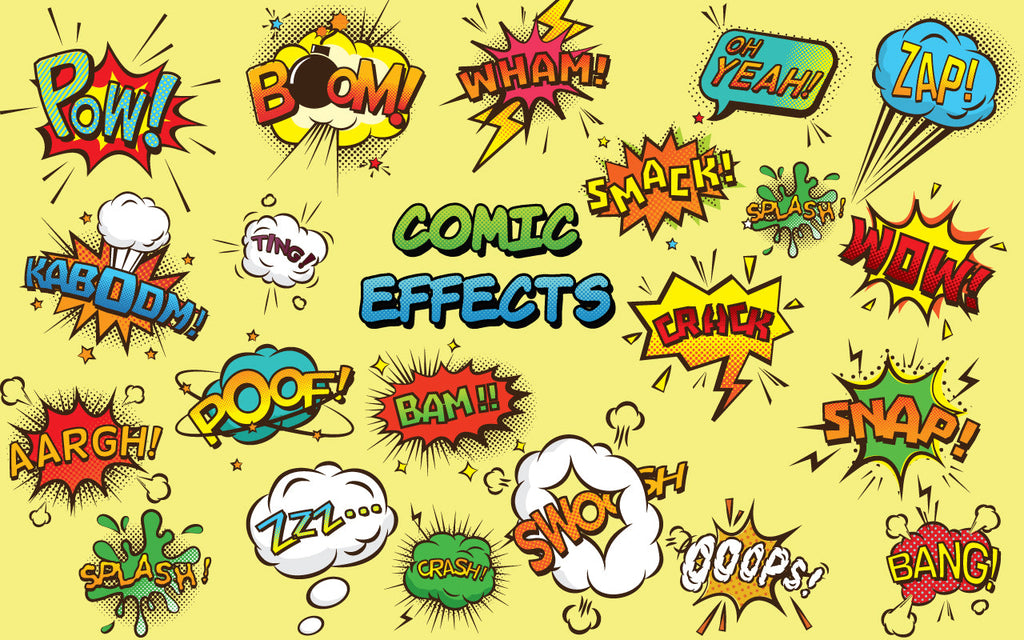
Cartoon bubble text is one of the most universally recognized visual communication tools in human history — and in 2026, it's bigger than ever. The AI comic generator market reached USD 33 billion in 2025 and is expanding at a 23.44% CAGR toward USD 271.06 billion by 2035, while the digital comic book market is forecast to grow by USD 1.65 billion at a 5.5% CAGR between 2024 and 2029. Meanwhile, Adobe's 2026 Creative Trends Forecast identifies "exaggerated, playful letters and text" — including "bubbly and puffy letterforms" and "bubble-like fonts" — as a defining design direction this year.
Speech bubbles have expanded far beyond comics into social media graphics, marketing campaigns, educational materials, and app interfaces. They work because humans are 65% more likely to remember information paired with an image, and LinkedIn posts with graphics receive a 98% higher comment rate on average.
- Bubble shape carries meaning — clouds for thoughts, spikes for shouting, dashes for whispers, ovals for normal speech
- Reading order determines whether your dialogue makes sense or creates confusion
- Character-specific styling gives each speaker a distinct visual voice
- Jenova's Comic Creator generates professional cartoon bubble text within complete visual narratives — not just empty shapes you fill manually
Quick Answer: What Is Cartoon Bubble Text?
Cartoon bubble text refers to the graphic containers — speech balloons, thought clouds, shout spikes, whisper dashes, and narration boxes — that visually represent a character's spoken words, thoughts, or emotions in comics, cartoons, marketing graphics, and digital content.
- 🗨️ Multiple bubble types including standard dialogue, thought clouds, burst/shout, whisper, and narration boxes — Comic Creator generates all types with proper semantic meaning
- 📐 Reading order placement with correct left-to-right, top-to-bottom flow for Western comics and right-to-left for manga
- 🎭 Character-specific styling that maintains distinct visual voices across entire projects
- 🎨 Integrated dialogue and art — bubbles generated within complete panels, not pasted on top
The Problem: Why Cartoon Bubble Text Is Harder Than It Looks
Speech bubbles appear simple — a shape, some text, a tail pointing at the speaker. But as graphic novelist K. Woodman-Maynard explains: "Speech bubbles take up a lot of space, so I plan for them from the very start. When I thumbnail my pages, I sketch in the approximate size of the speech bubbles, even if I don't yet know exactly what they'll say". Comics educator Joana confirmed the challenge: "Bubbles and text are one of the things that students struggle with the most, maybe because their importance is so overlooked".
Reading Order Is Invisible — Until It's Wrong
Speech bubbles dictate the sequence in which readers process a conversation. The character who speaks first must have their bubble positioned where the reader's eye lands first. As professional letterer Blambot's guide documents, balloon tails should point to a character's mouth, terminating at roughly 50–60% of the distance between the balloon and the character's head. Get the order wrong and characters appear to respond before the question is asked.
Bubble Shape Is a Semantic System
As Book Riot's comics analysis documented: "A cloud shape denotes internal thoughts rather than dialogue, while spikes show that the words within are especially loud, angry, or surprised".
In Neil Gaiman's The Sandman, letterer Todd Klein created unique bubble styles for each character — Dream speaks in "wavy-edged bubbles, completely black, with similarly wavy white lettering," while Delirium speaks in "bubbles in a many-colored explosive background with uneven lettering". Every shape choice carries narrative weight.
Text-to-Art Integration Is Fragmented
The text inside a speech bubble must balance with the art around it. Font size, spacing, capitalization, and the distance between text and bubble edge all affect readability and tone. Woodman-Maynard's practice: "Keep the font the same size for all the dialogue in the book except when there is good reason to change the size — like with shouting or whispering".
Creating cartoon bubble text in 2026 typically requires a drawing tool for the art (Clip Studio Paint, Procreate), a separate tool for lettering and bubble generation, a design tool for marketing graphics (Canva, Adobe Express), and manual assembly to combine everything. Each tool handles one piece. Nothing integrates dialogue, visual storytelling, and bubble styling into a single workflow.
This is exactly what Comic Creator was built for.
Why Comic Creator Is the Best Cartoon Bubble Text Tool
The fundamental difference between Jenova's Comic Creator and generic design tools is simple: it understands that cartoon bubble text is a narrative system, not clip art. While tools like Canva and Adobe Express offer speech bubble templates — pre-made shapes you fill with text and place on a canvas — the Comic Creator generates speech bubbles within complete visual narratives, understanding who's speaking, what they're feeling, how the dialogue flows, and where the reader's eye should move next.
| Challenge | Generic Design Tools | Comic Creator on Jenova |
|---|---|---|
| Reading order | Manual placement, frequent errors | AI-optimized dialogue flow with correct reading sequence |
| Bubble styling | Generic shapes, no character awareness | Character-specific styles: standard, thought, shout, whisper |
| Text integration | Text and art as separate layers | Integrated dialogue placement within complete panels |
| Consistency | Styles drift across pages | Persistent memory maintains bubble styles across entire projects |
| Model flexibility | Single tool, single output | Switch between GPT-5.4, Claude Opus 4.6, Gemini 3.1 Pro Preview |
| Format range | Comics only, or marketing only | Comics, graphic novels, social media graphics, educational materials |
The Complete Bubble Type System
Professional cartoon bubble text uses at least seven distinct bubble types, each carrying specific semantic meaning established by decades of comics tradition:
| Bubble Type | Shape | Meaning | When to Use |
|---|---|---|---|
| Speech balloon | Round/oval | Normal dialogue | Standard conversation |
| Thought bubble | Cloud-shaped | Internal monologue | Character's private thoughts |
| Shout/burst | Spiked/jagged | Loud, angry, surprised | Exclamations, arguments |
| Whisper | Dashed outline | Quiet, secretive | Confidential dialogue |
| Narration box | Rectangular | Narrator voice | Scene-setting, exposition |
| Radio/electric | Lightning-edged | Transmitted speech | Phone calls, broadcasts |
| Custom | Varies | Non-human characters | Robots, supernatural beings |
The Comic Creator generates all of these automatically based on your scene description — shouting gets larger text in spiked bubbles, whispers get smaller text in dashed outlines, thoughts get cloud-shaped containers.
Character-Specific Bubble Design
Just as Todd Klein gave each Sandman character a unique visual voice, the Comic Creator maintains distinct bubble styles for different characters across your entire project. Your villain speaks in angular, dark-bordered bubbles. Your protagonist uses clean, rounded ones. Your robot character gets rectangular, digital-looking containers. These styles persist across sessions through unlimited memory.
Example Prompts
"Create a 6-panel comic page. Two detectives interrogate a suspect. Detective A is calm and methodical — use clean, rounded speech bubbles. Detective B is aggressive — use slightly angular bubbles with heavier borders. The suspect is nervous — use wavy, unsteady bubbles with smaller text. End with a thought bubble showing the suspect planning an escape."
"Generate a social media comic strip: a customer frustrated with spreadsheets (jagged speech bubble: 'There has to be a better way!'), then our product mascot appears (smooth blue bubble: 'There is.'), final panel shows the customer smiling with a thought bubble containing a lightbulb."
"Design a 4-panel educational comic explaining photosynthesis. The sun character speaks in warm yellow bubbles. The plant character speaks in green bubbles. Use narration boxes for scientific terminology."
Try the Comic Creator free — no credit card required.
Related Agents You'll Also Like
🎨 Manga Creator — Japanese-Style Speech Bubbles and Sequential Art
For creators working in manga conventions — right-to-left reading order, vertical text placement, and the distinctive manga approach where "speech necessary for the story line" appears in balloons while "small scribbles outside the balloons add side comments".
- Right-to-left panel flow with proper Japanese dialogue placement
- Consistent character art across entire serialized stories
- Shonen, shoujo, seinen, and josei visual conventions
📱 Webtoon Creator — Vertical Scroll Speech Bubbles for Mobile
Mobile-first vertical scroll comics require fundamentally different speech bubble placement — optimized for thumb-stop moments and continuous downward reading rather than panel-to-panel scanning. The webtoons market is worth USD 14.44 billion in 2026, with mobile phones owning 74.20% of reading time.
- Vertical scroll speech bubble optimization for mobile reading
- Episode-based narrative structures with cliffhanger dialogue hooks
- Full-color consistency across episodes
🖌️ Graphic Designer — Speech Bubble Graphics for Branding and Marketing
For non-comic applications — marketing materials, social media graphics, infographics, and brand assets that use speech bubble aesthetics. Adobe's 2026 Creative Trends Forecast highlights "exaggerated, playful letters and text" with "bubbly and puffy letterforms" as a defining trend this year.
- Social media graphics with speech bubble design elements
- Marketing materials with conversational visual framing
- Infographics and presentation slides with dialogue-style callouts
😂 Meme Generator — Speech Bubbles for Viral Content
Memes are, at their core, images with text — and many of the most viral formats use speech bubble conventions. The Meme Generator understands format-specific text placement, from classic comic-panel memes to modern reaction image templates.
- Deep format knowledge across classic and trending meme templates
- Text placement optimized for viral sharing
- Cultural context awareness across 110+ languages
How It Works: From Dialogue to Complete Visual
Step 1: Describe Your Scene and Dialogue
Open a chat with the Comic Creator and describe what you need — a comic page, a marketing graphic, an educational illustration, or any visual that combines cartoon bubble text with art. Include the dialogue, the characters, and the emotional tone.
"I need a 3-panel comic strip for my company's social media. Panel 1: A customer looking frustrated at their laptop, speech bubble says 'Why is this so complicated?' Panel 2: Our product mascot appears with a friendly wave, speech bubble says 'It doesn't have to be!' Panel 3: Customer smiling, thought bubble shows a lightbulb moment, small speech bubble says 'Oh. That was easy.'"
Step 2: Specify Your Bubble Style
Tell the AI what visual style you want for your speech bubbles — clean and modern, hand-drawn and organic, bold and comic-book, or minimalist and sleek. The AI adapts bubble shapes, tail styles, font choices, and color schemes to match your brand or project aesthetic.
"Hand-drawn style bubbles with slightly uneven edges. Warm colors. The mascot's bubbles should be a different color from the customer's — maybe blue for the mascot and white for the customer."
Step 3: Generate and Iterate
The Comic Creator produces your complete visual with integrated speech bubbles, proper reading order, and character-appropriate styling. Review the output and refine — adjust bubble sizes, reposition tails, change dialogue, or modify the art style. Persistent memory means every refinement carries forward.
Step 4: Adapt Across Formats
Take your cartoon bubble text content and adapt it for different platforms. The same dialogue can be reformatted from a horizontal comic strip to a vertical webtoon panel with the Webtoon Creator, expanded into a full manga chapter with the Manga Creator, or extracted into standalone social media graphics with the Graphic Designer. Your character voices and bubble styles persist across all formats.
Step 5: Export and Publish
Download your finished visuals for digital publishing or print. Cartoon bubble text graphics are ready for social media, websites, presentations, print materials, or comic distribution platforms.
Results & Use Cases
📖 Graphic Novel: 200 Pages of Consistent Dialogue
Scenario: Independent creator writing a fantasy graphic novel with six main characters, each needing a distinct visual voice.
Traditional Approach: Hire a professional letterer at $15–$50 per page ($3,000–$10,000 for the full novel), manage a separate character bible for bubble styles, risk inconsistency across months of production.
Jenova Solution: Define each character's bubble style once during setup with the Comic Creator. The AI maintains those styles across every page — the wizard's bubbles stay ornate, the warrior's stay bold, the thief's stay small and sneaky. Return to the project weeks later and the AI remembers everything.
💼 Marketing Comic Strips for Social Media
Scenario: Brand needs weekly comic strips featuring a mascot character for Instagram and LinkedIn.
Traditional Approach: Commission individual illustrations at $75–$150 each, 1–2 week turnaround per piece, inconsistent styles across different artists.
Jenova Solution: Generate branded comic strips in minutes with consistent mascot appearance and bubble styling using the Comic Creator. Produce multiple variations for A/B testing. Social media posts with graphics receive up to 98% higher engagement.
📱 Webtoon Series with Mobile-Optimized Bubbles
Scenario: Creator launching a romance webtoon on Tapas with weekly episode releases.
Traditional Approach: Manual bubble placement for vertical scroll format, constant adjustment for mobile readability, risk of dialogue pacing that doesn't match thumb-scrolling rhythm.
Jenova Solution: The Webtoon Creator automatically optimizes dialogue pacing for vertical scroll — shorter exchanges, more visual breathing room between speech bubbles, strategic "thumb stop" moments.
🎓 Educational Comics with Clear Dialogue
Scenario: Teacher needs comic-format explanations of complex science concepts for students.
Traditional Approach: Limited to stock illustrations or expensive custom artwork.
Jenova Solution: Character voices calibrated for educational clarity — a teacher character explains concepts in accessible language, a student character asks the questions readers would ask. As Skywork's 2026 guide confirmed: educators "can transform dense lesson plans into visually appealing and easy-to-digest comic strips."
💡 Pitch Decks and Presentations
Scenario: Startup founder needs conversational visuals for an investor pitch deck — customer testimonials in speech bubbles, product benefits in callout shapes.
Traditional Approach: Generic PowerPoint shapes, clip art bubbles, and text boxes that look like they were made in 2012.
Jenova Solution: The Graphic Designer creates polished speech bubble graphics that match the pitch deck's visual identity — modern, professional, and narrative-driven.
FAQ
What types of cartoon bubble text can AI create?
The Comic Creator generates all standard speech bubble types: round/oval speech balloons for normal dialogue, cloud-shaped thought bubbles for internal monologue, spiked/jagged burst balloons for shouting or surprise, dashed-outline bubbles for whispering, rectangular caption boxes for narration, radio/electric balloons for transmitted speech, and custom shapes for non-human characters. Each bubble type carries specific semantic meaning established by decades of comics tradition.
How does the AI handle reading order for speech bubbles?
The Comic Creator understands Western left-to-right, top-to-bottom reading conventions and Japanese right-to-left manga conventions. It places speech bubbles so that dialogue flows in the correct sequence — the character who speaks first has their bubble positioned where the reader's eye lands first. As comics expert Woodman-Maynard advises: "If you're not sure where to put speech bubbles, put them along the top of the page — that way they don't interfere with the art, and the reading order will usually make sense". For manga-specific projects, the Manga Creator handles right-to-left flow natively.
Can I use cartoon bubble text for marketing, not just comics?
Absolutely. Speech bubbles have expanded far beyond comics into social media graphics, marketing campaigns, educational materials, app UI design, and presentation slides. Adobe's 2026 Creative Trends Forecast highlights "exaggerated, playful letters and text" with "bubbly and puffy letterforms" as a defining trend. Kittl's 2026 design trends report identifies "naive design" and "kid core" aesthetics — both of which frequently use speech bubble elements — as major movements. White Rabbit's 2026 trends analysis also highlights "floating callouts" where designs intentionally layer "annotation bubbles, drawn arrows and tooltip-style notes directly into the composition".
How does this compare to Canva or Adobe Express for speech bubbles?
Canva and Adobe Express offer speech bubble templates — pre-made shapes you fill with text and place on a canvas. They're excellent for quick, static graphics. Jenova's Comic Creator generates speech bubbles within complete visual narratives — understanding who's speaking, what they're feeling, how the dialogue flows, and where the reader's eye should move next. It's the difference between placing a sticker and creating a conversation.
Do I need drawing skills to create cartoon bubble text?
No drawing skills required. The Comic Creator generates complete visual output — art, speech bubbles, text, and layout — from natural language descriptions. Individual creators account for 38.6% of total AI comic tool adoption precisely because these tools offer a low barrier to entry while delivering professional results. Approximately 61% of digital artists now use AI tools, and 57% of comic publishers employ AI for production tasks including dialogue and lettering.
Is the cartoon bubble text generator free?
The Comic Creator is available through Jenova with free access to all core features. You can create complete comics and speech bubble graphics on the free plan. Paid plans start at $20/month for expanded usage.
Conclusion
Cartoon bubble text is one of the oldest and most effective visual communication tools ever invented — originating in Mesoamerican art between 600–900 CE and refined through centuries of comics, political cartoons, and graphic storytelling. In 2026, it's more relevant than ever: the AI comic generator market is racing toward USD 271.06 billion by 2035, Adobe's design trends emphasize playful, exaggerated typography and storytelling layouts, and the digital comic book market is growing by USD 1.65 billion through 2029.
But a cartoon bubble isn't just a shape with words inside. It's a reading order decision. It's an emotional signal. It's a character voice made visible. The shape of the bubble tells you whether someone is speaking, thinking, shouting, or whispering — before you read a single word.
Start with Comic Creator to generate professional cartoon bubble text with integrated dialogue and panel art. Expand into manga with the Manga Creator, go mobile-first with the Webtoon Creator, or create marketing graphics with the Graphic Designer. Browse the complete agent library at Jenova.