Anime Character Creator: Build Original Anime Characters With AI (April 2026)
2026-04-18
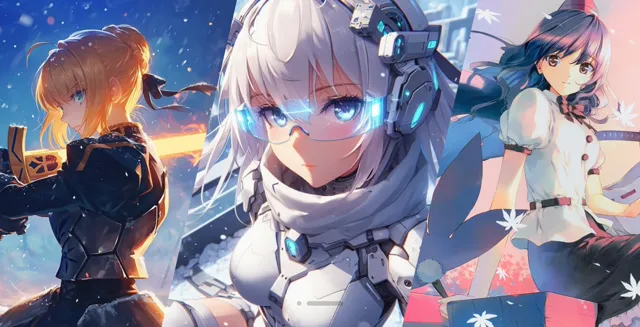
Anime character creation has become one of the most popular creative activities online in 2026 — and the tools have finally caught up with the ambition. The global anime market was valued at USD 37.7 billion in 2025 and is projected to reach USD 77.3 billion by 2033, growing at a CAGR of 9.2% (Grand View Research). Nielsen's April 2026 report found that over 45 billion minutes of anime content were streamed in the U.S. last year alone, with 60% of anime fans being the chief income earner in their household (Nielsen). Anime isn't niche anymore — it's a multigenerational cultural force, and millions of fans want to create characters within that visual language.
The Manga Creator on Jenova is built for exactly this challenge — a dedicated AI agent that transforms your anime character concepts into complete visual stories with consistent art, panel flow, and narrative structure. Whether you're designing a shonen protagonist, a shoujo heroine, or a seinen antihero, it maintains visual consistency across one-shots to 200+ page serialized epics.
- ✅ Consistent anime character art across hundreds of panels and pages
- ✅ Complete character design from concept to reference sheet to story
- ✅ Multiple anime sub-styles: shonen, shoujo, seinen, josei, chibi
- ✅ Persistent memory that tracks your character's visual and narrative details across sessions
Quick Answer: What Is an Anime Character Creator?
An anime character creator is a tool that helps you design original characters in anime art styles — including visual appearance, personality, backstory, and narrative-ready designs — for use in manga, comics, webtoons, roleplay, fiction, games, and fan communities. The best anime character creators in 2026 combine visual generation with narrative depth and character consistency.
- 🎨 Visual character design — Create consistent anime character art with the Manga Creator
- 🧠 Deep character profiles — Build psychology, backstory, and voice with the Creative Fiction Writer
- 📖 Complete visual stories — Turn characters into manga, comics, and webtoons
- 🔄 Persistent memory — Every detail carries forward across unlimited sessions
The Problem: Why Most Anime Character Creators Fall Short
Anime fandom has gone fully mainstream. Netflix confirmed that 50% of its global audience watches anime, Crunchyroll experienced double-digit subscriber growth again in 2025, and Crunchyroll's president stated that anime fans worldwide are expected to reach one billion (Anime By The Numbers / Substack,
). The anime industry market grew 15% to a record ¥3.8 trillion, with overseas sales eclipsing domestic Japanese revenue (AUTOMATON).Over 45 billion minutes of anime were streamed in the U.S. in 2025 — and the global anime market is projected to nearly double to USD 77.3 billion by 2033. (Nielsen, Grand View Research)
With this massive audience comes an equally massive desire to create — but the tools keep falling short in predictable ways.
Visual Without Substance
Most anime character creators — from Picrew to Waifu Labs to basic AI image generators — produce a look but not a character. You get a face, a hairstyle, maybe a color palette. But there's no backstory, no voice, no motivation, no relationship map, no internal contradiction that makes a character feel alive. As Clip Studio's popular character creation guide emphasizes, compelling anime OCs start with "contradictory traits" and thematic depth — the visual design comes after the concept (Clip Studio TIPS).
The Character Consistency Nightmare
The single biggest pain point for anime character creators in 2026 is maintaining visual consistency across multiple images. As Neolemon's consistency guide documented: "Most anime generators make one great image, then lose the character. A text prompt is not memory — it tells the model what kind of character to draw, not which exact character" (Neolemon). Freepik's 2026 analysis confirmed the same: "Most 'best of' lists treat anime as one style. It is not. A generator that produces exceptional Ghibli landscapes might fail at mecha designs" (Freepik).
The Multi-Skill Burden
Creating anime-style character art demands simultaneous mastery across character design, anatomy, color theory, expression work, outfit design, and — if you want to tell stories — panel composition, sequential narrative, and visual pacing. A single manga page can take a professional artist 4 to 10 hours (Jenova Resource Center). For independent creators testing a character concept, the time and skill investment is prohibitive.
Fragmented Across Five Different Tools
In 2026, building a complete anime character typically requires a visual creator for the portrait, a writing tool for the backstory, a separate platform for roleplay testing, a name generator, and a manga tool for sequential art. Each operates in isolation. Nothing connects. The AI-generated comic book market grew from USD 1.52 billion in 2025 to USD 2.01 billion in 2026 — a 32.1% year-over-year increase (Research and Markets / Jenova) — proving that creators want integrated tools, not fragmented workflows.
Why Manga Creator Is the Anime Character Creator You Need
This is exactly what the Manga Creator on Jenova was built for. It's not a portrait generator that produces one beautiful image and forgets who the character was. It's a dedicated AI agent that creates complete anime characters with consistent visual designs, then places them into full manga stories — maintaining identical appearances from page 1 to page 200+.
| Challenge | Traditional Anime Character Creators | Manga Creator on Jenova |
|---|---|---|
| Character consistency | Drift after a few images | Reference sheet architecture across 200+ pages |
| Visual + narrative | Separate tools required | Integrated character design + sequential storytelling |
| Anime sub-styles | One generic "anime" filter | Shonen, shoujo, seinen, josei, chibi, and hybrid styles |
| Memory | None — output is static | Unlimited persistent cross-session memory |
| Model flexibility | Single AI model | Switch between GPT-5.4, Claude Opus 4.6, Gemini 3.1 Pro |
| Story integration | Not available | Complete manga pages with panels, dialogue, and pacing |
| Ecosystem | Isolated tool | Connected to fiction writing, roleplay, webtoon, and comic agents |
While tools like NovelAI offer excellent anime-native image generation with Danbooru-style tagging, and Midjourney V7 produces stunning standalone anime illustrations (Freepik), neither is designed for the complete character creation workflow: concept → design → reference sheet → story. Jenova's Manga Creator addresses the full pipeline.
Reference Sheet Architecture for Visual Consistency
Before generating any story pages, you create character reference sheets showing each character in neutral poses with labeled features — hairstyle, eye color, outfit details, distinguishing marks. These references load with every subsequent generation, ensuring your character looks identical across your entire project. As Anifusion's 2026 analysis confirmed: "Character consistency is absolutely critical for manga. Readers need to instantly recognize your characters across hundreds of pages" (Jenova Resource Center).
Anime Sub-Genre Awareness
Anime isn't one style — it's dozens. The Manga Creator understands the visual grammar that distinguishes shonen action (bold lines, dynamic poses, saturated colors) from shoujo romance (soft lines, large sparkling eyes, pastel palettes) from seinen drama (realistic proportions, detailed shading, muted tones). Tell it your genre and it adapts the visual conventions accordingly.
From Character to Complete Story
The real power isn't just creating a character — it's placing that character into a complete visual narrative. Panel flow, page composition, dialogue placement, visual pacing, and narrative structure are all handled by the AI. Your character doesn't just exist as a portrait — they live in a story.
"Create an anime character for a shonen manga: a 17-year-old swordsman with a prosthetic left arm and a scar across his nose. He's cheerful in public but haunted by guilt. Design him in a dynamic action pose and a quiet contemplative pose. Shonen style — bold lines, intense eyes."
"Build a reference sheet for my shoujo protagonist: a university student who works part-time at a bookshop. She has messy brown hair she's always pushing behind her ear, round glasses, and an oversized cardigan. Soft color palette. Show front, side, and 3/4 views with three expressions: curious, flustered, and determined."
"I have two anime characters designed. Now create a 10-page manga chapter where they meet for the first time at a train station during a rainstorm. Seinen tone — understated emotion, atmospheric backgrounds, minimal dialogue."
Try the Manga Creator free — no credit card required.
Related Agents You'll Also Like
✍️ Creative Fiction Writer — Build the Person Behind the Portrait
The visual design is only half the character. The Creative Fiction Writer builds everything underneath — psychology, backstory, contradictions, relationships, and voice. Tell it your character concept and it asks probing questions that deepen the character organically: What specific event shaped them? How does their contradiction manifest in daily behavior? What do they lie about? Persistent memory means every detail carries forward across sessions.
- Psychology-first character building through collaborative conversation
- Character voice discovery through dialogue samples
- Canon-aware worldbuilding for characters within existing anime universes
- Persistent memory that never forgets your character's details
📚 Comic Creator — Western-Style Anime Comics
For creators who prefer Western comic layouts with anime-influenced art styles, the Comic Creator handles page composition, speech bubbles, lettering, and sequential narrative in traditional comic format — while maintaining the anime aesthetic you've established.
- Six professional art style templates including anime
- Western comic layouts with anime visual conventions
- Integrated dialogue placement and lettering
📱 Webtoon Creator — Mobile-First Vertical Scroll
Digital formats now account for 72.12% of manga consumption, with 77% of readers enjoying comics primarily on phones (Mordor Intelligence / Jenova). The Webtoon Creator handles vertical scroll rhythm, thumb-stop placement, and episode-based narrative structures with built-in hooks — optimized for LINE Webtoon, Tapas, and Lezhin.
- Vertical scroll rhythm optimization for mobile reading
- Episode-based narrative structures with cliffhanger hooks
- Full-color consistency across episodes
🎭 Roleplay Game Master — Test Your Character in Action
Before committing your anime character to a manga or story, roleplay through key scenes. The Roleplay Game Master provides immersive, unlimited-memory character interactions — perfect for discovering how your character actually speaks, reacts under pressure, and relates to others.
- Unlimited persistent memory for character consistency
- Any genre, any setting, any scenario
- Discover character voice through interaction, not description
How It Works: From Concept to Complete Anime Character
1. Start With Your Character Concept
Open a chat with the Manga Creator and describe your character — even a fragment is enough. A genre and a contradiction. A visual and a feeling. An archetype you want to subvert.
"I want to create an anime character for a dark fantasy manga. She's a healer who secretly resents being needed — she saves people because she's good at it, not because she wants to. She has white hair that she keeps short and practical, and she always wears gloves to avoid touching people. Seinen aesthetic."
2. Generate the Reference Sheet
The AI creates a character reference sheet showing your character in multiple views and expressions — front, side, 3/4 angle, and key emotional states. These references become the visual anchor for everything that follows.
3. Build the Narrative Foundation
For deeper character development, bring in the Creative Fiction Writer. Build the backstory, explore the psychology, discover the voice. Why does she resent being needed? What happened? How does she speak when she's lying? What makes her laugh despite herself?
4. Create Your First Pages
With the character visually and narratively established, generate your first manga pages. The Manga Creator handles panel composition, visual pacing, and dialogue placement while maintaining your character's consistent appearance across every panel.
"Create a 5-page opening sequence. She's treating a wounded soldier in a field hospital. She's efficient, clinical, detached. The soldier tries to thank her. She cuts him off. Show her walking away — and in the final panel, show her hands shaking once she's alone."
5. Expand Across Formats
Export your character into different formats: the Comic Creator for Western-style graphic novels, the Webtoon Creator for mobile-first vertical scroll, or the PDF Doc Generator for print-ready output. Your character's visual and narrative identity persists across all of them.
Results & Use Cases
🎨 Manga Series: Consistent Characters Across 50+ Chapters
Scenario: A creator is building a shonen manga series with a cast of six characters, each with distinct visual designs, personality profiles, and character arcs that need to hold across an entire serialized run.
Traditional Approach: Separate character sheets in Photoshop, manual reference checking for every panel, visual drift by chapter 10, and inconsistencies that readers catch in the comments.
With Jenova: The Manga Creator generates reference sheets for each character and maintains visual consistency across every page. Chapter 50 looks like chapter 1. The character who appears in a flashback is recognizably the same person from the present-day scenes — same face, same proportions, same visual identity.
📱 Webtoon Launch: From Character to Published Episode
Scenario: A writer has a compelling story concept and character ideas but no drawing skills. They want to launch a vertical-scroll webtoon on Tapas.
Traditional Approach: Hire an artist ($200–$500 per episode) or spend months learning to draw. Most projects never launch.
With Jenova: Design characters with the Manga Creator, develop their backstories with the Creative Fiction Writer, then produce vertical-scroll episodes with the Webtoon Creator. Both Webtoon and Tapas accept AI-assisted content with proper disclosure (Jenova Resource Center). Launch with pilot episodes to test audience interest before committing to a full series.
🎭 Roleplay OC: Visual + Narrative Depth
Scenario: A roleplay enthusiast wants an anime OC with both a consistent visual design and a deep, playable personality — not just a portrait and three adjectives.
Traditional Approach: Commission art ($50–$200 per illustration), write a backstory in Google Docs, and hope the character feels consistent when you actually play them.
With Jenova: Build the character's psychology with the Creative Fiction Writer, test their voice through scenes with the Roleplay Game Master, and generate consistent visual references with the Manga Creator. Everything connects through persistent memory — the character who appears in your manga is the same person you roleplayed with last week.
📖 Fan Manga: Canon Characters + Original Characters
Scenario: A fan creator wants to produce a doujinshi-style manga featuring their original anime character interacting with characters from an existing anime universe.
Traditional Approach: Years of artistic training or $1,500–$9,000 for a 30-page commissioned chapter (Jenova Resource Center).
With Jenova: Design the OC with the Manga Creator, establish the AU rules and character dynamics with the Creative Fiction Writer, and generate complete chapters with consistent art. Iterate on visual style until it matches your vision. Produce print-ready pages for convention distribution or digital sharing.
FAQ
What makes a good anime character creator in 2026?
The best anime character creators in 2026 combine three capabilities that most tools handle separately: visual generation (consistent anime art across multiple images), narrative depth (backstory, psychology, voice), and sequential storytelling (placing characters into manga, comics, or webtoons). The Manga Creator on Jenova handles all three through a single platform with persistent memory, while the Creative Fiction Writer adds the narrative layer that visual-only tools miss entirely.
How does the AI maintain character consistency in anime style?
The Manga Creator uses a reference sheet architecture. Before generating story pages, you create character reference sheets showing each character in neutral poses and key expressions. These references load with every subsequent page generation, ensuring visual consistency across your entire project — even across 200+ pages. This is fundamentally different from generic image generators where "a text prompt is not memory" (Neolemon).
Can I create both manga and Western-style anime comics?
Yes. Jenova offers dedicated agents for different formats: the Manga Creator specializes in Japanese manga conventions with right-to-left panel flow, the Comic Creator handles Western comic layouts with anime-influenced art styles, and the Webtoon Creator handles vertical-scroll mobile formats. Each agent is optimized for its format's specific reading rhythm and visual conventions.
Do I need drawing skills to create anime characters?
No drawing skills are required. The Manga Creator is specifically designed for writers, storytellers, and creators who have compelling character concepts but lack traditional artistic training. You describe your character in natural language — appearance, personality, genre, mood — and the AI generates the visual output. As multiple 2026 guides confirmed: "AI comic generators are specifically designed for writers, marketers, educators, and storytellers who have ideas but lack traditional artistic training" (Jenova Resource Center).
How does this compare to Picrew, Waifu Labs, or NovelAI?
Picrew and Waifu Labs create a character's appearance — a portrait with customizable features or AI-generated anime art. They don't create backstory, voice, or sequential stories. NovelAI V4.5 offers excellent anime-native image generation with Danbooru-style tagging and multi-character prompting (Freepik), but it's primarily an image generator — not a manga production tool. Jenova's Manga Creator bridges the gap: it creates consistent character designs and places them into complete visual narratives with panel flow, dialogue, and pacing. The Creative Fiction Writer adds the narrative depth that none of these tools provide.
How much does Jenova cost?
Jenova offers a free tier with all core features. Paid plans start at $20/month for expanded usage. You can create complete anime characters and manga pages on the free plan.
Conclusion
An anime character isn't a hairstyle and an eye color — it's a person with contradictions, a history that shaped them, a voice that's distinctly theirs, and a visual identity that stays consistent whether they're in a battle scene or a quiet moment by a window. Portrait generators give you a face. Random trait pickers give you adjectives. Generic image generators give you one beautiful image and then forget who the character was supposed to be.
The Manga Creator on Jenova gives you something fundamentally different: consistent anime character art across hundreds of pages, reference sheet architecture that locks your character's visual identity, and the ability to place that character into complete manga stories with panel flow, dialogue, and narrative pacing. Build their psychology with the Creative Fiction Writer. Test their voice with the Roleplay Game Master. Expand into vertical scroll with the Webtoon Creator. Everything connects. Nothing is forgotten.
Try the Manga Creator free — no credit card required. Explore the full agent library at Jenova.