AI Manga Generator: Create Professional Manga from Text Without Drawing (April 2026)
2026-04-27
Article Classification: Type B — Use-Case Article Hero Agent: Manga Creator
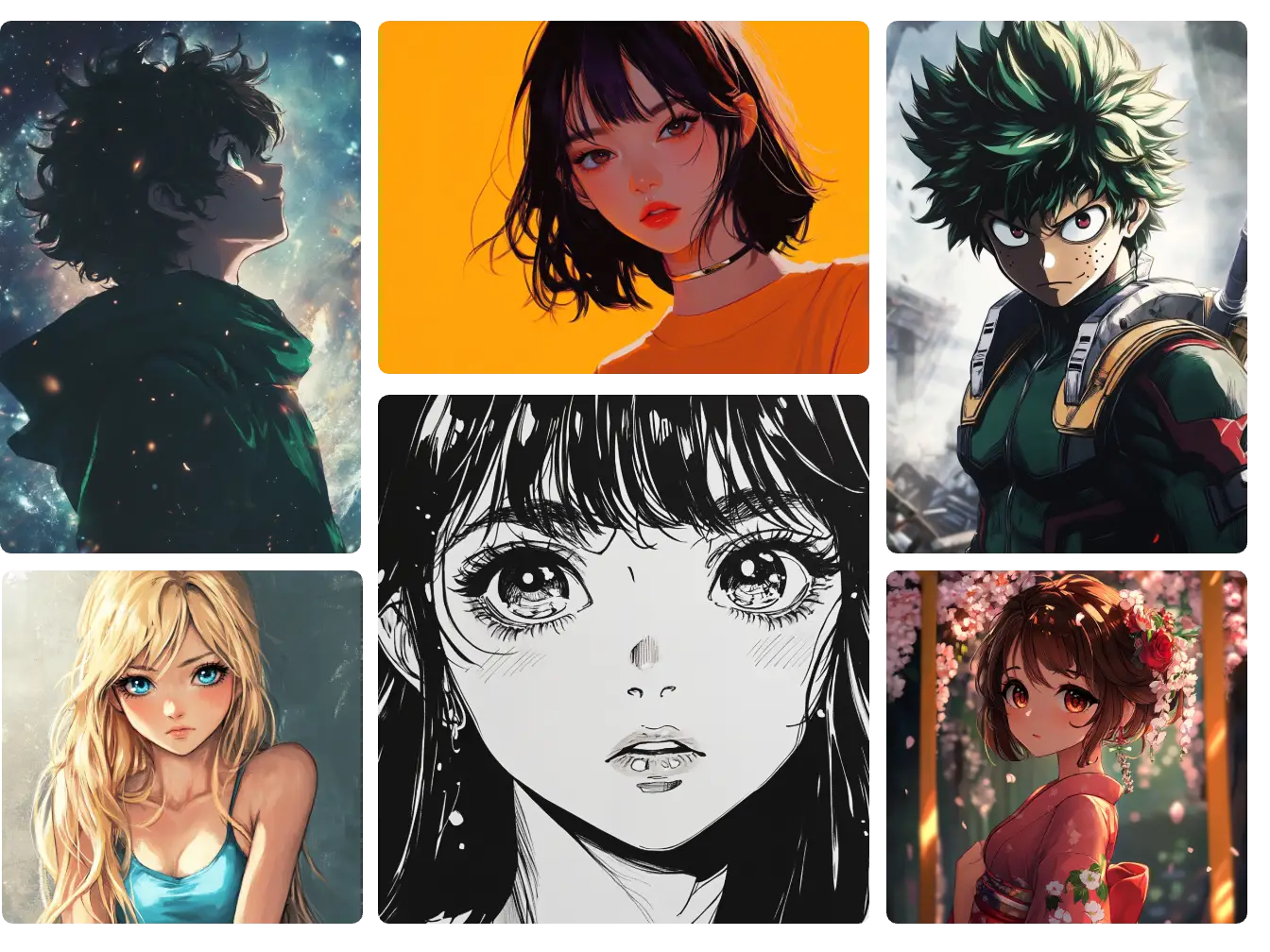
A fully AI-generated manga titled My Dear Wife, Will You Be My Lover? claimed the #1 spot on Comic C'moA — Japan's largest digital bookstore — in January 2026, outperforming established titles like Kingdom. Mob Psycho 100 editor Kazuaki Ishibashi observed that "readers don't seem to care whether the artist is AI or not" and predicted AI-generated manga would "explode in popularity" this year (CBR / Automaton via Jenova).
That moment made something undeniable: the audience doesn't care how manga gets made. They care whether the story is good.
The global manga market is worth USD 23.12 billion in 2026 and projected to reach USD 56.38 billion by 2031, while the AI manga generator market itself was valued at USD 25 million in 2024 and is projected to reach USD 102.1 million by 2030 at a 27.50% CAGR. The demand is massive. The creation tools have finally caught up.
Jenova's Manga Creator is built for this moment — a dedicated mangaka agent that handles the complete workflow from character reference sheets through 200+ page serialized epics, with five professional art style templates, persistent plot memory, and multi-model intelligence from GPT-5.4, Claude Opus 4.6, and Gemini 3.1 Pro Preview. No drawing skills. No five-figure art budgets. Just your story.
This guide covers how AI manga generation works in 2026, the real barriers it eliminates, how to produce publication-quality manga from your first session, and where the industry is heading.
Quick Answer: What Is an AI Manga Generator?
An AI manga generator is a specialized tool that transforms story concepts, scripts, or text descriptions into professional manga pages — including character designs, panel layouts, screentone effects, dialogue placement, and authentic Japanese visual storytelling conventions — without requiring drawing skills.
- 🎨 Five professional art style templates — Shonen, Shoujo, Seinen, Slice-of-Life, and Chibi with Manga Creator
- 🔁 Character consistency across 200+ pages — reference sheet architecture with identity embedding
- 📐 Authentic panel layouts — proper manga reading flow, page-turn reveals, and visual pacing
- 🧠 Plot memory engine — maintains narrative continuity across long-form serialized projects
The Problem: Why Manga Creation Has Remained Out of Reach
The manga market is projected to nearly triple by 2031. Digital formats already hold 72.12% market share, and international demand is surging — the U.S. manga market alone is set to grow from $5.26 billion in 2025 to $19.57 billion by 2034 at a 15.72% CAGR. Yet for aspiring creators, the barriers to entry remain brutally high.
💰 Prohibitive Illustration Costs
A single manga page takes a professional artist 4 to 10 hours — penciling, inking, toning, lettering, and composing panels. A standard 20-page chapter represents 80 to 200 hours of work. Hiring professional manga artists costs $50–$300 per page, putting a 200-page graphic novel between $10,000 and $60,000 in illustration costs alone — before printing, distribution, or marketing.
⏱️ Crushing Production Demands
Many professional mangaka work alongside 2–7 assistants just to meet weekly serialization demands — resources unavailable to solo creators. Japan's domestic manga market contracted 1.7% in 2025 even as publishers increased output by 6.5% to over 16,000 titles, squeezing per-title revenue. The math is punishing: more titles, fewer readers per title, and the same inhuman production schedule.
🎭 The Character Consistency Nightmare
"The challenge is not generating a single good panel. It is generating dozens or hundreds of panels that look like they belong to the same comic — with consistent characters, consistent style, and appropriate compositions for the story being told." — AI Magicx, 2026 Guide
Maintaining visual consistency across hundreds of panels is the single hardest challenge in long-form manga. Small fluctuations — shifted proportions, inconsistent hair details, changing costume elements — break reader immersion immediately. General-purpose AI image generators have "no built-in character consistency", making them fundamentally inadequate for serialized production.
🌍 The Global Paradox
Japan's anime and manga industries are feeling the AI squeeze — otaku-related industries reached a total market value of $25 billion in 2024, but GenAI's "limitless capacity for just-so, not-quite plagiarism" is creating unprecedented scale challenges around copyright enforcement. Meanwhile, international creators who want to participate in this explosive market face all the same production barriers as Japanese mangaka, plus the additional challenge of learning format-specific conventions from outside the ecosystem.
Why Manga Creator Is the AI Manga Generator You Need
This is exactly what Manga Creator was built for — turning writers into mangaka without the years of artistic training, the assistant teams, or the five-figure budgets.
| Traditional Approach | Manga Creator on Jenova |
|---|---|
| $50–$300 per page for illustration | Unlimited page generation on subscription |
| 4–10 hours per page, 2–7 assistants needed | Full pages generated in minutes |
| Years of artistic training required | Story-first — describe, don't draw |
| Manual consistency tracking across panels | Reference sheet architecture with identity embedding |
| Single art style per project | Five professional templates, mixable within projects |
| No story tracking — continuity errors accumulate | Plot memory engine across sessions |
How Manga Creator Works Differently
Unlike general image generators that produce isolated panels, Manga Creator implements the same structured methodology used by professional mangaka — powered by AI execution:
- Reference Sheet Architecture — Before generating story pages, create character reference sheets showing front, side, three-quarter views, key expressions, and costume details. The system creates a mathematical "fingerprint" of each character, capturing facial structure, body proportions, and distinctive characteristics. These references load with every subsequent generation, maintaining visual identity across your entire project — even across 200+ pages
- Five Art Style Templates — Shonen (bold lines, dynamic action, speed lines), Shoujo (soft lines, floral effects, emotional close-ups), Seinen (detailed anatomy, heavy shading, cinematic composition), Slice-of-Life (clean lines, warm expressions, cozy atmosphere), and Chibi/Comedy (super-deformed proportions, exaggerated reactions). Mix styles within a project — switch to chibi for comedic relief, then return to seinen for dramatic sequences
- Panel Layout Intelligence — Optimizes panel size, flow, and composition based on whether a scene is action-packed, dialogue-heavy, or emotionally reflective. Proper manga reading flow, page-turn reveals, and visual pacing built in
- Plot Memory Engine — Persistent cross-session memory tracks character arcs, planted setups, thematic threads, costume changes, relationship dynamics, and visual references. Chapter 30 maintains perfect continuity with Chapter 1
- Multi-Model Intelligence — Access to GPT-5.4, Claude Opus 4.6, Gemini 3.1 Pro Preview, and others means you're always using the strongest model for each task — narrative structure from one, visual prompting from another
Example Prompts
"I'm creating a seinen manga about a retired detective who discovers she can see the last 30 seconds of a dead person's life by touching their belongings. The setting is modern Osaka. My protagonist, Haruka, is in her late 40s — short silver hair, sharp eyes, wears a worn leather jacket over a turtleneck. She's methodical but haunted. I want the art style to feel like a cross between Monster and Psycho-Pass."
"Show Haruka in five expressions: focused investigation, shock of a psychometric vision, sardonic humor, quiet grief, and cold determination. Include her signature leather jacket, the small scar across her left knuckle, and the antique pocket watch she always carries."
"Chapter 1, Page 5: Haruka visits the crime scene — an abandoned warehouse by the Osaka docks. She kneels beside a victim's dropped phone. Close-up on her hand reaching for it. Her eyes widen as the psychometric vision hits — we see a fragmented, distorted flashback of the victim's final moments. Speed lines and screentone for tension. Final panel: Haruka pulls her hand away, breathing hard. She whispers: 'He knew his killer.'"
While tools like Midjourney produce stunning individual illustrations, they have "no built-in character consistency, no panel layout tools, no speech bubbles or text integration, and a Discord-based interface not designed for comic workflows". Manga Creator handles the complete pipeline — from character design sheets through publication-ready pages — within a single conversation that remembers everything.
Related Agents You'll Also Like
Comic Creator
For creators working in Western comic traditions or blending manga influences with American, European, and indie aesthetics. Comic Creator handles superhero, noir, indie, horror, and graphic novel formats with bold panel compositions and dynamic action choreography optimized for print and digital distribution.
- 🎨 Six Western art style templates from noir to superhero to indie
- 📐 Traditional page layouts with dynamic panel composition
- 📚 Sequential storytelling across graphic novel-length projects
Webtoon Creator
Purpose-built for the vertical-scroll format dominating platforms like LINE Webtoon, Tapas, and Lezhin. Webtoon Creator designs mobile-first layouts optimized for thumb-scrolling, maintains full-color consistency across episodes, and integrates cliffhanger mechanics and engagement hooks.
- 📱 Vertical scroll rhythm with strategic "thumb stop" moments
- 🎨 Consistent full-color art across 100+ episodes
- 🪝 Built-in episode hook and cliffhanger mechanics
Creative Fiction Writer
Before a single panel is drawn, the story needs to be bulletproof. Creative Fiction Writer provides deep character arc development, dialogue craft, world-building, and plot structure — feeding directly into Manga Creator for visual execution.
- 📝 Character psychology, motivation mapping, and arc development
- 🔬 Genre-specific research and convention expertise
- ✏️ Editorial-level draft refinement and structural analysis
How It Works: From Story Concept to Finished Manga
Step 1: Define Your Story and Choose Your Style
Start by telling Manga Creator what you're building. Provide your story concept, genre, tone, target length, and main characters. Choose from five professional art style templates — Shonen, Shoujo, Seinen, Slice-of-Life, or Chibi — each calibrated to match major manga traditions.
"I'm creating a shonen manga about a 16-year-old girl, Ren, who discovers that music can physically reshape reality. She joins an underground band in a dystopian city where the government has banned live performance. Tone: My Hero Academia meets BECK: Mongolian Chop Squad. Art style: Shonen with dynamic action sequences and emotional close-ups during performance scenes."
For complex narratives, use Creative Fiction Writer to develop full character profiles, plot outlines, and scene breakdowns before visual production.
Step 2: Generate Character Reference Sheets
Before any story pages are created, lock your characters visually. Request reference sheets showing front view, side view, three-quarter view, key expressions, and costume details. These references become the visual anchors for your entire project.
"Generate a full reference sheet for Ren. She has messy shoulder-length black hair with a streak of electric blue, band-aid on her left cheek, oversized vintage leather jacket covered in hand-painted patches, combat boots. Show front, side, three-quarter, and five expression variants: fierce determination, wild joy during performance, quiet vulnerability, mischievous grin, and exhaustion."
This is the critical step that prevents the character inconsistency plaguing most AI art projects. The system creates an identity fingerprint that loads with every subsequent generation.
Step 3: Script Your Pages Panel by Panel
With characters established, provide your story direction for each page. Manga Creator breaks content into panel-by-panel beats, writes dialogue matching each character's voice, and selects appropriate panel layouts based on narrative rhythm.
"Chapter 2, Page 12: Ren sneaks into the abandoned subway station where the underground band practices. Wide establishing shot — graffiti-covered walls, dim emergency lighting, a makeshift stage assembled from scrap metal. Medium shot: she sees the guitarist, Kai, playing alone — his music is making the air itself ripple. Close-up on Ren's face: shock, then recognition. She's seen this before. Final panel — she steps forward into the light. Kai stops playing. Silence."
Step 4: Generate, Iterate, and Refine
The AI generates each page with all character references loaded, then reviews output against quality criteria — character consistency, panel flow, and style adherence. Request adjustments to composition, expression, screentone density, or dialogue placement. The AI remembers your entire project context, so revisions are informed by everything that came before.
Step 5: Export and Publish
Export completed pages in formats optimized for your target platform — print-ready files for Amazon KDP, digital formats for online distribution, or platform-specific specifications for webtoon platforms. For vertical-scroll adaptations, Webtoon Creator handles format-specific restructuring.
Results & Use Cases
📚 Aspiring Mangaka Without Drawing Skills
Scenario: A novelist has dreamed of creating manga for years but lacks any artistic training. She has a complete 12-chapter plot outline for a psychological thriller manga.
Traditional Approach: Years of art school, or $10,000–$60,000 in professional artist commissions for a single graphic novel. Timeline: 12–24 months minimum.
With Manga Creator: Start with a one-shot chapter to learn the workflow, then scale to serialized production. Generate character reference sheets, produce pages chapter by chapter with persistent memory maintaining visual and narrative continuity. Timeline: weeks per chapter. Cost: a Jenova subscription.
📖 Novelists Adapting Their Own Stories
Scenario: A published author wants to create a manga adaptation of their fantasy novel without losing creative control to a publisher's adaptation process.
Traditional Approach: Pitch to publishers, negotiate adaptation rights, lose creative control over visual interpretation. If self-producing, hire an illustrator at $50–$300 per page.
With Manga Creator + Creative Fiction Writer: Use Creative Fiction Writer to adapt prose into manga-optimized scripts — tightening dialogue, restructuring scenes for visual pacing, identifying which moments deserve splash pages. Then execute visually with Manga Creator. Maintain complete creative ownership throughout.
🌍 International Creators Entering the Global Manga Market
Scenario: A creator in Brazil wants to produce a manga series targeting the global audience. The U.S. manga market is growing at 15.72% CAGR toward $19.57 billion by 2034, and South America is the fastest-growing manga region at 20.85% CAGR.
Traditional Approach: Learn Japanese visual storytelling conventions from outside the ecosystem. Find and commission artists familiar with manga aesthetics. Navigate cultural and stylistic expectations with limited local resources.
With Manga Creator: Five style templates calibrated to authentic manga traditions. Panel layout intelligence with proper reading flow. Reference sheet systems that eliminate the consistency challenges that plague cross-cultural manga production. The growing acceptance of AI manga — demonstrated by an AI-generated title topping Japan's largest digital bookstore — validates this path for international creators.
📱 Social Media and Content Marketing
Scenario: A content creator wants manga-style characters and short comic strips for social media, merchandise, and brand content.
Traditional Approach: Commission artists for each piece at $50–$300 per illustration. Wait weeks for delivery. Struggle with inconsistent character appearances across different commissions.
With Manga Creator: Generate consistent character art, reaction images, and short comic strips on demand. The reference sheet system ensures brand characters look identical across every piece of content. Pair with Marketing Visual Designer for promotional assets that match your manga's visual identity.
FAQ
What is an AI manga generator, and how does it work?
An AI manga generator uses artificial intelligence to convert text descriptions, scripts, or uploaded references into illustrated manga pages — including character designs, panel layouts, screentone effects, and dialogue placement. Jenova's Manga Creator combines multi-model AI (GPT-5.4, Claude Opus 4.6, Gemini 3.1 Pro Preview) with a reference sheet architecture for character consistency, five professional art style templates, and a plot memory engine that maintains narrative continuity across entire serialized projects.
How much does AI manga creation cost compared to traditional illustration?
Professional manga illustration costs $50–$300 per page, with a 200-page graphic novel running $10,000–$60,000 for art alone. The AI manga generator market is growing at [27.50% CAGR toward $102.1 million by 2030](https://finance.yahoo.com/news/ai-manga-generator-market-report-142700969.html), reflecting the industry's shift toward accessible creation tools. Jenova offers plans starting at $20/month with access to Manga Creator and all other agents. A free tier is available to get started.
Can AI maintain character consistency across a long manga series?
Yes — this is the most critical capability separating specialized manga tools from general image generators. Manga Creator uses a reference sheet architecture where each character's appearance is locked before story production begins. Identity embedding creates a mathematical fingerprint of facial structure, body proportions, and distinctive features that loads with every subsequent generation. As Anifusion's 2026 analysis confirmed: "Character consistency is absolutely critical for manga... This is where specialized manga tools vastly outperform general AI art generators."
What manga art styles can AI generators produce?
Manga Creator supports five professional art style templates: Shonen (bold lines, dynamic action, speed lines), Shoujo (soft lines, floral effects, emotional close-ups), Seinen (detailed anatomy, heavy shading, cinematic composition), Slice-of-Life (clean lines, warm expressions, cozy atmosphere), and Chibi/Comedy (super-deformed proportions, exaggerated reactions). Styles can be mixed within a single project — switching to chibi for comedic relief panels, then returning to seinen for dramatic sequences.
Is AI-generated manga accepted by readers and publishers?
Growing evidence suggests increasing reader acceptance. In January 2026, an AI-generated manga topped Japan's largest digital bookstore, and Neon Genesis Evangelion creator Hideaki Anno stated the industry has "no choice but to accept" AI technology. However, Japan's anime and manga industries are simultaneously growing wary of GenAI's impact on labor relations and revenue. Major publishers have taken firm stances against AI-generated submissions. The landscape is evolving — creators should verify platform-specific policies before publishing.
How is this different from using Midjourney or DALL-E?
General image generators produce individual illustrations but lack manga-specific features. As documented by industry analysis, Midjourney has "no built-in character consistency, no panel layout tools, no speech bubbles or text integration, and a Discord-based interface not designed for comic workflows." Manga Creator handles the complete workflow — character design sheets, panel-by-panel page generation, dialogue placement, style template switching, and persistent project memory across sessions — within a single conversation.
Conclusion
The manga market's trajectory speaks for itself: USD 23.12 billion in 2026, projected to reach USD 56.38 billion by 2031. Digital formats account for 72.12% of consumption. International demand is surging — the U.S. market alone is growing at 15.72% CAGR, and South America is forecast to deliver 20.85% CAGR through 2031. An AI-generated manga has already topped Japan's largest digital bookstore. The audience is massive. The distribution platforms are ready. The only thing that was missing was an accessible creation tool.
Manga Creator is that tool. Reference sheet architecture that locks character identity across 200+ pages. Five professional art style templates matching major manga traditions. A plot memory engine that maintains narrative continuity across sessions and seasons. And multi-model intelligence that adapts to every creative task — from character design to action choreography to emotional close-ups.
Pair it with Comic Creator for Western formats, Webtoon Creator for mobile-first vertical comics, or Creative Fiction Writer to build your narrative foundation before a single panel is drawn.
Try Manga Creator free — no credit card required. Or explore the full agent library at Jenova.