AI Manga Art Generator: Create Stunning Manga Artwork Without Drawing Skills (March 2026)
2026-03-27
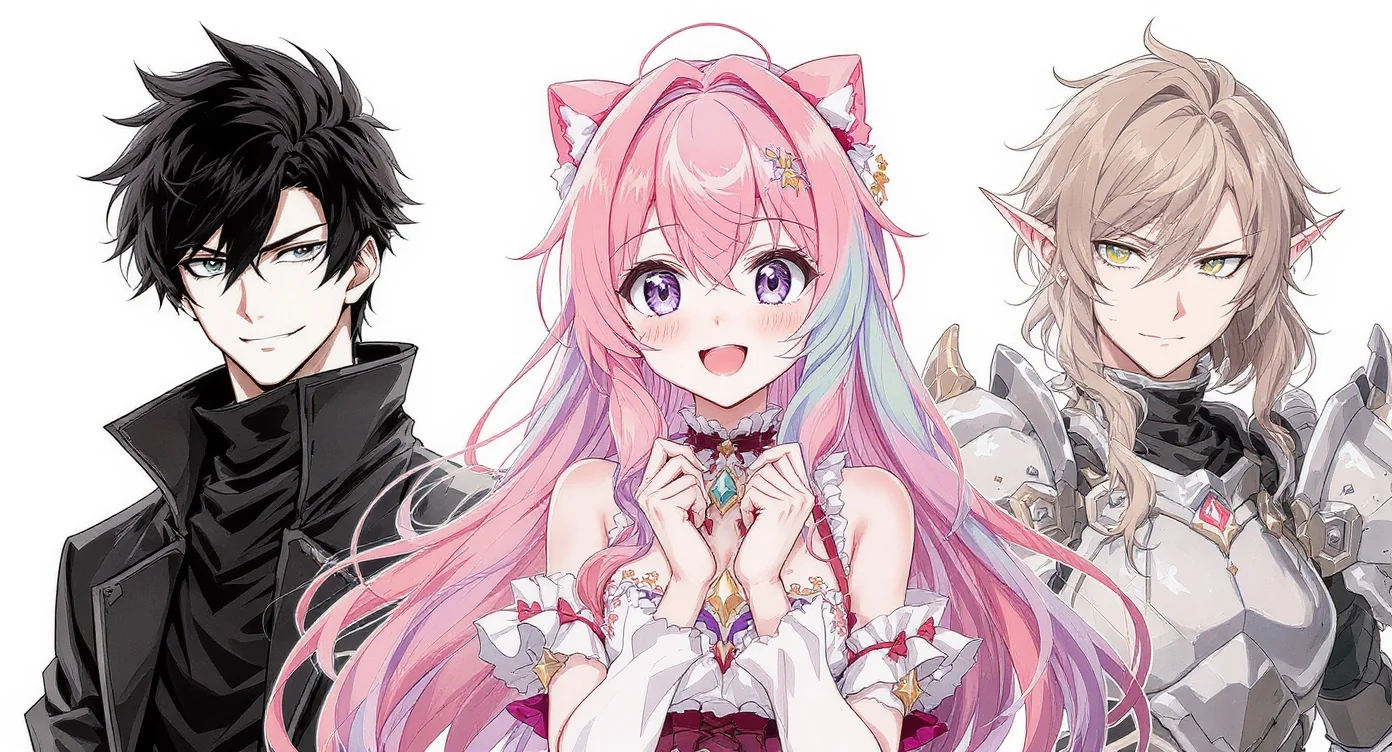
The AI manga art generator has crossed a decisive threshold in 2026. The AI manga generator market was valued at USD 25.0 million in 2024 and is projected to reach USD 102.1 million by 2030, growing at a 27.50% CAGR — and the proof that AI manga art has arrived? In January 2026, a fully AI-generated manga titled My Dear Wife, Will You Be My Lover? claimed the #1 spot on Japan's largest digital bookstore, Comic C'moA, outperforming established titles like Kingdom. Mob Psycho 100 editor Kazuaki Ishibashi observed that "readers don't seem to care whether the artist is AI or not" — and predicted AI-generated manga would "explode in popularity" in 2026.
Jenova's Manga Creator is the AI manga art generator built for creators who have stories to tell but not years of art training to spare. It handles the complete manga art workflow — character reference sheets for visual consistency across hundreds of panels, five professional art style templates (Shonen, Shoujo, Seinen, Slice-of-Life, Chibi), intelligent panel composition with authentic reading flow, screentone integration, and a plot memory engine that tracks your story across sessions. Whether you're creating standalone character art, a 20-page one-shot, or a 200+ page serialized epic, this guide covers how AI manga art generation works, why dedicated agents outperform generic image generators, and how to create your first manga artwork in minutes.
Quick Answer: What Is an AI Manga Art Generator?
An AI manga art generator is a specialized tool that transforms text descriptions into professional manga-style artwork — including character designs, panel illustrations, screentone effects, and complete pages — with authentic Japanese visual storytelling conventions and without requiring drawing skills.
- 🎨 Text-to-manga art conversion with authentic anime/manga styling — Manga Creator handles this conversationally
- 🧑🎨 Character consistency across hundreds of panels using reference sheet architecture and identity embedding
- 🖌️ Five professional art style templates covering Shonen, Shoujo, Seinen, Slice-of-Life, and Chibi aesthetics
- 📖 Complete page generation with panel layouts, speech bubbles, screentones, and reading flow optimization
The Problem: Why Creating Manga Art Has Remained Out of Reach
The demand for manga art has never been higher. The broader manga market is expected to grow from USD 19.35 billion in 2025 to USD 56.38 billion by 2031 — a 19.52% CAGR, with digital formats now capturing 76.1% of manga consumption in Japan. Yet the tools available to most aspiring creators remain frustratingly inadequate for producing professional-quality manga artwork.
The Multi-Skill Burden
Professional manga art demands simultaneous mastery of illustration fundamentals, character design, inking, screentone application, background art, and lettering. According to ScienceDirect research, manga work is "often demanding, involving challenging working hours, limited job security" and requires creators to function as "one-person studios." A single manga page can take a professional artist 4 to 10 hours — penciling, inking, toning, lettering, and composing panels. For independent creators, completing a single volume can take 1–2 years.
The Character Consistency Crisis
As Anifusion's 2026 analysis confirmed, "Character consistency is absolutely critical for manga. Readers need to instantly recognize your characters across hundreds of pages and various scenes. This is where specialized manga tools vastly outperform general AI art generators."
Generic image generators like Midjourney can produce stunning individual manga-style illustrations, but they have no built-in character consistency, no panel layout tools, no speech bubbles or text integration, and a Discord-based interface not designed for manga workflows. Every panel requires individual prompting, and your protagonist's face changes between frames.
The Cost Barrier
Hiring professional manga artists costs $50–$300 per page. A 200-page graphic novel could require $10,000–$60,000 in illustration costs alone — before editing, lettering, or printing.
Meanwhile, Japan's domestic manga market contracted 1.7% in 2025 as publishers increased output by 6.5% to over 16,000 titles, squeezing per-title revenue. Independent creators face a market that demands more content at lower margins — making accessible art generation tools not just convenient but economically essential.
Why Manga Creator Is the Best AI Manga Art Generator
This is exactly what Manga Creator was built for. Unlike generic image generators that produce beautiful standalone illustrations but can't maintain a character's face across two panels, Manga Creator is a dedicated mangaka Agent that handles the complete manga art creation workflow through conversational AI.
| Feature | General Image Generator (e.g., Midjourney) | Manga Creator |
|---|---|---|
| Character consistency | ❌ Extremely difficult | ✅ Reference sheet system across 200+ pages |
| Art style templates | ⚠️ Prompt-dependent | ✅ Five professional manga styles |
| Panel layouts | ❌ Manual in external tools | ✅ Intelligent composition with reading flow |
| Speech bubbles & lettering | ❌ None | ✅ Integrated dialogue placement |
| Screentone integration | ❌ None | ✅ Authentic manga toning |
| Story continuity | ❌ None | ✅ Plot memory engine across sessions |
| Project state tracking | ❌ None | ✅ Persistent across sessions |
| Cost | $10–$60/month | Free to start |
While tools like Midjourney and ChatGPT can approximate manga-style artwork, the real challenge — as AI Magicx's 2026 guide documented — is not generating a single good panel. It's "generating dozens or hundreds of panels that look like they belong to the same comic — with consistent characters, consistent style, and appropriate compositions for the story being told."
The Character Reference Sheet System
Before generating any story panels, you create character reference sheets with Manga Creator — showing each character in neutral poses with labeled features, key expressions, and costume details. These references load with every subsequent generation, ensuring visual consistency across your entire project. The system uses identity embedding to create a mathematical "fingerprint" of each character, capturing facial structure, body proportions, and distinctive characteristics — the same approach that Anifusion describes as LoRA (Low-Rank Adaptation) training for maintaining character appearance from page 1 to page 200.
Five Professional Art Style Templates
Each style template carries its own visual conventions, line work, and toning approach:
- Shonen: Bold lines, dynamic action, speed lines, impact frames — the Dragon Ball and Naruto aesthetic where characters burst through panel borders
- Shoujo: Soft lines, floral effects, emotional close-ups, overlapping panels with decorative borders — romance and drama
- Seinen: Detailed anatomy, heavy shading, cinematic composition, atmospheric screentones — mature themes with deliberate pacing
- Slice-of-Life: Clean lines, warm expressions, cozy atmosphere, consistent panel grids — everyday realism
- Chibi/Comedy: Super-deformed proportions, exaggerated reactions, panel breaks for comedic timing
You can mix styles within a project — switching to chibi for comedic relief panels, then returning to seinen for dramatic sequences.
Plot Memory Engine
Unlike static tools that treat every session as a blank slate, the AI manga art generator maintains persistent awareness of your project across sessions. Character evolutions (new scars, costume changes, aging) are tracked with versioned reference sheets. Landmark page tagging enables narrative callbacks. Your art direction — the specific visual language you've established — carries forward automatically.
Try Manga Creator free — no credit card required.
Related Agents You'll Also Like
🎨 Comic Creator — Western Comic Art
For creators blending manga influences with Western comic aesthetics — bold lines, dynamic action, and American-style panel compositions. Handles six professional art style templates (Superhero, Noir, Indie, Franco-Belgian, Cartoon, Realistic) with character consistency across full graphic novels.
- Dynamic panel layouts from traditional grids to splash pages
- Character reference sheets for visual consistency
- Single issues to graphic novel sagas
📱 Webtoon Creator — Mobile-First Manga Art
Optimized for platforms like LINE Webtoon, Tapas, and Lezhin where manga art needs to work in vertical scroll format. Digital formats now account for 76.1% of manga consumption in Japan, and webtoon-specific art conventions are critical for mobile audiences.
- Vertical scroll rhythm and strategic pacing
- Full-color consistency across 100+ episodes
- Platform presets for major webtoon services
✍️ Creative Fiction Writer — Story Development Before Art
Develop your narrative foundation before visual production begins. Scene-by-scene breakdowns with visual direction notes, character arc development, dialogue refinement, and plot structure guidance that translates directly into panel descriptions for the manga art generator.
- World-building with authentic detail
- Scene breakdowns ready for art generation
- Editorial insight for pacing and narrative structure
How It Works: From Concept to Professional Manga Art
Step 1: Define Your Story and Art Style
Begin by describing your story concept, genre, and visual approach to the Manga Creator. Choose from five professional art style templates — each carries its own visual conventions that affect line work, toning, composition, and emotional register.
"I want to create a shoujo manga about a university student who discovers she can see the red threads of fate connecting people — but her own thread is severed. The art style should be elegant with soft lines, floral effects, and emotional close-ups. Think Nana meets Your Lie in April."
For complex narratives, the Creative Fiction Writer can help develop full character profiles, plot outlines, and scene breakdowns before visual production begins.
Step 2: Lock In Character Designs
Create reference sheets for your main characters. Manga Creator generates consistent designs that persist across your entire project:
"Design my protagonist: Hana, 20 years old, long dark hair often in a loose braid, gentle but melancholic eyes, oversized cardigan over a simple dress. Shoujo style with delicate features and expressive eyes that convey quiet sadness."
The reference sheet captures neutral poses, key expressions (joy, sorrow, surprise, determination), costume details, and distinctive features — loading automatically with every subsequent art generation.
Step 3: Generate Manga Art
With characters established, generate individual panels, character illustrations, and complete pages:
"Create a full page: Hana walks through a crowded campus. She sees red threads connecting couples around her — rendered as ethereal, glowing lines. Close-up on her face as she looks down at her own wrist where no thread exists. Soft autumn lighting, falling leaves."
The AI understands manga art conventions — screentone application for atmosphere, speed lines for motion, panel composition for emotional impact, and the visual language that distinguishes professional manga from amateur work.
Step 4: Assemble Complete Scenes
Combine panels into complete scenes with proper manga flow — right-to-left reading, appropriate panel sizes for emotional beats, page-turn reveals for dramatic moments, and visual pacing that matches your narrative rhythm. The AI handles gutter spacing, panel border treatment, and the relationship between facing pages automatically.
Step 5: Iterate and Refine
Generate variations, adjust compositions, experiment with different art approaches, and refine until each page meets your vision. The AI's speed enables experimentation that would be prohibitively expensive with traditional artists — what takes professional artists hours per panel, the manga art generator produces in minutes.
Results & Use Cases
📚 Aspiring Mangaka Without Drawing Skills
Scenario: You've dreamed of creating manga art but lack artistic training.
Traditional Approach: Years of art school or $10,000–$60,000 in professional artist commissions for a single graphic novel.
Jenova Solution: Manga Creator handles visual execution while you focus on the story you've always wanted to tell. Start with a one-shot to learn the workflow, then scale to serialized production. Character consistency is maintained automatically from page 1 to page 200+.
📖 Novelists Visualizing Their Stories
Scenario: You've written a novel and want to create a manga adaptation with professional art.
Traditional Approach: Pitch to publishers, hope for adaptation rights, lose creative control.
Jenova Solution: Adapt your own work using the Creative Fiction Writer for script adaptation and Manga Creator for visual production. Maintain complete creative ownership. The growing acceptance of AI manga — demonstrated by My Dear Wife, Will You Be My Lover? topping Japan's largest digital bookstore — validates this path.
📱 Mobile-First Creators
Scenario: You want to publish manga art on webtoon platforms like Tapas or LINE Webtoon.
Traditional Approach: Learn vertical scroll format conventions, hire specialists for mobile optimization, produce weekly full-color episodes under crushing deadlines.
Jenova Solution: Start with Manga Creator for character design and story art, then @mention Webtoon Creator for vertical scroll optimization — flexible panel layouts, "thumb stop" moments, and platform-ready exports. The agents share conversational context, ensuring your characters and art style translate seamlessly between formats.
💼 Content Creators & Social Media
Scenario: You need manga-style art for social media, merchandise, YouTube thumbnails, or brand storytelling.
Traditional Approach: Commission artists for each piece at $50–$300 per illustration, wait weeks for delivery.
Jenova Solution: Generate consistent character art, reaction images, and short comic strips on-demand with the manga art generator. The reference sheet system ensures your brand characters look identical across every piece of content. As Vocal Media documented, anime AI art has become essential for YouTube and TikTok creators looking to "amplify engagement and express their unique artistic voice."
🌍 International Creators Entering the Manga Market
Scenario: A non-Japanese creator wanting to participate in the global manga boom.
Traditional Approach: Navigate cultural conventions, find artists familiar with manga aesthetics, compete against established Japanese studios.
Jenova Solution: The broader manga market is projected to reach USD 56.38 billion by 2031, and MENA and LATAM regions have seen anime viewership growth exceeding 35% year-over-year. With Manga Creator handling authentic manga art conventions automatically — screentones, panel flow, expression systems — creators worldwide can produce art that meets professional Japanese standards.
FAQ
Do I need drawing skills to use an AI manga art generator?
No. AI manga art generators are specifically designed for creators who have stories to tell but lack traditional artistic training. Manga Creator is story-first — your creative vision and storytelling ability matter more than drawing skills. You describe scenes in natural language, and the AI handles all visual execution, from character design through finished manga pages.
How does the AI maintain character consistency across hundreds of panels?
Manga Creator uses a reference sheet architecture — before generating story panels, you create character reference sheets showing each character in neutral poses with labeled features. These references load with every subsequent generation. As Anifusion's 2026 analysis confirmed: "Character consistency is absolutely critical for manga... This is where specialized manga tools vastly outperform general AI art generators." The system uses LoRA-style identity embedding to create mathematical "fingerprints" that persist across unlimited generations.
What manga art styles can the AI generate?
Manga Creator supports five professional art style templates: Shonen (bold lines, dynamic action, speed lines), Shoujo (soft lines, floral effects, emotional close-ups), Seinen (detailed anatomy, heavy shading, cinematic composition), Slice-of-Life (clean lines, warm expressions, cozy atmosphere), and Chibi/Comedy (super-deformed proportions, exaggerated reactions). You can mix styles within a project. For Western comic aesthetics, the Comic Creator offers six additional style templates.
Is AI-generated manga art accepted by readers?
Growing evidence suggests increasing acceptance. In January 2026, an AI-generated manga topped Japan's largest digital bookstore rankings, outperforming established titles. Mob Psycho 100 editor Kazuaki Ishibashi observed that "readers don't seem to care whether the artist is AI or not." Meanwhile, Neon Genesis Evangelion creator Hideaki Anno stated that the industry has "no choice but to accept" AI technology, as it is too convenient to ignore.
Can I sell manga art created with this tool?
Jenova allows commercial use of generated content on paid plans. However, note that the U.S. Supreme Court declined in March 2026 to hear a case on AI-generated art copyright, and the U.S. Copyright Office ruled in 2025 that purely AI-generated outputs cannot receive copyright protection unless a human has contributed "sufficient expressive elements." Publishing platforms may also have their own policies — always verify terms of service for your target distribution channel.
Is the AI manga art generator free?
Yes — you can start using Manga Creator for free with no credit card required. Free accounts include all core features with limited usage — sufficient for testing workflows, creating sample art, and validating story concepts. Paid plans starting at $20/month increase usage limits significantly for full-length projects.
How is this different from using Midjourney or PixAI for manga art?
General image generators produce stunning individual illustrations but lack manga-specific features. As Anifusion's 2026 guide documented: Midjourney has "no built-in character consistency... no panel layout tools, no speech bubbles or text integration, and a Discord-based interface not designed for comic workflows." Tools like PixAI specialize in anime-style single images but lack sequential art capabilities. Manga Creator handles the complete workflow — from character design sheets through publication-ready pages — with authentic manga conventions, persistent project memory, and five distinct style templates.
Conclusion
The manga art landscape has fundamentally shifted in 2026. The AI manga generator market is growing at 27.5% CAGR toward USD 102.1 million by 2030, the broader manga market is projected to nearly triple to USD 56.38 billion by 2031, and AI-generated manga is already topping sales charts in Japan. The audience is massive, the distribution platforms are ready, and the only thing that was missing was an accessible art creation tool.
What makes Manga Creator different isn't just that it generates manga-style images — it's that it handles the complete art workflow that professional mangaka follow: character reference sheets for visual consistency, five distinct art style templates with authentic screentone integration, a plot memory engine for narrative continuity, and persistent project state tracking that remembers your characters, your story, and your creative direction across sessions.
The question is no longer "can I draw this?" It's "what story do I want to tell?"
Try Manga Creator now — describe your story and see your manga art come to life. No drawing skills required. No credit card required.
For creators exploring different visual storytelling formats, Jenova also offers dedicated agents for Western comics, webtoons, and fiction writing. Explore the full Agent library at Jenova.