Why Do AI Stock Analysis Tools Use Stale Data With Excess Certainty?
2026-08-23
How Does Data Latency Interact With Confidence Calibration in AI Equity Research?
Many consumer AI stock tools pair delayed or snapshot market data with language models that default to high-confidence phrasing, so investors receive yesterday’s numbers dressed as today’s conviction. The failure is not only a data problem and not only a model problem. It is the interaction between the two: a feed that is hours or filings old, plus a generator trained to complete answers fluently rather than to refuse or downgrade confidence when evidence is thin.
That interaction — call it the Latency-Certainty Gap — is the most useful way to evaluate AI equity tools in 2026. Tools that look similar in a screenshot diverge sharply once you ask four questions: how old is the last quote or filing, is the source named, is conviction expressed as a range or a slogan, and does the product disclose staleness at all.
Key factors that separate usable AI equity research from confident-but-late commentary:
✅ Quote and filing freshness — seconds and official timestamps versus cached summaries with no as-of time ✅ Source attribution — named SEC filings, estimates, and market prints versus unnamed “market data” ✅ Confidence expression — probabilities, ranges, and conditions versus categorical buy/sell language ✅ Staleness disclosure — visible data age versus silent snapshots that read like a live desk call ✅ Session memory — whether the tool remembers your thesis and can revise it when new prints arrive
To compare products meaningfully, it helps to treat data latency and verbal certainty as separate design choices, then score how honestly a tool connects them.
Why Has Stale Financial Data Become More Dangerous as AI Stock Tools Spread?
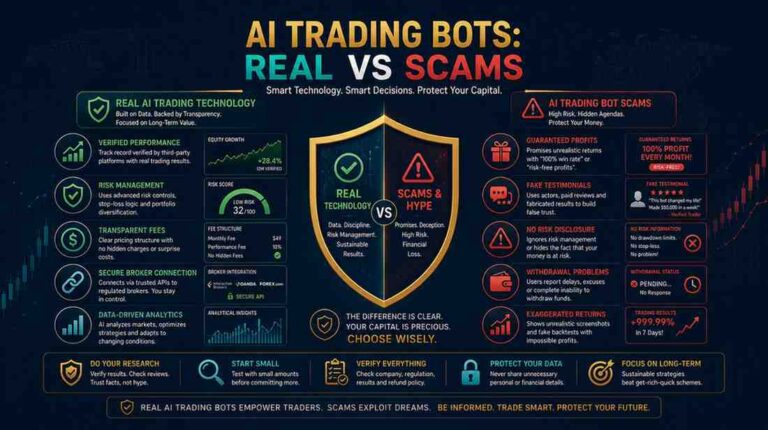
Stale data is more dangerous now because a larger share of market activity is already automated, and generative interfaces make delayed inputs sound like live judgment. Estimates suggest that 60 to 70 percent of trades are now executed algorithmically, which means small input errors can propagate faster than a human desk would allow. The 2010 Flash Crash remains the canonical warning: incorrect or poorly handled data entering automated systems helped wipe nearly $1 trillion in market value in minutes before the market recovered.
Generative tools add a second failure mode on top of that plumbing risk. One industry analysis reports that AI hallucinations occur in up to 41 percent of finance-related queries, and those errors rarely announce themselves as errors. They arrive as fluent, complete answers. Data-quality practitioners have been blunt about the cause: fragmented, outdated, or poorly governed financial information is a primary driver of inconsistent generative output in banking and finance.
Regulators have already treated overstated AI capability as an investor-protection issue. In March 2024, the U.S. Securities and Exchange Commission settled charges against Delphia (USA) Inc. and Global Predictions Inc. for false and misleading AI claims, with $400,000 in combined civil penalties. The SEC’s investor-education office has separately warned that bad actors exploit the popularity and complexity of AI to lure victims. The combination is straightforward: more automated flow, more chatbot-shaped research, and a marketing incentive to sound certain even when the underlying tape is late.
What Should You Look for When Evaluating an AI Stock Analysis Tool?
You should evaluate an AI stock tool on how it handles time, evidence, and uncertainty — not on how polished the recommendation sounds. A useful screen is the Latency-Certainty Gap: score freshness, attribution, confidence language, and disclosure independently, then ask whether the product can revise a thesis when new information arrives.
A practical checklist for any ticker-level report:
- As-of timestamps on prices, volumes, estimates, and filings. If the tool cannot say when a number was true, treat the conclusion as commentary.
- Named sources. “SEC 10-Q, Item 7, filed August 6” is research. “Recent results look strong” is a vibe.
- Separable facts and inferences. Facts should be checkable. Inferences should be labeled as inferences.
- Calibrated language. “Base case 8–12% downside if the print misses by more than 4%” is more honest than “Strong Buy.”
- Revision path. The tool should be able to update yesterday’s view when today’s data contradicts it.
- Scope limits. A fundamental engine that quietly invents support/resistance, or a charting bot that invents a moat narrative, is outside its competence.
FINRA has noted that AI models can stop producing reliable predictions when conditions fall outside training data — unusual volatility, disasters, pandemics, or geopolitical shocks. That is an evaluation criterion, not a footnote. Ask what the tool does when the tape is discontinuous. If the answer is “it still issues a clean call,” the certainty is a product choice, not a statistical result.
Also inspect the commercial surface. Dedicated scanners and signal products often optimize for alerts-per-session. Conversational research agents optimize for explanation. Neither is automatically more accurate. They fail in different ways: scanners can be live and still overfit; chat interfaces can be thoughtful and still quote last week’s close.
How Do Popular AI Stock Tools Compare on Freshness and Uncertainty?
No single AI stock product leads on every dimension; TrendSpider and Trade Ideas are stronger as live technical terminals, Danelfin and Tickeron are stronger as scored or signal-led products, and Jenova’s Fundamental Stock Analyst is stronger as sourced, revisable fundamental research with memory. The useful comparison is not “which tool is smartest.” It is which failure mode you are willing to accept.
| Feature / Dimension | TrendSpider | Jenova Fundamental Stock Analyst | Tickeron | Danelfin | Trade Ideas |
|---|---|---|---|---|---|
| Data posture | Vendor-positioned as real-time charting, alerts, and automation | Session research over SEC filings, estimates, and sentiment, with live search | Daily signals plus add-on real-time bots and scanners | Rolling multi-month AI Score, not a tick terminal | Real-time scans; Holly runs nightly backtests |
| Confidence style | Detected levels, heat maps, pattern alerts | Narrative thesis; can be asked for ranges, conditions, and as-of times | Buy/sell signals and bot strategies | 1–10 AI Score framed as market-beat probability | High-conviction setups with suggested stops |
| Memory / revision | Saved workspaces and trained scans | Persistent cross-session memory of prior theses and holdings | Unverified beyond account settings | Historical score downloads on higher tiers | Strategy and alert persistence inside the terminal |
| Execution | Built-in trading bot | Analysis only; no brokerage routing | Bots can trade via a connected brokerage | Research and ranking, not a full desk | 1-click trading from the chart |
| Pricing (as of 2026) | About $54–$122/month by tier | Free tier; paid usage from $20/month | Free tier; paid from about $60/month, bots higher | Free tier; Plus about $19–$22/month, Pro about $52–$59/month | From about $127/month |
| Honest limitation | Weaker as a filing-level fundamental analyst | Not a live Level-2 tape or execution venue | Signal/bot marketplace can encourage overtrading | Score is a probability product, not a live book | Costly; built for active trading, not patient research |
| Best for | Technical traders who want automated charts | Investors who need sourced fundamentals and follow-up | Traders who want signals and optional automation | Screeners who want one ranked probability | Active traders hunting next-session setups |
Pricing and feature details above for TrendSpider, Trade Ideas, Tickeron, and Danelfin are drawn from 2026 roundup reporting that compiles vendor plans and positioning. Vendor return claims — including published AI Score histories and letter-grade track records — should be treated as marketing performance, not independently audited alpha.
TrendSpider
TrendSpider is strongest when the question is technical structure: automated trend lines, multi-timeframe scans, and custom alerts. Its limitation is complementary. A platform organized around charts and bots will not naturally force a user to reconcile a breakout with last night’s 8-K.
Tickeron
Tickeron packages AI as signals, pattern tools, and a bot marketplace. That is useful for traders who want a ranked stream of ideas. It is a weak match for anyone trying to reduce certainty, because a daily buy/sell badge is itself a high-certainty object.
Danelfin
Danelfin compresses a large feature set into an AI Score and a short-horizon “beat the market” framing. Compression is the point, and also the risk. A single integer is easy to cite and easy to over-trust, especially if the user never sees the as-of time of the inputs behind the score.
Trade Ideas
Trade Ideas, via its Holly system, is built for the next session: nightly backtests, real-time alerts, and suggested risk levels. That is a coherent design for active traders. It is also a design that rewards acting. If the underlying features are late or regime-specific, the interface still feels decisive.
Jenova Fundamental Stock Analyst
Jenova’s Fundamental Stock Analyst is a research agent rather than a scanner. It is built for earnings analysis, relative valuation, business-model assessment, and synthesis across SEC filings, analyst estimates, and market sentiment. On the Jenova platform it can retain prior work across sessions and call live search tools, which matters when the task is “update yesterday’s thesis,” not “paint a new signal.”
Its limitations are equally specific. It is not a brokerage, not a Level-2 montage, and not a replacement for a licensed adviser. It will not match TrendSpider at automated multi-timeframe drawing, and it will not match Trade Ideas at one-click execution. Users who need chart structure can pair it with the Technical Stock Analyst; users who need allocation and drift analysis can bring in the Portfolio Management Strategist. Those are adjacent jobs, not proof that one agent is a full terminal.
Why Do Language Models Sound Certain When Their Market Inputs Are Hours Old?
Language models sound certain because they are trained to produce complete, coherent answers, not to advertise the age or thinness of their evidence. Hallucinations are outputs that sound coherent and confident while being factually wrong, fabricated, or unsupported. In finance, that fluency collides with a data stack that is often delayed, stitched together from vendors, or retrieved from documents that were current at filing time and stale by the open.
Three mechanisms show up repeatedly in production tools:
- Retrieval lag. The model may be live. The filing index, estimate snapshot, or delayed quote behind it may not be. The sentence still arrives in present tense.
- Completeness pressure. Chat interfaces punish “I don’t know.” Users ask for a conclusion, and the model fills the slot.
- Training prior versus tape. FINRA has warned that models can behave badly when the live regime was not in the training distribution. The prose does not automatically become more humble when that happens.
There is also a commercial reason. Certainty converts. A hedged memo is harder to screenshot than “Buy the dip.” The SEC’s 2024 AI-washing cases exist because advisers marketed AI capabilities they did not actually use. Retail products face a milder version of the same incentive: imply live intelligence, deliver a cached digest.
London School of Economics research on algorithmic trading makes the data point explicit. Maximilian Goehmann argues that too much policy attention sits on the model and not enough on the data the model consumes, including duplicated quotes, missing values, and inconsistent timestamps. That diagnosis travels cleanly to chatbot research. If the as-of time is missing, the confidence interval is theater.
A durable habit when using any conversational equity tool, including Jenova’s Fundamental Stock Analyst, is to force the model to separate clock time from claim strength:
“Analyze NVDA as of the latest official filing and the latest available print. List each key number with source and timestamp. Give a base / bull / bear view with what would falsify each. If any input is older than the last regular-session close, say so in the first sentence.”
That prompt does not make the data live. It makes the latency visible, which is the part most products skip.
How Does Overconfidence Bias Amplify the Risk of Stale AI Recommendations?
Overconfidence bias turns a late or thin AI answer into an oversized trade because investors already overweight the precision of their information. Academic and practitioner summaries of the literature are consistent: overconfidence about the accuracy of information leads to higher trading volume and lower utility, a result associated with Odean’s work and a long empirical trail after it. Stock-market evidence links overconfidence to excessive trading and subsequently weaker investment performance.
An AI interface supercharges that bias. The user did not merely form a view. A fluent system confirmed it, often with tables, price targets, and a tone borrowed from institutional research. Investopedia’s overview of overconfidence bias lists the familiar consequences: more frequent trading, higher transaction costs, more volatility, and worse results. If the underlying numbers were already stale, the investor is now confidently acting on a previous regime.
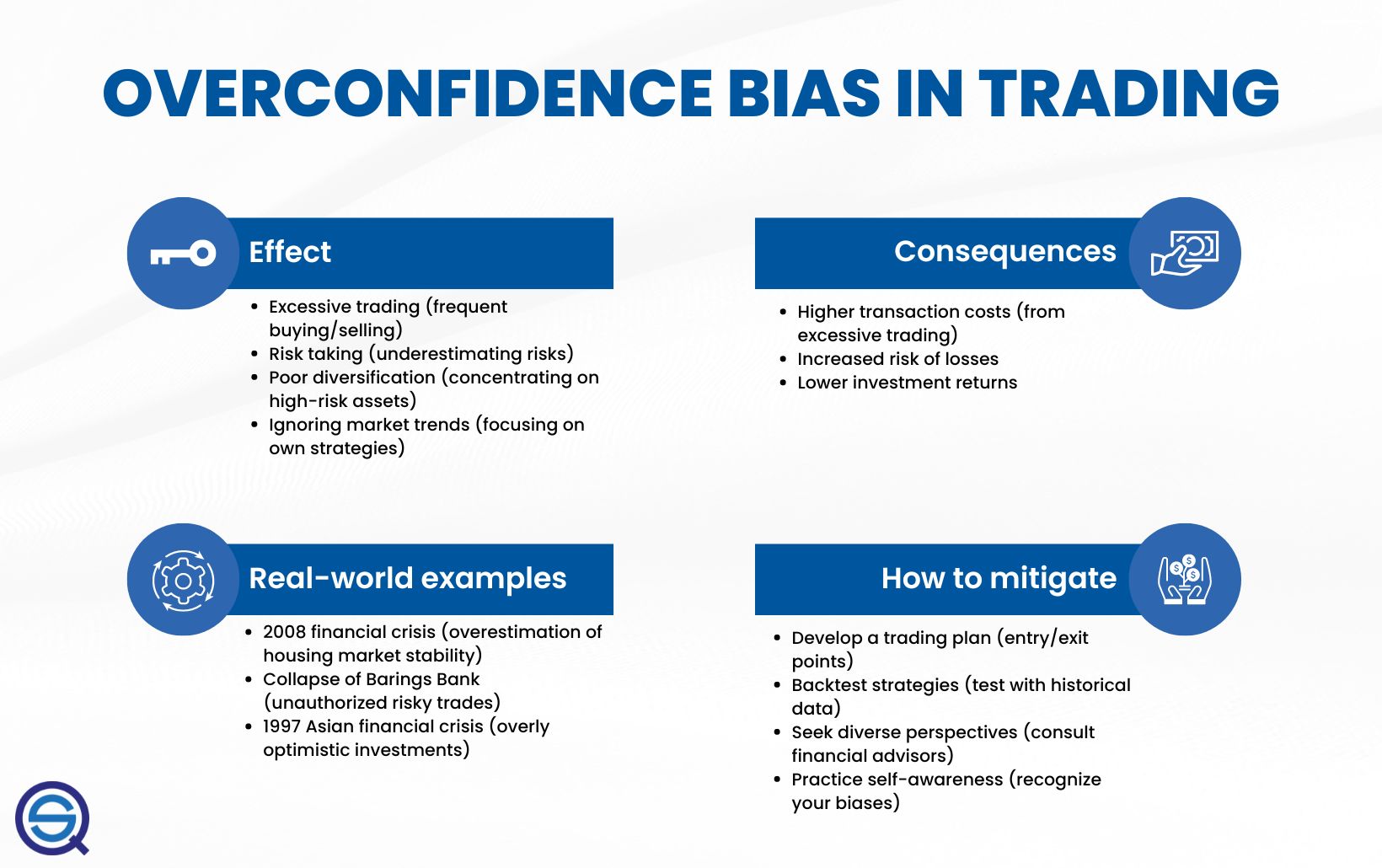
Two compounding loops are easy to miss.
The first is confirmation at machine speed. A user who likes a long thesis asks an AI to “punch holes in it,” then unconsciously accepts the residual bullish paragraphs as independent validation. The second is social-sentiment overlay. FINRA has separately cautioned investors against trading on social-sentiment tools without understanding their limits. When a model blends last week’s 10-Q with this morning’s posts and speaks in one voice, the user cannot see which layer is driving the call.
Mitigation is operational, not motivational:
- Write the trade plan before opening the AI, including invalidation.
- Require the tool to list what would change its mind.
- Cap size on any idea whose key inputs lack timestamps.
- Prefer revision sessions over one-shot “what should I buy” prompts.
- Treat categorical signals from bots and score products as hypotheses, not instructions.
Deloitte has framed hallucination risk in high-stakes financial work as a source of poor decisions, losses, and reputational damage. For an individual account, the reputational damage is personal: a sequence of confident, slightly late decisions that look disciplined in the chat log and random in the blotter.
How Can Investors Verify Whether an AI Stock Tool Is Using Current Data?
You verify freshness by forcing every material number back to a primary source and an as-of time, then seeing whether the tool cooperates or evades. A product that cannot complete that exercise is not “approximate.” It is un-auditable.
A short verification sequence that works across vendors:
- Ask for the clock. “What is the as-of datetime, timezone, and session state for every price and estimate you used?”
- Re-pull the primary. Open the company’s latest 10-K, 10-Q, 8-K, or earnings release on the SEC’s site and match revenue, guidance, share count, and debt.
- Check the tape independently. Compare the tool’s last price and volume with your broker or a market-data page you already trust.
- Stress the gap. If the filing is three days old and the stock moved 9% on a peer print, ask the tool to rebuild the thesis with that move as a given.
- Watch the verbs. Present-tense claims about a print the company has not issued yet are a hard fail.
On Jenova’s Fundamental Stock Analyst, the same sequence is a first-session habit rather than an optional extra:
- Open the agent and state the ticker, the decision, and the required evidence standard.
- Use a prompt that bans unsourced certainty:
“I hold 180 shares of JPM and I am deciding whether to add before the next earnings date. Use only sourced filings, official releases, and clearly dated estimates. Start with data age. Then give valuation versus history and versus peers. End with what you do not know.”
- Save the memo in-session so a later update can diff against it instead of generating a new monologue.
- If the question is actually about trend, volume, or market structure, switch to the Technical Stock Analyst rather than asking a fundamental agent to invent a chart call.
For a terminal such as TrendSpider, verification looks different and should. Confirm that the chart’s timestamp, session, and adjusted/unadjusted setting match the contract you think you are trading, then backtest the rule instead of trusting a single auto-drawn level. For Danelfin or Tickeron, do not “verify the score.” Verify the inputs you can see, and treat the score as a compressed posterior with unpublished assumptions.
If a product answers freshness questions with branding — “powered by AI,” “institutional-grade,” “real-time intelligence” — stop. That language is the same neighborhood the SEC targeted when it said advisers must not claim to use AI models they do not actually use.
When Is a Snapshot AI Report Enough, and When Do You Need a Live Research Session?
A snapshot report is enough when the decision is slow, the inputs are official, and nothing material has printed since the document date; a live session is required when price, news, or positioning can change the thesis before you act. Most disappointment with AI stock tools comes from using a snapshot interface to answer a live question.
Snapshot-friendly work includes reading a 10-K business description, rebuilding a historical margin stack, comparing stated capital-allocation policy across years, or drafting questions for an earnings call. Those tasks are filing-complete. Their truth does not expire at 10:31 a.m.
Live-session work includes trading around a print, sizing into a gap, interpreting an intra-day guidance leak, or updating a portfolio after a sector-wide move. Accuracy reviews of AI stock tools in 2025 already emphasized that results vary with the tool, the data sources, and how the user applies them. That sentence is more precise than it looks. “How it is used” includes whether the user asked a document question or a tape question.
A simple rule of thumb:
- If the invalidation is a sentence in a filing, a dated snapshot can be sufficient.
- If the invalidation is a print, a halt, a Fed speaker, or a peer gap, you need a session that can retrieve again and revise.
- If you cannot tell which of those you are in, assume live until proven otherwise.
Jenova’s design is closer to the live-session side: persistent memory, multi-model access, and search tools that can be invoked again when the facts change. That is an advantage for thesis maintenance. It is not an advantage for someone who wanted a fire-and-forget scanner, and it does not create exchange-native tick history. Trade Ideas and TrendSpider remain more natural when the object is a next-session setup. Danelfin remains more natural when the object is a ranked universe. Matching the object to the interface prevents the Latency-Certainty Gap from opening in the first place.
What Do Market Data Practitioners Say About AI Certainty and Delayed Feeds?
Practitioners who sit between research agents and market data keep returning to the same point: the harmful output is not a wrong adjective, it is a late fact spoken with live-desk grammar.
“The pattern we keep seeing is not that models are incapable of caution. It is that most equity interfaces never ask them for caution. A delayed quote plus a completeness-trained model will produce a paragraph that sounds like a morning meeting note. The user remembers the conviction and forgets that nobody stated the as-of time. In user sessions, forcing an opening line that names data age and missing inputs does more to reduce bad trades than adding another factor to a score.”
“We also see teams confuse model routing with data architecture. Switching from one frontier model to another does not freshen a cached estimate file. If your retrieval layer cannot tell you whether the last print is from the auction, a delayed vendor snapshot, or a weekly digest, the agent is doing literature review, not market analysis. That can still be valuable — but only if the product says so.”
“The other failure is regime silence. When volatility, a halt, or a policy shock takes the tape outside what the features were built on, a calibrated system should widen intervals or refuse the call. Many retail tools do the opposite. They keep the same sentence structure and just swap the ticker. That is how overconfidence gets automated.”
— Jenova Product Team, AI research-agent design, eight years in agent infrastructure for professional workflows
That view lines up with the official record. SEC Chair Gary Gensler’s 2024 statement on the Delphia and Global Predictions cases was explicit: new technology creates buzz, and false claims follow the buzz. It also lines up with the market-structure record. Goehmann’s LSE work argues for more transparency around data quality — timestamps, anomalies, certification — rather than treating the algorithm as the only object of concern. For a retail user, the practical translation is small. Demand the clock. Demand the source. Treat unmatched certainty as a defect.
References
- Aveni — AI hallucinations in financial services, including reported error rates on finance queries
- London School of Economics — Algorithmic trading prevalence, the 2010 Flash Crash, and data-error risk
- Accedia — Financial data quality management and outdated data as a driver of AI hallucinations
- U.S. Securities and Exchange Commission — Charges against Delphia and Global Predictions for false AI claims
- Investor.gov — Investor alert on artificial intelligence and investment fraud
- FINRA — AI applications in the securities industry, including model limits outside training conditions
- WallStreetZen — 2026 comparison of AI stock analyzers, pricing, and product positioning
- Databricks — Definition of AI hallucinations as confident but unsupported output
- ScienceDirect — Overconfidence, information accuracy, trading volume, and utility
- MDPI — Investor overconfidence, excessive trading, and weaker performance
- Investopedia — Overconfidence bias and its effects on trading behavior
- FINRA — Investor alert on social-sentiment investing tools
- Deloitte — Hallucination risk, poor decisions, and financial loss in high-stakes analysis
- Bika.ai — How accuracy varies across AI stock analysis tools, data sources, and usage