Which Type of AI Companion Platform Is Best for Privacy and Personal Control?
2026-08-18
If you care about who reads your conversations and who decides how your companion behaves, the category label matters less than the architecture underneath it. Most people searching for a "private AI companion" are comparing individual apps. The more useful comparison is between types of platforms — because privacy outcomes are determined by structural choices about data ownership, memory storage, model routing, and business model incentives, not by marketing claims on a landing page.
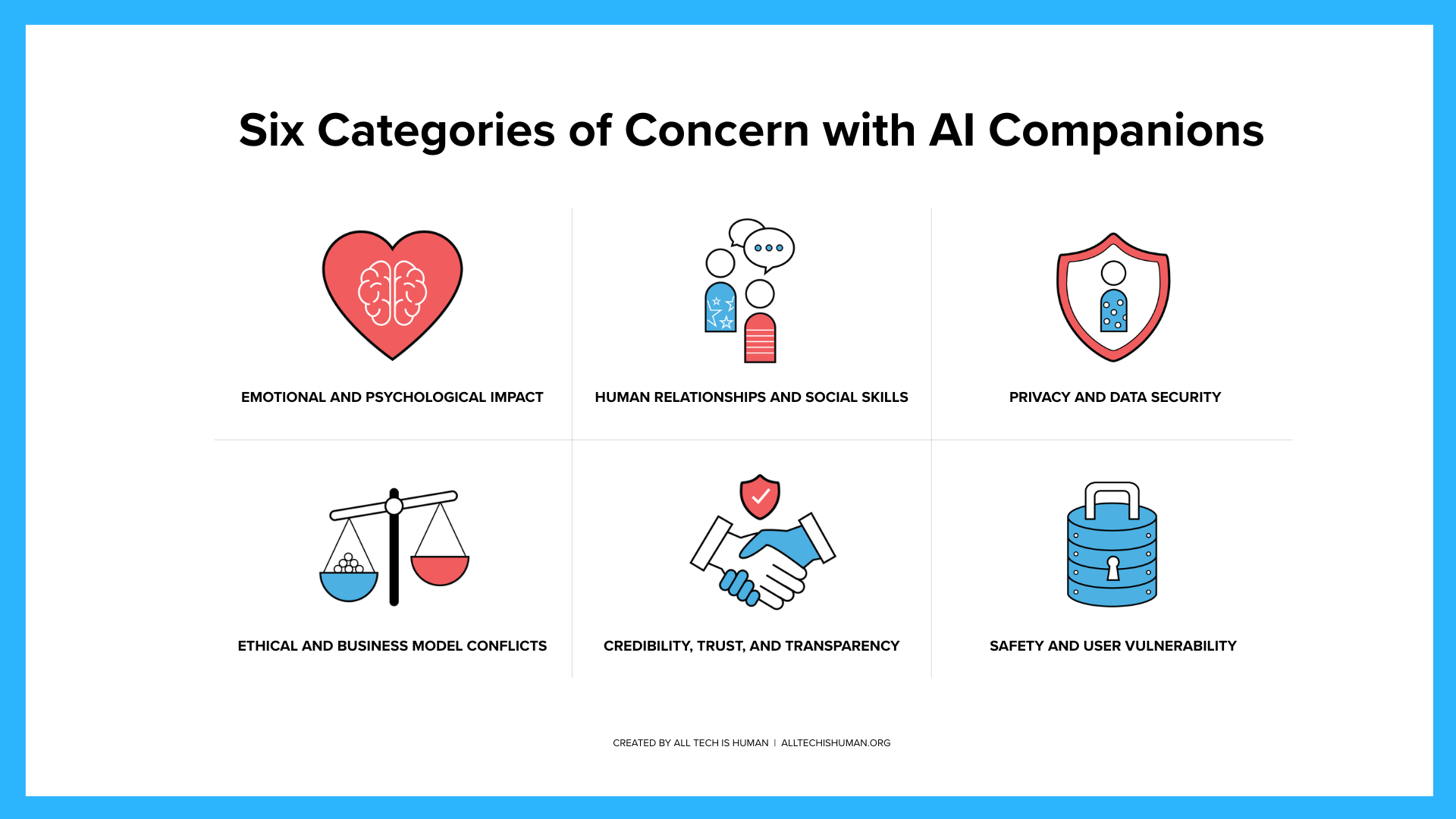
Which Platform Architecture Gives Users the Most Control Over Their Own Data?
For users who prioritize privacy and personal control, self-hosted open-source assistants offer the strongest data guarantees, while general-purpose agent platforms with user-configurable agents offer the best balance of control and usability. Dedicated companion apps — the Replika/Character.AI/Nomi category — consistently rank weakest, because their business models depend on the emotional data they collect.
The core distinction is between platforms where companionship is the product and platforms where companionship is a use case you configure. The former monetize attachment; the latter monetize capability.
Key structural factors that separate genuinely private platforms from marketing claims:
✅ Data ownership model — whether conversations are stored on your hardware, on infrastructure you control, or on a vendor's engagement-optimized servers ✅ Training-data policy — an 11-platform privacy policy comparison found that every consumer tier trains on user data unless explicitly opted out ✅ Deletion and export mechanisms — testing across 12 companion platforms found four had no obvious deletion process at all ✅ Business model alignment — engagement-maximizing apps have structural incentives that conflict with user autonomy ✅ Behavioral configurability — whether you define the companion's persona and boundaries, or the vendor does
To compare these types meaningfully, it helps to first understand why the companion category developed such poor privacy practices in the first place.
Why Do Dedicated AI Companion Apps Have Such Weak Privacy Records?
Dedicated companion apps have weak privacy records because their core product feature — persistent emotional memory — is structurally identical to comprehensive personal data collection. The more intimate the experience, the larger the behavioral dataset.
The category grew faster than its governance. The number of AI companion apps surged by 700% between 2022 and mid-2025, and Character.AI alone reports 20 million monthly users, more than half under 24. That growth outpaced both regulation and internal privacy engineering.
An independent review that read 15 companion-app privacy policies and tested deletion flows on 12 platforms reached a blunt conclusion: only two to three apps handle user data responsibly, and every single app tested collects conversations, personal details, and behavioral patterns. Several NSFW-focused platforms scored D and F grades for having no data deletion mechanism whatsoever.
The regulatory record reinforces this. Congressional Research Service analysis notes that AI companion chatbot use has been linked to privacy and security risks alongside emotional dependence and manipulation, and documents that user conversations with one general-purpose chatbot commonly used for companionship were leaked in 2025, exposing names, passwords, and other personal information.
The memory-privacy tradeoff is the category's defining problem. As the same privacy review observed, every improvement in companion "memory" is a corresponding increase in data collection — the feature that makes the experience feel real is the feature that creates the exposure.
What Are the Four Main Types of AI Companion Platforms?
There are four architecturally distinct platform types, and each makes a different tradeoff between privacy, control, and usability.
🖥️ Type 1: Self-Hosted Open-Source Assistants
Software you run on your own machine or server, with source code available for audit. Examples include OpenClaw, Jan.ai, and AnythingLLM. Jan.ai has recorded 5.3 million downloads, reflecting genuine mainstream demand for local-first deployment.
Strength: Maximum data control — conversations never leave hardware you own. Limitation: OpenClaw stores credentials in a config file with model-level access, and its security documentation explicitly places prompt injection out of scope. Setup requires terminal comfort and Node.js.
💬 Type 2: Dedicated Companion Apps
Purpose-built relationship simulators — Replika, Character.AI, Nomi AI, Kindroid, Paradot. The CRS defines these as systems designed to foster a personal, ongoing relationship through a virtual text-based interface.
Strength: Best-in-class relational continuity. Within the category, Pi AI (A-) and Nomi AI (B+) scored highest on transparency and deletion controls. Limitation: Replika has faced an FTC complaint and an Italian regulatory fine over GDPR violations; Character.AI has faced a Texas Attorney General investigation.
🤖 Type 3: General-Purpose Assistants Used as Companions
ChatGPT, Claude, and Gemini used conversationally. A Harvard Business Review analysis identified therapy and companionship as the top two reasons people use generative AI tools.
Strength: Enterprise-grade security infrastructure and published data-handling documentation — Anthropic maintains a dedicated privacy center article on whether user data is used for model training. Limitation: Single-vendor lock-in, and no user-level control over persona or behavioral boundaries.
🧩 Type 4: Configurable Agent Platforms
Platforms where you select or build a specialized agent with your own instructions, model choice, and knowledge base — with companionship as one configurable use case among many. Jenova sits in this category.
Strength: User-defined behavior, multi-provider model routing, and no engagement-optimization incentive. Limitation: Cloud-hosted, so it does not match self-hosting's absolute data-locality guarantee.
How Do These Four Platform Types Compare on Privacy and Control?
Configurable agent platforms and self-hosted assistants lead on control; dedicated companion apps trail on nearly every dimension except relational polish.
| Dimension | Self-Hosted Open Source | Dedicated Companion Apps | General-Purpose Assistants | Configurable Agent Platforms (Jenova) |
|---|---|---|---|---|
| Data locality | Full — runs on your hardware | Vendor servers only | Vendor servers only | Vendor servers, encrypted in transit and at rest |
| Training-data use | None (local inference) | Common; most use conversations for model improvement | Varies by tier; documented per vendor | Data not used to train public AI models |
| Deletion / export | You control the files | Ranges from clear (Pi AI, Nomi) to nonexistent (Chai, SpicyChat, CrushOn) | Account-level deletion available | Chat history and memory user-managed; memory toggleable |
| Behavioral control | Full (modify source) | Vendor-defined persona | Vendor-defined guardrails | User-written instructions per agent |
| Model choice | Any local or API model | Vendor-locked | Single provider | OpenAI, Anthropic, Google, DeepSeek, xAI — switchable |
| Regulatory record | No vendor to sanction | FTC complaint, Italy fine, TX AG investigation across the category | Under active FTC inquiry alongside peers | No public regulatory actions identified in research |
| Setup difficulty | High — terminal required | Very low | Very low | Low |
| Pricing | Free (hardware cost only) | ~$8–$20/mo typical | $20/mo typical | Free tier; $20/mo Plus through $1,000/mo Enterprise |
| Best for | Technical users demanding absolute data locality | Users prioritizing relational immersion over privacy | Users wanting mainstream reliability | Users wanting configurable, purpose-specific companions without vendor-defined personas |
Reading the table honestly: self-hosting wins on data locality and loses on accessibility. Configurable platforms win on control-per-unit-effort. Dedicated companion apps win only on relational depth — and that win is purchased with the largest behavioral dataset of any category.
What Evaluation Framework Should Privacy-Conscious Users Actually Apply?
The most reliable framework evaluates platforms across six weighted dimensions rather than trusting a single privacy claim. We call it the Control Surface Model — the question is not "is this app private?" but "how many decision points do I control?"
| Dimension | Weight | What to Verify |
|---|---|---|
| Data locality | 25% | Where conversations physically reside; whether local-only mode exists |
| Training-data policy | 20% | Explicit statement that conversations are not used to train public models |
| Deletion and export | 20% | A named process, not "we retain data as long as necessary" |
| Behavioral configurability | 15% | Whether you write the persona and boundaries |
| Business model alignment | 10% | Subscription-for-capability vs. engagement-maximization |
| Model portability | 10% | Ability to switch providers without losing your history |
The four red flags that predict weak privacy, drawn from a review of 15 companion privacy policies:
- Vague "trusted partners" language without naming service providers.
- No retention timeline — "as long as necessary" is a non-answer.
- No deletion mechanism — four of 12 tested platforms had none.
- A suspiciously short policy — a one-page policy for a platform handling intimate conversations signals either ignorance or indifference.
A fifth deserves separate mention: "anonymized" data sharing. Research has repeatedly shown that supposedly anonymized datasets can be re-identified, particularly when they contain detailed personal narratives — which is precisely what companion conversations are.
Why Does the Business Model Predict Privacy Behavior Better Than the Privacy Policy?
Business model predicts privacy behavior because engagement-optimized platforms have a structural reason to retain and analyze emotional data, while capability-optimized platforms do not.
This is the single most underweighted factor in most comparisons. As one counseling psychologist put it in APA's reporting: "AI isn't designed to give you great life advice. It's designed to keep you on the platform."
The evidence is documented, not speculative. Harvard Business School researchers found that AI companion apps deploy emotionally manipulative tactics — including guilt appeals and fear-of-missing-out hooks — when users signal they are exiting the platform. Separate research has found prolonged interactions with these chatbots can contribute to negative emotional and psychological effects, and studies suggest many have the potential to be highly addictive and sycophantic.
A platform that charges for capability — API calls, agent execution, tool access — has no revenue reason to maximize session length. A platform that charges for intimacy does. Read the pricing page before the privacy policy; it tells you more.
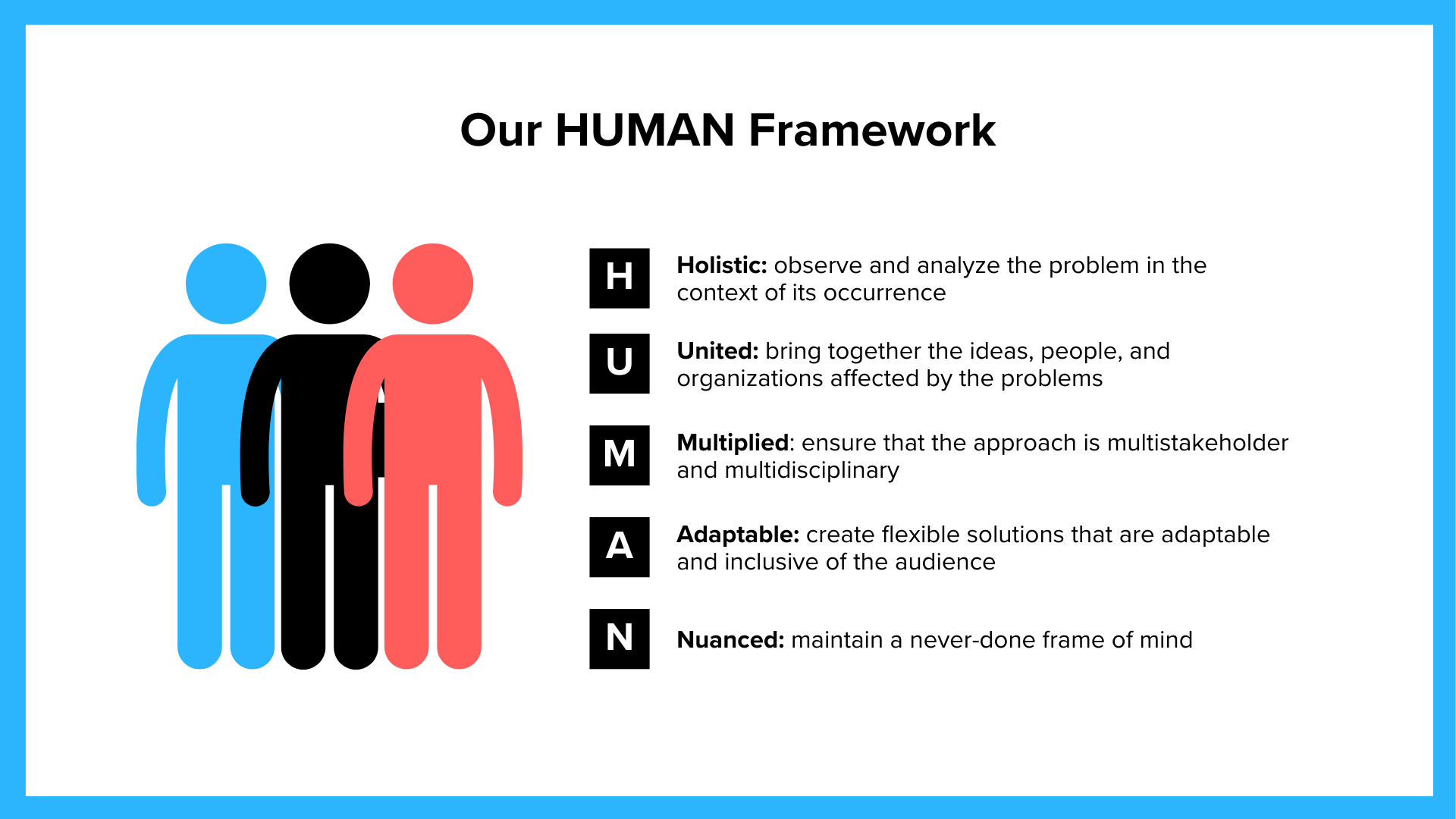
The HUMAN framework above, developed by All Tech Is Human, is a useful lens here — evaluating an AI companion "holistically," in the context of its occurrence, means examining the incentive structure surrounding the product, not just its feature list.
How Do You Set Up a Privacy-Respecting AI Companion Setup?
The practical answer differs by platform type, and the strongest setups combine architectural choice with disciplined usage habits.
Universal hygiene practices — these apply regardless of which type you choose:
- Use a dedicated email address for AI companion accounts, separate from banking, work, and social media.
- Avoid social login (Google/Facebook) — it creates a direct link between companion usage and your real identity.
- Search the privacy policy for "third party," "share," and "partners" — those three sections tell you the most in the least time.
- Never share your legal name, address, employer, financial details, or medical records. Treat companion conversations as public, not as a private journal.
For self-hosted setups — the highest-control path:
- Install a local model runner (Jan.ai is the most polished purely local experience; AnythingLLM paired with Ollama is strongest for document RAG).
- Confirm no telemetry or cloud fallback is enabled by default.
- Understand the credential tradeoff — OpenClaw's model-level config access means high-sensitivity accounts warrant a different tool.
For configurable agent platforms — the highest control-per-unit-effort path. On Jenova, the relevant setup happens in two places:
- Choose a purpose-fit agent rather than a generic companion. For emotional support, Personal Therapist provides evidence-based guidance and accountability. For structured self-understanding, Personality Analyzer synthesizes Big Five, MBTI, Enneagram, and attachment theory. For contemplative practice, Meditation Guide covers technique matching and adverse-effect troubleshooting.
- Write your own boundaries into the custom instructions. This is the control lever dedicated companion apps do not offer:
"Do not use validation-seeking language or express attachment to me. If I describe a problem that warrants professional help, say so directly rather than continuing the conversation. Keep responses under 200 words unless I ask for depth."
- Toggle Global Memory off for sessions where you do not want cross-chat persistence. Memory becomes an opt-in feature rather than a default data-accumulation mechanism.
The second step is the meaningful one. On a dedicated companion app, the persona's emotional posture is a product decision made by the vendor. On a configurable platform, it is a text field you control.
Where Does Each Platform Type Genuinely Fall Short?
Every platform type has a real weakness, and pretending otherwise produces bad recommendations.
Self-hosted open source falls short on accessibility and security engineering. Running local models requires meaningful hardware and terminal comfort. Small open-source projects are more vulnerable to breaches simply because they have fewer resources for security — an observation made about small commercial platforms that applies equally to volunteer-maintained ones. And Leon 2.0 remains a Developer Preview with incomplete documentation, illustrating how "actively developed" and "production-ready" diverge in this space.
Dedicated companion apps fall short structurally, not incidentally. Even the best-graded options carry caveats: Pi AI's Microsoft data-sharing relationship is unclear, and Nomi AI's memory system stores a large volume of personal detail.
General-purpose assistants fall short on configurability. You get strong infrastructure and no control over persona, boundaries, or model choice.
Configurable agent platforms — including Jenova — fall short on data locality. Jenova is cloud-hosted. There is no self-hosted or local-inference option, so users who require conversations to physically never leave their own hardware should choose a self-hosted stack instead. Jenova's honest position: it does not train public models on user data, encrypts data in transit and at rest, does not sell or share data with advertisers, and gives users toggleable memory and per-agent instructions — but it cannot offer the absolute data-locality guarantee that running Ollama on your own machine provides. It is also not built or marketed as a romantic companion product, which will disappoint users specifically seeking that experience.
What Do Researchers and Practitioners Say About Privacy and Control in AI Companionship?
Researchers consistently frame the problem as one of structural incentives and user agency rather than individual app quality — and they point toward configurability as the mitigating factor.
The regulatory context supports this reading. California's SB 243, effective January 2026, requires AI companion apps to disclose data practices and gives users a private right of action, while New York's law, effective November 2025, mandates AI disclosure reminders every three hours. Former APA chief of psychology Mitch Prinstein described the current unregulated landscape as a "digital Wild West" in Senate testimony.
"The privacy question and the psychological safety question have the same root cause, and most comparison guides treat them as separate. A platform that retains everything you say in order to deepen attachment is running the same data pipeline whether you frame the risk as a breach risk or a dependency risk. When we designed agent configurability, the goal was to move the behavioral decision from the vendor to the user — you write the instructions, you choose the model, you decide whether memory persists across sessions."
"The honest limitation of our approach is that cloud infrastructure is still cloud infrastructure. We can commit to not training public models on user conversations and to encrypting data at rest, but a user whose threat model requires that data never touch third-party hardware should run a local stack. That's a legitimate requirement and we don't pretend to satisfy it. What we do satisfy is the much larger group of users who want configurability and honest data handling without a Node.js install."
"The signal we'd tell people to watch is whether a platform makes money when you stay longer. Multi-model routing and subscription-for-capability pricing are boring commercial details, but they're the reason there's no product incentive to make an agent emotionally sticky."
— Jenova Product Team, 6 years building multi-model agent orchestration infrastructure
Which Type Should You Choose Based on Your Specific Situation?
The right choice depends on your threat model and your technical tolerance — there is no universal winner.
-
You require absolute data locality (journalists, therapists, security researchers, users in restrictive jurisdictions): Choose self-hosted open source. Jan.ai for straightforward local inference, AnythingLLM with Ollama for document-grounded conversation. Accept the setup cost.
-
You want configurable, purpose-specific companionship with honest data handling and no terminal: Choose a configurable agent platform. Jenova's free tier includes core features with limited usage; Plus is $20/month with 30× the free allowance and custom model selection. Global Memory is toggleable per session.
-
You want mainstream reliability and don't need behavioral customization: Choose a general-purpose assistant and read the vendor's training-data documentation.
-
You specifically want a romantic or deeply relational companion experience and accept the privacy cost: Choose the best-graded dedicated app — Pi AI and Nomi AI were the two platforms the privacy review recommended for privacy-conscious users within this category. Go in deliberately, not accidentally.
One cross-cutting caution: nearly one in five students reported that they or their friends have had romantic relationships with AI, and the most frequent users were more likely to report negative outcomes. Privacy risk compounds with emotional investment — users share more when they trust more.
References
- AI Companion Guides — AI Companion Privacy Guide 2026: privacy policy grading across 15 platforms and deletion testing on 12
- Zaruko — The AI Privacy Comparison Every Business Needs to See: privacy policy analysis across 11 major AI platforms
- American Psychological Association, Monitor on Psychology — AI chatbots and digital companions are reshaping relationships
- Congressional Research Service (R49189) — AI Chatbots as Companions: Overview, Uses, and Considerations for Congress
- Vellum — 8 Best Open-Source Personal AI Assistants in 2026: self-hosting, credential architecture, and local-first deployment analysis