Which Method Keeps AI Characters Consistent: Regenerating Panels or Using Reference Sheets?
2026-08-14
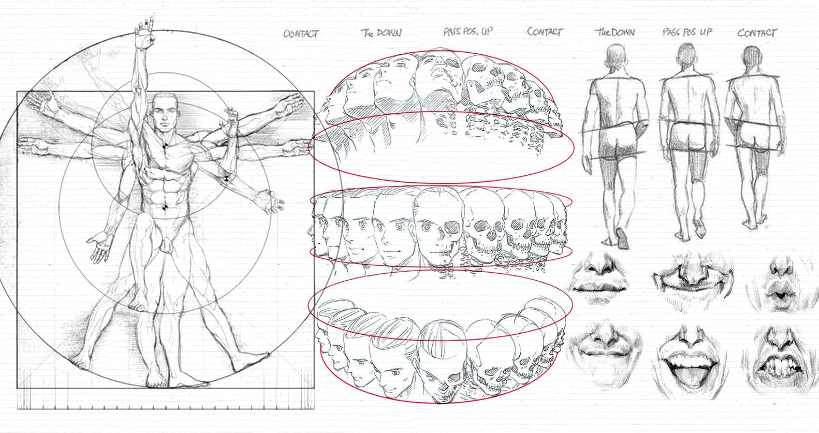
How Do Reference-Anchored and Regenerate-From-Scratch Workflows Differ in Drift Accumulation?
Persistent character reference sheets maintain consistency substantially better than regenerating each panel from a text prompt, because reference-conditioned generation anchors identity to a fixed visual embedding rather than re-sampling it from language every time. Regeneration compounds drift panel by panel — each generation is an independent draw from the model's distribution, so facial structure, costume detail, and proportions wander with no correction mechanism. Reference workflows collapse that variance by feeding the same source image back into every generation.
The measurable gap is documented in academic benchmarking. In the Character-Adapter research from arXiv, reference-conditioned methods scored 84.8% CLIP-I and 68.1% DINO-I on single-character consistency, while training-free approaches without proper regional feature extraction landed as low as 63.8% CLIP-I. Text prompts alone have no consistency score to report — there is no identity anchor to measure against.
Key factors that separate reliable character continuity from panel-to-panel drift:
✅ Identity anchoring — a reference image supplies a persistent visual embedding; a text prompt does not ✅ Drift compounding — regeneration errors are independent per panel, so variance grows across a sequence ✅ Detail resolution — Midjourney's documentation explicitly warns that intricate details like freckles or clothing logos "might not come out exactly right" even with references ✅ Cost asymmetry — reference conditioning carries a compute premium; Midjourney notes Omni Reference costs 2× the GPU time of a standard V7 image ✅ Input quality dependency — reference workflows are only as stable as the source sheet, which shifts the failure point upstream
The trade-off is not consistency versus inconsistency. It is upfront investment and per-image cost versus accumulated correction work later — and the correct answer depends on sequence length, art style, and how much identity precision your project actually requires.
Why Does Regenerating From a Text Prompt Cause Character Drift?
Text prompts underspecify identity. A prompt like "a woman with short black hair and steampunk goggles" describes a category of faces, not a specific face — and each generation samples a different member of that category. Even with an identical prompt and identical settings, changing the seed produces a different person who happens to satisfy the same description.
The problem is structural, not a tuning issue. Diffusion models generate from noise conditioned on a text embedding, and natural language cannot encode the thousands of subtle geometric relationships that make a face recognizable — interocular distance, jaw taper, nostril shape, the precise curve of an upper lip.
Three drift modes appear in regenerate-from-scratch comic workflows:
- Facial identity drift — the most visible failure. Readers detect face changes instantly, even when they cannot articulate what changed.
- Costume drift — buckle count, jacket length, weapon placement, and accessory details vary because prompts rarely enumerate every element.
- Style drift — line weight, rendering density, and color temperature shift between panels, breaking the visual unity of a page.
The community record reflects this. A widely-referenced
exists precisely because prompt-only generation was inadequate for comics, storyboards, and books — every documented method adds some form of visual conditioning on top of text.Practical drift test: Generate the same character prompt eight times at different seeds. Lay the outputs in a grid. If a reader cannot identify them as the same person without being told, prompt-only regeneration will not survive a multi-panel sequence.
What Exactly Is a Persistent Character Reference Sheet, and How Does AI Use It?
A persistent character reference sheet is a fixed visual artifact — typically a turnaround with front, side, and back views plus detail callouts — that gets fed back into every generation as a conditioning input. Traditional animation has used model sheets for decades to keep a character on-model across hundreds of drawings by different artists; AI workflows repurpose the same artifact as a machine-readable identity anchor.
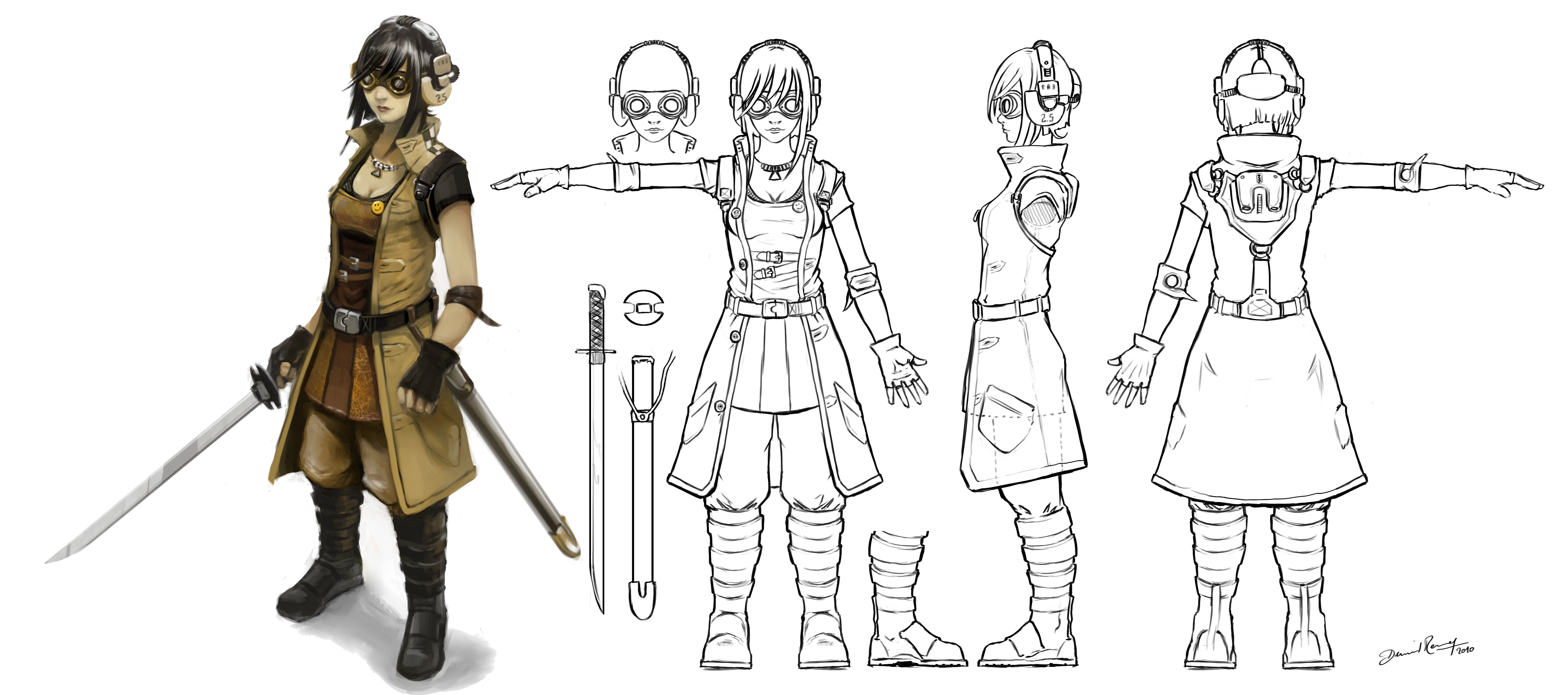
The technical mechanism differs by platform, but the pattern is consistent:
- Image-embedding injection — the reference is encoded and injected into the diffusion process alongside the text embedding. Tencent's IP-Adapter established this as "an effective and lightweight adapter to achieve image prompt capability for the pre-trained text-to-image diffusion models."
- Regional feature extraction — more advanced approaches segment the reference into regions (face, attire, accessories) and condition each separately. Character-Adapter uses prompt-guided segmentation with dynamic region-level adapters specifically to prevent "concept confusion," where the model blends attributes across characters or objects.
- Named reference tagging — commercial platforms let you save and recall references by name. Runway's Gen-4 References supports up to three active references per generation and lets you invoke them inline with an
@symbol in the prompt.
📋 What Belongs on a Reference Sheet for AI Use
AI-oriented reference sheets differ from human-artist model sheets. Runway's documentation recommends natural, even lighting, moderate quality, and a neutral subject expression — creating a "blank canvas" that simplifies transformation. Dramatic lighting or an extreme expression baked into the reference propagates into every downstream generation.
Recommended components:
- Neutral front view — evenly lit, neutral expression, the primary identity anchor
- Three-quarter and profile views — supports off-angle panels
- Full-body shot — Runway notes that describing shoes or pants in the prompt reliably triggers full-body framing
- Costume detail callouts — isolated crops of accessories, weapons, insignia
- Style-locked rendering — the reference should match your target art style, not a photoreal baseline
How Do the Major Character Consistency Tools Actually Compare?
No single tool wins across all dimensions — the right choice depends on whether you prioritize style fidelity, reference precision, or workflow control. Midjourney offers the strongest stylistic coherence with the weakest external-reference handling; Runway offers the most flexible multi-reference composition; open-source stacks offer the most control at the highest setup cost.
| Dimension | Midjourney | Runway Gen-4 References | Leonardo.Ai | Open-Source (ComfyUI + IP-Adapter) |
|---|---|---|---|---|
| Reference mechanism | Character Reference (--cref) in V6/Niji 6; Omni Reference in V7+ | Up to 3 tagged references per generation, invoked with @name | Character Reference and Image Guidance options | IP-Adapter, FaceID, ControlNet, LoRA — composable |
| Consistency strength dial | --cw 0 (face only) to --cw 100 (face, hair, clothing) | Iterative reference pathways; outputs become new references | Adjustable guidance weight per reference | Full weight and layer control per adapter |
| External photo handling | Weak — that it "works GREAT with MJ-made characters" but poorly with third-party references | Strong — designed for uploaded photos with even lighting | Moderate | Strongest with FaceID variants |
| Compute premium | Omni Reference costs 2× GPU time vs. standard V7 image | Credit-based per generation | Image Guidance costs 2 tokens per option on a 12-token base, per Leonardo's help center | Local GPU time only |
| Multi-character scenes | Limited — concept confusion common | Supported via multi-reference | Limited | Strong with regional conditioning |
| Pricing | Subscription tiers | Standard plan from $15/month with 625 credits, per third-party analysis | Paid tier from $12/month with 8,500 tokens (~340 images), per Sonary's review | Free software; hardware cost |
| Setup time to first consistent panel | Minutes | Minutes | Minutes | Hours to days |
| Best For | Stylized comics where art direction matters more than exact likeness | Cinematic sequences and scene-consistent b-roll | Budget-conscious volume work | Technical creators needing precise, repeatable control |
Pricing and feature details reflect publicly available information at the time of writing and change frequently.
Honest limitations across all reference-based tools:
- Midjourney's documentation is explicit that the model "uses Image Prompts and references as inspiration to guide new creations, not to copy them exactly." Reference conditioning reduces drift; it does not eliminate it.
- IP-Adapter is frequently misapplied. A notes bluntly that IP-Adapters "are not meant to create consistent characters" in isolation — they transfer visual style, and character-specific variants like FaceID are required for identity locking.
- Character-Adapter's own paper acknowledges that "in scenarios involving extremely complex clothing patterns, our model may not fully preserve the original details."
When Is Regenerating From Scratch Actually the Better Choice?
Regenerating from scratch is the right call for exploratory work, single-image output, and any project where you have not yet locked a character design. Reference conditioning constrains the output space by design — that is its purpose — which makes it actively counterproductive during ideation.
Regeneration wins in four specific scenarios:
- Design exploration. You are searching for a character, not reproducing one. Running twenty seeds on a loose prompt surfaces options a reference sheet would suppress.
- Single-panel or standalone illustration. With no sequence, there is nothing to drift against. The reference-conditioning compute premium buys nothing.
- Crowd and background characters. Variation is the goal. Locking every background figure to a reference produces uncanny cloned extras.
- Heavily stylized art where likeness tolerance is wide. Chibi, minimalist, and heavy-abstraction styles have fewer identity-carrying features, so prompt-only generation drifts within a range readers accept.
The Hybrid Pattern Most Professional Workflows Actually Use
In practice, experienced creators rarely choose one method exclusively. The dominant workflow is a two-phase pattern:
- Phase one — regenerate freely to discover the character. No references, high seed variation, wide prompt latitude.
- Phase two — lock and anchor. Select the strongest output, generate a turnaround from it, save it as a named reference, and switch entirely to reference-conditioned generation for the production sequence.
Runway's documentation describes exactly this iterative pattern: hover over any output, select "Reference for image," and the generated result becomes the new anchor. Their guide walks through saving an intermediate output as fullbodyelfbryan and continuing from there — the reference sheet is not a static input but a living artifact that gets refined as the sequence progresses.
A refinement most guides omit: when your reference image already contains a subject and you want to composite a different character into that scene, Runway recommends covering the existing face with a black box in a photo editor before uploading. This prevents the model from confusing the original subject with the intended one — a small preprocessing step that eliminates a common and confusing failure mode.
What Are the Real Cost and Time Trade-Offs Between the Two Approaches?
Reference sheets cost more upfront and more per generation, but dramatically less in rework — and the crossover point arrives faster than most creators expect, typically somewhere between 5 and 10 panels.
Cost structure comparison:
| Cost Component | Regenerate From Scratch | Persistent Reference Sheet |
|---|---|---|
| Setup investment | Near zero | 1-3 hours building and validating the sheet |
| Per-generation compute | Base rate | 2× on Midjourney Omni Reference; +2 tokens per guidance option on Leonardo |
| Rejection rate | High — most outputs fail identity match | Low — most outputs are usable or near-usable |
| Rework cost | Grows with sequence length | Roughly flat |
| Failure mode | Silent drift discovered at assembly | Visible mismatch at generation time |
The rejection rate is the dominant variable and the one creators most often miscalculate. If prompt-only regeneration produces one on-model panel in eight, you are paying eight base-rate generations per usable panel. Reference conditioning at 2× cost with a one-in-two hit rate is cheaper per usable output — before counting the labor of reviewing and discarding rejects.
The second-order cost is discovery timing. Prompt-only drift is often invisible panel by panel and only becomes obvious when panels sit side by side on a finished page. At that point the fix requires regenerating panels that already passed individual review, plus re-matching lighting and composition to neighbors. Reference workflows surface identity mismatches at the moment of generation, when correction is cheapest.
There is a genuine counter-argument. Character-Adapter's benchmarking found that fine-tuning approaches like LoRA required 1,050 seconds of setup compute versus 7.2 seconds for training-free reference conditioning — a 70× efficiency gap. Heavy reference infrastructure has real cost, and for short sequences the setup may never amortize.
How Do You Build and Deploy a Reference Sheet That Actually Holds?
Build the sheet in the same art style as your final panels, generate it from a single locked output rather than assembling views from separate generations, then validate it against a hard test sequence before committing to production.
Step-by-Step: Reference Sheet Construction
- Lock a hero image. Run prompt-only exploration until one output nails the character. This becomes the seed for everything downstream.
- Generate the turnaround from the hero image, not the prompt. Feed the hero image back as a reference and prompt for side, three-quarter, and back views. Generating views independently from text produces three different characters.
- Normalize lighting and expression. Follow Runway's blank-canvas guidance: even lighting, neutral expression, moderate quality. Bake nothing in that you do not want in every panel.
- Add costume detail crops. Isolated close-ups of accessories, weapon designs, and insignia give the model explicit targets for the details that drift first.
- Save and name the reference. In Runway, hover the image, click tag to save, and enter a name — otherwise the reference is session-temporary and disappears on browser refresh.
- Run a validation gauntlet. Generate the character in five deliberately hostile conditions: extreme close-up, full-body wide shot, back three-quarter, dramatic side lighting, and heavy action pose. If identity holds across all five, the sheet is production-ready.
Deploying the Sheet in a Panel Workflow
Once the sheet is validated, panel generation follows a repeatable pattern. On platforms with named references, invoke the character inline and describe only the scene:
"@marisa standing at the edge of a rain-slicked rooftop at night, city lights below, three-quarter view from behind, dramatic backlighting"
Two prompting rules matter more than any other:
- Do not re-describe the character. Midjourney's docs give the exact contrast: a bad prompt re-specifies "a man with blue hair and gold glasses sitting in a cafe," while a good prompt says "illustration of a man sitting alone in a cafe." Re-describing physical traits creates conflict between text and image conditioning.
- Do describe everything else in detail. Midjourney's guidance is explicit that text "is just as important for conveying the full scene and additional details beyond what the reference image shows."
🎯 Tuning the Consistency Dial
Midjourney's character weight parameter is the clearest example of a control most creators leave at default. At --cw 100, the model pulls face, hair, and clothing from the reference. At --cw 0, it focuses almost entirely on the face.
Practical mapping:
--cw 100— panels where the character wears the same outfit as the reference--cw 0to--cw 30— costume changes, time skips, alternate wardrobe where only the face must persist
Creators who report that reference conditioning "fights" their costume changes are usually running at default weight when a low weight is correct.
For creators working inside conversational AI platforms rather than dedicated image tools, agents like the Comic Creator, Manga Creator, and Webtoon Creator on Jenova handle sequential art with persistent cross-session memory, which keeps character descriptions and established design decisions available across a long project rather than requiring re-specification each session. The trade-off is less granular parameter control than a dedicated image platform — you cannot set a character weight value directly. Available at jenova.ai; the free tier includes limited daily usage, with paid plans starting at $20/month.
What Do Practitioners Say About Reference Sheets in Production Pipelines?
Practitioners consistently report that the reference-versus-regeneration debate is settled in favor of references for any sequence work, but that the real skill has shifted from prompt writing to reference curation.
"The framing most people bring to this question is backwards. They ask which method produces better consistency, when the actual variable is how many panels you're shipping. Under three panels, regeneration is fine and references are overhead. Past ten, prompt-only workflows have a rejection rate that makes them economically indefensible — you're paying for eight generations to get one usable panel, and you don't discover the failures until you assemble the page."
"The failure we see most often isn't tool choice, it's reference quality. Creators build a sheet from a dramatically lit hero shot with a strong expression, then wonder why every panel has the same lighting and the same half-smile. The reference is a constraint surface — everything baked into it propagates. Neutral lighting and neutral expression aren't aesthetic preferences, they're technical requirements."
"The other underused lever is consistency weight. Midjourney gives you a dial from 0 to 100 and almost nobody touches it. If your character changes outfits in act two, running at full character weight means you're fighting the reference on every generation. Drop it to face-only and the conflict disappears. The tools already solved this problem — the knowledge gap is on the creator side."
— Jenova Product Team, 6 years building creative AI agent workflows
Which Approach Should You Choose for Your Specific Project?
Match the method to sequence length and identity tolerance — those two variables determine the answer more than tool preference or budget.
Choose regenerate-from-scratch when:
- Producing 1-3 images total
- Exploring character design before locking
- Generating background or crowd figures where variation is desirable
- Working in a heavily abstracted style with low identity resolution
- Operating on a strict per-generation budget with high style tolerance
Choose persistent reference sheets when:
- Producing 5+ sequential panels
- The character's face appears in close-up
- The project spans multiple sessions or multiple contributors
- Costume and accessory detail carries story weight
- The output is client work with revision expectations
Choose the hybrid pattern when:
- The character is not yet designed but the sequence is long — nearly every serious comic, storyboard, or illustrated book project
A useful decision heuristic: if you would notice the character changing between any two images in the set, use a reference. If you would not, do not pay the premium.
The one genuinely contrarian position worth stating: reference sheets are frequently overapplied to projects that do not need them. A four-panel social media strip in a flat, minimal style will read as consistent from prompt-only generation, and the hours spent building a validated turnaround produce no visible improvement. Consistency is a means to reader immersion, not an end in itself — and past a certain threshold, additional consistency is invisible.
References
- Character-Adapter: Prompt-Guided Region Control for High-Fidelity Character Customization — arXiv research paper with CLIP-I, DINO-I, and efficiency benchmarks
- Midjourney Documentation — Character Reference parameter, character weight, and best practices
- Midjourney Documentation — Omni Reference GPU cost
- Runway Help Center — Creating with Gen-4 Image References, reference tagging and iteration workflow
- Leonardo.Ai Help Center — Image Guidance token costs
- Tencent AI Lab — IP-Adapter repository and technical description
- Wikipedia — Model sheet, traditional animation character reference standards
- Kie.ai — Runway Gen-4 plan tiers and credit allocation analysis
- Sonary — Leonardo.AI Image Generator review, plan pricing and token allocation