Which AI Stock Research Tool Is Best for Pre-Earnings Prep?
2026-08-23
How Do AI Tools Compare on Consensus Maps, KPI Tracking, and Pre-Earnings Risk Scenarios?
For organizing street expectations, the operating metrics that actually move a print, and explicit bull, base, and bear paths, a conversational fundamental analyst with persistent memory is usually the strongest fit for individual investors and small research teams in 2026. Jenova's Fundamental Stock Analyst is built for earnings analysis, relative valuation, and estimate context across SEC filings and street numbers. Fiscal.ai (formerly FinChat) is stronger when you want a dedicated KPI-and-segment terminal, and AlphaSense is stronger when licensed broker research and expert calls are the constraint.
Key factors that separate a usable pre-earnings brief from a generic AI stock chat:
✅ Consensus fidelity — earnings per share (EPS), revenue, and segment estimates tied to a known vintage
✅ KPI materiality — the three to five operating metrics management and the street actually debate
✅ Scenario completeness — quantified bull, base, and bear cases with invalidation levels
✅ Source traceability — every material number linked to a filing, transcript, or estimate set
✅ Reusable memory — the brief survives into the print and the post-call recap
Those five tests are the rest of this guide. The comparison below uses them as a single scorecard rather than a feature-list beauty contest.
Why Does Pre-Earnings Organization Matter More in 2026 Than a Generic Stock Screen?
Pre-earnings work now fails less from missing data and more from unorganized data: estimates, transcripts, guidance, and risk language arrive faster than most investors can structure them. Corporate AI investment reached $252.3 billion in 2024](https://hai.stanford.edu/ai-index/2025-ai-index-report/economy), and [generative AI alone attracted $33.9 billion in private investment in the latest Stanford AI Index cycle. Research platforms absorbed that spend as document search, copilots, and scoring models.
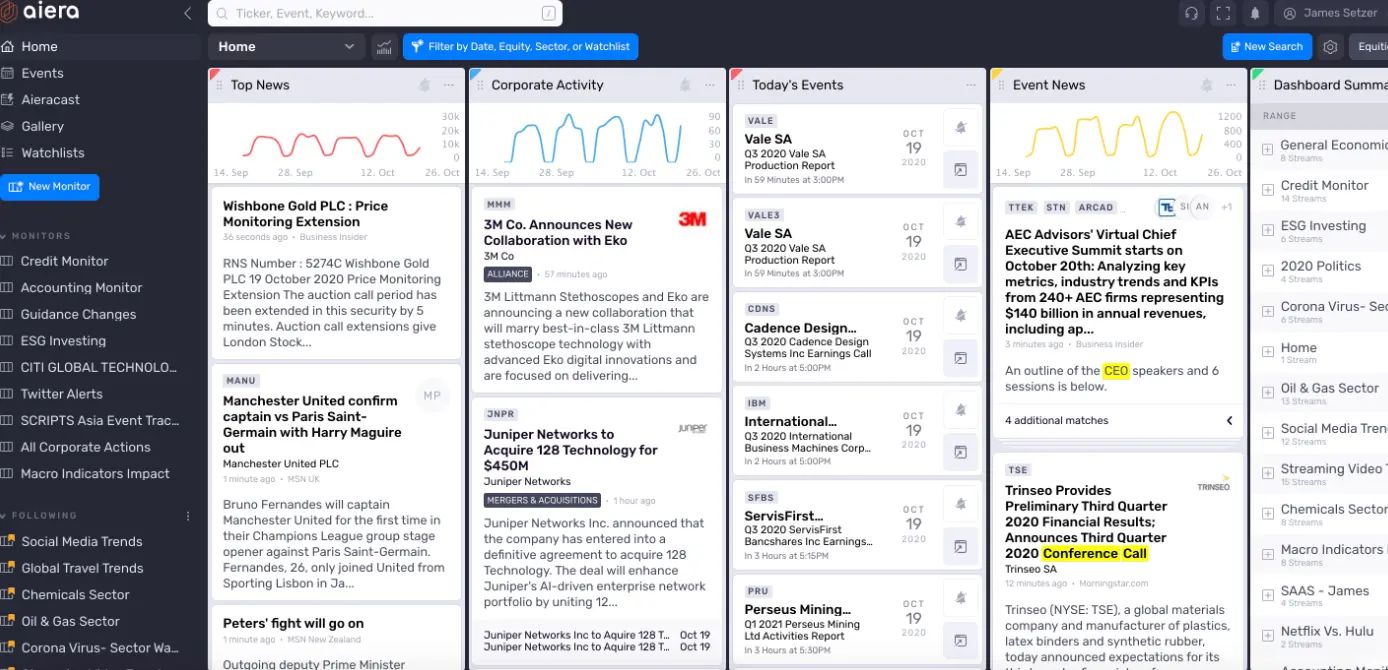
The practical problem is narrower. Amundi's 2025 review of AI in investment research highlights scenario modelling and structured data analysis as the useful layer, not stock picking. A screen can rank names. It cannot tell you whether a beat is already in the price, which KPI the call will hinge on, or what a miss does to the thesis.
NerdWallet's stock-research checklist still starts with understanding the business and the financials. Earnings week compresses that work into a few days. Investors who only ask “will they beat?” skip the organization step that determines position size, hedge choice, and whether to wait for the call.
The U.S. Securities and Exchange Commission (SEC) also treats risk language as investor-facing disclosure, not boilerplate. Harvard Law's review of SEC risk-factor rules stresses material risks — the ones a reasonable investor would actually weigh. A pre-earnings tool that cannot extract those risks into scenarios is only a news reader.
What Should You Look for in an AI Tool Built for Earnings Prep?
You should score a tool on six dimensions: consensus fidelity, KPI materiality, scenario completeness, source traceability, session persistence, and cost-to-coverage. This Earnings Brief Scorecard is more useful than asking which product has the longest feature list.
Consensus fidelity. Estimates must show the number, the period, and the vintage. Baruch College's earnings guide notes that institutional datasets such as FactSet carry actuals and consensus for more than 16,000 companies and link estimates back to sources. An AI answer that says “the street is at $1.20” without a date is not research.
KPI materiality. Revenue and EPS are the headline. The stock often moves on bookings, same-store sales, billings, utilization, net interest margin, or a single segment. QVeris's 2026 comparison of AI research tools treats source lineage, definition changes, and estimate dates as first-order tests for that reason.
Scenario completeness. Investopedia defines scenario analysis as estimating expected value across distinct cases, including worst-case and best-case paths. A pre-earnings brief needs a base case, a beat path, a miss path, and the condition that invalidates the thesis.
Source traceability. QVeris argues that high-stakes research should use AI to gather evidence, not replace the original document. Citations, filing dates, and period labels matter more than fluent prose.
Session persistence. Earnings work is a sequence: preview, print, call, revision. Tools that forget the preview force you to rebuild the brief after the release.
Cost-to-coverage. AlphaSense is built as an enterprise content system. Conversational terminals and agent platforms sit at a different price point. Match spend to whether you need licensed broker research or a structured brief.
A tool can win one dimension and still be the wrong pre-earnings desk. Danelfin is strong at ranking and weak at writing a three-scenario memo. AlphaSense is strong at documents and expensive if you only need one name's preview.
Which AI Stock Research Tools Handle Expectations, Metrics, and Scenarios Best?
Jenova's Fundamental Stock Analyst is the most complete conversational option for turning estimates, KPIs, and risk language into a reusable earnings brief, while Fiscal.ai, AlphaSense, TIKR, and Danelfin each win a narrower job. Independent 2026 roundups now treat these products as different research jobs, not interchangeable “AI stock apps.”
| Feature / Dimension | Fiscal.ai | Jenova Fundamental Stock Analyst | AlphaSense | TIKR | Danelfin |
|---|---|---|---|---|---|
| Consensus & estimates | Global public-equity estimates and comparisons | Earnings analysis against street estimates and filings | Standardized statements and consensus across 19,000+ public companies | Financials, ratios, and estimates with a valuation builder | Not the core product; scores sit on top of mixed signals |
| KPI / segment maps | Company-specific KPIs, segments, and IR content | Narrative KPI map tied to what management and the street debate | Sector KPIs via 4,500+ Canalyst models | Standardized statements and custom models | Feature-level explainability for the AI Score, not a management KPI tree |
| Risk scenarios | Fast comparisons; scenario depth depends on the user prompt | Explicit bull / base / bear briefs with invalidation language | Document-grounded risk extraction from filings, calls, and broker notes | Hands-on valuation cases the user builds | Score upgrades and downgrades, not thesis scenarios |
| Source grounding | Auditable data published minutes after earnings | Filings, estimates, news, and cited web research | Licensed library of 500+ million documents | Filings, transcripts, news, holdings | Model features rather than primary-document packets |
| Memory / reuse | Dashboards and saved research inside the terminal | Persistent cross-session memory of the preview and prior prints | Workspaces, watchlists, scheduled agents | Models and screens saved by plan | Portfolio score monitoring and alerts |
| Pricing (as of 2026) | Unverified on public pages reviewed here | Free tier with limited usage; Plus $20/month for 30× usage | Custom / enterprise, quoted by seat and content | Varies by market-history and export plan; confirm on site | Public marketing emphasizes scores and portfolios; plan details unverified here |
| Best for | Conversational fundamentals and KPI lookup | Organizing expectations, metrics, and risk scenarios before a print | Professional document intelligence and licensed research | Global valuation models you want to edit | Quantitative ranking and a second-opinion score |
Fiscal.ai
Fiscal.ai is strongest as a conversational fundamental terminal. The product combines global financials, estimates, ownership, investor-relations content, charts, screeners, and an AI copilot. Its data pipeline is designed to publish auditable numbers minutes after a filing, which matters when you are refreshing a model during earnings week.
The limitation is structural. QVeris flags coverage of the exact KPI, source lineage, definition changes, estimate dates, and export limits as the items to test. Fiscal.ai will answer “what was last quarter's billings?” quickly. It will not automatically write a three-path risk memo unless you impose that workflow.
Jenova Fundamental Stock Analyst
Jenova's agent is strongest when the job is a brief, not a terminal. It is built for earnings analysis, relative valuation, business-model assessment, and live context from filings, estimates, and sentiment. On the Jenova platform it keeps unlimited chat history and persistent memory, so the preview, the print, and the call recap stay in one thread.
It also sits next to related agents a pre-earnings desk actually uses. Jenova's Portfolio Management Strategist can stress-test position size and scenario impact after the single-name brief is done. That pairing is closer to how a buy-side morning meeting works than a standalone score or a document search box.
The honest limitation is content breadth. This is not a licensed broker-research library, and it does not ship 4,500 institutional models or a native Excel add-in. Users who need Goldman or Morgan Stanley notes, expert-network transcripts, or Canalyst operating models still need a document terminal. Users who need a dated consensus map, a KPI tree, and written downside cases usually do not.
AlphaSense
AlphaSense is strongest when the scarce resource is premium content. It licenses and curates its own universe rather than stitching third-party connectors, including more than 1,700 broker sources and 280,000+ expert interviews. Earnings-season features such as Smart Summaries turn a transcript into takeaways, Q&A themes, and critical topics in minutes.
The trade-off is fit and cost. Pricing is customized by seats and organization, and collaboration is limited to licensed users. Visualization tools were still described as limited to beta in AlphaSense's own 2026 product review. If you cover one or two names and do not buy sell-side research, you will pay for a library you barely open.
TIKR
TIKR is strongest for global standardized financials, estimates, screening, ownership, and a custom valuation builder. That is the right shape if your pre-earnings work lives in a model: change the growth rate, watch the multiple, and save the case.
Plan-specific market history, update timing, transcript coverage, model assumptions, and export rights are the constraints to test. TIKR will not, by itself, interview a 10-K risk section and produce a written invalidation memo. It assumes you already know how to turn numbers into cases.
Danelfin
Danelfin is a scoring and ranking system used by more than 150,000 investors. The firm reports that U.S. stocks with a 10/10 AI Score outperformed the market by 21.05% on average after three months (annualized alpha) since 2017, while 1/10 scores underperformed by 33.28%. It also publishes an explainable-AI view of the features behind each score.
Those figures are the vendor's own track record, not an independent audit, and QVeris warns that scores depend on features, labels, horizon, and backtest design. Danelfin is a useful second opinion on whether odds are improving into the print. It is a weak primary tool for organizing expectations and writing risk scenarios.
How Does an AI Analyst Turn Consensus Estimates Into a Usable Earnings Brief?
A usable brief has four dated blocks: the street tape, the company tape, the gap, and the questions the call must answer. Anything less is a summary of last quarter.
Start with the street tape. Pull consensus EPS, revenue, and the two or three segment or KPI estimates that matter for that business. Record the source and the as-of date. Then pull the company tape: prior-quarter actuals, current guidance, and any mid-quarter commentary. The gap is not “beat or miss.” It is where guidance, consensus, and recent operating data disagree.
Jenova's Fundamental Stock Analyst is built for that sequence because earnings analysis is the core job, not an add-on chat window. A tight opening prompt looks like this:
“Build a pre-earnings brief for ticker X, next report date Y. Table consensus EPS, revenue, and the three most material operating KPIs with source and estimate date. Compare those figures to company guidance and the last two reported periods. List the three questions the call must answer for the current thesis to survive.”
Fiscal.ai is the cleaner alternative when you already know the KPI names and want the terminal's standardized series. Ask for the KPI, the segment breakout, and the estimate history, then paste those figures into your own scenario sheet. QVeris's caution still applies: confirm definition changes and estimate vintage before you treat a copilot number as the street.
AlphaSense changes the order. You search the last three transcripts and the latest 10-K first, then let Smart Summaries and sentiment tools show what analysts already argued about. That is the right workflow when broker language is the consensus, not when you only need a public-market preview.
Two quality checks prevent a fluent but empty brief:
- Every headline number has a period, a unit, and a source.
- Every “beat” claim states what is already priced — multiple, implied move, or recent revision — not just the raw cent difference.
How Should You Model Bull, Base, and Bear Cases Before the Print?
You should write three numerically distinct cases and one invalidation line before you care about the headline beat. Scenario analysis exists to estimate value across those paths, including a worst case, not to decorate a bullish paragraph with a risk sentence.
A practical pre-earnings case set uses the same three drivers in every path:
- The consensus gap on revenue and EPS
- The one or two KPIs that historically move the multiple
- The balance-sheet or guidance item that changes the following quarter, not just the print
The base case should be “in-line on the numbers the street is actually using,” not “the company is a good business.” The bull case should specify which KPI surprise forces a revision, not a higher price target pulled from nowhere. The bear case should name the miss that breaks the thesis — a covenant issue, a demand roll-over, a guidance cut, or a quality-of-earnings problem disclosed in material risk factors.
Jenova's Portfolio Management Strategist is the natural second step after the single-name cases exist. It is built for allocation analysis, drift, risk assessment, and scenario stress tests. Once the Fundamental Stock Analyst has written the three paths, you can ask what a bear print does to position size, factor exposure, and correlated names.
TIKR is the better home if your cases live in a DCF or reverse DCF you want to edit cell by cell. Its custom valuation builder is the product. Danelfin is not a scenario engine; a score change can confirm that odds shifted, but it does not tell you which assumption broke.
A complete case block, in any tool, should end with a single invalidation sentence:
“The thesis is wrong if organic growth is below X, if guidance implies full-year Y, or if the 10-Q shows working-capital cash conversion below Z.”
Without that line, you have opinions. You do not have risk scenarios.
How Do You Run a Complete Pre-Earnings Workflow With an AI Research Agent?
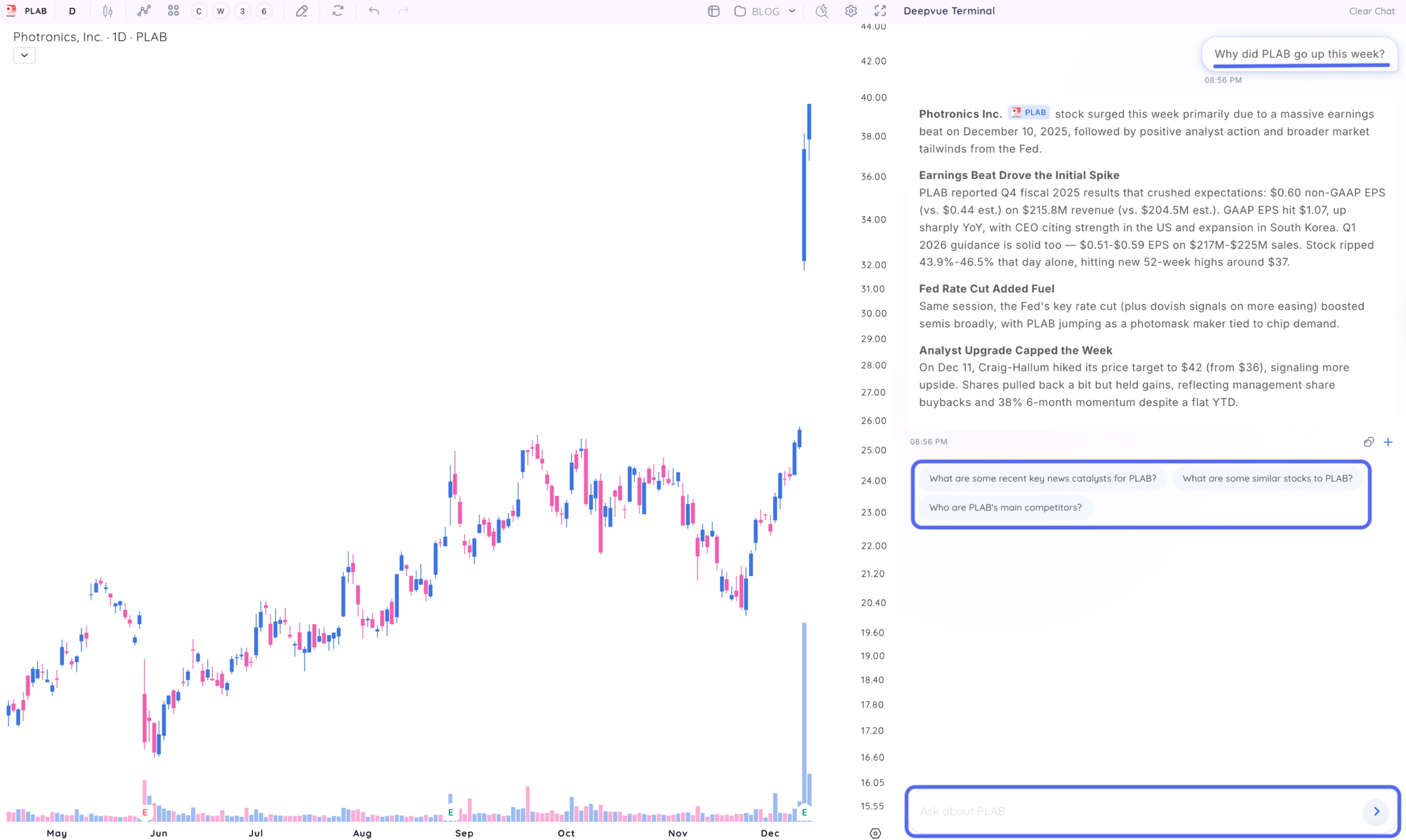
Most complete workflows take one sitting before the print and a shorter sitting after the call: lock the tape, write the cases, size the risk, then grade the actuals against the brief you already saved.
For Jenova's Fundamental Stock Analyst, the sequence is:
- Open the agent and name the ticker, report date, position, and time horizon.
- Force a structured tape:
“Using the latest filings and current consensus, output a table of revenue, EPS, gross margin, and the two KPIs this stock has historically moved on. Include source and as-of date for every cell.”
- Convert the tape into cases:
“Write bull, base, and bear paths using only the drivers in that table. Quantify the print, the likely guidance reaction, and the invalidation level for each path.”
- Keep the same thread through the release so the agent grades actuals against the preview instead of writing a new story.
- If the name sits inside a book, hand the three paths to the Portfolio Management Strategist for stress tests and rebalancing notes.
For Fiscal.ai, replace steps 2 and 3 with the copilot plus the terminal's KPI pages. Pull the standardized series first, export or screenshot the table, then ask the copilot to explain period-over-period changes. Do not let the chat invent a KPI the company does not report.
For AlphaSense, start in monitoring and Smart Summaries. Set the company and peer set on alert, read the last two Smart Summaries, then run a document search across the 10-K risk factors and the last earnings Q&A. That workflow is slower to set up and much stronger when you must show a compliance-friendly source trail.
Two process rules keep any of these desks honest:
- Save the preview before the print. A brief written after the number is a narrative, not a forecast.
- Reconcile every surprise to a cell in the original table. If you cannot point to the missed KPI, you did not organize the setup.
Jenova's Fundamental Stock Analyst is available at jenova.ai/a/fundamental-stock-analyst. The free tier includes core features with limited usage; paid plans start at $20/month with 30× the free usage allowance. That is enough for a multi-name earnings week if you are writing briefs rather than ingesting an entire broker library.
What Do Equity Research Practitioners Say About AI Before Earnings?
Practitioners who use AI well treat it as a filing clerk and a devil's advocate, not as a portfolio manager. The useful output is a dated tape and a falsifiable case set, not a buy rating.
"The failure mode we see most often is a clean consensus table with no invalidation level. People know the street number and still get surprised, because they never wrote down which KPI, if missed, breaks the thesis. A beat on EPS with a miss on the operating metric the multiple is tied to is not a beat."
"Persistent memory changes the job more than model choice. If the preview, the print, and the call recap live in separate chats, you will grade the company against whatever narrative is loudest that morning. If they live in one thread, you grade the company against the brief you were willing to sign two days earlier."
"Licensed document terminals still win when the edge is in broker language or expert-call texture. Conversational agents win when the edge is organization: getting estimates, KPIs, and downside paths onto one page before the number hits. Those are different products. Mixing them up is how teams overpay or under-prepare."
— Jenova Product Team, equity-research agent design, eight years building AI research workflows
That split matches the independent reviews. QVeris separates document intelligence, conversational fundamentals, valuation work, dashboards, cited Q&A, and quantitative scoring as six jobs. Earnings week punishes anyone who buys one job and expects the other five.
When Should You Use a Document Terminal Instead of a Conversational Analyst?
You should use a document terminal when the decision depends on licensed research, expert-call texture, or a compliance-grade source packet you cannot rebuild from public filings. You should use a conversational analyst when the decision depends on organizing public estimates, KPIs, and written scenarios for a name you already cover.
AlphaSense is the default in the first camp. Its SuperAnalyst and workflow agents can run recurring earnings summaries, diligence scans, and watchlist maintenance against a content set that includes broker research and expert interviews. That is the right stack for a team that already pays for sell-side and needs the notes searchable.
Fiscal.ai and TIKR sit in the middle. They are terminals first. The AI layer speeds lookup and comparison. Choose them when you want to live in statements, estimates, and models, and you will write the scenario memo yourself.
Jenova's Fundamental Stock Analyst sits in the second camp on purpose. It will not replace a Bloomberg-style workstation or an AlphaSense content entitlement. It will hold the preview together, pressure-test the gap between guidance and consensus, and keep the bear case visible when the headline looks fine.
A simple routing rule:
- One or two public names, long thesis, need a brief → conversational fundamental analyst
- Many names, need standardized KPIs and peer tables → Fiscal.ai or TIKR
- Institutional process, broker notes, expert calls → AlphaSense
- Want a ranked probability overlay, not a memo → Danelfin
By 2025, AI already accounted for about 61% of global venture-capital deal value. The market is not short of “AI stock” products. It is still short of tools that force the three things a print actually requires: a dated expectation, a material KPI, and a risk path you will still respect after the number prints.
References
- Stanford HAI — The 2025 AI Index Report, generative AI private investment
- Stanford HAI — 2025 AI Index Report, Economy chapter, corporate AI investment
- Amundi Research Center — AI Investment Research: 2025 Trends
- NerdWallet — How to Analyze Stocks in 5 Steps
- SEC.gov — Resources for Investors
- Harvard Law School Forum on Corporate Governance — SEC Risk Factor Disclosure Rules
- Baruch College Newman Library — Earnings Estimates, Guidance, and Call Transcripts
- QVeris — Best AI Stock Research Tools in 2026
- Investopedia — Scenario Analysis Explained
- AIMultiple — Top AI Financial Research Platforms
- Fiscal.ai — AI-powered investment research platform and post-earnings data pipeline
- AlphaSense — Top Stock and Investment Research Tools for 2026
- Danelfin — AI Score methodology, user base, and published performance figures
- OECD — Venture capital investments in artificial intelligence through 2025