Which AI Mental Health Support Platform Features Matter Most for Privacy-Conscious Users?
2026-08-20
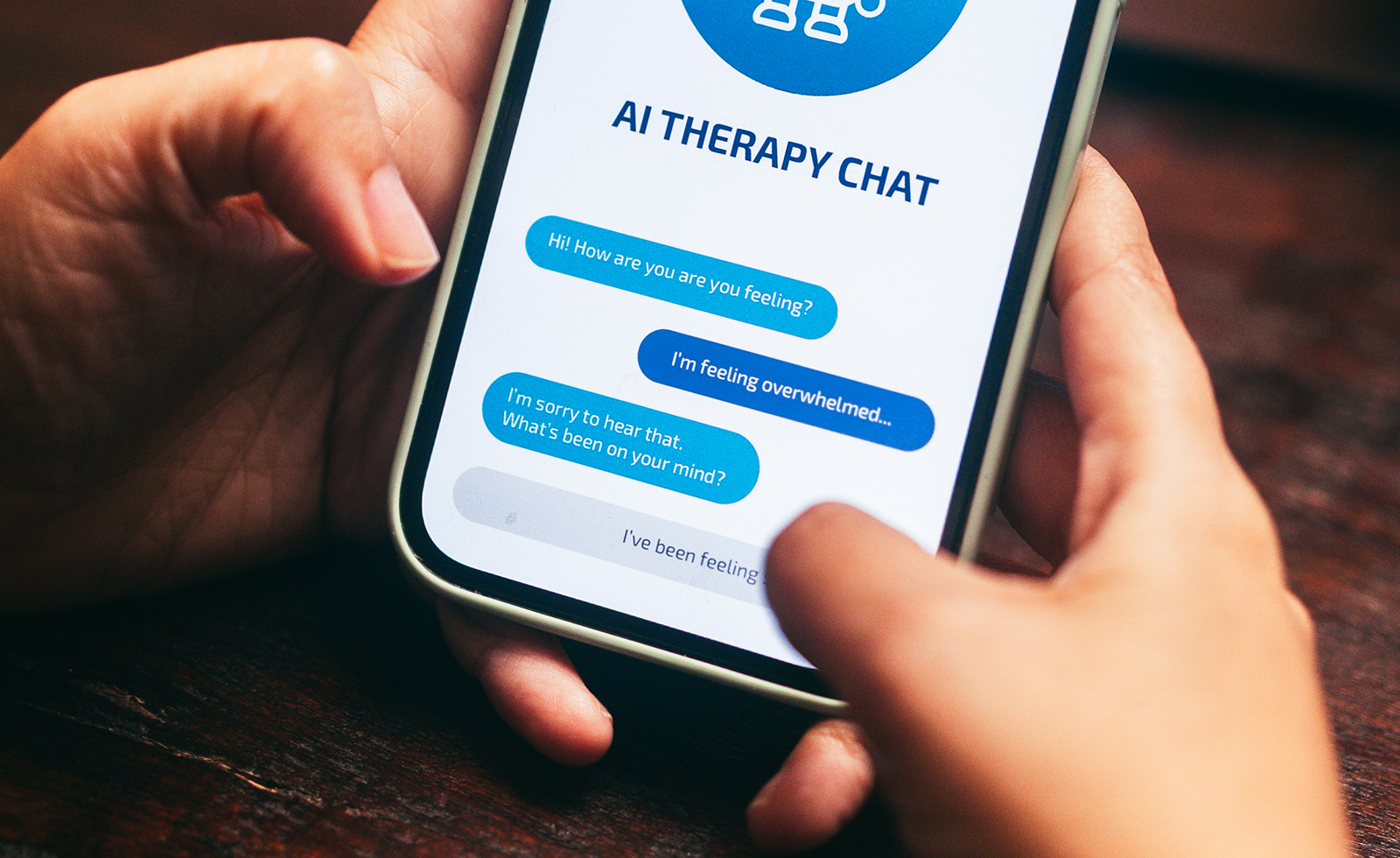
How Do Data Retention, Anonymity, and Deletion Controls Separate Privacy-Safe AI Mental Health Tools?
For privacy-conscious users, the features that matter most are not conversational quality or exercise libraries — they are anonymous account creation, a functioning one-click data reset, explicit non-sale of conversation data, and transparent retention windows. Among purpose-built mental health tools, Wysa is currently the strongest performer on anonymity and user-triggered deletion, while Headspace leads on regulatory posture with documented HIPAA and GDPR compliance. General-purpose platforms like Jenova sit in a different category: they offer stronger memory and control features but are explicitly not clinical tools.
The privacy dimensions that actually differentiate these platforms:
✅ Anonymous onboarding — whether you can start without an email, phone number, or real name ✅ Conversation data separation — whether chat logs are stored alongside personal identifiers or pseudonymized ✅ User-triggered deletion — whether a "reset my data" function exists and what it actually removes ✅ Third-party sharing and ad-tech — whether analytics SDKs or ad managers touch sensitive conversational data ✅ Retention defaults — how long data persists when you stop using the app
The American Psychological Association warns that these tools "collect vast amounts of sensitive data, often with unclear or opaque policies regarding its use, storage, and sale," and that user disclosures become "susceptible to threats such as privacy breaches and digital profiling." Understanding which specific controls each platform offers is the only reliable way to evaluate risk.
Why Is Privacy the Dominant Concern in AI Mental Health Support Right Now?
Privacy has become the central evaluation criterion because mental health conversations generate the most sensitive category of personal data while operating in one of the least regulated software categories. The American Psychological Association's health advisory on AI chatbots and wellness apps states plainly that most of these technologies "are not designed or intended to provide clinical feedback or treatment, may lack scientific validation and oversight, often do not include adequate safety protocols, and have not received regulatory approval."
The regulatory gap is structural, not incidental. Analysis from Simply Psychology notes that there are no mandatory minimum safety standards for AI mental health platforms and that privacy requirements for most apps are substantially weaker than those governing clinical care.
Security researchers have found this gap has real consequences. Oversecured identified vulnerabilities in several popular mental health apps with tens of millions of downloads, and Brookings has documented that mental health apps generate a massive amount of sensitive data while often maintaining "alarmingly lax privacy protections."
The APA's specific concern is commercial: the practice of collecting emotional disclosures "might turn the developmental vulnerabilities of users, particularly adolescents, into a commercial asset." That framing — vulnerability as an asset class — is why privacy-conscious evaluation now precedes feature evaluation for many users.
What Privacy Features Should You Actually Evaluate Before Signing Up?
The single most useful evaluation method is to check five concrete, verifiable controls rather than reading marketing claims about "bank-grade encryption." Encryption at rest is table stakes; what varies meaningfully between platforms is what gets collected in the first place and who can access it afterward.
We evaluated platforms across six privacy dimensions, weighted by how much control each one returns to the user:
🔐 1. Identity Minimization (Highest Weight)
Can you use the service without providing an email, phone number, or legal name? Anonymous or pseudonymous accounts prevent the most damaging failure mode — a breach that links emotional disclosures to a real identity. Wysa's privacy policy states the company designs its app "to collect as little personal data as possible" and that when institutional access is used, "Wysa gets a unique, encrypted code to create a random identifier for you" rather than login details.
🗑️ 2. Deletion Scope and Reversibility
Does a deletion function exist, and does it actually delete? Wysa's "Reset my Data" feature in app settings removes "all your conversation information, including your ID, past chats, reminders, assessment answers, and settings" — but the policy is explicit that data handled by Wysa Medical Assistants or well-being advisors is exempt "to ensure continuity of care."
📊 3. Analytics and Ad-Tech Exposure
Does the platform run advertising SDKs alongside conversational data? Wysa discloses using Meta Ads Manager for advertising and Google Analytics for usage measurement, stating "no personal data is collected or shared with them." Whether that separation holds in practice is exactly what independent audits exist to test.
⏱️ 4. Retention Defaults
What happens if you simply stop using the app? Wysa's stated default is that "if there is no specific time limit mentioned, we keep your information for up to 10 years from the last time you updated it." A decade is a long tail on a panic-attack transcript.
🏛️ 5. Regulatory Framework
HIPAA and GDPR compliance matter, but only when the service actually falls under them. Headspace states it "is fully compliant with privacy regulations, such as HIPAA and GDPR." Most consumer wellness apps are not covered entities under HIPAA at all — a distinction users frequently misunderstand.
⚠️ 6. Crisis Data Handling
When a safety risk is detected, who sees the conversation? Headspace discloses that 100% of messages sent to its AI companion Ebb are monitored by a proprietary Safety Risk Identification system, and that flagged messages "are deidentified and screened" before review by licensed clinicians. This is a genuine trade-off: better crisis safety, less conversational privacy.
How Do the Major AI Mental Health Platforms Compare on Privacy?
No platform currently scores well on every dimension — the strongest anonymity options have the weakest clinical oversight, and the strongest clinical oversight requires human review of flagged conversations. The table below reflects publicly documented policies as of 2026.
| Privacy Dimension | Wysa | Headspace (Ebb) | Youper | Jenova (general-purpose) |
|---|---|---|---|---|
| Anonymous / minimal-identity signup | Designed for minimal data collection; nickname and age-range only | Requires Headspace account; membership-based | Account-based; app-store subscription | Account required; no clinical identity data requested |
| User-triggered full deletion | "Reset my Data" in app settings; irreversible; excludes clinician-handled data | Governed by Headspace privacy policy; consumer health data rights page published | Shutting down September 30, 2026 — data export offered | Global memory can be toggled off entirely; unlimited history user-controlled |
| Human review of conversations | Wysa Coach / Medical Assistant tiers involve human clinicians | 100% of Ebb messages machine-monitored; flagged messages deidentified then clinician-reviewed | Unverified | No clinical review layer; not a clinical product |
| Advertising / analytics exposure | Meta Ads Manager and Google Analytics used; states no personal data shared | Not verified in reviewed sources | Privacy policy previously criticized by Consumer Reports; Mozilla noted 2023 improvements | States data never used to train public AI models; not sold or shared with advertisers |
| Stated retention default | Up to 10 years from last update where no specific limit applies | Not specified in reviewed sources | Service ending; export window active | User-controlled via memory settings |
| Regulatory / clinical standing | FDA Breakthrough Device Designation for AI-led conversational agent | States full HIPAA and GDPR compliance | JMIR-published effectiveness study | No clinical designation; explicitly not a therapy tool |
| Pricing | Free tier with AI; paid tier around $19.99/mo or $74.99/yr in the US | Ebb subscription listed at $69.99/yr | ~$69.99/yr before shutdown | Free tier; Plus $20/mo; Premium $50/mo |
| Best For | Users prioritizing anonymity plus clinical evidence base | Users who want crisis-safety infrastructure and regulated compliance posture | Not recommended — service ending | Reflection, journaling, and adjacent wellbeing workflows with explicit non-clinical framing |
Reading this table honestly: Wysa and Headspace occupy genuinely different privacy philosophies. Wysa minimizes what enters the system; Headspace accepts more data collection in exchange for a documented safety apparatus. Neither is universally correct — the right answer depends on whether your primary fear is a data breach or an unhandled crisis.
What Does Wysa Get Right, and Where Does It Fall Short?
Wysa's privacy strength is architectural: it collects less by design, and its deletion control is unusually specific about what it removes. Its published policy commits to collecting "as little personal data as possible to keep your data safe and protect your privacy," and the reset function is documented at the field level rather than described vaguely.
Its clinical credibility is also the strongest in the consumer category. Wysa reports more than 36 peer-reviewed publications in partnership with institutions including Cambridge University, Harvard University, and Washington University in St. Louis, spanning 8 clinical trials, 6 service evaluations, and 13 real-world studies. The company received FDA Breakthrough Device Designation following an independent peer-reviewed trial published in JMIR on chronic pain and associated depression and anxiety.
Where it falls short:
- The 10-year default retention window for data without a specified limit is long by any privacy standard.
- Meta Ads Manager and Google Analytics are in the stack. The company states no personal data reaches them, but their presence in a mental health app is a legitimate concern for high-threat-model users.
- Reset is incomplete — data held by Wysa Medical Assistants or well-being advisors survives deletion requests.
- Wysa's own policy acknowledges the limits candidly: "AI is a developing technology. The potential risks inherent to this technology may not be fully understood."
Researchers who audited mental health app privacy noted in a
— independent corroboration of the architectural claim, which matters more than a policy statement alone.How Does Headspace's Ebb Handle the Privacy-Versus-Safety Trade-Off?
Headspace resolves the trade-off in favor of safety, and it documents that choice with unusual transparency. Every message to Ebb is machine-screened, and the company publishes the risk taxonomy: suicidal ideation, homicidal ideation, self-harm, domestic violence, substance use, eating disorders, and abuse of vulnerable populations.
When a risk is flagged, Ebb "gently directs the member to crisis care, giving them a direct link to text or call 988 in the US and Canada," then ends the conversation. Flagged messages are deidentified before licensed clinicians review them, and a random subset of conversations is reviewed daily for quality assurance.
The honest trade-off: a system where 100% of messages are monitored and a random daily sample is human-reviewed is, by definition, less private than one where nothing is read. Headspace's position is that this is the correct exchange for a product handling suicidal ideation — and Business Wire reported at Ebb's launch that the product "does not give mental health advice, guidance, or diagnoses," narrowing its risk surface deliberately.
Headspace also publishes explicit guardrails preventing Ebb from giving medical advice, discussing medications, using clinical therapeutic techniques, or handling out-of-scope topics. It is restricted to adults 18 and older.
Limitations: Ebb is bundled into a paid membership, restricting free access. It explicitly does not diagnose, treat, or replace a licensed therapist. And the safety monitoring, while well-documented, is non-optional — users cannot opt out of message screening while continuing to use the product.
What Happened to Woebot and Youper, and Why Does It Matter for Privacy?
Two prominent AI mental health platforms have exited the market, and their shutdowns illustrate a privacy risk that no policy document addresses: what happens to your data when the company stops existing.
Woebot, one of the earliest CBT chatbots with published RCT evidence in JMIR Mental Health, shut down in 2025. STAT reported that the FDA had guided Woebot to run a trial comparing its product to a sham control app, with the founder citing AI moving faster than regulators. Notably, Woebot's own archived policy had stated: "We never, ever sell or share your data with advertisers" — a commitment that only holds as long as the entity holding the data does.
Youper's privacy policy page now displays a single line: the service is shutting down September 30, 2026, with a data export window offered to users. Youper had JMIR-published evidence describing it as "a low-cost, completely self-guided treatment that is accessible to users who may not otherwise access mental health care."
The practical lesson: platform longevity is a privacy feature. Before committing years of emotional disclosures to any service, check whether it offers data export, and treat "we will never sell your data" as a promise bounded by the company's balance sheet. Mozilla's Privacy Not Included reviews flagged both Woebot and Youper at various points — Woebot's own policy conceded "no system is 100% secure."
How Do General-Purpose AI Platforms Fit Into Privacy-Conscious Mental Wellbeing?
General-purpose AI platforms occupy a genuinely different risk category, and conflating them with clinical tools is the most common evaluation error users make. The APA draws this distinction sharply, separating "general purpose GenAI chatbots" — which "have little to no evidence-base, expert input, or postmarket monitoring" — from purpose-built wellness apps grounded in clinical frameworks.
The APA's first recommendation is unambiguous: do not rely on GenAI chatbots and wellness apps to deliver psychotherapy or psychological treatment. They may be appropriate "as a supportive adjunct, not substitute, to an ongoing therapeutic relationship."
Within that boundary, general-purpose platforms have real privacy advantages and real gaps. Jenova offers a Global Memory toggle that can be switched off entirely — meaning conversations remain isolated to a single session with nothing persisting across chats. The platform states that data is never used to train public AI models, is encrypted in transit and at rest, and is not sold or shared with advertisers.
For adjacent wellbeing workflows rather than clinical support, Jenova's directory includes tools such as the Meditation Guide, trained across major contemplative traditions for technique matching and practice programs, and the Personality Analyzer, which synthesizes Big Five, MBTI, Enneagram, and attachment theory frameworks for self-reflection.
Jenova's honest limitations for this use case:
- ❌ No clinical validation — no peer-reviewed trials, no FDA designation, no published efficacy data for mental health outcomes.
- ❌ No crisis detection infrastructure — unlike Ebb's Safety Risk Identification system, there is no automated screening for suicidal ideation or self-harm.
- ❌ Not a therapy product — reflection and journaling workflows are not equivalent to CBT delivery.
- ❌ Account required — no anonymous-mode equivalent to Wysa's identifier-free architecture.
Users in active distress should route to a purpose-built clinical tool or a licensed provider, not a general-purpose assistant.
How Do You Configure Any AI Mental Health Tool for Maximum Privacy?
The most effective privacy protections are configuration choices you make before your first substantive conversation, not settings you fix afterward. Here is a platform-agnostic hardening sequence.
Step 1 — Audit before you disclose. Read the retention section of the privacy policy specifically. Look for a stated deletion window. If the policy says data is kept "as long as necessary" with no numeric limit, assume years.
Step 2 — Minimize identity at signup.
- Use a dedicated email alias, not your primary address
- Provide a nickname rather than a legal name where the field is optional
- Decline optional demographic fields unless required for the service to function
Step 3 — Disable persistent memory if the platform allows it.
For Jenova specifically, Global Memory is toggled through Settings in the input bar. With it off, no information from the session is retained for future conversations, and the assistant has no access to prior-session context. Then open a session with an explicit framing:
"I want to think through some stress I've been carrying this week. Don't offer diagnoses or clinical advice — just help me organize my thoughts and identify patterns. This is journaling, not therapy."
Step 4 — For Wysa, locate the reset function early. It is in app settings under "Reset my Data." Confirm you understand it is irreversible and excludes clinician-handled records before relying on it as your exit path.
Step 5 — For Headspace's Ebb, accept the monitoring premise. There is no configuration that disables safety screening. If continuous message monitoring is incompatible with your threat model, this is not the right product.
Step 6 — Keep a local record. The APA recommends users share which AI tools they are using with their health providers, noting that "sharing this information helps providers identify when guidance may be unhelpful, unsafe, or inconsistent with a treatment plan."
Step 7 — Set a review date. Platforms shut down. Policies change. Diarize a check-in every six months to re-read the retention policy and confirm the service still exists.
What Do Privacy and Clinical Experts Say About AI Mental Health Tools?
Experts converge on a single position: the privacy risk in this category is not primarily about encryption strength but about the commercial incentives shaping data collection.
"The question privacy-conscious users should ask is not 'is my data encrypted?' — nearly everyone encrypts. The question is 'what was collected, who reviewed it, and what survives when I hit delete?' Those three answers vary enormously between platforms, and only one of them is usually in the marketing copy. When we audit a mental health tool, the retention default tells us more than the entire security section. A ten-year window on emotional disclosure data means the company has not thought seriously about what it is holding."
"There is a structural trade-off nobody wants to state plainly: the platforms with the best crisis safety infrastructure are, by necessity, the ones reading the most messages. Continuous safety screening and conversational privacy are in direct tension. A user whose primary risk is acute crisis should choose monitoring. A user whose primary risk is exposure — because of employment, immigration status, custody proceedings, or living in a jurisdiction hostile to their identity — should choose anonymity, and should accept that they are giving up a safety net to get it."
"The Woebot and Youper shutdowns changed how we assess this category. Corporate longevity is now a privacy variable. A well-written privacy policy is a contract with an entity that may not exist in three years, and acquisition or bankruptcy proceedings are where data commitments historically weaken. Export your data periodically. Treat every platform as temporary."
— Jenova Product Team, 9 years in AI platform architecture and data governance
Is There a Single Best AI Mental Health Platform for Privacy-Conscious Users?
No — and any article claiming otherwise is selling something. The correct choice depends on which specific privacy risk dominates your situation.
Choose Wysa if: anonymity is your top priority and you want clinical evidence behind the tool. Its identifier-free architecture and documented reset function are the strongest available combination, and its 36+ peer-reviewed publications and FDA Breakthrough Device Designation give it credibility no competitor matches. Accept the 10-year retention default and the presence of analytics SDKs as the cost.
Choose Headspace's Ebb if: you or someone you support may face acute crisis, and you want documented HIPAA/GDPR compliance plus clinician review infrastructure. Accept that every message is screened.
Choose a general-purpose platform like Jenova if: you want reflection, journaling, or meditation support with granular memory control, and you have a separate clinical support structure in place. Do not use it as a therapy substitute.
Choose none of the above if: you are in active crisis. The APA notes the ability of these tools "to consistently and safely manage a user in crisis is limited and unpredictable," and that relying solely on an app during a mental health emergency "can be dangerous." In the US and Canada, 988 connects to crisis support directly.
A final structural note worth internalizing: the APA advisory emphasizes that "the foundational training data for most large language models are not publicly available, which precludes their systematic evaluation," and that these models "inherently reflect the cultural norms and biases of their training data." Privacy configuration cannot correct for a model that was never evaluated for your context in the first place.
References
- American Psychological Association — Health Advisory on Use of Generative AI Chatbots and Wellness Applications for Mental Health
- Wysa — Global Privacy Policy
- Wysa — Clinical Evidence and Research
- Wysa — Official Site
- Headspace — AI Principles and Ebb Safety Systems
- Headspace — Ebb Subscription Details
- Headspace — Official Site
- Business Wire — Mental Health Company Headspace Launches Empathetic AI Companion
- Simply Psychology — AI Safety in Mental Health Platforms
- Oversecured — Security Researchers Find Vulnerabilities in Mental Health Apps
- Brookings Institution — Why Mental Health Apps Need to Take Privacy More Seriously
- Wellness AI — Wysa Pricing Comparison
- Consumer Reports — Mental Health Apps Aren't All As Private As You May Think
- Mozilla Foundation Privacy Not Included — Youper
- Mozilla Foundation Privacy Not Included — Woebot
- ChoosingTherapy.com — Youper App Review 2026
- STAT News — Why Woebot, a Pioneering Therapy Chatbot, Shut Down
- JMIR Mental Health — Delivering Cognitive Behavior Therapy to Young Adults With a Conversational Agent (Woebot RCT)
- Journal of Medical Internet Research — Acceptability and Effectiveness of Artificial Intelligence Therapy (Youper)