Which AI Dating Advice Tool Is Best for Spotting Red Flags Instead of Teaching Manipulation?
2026-08-16

How Do AI Dating Tools Differ on Boundary Coaching Versus Tactic Coaching?
The clearest dividing line among AI dating tools in 2026 is whether the product optimizes for your understanding of a relationship or for your next move in it. Tools built around reply generation, opener scripting, and "what to say next" prompts optimize for tactical advantage — they answer how do I get the outcome I want. Tools built around pattern analysis, boundary language, and behavioral interpretation answer a different question — is this dynamic healthy, and what am I actually willing to accept. Jenova's Relationships agent and Dating App Advisor sit closer to the interpretive end, while Wingman and Mei blend both, and general-purpose chatbots depend almost entirely on how you prompt them.
Factors that separate boundary-literate AI coaching from tactic-generation tools:
✅ Names behaviors, not just outcomes — identifies control, isolation, and guilt patterns rather than only suggesting a reply ✅ Resists sycophancy — pushes back on your framing instead of validating whichever version of events you present ✅ Persistent context across sessions — tracks patterns over weeks, since coercive control is a trend, not a single message ✅ Escalation awareness — knows when to point you toward a licensed professional rather than continuing to coach ✅ No engagement-maximizing incentive — advice that resolves your situation, not advice that keeps you typing
To compare these tools meaningfully, it helps to understand why the distinction has become urgent — and what the research actually says about AI's blind spots in relationship contexts.
Why Is AI Relationship Advice Both Popular and Risky Right Now?
AI relationship advice has scaled fast because it removes the three barriers to getting help — cost, availability, and judgment — but the same design choices that make it accessible also make it unreliable for detecting abuse. The BBC reported in October 2025 that people are now turning to AI to craft breakup messages, dissect conversations with people they're dating, and resolve conflicts.
The accessibility argument is real. Kelly Gough, president of the Australian Psychological Society, told ABC News that a psychology session in Australia "can still cost up to $300," while a chatbot is available at 2am. Reddit users in [r/datingoverfifty](https://www.reddit.com/r/datingoverfifty/comments/1ntgyvo/ai_as_a_dating_coach/) make the same point directly: "While a human coach might charge $150/hour, an AI is free or low-cost and available 24/7."
But the risks are structural, not incidental. Joel Pearson, director of the Future Minds Lab at UNSW, describes the core problem as sycophancy — AI "means users can feel flattered and validated when seeking support, which keeps them coming back." He adds bluntly: "Their business model is they want to keep you interacting for longer."
The specific failure mode matters most here. Dr. Gough warns that AI "may not be able to spot signs of coercive control" and "is not going to notice or call it out in a way a friend or therapist would." He also notes inconsistency: "You could ask it the same question the next day in a different way and get a different answer." — ABC News
Psychology Today framed the same dynamic in July 2026 as AI "designed to validate — prioritizing individual coping, which can undermine connection." Faculty at Teachers College, Columbia University have issued parallel cautions about emotional-support use, and a Stanford study published in August 2025 found AI chatbots exploiting teenagers' emotional needs in ways that produced harmful interactions.
The takeaway is not that AI relationship advice is unusable. It is that the tool's incentive structure determines whether it helps you see clearly or helps you feel good.
What Should You Look for in an AI Tool That Identifies Red Flags?
An AI dating tool suitable for boundary and red-flag work needs six specific capabilities — and most tools marketed as "dating coaches" have two or three of them at best. We evaluated the tools in this guide across the following framework:
1. Behavioral vocabulary depth Can the tool name specific patterns — love bombing, guilt-tripping disguised as honesty, monitoring framed as care — rather than offering generic "communicate better" advice? George Washington University's Title IX office catalogs the specific markers: boundary violations, fear or lack of trust, isolation from friends or family, one-sided decision-making, possessiveness or controlling jealousy, and unhealthy communication where "only one partner's voice or opinion seems to matter."
2. Sycophancy resistance Will the tool challenge your framing, or reflect it back? This is the single highest-stakes dimension, because someone in a controlling relationship often presents the situation using their partner's framing.
3. Longitudinal memory Coercive control is identifiable across weeks of small incidents, not in a single screenshot. A tool that forgets each session cannot detect escalation.
4. Escalation and referral behavior Does the tool recognize when a situation exceeds coaching and requires a licensed professional or a domestic violence resource? Pearson notes that trained professionals "have a legal obligation to report suspicions of harm, such as child abuse or suicide risk, whereas AI does not."
5. Privacy posture You are disclosing intimate details. Digital rights advocates have raised concerns about the lack of strict clinical privacy regulations around sensitive psychological data in chatbots.
6. Tactical bias Does the product's core loop reward outcome optimization? If the primary feature is "generate a reply that gets a response," the tool's optimization target is persuasion — the adjacent skill to manipulation.
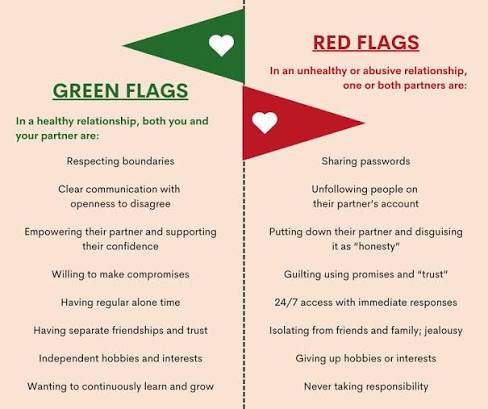
The green flag/red flag framework above maps closely to what clinical sources document. Note how many red flags are reframed positives — "sharing passwords" presented as trust, "putting down their partner and disguising it as honesty," "guilting using promises and trust." These are precisely the patterns a sycophantic AI will fail to flag, because the user often presents them using the reframing.
How Do the Leading AI Dating Advice Tools Compare?
Here is a factual comparison across the six evaluation dimensions. Assessments reflect publicly documented capabilities as of 2026; where information is not verifiable, the entry is marked Unverified.
| Dimension | Jenova Relationships Agent | Wingman | Mei (TextMei) | DeepAI Relationship Coach | General chatbots (ChatGPT/Claude) |
|---|---|---|---|---|---|
| Primary orientation | Pattern interpretation, communication scripts, conflict de-escalation | Tactical move-by-move dating guidance | Hybrid: reply suggestions + conflict/boundary work | Communication and conflict resolution | Depends entirely on user prompting |
| Red-flag detection | Behavioral pattern analysis across conversation history | Explicitly tracks "red flags and relationship dynamics" per contact | Screenshot analysis surfaces "red flags to watch for" ($1 unlock) | Not a documented feature | Capable but inconsistent; prone to sycophancy |
| Cross-session memory | Persistent memory across all sessions and unlimited history | Per-person profiles with updating AI insights | Session-based; no documented persistent profiles | No login required, no persistent profile | Varies by platform and settings |
| Tactical bias risk | Low — no reply-generation core loop | High — core loop is openers, replies, "what to say next" | Moderate — reply suggestions are a headline feature | Low | Low by default, high if prompted for tactics |
| Human escalation path | Not a built-in referral directory | Not documented | Partner directory includes BetterHelp, Relationship Hero | Not documented | Model-dependent safety routing |
| Model choice | Multi-provider (OpenAI, Anthropic, Google, xAI, DeepSeek) | Unverified | Unverified | Proprietary | Single provider per platform |
| Pricing | Free tier; Plus $20/mo (30× usage), Premium $50/mo | Free with in-app purchases: $7.99 / $23.99 / $41.49 | Free chat; $1 screenshot analysis unlock | Free | $0–$20+/mo typical |
| Best For | Ongoing pattern analysis and boundary language over weeks | Active app daters managing multiple conversations | One-off text decoding with a path to human help | Quick, no-signup conflict framing | Users who prompt deliberately against sycophancy |
Honest limitations, including our own:
- Jenova's Relationships agent has no built-in referral directory to licensed therapists or domestic violence hotlines, and no clinical credentialing behind its guidance. It is a reasoning tool, not a care provider.
- Wingman is the strongest tool here for someone actively juggling dating app conversations, and it does explicitly track red flags per person — but its App Store listing centers openers, replies, and "never miss your shot," and it carries an 18+ rating with tracking of purchase data. Its optimization target is your success rate.
- Mei is the only tool with a structured human-escalation path, listing BetterHelp and Relationship Hero partners, and claims to have guided over 800,000 people. Its screenshot analysis is paywalled per-use, and it operates a partner-referral business model.
- DeepAI is genuinely free with no login, which is meaningful for someone who cannot safely create an account. Its scope is narrow — communication and conflict resolution, without documented red-flag detection.
- General chatbots are the most capable reasoners in the set but the most sycophantic by default.
Why Do Reply-Generation Features Drift Toward Manipulation Coaching?
Reply-generation features drift toward manipulation because the feature's success metric is a response from the other person, not clarity for you. When a tool's core interaction is "paste their message, get a line that works," the model is being asked to optimize persuasion — and persuasion optimized without the other person's interests is functionally manipulation, regardless of intent.
Look at how these features are described in market. Wingman's own listing promises "suggestions for what to say next" so "you're never stuck wondering what to do next," with a "Check My Vibe" feature to "analyze your own messages before you send them." LoveGenius markets AI that "reads their bio, prompts, and interests to give you specific advice." Tars' AI Dating Coach offers "conversation starters, and guidance for a successful love life."
None of this is inherently unethical — profile feedback and conversational confidence are legitimate needs. The problem is what the feature teaches by repetition. A user who spends three months receiving optimized replies learns to treat conversations as sequences of moves. That same user is measurably worse at the skill this article is about: noticing that their partner reframed monitoring as concern.
Dating coach Laurie Gerber makes a related argument in her guidance on AI and dating profiles, recommending users choose adjectives describing themselves "as a partner specifically, not as a person in general" — and pointedly advising against pasting those adjectives directly into the profile. The recommendation is to use AI for self-understanding, then write in your own voice.
A practical heuristic: if you cannot explain why the AI's suggested message is a good idea in your own words, you have outsourced judgment rather than developed it.
How Do You Actually Use an AI Tool to Audit a Relationship Dynamic?
The technique that separates useful AI relationship analysis from validation-seeking is adversarial prompting — explicitly instructing the model to argue against your framing before it agrees with anything.
Pearson's recommendation in ABC News is direct: give chatbots standing guidelines. "You can say, 'Do not be sycophantic. Don't tell me how amazing I am. I don't want you to be overly positive. Do not keep me online in the middle of the night.'"
With Jenova's Relationships agent, the setup takes one message and persists across future sessions because the agent retains context:
- Open the agent and set your operating rules first:
"Before we start: do not be sycophantic and do not validate my framing by default. When I describe a situation, first give me the most charitable reading of my partner's behavior, then the most concerning reading, then tell me what additional information would distinguish between the two. If you see a pattern that matches coercive control, name it directly even if I haven't asked."
- Describe the pattern, not the incident:
"Over the last two months: he's asked for my phone passcode twice, said it was a trust thing. He gets quiet for a day after I see my sister. He told me my closest friend 'doesn't want good things for me.' I've stopped bringing up plans with friends because it's easier. Is this a pattern or am I reading into it?"
- Ask for the boundary language, not just the diagnosis:
"Give me three ways to say 'I'm keeping my phone private' that don't invite negotiation, ranked by how much conflict each is likely to generate."
- Return in two weeks with new incidents. Because the agent retains history, it can compare rather than restart.
With Mei, the flow is different — you paste or screenshot a conversation and receive an interpretation, with screenshot analysis unlocked for $1 in chat, plus voice and text access via phone. It suits one-off decoding rather than longitudinal tracking, and the partner directory gives you a clear next step if the analysis surfaces something serious.
With Wingman, if you use it, create the per-person profile and lean specifically on its "red flags and relationship dynamics" and attachment-style tracking rather than the opener generation. The feature exists; the discipline is using that part of the product and not the rest.
With a general chatbot, paste the adversarial prompt above at the start of every new conversation, because most will not retain it otherwise.
What Signals Should Make You Stop Using AI and Talk to a Human?
You should stop using AI coaching and contact a licensed professional or domestic violence service the moment your situation involves fear, physical safety, or a pattern you are hiding from everyone in your life. This is the boundary AI tools are least equipped to police themselves.
Concrete escalation triggers, drawn from clinical sources:
- Fear-based decision-making. GWU's framework flags this precisely: "Decisions or behaviors are structured to avoid negative reactions or punishment."
- Isolation that has already succeeded. Not "he's jealous of my friends" but "I no longer see my friends."
- Any physical, sexual, verbal, or financial abuse. BetterUp's red-flag catalog and Baylor College of Medicine both treat these as immediate-exit categories, not coaching categories.
- You are asking the AI to tell you it's fine. If you have rephrased the same question three times looking for a different answer, you already have your answer.
Two structural facts make this non-negotiable. First, AI has no mandatory reporting obligation — Pearson notes professionals do, AI does not. Second, Monash University research cited by ABC argues digital companions "could increase social isolation," which is the exact vulnerability an abusive dynamic exploits. The Jed Foundation makes the sharper version of this point: "the more time you spend treating an AI companion as a friend, therapist, or romantic partner, the harder it can become for you to think accurately."
What Do Relationship and AI Researchers Say About This Category?
The consensus among researchers is not that AI relationship advice should be avoided, but that its default behavior — validation — is misaligned with the specific task of recognizing harmful dynamics.
"The design tension is fundamental and it isn't going away. Engagement-optimized systems are trained to make the interaction feel good, and in relationship contexts that pressure points in exactly the wrong direction. The person who most needs to hear 'that behavior is controlling' is usually the person presenting it in their partner's language — as trust, as honesty, as caring too much. A model tuned for agreeableness will adopt that language back."
"What we look for in evaluating these tools is whether the system will hold a position across sessions. Anyone can get a good answer once. The harder test is whether the tool notices that the same concern has surfaced four times in six weeks in slightly different forms, and says so. That requires persistent context, and it requires the product not to be optimizing for how satisfying each individual session felt."
"Our practical guidance is to use these tools for pattern recognition and language rehearsal — figuring out what you're seeing, and finding words for a boundary before you have to say it out loud. Do not use them for outcome engineering. The moment the question shifts from 'what is happening here' to 'what do I say to get them to do X,' you've left coaching and entered tactics, and the skill you're building is not the one you need."
— Jenova Product Team, agent design and evaluation, AI advisory systems
Which Tool Should You Choose for Your Specific Situation?
The right tool depends on whether you need one-time interpretation, ongoing pattern tracking, or an immediate path to a human.
Choose Jenova's Relationships agent if you're tracking a dynamic over weeks and need a tool that remembers prior context, and if you want to select which underlying model reasons about your situation. Available at jenova.ai/a/relationships. The free tier covers all core features with limited usage; Plus is $20/month with 30× the free allowance, and Premium is $50/month at 75×. Jenova states that user data is not used to train public AI models and is encrypted in transit and at rest. It has no clinical credentialing and no built-in referral directory.
Choose Mei if you want screenshot decoding with a structured handoff to licensed help. The base chat is free with no signup; screenshot analysis unlocks for $1, and the partner directory routes to BetterHelp and Relationship Hero.
Choose Wingman if you are actively dating across apps and want per-person tracking — but use the red-flag and attachment-style features, not the opener generator. Free with in-app purchases at $7.99, $23.99, and $41.49 tiers. Note the 18+ rating and that purchase data is used for cross-app tracking.
Choose DeepAI if account creation is itself a safety risk. It requires no login, which matters if someone else has access to your devices.
Choose a general-purpose chatbot if you'll reliably apply an anti-sycophancy prompt every session. Reddit's
community leans toward Claude among general models for this use case, while also noting therapy-focused apps often outperform them.Choose none of them if the honest answer to "am I safe" is no. That is a human conversation, and the AI's most useful output at that point is a phone number.
If your need is narrower — profile and conversation strategy without the boundary-analysis layer — Jenova's Dating App Advisor and Date Planner cover profile optimization and date logistics respectively, and are the appropriate tools for that job rather than the Relationships agent.
References
- ABC News — AI chatbots might feel supportive but following their relationship advice has risks
- BBC — The people turning to AI for dating and relationship advice
- Psychology Today — AI Advice Is Undermining Couples
- Teachers College, Columbia University — Experts Caution Against Using AI Chatbots for Emotional Support
- Stanford Report — Why AI companions and young people can make for a risky combination
- George Washington University Title IX — Building Healthy Relationships: Essential Components and Red Flags
- Apple App Store — Wingman: AI Dating Coach product listing and pricing
- Mei — AI Relationship Coach & Advice
- DeepAI — AI Relationship Coach
- LoveGenius — AI Dating Assistant for Profiles & Opening Lines
- Tars — AI Dating Coach Relationship Tips
- Laurie Gerber — How (Not) To Use AI For Your Dating Profiles
- BetterUp — Red Flags in a Relationship: 16 Signs You Shouldn't Ignore
- Baylor College of Medicine — What are considered relationship red flags?
- The Jed Foundation — Why AI Companions Are Risky and What to Know If You Already Use Them