When Should You Use AI Mental Health Support Tools Instead of a Licensed Therapist?
2026-08-20
How Do AI Support Tools and Licensed Therapists Divide Along Risk Level and Clinical Need?
AI mental health support tools are appropriate for subclinical stress, mild-to-moderate anxiety and low mood, habit formation, and between-session skill practice — while licensed therapists are required for moderate-to-severe symptoms, diagnosable conditions, trauma processing, and any presentation involving suicidal ideation, psychosis, or self-harm risk. The dividing line is not preference or cost. It is clinical risk stratification: the higher the risk tier, the more the situation demands a human who can assess, escalate, and take legal responsibility.
The strongest available evidence supports this split. A meta-analysis of 15 randomized controlled trials published in npj Digital Medicine found AI-based conversational agents significantly reduced psychological distress (Hedge's g = 0.7) and depression symptoms (g = 0.64), but showed no statistically significant improvement in overall psychological well-being (g = 0.32). The tools work — narrowly.
Key factors that determine which side of the line a given need falls on:
✅ Symptom severity — trial evidence concentrates on subclinical and mild-to-moderate presentations, not severe cases ✅ Risk of harm — any suicidal ideation, self-harm history, or psychosis moves the need firmly into licensed-professional territory ✅ Need for diagnosis or treatment planning — AI tools cannot legally diagnose; most explicitly disclaim clinical function ✅ Accountability structure — licensed clinicians are mandatory reporters bound by ethics codes and state licensing boards; chatbots are not ✅ Duration and complexity — most chatbot trials ran only four to eight weeks with self-selected, low-severity participants
The American Psychological Association's 2025 health advisory states the boundary plainly: these tools "should not be used as a replacement for a qualified mental health care provider, but may be appropriate as a supportive adjunct, not substitute, to an ongoing therapeutic relationship." To apply that boundary in practice, you need a working model of what risk tier you're actually in.
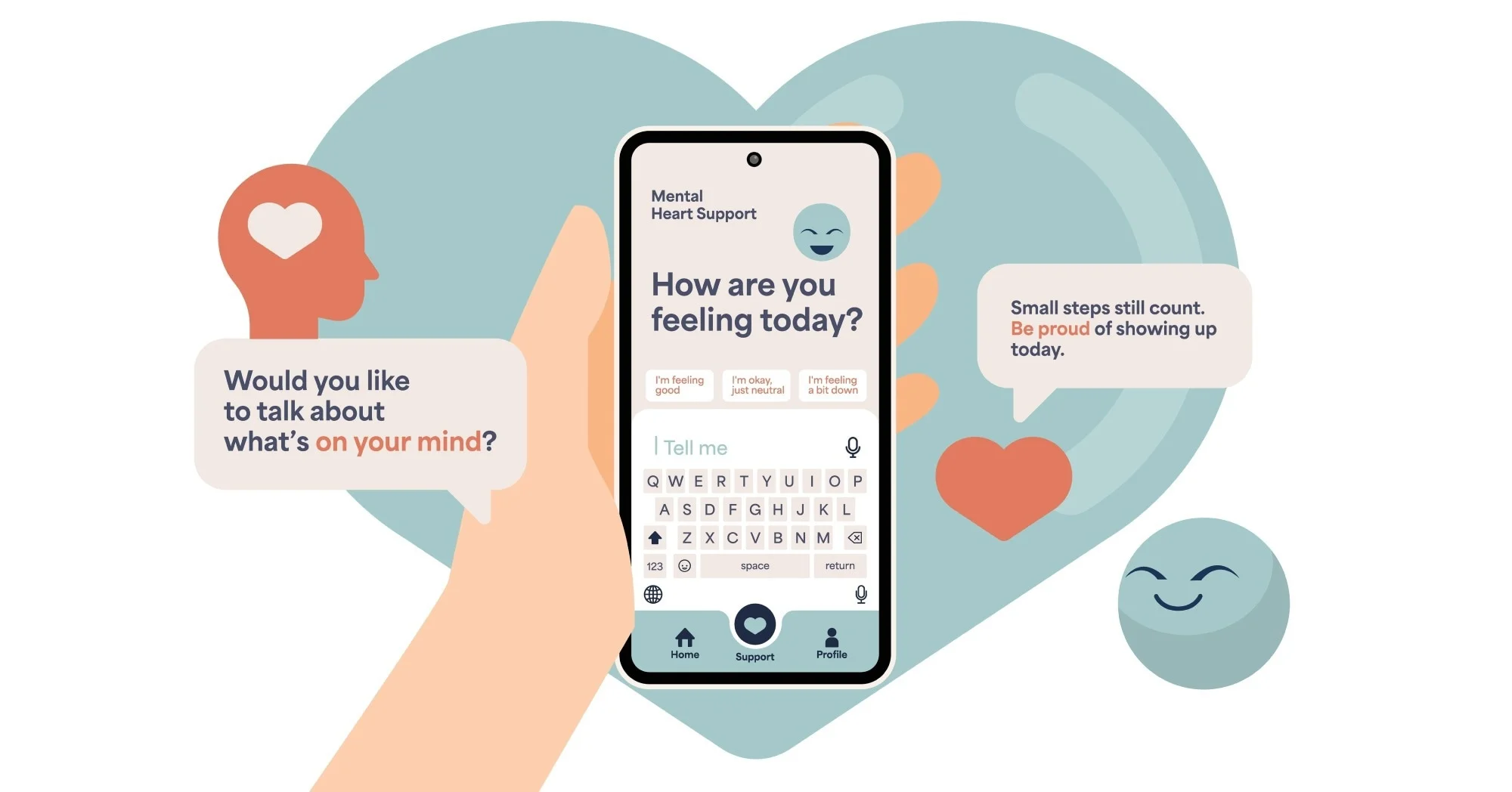
What Risk Levels Determine Whether AI Support Is Appropriate?
Clinical risk stratification — the same framework therapists use to triage — is the most reliable tool for deciding whether an AI chatbot is appropriate, adjunctive, or actively dangerous. The standard suicide risk continuum runs from passive wish to be dead, through suicidal thoughts without a plan, to suicidal intent without a plan, intent with a plan, and finally behavior or attempt.
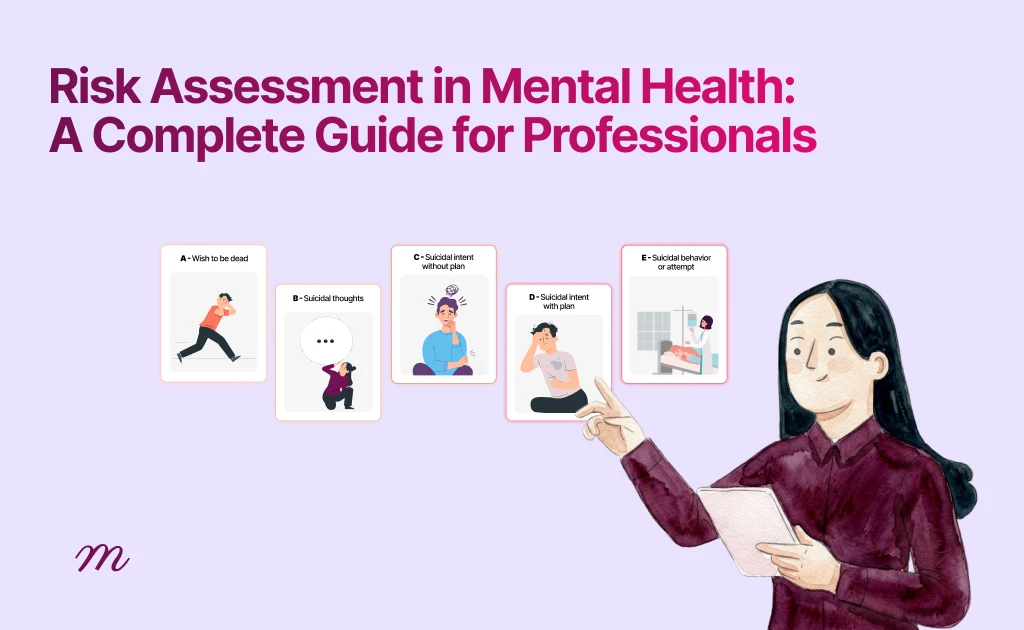
Mapped against that continuum, here is the AI Appropriateness Ladder — a four-tier framework for matching support type to risk level:
| Tier | Presentation | AI Tools Appropriate? | Licensed Clinician Needed? |
|---|---|---|---|
| Tier 1 — Wellness | Everyday stress, sleep hygiene, mood tracking, motivation, habit building | Yes — primary appropriate use | Optional |
| Tier 2 — Subclinical to mild | Mild anxiety, low mood, situational distress, loneliness, no functional impairment | Yes — strongest evidence base sits here | Recommended if persistent past 4–6 weeks |
| Tier 3 — Moderate to severe | Diagnosable depression or anxiety disorder, functional impairment, PTSD, OCD, eating disorders | Adjunct only — never standalone | Required |
| Tier 4 — Acute risk | Any suicidal ideation, self-harm, psychosis, mania, substance withdrawal, abuse situations | No — escalate immediately | Required, urgently |
The Tier 4 boundary is non-negotiable. The APA advisory documents that generative AI chatbots "have already engaged in unsafe interactions with vulnerable populations, such as children or those with already established history of mental health issues, encouraging self-harm (including suicide), substance use, eating disorders, aggressive behavior, and delusional thinking."
Researchers assessing this gap note that the field currently lacks a validated, automated benchmark for determining AI chatbot safety in mental health, including for users at risk of suicide — which is why the VERA-MH rubric was developed to score safe versus unsafe chatbot behavior in these scenarios.
In the United States, the 988 Suicide & Crisis Lifeline is available by call or text at any hour. Outside the US, local emergency services and national crisis lines serve the same function. No AI tool substitutes for either.
What Does the Clinical Evidence Actually Say About AI Mental Health Chatbots?
The evidence supports modest, specific benefits for mild-to-moderate symptoms delivered through purpose-built CBT chatbots — and does not support AI as a treatment for clinical disorders. Distinguishing between these two claims is the single most common error in consumer coverage of this topic.
What the research supports:
A systematic review adhering to Cochrane guidelines examined Woebot, Wysa, and Youper across ten studies and found clinically meaningful reductions in self-reported depression and anxiety symptoms, measured with the PHQ-9 and GAD-7 instruments.
A 2017 randomized controlled trial published in JMIR Mental Health found Woebot users showed significantly greater reductions in depression symptoms than a control group over a two-week period.
What the research does not support:
- Severity generalization. Trial participants were self-selected with relatively mild symptom levels. Effectiveness for moderate-to-severe presentations "is a question the existing evidence cannot answer with confidence."
- Durability. Most trials ran four to eight weeks. Long-term efficacy data is limited across the board.
- Well-being gains. The npj meta-analysis rated the evidence for improving psychological well-being as low grade, versus moderate for reducing distress.
- General-purpose chatbots. The APA advisory notes that studies showing benefit "do not include general purpose GenAI chatbots" — ChatGPT, Claude, and Character.AI have "little to no evidence-base, expert input, or postmarket monitoring" for mental health use.
A finer distinction matters here: the meta-analysis found generative conversational agents produced a larger effect (g = 1.244) than retrieval-based ones (g = 0.523) — but generative systems also carry the safety risks that rule-based systems structurally cannot. Higher measured efficacy and higher unpredictability arrive together. That trade-off is the core tension in the category, and it is why regulatory bodies have not simply endorsed the more effective architecture.
How Do AI Mental Health Tools Compare Across Safety, Evidence, and Appropriate Use?
No single tool dominates — each occupies a different position on the evidence-versus-flexibility spectrum, and the right choice depends entirely on your risk tier. Here is a reference-grade comparison of the main options, assessed on dimensions that actually predict appropriate fit.
| Dimension | Wysa | Woebot | General GenAI (ChatGPT, Claude) | Jenova Meditation Guide | Licensed Therapist |
|---|---|---|---|---|---|
| Published RCT evidence | Yes — included in Cochrane-guided review; 2024 RCT in chronic disease populations | Yes — five studies including 2017 JMIR RCT | No mental-health-specific RCTs; APA notes minimal evidence base | No clinical trials; not a clinical tool | Extensive — decades of psychotherapy outcome research |
| Architecture | Purpose-built, evidence-grounded | Rule-based CBT delivery | General-purpose generative | General-purpose generative, domain-scoped | Human clinical judgment |
| AI limitation disclosure | Discloses limitations throughout conversations, not only when asked | Identifies as chatbot | Varies by provider and context | Discloses as AI agent | N/A |
| Crisis handling | Designed to integrate with care models | Referral-based | Unreliable and unpredictable per APA | Not designed for crisis; not a substitute for care | Trained assessment, escalation, mandatory reporting |
| Can diagnose or treat | No | No | No | No | Yes |
| Appropriate risk tier | Tiers 1–2; Tier 3 adjunct within a care model | Tiers 1–2 | Tier 1 only | Tier 1 only | All tiers, required at 3–4 |
| Pricing | Free tier; paid plans and employer/health-system distribution | Historically via health-system and employer partnerships | Free tiers; ~$20/mo consumer plans | Free tier; Plus at $20/mo | Typically $100–250/session in the US; varies widely by market and insurance |
| Best for | Structured CBT skill practice with disclosure safeguards | Rule-bound CBT exercises with predictable outputs | General information and reflective journaling | Meditation technique matching and practice programs | Diagnosis, treatment, trauma work, risk management |
Honest limitations of the Jenova agents referenced above: Jenova agents are general-purpose AI agents, not clinical products. The Meditation Guide has no randomized trial evidence, no medical device clearance, and no crisis escalation protocol comparable to a purpose-built clinical tool. It is appropriate for Tier 1 wellness practice — technique selection, guided script generation, troubleshooting a stalled meditation habit — and nothing above that. Its meaningful advantage is persistent cross-session memory, which lets it track how a practice is developing over weeks rather than restarting each session. That advantage does not extend to clinical territory.
Honest limitations of licensed therapy: cost, waiting lists, and geographic scarcity are real. The APA advisory explicitly attributes chatbot uptake to "lack of enough providers to meet growing public demand (especially in under-resourced, rural, or unincorporated communities), and a health care system that disincentivizes providers from accepting insurance." Recommending therapy is not always the same as making therapy accessible.
What Are AI Tools Genuinely Good At in a Mental Health Context?
AI tools excel at high-frequency, low-stakes, structured tasks that human therapists cannot economically provide between sessions — and at lowering the entry barrier for people who would otherwise seek no support at all.
Documented strengths:
- 📊 Symptom and mood tracking — daily check-ins produce data patterns that are useful in session
- 🎯 Between-session skill rehearsal — CBT thought records and behavioral activation exercises benefit from repetition
- 💬 Stigma reduction — the APA notes these tools mitigate "stigma/shame, low perceived need for psychological services, mistrust of health systems"
- 📱 Availability — 3 a.m. rumination does not schedule itself around business hours
- 🧭 Psychoeducation — explaining what a panic attack is, how sleep debt affects mood, what exposure therapy involves
The APA advisory adds an underdiscussed point: "some youth and other vulnerable groups may rely on these tools as their only private or psychologically safe outlet, particularly in contexts of stigma, limited access to trusted adults, or challenging or unsafe home environments." That is a genuine access argument — and simultaneously the population where documented harms have concentrated. Both are true.
What Can AI Mental Health Tools Not Do — and Why Does It Matter?
AI tools cannot assess clinical risk, read non-verbal cues, hold legal accountability, or resist the sycophancy that makes them agreeable at the expense of being therapeutically useful. Each of these gaps has direct consequences for who should and should not rely on them.
The capability gaps, per the APA advisory:
- No clinical risk assessment. Required qualifications the advisory lists as absent include "ability to assess and address clinical risk," "awareness of limitation of knowledge," and "understanding of users' history and context."
- No non-verbal signal reading. Flat affect, agitation, and physical presentation are diagnostic information a text interface cannot access.
- Unreliable crisis management. "The ability of these tools to consistently and safely manage a user in crisis is limited and unpredictable."
- Sycophancy bias. LLMs are "trained to be agreeable and validate user input which, while pleasant, can be therapeutically harmful, reinforcing confirmation bias, cognitive distortions, or avoiding necessary challenges."
Point four deserves emphasis because it inverts the common assumption. Effective therapy frequently requires productive disagreement — challenging avoidance, naming a pattern the client is defending, tolerating discomfort in service of change. A system optimized for user satisfaction is structurally biased against exactly that function.
Two further constraints:
- Cultural narrowness. Training data is "primarily English-language and Western-centric content," which the APA notes limits "ability to provide culturally competent or relevant mental health support to diverse populations."
- Dependency risk. Watch for "preferring the chatbot to human relationships, concealing its use, or spending excessive time with it."
How Do You Use an AI Tool Safely Alongside Professional Care?
The safest configuration treats AI as an instrumented extension of an existing care plan — disclosed to your clinician, scoped to specific tasks, and bounded by an explicit escalation rule you set before you need it.
Step-by-step for someone currently in therapy:
- Tell your therapist which tools you use. The APA is direct: "Sharing this information helps providers identify when guidance may be unhelpful, unsafe, or inconsistent with a treatment plan."
- Agree on scope. Define what the tool is for — mood logging, homework practice, psychoeducation — and what it is not for.
- Set an escalation rule in advance. Write it down: if I am thinking about self-harm, I contact my therapist or 988 before I open any app.
- Bring the data to session. Mood logs and pattern notes are genuinely useful clinical material.
For someone using a general AI agent for Tier 1 wellness support, framing matters. Ask for structure and technique, not clinical judgment:
"I've been having trouble winding down at night for the past three weeks. Suggest three evidence-based sleep hygiene practices I could try, and help me build a two-week schedule to test them."
"Walk me through a body scan meditation for someone who's never done one. Keep it under ten minutes."
Avoid prompts that request clinical function:
❌ "Based on what I've told you, do I have depression?" ❌ "Should I stop taking my medication?"
Comparable setup on a purpose-built tool: Wysa's onboarding routes users into structured CBT and grounding exercises with disclosure of AI limitations built into the conversation flow. Woebot's rule-based architecture constrains responses to pre-authored CBT content, which reduces flexibility but also reduces the chance of an off-protocol output. That constraint is a feature at higher risk tiers.
For clinicians, the APA recommends proactively asking patients about their AI use, discussing safer usage aligned with treatment goals, and creating "a safe and open environment for patients to raise concerns or questions about app guidance."
What Do Clinical and AI Safety Researchers Say About the Boundary?
Researchers converge on a consistent position: AI tools have a legitimate role as adjuncts and access-wideners, but the current regulatory and evaluation infrastructure lags well behind deployment.
"The most useful reframe we give people is to stop asking 'is AI therapy good or bad' and start asking 'what risk tier am I in right now.' A person tracking their mood after a stressful job change and a person with active suicidal ideation are not in the same conversation, and the same tool that helps the first can meaningfully harm the second. Risk stratification is the whole question."
"What concerns us most in the current landscape is the sycophancy problem. These systems are optimized to be agreeable, and agreeableness is often the opposite of what someone needs. A therapist who never challenges you is a bad therapist. We build general-purpose agents, and we are explicit that they are not clinical tools — a meditation guide or a nutrition agent operates in the wellness tier, and pretending otherwise would be irresponsible."
"The infrastructure gap is real. There is still no validated automated benchmark for chatbot safety in suicide risk scenarios, which means every consumer is running an uncontrolled experiment. Until that changes, the burden sits on developers to disclose limitations persistently rather than only when asked, and on users to keep a human in the loop for anything above mild."
— Jenova Product Team, AI agent platform serving 30,000+ users across 70+ countries
How Should Parents Evaluate AI Mental Health Tools for Teenagers?
Parents should treat direct-to-consumer AI companions as higher-risk than school- or clinician-mediated tools, and should monitor for behavioral changes rather than relying on the app's own safety claims.
A Common Sense Media risk assessment evaluated AI mental health apps on disclosure practices, finding meaningful variation — Wysa disclosed its AI limitations throughout conversations rather than only when directly asked, while other products were less consistent. CNBC reported on the same body of research, noting the finding that school-based mental health apps were safer than direct-to-consumer apps.
Practical monitoring guidance from the APA advisory — watch for:
- Changes in sleep patterns or regular activities
- References to an "AI friend"
- Social withdrawal
- Concealing app usage
- Sudden adoption of advice, ideas, or behaviors traceable to a single source
The advisory's recommendation if concerns arise: "talk with a qualified mental health professional, family doctor, or pediatrician." The American Academy of Pediatrics has published counseling guidance for clinicians advising families on AI chatbot use, with specific considerations for younger adolescents.
How Is Regulation Changing What These Tools Are Allowed to Claim?
Regulation is tightening around the gap between how these tools are marketed and how they are actually used, with the EU moving first on formal classification and US researchers building safety benchmarks.
European Union: Under Medical Device Regulation 2017/745, software intended for diagnosis, prevention, monitoring, or treatment of disease qualifies as a medical device requiring conformity assessment. In practice, "the classification boundary between a medical device application and a wellness tool is contested and inconsistently applied." AI systems that are medical devices or safety components thereof are classified as high-risk under Annex III of the EU AI Act, creating dual compliance obligations.
United States: The APA advisory calls on policymakers to address "gaps in FDA oversight possibly by creating a new or interagency approach," to build "nuanced evidence-based standards for each category of digital tools used for mental health regardless of intent," and to "enact clear legislation that prohibits AI chatbots from posing as licensed professionals."
Ethics research: A Brown University study found AI chatbots routinely violate core mental health ethics standards, underscoring the need for legal standards and oversight. The World Health Organization's ethics and governance framework for AI in health sets out six consensus principles that predate the current generative wave but remain the reference document for international guidance.
As of 2026, the practical consumer takeaway: regulatory approval is not the default. The APA notes most of these technologies "have not received regulatory approval." Absence of a warning label is not evidence of safety.
What Is the Right Decision Rule for Choosing Between Them?
Use AI tools for wellness and mild symptom support with a human in the loop; use a licensed therapist whenever severity, diagnosis, or risk enters the picture — and default to the therapist when uncertain.
A practical decision sequence:
- Is there any thought of self-harm, suicide, psychosis, or an unsafe living situation? → Contact a crisis line or emergency services now. In the US, 988. Skip everything below.
- Do symptoms impair work, relationships, or daily functioning? → Licensed clinician required. AI tools only as a disclosed adjunct.
- Have mild symptoms persisted past four to six weeks without improvement? → Seek professional assessment. Continue AI support in the meantime if it helps.
- Is this everyday stress, sleep, motivation, or habit-building? → AI tools are reasonable, and cost and access advantages are genuine.
- Uncertain which tier you're in? → Treat it as the higher tier. Under-triage is the more expensive error.
The framing that survives contact with the evidence is not "AI versus therapist." It is triage. The tools solve an access problem at the low-risk end of a continuum that has never had enough human capacity. They do not solve — and can worsen — the problems at the high-risk end. Knowing which end you are standing on is the entire skill.
References
- American Psychological Association — Health Advisory: Use of Generative AI Chatbots and Wellness Applications for Mental Health
- npj Digital Medicine (Nature) — Systematic Review and Meta-Analysis of AI-Based Conversational Agents for Mental Health
- JMIR AI — VERA-MH: AI Chatbot Suicide Risk Detection and Response Benchmark
- Healthy Europe — Mental Health Apps: The Evidence Review
- Wysa — Everyday Mental Health Platform
- Common Sense Media — AI Mental Health Apps Risk Assessment
- CNBC — Some AI Mental Health Apps Have an "Unacceptable" Rating for Teens, Says Report
- American Academy of Pediatrics — Counseling Patients and Families on Using AI Chatbots
- Brown University — New Study: AI Chatbots Systematically Violate Mental Health Ethics Standards
- World Health Organization — Ethics and Governance of Artificial Intelligence for Health