What Should You Look For in an AI Creative Writing Platform?
2026-08-10
Which Four Capabilities Actually Separate a Drafting Toy From a Manuscript Tool?
The four capabilities that determine whether an AI writing platform can carry a book-length project are long-text memory (does it remember chapter 3 when you're writing chapter 27), style control (can you keep its voice from overwriting yours), fact-checking discipline (does it flag or fabricate), and export quality (does the manuscript leave the tool in a shape a publisher or reader can actually use). Tools like Novelcrafter, Sudowrite, Inkfluence AI, and general-purpose platforms like Jenova each solve a different subset of these — none solves all four equally well.
Evaluate on the failure modes, not the feature list:
✅ Memory is architectural, not advertised — a "story bible" you maintain manually is a different mechanism from persistent session memory, and they fail differently ✅ Style control is subtractive — the harder problem is stopping over-writing, not generating more prose ✅ Fact-checking depends on grounding — models connected to live search hallucinate less than models answering from training data alone ✅ Export quality is a hard pass/fail — EPUB validation either succeeds or it doesn't, and this is the only one of the four you can test in under ten minutes ✅ Pricing models diverge sharply — flat subscription, bring-your-own-key, and credit metering produce very different real costs at book length
To compare tools meaningfully across these dimensions, it helps to define what each capability actually means in practice — because vendors use the same words for very different mechanisms.
What Does "Long-Text Memory" Actually Mean in an AI Writing Tool?
Long-text memory in AI writing platforms comes in two fundamentally different architectures — retrieval from a structured database you maintain, and persistent conversational memory the platform maintains for you — and they fail in opposite ways.
Architecture 1: The curated story bible. Novelcrafter is the clearest example. Its Codex is a structured database of characters, locations, factions, and objects, and when the AI writes, it references your personal Codex rather than relying solely on the model's general knowledge. You link relevant entries to a scene, giving the model a precise, curated context window.
- Strength: Consistency is enforced by construction. A character's eye color doesn't drift across 100,000 words.
- Failure mode: It only knows what you told it. Every unrecorded detail is invisible. The setup cost is real — reviewers describe Novelcrafter as powerful but frustrating to set up.
Architecture 2: Persistent session memory. Platforms like Jenova retain unlimited chat history and carry memory across sessions, so the agent accumulates context from the actual work rather than from a database you populate separately.
- Strength: Zero maintenance overhead. The tool remembers what you did, not what you documented.
- Failure mode: Less deterministic. There's no single screen where you can audit what the model "knows" about your protagonist.
Architecture 3: Context window only. Most general chat tools operate here. Sudowrite's memory is good but not perfect — over a long project it can forget key details that weren't in the immediate context window, a known limitation of even advanced long-context models.
🎯 The memory test to run before you commit
- Write or import three chapters into the tool.
- Establish a specific, low-salience detail in chapter 1 — a minor character's profession, a scar on the left hand, a rule of your magic system.
- Skip to chapter 3 and ask the tool to write a scene where that detail is relevant but not mentioned in your prompt.
- Check whether it surfaces correctly, contradicts, or invents.
A tool that passes this at three chapters may still fail at thirty. Run it again at scale before committing a book to the platform.
How Do You Test Whether a Platform Actually Gives You Style Control?
Real style control means the tool reliably restrains its default register — not just that it can produce varied prose on request. The most common failure in AI fiction tools is over-writing, and it's the one most feature lists never mention.
Sudowrite is the canonical case study. It's tuned for a more literary, descriptive output, which is genuinely valuable when you're stuck on a description. But the same review notes it can be a terrible over-writer — it loves adverbs, flowery metaphors, and dramatic pronouncements, and without a firm editorial hand it can turn gritty noir into gothic romance.
Novelcrafter's output sits at the other pole — very good, clear, and effective, but sometimes more workmanlike, prioritizing accuracy over artistry. Neither is wrong. They're different trade-offs, and knowing which one you need is the actual evaluation.
The three-layer style control checklist
| Layer | What to look for | Why it matters |
|---|---|---|
| Instruction-level | Can you set persistent style rules that apply to every generation, not just the current prompt? | One-off prompt steering degrades across a long session |
| Model-level | Can you switch the underlying model? | Different models have measurably different default registers |
| Restraint | Can you instruct against a tendency ("no metaphors, no adverbs, max 15-word sentences") and have it hold for 2,000 words? | This is where most tools break |
The restraint test: Give the tool a plain prompt — "A detective enters a dusty office" — with an explicit constraint: no similes, no adverbs, under 60 words. Run it five times. Count violations. A tool that breaks constraints in 3 of 5 runs will fight you for an entire manuscript.
Platforms with model switching have an advantage here, because register is partly a model property, not a prompt property. Jenova provides access to models from OpenAI, Anthropic, Google, DeepSeek, and xAI within a single account, which lets you match model to register — a more clinical model for procedural chapters, a more expressive one for lyric passages. Novelcrafter takes a bring-your-own-key approach, available from the Hobbyist tier at $8/month, which gives similar flexibility but pushes model costs and configuration onto you.
Why Does Fact-Checking Matter in Creative Writing?
Fact-checking matters in fiction because most novels contain non-fiction load-bearing detail — procedural, historical, medical, legal, geographic — and AI systems fabricate this category of detail with high confidence and no signal.
A 2026 thematic analysis of 63 university students' experiences with AI hallucinations found the most commonly reported problems were incorrect or fabricated citations, false information, and overconfident but misleading responses. The study identified a specific psychological trap: AI's confident presentation creates a fluency-truth effect, where clearly presented information feels more truthful regardless of accuracy. Students described hallucinations as "convincing," "specific," and "logical."
The study also surfaced an expertise paradox directly relevant to novelists researching outside their domain: medical trainees in a cited study achieved only 55% accuracy detecting AI hallucinations overall, dropping to 44.2% in complex scenarios. Detection accuracy falls precisely where assistance is most valuable.
📊 What to demand from a platform's fact-checking layer
- Live web grounding. When an AI model is combined with a search engine it hallucinates less, because it can search, read the pages it finds, and summarize with links back. Ask whether the tool actually retrieves, or only generates.
- Traceable links, not just claims. The Arizona guidance is explicit that summaries can still contain errors — following the links is the verification step. A tool that gives you sources is materially more useful than one that gives you confident prose.
- Scholarly grounding for technical fiction. Some systems use scholarly papers as a grounding source, which makes them more factual. This matters for hard SF, medical thrillers, and historical fiction.
- Task decomposition. Practitioner guidance recommends breaking the writing process into small separate AI tasks and verifying each before moving to the next. A platform that supports discrete research steps beats one that produces a monolithic draft.
Dedicated fiction tools like Sudowrite and Novelcrafter are largely silent here — they're built for prose and structure, not verification. General-purpose agent platforms tend to be stronger on this axis. Jenova connects to Google Search, Google Scholar, Google Maps, and other tools through the Model Context Protocol, which means research queries return retrieved sources rather than generated ones. The trade-off is real: you lose the purpose-built manuscript structure that Novelcrafter's Codex provides.
How to run a research query safely, in any tool:
"Research the standard evidence-handling procedure for a homicide scene in a mid-sized US police department, circa 2003. Cite your sources with links. Flag anything you're inferring rather than sourcing."
Then follow every link. The instruction to flag inference is the part most writers skip and the part that catches the most errors.

What Makes Export Quality a Pass/Fail Test Rather Than a Feature?
Export quality is pass/fail because ebook formats validate mechanically — an EPUB either passes platform ingestion or it's rejected, with no partial credit. This makes it the single fastest capability to evaluate and the one writers most consistently defer until it's expensive to switch.
The EPUB-first validation method
Formatting guidance recommends a specific order: export EPUB first, validate it, then export PDF and DOCX — EPUB is the strictest format and the best canary. Open the EPUB in a free tool like Calibre. If the structure survives EPUB, it will survive the looser formats.
Minimum export requirements for a publishable manuscript:
- EPUB with a navigable table of contents, embedded cover, proper chapter breaks, and metadata — this is what Amazon KDP, Apple Books, Kobo, and Barnes & Noble ingest
- PDF with consistent typography, page numbers, headers, and embedded fonts for print-on-demand and direct sales
- DOCX preserving chapter structure and heading hierarchy — the format editors, agents, and beta readers expect
Dedicated formatting tools operate in a different price and capability band from AI writing tools. Inkfluence AI publishes a comparison putting [Atticus at $147 one-time, Vellum at $249.99 one-time and Mac-only, and Scrivener at $49 one-time](https://www.inkfluenceai.com/ai-book-formatter), with its own plan at $9.99/month. Notably, Vellum does not offer DOCX export per that comparison — a meaningful gap if you submit to agents.
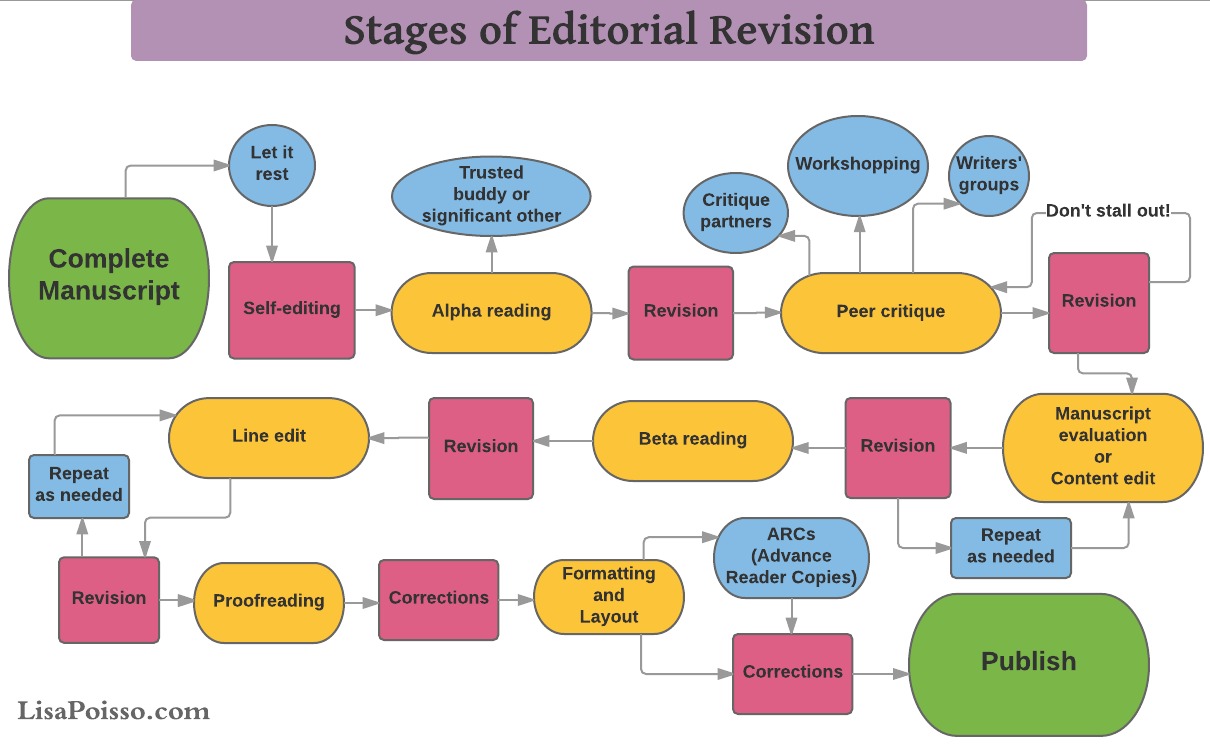
A pattern worth considering: treat export as a separate stage rather than a platform requirement. Draft where memory and style control are strongest, then move to a purpose-built formatter for the final pass. This is what the traditional revision workflow already assumes — line edit, proofread, corrections, then formatting and layout as a discrete step.
How Do the Main Options Compare Across All Four Dimensions?
No single platform leads on all four. The comparison below reflects what's verifiable from each tool's own documentation and independent reviews as of 2026.
| Dimension | Novelcrafter | Sudowrite | Jenova | Inkfluence AI |
|---|---|---|---|---|
| Long-text memory | Strongest — structured Codex referenced at generation time; requires manual upkeep | Context-window based; can forget details across long projects | Unlimited history with persistent cross-session memory; no manual bible to maintain | Chapter-outline based; built for generation, not long-arc consistency |
| Style control | Consistency-first; output can read workmanlike | Most expressive; prone to over-writing without editorial restraint | Model switching across OpenAI, Anthropic, Google, DeepSeek, xAI + custom instructions | Template and prompt driven |
| Fact-checking | Not a stated focus | Not a stated focus | Connected search, Scholar, and MCP tools return retrieved sources with links | Not a stated focus |
| Export quality | Import/export supported; not a dedicated formatter | Not a dedicated formatter | Chat-level export to PDF, Word, TXT, CSV; not KDP-native | Strongest — PDF, EPUB, DOCX with auto TOC and KDP-ready output |
| Pricing | $4–$20/mo, BYOK from $8 tier; AI costs on top | Credit-based subscription tiers | Free tier; Plus $20/mo (30× usage), scaling to higher tiers | Free plan; $9.99/mo Creator |
| Free access | 21-day trial, no free plan | Trial, not an ongoing free plan | Free tier with limited usage | Free to start |
| Best for | Plotters building series with heavy world lore | Discovery writers who want prose provocation | Research-heavy fiction; writers who want model choice and grounded verification | Writers whose bottleneck is formatting and export |
Honest limitations, including our own: Jenova is not a purpose-built novel-writing environment. It has no structured story-bible database with linked entries like Novelcrafter's Codex, and no KDP-native EPUB pipeline like Inkfluence AI's. Its strengths are memory persistence, model flexibility, and grounded research — writers who need scene-beat workflows and one-click ebook export will want a dedicated tool for those stages. Novelcrafter's Codex is stronger on deterministic lore consistency than any conversational memory system. Sudowrite produces prose with more character than most alternatives when that's what you need.
How Should You Actually Run the Evaluation?
Run a four-part test on the same 5,000-word sample across every candidate tool, in one sitting, before you commit any real manuscript.
The 90-minute evaluation protocol:
-
Prepare the sample. Take 5,000 words of your existing work — real prose, not a synthetic test. Include at least three specific factual details and one recurring stylistic tic you want preserved.
-
Memory test (25 min). Import the sample. Ask each tool to write a new scene that depends on an established detail you don't mention in the prompt. Score: surfaced correctly / omitted / contradicted / invented.
-
Style restraint test (20 min). Issue a constrained prompt with three explicit prohibitions. Run five generations. Count violations per tool.
-
Fact-check test (25 min). Ask a research question in your novel's domain with an explicit demand for sources and inference flagging. Verify every link. Score: linked and accurate / linked and wrong / unlinked assertion.
-
Export test (20 min). Export to EPUB. Open in Calibre. Check TOC navigation, chapter breaks, embedded cover, metadata. This is binary — it works or it doesn't.
Getting started on Jenova specifically: open the Creative Fiction Writer agent, attach your sample as a document so it becomes part of the working context, and set your constraints up front:
"I'm writing literary crime fiction. Sparse register, no similes, sentences under 20 words. Here's 5,000 words of my existing draft — match this voice exactly. When I ask you to research procedural detail, search and cite with links, and flag anything you're inferring."
For Novelcrafter, the equivalent setup is different in kind: you build Codex entries for your characters and locations first, then link them to scenes. Budget an hour for initial Codex construction before you can meaningfully evaluate generation quality — this is the setup friction reviewers flag.
What Do Working Writers and Editors Say About Evaluating These Tools?
Practitioners consistently report that the capability writers over-weight in evaluation is prose quality, and the capability they under-weight is consistency infrastructure.
"The mistake I see most often is writers running a single-paragraph test — 'write me a description of a rainy street' — and choosing a platform based on which output sounded prettiest. Prose quality at 200 words tells you almost nothing about performance at 90,000 words. The variables that actually break a project are consistency drift and unverified factual detail, and neither shows up in a short sample."
"The second pattern: writers treat these four capabilities as though one tool must supply all of them. In practice, the most reliable workflows we see are staged. Draft where memory and research are strongest, do the line-level work where style control is tightest, and format in a dedicated tool that validates EPUB. The traditional editorial pipeline already separates developmental editing, line editing, proofreading, and layout into distinct stages with distinct tools. AI doesn't collapse that structure — it just changes who does each pass."
"On fact-checking specifically: the research is unambiguous that grounded retrieval reduces fabrication relative to pure generation. But grounding is necessary, not sufficient. Detection accuracy collapses outside your own expertise, and that's exactly where novelists do most of their research. Build the verification step into your process rather than trusting any tool's output on domain detail you can't independently assess."
— Jenova Product Team, 6 years building AI writing and research agents
What Should You Do If No Single Tool Covers All Four Capabilities?
Use a staged stack rather than searching for a single platform that leads on all four — this is the standard practice among writers producing book-length work with AI assistance in 2026.
A representative three-stage stack:
| Stage | Priority capability | Reasonable choices |
|---|---|---|
| Drafting & research | Memory + fact-checking | Jenova for grounded research and persistent context; Novelcrafter for lore-heavy series |
| Line-level revision | Style control | Whichever tool holds your constraints most reliably in the restraint test |
| Format & export | Export quality | Inkfluence AI, Atticus, or Vellum for validated EPUB/PDF |
The cost math matters. Novelcrafter's $4–$20/month plans exclude AI costs, which you pay separately via your own API key. Sudowrite's credit model means heavy drafting months cost more than light ones. Flat subscriptions like Jenova's Plus tier at $20/month or Inkfluence AI's $9.99/month Creator plan are predictable but cap usage differently. Price the combination at your actual expected volume, not each tool in isolation.
The portability requirement. Before committing a manuscript anywhere, confirm you can export clean DOCX at any point. Novelcrafter states that if you cancel, you retain read-only access and can still view and export your data — a policy worth verifying explicitly with any platform you're considering. A tool you can't leave is a tool that owns your book.