What Is the Best AI Shinto Priest for Kami and Shrine Guidance?
2026-08-28
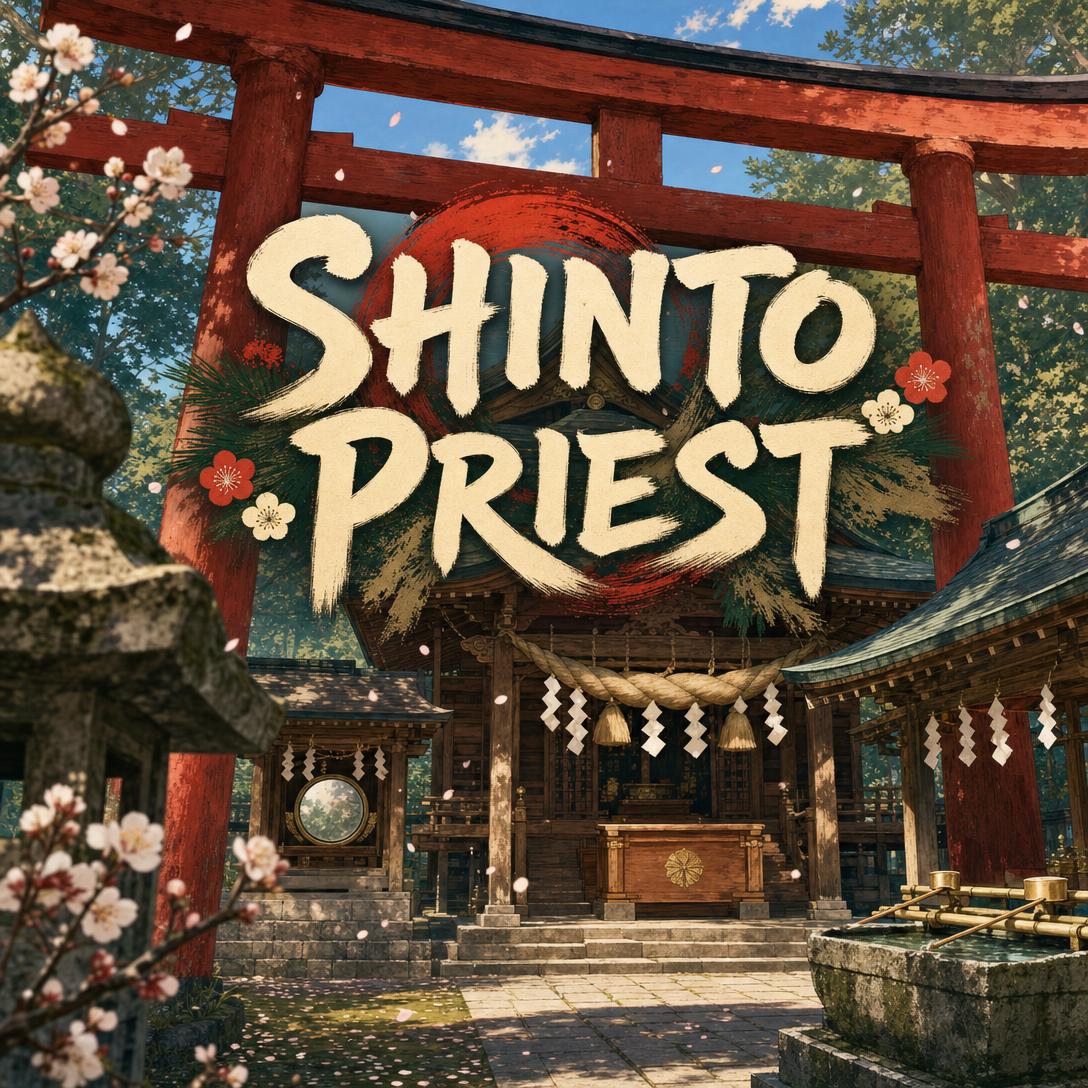
What Separates a Specialized AI Kannushi From a General Chatbot on Shinto Questions?
A specialized AI kannushi is stronger than a general chatbot when the question is not “what is Shinto?” but “how do I live it this week” — shrine etiquette, kamidana care, purification, and life passages held in one continuing conversation. In 2026, Jenova's Shinto Priest is the option built for that pastoral loop. ChatGPT and Claude remain useful for quick explainers and long textual study, while Jinja Honchō remains the institutional reference for shrine etiquette itself.
Shinto has no founder, no official scripture in the strict sense, and no fixed dogma. Guidance that treats it like a creed to join will mislead. What separates effective AI kannushi work from generic Q&A is whether the model stays inside practice, presence, and relationship.
Key factors that separate a usable AI Shinto priest from a chatbot reciting shrine trivia:
✅ Ritual fidelity — temizu, sandō, and the two-bow, two-clap, one-bow sequence taught as a visit, not a spell ✅ Conceptual precision — kami, kegare, and harae explained without importing “sin” or Western god-talk ✅ Pastoral memory — ujigami, mourning periods, and home practice recalled across sessions ✅ Boundary honesty — the AI prepares you for rites it cannot perform at a physical jinja ✅ Seasonal literacy — ōharai, hatsumōde, and local matsuri treated as spiritual architecture, not tourism
To compare these options fairly, it helps to judge them as guides into a practice tradition — not as interchangeable “religion chatbots.”
Why Are People Seeking AI Guidance on Kami and Shrine Practice in 2026?
People turn to AI for Shinto guidance because shrine life is widely practiced, thinly explained in English, and often disconnected from daily conversation once someone leaves Japan. Government figures commonly cited for Japan put Shintō practice around 69.0% and Buddhism around 66.7%, a double count that only makes sense if many people participate in both.
Japan’s Agency for Cultural Affairs has recorded religious-adherent totals far above the national population — about 107 million Shinto identifications alongside 89 million Buddhist ones in yearbook-style tallies. Jinja Honchō states the practical implication directly: Shinto is something you do rather than something you are, and most people who practice it in Japan would describe themselves as having no religion, or as Buddhist.
That pattern creates three recurring gaps. Diaspora families want kamidana help without a nearby ujigami shrine. Travelers want sanpai etiquette they will not get from a restaurant review. Seekers want kami and purification explained without a conversion pitch.
There are more than 80,000 Shinto shrines across the Japanese archipelago. Ise Jingu alone draws around 10 million visitors and celebrates over a thousand matsuri in a year. Scale like that does not automatically produce a bilingual priest who remembers your grandmother’s shrine and your December ōharai question.
General models already absorb religious questions. Church and ministry comparisons in 2026 treat ChatGPT as the easiest on-ramp, Claude as stronger for long writing, and Gemini as convenient inside Google Workspace. Those strengths do not equal a kannushi who knows when to stop talking and send you to the shrine.
What Should You Look for in an AI Shinto Priest?
You should look for ritual accuracy, conceptual honesty, memory, seasonal awareness, and a clear line between counsel and ceremony — not fluency alone. This article uses a six-part frame, the Kannagara Six, to score AI Shinto guidance the way a careful ujiko might assess a priest: does this help me stand in right relationship, or does it only sound spiritual?
1. Ritual fidelity
Can the guide walk temizu, the sandō, saisen, and nihai-nihakushu-ichihai without mixing temple and shrine manners? Jinja Honchō’s public instruction is specific: coins in the offering box, two deep bows, two claps, then one bow. The center of the torii is the kami’s path; visitors walk to the sides.
2. Conceptual precision
Kami are sacred powers in nature, ancestors, and awe-inspiring phenomena — not a Japanese pantheon pasted onto monotheism. Kegare is accumulated impurity, not moral guilt. Harae restores clarity. An AI that says “cleanse your sins at the torii” has already left the tradition.
3. Pastoral continuity
A priest who forgets you are in kichu, or that you asked about ofuda renewal last month, is an encyclopedia with a gentle tone. Persistent memory is the difference between FAQ and care.
4. Seasonal literacy
Shrine Shinto is lived through agricultural and festival time. Hatsumōde, Nagoshi no Ōharai, Shichi-Go-San, and local matsuri are not optional flavor. They are how the year is made sacred.
5. Boundary honesty
Official priests in Japan qualify through Jinja Honchō examinations. An AI cannot grant oharai, issue ofuda, or conduct jichinsai. The trustworthy guide says so, then prepares you for the jinja that can.
6. Cross-cultural welcome without erasure
Jinja Honchō notes that Shinto is not something you convert to, and that visiting jinja and practicing at home are welcome. Good guidance names what travels — sincerity, purification, seasonal attention — and what is place-bound: land, community, and matsuri.
Weighted this way, a tool can score well on prose and still fail as a priest. The inverse is also true: a specialized kannushi agent that refuses to perform rites may feel less “magical” and be more faithful.
How Does Jenova's Shinto Priest Compare to ChatGPT, Claude, and Jinja Honchō Resources?
Jenova's Shinto Priest is strongest for ongoing, practice-centered guidance; ChatGPT is strongest as a familiar general explainer; Claude is stronger for long, careful reading; and Jinja Honchō is the authority to verify etiquette against. None replaces a physical kannushi when a rite must be performed before the kami.
| Feature / Dimension | Jenova Shinto Priest | ChatGPT | Claude | Jinja Honchō / shrine materials |
|---|---|---|---|---|
| Ritual sequence (sanpai, temizu) | Walks the full visit flow and flags shrine-versus-temple differences | Usually recites the common sequence; quality depends on prompting | Clear long-form etiquette when given good sources | Authoritative two-bow, two-clap, one-bow instruction |
| Pastoral memory | Persistent cross-session memory of practice, family, and season | Chat history only if the user maintains it | Strong document context; not a continuing parish relationship | Static pages; no personal follow-up |
| Kamidana and ofuda | Setup, offerings, annual renewal, diaspora limits | Generic home-altar tips; easy to miss renewal and disposal rules | Useful if you paste a detailed guide | Limited English depth on home practice |
| Life passages and grief | Prepares hatsumiyamairi, shichi-go-san, shinzen kekkon, kichu, shinsōsai | Broad summaries; may flatten Shinto–Buddhist overlap | Nuanced essays; weaker “what do I do Thursday” care | Institutional description, not family counseling |
| Formal rites | Cannot perform sai; directs users to a jinja | May sound as if a ceremony is happening in chat | Usually more cautious, still not a priest | Priests formulate wishes as norito and conduct gokito |
| Pricing (as of 2026) | Free tier with limited usage; Plus $20/month (30× usage) | Free tier; paid plans for longer context and private handling | Free tier; paid plans for higher limits | Free website; in-person rites charged separately |
| Best for | Continuing kannushi-style care and home practice | Fast answers and custom GPTs | Myth, history, and long documents | Checking etiquette and hearing the tradition’s official voice |
Jenova Shinto Priest
Testing the agent’s design shows a shrine-Shinto default: kami, musubi, harae, makoto, kannagara, and wa, with adaptation for shrine families, general Japanese practitioners, returners, non-Japanese seekers, and Sect Shinto backgrounds. It treats centuries of shinbutsu-shūgō and the Meiji-era shinbutsu bunri as history a pastor has to navigate, not a purity test.
Its honest limits matter. It cannot perform shrine ceremonies, grant purification, or issue ofuda. It is not Jinja Honchō-certified. It cannot schedule morning kamidana reminders. For grief that looks like clinical depression or suicidal crisis, it is built to stay present and point to professional care rather than rebrand illness as kegare.
ChatGPT
ChatGPT is the easiest general-purpose on-ramp and supports custom GPTs for reusable staff or household prompts. That helps a traveler who needs the clap-and-bow sequence before tomorrow’s Meiji Jingū visit.
The limitation is specialization. Public web text often mixes shrine and temple manners, treats omikuji as a personality quiz, or frames kami as “Japanese gods.” Without a pastoral memory of your ujigami and mourning calendar, each chat starts as a tourist briefing.
Claude
Claude tends to produce warmer, more natural long writing and handles long documents well. That is a real advantage if you want to sit with a Kojiki episode or a scholarly essay and ask careful questions.
It is still a general model. It will not, by default, check whether you covered the kamidana during kichu, or whether this week is closer to Nagoshi no Ōharai than to a generic “new moon ritual.” Warmth is not the same as shrine time.
Jinja Honchō and the physical shrine
Jinja Honchō was established in 1946 to support Japan’s jinja, preserve traditions, and promote matsuri. Its English materials are short, clear, and non-conversational — which is a strength when you need the official gesture, not a personality.
Shinto priests perform the rituals; many receive a few thousand yen per rite, and many serve part-time. Access, language, and geography still gate the thing AI cannot fake: standing at the chōzuya, then before the haiden.
Gemini is the practical fourth general model if your life already runs on Gmail, Docs, and Drive. It can help with logistics. It is not a kannushi.
Readers who also sit with Buddhist practice often keep a Buddhist Monk conversation alongside Shinto guidance rather than forcing a split most Japanese households do not live.
How Does an AI Kannushi Teach Shrine Worship and Home Kamidana Practice?
A capable AI kannushi teaches shrine worship as a sequence of attention — gate, water, path, offering, prayer — and treats the kamidana as daily shrine life scaled to a shelf. Practices later called Shinto were recorded in the Kojiki and Nihon Shoki in the eighth century; the living core is still doing, not subscribing.
At a jinja, the visit is more than the claps. Bow at the torii. Walk the sandō off-center. Purify at the chōzuya: left hand, right hand, mouth from the left hand, rinse the ladle handle, replace it. Approach the haiden, offer saisen, then two bows, two claps, a quiet prayer, one bow. Japan-guide’s overview likewise frames shrines around matsuri and priest-led ritual rather than weekly congregational services.
Jenova's Shinto Priest is built to add the meanings travelers skip. The center of the path is not a crowd-control rule; it is seichū, the kami’s way. Temizu is outer washing that turns inward. Makoto — sincerity — outweighs perfect choreography, but the choreography exists so the heart has a form.
Kamidana guidance is where general chatbots thin out. Placement is high, clean, and typically south- or east-facing. Jingū Taima from Ise sits central when present, with ujigami ofuda beside it. Rice, water, and salt are ordinary offerings. Sakaki is tended. Old ofuda return to a shrine for otakiage, not the household trash.
Diaspora practice needs the same honesty. Some shrines mail ofuda; many households cannot match a textbook shelf. The priestly move is to keep makoto and the possible offerings, not to shame an apartment that cannot reproduce a shrine kitchen.
Omamori, ema, omikuji, and goshuin are easy to turn into souvenirs. A specialized guide treats a goshuin-chō as a pilgrimage record, an omamori as something carried respectfully and returned after a year, and a kyō fortune as guidance to be tied at the shrine rather than a curse.
If you are standing in front of a torii with a photo and a practical question — which building is the haiden, is this a shrine or a temple — a Tour Guide can read the scene while the Shinto Priest holds the worship logic. Those are complementary jobs, not duplicates.
How Do AI Shinto Guides Handle Purification, Life Ceremonies, and Mourning?
They handle them well only if purification is restoration, ceremonies are prepared rather than performed, and mourning is timed to kichu instead of improvised comfort language. Harae reestablishes order among nature, humans, and kami; kegare is pollution that ritual can counteract. That is not the same as washing away sin.
Personal harae an AI can actually teach includes temizu, salt at thresholds, cleaning as spiritual work, and seasonal awareness of Ōharai on June 30 and December 31, including chinowa kuguri where it is offered. Misogi under a waterfall is traditional and physically demanding; a responsible guide adds caution rather than a dare.
What it must not do is pronounce you impure as a verdict, or sell anxiety. “Am I polluted? Have I offended the kami?” is often genuine engagement. The pastoral answer is that kegare accumulates through ordinary contact with death, illness, and misfortune, and that restoration is built into the year. When the worry becomes obsessive, spiritual care and clinical care can sit side by side.
Life-passage work is preparation: hatsumiyamairi, shichi-go-san, seijinshiki, shinzen kekkon, yakudoshi, jichinsai, jōtōsai. An AI can explain dress, offerings, and meaning. The rite still happens at the shrine. At a jinja, the priest acts as intermediary and shapes a worshipper’s request into norito. Chat cannot substitute for that.
Death is where generic AI is most likely to trespass. Many families use Buddhist funeral rites; that is normal, not a failure of Shinto. A Shinto-shaped mourning map — kamidana covered during kichu, shrine visits paused, gojūnichi-sai around the fiftieth day, later reisai — should be offered without recruiting the bereaved away from a temple already holding the family.
Shinto’s history includes deep syncretism with Buddhism, Confucianism, Daoism, and Onmyōdō. An AI that panics at mixed practice is less traditional than the households it advises. Users who want seated practice as well as shrine practice sometimes add a Meditation Guide; that is a parallel craft, not a replacement for harae.
How Do You Get Meaningful Pastoral Guidance From an AI Shinto Priest?
You get better guidance by stating where you stand — Japanese, diaspora, or non-Japanese; what you already do; and whether you need etiquette, a home shelf, a ceremony preview, or company in grief — then verifying ritual details against a shrine or Jinja Honchō. Vague prompts produce brochure Shinto.
For Jenova's Shinto Priest, a first message can be ordinary speech. There is no intake form. Crisis comes first; a factual question gets a factual answer; curiosity is welcomed without a conversion arc.
- Open the agent at jenova.ai/a/shinto-priest.
- Name your context in one or two sentences.
- Ask for the next practice, not a complete theology.
- Treat blessings and prayers as offered language, not as a completed shrine rite.
- Take ceremonies, ofuda, and oharai to a jinja.
Example, reconnecting from outside Japan:
"I grew up visiting my grandmother’s ujigami shrine in Kyoto. I live in California now. I want a kamidana that is respectful, not decorative, and I don’t know what I can actually obtain here."
Example, shrine etiquette:
"I am visiting a shrine tomorrow. Walk me through torii, temizu, and haiden prayer, and tell me what I should not do with photographs."
Example, grief without forcing a Shinto funeral:
"Our family will use Buddhist rites. I still want to know how to treat the kamidana during mourning and when shrine visits can resume."
For ChatGPT, the parallel method is to constrain the model and then check it.
"Answer only from shrine Shinto practice. Do not mix Buddhist temple etiquette. Give the standard sanpai sequence, then list what you are unsure about so I can verify with Jinja Honchō or the local shrine."
Start on a free tier if you are testing any of these tools; paid plans mainly add usage, context length, and privacy features. Jenova’s free tier includes core features with limited usage; Plus is $20 per month for 30× that allowance. Usage is not a spiritual credential. Sincerity and a real shrine visit still outweigh a polished transcript.
Bring the calendar into the chat. Tsuitachi and the fifteenth, Setsubun, the equinoxes, hatsumōde, and the two ōharai dates will discipline an AI that otherwise lives in generic “mindfulness time.” If the model cannot tell you when to cover a kamidana after a death, it is not yet functioning as a priest.
What Do Shinto and AI Design Experts Say About Digital Kannushi Guidance?
Experts on living Shinto and on religious AI design tend to agree on a blunt point: digital guidance is valuable when it deepens practice and dangerous when it impersonates a shrine. Britannica’s standard account still holds — no founder, no fixed dogmas, kami at the center, sincerity and purification as the working virtues. An AI that adds a creed is not modernizing the tradition. It is replacing it.
"An AI kannushi earns its keep by refusing to impersonate a jinja. People arrive with temizu questions, kamidana shelves in small apartments, yakudoshi nerves, and grief after a Buddhist funeral. The failure mode is either a tourist FAQ or a theatrical voice that implies the kami have spoken through the model. The design problem is pastoral: remember the ujigami, the season, and whether the household is in kichu, then answer from shrine Shinto without claiming the rite has been performed."
"General chatbots can recite two bows, two claps, and one bow because that page is everywhere. They are weaker at the next sentence — this ceremony belongs at your local shrine; kegare is not sin; you may practice without converting. Continuity across months is what turns an encyclopedia into something closer to a priest who notices last year’s ofuda was never renewed."
"Non-Japanese users often begin after one visit to Fushimi Inari and want a religion that fits in an app. Honest guidance names what is bound to land, community, and matsuri, and what travels: makoto, purification as restoration, attention to weather and season. That restraint is closer to kannagara than a fluent aesthetic with no place to bow."
— Jenova Product Team, designers of domain-specific AI agents for living religious traditions
Yale’s overview of Shinto and ecology adds a further caution: beliefs about nature do not automatically produce ecological virtue, and shrine groves are now among the last green spaces in some cities. A digital priest that sells “harmony with nature” as a mood, while never mentioning chinju no mori or local matsuri, is selling a slogan.
The same honesty applies to hard history. State Shinto’s modern nationalist use, Yasukuni’s politics, and debates over whether “Shinto” as a unified religion is partly a modern category deserve range, not a single branded answer. Pastoral neutrality is not amnesia.
Can Non-Japanese Practitioners Approach Shinto Authentically With AI Help?
Yes — if authenticity is measured by sincerity, study, and respect for place, not by pretending the internet can make you ujiko of a shrine you have never seen. Jinja Honchō states you are welcome to practice Shinto by visiting jinja and in personal practice at home, and that there is no equivalent of baptism.
What does not travel unchanged is the social body of the shrine: ujiko networks, local matsuri roles, ofuda logistics, and the authority of a licensed kannushi. More than 80,000 jinja are scattered through Japanese landscapes for a reason. Kami are encountered in groves, waterfalls, and community festivals, not only in correct vocabulary.
Useful AI help for outsiders looks like this. Learn sanpai so you do not block seichū or clap at a Buddhist temple. Understand kami without forcing them into a god/not-god argument. Set a kamidana only if you will tend it. Ask for seasonal observances you can actually keep. Accept that some questions end with “visit, if you can.”
Unhelpful AI help looks like gatekeeping (“you cannot practice”) or costume (“here is your personal kami assignment”). Superficial borrowing of torii aesthetics without harae, gratitude, or community is the pattern a good priest redirects toward depth rather than scolding.
Language is part of respect, not a barrier test. Terms such as kegare, norito, and hatsumiyamairi carry distinctions English paraphrases blur. An AI that glosses them on first use and then speaks normally is teaching; one that either hides all Japanese or floods a newcomer with untranslated jargon is performing.
If the underlying desire is simply to stand somewhere sacred with better eyes, pair counsel with travel literacy and, when you reach Japan, ordinary shrine manners. Authenticity is closer to washing your hands at the chōzuya than to collecting an identity.
When Should You Visit a Physical Shrine Instead of Asking an AI?
You should visit a physical shrine whenever the need is a rite, an ofuda, a formal purification, a festival body, or the experience of the precinct itself — AI is for understanding and preparation, not for standing in for the kami’s place. Shrines are where a kami is enshrined; people come to pay respects, give thanks, join matsuri, or request gokito.
Go in person for jichinsai on new land, yakubarai in a heavy year, hatsumiyamairi, shinzen kekkon, ōharai you can walk with your feet, and the New Year renewal of ofuda. Priests still perform those rituals at jinja. A chat blessing can be sincere and still not be sai.
Go in person when kegare anxiety is tied to a death in the family and the kamidana is covered. The uncovering after the mourning period is a ritual resumption, not a notification setting. Go in person for matsuri, because belonging is carried on a mikoshi more than it is described.
Ask an AI first when you need the sequence of temizu before a trip, a calm explanation of omikuji, help writing an ema without turning it into a shopping list, or company while you decide whether Shinto practice is heritage, curiosity, or both. Ask when no shrine is reachable and the alternative is silence.
The Kannagara Six ends on that distinction. Ritual fidelity without a shrine is incomplete. Conceptual precision without practice is homework. Pastoral memory without boundaries becomes roleplay. The stronger AI Shinto priest is the one that makes the torii more intelligible — then leaves the center of the path empty.
References
- Encyclopaedia Britannica — Shintō: kami, origins, absence of founder, scriptures, and fixed dogmas
- Jinja Honchō — official Association of Shinto Shrines: kami, jinja, Ise Jingu visitation, worship sequence, and practice without conversion
- SBS Cultural Atlas — Japanese religion statistics, including dual Shintō and Buddhist practice figures
- Nippon.com — Agency for Cultural Affairs adherent counts exceeding Japan’s population
- Association of Religion Data Archives — national profile figures for Shinto and Buddhist identification in Japan
- Yale Forum on Religion and Ecology — Rosemarie Bernard on Shinto ritual, shrine groves, harae, kegare, and more than 80,000 shrines
- Cleveland State University — World Religions: Kojiki and Nihon Shoki as eighth-century records of Shinto practice
- AI For Church Leaders — 2026 comparison of ChatGPT, Claude, and Gemini for religious-organization use
- Kego Shrine — torii seichū etiquette and the process of worship
- Kego Shrine — gokito, norito, and the priest as intermediary
- Japan-guide — Shinto shrines, matsuri, and priest-led ritual
- Onmark Productions — Jinja Honchō examinations for official shrine priesthood
- Facts and Details — shrine priests, ritual fees, and part-time service
- Zygon: Journal of Religion and Science — Shinto’s historical syncretism with Buddhism, Confucianism, Daoism, and Onmyōdō