What Is the Best AI Chemistry Tutor for Students?
2026-08-24
How Do AI Chemistry Tutors Compare on Particulate Reasoning and Exam Alignment?
The strongest AI chemistry tutor in 2026 depends on whether you need adaptive molecular-level coaching or a fixed curriculum: Jenova's Chemistry Tutor is built for one-to-one conceptual diagnosis across every chemistry domain, Khan Academy remains the most complete free video-and-practice sequence, Master Organic Chemistry is the deepest undergraduate organic resource, and Chemix plus the ChemCollective Virtual Lab cover lab diagrams and simulated experiments rather than tutoring.
What separates tools that produce chemical thinkers from tools that only grade calculations:
✅ Fluency across macroscopic observations, particulate explanations, and symbolic notation — the three-level model chemistry education research treats as foundational ✅ Diagnosis of high-frequency misconceptions, such as treating bond breaking as exothermic or equating equilibrium with equal concentrations ✅ Exam-format awareness for AP Chemistry's nine-unit framework, plus IB, MCAT, ACS, and other assessments ✅ Adaptive depth that slows down for conceptual gaps and speeds up when algebra is the only bottleneck ✅ Persistent memory of error patterns across sessions, not just a progress bar on completed videos
To compare these options fairly, it helps to evaluate them on particulate reasoning, representational fluency, exam alignment, and lab thinking — not on video count alone.
Why Do So Many Students Still Struggle With Chemistry in 2026?
Students struggle with chemistry because the subject requires simultaneous translation among what they see, what molecules are doing, and how that is written — and most resources teach only one of those levels at a time. Chemistry education research has long treated this as the central learning problem, not a side issue of “not studying enough.”
Treagust, Chittleborough, and Mamiala showed that relational understanding requires simultaneous use of submicroscopic and symbolic representations. Students who can recite $K_c$ but cannot picture particles exchanging in a closed system have instrumental knowledge — they know a procedure, not a mechanism. A 2025 review likewise treats integration of macroscopic, symbolic, and submicroscopic levels as a cornerstone of effective chemistry instruction.
The exam layer makes the gap more expensive. AP Chemistry weights Properties of Substances and Mixtures at 18%–22% of the multiple-choice section, and Mathematical Routines account for 35%–42% of multiple-choice scoring and 43%–53% of free-response scoring. A student who only watches videos or only drills stoichiometry is underprepared for the representation and argumentation practices the exam actually scores.
A second, well-documented failure mode is macro-micro confusion: assigning everyday bulk properties to individual molecules. Students say a molecule is “hot,” “rusty,” or “blue” because the sample is. Until a tutor names that category error, more practice problems usually reinforce it.
What Should You Look for in an AI Chemistry Tutor?
You should evaluate an AI chemistry tutor with a capability scorecard, not a feature checklist, because video libraries and chat interfaces can look similar while teaching very different skills. The PARTICLE framework below is the evaluation model used in this comparison.
The PARTICLE Framework
- P — Particulate reasoning. Does the tool force an explanation of what atoms, ions, and electrons are doing, or does it jump to the equation?
- A — Adaptive calibration. Can it detect whether you are in middle school matter classification, AP equilibrium, or graduate physical chemistry, then change grain size?
- R — Representational fluency. Can it move you among verbal description, particulate diagrams, symbolic equations, graphs, and molecular models?
- T — Targeted misconception repair. Does it name the specific error — strong versus concentrated, spontaneity versus rate, versus — or only mark the answer wrong?
- I — Exam-format integration. Does practice resemble AP Chemistry's 60 multiple-choice and seven free-response structure, MCAT passages, ACS item style, or only textbook end-of-chapter problems?
- C — Coverage breadth. Is the tool general chemistry only, organic only, or genuinely multi-domain?
- L — Lab and experimental thinking. Does it connect technique, error analysis, and safety to the principle, or ignore the bench entirely?
- E — Explanatory persistence. Does it remember that ICE-table algebra is your bottleneck, or reset every chat?
Weight the dimensions by goal. An AP student should overweight I and R. An organic chemistry student should overweight P and C. A pre-med student preparing for the Chemical and Physical Foundations section should overweight I plus connections to biochemistry — the same reader often also uses Jenova's MCAT Tutor for passage strategy.
Tools that score well on only one or two PARTICLE dimensions can still be the right choice. They should not be described as complete tutors.
How Do Khan Academy, Master Organic Chemistry, Chemix, and Jenova Compare?
Khan Academy is the strongest free structured curriculum, Master Organic Chemistry is the strongest organic-specific explainer, Chemix and ChemCollective are lab-visualization tools rather than tutors, and Jenova's Chemistry Tutor is the strongest option for adaptive, misconception-aware coaching across levels. None of the five replaces all of the others.
| Feature / Dimension | Khan Academy | Jenova Chemistry Tutor | Master Organic Chemistry | Chemix | ChemCollective Virtual Lab |
|---|---|---|---|---|---|
| Domain coverage | Middle school, high school, AP/college chemistry, and organic chemistry | Foundations through graduate topics, including inorganic, analytical, physical, nuclear, materials, and biochemistry | Undergraduate organic chemistry, with 400+ topic articles | Lab apparatus diagrams only | Simulated aqueous experiments and stoichiometry |
| Teaching model | Videos, articles, mastery practice | Adaptive conceptual-first tutoring with generated practice | Long-form conceptual articles and reaction logic | Sketching lab setups | Linking calculations to virtual bench work |
| Particulate / mechanism focus | Present in many lessons; not personalized | Primary diagnostic frame; bridges stuck levels | Very strong on electron flow, resonance, and mechanisms | Not a reasoning tutor | Implicit through experimental outcomes |
| Exam alignment | AP-aligned practice | AP, IB, MCAT, ACS, A-Level, DAT/OAT, Olympiad, and several entrance exams | Course exams and conceptual organic mastery | None | Lab reasoning, not standardized exams |
| Persistence | Course progress in an account | Cross-session memory of level, topic, and error patterns | Content library and membership materials | Cloud storage on paid plans | Session-based simulations |
| Pricing (as of 2026) | Free for learners; Khanmigo reported at $4/month or $44/year | Free tier with limited usage; Plus starts at $20/month | Free articles plus paid membership | About 80% free; subscription unlocks high-resolution export and more storage | Free |
| Best for | Self-paced course replacement | 1:1 diagnosis, mixed-level tutoring, exam strategy | Organic 1 and Organic 2 conceptual repair | Lab-report diagrams | Connecting mole math to virtual experiments |
Khan Academy
Khan Academy's strength is sequence and access. Its chemistry archive and AP course give students a complete, no-cost path through videos, articles, and practice, which is why it remains the default recommendation for structured self-study. The limitation is pedagogical rigidity: the course cannot watch you confuse Le Chatelier shifts with a change in , then rebuild that distinction from a particulate picture. It also cannot generate a custom FRQ that matches tomorrow's quiz on buffers.
Master Organic Chemistry
Master Organic Chemistry, founded by James Ashenhurst after a Ph.D. in organic synthesis and an MIT postdoc, fills conceptual gaps textbooks leave around resonance, acidity, arrow-pushing, and synthesis logic. The site is unusually good at teaching why electrons move, not just that a reaction happens. Its limitation is scope: it is not a general-chemistry, AP, or physical-chemistry tutor, and it is not a conversational diagnostician.
Chemix
Chemix is easy to mis-classify. It is a fast online editor for drawing condensers, burets, and other apparatus — useful for lab reports and teacher worksheets — not an explainer of bonding or kinetics. Most of the product is free, with a subscription for premium export and storage. Students who need help understanding a distillation still need a tutor; Chemix only helps them draw one.
ChemCollective Virtual Lab
The ChemCollective Virtual Lab is stronger than Chemix as a learning environment because it asks students to connect computed amounts to experimental outcomes. It still does not diagnose misconceptions, coach AP free-response argumentation, or remember that you treat dissolving as a chemical change. Labster occupies a similar virtual-lab niche for schools that buy institutional simulations.
Jenova Chemistry Tutor
Jenova's Chemistry Tutor is strongest where the others are weakest: live calibration of level, explicit repair of named misconceptions, and movement among macroscopic, particulate, and symbolic accounts of the same phenomenon. It can generate graduated practice, walk arrow-pushing as a language, and keep a running model of which topics are solid, developing, or struggling.
Its honest limits matter. It does not include official College Board AP Classroom items. It is not a wet-lab or a dedicated structure-drawing package comparable to Chemix or ChemDraw. The free tier is usage-capped, and it cannot schedule recurring unsolicited drills. Students who want a full video syllabus should keep Khan Academy in the mix.
How Does Moving Between Macroscopic, Particulate, and Symbolic Levels Change Learning?
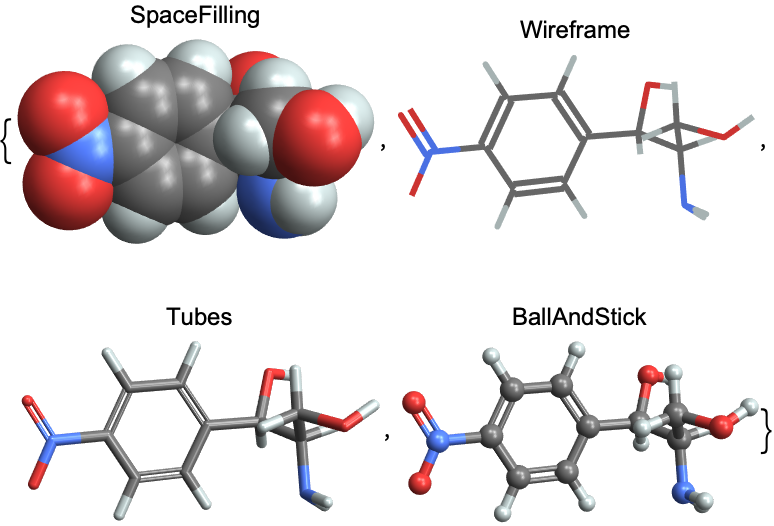
Moving among the three levels changes learning because most chemistry errors are translation errors, not arithmetic errors. A student who writes a correct net ionic equation but cannot say which ions are spectators is not ready for the next unit; more algebraic practice will not fix that.
The three levels, used consistently in chemistry education research, are:
- Macroscopic — color change, temperature drop, precipitate, gas evolution
- Particulate / submicroscopic — ions pairing, molecules escaping, electron density shifting
- Symbolic — , , ICE tables, Lewis structures, cell notation
Classroom studies of student translations between symbolic and particulate representations show that transferring a formula into a particle picture is a distinct skill. ChemEd X materials likewise treat macroscopic, particulate, symbolic, and real-world representations as separately teachable layers of the same reaction.
In practice, an effective AI tutor should refuse to accept “the solution turned blue” as an explanation. The follow-up is what absorbed which wavelengths, which species is in solution, and how that is written. Jenova's Chemistry Tutor is designed around that diagnostic move. Khan Academy lessons often show all three levels, but they cannot detect that you are trapped at the macroscopic one. Master Organic Chemistry is excellent at the particulate-to-symbolic jump for mechanisms, and weaker at general-chemistry phenomena such as phase changes or colligative properties.
A useful self-check after any worked problem is to force all three sentences:
- What did I observe or what would I observe?
- What did the particles do?
- How is that written, and do atoms and charge still balance?
If any sentence is missing, the understanding is incomplete even if the numerical answer matches the key.
How Well Do These Tools Handle Organic Mechanisms and Standardized Exams?
Organic mechanisms and standardized exams expose different tool strengths: Master Organic Chemistry leads on mechanism logic, Khan Academy leads on free AP-aligned practice volume, and Jenova's Chemistry Tutor leads when you need both mechanism coaching and exam-format strategy in the same thread. No single tool owns every exam family.
For organic chemistry, mechanism fluency is a language problem. Students must learn curved-arrow grammar, then SN1 versus SN2, E1 versus E2, carbonyl addition, and aromatic substitution as structured choices rather than flashcards. Master Organic Chemistry's article sequence — bonding and resonance, acidity, conformational analysis, spectroscopy, aromaticity, and carbonyls — is purpose-built for that progression. Khan Academy's organic course is a solid free companion but thinner on synthesis strategy and exception-handling. Jenova treats arrow-pushing as a language to be read and written, then generates mechanism, synthesis, and spectral-interpretation sets at the student's current grain size.
For AP Chemistry, official structure still governs preparation. The 2026 exam remains two sections, with 60 multiple-choice questions and seven free-response questions, and one 2026 prep guide lists the administration date as May 5. The CED's science practices — models and representations, experimental method, data representation, model analysis, mathematical routines, and argumentation — mean a calculator-only tutor is misaligned. Students who want a dedicated AP-wide coach sometimes pair chemistry work with Jenova's AP Exam Tutor.
For MCAT Chemical and Physical Foundations, the bottleneck is usually passage integration with biochemistry and physics, not isolated mole conversions. A chemistry tutor that can bridge thermodynamics to bioenergetics is more useful than a general-chemistry video unit. That is also why Physics Tutor and Biology Tutor are common adjacent tools for the same pre-med workflow.
Jenova additionally tracks ACS finals, IB SL/HL papers, A-Level specifications, DAT/OAT chemistry, Chemistry Olympiad depth, and several national entrance exams. Those alignments are strategic rather than official-item-bank access. When formats change, current board documentation should still be checked. Khan Academy does not attempt that breadth. Master Organic Chemistry does not attempt it at all.
How Do You Get the Most Out of an AI Chemistry Tutor?
You get the most out of an AI chemistry tutor by stating your level, your stuck point, and the representational level you can already handle — then demanding the other two levels before you accept an answer. Vague prompts produce generic formula sheets.
For Jenova's Chemistry Tutor, a first session can be this short:
- Open the agent at jenova.ai/a/chemistry-tutor.
- State level, course, and the exact snag:
"I'm a high school junior in AP Chemistry. I can set up Kc expressions, but my ICE tables blow up algebraically, and I still think adding reactant changes K. Target score is a 5 in May."
- Ask for a three-level repair, not a shortcut:
"Explain the stress on the system at the particle level, then write Q versus K, then give me one moderate and one AP-style FRQ with a hint ladder."
- After two or three problems, ask it to name the misconception pattern and generate a five-item set that isolates that pattern only.
The free tier includes core tutoring with limited usage. Plus is $20/month for 30× the free allowance; higher tiers increase monthly usage further. Usage resets on the billing date rather than as a daily drip.
For Khan Academy, the parallel setup is different because the product is a course, not a diagnostician:
- Open the AP/College Chemistry course or the high school sequence.
- Complete the unit diagnostic rather than starting at video one if you already had a class.
- Use mastery challenges for retrieval, then bring residual confusion to a conversational tutor. Khan Academy is strongest as the syllabus; it is weaker as the follow-up interrogator.
For Master Organic Chemistry, start with the conceptual gap, not the chapter number:
"I keep treating formal charge as the same thing as electron density. Give me the resonance and electronegativity articles I should read before I try EAS directors."
Students whose real bottleneck is logarithms in pH or algebra in equilibrium should not stay inside a chemistry-only loop. Jenova's Math Tutor is the better place to rebuild those operations, then return to the chemistry agent with the chemistry meaning of the same symbols.
What Do Chemistry Education Researchers and Practitioners Say About AI Tutoring?
Chemistry education research is clearer than most product marketing: AI tutoring is useful when it forces representational translation and names misconceptions, and weak when it only accelerates plug-and-chug.
"The citation-worthy finding in the last two decades of chemistry education work is not that students need more videos. It is that students can appear fluent at the symbolic level while holding a macroscopic story that is chemically false. If an AI tutor cannot tell those two states apart, it will reward the false story every time the algebra happens to work."
"AP weighting makes this operational. Mathematical routines dominate scoring, but model analysis and argumentation are what separate a 3 from a 5. Tools that only generate numerical drills are practicing the largest slice of the rubric and ignoring the slice that requires chemical thought. We designed around the opposite bias: equations after the molecular picture, and conservation audits before the calculator."
"Persistent memory is the unglamorous advantage. A human tutor who has to rediscover, every Monday, that you confuse catalyst energy with catalyst consumption wastes the first ten minutes. An agent that already knows your ICE-table algebra is fine and your Le Chatelier interpretation is not can start on the actual error. That is a teaching design choice, not a chatbot feature."
— Jenova Product Team, AI science-tutor design, drawing on chemistry education research and multi-exam coaching workflows
That view matches the research record already cited: relational understanding needs submicroscopic and symbolic representations used together, and macro-micro category errors are a standard alternative conception. AI does not repeal those constraints. It either implements them or it does not.
Which Chemistry Study Tool Fits High School, College, and Pre-Med Students?
The right chemistry study tool is the one that matches your course constraint and your failure mode, not the one with the longest topic list. Use the mappings below as a decision guide rather than a ranking.
High school and AP Chemistry. Start with Khan Academy for unit coverage and free AP-style practice, then use Jenova's Chemistry Tutor when a misconception or FRQ explanation stalls. Chemix is worth adding only when a lab report needs a clean apparatus drawing. Students drowning in significant figures and dimensional analysis should treat that as a math-fluency problem as much as a chemistry problem.
First-year college general chemistry. Jenova is the better primary tutor if office hours are scarce and your errors span bonding, equilibrium, thermo, and kinetics. Khan Academy still works as a lecture substitute. ChemCollective is the better add-on when the course grade includes lab reasoning and you cannot get extra bench time.
Organic chemistry I and II. Master Organic Chemistry should be in the weekly rotation for every student who is lost in mechanisms, regardless of what else they use. Jenova is the better live drill partner for synthesis, spectroscopy interpretation, and “explain why this pathway wins.” Khan Academy organic is a free backup, not a full replacement for either.
Pre-med, DAT, OAT, and MCAT. Prioritize passage-style reasoning and cross-disciplinary links over completing a high school video tree. Jenova's Chemistry Tutor plus the MCAT Tutor is a more coherent pairing than stacking three general-chemistry channels. Biology Tutor and Physics Tutor cover the bordering content the chemistry agent should not pretend to replace.
Olympiad, ACS finals, and physical chemistry. Breadth-first video courses run out of depth. Jenova is the only option in this set that is explicitly scoped to competition-level integration and pchem topics such as quantum models, statistical thermodynamics, and surface chemistry. Even then, primary literature and a course textbook remain necessary; an AI tutor is a reasoning partner, not a substitute for the ACS exam or a graduate syllabus.
A practical stack for most students in 2026 is therefore mixed: one structured curriculum (usually Khan Academy), one deep specialist if organic is the course (Master Organic Chemistry), one lab-visualization tool if drawings or virtual experiments are required (Chemix or ChemCollective), and one adaptive tutor when the need is diagnosis rather than content exposure (Jenova's Chemistry Tutor). Treating any one of those as a complete chemistry education is the mistake the PARTICLE framework is meant to prevent.
References
- Khan Academy — Chemistry archive and course index
- Khan Academy — AP/College Chemistry course with videos and AP-aligned practice
- Khan Academy — Organic chemistry course
- Khan Academy Districts — Pricing stating the core platform is free for independent learners
- Nibble — Reporting on Khanmigo pricing of $4/month or $44/year
- College Board AP Central — AP Chemistry course framework, nine units, and science practices
- College Board AP Central — AP Chemistry exam structure of 60 multiple-choice and seven free-response questions
- Marks Education — 2026 AP Chemistry exam date and section timing
- Master Organic Chemistry — 400+ undergraduate organic articles, study guides, and practice
- Chemix — Browser editor for science lab diagrams and apparatus
- EdTech Digest — Chemix free-tier share and subscription features
- ChemCollective — Virtual Lab linking chemical computations to simulated experiments
- Labster — Institutional virtual labs for high school and university chemistry
- ERIC / International Journal of Science Education — Treagust, Chittleborough, and Mamiala on macroscopic, submicroscopic, and symbolic representations
- Keith S. Taber — Macro-micro confusion as a common alternative conception
- Springer Discover Education (2025) — Integrating macroscopic, symbolic, and submicroscopic chemical representations
- MDPI Education Sciences — Student translations between symbolic and particulate chemistry
- Chemical Education Xchange — Macroscopic, particulate, symbolic, and real-world representations of reactions