What Are the Best Free AI Roleplay Games for Beginners?
2026-09-08
How Do Guidance, Memory, and Free-Tier Limits Separate Beginner-Friendly AI Roleplay Games?
The free AI roleplay games that work for beginners in 2026 are the ones that put a scene, a character, and a reason to act in front of you within the first minute — not the ones that dump you onto a blank prompt. Structured scenario agents such as The Mansion on Jenova, character-chat libraries such as Character.AI, and narrator-led sandboxes such as AI Dungeon all offer usable free access, but they fail beginners in different ways: chat tools stall without a plot, sandboxes drift without memory work, and “free” tiers often cut the session short.
Key factors that separate a playable first session from a confusing one:
✅ Cold-start speed — a designed opening (locked room, tavern stranger, missing memory) beats “describe your world” ✅ Input style — typing what you do is more game-like than picking gem-gated dialogue, but only if the narrator knows how to respond ✅ Session memory — auto-summaries, story cards, and persistent chat history decide whether yesterday’s wound still exists today ✅ Free-tier completeness — daily credits, message caps, and model quality determine whether you finish a scene or hit a paywall mid-fight ✅ Cognitive load — full Dungeons & Dragons 5e rules help tabletop fans and overwhelm everyone else
To compare these tools honestly, it helps to treat “free AI roleplay” as three different products — a story with an arc, a character to talk to, and a rules engine — rather than one ranking.
Why Are First-Time Players Switching to Free AI Roleplay Games in 2026?
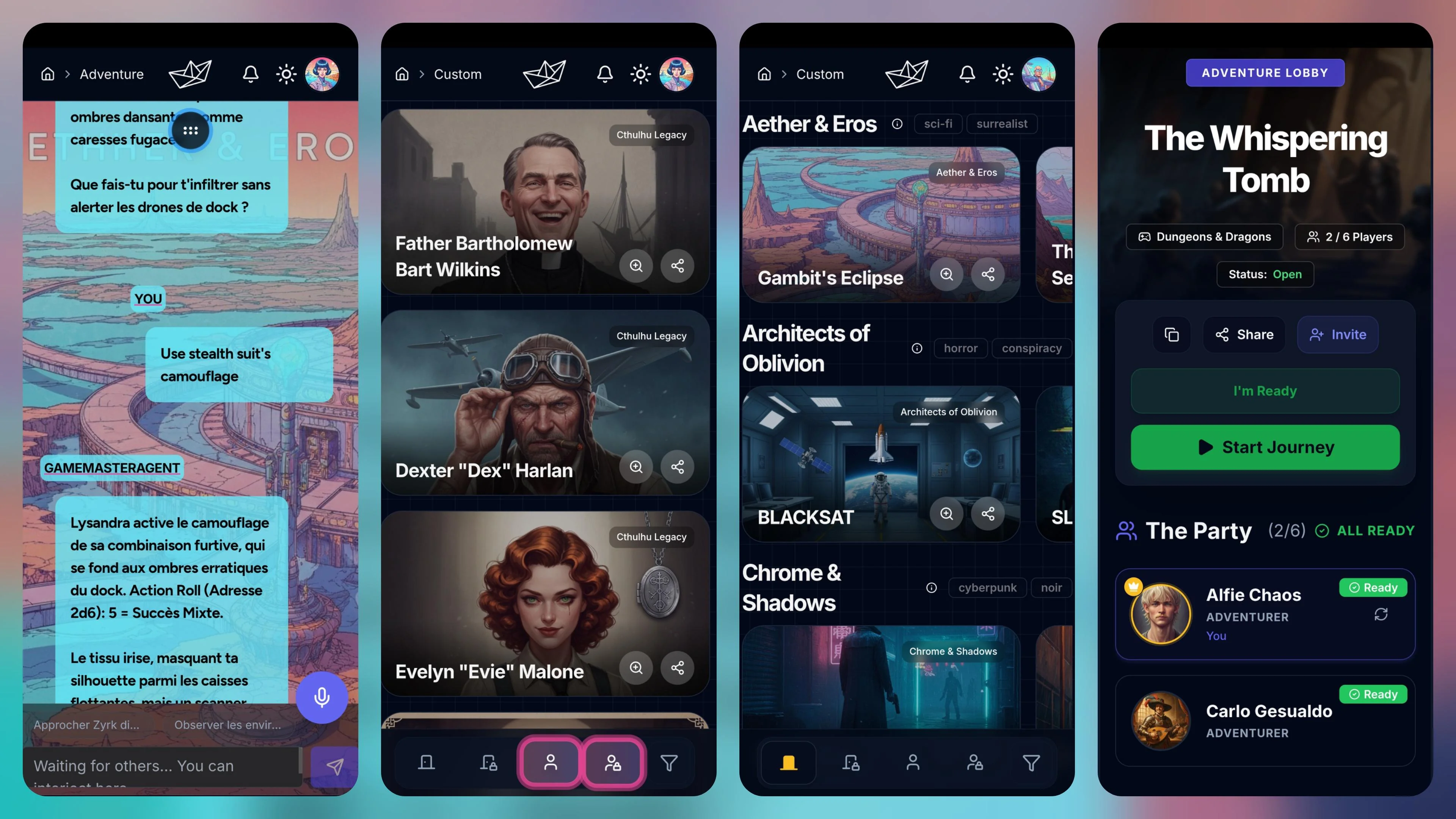
Beginners are switching because an AI narrator removes the two classic blockers of tabletop play: finding a group and finding a Game Master. You can start a mystery, a romance, or a dungeon crawl alone, on a phone, without learning a 300-page rulebook first.
That shift is not only a consumer fad. Universities are treating AI inside games as a research subject, not a novelty: the University of Nevada, Las Vegas opened an AI Research Hub inside its International Gaming Institute to study how AI is changing the industry. On the player side,
that do not require a paid module or a scheduled session.Emotional investment is the other draw. Research on emotional simulation in game AI finds that when players perceive genuine emotion in virtual characters — anger, fear, warmth — they become more willing to stay in the scene. AI roleplay games exploit that loop: the character remembers your slight, the mansion reacts to the door you forced, the island romance tilts because you picked a side.
The catch for 2026 beginners is abundance without labels. Character chat, text adventures, otome-style dating games, and AI dungeon masters all advertise as “roleplay.” A first-time player who wants a game often lands in a chatbot that never ends, and a player who wants a companion often lands in a sandbox that never focuses. Sorting by what the free product actually is matters more than sorting by star ratings.
What Should Beginners Look for in a Free AI Roleplay Game?
Beginners should evaluate free AI roleplay games on six dimensions — a Beginner On-Ramp Framework — rather than on who has the largest character catalog. Catalog size is a discovery feature. It is not a game.
The six dimensions:
- Cold-start speed. Can you be in a scene in under two minutes without writing a lore bible?
- Premise quality. Does the game give you a dramatic question (escape, investigate, survive, romance) or only a persona?
- Input freedom. Can you type an unexpected action, or are you locked to authored choices and gem branches?
- Memory reliability. Does the tool remember names, injuries, and promises after you close the tab?
- Free-tier completeness. Can a first session finish on the free plan, or does quality collapse after a handful of messages?
- Cognitive load. Are you playing prose, light RPG actions, or a full 5e combat tracker?
Independent roundups of AI story games already split the market this way: sandboxes such as AI Dungeon maximize freedom and minimize rails; character hosts such as Character.AI maximize conversation and minimize plot; mechanics-first tools such as Friends & Fables run real 5e campaigns; episodic apps such as Episode still use scripted flags rather than generative input. A roleplay-chatbot comparison built around failure modes makes the same point from the other direction: pick the compromise you refuse to live with — forgotten facts, heavy setup, or an AI that hijacks the story — before you pick a brand.
Testing against this framework shows a consistent beginner pattern. Tools that score high on cold-start and premise quality get a first session finished. Tools that score high only on catalog size get a first session abandoned. Free-tier completeness is the silent killer: several hosts restrict messages, advanced memory, group scenes, or model quality unless you pay, which means the “free game” you opened is a demo of a different product.
Which Free AI Roleplay Games Are Easiest to Start Without Tabletop Experience?
The easiest free starting points for someone with no tabletop background are a designed scenario agent such as The Mansion, a huge hosted character catalog such as Character.AI, a narrator sandbox such as AI Dungeon, a mobile text-adventure such as FableAI, and a 5e-aware AI Game Master such as Friends & Fables — in that order of “just press play.”
The Mansion (Jenova)
The Mansion is a complete mystery: you wake in a house with no memory of how you arrived, and every room is a reason to act. That designed opening is the beginner advantage. You do not invent a setting, a party, or a quest log. You open a door.
On Jenova, the free plan includes core features with limited monthly usage; Plus starts at $20/month for 30× that allowance. Persistent cross-session memory means the house can remember what you broke yesterday. The limitation is structural: this is a scenario, not a public character bazaar, and it does not implement official D&D 5e combat the way a dedicated virtual tabletop does. Players who want a different tone can move to The Asylum (investigator horror) or Love Island (open-world romance) without learning a new interface.
Character.AI
Character.AI remains the lowest-friction character host: search a public catalog, tap a bot, start talking. Comparison guides note that it is generally stronger for roleplay conversation than AI Dungeon, with web and mobile apps and a Stories format on top of free-form chat. Strict content filtering and limited model control are the trade-offs. The deeper beginner issue is structural. Chat does not automatically become a game. Conversations often do not build toward an ending; they continue until you stop.
AI Dungeon
AI Dungeon is the opposite failure mode, and the opposite strength. It is an open-ended AI sandbox with a genuine free tier on browser, iOS, Android, and Steam. You type any action; the narrator improvises. Memory is a mix of auto-summarization and Story Cards you edit yourself. For a beginner, that freedom is intoxicating for twenty minutes and then expensive in attention. Long sessions drift unless you maintain the memory yourself. Writers and improvisers tend to prefer it; players who want a story that “goes somewhere” often do not.
FableAI
FableAI is a mobile text-adventure RPG you can play solo or with friends, with preset and custom adventures, image generation, and daily free credits. It is free to download, with in-app purchases (gem packs and named tiers such as Starter, Explorer, Adventurer, and Hero). The beginner limitation is platform and monetization: it is iPhone-only as of the App Store listing, rated 13+, and the free layer is credit-gated rather than unlimited. It is a strong on-ramp if you already live on iOS and want visuals with the prose.
Friends & Fables
Friends & Fables is the pick when the beginner is not actually a beginner at wanting D&D. It runs actual 5e — hit points, leveling, spellcasting, battlemaps — on Discord or the web, solo or with a party, with a free tier plus subscription. If nobody in your group will GM, this is the closest free-adjacent substitute. If you wanted prose-first storytelling without tracking spell slots, the rules layer is overhead.
| Feature / Dimension | The Mansion (Jenova) | Character.AI | AI Dungeon | FableAI | Friends & Fables |
|---|---|---|---|---|---|
| Cold-start | Designed mystery opening | Search a public bot | Blank page or preset adventure | Preset or custom adventure | Campaign / 5e setup |
| Input style | Free-text actions | Chat messages | Type any action | Free text inside an RPG frame | In-character actions plus 5e |
| Memory | Persistent cross-session memory | Conversation history plus Story Memory | Auto-summary plus editable Story Cards | Adventure/session continuity | Campaign state and mechanics |
| Free access (as of 2026) | Free tier, limited usage | Free plus subscription | Free tier plus subscriptions | Daily free credits plus IAP | Free tier plus subscription |
| Mechanics load | Narrative, no official 5e | None | Light game actions | RPG-flavored, credit-gated | Full D&D 5e |
| Best for | First-time players who need a story that starts itself | Casual character chat with huge catalog | Improvisers who will tend memory | iPhone players who want art with the story | Groups that want 5e without a human GM |
Janitor AI sits just outside this beginner table on purpose. It is a large free community library with optional bring-your-own API key, which is excellent once you know what a character card is and poor as a first contact with the hobby. Lists of Character.AI alternatives keep expanding in 2026; more options is not the same as an easier first hour.
How Does a Designed Opening Scene Compare to a Blank Sandbox?
A designed opening scene is almost always the better first game; a blank sandbox is almost always the better tenth game. Beginners confuse those two jobs because both are labeled “AI roleplay.”
In a designed scenario, the narrator already knows the dramatic question. The Mansion’s amnesia hook, The Asylum’s failed investigation, and Vesper Court’s vampire-court awakening all answer “what do I do?” before you type. You still have free input — you can climb out a window, interrogate a portrait, refuse the obvious clue — but you are pushing against a world that already has mass. That is closer to sitting down at a prepared one-shot than to worldbuilding from zero.
In a blank sandbox, you are the writer, the player, and the editor of the AI’s memory. AI Dungeon is the clearest example: maximum freedom, zero rails. Text-adventure veterans love that fog of possibility. New players often type “look around,” get a generic tavern, and do not know whether they are allowed to start a fight, leave town, or rewrite the genre. Classic interactive fiction had the same discoverability problem; the open-ended text adventure creates a fog where anything seems possible, which is inspiring for some people and paralyzing for others.
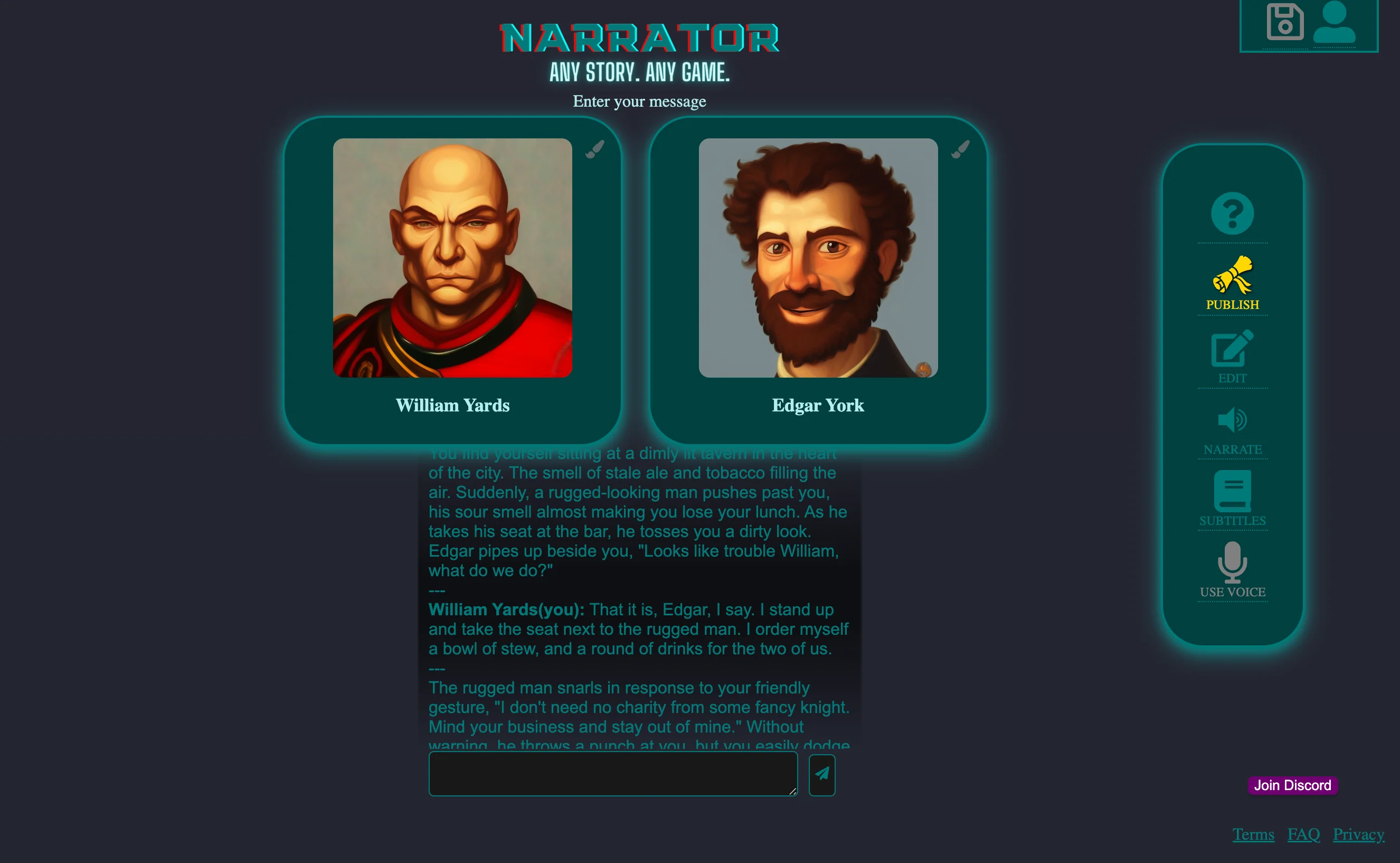
There is a third category beginners should name out loud: character chat that never becomes a scene. Character.AI, Talkie, Chai, and similar hosts are strong at persona. They are weak at closure. A use-case comparison of roleplay chatbots separates “persistent relationship” tools from “narrator-led adventures” for this reason. If your test of a good session is “something happened and then it ended,” start with a scenario game. If your test is “I talked to this person for an hour,” start with a character host.
Human-authored branching novels such as Choice of Games remain the quality ceiling for deliberate endings — every path was written on purpose — but they are not free-input AI games. They are the benchmark, not the competitor. Use them when you want crafted branches. Use an AI narrator when you want to attempt something the author never wrote.
How Much Continuity Can You Expect From a Free AI Roleplay Plan?
On a free plan, expect continuity inside a single sitting and treat multi-day memory as a paid or self-managed feature unless the product documents otherwise. That is the practical rule; the marketing copy will not phrase it that way.
Memory is not one number. Kindroid-style companion products layer relationship memory; Character.AI has added Story Memory and pinned facts; AI Dungeon mixes auto-summaries with Story Cards you curate; Reverie-style hosts combine editable long-term notes with world books. Free tiers frequently restrict advanced memory, group scenes, or the better model. A beginner who returns the next evening and finds the AI has forgotten the locked cellar did not “play wrong.” They hit the product’s free-state design.
Jenova’s advantage on this axis is architectural rather than magical: unlimited chat history and persistent cross-session memory are platform features, so a scenario like The Mansion can recall that you already searched the study. The honest limitation is usage, not amnesia. The free tier is real and includes core features, but it is metered. Heavy daily play belongs on a paid tier ($20/month and up), the same way FableAI’s daily free credits are a ration, not a lake.
Self-hosted front ends such as SillyTavern invert the problem. The software is free; you supply the model, the lorebooks, and the server. Continuity can be excellent. Setup is the game, which makes it a poor beginner on-ramp. If configuring prompts is part of the hobby, use it later. If you wanted to play tonight, skip it.
A useful self-test: after fifteen minutes, ask the narrator to recap who you are, what you want, and what just went wrong. If the recap is wrong, you do not have a game yet. You have a chatbot with a costume.
How Do You Run Your First AI Roleplay Session Without Getting Stuck?
Start with a designed premise, one character, and a single goal for twenty minutes — then stop on a cliffhanger so the next session has a hook. Do not begin by pasting a six-page backstory.
For The Mansion, the first session is mostly orientation:
- Open the agent at jenova.ai/a/the-mansion.
- Accept the amnesia hook and name one thing you want (a way out, a name, a weapon, a person).
- Act in short, concrete moves rather than essays.
A first prompt that works:
"I wake on a cold floor. I check my pockets, then the nearest door. I am looking for any sign of my name and a way out. If I hear someone, I hide first and watch."
That prompt gives the narrator a body, a goal, and a temperament. It does not ask the AI to invent your entire life.
If you would rather start in a sandbox such as AI Dungeon, borrow the same discipline. Do not type “start a fantasy adventure.” Type a scene:
"I am a tired courier in a rain-soaked port city. I have a sealed letter I am not supposed to open. I duck into a tavern to wait out the storm and notice someone watching the door."
Preset adventures in FableAI follow the same logic with less typing: pick a module, play as a defined role, spend the daily credits on one complete scene rather than five abandoned intros. Character.AI beginners should search for bots that describe a situation (you are trapped, you are on a job, you are late to a trial) rather than bots that only describe a personality.
Two recovery habits prevent the classic spiral:
- Rewind early. If the narrator takes your character’s agency or jumps three days, edit or regenerate that turn. Tools without a rewind will train you to accept bad canon.
- State the camera. “Stay in this room. Do not skip time. Describe what I see, then wait.” Beginners lose sessions when the AI summarizes past the interesting part.
When you outgrow a single scenario, Game Designer Assistant is the adjacent Jenova tool for turning “I wish this mystery had a better villain” into notes, systems, and a next adventure — still without requiring you to GM a table.
What Do Interactive Fiction Designers Say About AI Game Masters for New Players?
Interactive fiction designers tend to agree that AI game masters fail beginners at the first verb, not at the prose quality: if the player does not know what kinds of actions count, the model’s eloquence does not matter.
"The beginner drop-off we see is almost never 'the writing was bad.' It is 'I did not know whether I was allowed to do anything.' A blank 'What do you do?' prompt feels like creative freedom to a Game Master. To a first-time player it feels like a test they did not study for. A designed opening — amnesia in a mansion, a letter you must not open, a party already in the lobby — is not a constraint on the AI. It is a courtesy to the human."
"Memory is the second failure point, and free tiers hide it. Players will forgive a clumsy fight description. They will not forgive a narrator who forgets the wound they just took. If your free plan cannot recap the last scene accurately, you do not have a campaign. You have a slot machine that pays out atmosphere. That is why we would rather ship a smaller set of scenario agents with persistent memory than a thousand bots with none."
"The other misconception is that more mechanics make a kinder on-ramp. Full 5e is a gift to people who already love 5e. For everyone else, tracking spell slots on day one is how you lose them to a dating sim. Start with prose and one dramatic question. Add dice when the player asks for them, not because the category is called RPG."
— Jenova Product Team, designers of scenario-based AI game agents, working on persistent-memory play since the platform’s public release
That view lines up with player-perception research as well. Studies of generated game content find that players often misclassify AI-made and human-made levels, and that experience tracks who they think made the content. For a beginner, a coherent authored premise will feel more “real” than a technically impressive sandbox that contradicts itself.
Which Free AI Roleplay Games Fit Solo Play Versus Playing With Friends?
Solo play favors designed scenarios and character chat; friends play favors lobby-based adventures, 5e-aware GMs, and social worlds that already have a cast. Mixing those up is how a quiet mystery becomes a chaotic group chat.
Solo, tonight, no rules knowledge. The Mansion and The Asylum are built as single-player dramatic questions. Character.AI is the solo companion option if talking to someone is the point. AI Dungeon and FableAI both support solo sandbox play; FableAI’s daily credits make it a “one scene per day” habit rather than an all-night crawl. Low-cost, no-fuss entry is also the pitch around tools such as RoleplayGPT-style text roleplay hosts, which aim at beginners who do not want a toolchain.
Solo, but you want romance or social inference rather than escape. Love Island runs emergent social dynamics among a fixed cast of strangers. That is still a game — choices create alliances and rejections — without requiring you to invent NPCs. Otome-style AI platforms occupy a similar niche for players who want preset romantic routes with a low mechanical barrier.
With friends. Friends & Fables is the explicit party tool in this set, because the campaign state is the point. FableAI advertises solo or friends on iPhone. Hidden Door, which left early access in 2026, is built as social roleplay inside known story worlds, free to start, English-only, and episodic rather than novel-length. A group of beginners should pick the product that already has a lobby, a ready check, and a shared log. Pasting four people into one Character.AI thread is not a session. It is four inner monologues.
Not yet, if you are a beginner. SillyTavern and NovelAI are capable and the wrong first purchase of attention. NovelAI is a writing studio with a limited trial, not a game that starts without you. SillyTavern is total control after you become your own sysadmin. Both are reasonable second homes. They are poor answers to “what can I play free after dinner.”
Gamification research keeps repeating a related warning from the live-service world: personalization and data-driven loops drive retention only when the activity is already fun. An AI roleplay game that remembers you will not save a session that never had a goal. Pick the social shape first — one player, two players, or a table — then pick the narrator.
References
- Loreon — Best AI Story Games 2026: 13 Compared
- GovTech — UNLV Launches Hub to Study AI’s Impact on Gaming Industry
- ResearchGate — Emotional Simulation in Game AI and Its Impact on Player Experience
- Reverie — 6 Best AI Roleplay Chatbots in 2026, Compared by Use Case
- Character AI vs AI Dungeon — Full Comparison Guide
- Apple App Store — FableAI: AI Text Adventure RPG
- AITestGuide — 16 Best Character AI Alternatives 2026
- Hacker News — The Greatness of Text Adventures
- ACM Digital Library — Playing the Imitation Game: How Perceived Generated Content Shapes Play
- Skywork — Unlocking AI RP: A Deep Dive into RoleplayGPT
- WeavAI — 7 Best AI Otome Roleplay Platforms (2026)
- Optimove — AI-Orchestrated Gamification and Player Engagement