Werewolf Roleplay AI: Pack Lore, Shift Scenes & Persistent Memory
2026-08-27
Looking for werewolf roleplay AI that holds a pack together, remembers who shifted last, and never drops a blood-oath mid-scene? Jenova gives you a dedicated space to build lycan companions, run territory stories, and keep every rival, mate-bond, and moon-cycle intact across sessions.
As of August 2026, conversational AI is less a novelty and more a creative partner. Werewolf roleplay sits at the intersection of character chat, dark fantasy, and long-form worldbuilding — and a generic chat window was never built for dual natures, pack law, or a hunt that lasts three nights.
✅ Create custom werewolf characters with private pack lore and persistent memory ✅ Stay in voice across hunts, rivalries, and dual-nature scenes ✅ Move from chat into manga, comics, screenplays, and scores without leaving the platform ✅ Play on web, iOS, and Android with the same characters and history
To understand why this matters, let's examine why most AI chat tools fail lycan roleplay — and what a purpose-built setup actually requires.
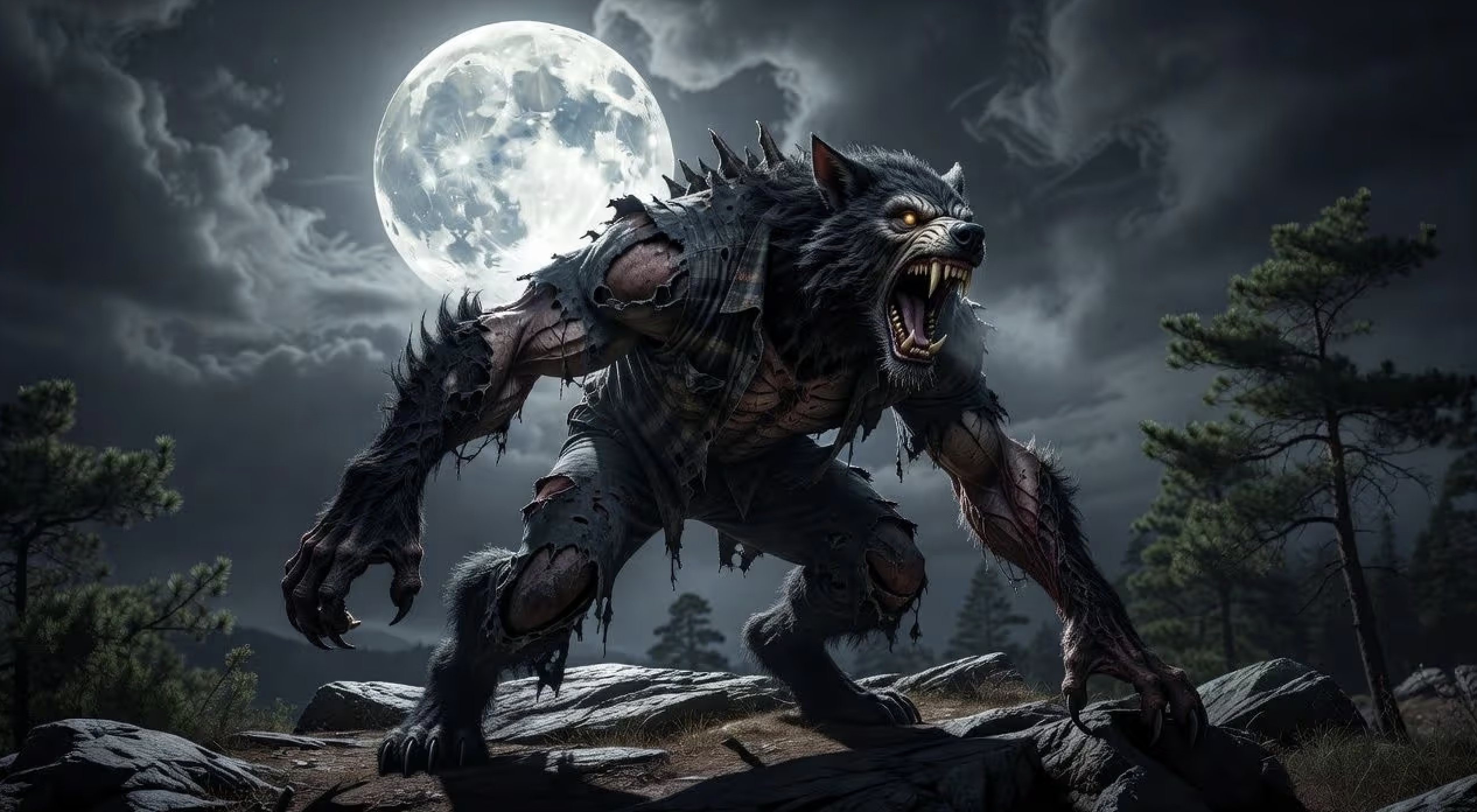
Quick Answer: What Is Werewolf Roleplay AI?
Werewolf roleplay AI is a conversational system that lets you inhabit lycan characters, sustain in-character hunts and pack politics, and continue long stories with consistent lore and memory. It is built for character work, not one-off Q&A.
Key capabilities:
- Custom werewolf personas with private knowledge bases and a locked dual-nature voice
- Persistent memory so names, territories, grudges, and moon rules survive every session
- A Roleplay Game Master path when you want a full scene partner, not a questionnaire
- A route from live scenes into manga, comics, and screenplays when a hunt is worth keeping
Why Werewolf Roleplay AI Breaks Character
Werewolf fiction rewards continuity. An alpha who forgets last week's challenge, a hunter who resets after a cliffhanger, or a centuries-old wolf who suddenly sounds like a helpdesk bot will kill the scene. Demand for this kind of companionship is not a fringe hobby at the edge of AI — it sits inside a much larger shift.
$36.8 billion — Global AI companion market size in 2025
Therapy and companion chat now rank among the top uses of generative AI, according to reporting in Nature Machine Intelligence and a Harvard Business Review analysis cited by the American Psychological Association. Mixed-use roleplay platforms — the ones that blend creative writing, character play, and long chats — show the stickiest use.
16 visits per month — Average return rate on mixed-use roleplay platforms in the UK
The number of AI companion apps surged by 700% between 2022 and mid-2025. Young adults already account for about 42.6% of the AI companion app market. But accessing good werewolf roleplay is still frustratingly difficult:
- Human and wolf voices collapse into one generic tone
- Pack maps, ranks, and moon rules vanish between sessions
- The shift is treated as a costume change instead of a physical event
- Chat, writing, and art live in separate tools that do not share canon
- Mobile play is an afterthought, so late-night hunts die when you leave the desk
Dual-Nature Voice Is the First Thing to Snap
Werewolf roleplay depends on two masks that still belong to one person: diction, appetite, era, and moral code. A rural alpha should not start using startup slang. A newly bitten intern should not suddenly lecture like a folklore encyclopedia. Most general-purpose chatbots optimize for being useful, not for staying feral, weary, or pack-loyal.
Testing reveals the break almost immediately. One out-of-character apology, and the treeline is a call center. Practitioners who study AI character consistency treat this as a continuity problem — voice drift, value drift, and relationship drift — not a mood you can fix with one adjective.
Memory Is the Real Territory
Pack politics only work if last week's insult still matters. Players track ranks, feeding or hunting restrictions, city versus forest borders, and who saw whom at the full moon. Stateless chat throws that ledger away.
Many companion apps forget because they run on a fixed context window of roughly 8,000–9,000 tokens. You end up restating the pack bible every session, which is the opposite of play. Persistent, cross-session memory is not a luxury here. It is the difference between a campaign and a series of auditions.
The Shift Gets Flattened Into a Costume
A convincing lycan scene has body logic: heat, scent, torn seams, delayed speech, the moment a human hand is no longer a hand. Generic models skip the cost of the change and jump to plot. The result is a wolf in a people suit — or a person who mentions fangs and then files a status report.
Gothic and rural werewolf stories also run on hunger, loyalty, and grief. That does not require abandoning responsible use. It does require a system that can hold dark fiction without sanding it into bland wellness copy.
The Workflow Is Fragmented
Serious players do not only chat. They write prose, sketch panels, score a hunt, or turn a night into a vertical drama. Doing that across disconnected apps means recopying character sheets and losing visual continuity. A werewolf OC that exists only in one chat window is a dead end the moment you want a page, a poster, or a script.
This is exactly what Jenova was built for.
The Jenova Solution
Jenova treats werewolf roleplay as a long-running creative practice, not a disposable chat. You define a custom agent — instructions, model, knowledge base, tools — and the platform keeps orchestration, memory, and storage in place so the character can actually live.
| Traditional Approach | Jenova |
|---|---|
| Generic chatbot that forgets names mid-hunt | Unlimited conversation history and persistent cross-session memory |
| A single character card with no private canon | Custom instructions plus a private knowledge base for pack law, maps, and moon rules |
| Locked to one model and one tone | Unified access to models from OpenAI, Anthropic, Google, DeepSeek, xAI, and more |
| Chat only; art and scripts live elsewhere | Move from scene work into manga, comics, webtoons, film, and music |
| Inconsistent mobile play | Full feature parity across web, iOS, and Android |
Build a Wolf Who Does Not Forget You
Create a custom agent in minutes. Write the voice: origin, pack rank, city or woods, enemies, tells, what happens at the change. Attach documents — a family tree, a glossary of packs, a map of hunting grounds. The agent answers from that canon instead of improvising Wikipedia folklore.
Because memory is built into every session, a promise made on a new moon still binds on the next. If you want a scene partner rather than a blank custom sheet, Roleplay Game Master is built for unlimited-memory play with character consistency and complete scenario freedom.
Match the Model to the Night
Court intrigue in a city pack wants a different instrument than a rain-soaked ridge hunt. Multi-model access lets you keep the same character instructions while switching the underlying model when you need more lyricism, more bite, or tighter scene control. You are not juggling accounts. You are directing a performance.
When the chat has produced a voice you trust, Creative Fiction Writer takes the same world into researched, editable prose — useful when pack politics have to survive a novel, not just a log.
Play the Atmosphere, Then Keep the Art
When a scene deserves to leave the chat, you do not start over. Webtoon Creator keeps faces, palettes, and vertical rhythm consistent across long shifter serials. Manga Creator and Comic Creator do the same for page-turn pacing.
Film Screenwriter and Microdrama Screenwriter catch the cast when you want structure, dialogue, and cliffhangers instead of open chat. Music Composition Assistant can score a hunt or a pack howl so the night has a theme, not just text.
Looks are lore in this genre: scars, kohl, denim over a white shirt, the difference between a 19th-century woodsman and a 2020s club enforcer. Beauty Consultant helps you describe — or actually wear — a coherent human-form aesthetic. For pack omens and moon-night ritual, Mystic Tarot Reader and Personal Astrologer give you in-world texture without leaving the same creative stack.
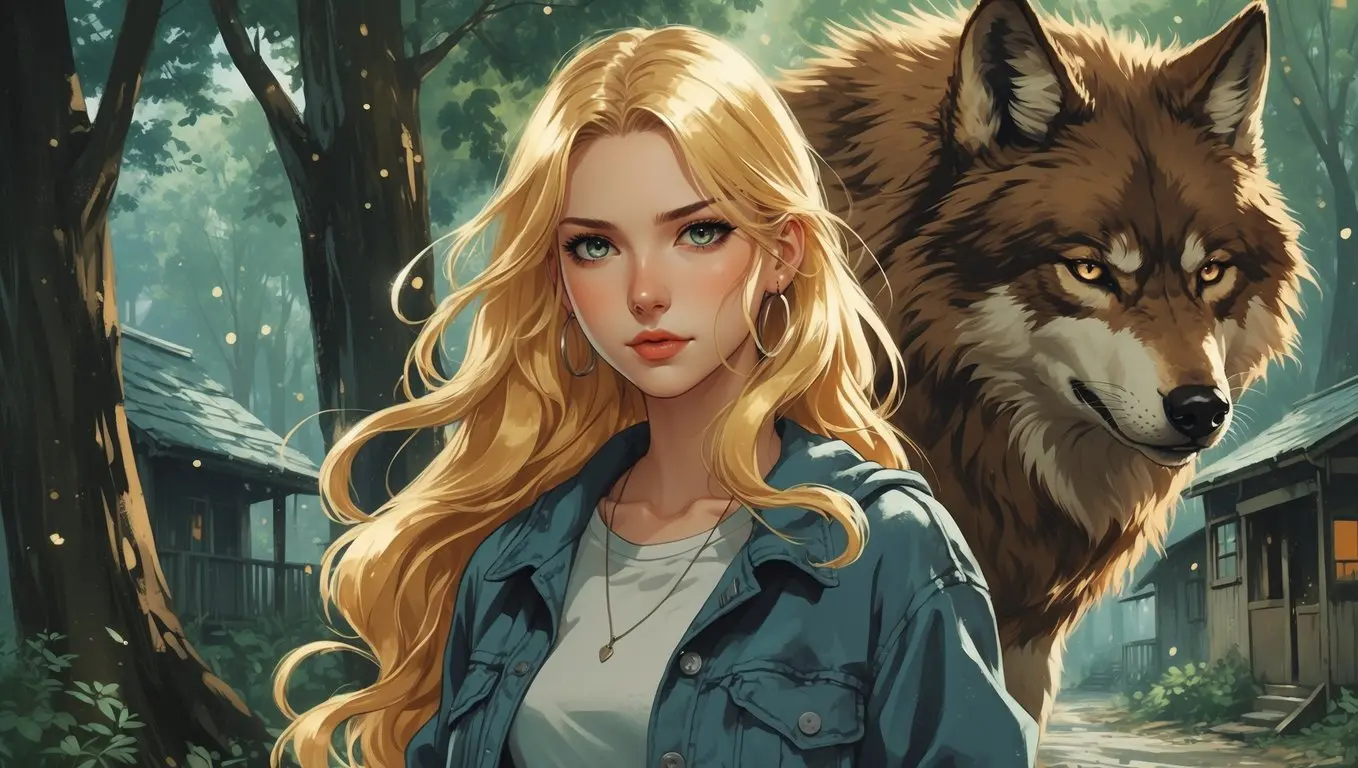
Specialized AI Agents for Werewolf Roleplay
If you are building a night world, these agents sit next to a custom lycan companion rather than replacing it. Each one covers a step you would otherwise do in a separate app.
Roleplay Game Master
Immersive roleplay with unlimited memory and perfect character consistency. Complete creative freedom to explore any scenario you imagine — a ridge hunt, a city masquerade, a pack tribunal, a first change that does not go cleanly.
- Memory that can carry ranks, debts, and scent-marks across sessions
- Character consistency under pressure, not only in calm talk
- Room to run horror, romance, rural gothic, or urban fantasy without a scripted tour
Creative Fiction Writer
Chat is rehearsal. A manuscript is architecture. This storytelling partner handles original fiction across any genre, with research for authentic worlds and editorial insight from first draft to final pages. Use it when your roleplay nights have produced a canon worth committing.
- Worlds that stay internally consistent after the improvisation ends
- Prose that can hold dual-nature interiority, not only banter
- A path from scene logs to a novel bible you can actually revise
Manga Creator
Werewolf stories are visual long before they are clever. This agent is a personal mangaka for complete stories — panel flow, consistent art, one-shots through serialized epics. Use it when a shift, a scar, or a pack mark has to look like the same person on page 12 and page 120.
- Visual continuity for fangs, fur, and period or street costume
- Panel rhythm that can carry a reveal across a page turn
- Room to grow from a single hunt to a 200-page chronicle
Film Screenwriter
When a custom werewolf agent has given you a voice you trust, this partner takes you through concept, outline, draft, and revision — structure, dialogue, character, and visual storytelling.
- Scene craft that survives the move off the chat log
- Dialogue that keeps immortal-or-feral cadence on the page
- Professional revision instead of a dumped transcript
Music Composition Assistant
A hunt without a motif is just typing. This composer works in melody, harmony, counterpoint, and text-based notation across traditions. Score the change, the pack howl, or the quiet after.
- Themes you can reuse whenever that wolf enters
- Arrangement notes that match rural night, city alley, or court hall
- A soundtrack layer the chat itself cannot provide
Learn English Through Roleplay
If you want the language of the night to sound native — idioms, grammar, register — immersive English roleplay is a sharper path than flashcards. Any scenario, including gothic and shifter ones, becomes the place where speech sticks because the moment mattered.
- In-character practice at the intensity you choose
- Vocabulary anchored to scenes, not word lists
- A way to keep RP going while leveling the language you write it in
Try Jenova free — no credit card required.
How to Start Werewolf Roleplay on Jenova
Step 1: Open the Platform and Create the Agent
Go to Jenova and create a custom agent for your werewolf — or open Roleplay Game Master if you want a scene runner first. Name them. Write instructions that lock voice, era, pack rank, and what they will never do. Choose a model that fits the tone you want tonight. You are not filling a toy bio. You are hiring a performer with a contract.
"You are Mara Ellison, bitten in 1998 outside Butte. You speak in short, dry sentences. You never explain lycanthropy to humans unless it serves the pack. You remember every slight. You are hungry near the moon, but you are never theatrical about it."
Step 2: Load Canon, Not Vibes
Attach a knowledge base: territory map, pack glossary, moon rules, a cast list with ages and allegiances. The more specific the file, the less the character will invent a contradictory mythos. This is also where you decide the rating and the lines you will not cross, so the scene can go dark without going sloppy.
"Canon notes: The Blackridge pack holds the river valley. My character, Jonah, is six months turned and still loses time. Last session he lied about a hunter's truck on the fire road. Mara knows. He does not know she knows. No one shifts inside town limits."
Step 3: Open a Scene With Stakes
Do not start with "hello." Start with weather, a door, a debt. Give the agent something to want. Persistent memory means you can pick up mid-plot; you do not need a recap paragraph unless you enjoy the ritual.
"2 a.m., ridge above the sawmill. The moon is two nights off full. Mara, you can smell copper on Jonah's jacket that is not deer. You do not accuse him yet. You toss him a spare shirt and wait to see if his hands shake."
Step 4: Continue, Then Promote the Scene
Come back tomorrow. The agent should still know who lied. When a night is good enough to keep, hand it to Comic Creator for sequential art, to the webtoon artist for vertical episodes, or to Microdrama Screenwriter if you want 60–100 episode cliffhanger structure. Score it with the music composition assistant if the hunt needs a motif.
"Turn last night's sawmill scene into a 12-panel comic, high-contrast moonlight, Mara in profile, Jonah's face never fully shown until the final panel, one torn sleeve in the foreground."
Results & Use Cases
🐺 Nightly Companion in a Living Territory
Scenario: You want a continuous relationship with an original werewolf in a mapped valley — not a random prompt, a person with a calendar and a pack.
Traditional Approach: Re-paste a character card into a new chat every evening. Watch them forget your human name, your last gift, and the hunter you both escaped.
Jenova: A custom agent plus private lore files keeps the territory consistent. You play in twenty-minute scenes. The grudge accumulates.
- Persistent memory across unlimited history
- Knowledge base for roads, ranks, and moon law
- The same character on phone and desktop
📊 From Roleplay Log to Novel Bible
Scenario: You are drafting a dark-fantasy novel and use roleplay to pressure-test dialogue and pack politics before you commit them to chapters.
Traditional Approach: A messy notes app, a chatbot that invents a third mythology, and a draft that contradicts chapter four.
Jenova: Roleplay generates usable voice. You export decisions into an outline, then take the same cast to a film screenwriter if the book wants a script treatment later.
- Dialogue that has already survived improvisation
- A canon file the agent cannot freely overwrite
- Less time spent reconciling continuity errors
📱 Shifter Webtoon on a Commute
Scenario: You build episodes on your phone after work — vertical scroll, full color, a new hook every Sunday.
Traditional Approach: Desktop-only tools, inconsistent character faces, and a chat log you cannot easily thumbnail.
Jenova: Play the scene on iOS or Android, then hand the beat sheet to Webtoon Creator for mobile-first pacing. Speech-to-text lets you dictate a ridge argument while you walk.
- Feature parity across web, iOS, and Android
- Visual continuity for a long-running immortal-or-lycan cast
- Episode hooks designed for scroll, not page turns
💼 Pitch a Werewolf Microdrama
Scenario: A small studio wants a vertical shifter romance: dozens of short episodes, paywall-aware cliffhangers, a lead who cannot be seen in town on the full moon.
Traditional Approach: A writers' room spreadsheet, a separate chatbot for "inspiration," and no shared memory of what episode 14 already revealed.
Jenova: Custom character agents hold the leads. Microdrama Screenwriter structures 60–100 episode seasons. Roleplay Game Master can pressure-test a tribunal or a first-change episode before you lock the outline.
- Season architecture instead of isolated prompts
- Leads who do not reset their secrets
- A faster path from OC chat to a pitchable bible
FAQ
What is werewolf roleplay AI, exactly?
Werewolf roleplay AI is software that roleplays lycan characters with you in real time — conversation, scene direction, and ongoing plot — while trying to hold a stable voice and world. On Jenova, that usually means a custom agent with instructions, a private knowledge base, and persistent memory, not a disposable chat with a one-line persona.
Is Jenova free to use for werewolf roleplay?
Yes. There is a Free tier at $0 with all core features and limited monthly usage. Paid tiers increase usage (Plus at $20/month for 30×, up through higher plans) and add things like custom model selection. Usage resets on your billing date, with the full limit available from day one rather than a daily drip.
How is this different from a generic chatbot?
A generic chatbot is built to answer questions and be agreeable. Werewolf roleplay needs a locked dual-nature voice, a private canon, and memory that survives the session. Many companion apps also forget because they run on a short context window. Jenova is an agent platform: you specify instructions, model, knowledge, and tools, and the character can continue for as long as you play. You can also move a scene into manga or a script without rebuilding the pack.
Can I create my own werewolf OC, or only preset characters?
You can create your own. Custom agents are the intended path for original bloodlines, packs, and hunters. Roleplay Game Master is there if you want a contained, high-memory scene runner first, then take what you learned back into a custom lycan.
Does werewolf roleplay AI work on mobile?
Yes. Jenova runs with full feature parity on web, iOS, and Android, including synced settings. That matters for this genre: a lot of play happens late, in short scenes, away from a desk. Speech-to-text is available when you would rather whisper a scene than type it.
Will the character remember pack lore, and is my data used to train public models?
Persistent, cross-session memory is part of the platform design — attach canon documents and keep playing. Data is encrypted in transit and at rest, is not sold to advertisers, and is not used to train public AI models. Treat the work as fiction, keep personal legal or medical questions out of the den, and you get a stable creative partner rather than a leaking diary.
Conclusion
Generic chat was never going to hold a pack grudge. Werewolf roleplay AI only works when voice, canon, and memory are treated as infrastructure — and when a good night can become a page, a scroll, or a script without a second origin story.
Jenova gives you that stack: custom lycan agents, persistent history, any major model, and a path into Roleplay Game Master, Creative Fiction Writer, visual serials, and screenplays when the story outgrows the chat. Build the character. Load the valley. Open a ridge that has been watched since 1998.
Explore the full agent library at Jenova.
For Developers: Werewolf roleplay agents and persistent pack companions are available programmatically via the Jenova API — integrate character chat with memory into your application with a single API call. Full documentation →