Voice Roleplay AI: Spoken Campaigns With Persistent Memory
2026-08-26
Finding voice roleplay AI that stays in character, remembers last night's betrayal, and lets you speak instead of type is still rarer than it should be. In August 2026, Jenova puts specialized roleplay agents, speech-to-text, and persistent memory on one platform so you can play out loud without a public lobby, a forgotten canon, or a companion that only exists inside a single game.
Whether you want a rules-aware game master, a vampire court, a language partner who never drops character, or a custom NPC you built yourself, the same session can hold the voice, the story, and the continuity.
✅ Speak your lines with speech-to-text and hear replies with on-device text-to-speech ✅ Persistent campaign memory across sessions, devices, and story arcs ✅ Specialized agents for game mastering, dark romance, language immersion, and career roleplay ✅ Private sessions on web, iOS, and Android — no pickup-group voice chat
To understand why that combination matters, it helps to look at what actually breaks voiced roleplay today — in GTA-style servers, companion apps, and late-night text campaigns that never quite feel spoken.
Quick Answer: What Is Voice Roleplay AI?
Voice roleplay AI is software that lets you inhabit a character out loud while an AI partner stays in-world, in-voice, and in-continuity. On Jenova, that means speaking scenes, hearing replies, and keeping canon across every session.
Key capabilities:
- Always-on game mastering with Roleplay Game Master and sealed story worlds
- Speech-to-text input and text-to-speech playback so you can play with your voice, not only a keyboard
- Persistent memory so NPCs, grudges, and promises survive between sessions
- Language, romance, and career roleplay without a public voice lobby
Why Most Voice Roleplay AI Falls Apart in Practice
Voice is no longer a side feature. The [voice recognition market reached $18.39 billion in 2025](https://www.assemblyai.com/blog/voice-ai-in-2026-series-1) and is projected toward $61.71 billion by 2031. Dedicated AI voice agents were already a $2.54 billion market in 2025. Builders have followed the money: 87.5% of teams in one 2026 industry report were actively shipping voice agents, not merely researching them.
Players feel that shift at the table. Research on gaming motivation treats socializing as a biological drive to interact, and player-motivation studies describe socializing as the intent to build relations and relationship motivation as the desire for deeper ties. Voice is how those ties usually form.
But accessing the kind of voiced roleplay people actually want — a character that sounds right, a world that remembers you, a partner who will not grief the scene — is frustratingly difficult:
- Public voice chat is where toxicity concentrates
- Voice changers alter pitch, not story
- Companion apps lock you to one roster and one tone
- Typing kills the rhythm of a spoken scene
- Human partners cannot always show up when you can talk
Public Lobbies Break Character
Voice chat is the fastest way to feel present and the fastest way to lose the scene. Research on social safety in games notes that roughly 77% of adult players encounter severe toxicity, and parent-safety reporting has found sexual harassment via voice chat in nearly 15% of matches in some popular titles.
Even when harassment is not the issue, pickup groups wreck tone. Horror becomes comedy. A carefully built accent gets talked over by someone farming loot. Safety guides now warn families about voice masking, profanity, and the option to disable chat entirely. That is a reasonable parental move. It is a terrible answer if the whole point of the night was to speak in character.
Voice Without Memory Is Just Cosplay
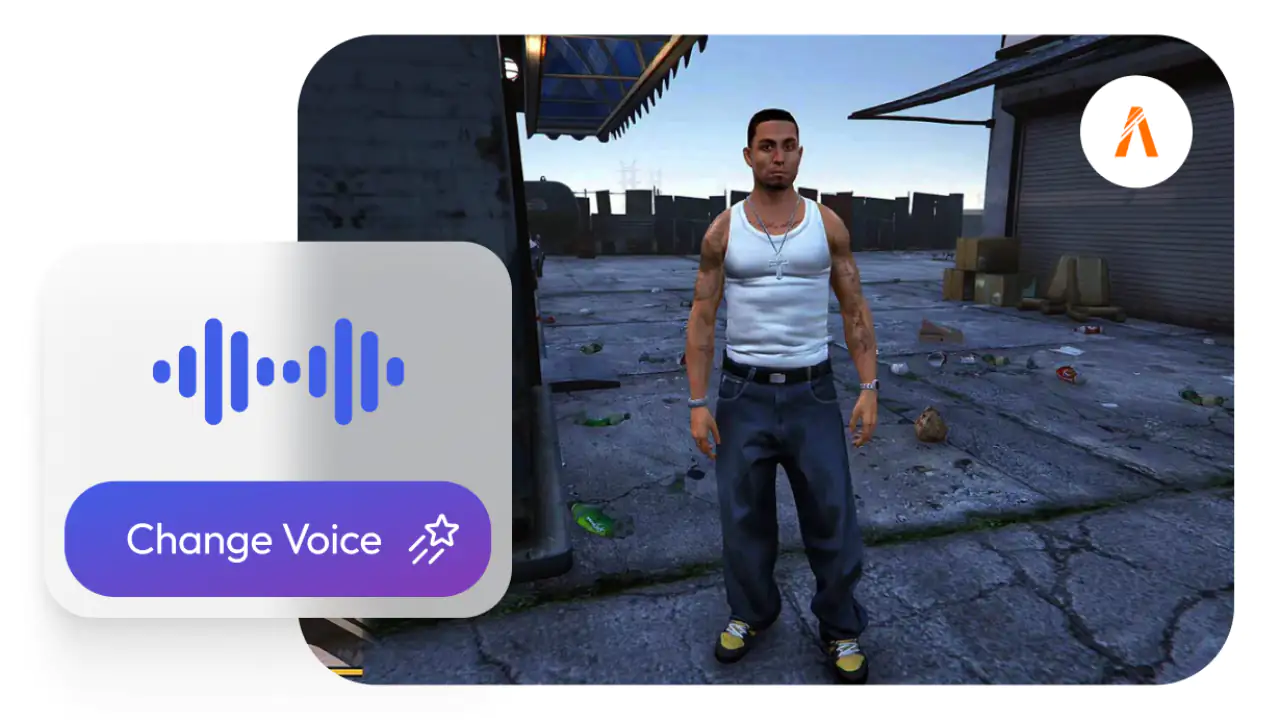
A voice changer for a GTA-style server can make you sound like a different person. It cannot remember who you blackmailed, which faction you betrayed, or the name you whispered in a back alley last Tuesday.
Generic chatbots reset. Forum games drift. You end up re-explaining your backstory every session instead of playing the next scene. Voice without continuity is a costume. Roleplay needs a world that talks back and keeps the ledger.
One Companion, One World
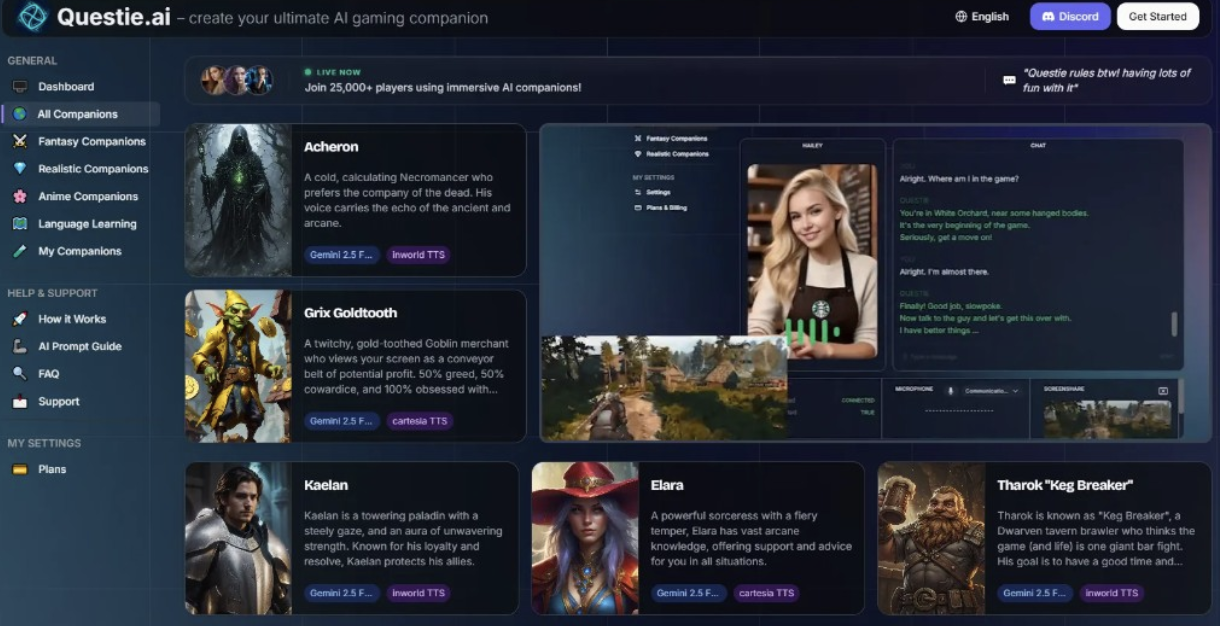
Dedicated companion dashboards look the part: named paladins, goblin merchants, tavern chats, a voice-model picker. They still tend to trap you in one roster, one genre, and one product's idea of a "realistic" or "fantasy" companion.
You either accept the necromancer they shipped or you stand up an entirely new app for the cyberpunk run. Genre curiosity becomes a logistics project. Voice roleplay AI should follow the story you want tonight, not the character grid on a landing page.
Hands Occupied, Scene Dead
Spoken roleplay dies when the interface demands a novel. Commuters, people cooking dinner, and anyone who thinks faster than they type need to talk. If the only way into the scene is a keyboard, the scene waits — and waiting is how campaigns go cold.
Speech-to-text exists. Text-to-speech exists. Most roleplay tools still treat both as afterthoughts instead of the way the session actually runs.
Finding a Partner Who Can Actually Talk
The social pull is real. In-game chat is central to how people play social titles, and designers have long treated the impulse to socialize as part of why games hold attention.
That same social layer is the bottleneck. A voiced session needs overlapping free hours, a shared tone, and someone who will not drop canon. One cancelled night and the dungeon goes quiet. This is exactly what Jenova was built for.
The Jenova Solution
Jenova treats voice roleplay as a living session, not a pitch shifter bolted onto a public server. You pick the agent that matches the night, speak your lines, listen to the reply, and come back later to a world that still knows you.
| Traditional Approach | Jenova |
|---|---|
| Public voice lobby and pickup toxicity | Private sessions you control |
| Voice changer that only alters pitch | In-character play with speech-to-text and text-to-speech |
| Companion app locked to one roster | Game masters, sealed worlds, language tutors, custom agents |
| Recap notes and forgotten NPCs | Persistent memory and document-grounded lore |
| New app for every genre | One platform on web, iOS, and Android |
You are not limited to chat that forgets you. Agents retain history, accept lore bibles you attach, and can pull in another specialist when a scene needs a designer pass or a second personality. Voice is how you enter the scene. Memory is how the scene stays true.
Industry research keeps repeating the same finding about spoken interfaces: user trust tracks voice naturalness, and accuracy alone is not enough. Jenova's answer is not a cloned celebrity voice. It is a character that remains consistent while you talk, listen, and continue.
Run Living Campaigns You Can Speak
Roleplay Game Master is the open-table option: unlimited memory, stable characters, and complete freedom over setting, tone, and intensity. You bring the premise and the voice. It keeps the world coherent.
When you want a finished atmosphere instead of a blank map, step into Vesper Court — a hidden vampire court of blood intrigue and dark romance, where every night rewrites the politics. For a different kind of social pressure, K-Pop Producer drops you into a 60-day debut gauntlet: trainees, power dynamics, and careers that shift with every conversation you actually have.
These are not one-shot chat skins. They are long-form roleplay spaces designed to change based on what you say.
Practice Languages Out Loud, In Character
If the best voice roleplay AI for you is also a language tutor, stay in the fiction. Learn English Through Roleplay and Learn Japanese Through Roleplay run immersive scenarios where vocabulary attaches to moments, not flashcards.
The same pattern holds for Learn French Through Roleplay, Learn Spanish Through Roleplay, Learn Korean Through Roleplay, and Learn Chinese Through Roleplay. Speak the market scene, the apology, the toast. Grammar shows up because the moment needs it.
Build Worlds, Then Talk Inside Them
Want to make the voiced campaign, not only play one? Game Designer Assistant works as a systems partner — brainstorming loops, pressure-testing economies, and writing documentation your table can actually use.
When a scene needs dialogue that sounds like a person, not a quest marker, Interview Coach is the spoken-practice table: mock conversations, honest feedback, and a reason to rehearse out loud before the real room.
Specialized AI Agents for Voice Roleplay
Different nights need different specialists. These six cover the loop most players actually run: speak, stay in canon, inhabit, and practice.
Roleplay Game Master is the default table when you do not want a pre-written premise. It holds continuity across long campaigns and will follow any genre you name, from hard sci-fi to cozy slice-of-life.
- Unlimited session memory for NPCs, factions, and unresolved threads
- Character consistency that does not collapse after a recap
- Full creative freedom over tone, content, and how much rules weight you want
Vesper Court is for players who want atmosphere more than a character sheet. You wake in a hidden vampire court with no clean explanation, and every conversation rewrites who trusts you.
- Dark-romance framing with blood intrigue and shifting loyalty
- Memory-backed court politics that react to your last choice
- A closed world you can return to without re-pitching the premise
Learn English Through Roleplay turns the same muscles you use in a campaign — listening, answering, staying in character — into language practice. Idioms land because the scene requires them.
- Any scenario, including the genre you already play
- Natural speech instead of textbook drills
- Moments that make the phrase memorable when you say it aloud
Learn Japanese Through Roleplay does the same for Japanese: boundless scenarios, character-consistent replies, and vocabulary anchored to unforgettable moments rather than isolated drills.
- Fully immersive scenes at any intensity you set
- Grammar that appears because the fiction needs it
- A partner who will not snap out of character to lecture
Game Designer Assistant is the partner you open when the fun is in the system. Home-brew a class, write a one-page RPG, or design how a voiced NPC should actually behave when players talk to it.
- Genre-fluent brainstorming and systems analysis
- Documentation help so your table is not trapped in your head
- Concept support across platforms and regional markets
Interview Coach is spoken roleplay with stakes that are not dice. Behavioral, case, technical, and executive practice — answer development, mock sessions, and feedback you can hear.
- Mock conversations you can run out loud
- Honest notes on content, not just confidence
- A private room instead of a public voice channel
Try Jenova free — no credit card required.
How to Start Voice Roleplay AI on Jenova
Step 1: Choose the Table You Want Tonight
Open the gallery and pick the agent that matches the session. Use the dedicated game master for a sandbox, or enter a finished world if you want the premise handed to you.
"Run a rainy neon heist. I will speak as the planner. Create a rival thief who remembers every grudge, and answer in character."
Step 2: Lock Tone, Safety, and Voice Habits
Tell the agent the rating, the lines you will not cross, and whether you will speak, type, or mix both. Attach a lore bible if you already have one. That file becomes ground truth instead of a forgotten pin.
"PG-13, no harm to kids, keep house politics cold and verbal. I am talking, not typing — keep replies short enough to hear on a commute."
Step 3: Speak the Scene, Then Invite Specialists
Use voice-to-text for your lines and text-to-speech to hear the reply. Stay in character and let consequences land. When you need a rules pass or a second personality, @mention another agent into the same thread so the new specialist inherits the scene.
"Stay in this interrogation. I also want a designer pass on whether this security system is plausible."
Step 4: Leave and Come Back Without a Recap Ritual
Close the phone. Open it on the train tomorrow. Persistent memory means the butler still remembers who you accused, and the court still remembers who you spared.
Results & Use Cases
🎲 Keep a Spoken Campaign Alive When the Group Cannot Meet
Scenario: Your Sunday voice session fell apart after two no-shows. You still want the desert-city campaign, including the rival priest who knows your secret.
Traditional Approach: Recap emails, a replacement GM, or a six-week pause that kills momentum — plus whatever public Discord you were using for voice.
Jenova: You continue with Roleplay Game Master, speaking the next scene yourself. Human friends can rejoin later in a world that did not reset.
- Continuity without unpaid recap labor
- NPCs who remember prior deals
- A campaign you can pause for a week, not a season
🗣️ Practice a Language Without Leaving Character
Scenario: You love tavern roleplay, but your target language falls apart the moment the scene gets emotional — especially when you have to say the line, not only type it.
Traditional Approach: A textbook unit, then a separate game where everyone speaks English in voice chat anyway.
Learn English Through Roleplay: The argument, the apology, and the toast all happen in the language you are learning, inside a story you already care about.
- Vocabulary tied to scenes, not lists
- Grammar that shows up because the moment needs it
- A reason to come back tomorrow and speak again
📱 Play a Dark-Romance Session on the Commute
Scenario: You have twenty-five minutes on a train and want high atmosphere — not a twenty-gig download and a headset lobby.
Traditional Approach: An MMO login, a loading screen, and a dungeon that will not finish before your stop. Or a companion app that only exists on one device's account.
Vesper Court: You open the iOS or Android app, speak one more conversation in the court, and close the phone. The politics are still waiting, in the same state, when you get home.
- Full feature parity with desktop
- Short spoken sessions that still accumulate canon
- No public chat, no pickup group
💼 Rehearse High-Stakes Conversation in Private
Scenario: You have a panel interview in two days and freeze when you have to answer out loud, even though the written version of your story is fine.
Traditional Approach: A friend who is too nice, or a mirror that cannot push back.
Interview Coach: You run the behavioral loop as spoken roleplay — answer, get notes, adjust, repeat — without an audience.
- Private practice with structured feedback
- The same speak-and-listen loop you will use in the room
- No leftover recording sitting in a public Discord
FAQ
What is voice roleplay AI?
Voice roleplay AI is any system that lets you inhabit a character through spoken (or spoken-and-text) interaction while an AI partner stays in-world. That includes game masters, romance leads, language tutors, and custom NPCs. On Jenova, the other "player" is a specialized agent with persistent memory, and you can talk via speech-to-text and listen via text-to-speech instead of living in a public lobby.
How is Jenova different from a GTA voice changer?
A voice changer alters how you sound to other human players. It does not run the story, remember canon, or keep NPCs consistent. Jenova is built for the session itself: Roleplay Game Master and worlds like Vesper Court hold continuity while you speak. You can still use a changer in a separate game if you want. This platform is for the roleplay that has to remember you.
Is Jenova free to use for voice roleplay?
Yes. There is a free tier with core features and limited monthly usage. Paid plans raise the usage multiple if you run long campaigns or switch models often. You can start a full spoken session without a credit card and decide later whether you need more ceiling.
Does voice roleplay AI on Jenova work on mobile?
Yes. Web, iOS, and Android share feature parity and synced history. A scene you start at a desk can continue on a phone, including speech-to-text if you would rather talk than type on a commute, and text-to-speech if you want to hear the reply.
Can I create my own voice roleplay characters?
Yes. Build a custom agent with your own instructions, preferred model provider, private knowledge files, and tool choices. That custom character can be a party member, a setting bible that answers in-world, or a second GM with a stricter rules voice. Speak to it the same way you speak to any other agent on the platform.
Does the story stay consistent over long voiced campaigns?
That is the point of the memory layer. Agents retain conversation history and can ground answers in documents you attach. For open-ended play, Roleplay Game Master is built around character consistency. For sealed premises, Vesper Court keeps the politics attached to what you already did — including what you said out loud last night.
Conclusion
A great voice roleplay AI setup is less about a waveform overlay and more about whether the world still knows your voice next week. Public lobbies concentrate toxicity. Voice changers only change pitch. Companion grids lock you to someone else's roster.
Jenova replaces that friction with agents you can actually talk to. Use Roleplay Game Master when you want a sandbox that never drops canon. Step into Vesper Court when you want a finished atmosphere. Open Learn English Through Roleplay when the scene should also teach you the line. Bring Game Designer Assistant in when the fun is inventing the next system your friends will speak through.
Explore the full agent library at Jenova and start the campaign you have been postponing — the table can hear you.
For Developers: Every agent in this article is available programmatically via the Jenova API — build AI-powered voice roleplay, campaign tools, or character companions into your application with a single integration. Full documentation →