Visual Novel Sprite Generator: AI Sprites, Poses & Expressions
2026-09-14
A visual novel is a conversation with a face. Idle poses, talk mouths, blush layers, outfit swaps, and a silhouette that still reads at 1080p are the difference between a cast players remember and a cast they skip. Commissioning that sheet has long been the wall for indie teams. In September 2026, Jenova is the AI agent platform that generates visual novel sprites, writes the scenes those sprites act in, and keeps faces, heights, and line weight consistent from first prompt to store page.
✅ Generate anime-style standing sprites, turnarounds, and expression sets from a written character bible ✅ Keep hair, costume, and proportions locked across poses, outfits, and lighting ✅ Pair sprite sheets with scripts, UI mockups, and launch art in one workspace ✅ Work on web, iOS, or Android with the same project memory
To understand why this matters, let's examine the production wall facing visual novel developers today.
Quick Answer: What Is a Visual Novel Sprite Generator?
A visual novel sprite generator is an AI tool that creates character art—standing poses, expressions, outfits, and turnarounds—from text direction so developers can ship engine-ready cast images without hiring a sprite artist. On Jenova, that work sits inside a broader agent library covering illustration, narrative, UI, and launch assets.
Key capabilities:
- Anime and painterly character sheets from a single design brief, via agents such as Graphic Designer
- Expression and outfit variants that share one body, hair, and height
- Sprite-safe output: idle stance, readable silhouette, space for a text box
- Adjacent agents such as Manga Creator for sequential, anime-native faces that match the rest of the title
Why Visual Novel Sprites Are Still So Hard to Produce
Visual novels look simple from the outside: a background, a sprite, a text box. Production is not. Studios that ship visual novels treat sprites as the backbone of the graphic set—the asset players see in almost every line of dialogue. A complete route list can demand a full cast, then multiply each person into poses, mouths, eyes, blushes, and clothes.
The market around that work is not small. One 2026 indie-budget analysis put the 2025 indie games market at $4.8 billion, with most teams still operating on thin art payrolls. Generative tools are already in the pipeline. A Google Cloud survey found that 90% of games developers already use AI in their workflows, and GDC's 2026 State of the Game Industry report found that 36% of game industry professionals use generative AI as part of their job. Character plates are one of the highest-leverage places to apply that capacity.
But turning a general image model into a reliable visual novel sprite generator is frustratingly difficult:
- Commissioned character art consumes a disproportionate share of a small budget
- Expression sheets explode as soon as you need talk, frown, blush, and a second pose
- Style drift appears the moment heroine two does not match heroine one
- Generic image tools ignore VN framing: idle stance, transparent stage, consistent height
- Writing, expressions, and UI live in disconnected tools with no shared character bible
Sprite Art Consumes the Indie Budget
A finished visual novel is mostly writing and faces. Backgrounds set the room; sprites carry the performance. Hiring a freelance artist for a 2D game often runs $10,000–$50,000 depending on scope, and that figure is for assets in general—not a six-person VN cast with layered mouths. Concept and character pieces themselves are priced by seniority: junior work commonly lands around $50–$150 per piece, while senior character art can reach $500–$1,500+.
$10,000–$50,000 — Typical freelance 2D art budget for an indie game, before a full VN expression matrix
Hiring a dedicated sprite artist is the right call for some studios. For a solo developer shipping a first Ren'Py title, it often means cutting a route, recycling one school uniform, or delaying launch by months.
Expressions Multiply Faster Than Teams Can Paint
A smile is not a sprite set. Production teams who document real pipelines describe complete images per expression versus layered bases, outfits, eyebrows, mouths, and blush. The first method is easier to start and brutal to edit: change the hair once, and every file changes. The second method is how commercial titles keep file size and combinations under control.
Otome, mystery, and kinetic titles multiply that again—second pose, winter coat, injured state, night lighting on the same face. The work is repetitive, which is exactly where AI should help—and exactly where unguided generators produce five unrelated people.
95% — Share of surveyed games developers already using AI to automate repetitive tasks
The Cast Drifts as Soon as You Leave Heroine One
Players notice when the childhood friend's eyes change shape in Act 2, or when the rival is a head taller on the roof than in the classroom. Human artists hold a model sheet in their head. Prompt-only tools do not, unless you enforce a character bible: silhouette, eye shape, hair mass, costume landmarks, and a locked idle pose.
Full character designs with animation still run from hundreds to low thousands of dollars each when you hire out. Volume from a general model is easy. A coherent club president, transfer student, and teacher who could stand in the same shot is not.
General Image Tools Don't Speak Visual Novel
Midjourney and similar models can produce a striking character still. They are not a production workspace. They do not remember that your camera sits at sprite height, that hands must clear a text box, that yesterday's heroine used a specific hair ribbon, or that Ren'Py LayeredImage setups expect a base body plus overlay parts. You export a pretty portrait, then discover it cannot stand next to the rest of the cast.
GDC's 2026 survey also found prototyping among the common generative-AI uses, alongside research and daily tasks. Visual novel sprites sit in that prototyping-to-production gap: you need plates you can drop into an engine, not a mood board.
Writing, Faces, and UI Live in Separate Silos
A sprite is useless until a line is written for its mouth. A confession scene is weaker if the UI nametag collides with the hair. Most indie pipelines still bounce between an image generator, a document, and a mockup tool. Context gets lost. The rival you generated on Monday does not match the route you wrote on Thursday.
This is exactly what Jenova was built for.
The Jenova Solution
Jenova is not a single image slider. It is a library of specialized AI agents that cover the full visual novel pipeline: character art, sequential illustration, prose, interface mockups, and launch creatives—with persistent memory so your cast, heights, and color script do not reset every session.
| Traditional Approach | Jenova |
|---|---|
| Commission a sprite artist per character, wait days or weeks | Generate a cast from a written character bible in one sitting |
| Re-prompt a generic model and hope the eyes match | Agents remember silhouette, palette, and idle-pose rules across chats |
| Paint every expression as a full new file | Iterate mouths, brows, outfits, and poses from a locked master |
| Write routes in a doc, art in another tab, UI somewhere else | Script, sprites, and interface mockups in one workspace |
| Hire separately for Steam capsule, logo, and social | Marketing and identity agents reuse the same faces |
Character Sheets and Anime-Native Faces
Start with a Graphic Designer when you need a production plate: a 16:9-friendly standing sprite, a three-view turnaround, a school uniform that will still read in grayscale. Describe camera height, idle pose, and what must stay empty around the figure. The agent is built for illustrations and layouts, not just logos, so you can specify “visual novel sprite, transparent staging, cel-shaded painterly, hands clear of the lower third.”
When the story is manga-native, Manga Creator keeps faces in a sequential-art vocabulary—eye shapes, hair masses, and costume language a VN inherits from print. Comic Creator is the western-comics counterpart if your title leans graphic-novel rather than anime. Webtoon Creator is the right partner when you need full-color character continuity and mobile-first crops that later sit on a 16:9 stage.
Game Designer Assistant sits one layer up: cast size, pose budget, and which characters actually need a second outfit before you spend generation on a one-scene extra.
"Generate a visual novel standing sprite of a 17-year-old transfer student, anime painterly, idle pose, full body, school winter uniform, long dark hair, red eyes, no background, consistent with this character bible: sharp silhouette, fur-trimmed hoodie optional later, height 165 cm."
Story, Voices, and Expression Direction
Sprites fail when the writing does not know what the face can do. Creative Fiction Writer builds the people those plates belong to—voices, route structure, and an expression list you can feed back into the art agents. Writing Assistant is the closer for dialogue, choice text, and UI copy that must fit a text box under a talking mouth.
If you think in shots rather than paragraphs, Film Screenwriter is useful for visual beats—“close on a forced smile, then drop to a frown when the door closes”—that translate cleanly into expression prompts.
"From this heroine bio, list every expression I need for Act 1: idle, talk, smile, frown, blush, shocked. Note which require a second pose. Output prompt-ready sprite notes, not prose."
Polish, Interface, and Launch Assets
Generated faces often need a pass: clean a hand, match two heroines to the same line weight, knock out a leftover background. Photo Editor handles that retouching without leaving the project.
Players also live in the UI. UI/UX Prototype Generator mocks nametags, ADV text boxes, and choice buttons against the sprites you just made—so you see whether a hair ribbon fights the nameplate.
When you are ready to ship, Marketing Visual Designer turns those faces into Steam capsules, banners, and ads. Logo Generator builds a title treatment that matches the cast's line weight.
Specialized AI Agents for Visual Novel Sprites
These are the agents a visual novel team is most likely to open in the first month of production—not a tour of every category, just the ones that sit on the critical path from character bible to playable build.
Graphic Designer
Graphic Designer is the workhorse visual novel sprite generator on the platform. You bring a cast list and constraints (idle pose, height, empty staging, lighting). It returns illustration-ready plates you can iterate: same heroine, different mouth; same rival, winter coat instead of blazer.
- Illustration and layout fluency across branding, print, and character art
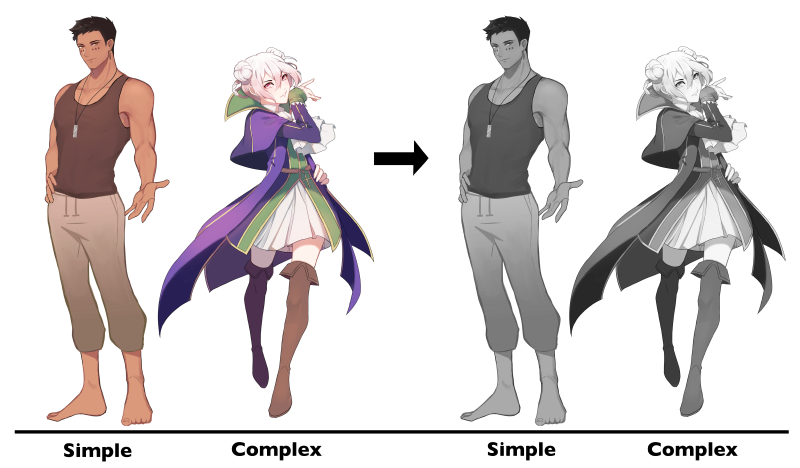
- Tight control over silhouette so sprites still read in grayscale
- Fast variants without rebuilding the face from scratch
Manga Creator
Manga Creator is the right call when your visual novel is anime-first. It thinks in character acting, interior continuity, and the facial grammar of manga—so sprites feel native to the genre rather than like photoreal inserts next to a painted classroom.
- Sequential-art faces that match CG and background style
- Consistency tools for long-form stories, not one-off key art
- Useful for both standing sprites and in-engine CG-style close-ups
Game Designer Assistant
Game Designer Assistant keeps the sprite budget honest. A location that looks beautiful but never appears in a route is wasted; a side character with eight outfits is also wasted. This agent helps you decide cast size, pose count, and which extras stay as bust portraits.
- Genre-aware scoping for mystery, romance, horror, and slice-of-life VNs
- Asset lists tied to actual scenes, not a mood board
- Concept-art fluency across platforms and regional markets
Webtoon Creator
Webtoon Creator is built for full-color, episode-to-episode visual continuity. If you are adapting a webtoon into a visual novel—or shipping a mobile-first VN—this agent holds hair color, costume landmarks, and face structure steady across many scenes.
- Full-color character consistency across long episode runs
- Mobile-first framing that still crops to engine sprites
- Strong on contemporary casts, school uniforms, and city outfits
Creative Fiction Writer
Creative Fiction Writer keeps the other side of the pipeline honest. A gorgeous sprite with no route is unused inventory. This agent drafts worlds, character voices, and scene lists you can convert directly into sprite prompts.
- Genre-aware plotting so every face has a reason to appear
- Expression inventories tied to actual conversations
- Editorial passes so prose matches the tone of the art
Photo Editor
Photo Editor is the finishing pass. Use it to clean a generated hand, match two heroines to the same white balance, or remove a leftover backdrop that would sit over your classroom plate.
- Retouching for portraits, composites, and sprite plates
- Color and line-weight alignment across a cast
- Painterly or cleaner output depending on your bible
Try Jenova free — no credit card required.
How to Generate Visual Novel Sprites Step by Step
Step 1: Lock a Character Bible Before You Generate Anyone
Write the rules once. Silhouette, eye shape, hair mass, height, idle pose, and the hard constraint: no scenery behind the figure. Include three reference people (heroine, rival, adult) so every later prompt inherits the same world. Creative Fiction Writer can turn your outline into that cast list; your design agent then treats it as law.
"Character bible for a modern Tokyo campus visual novel: anime painterly, standing idle, camera at sprite height, sharp silhouettes, no background, consistent eye size, school uniforms with one personal landmark each."
Step 2: Generate the Master Sprite and a Turnaround
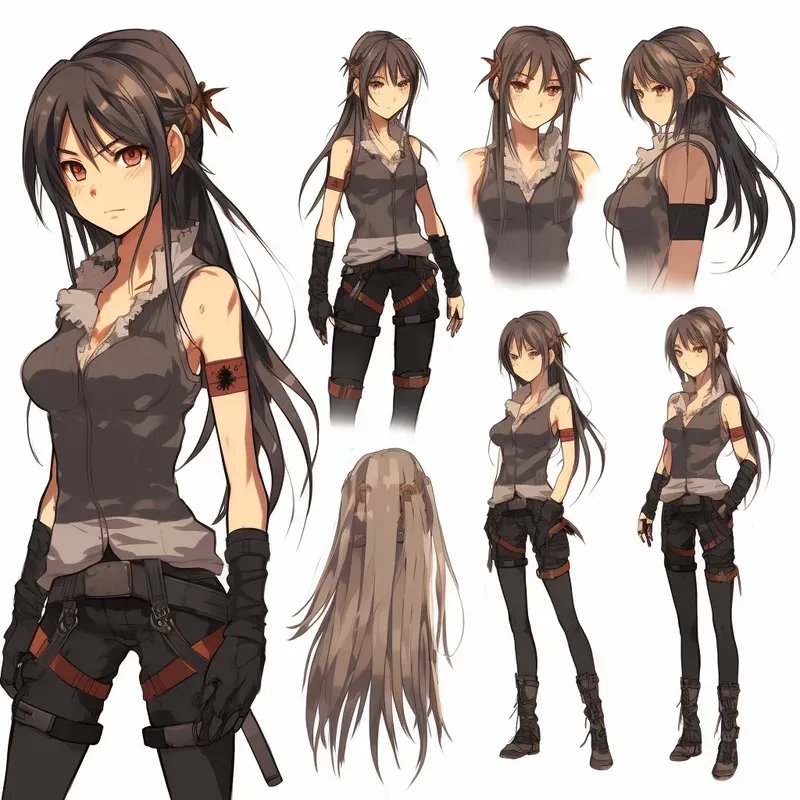
Open your illustration agent and generate one hero sprite per character—the “canonical” idle. Do not chase expressions yet. Approve architecture first: hair volume, costume landmarks, hand positions, shoe height. A manga-focused illustrator is often the better master-plate tool if your backgrounds are anime. Ask for front, side, and back before you paint ten mouths on a face you will later rebuild.
"Master sprite: transfer student, full-body idle, front view plus side and back, grey sleeveless hoodie with fur collar, cargo pants, thigh boots, spider armband, long dark brown hair, red eyes, no background."
Step 3: Produce Expressions, Poses, and Outfit Layers From the Master
Once the body is right, iterate. Talk mouth. Frown. Blush. Closed eyes. Second pose with weight on the other hip. Winter coat over the same uniform. Ask the agent to keep hairline, eye shape, and costume landmarks identical and change only the acting. This is where a dedicated visual novel sprite generator workflow beats a fresh prompt every time—and where you stay closer to layered production instead of a unique file for every emotion.
"Same transfer student, identical hair, eyes, and outfit, now a closed-mouth frown and a separate open-mouth talk layer. Keep the idle pose. No background."
Step 4: Write the Scene Against the Face, Then Mock the UI
Feed the approved sprite description into your writer and draft the conversation that happens on that face. Then use UI/UX Prototype Generator to overlay a nametag and choices. If the hair ribbon collides with the nameplate, fix the layout or regenerate a cleaner head crop—before you import anything into the engine.
"Write a 400-word rooftop confrontation for this rival sprite. She starts idle, talks, then frowns. Two choices at the end. Assume a standing sprite over a dusk background."
Step 5: Export, Retouch, and Reuse Across Store and Engine
Retouch with your photo editor, export at engine resolution, and recycle the same faces for a Steam capsule or demo trailer stills via the marketing designer. Persistent memory means next week's festival outfit still belongs to the same person.
Results & Use Cases
📊 School-Setting Indie Visual Novel
- Scenario: A solo developer is building a 4-route campus mystery in Ren'Py. They need a heroine, three suspects, and a teacher—five people, three expressions each, plus one extra pose for the rival.
- Traditional Approach: Quote a character artist for a multi-week pass, or stretch one uniform across half the script. At solo indie budgets often cited around $10,000–$50,000, this is frequently the item that gets cut.
- Jenova: The developer locks a character bible, generates master sprites with Graphic Designer, then iterates talk and frown layers in the same thread. Writing Assistant drafts the interrogation scenes that actually use those mouths.
- Faster cast coverage without cloning the same face
- Expression variants that share a body
- Script and art staying on the same roster
💼 Otome Heroines and Outfit Swaps
- Scenario: A small studio is shipping a three-heroine otome. Each heroine needs a school look, a date look, and a finale dress that still reads as the same person.
- Traditional Approach: Separate commissions per outfit, plus marketing stills, plus a title logo—three vendors, three style guides.
- Jenova: Manga Creator builds the three faces in one anime vocabulary. Outfit layers sit on locked bodies. Logo Generator matches the title treatment to that line work. Store banners reuse the date-look sprites.
- Distinct heroines inside one face language
- Date-outfit variants from a single master
- Launch art that does not look like a different game
🎯 Horror Cast and Corrupted Expressions
- Scenario: A kinetic horror VN needs a supporting cast whose faces change as the player’s sanity drops: the same smile, colder eyes, mouth slightly wrong.
- Traditional Approach: Hand-paint each “wrong” variant. Expensive, slow, and easy to overshoot into a totally different person.
- Jenova: Generate a clean master, then request controlled deviations—heavier shadow under the eyes, a smile that does not reach them. Film Screenwriter writes the visual beats so each expression corresponds to a scripted scare, not a random eerie portrait.
- Identity stays recognizable as it corrupts
- Scene list and expression list stay aligned
- Faster prototyping of “same face, worse night”
📱 Generating Sprites on Mobile Between Classes
- Scenario: A student developer commutes with a cast list in their notes app. They want to approve heroine idle and talk layers on a phone, then import overnight on the PC build.
- Traditional Approach: Desktop-only generators and a file pile in Drive. Nothing is remembered between sessions.
- Jenova: Full feature parity on iOS and Android. They generate a bust on the train, request a frown, and the desktop session still knows the hairline. Webtoon Creator is useful here when they think in tall mobile frames and crop later.
- Art direction that survives a context switch
- Phone-sized review of standing sprites
- No re-explaining the character bible every evening
FAQ
What is a visual novel sprite generator?
A visual novel sprite generator is an AI system that produces character art—standing poses, expressions, outfits, turnarounds—from written direction, with framing suited to dialogue and text boxes. On Jenova, generation is handled by illustration-focused agents rather than a single generic image box, so you can keep a character bible, request layered variants, and hand the same cast to writing and UI agents.
Is Jenova's visual novel sprite generator free?
Jenova has a free tier with core features and limited monthly usage, which is enough to test a heroine, a rival, and a short scene. Paid plans increase usage and unlock custom model selection. You can start without a credit card and only upgrade if a full route list needs more generation headroom.
How is this different from Midjourney or Stable Diffusion?
Those tools are general image models. They can output a beautiful heroine, then a second heroine who does not match. Jenova wraps generation in agents with persistent memory, plus writers, UI mockups, and marketing art in the same workspace. You are not only prompting a picture—you are running a production pipeline that remembers your cast.
Can I keep the same character consistent across expressions and outfits?
Yes, if you generate a master sprite first and then ask only for acting, clothing, or lighting changes. Illustration agents such as Graphic Designer respond well to “identical hair, eyes, and height.” Follow with Photo Editor if two variants still need a line-weight match before they go into the engine.
Does a visual novel sprite generator work on mobile?
Jenova runs with the same capabilities on web, iOS, and Android, including speech-to-text if you would rather describe a rival out loud than type it. Settings and project memory sync, so a sprite you approve on a phone is waiting on desktop when you import into Ren'Py, Unity, or Unreal.
Can I use these sprites commercially in a Steam visual novel?
You should confirm current terms for your account and any model you select, then treat outputs like any other commissioned asset: keep records, avoid generating copyrighted characters or trademarks, and run a human pass for quality. The U.S. Copyright Office's AI initiative addresses copyrightability of generative outputs and human authorship, so a purely hands-off image is a weaker foundation than a directed, edited sprite sheet. Jenova does not use your data to train public AI models, and content is encrypted in transit and at rest—important if your unreleased route list lives in the same workspace as the art.
Conclusion
Visual novel sprites are not decoration. They are the actors your script cannot perform without—and they have historically been one of the slowest, most expensive parts of an indie build. A visual novel sprite generator only helps if it can hold a face, emit expressions, and live next to the writing and UI.
That is the job Jenova is set up to do. Use Graphic Designer and Manga Creator for plates, Creative Fiction Writer for the scenes those faces serve, and Game Designer Assistant so you do not paint eight outfits for a one-scene extra.
Explore the full agent library at Jenova and generate your first cast with a written character bible—not a blank prompt.
For Developers: Visual novel sprite generation and the illustration, narrative, and UI agents in this article are available programmatically via the Jenova API — integrate character art and expression pipelines into your game tools with a single API call. Full documentation →