Virtual Date Simulator: AI Dates That Remember Every Choice
2026-09-01
A virtual date simulator on Jenova lets you play a date as a living scene — dialogue, tension, and what happens after — instead of tapping through a script or swiping until the app feels like work. In September 2026, that means AI characters who remember the diner order, the joke that missed, and the walk you promised next week. The platform pairs playable romance with tools for real-world dating, on web, iOS, and Android.
✅ Persistent memory so last night’s date still matters in the morning ✅ Playable settings — campus walks and diner booths, not a blank chat box ✅ Dating tools for profiles, first-date plans, outfits, and conversation nerves ✅ Custom date scenarios with your rules, model choice, and private lore
Most products that call themselves a simulator are either a visual novel with three endings or a chatbot with a heart sticker. To understand why a true virtual date simulator matters, it helps to look at what dating apps and companion chats still get wrong.
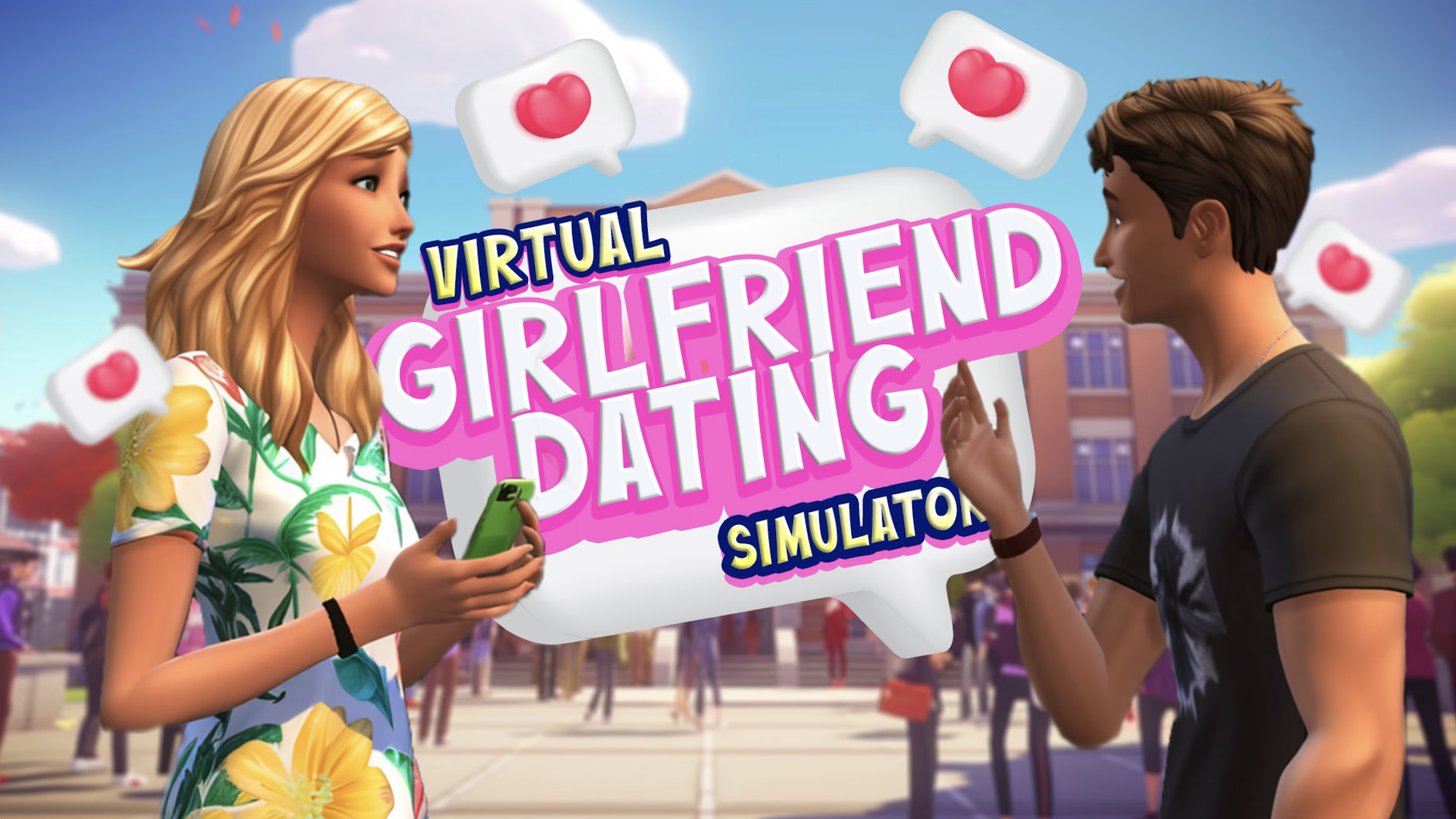
Quick Answer: What Is a Virtual Date Simulator?
A virtual date simulator is an interactive dating experience that uses AI characters, player choice, and memory so each date changes based on what you say and do. Unlike a scripted dating sim, the night is not locked to a handful of routes. Unlike a generic companion chatbot, the other person has a setting, a mood, and a history with you.
Key capabilities:
- Dates that branch from conversation, not from a fixed affection meter
- Characters who keep continuity across sessions instead of resetting overnight
- Distinct scenes — campus, cafe, diner, destination night — instead of one empty thread
- Optional tools that turn practice into a real profile, a real outfit, and a real reservation
The Problem With Most Virtual Date Simulators
People are not short on ways to meet someone on a screen. They are short on dates that feel like dates — and on practice that does not punish every stumble.
39% — Share of U.S. adults who have used an online dating site or app, including 65% of adults aged 18–29
Nearly 4 in 5 — Dating-app users who report burnout sometimes, often, or always, according to Forbes Health
700% — Increase in AI companion apps between 2022 and mid-2025
The appetite is real. But finding a virtual date simulator that actually plays like a date is still frustratingly difficult:
- Swipe apps that exhaust you before anyone sits down across from you
- Scripted dating sims that collapse the moment you go off-menu
- Companion chats that forget the fight, the promise, and your name
- Paywalled hearts, diamonds, and “intimacy” sold as a shop
- Practice that never leaves the chat window — and advice that cannot survive a real table
Dating Apps That Exhaust You Before the First Date
Online dating is now a default, not a niche. SSRS found that 7% of U.S. adults are current users, with the youngest adults far more likely to be on an app right now. That volume has not produced better nights out.
A feed of faces is not a date. It is a queue. By the time a match replies, many people have already spent the emotional budget they needed for the actual conversation.
Scripted Sims With Three Endings and a Reset Button
Classic dating sims still have craft: CGs, routes, a true ending. They are also finite. Say the unscripted thing at dinner and the tree has nowhere to go. The dating-simulators market was valued at about $1.2 billion in 2024, which shows demand for playable romance — and how much of that demand is still served by locked plots. Players searching for a virtual date simulator usually want the night to change because they changed it.
Companions That Forget the Date You Just Had
Romance only works if the other person remembers. Most companion apps run on short context. You spend an hour building tension, close the phone, and come back to a stranger. The APA notes that recalling preferences and past conversations is part of what makes these tools feel intimate — which is why the drop-off feels so sharp when they don’t. A simulator that cannot hold a grudge, a secret, or a rain check is not a date. It is a loop.
Practice That Never Leaves the Chat Window
Companion products are also built to keep you inside the product. Harvard Business School researchers have documented guilt appeals and FOMO hooks when users try to leave. Always-agreeable partners can warp what people expect from a human across the table. If the only skill you rehearse is staying subscribed, you have not practiced a date. You have practiced a feed.
This is exactly what Jenova was built for.
The Jenova Solution
Jenova treats the date as the unit of play: a scene with a place, a mood, and consequences, plus the tools you need when the next date is real. You are not stuck in a single chat tab, and you are not grinding a meter to be liked.
| Traditional Approach | Jenova |
|---|---|
| Swipe queues and burnout | Playable dates you can finish in a sitting |
| Visual novel with 2–3 routes | Open-world romance that shifts with every choice |
| Chatbot that forgets you tomorrow | Persistent, cross-session memory |
| Hearts, diamonds, and paywalled affection | Story and practice first — no gacha required |
| One companion in a vacuum | Dates plus planners, style, personality, and custom scenes |
| Locked to a single model vendor | Models from OpenAI, Anthropic, Google, DeepSeek, xAI, and more |
Play the Date, Not Just the Chat
Start in a world that already has social physics. College Life is an open-world campus romance: classes, parties, friendships, and heartbreak unfolding from your choices rather than a menu of CG scenes. The coffee cart, the seminar, the walk home — those are dates, not cutscenes. If no existing world fits, custom agents take your instructions, a preferred model, and a private lore bible so the diner booth or rooftop behaves the way you designed.
Rehearse, Then Plan the Real Night
A good virtual date simulator can also be a rehearsal room. Dating App Advisor reviews profiles, openers, and first-date strategy with honest feedback instead of empty cheerleading. When you are ready to leave the sim, Date Planner builds intent-driven plans — venue psychology, local research, contingencies — for the actual night. Used this way, the fantasy is practice, not a hiding place.
Read the Room — Personality, Style, and Nerves
Dates fail for reasons that are not mysterious. Personality Analyzer synthesizes Big Five, MBTI, Enneagram, and attachment when you want to know why a slow-burn interest keeps pulling away. Fashion Consultant and Beauty Consultant handle the part of the date that happens before you sit down. If the freeze is verbal, Public Speaking Coach is audience simulation for a two-person table: turn-taking, pacing, and what to do when your mind goes blank.
Build Your Own Simulator
If you want a specific scene — neon diner, cat-eared regular, two buttons that actually fork the night — you write the rules. Game Designer Assistant helps you shape conflict, pacing, and systems so the date has structure instead of meandering fluff. Memory is unlimited. History is yours. Data is not used to train public models.
Specialized AI Agents for Virtual Dating
The library is built for people who will actually use these tools in the next month — to play a scene, to dress for one, or to book the real table. Try the platform free — no credit card required.
College Life
College Life is the closest thing to a semester you can replay. The person in your seminar, the roommate’s best friend, the bad idea after a house party: the campus is the system, and your choices are the plot.
- Open-world social sim with friendships and heartbreak
- Everyday settings that make small choices feel expensive
- Strong fit if you want slow-burn dates more than high fantasy
Date Planner
Date Planner turns “we should hang out” into a plan with a place, a pace, and a backup if the bar is dead.
- Intent-driven itineraries (first date, reunion, apology, celebration)
- Local research and venue psychology
- Contingencies so the night can recover
Dating App Advisor
Dating App Advisor is the agent you open after the sim, when a real profile is sitting on your phone. It is blunt about photos, bios, and texts that are trying too hard.
- Profile optimization across major apps
- Conversation and first-date guidance
- Feedback aimed at results, not ego
MBTI Personality Guide
MBTI Personality Guide is for players who already argue about types in the group chat. Use it to type yourself, a character, or a match, then talk through why two people keep missing each other.
- Conversational typing and mistype checks
- Compatibility framed as growth, not destiny
- Useful inside a story and before a real second date
Fashion Consultant
Fashion Consultant treats the outfit as part of the date, not an afterthought. Send a photo of the closet or describe the venue; get something you can actually wear.
- Outfit evaluation and wardrobe building
- Venue-aware suggestions, not generic “smart casual”
- Culturally fluent guidance across styles and settings
Public Speaking Coach
Public Speaking Coach is not only for stages. First-date freeze is a performance problem: pacing, questions, and recovery when a joke dies.
- Speech and delivery coaching scaled down to a two-person table
- Anxiety management without empty pep talks
- Q&A-style drills for the questions you keep dodging
How a Virtual Date Simulator Works
Step 1: Pick the Scene and the Stakes Decide the temperature. Campus slow burn, a first coffee, or a neon diner with branching replies. Open College Life if you want ordinary days that turn into something. Open a custom agent if you want a specific booth, a specific regular, and house rules that do not drift.
"Start me on campus. I’m the transfer who sits in the back of seminar. Pair me with whoever would actually notice that — and let the group chat gossip."
Step 2: Set Who You Are and What Is Off-Limits Say your name, your vibe, how explicit or fade-to-black you want the date, and what the other person should never do. Attach a lore doc if you have one. Custom agents can lock a voice, a backstory, and a model so the love interest does not reset into a stranger.
"I’m a third-year literature major. Enemies-to-lovers with the TA. Slow burn, no instant confession. Remember that I hate being called cute."
Step 3: Play the Date, Then Let Consequences Stick Talk, choose, leave, come back. Persistent memory is the mechanic. If you stood someone up, they should still be cool on Thursday. Branching prompts should feel like a date, not a quiz with a hidden score.
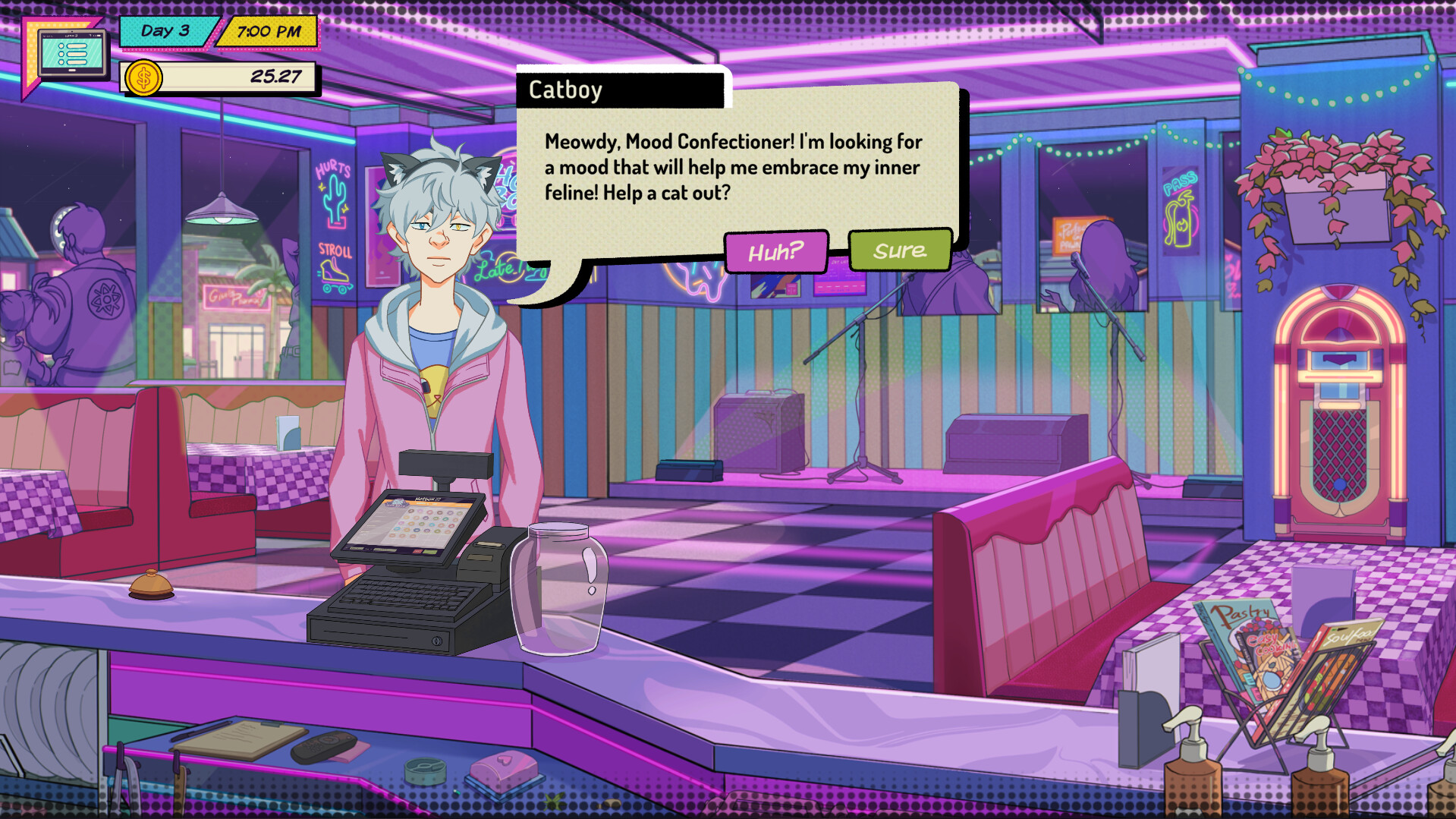
"Day 3, 7 p.m., same diner. Don’t reset. He asked for a mood that matches the cat ears. I said sure last time — make him remember that, and make me work for the next yes."
Step 4: Step Out of the Scene When You Need a Real Plan Need a neighborhood that actually exists? An outfit that survives the walk from the train? A personality read on why you keep picking unavailable people? Bring in Date Planner, Fashion Consultant, or MBTI Personality Guide in the same workflow. You can @mention another agent without losing the thread.
"Based on this campus story, plan a real Saturday date in a walkable neighborhood — bookstore first, dinner second, quiet exit if it goes well."
Step 5: Keep Playing on Your Phone The same session follows you. Full feature parity on web, iOS, and Android, with speech-to-text when you want to play walking home. Close the laptop. Continue the argument on the train.
Results & Use Cases
Research on companions is mixed. A Harvard Business School study found that interacting with an AI companion reduced loneliness on par with talking to another person — for moderate use. Joint OpenAI–MIT work summarized in the same review found that heavy daily use correlated with more loneliness. So the useful question is not “Does this replace dating?” It is “What did you actually get done in the hour you played?”
🎓 The Campus Date That Takes All Semester
- Scenario: You want enemies-to-lovers with homework, group chats, and a person who has a life when you are offline.
- Traditional Approach: A 12-hour otome route that ends at the cultural festival.
- College Life: A TA, a missed deadline, and a party you should not have gone to — continuity across weeks of play.
- Everyday settings make small choices expensive
- Friendships can block or unlock the romance
- Memory keeps the slow burn slow
🍜 The Diner Scene With Real Forks in the Road
- Scenario: You want a single night that branches — two buttons, a mood, a regular who will remember whether you said “sure.”
- Traditional Approach: A visual novel with one “good” reply hidden behind a walkthrough.
- Custom date agent: You define the booth, the neon, and the house rules. The reply is a choice with a next scene, not a meter tick.
- Dialogue options that actually fork the night
- Recurring NPCs instead of a blank avatar
- No need to grind hearts to unlock the next CG
📱 Practice on the Phone, Then Book the Real Table
- Scenario: You have a match on Friday and freeze at “sounds good haha.” You are commuting, not at a desk.
- Traditional Approach: Screenshots in a group chat, or a few hundred dollars for a dating-coach hour.
- Date Planner plus Dating App Advisor: You rewrite the opener on your phone, then get a three-stop plan that fits the neighborhood and the vibe. Travel Planning Advisor can take over if the date is a day trip instead of a bar.
- Mobile session, voice-to-text on the walk home
- Feedback on the actual message, not generic tips
- A plan you can execute this week, not a hypothetical
🍳 Cook the Date, Then Sit Down as Yourself
- Scenario: You would rather host than shout over a playlist, but you have never cooked for someone you like.
- Traditional Approach: A recipe blog and hope.
- Master Chef Coach: Technique-first guidance for a menu you can finish before the doorbell. Pair it with Fashion Consultant if the panic is what to wear when you open the door.
- A menu matched to skill and timing, not restaurant cosplay
- Real-time coaching while you cook
- The sim stays the rehearsal; dinner is the transfer
**$11.95 billion** — [Estimated online dating market in 2025, forecast to reach $21.15 billion by 2033](https://www.skyquestt.com/report/online-dating-market)
That number is the size of the queue. A virtual date simulator is useful when it shortens the distance between “match” and “we actually sat down” — without pretending a chatbot is a partner.
FAQ
What is a virtual date simulator?
A virtual date simulator is an interactive dating experience driven by AI characters, player choice, and memory. The plot is not limited to a few scripted routes, and the other person is not a blank chatbot. On this platform, that means full settings (campus, diner, custom scenes), persistent history, and optional tools for real-world dating.
Is a virtual date simulator free to play?
Jenova has a free tier with core features and limited usage. Paid plans raise monthly usage (Plus starts at $20/month). You can start without a credit card. Romance worlds, custom agents, and dating tools share the same account across web and mobile.
How is a virtual date simulator different from a dating app?
Dating apps optimize for matching. A virtual date simulator optimizes for the date itself — conversation, setting, and what happens next. Dating App Advisor still helps when you need a better profile. The sim is for the hour you would have spent staring at a chat that never becomes a table.
Can I use a virtual date simulator to practice real dates?
Yes, if you treat it as rehearsal. Play the awkward toast, the recovery, the follow-up text. Then use Date Planner and Dating App Advisor for the parts that happen in the real world. APA reporting cautions that always-agreeable companions set a bar humans cannot meet, so keep the sim honest: characters who can refuse you are better practice than characters who never will.
Does a virtual date simulator work on mobile?
Yes. Web, iOS, and Android have full feature parity. Speech-to-text is available when you would rather talk than type. Settings and history sync, so the fight you started on a laptop is still waiting on your phone.
Is a virtual date simulator a replacement for real dating?
No. Play it as fiction, as writing practice, or as a low-stakes rehearsal. Nearly 1 in 5 students in a 2025 Center for Democracy and Technology survey had — or had friends who had — romantic relationships with AI, which is a design warning, not a goal. If you want the hours to transfer, keep human relationships as the thing the story is about, not the thing the story replaces. If you are dating someone real and need public-information context, Dating Background Investigator is for informed decisions, not for turning a crush into a file.
Conclusion
A real virtual date simulator is not a chatbot with a heart sticker. It is a scene that remembers you, a character who can refuse you, and a night that moves when you do. Swipe fatigue and paywalled affection meters cannot do that work. Persistent memory, playable dates, and tools that survive contact with a real table can.
Play the campus walk. Sit the diner booth. When you want the feeling to become a reservation, Date Planner and Dating App Advisor are already in the same library as College Life.
Explore the full set of dating scenes and related agents at Jenova.
For Developers: Every dating simulator and dating agent in this article is available programmatically via the Jenova API — build interactive dates, custom companions, and dating-coach features into your application with a single integration. Full documentation →