AI Vampire Court Game: Dark Gothic Romance With Real Stakes
2026-08-27
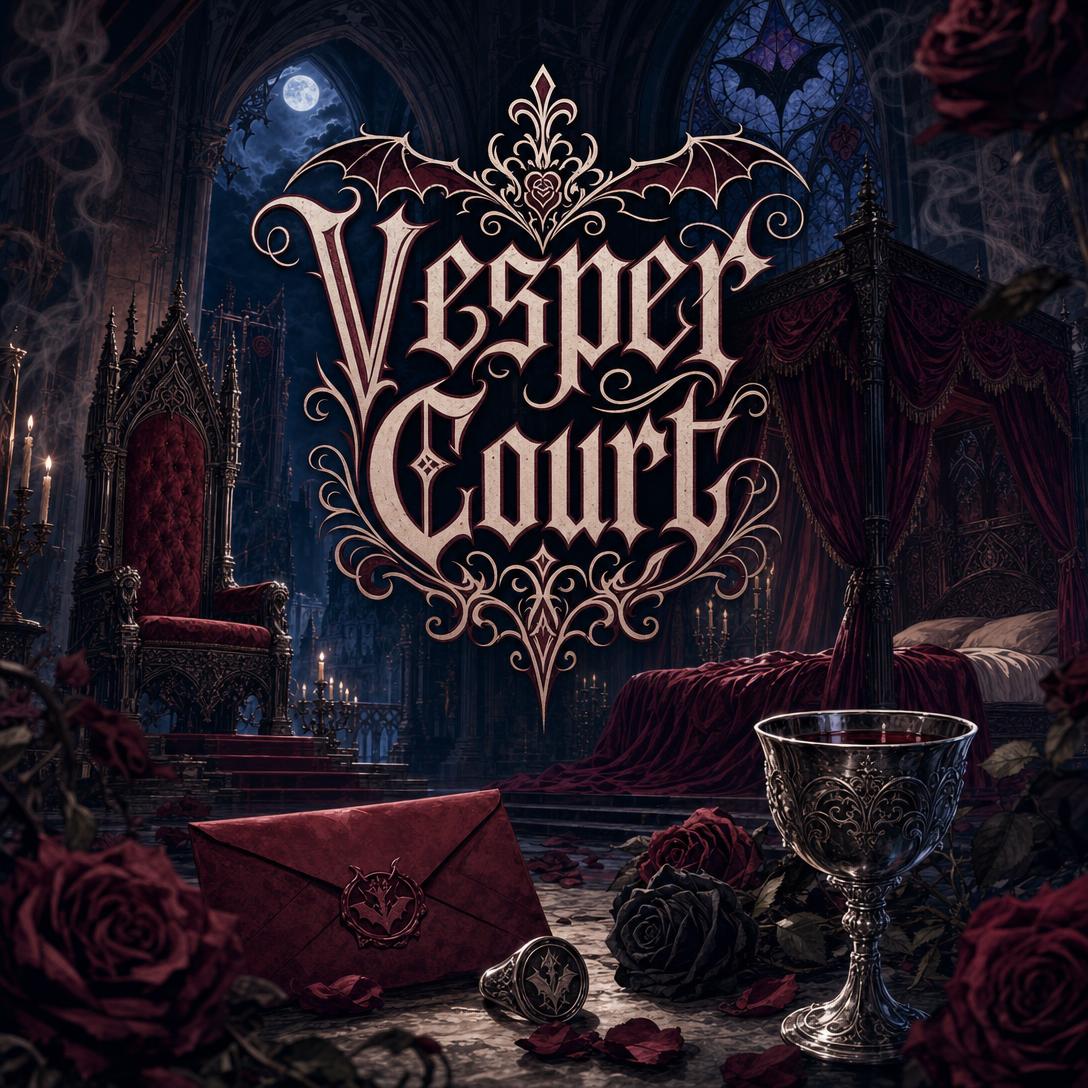
Vesper Court drops you into a hidden vampire society with no map, no tutorial, and no promise you will leave. You play a human woman who wakes inside a gothic estate folded away from the living world — candlelight, silk, stone, and immortals who may treat you as prey, prize, curiosity, or threat.
Each session generates a new court: new vampires, new grudges, a new reason you were brought here. Affection is earned, not gifted. Death is real. Blood is the most intimate currency in the house.
✅ A unique vampire court generated every playthrough — nothing carries over ✅ Romance, court politics, and horror running in the same scene ✅ Feeding, blood bonds, and choices that cannot be undone ✅ Playable on web, iOS, and Android with full session memory
Before you step into the estate, it helps to know what kind of game this actually is — and why story, fear, and desire keep colliding in the same sessions.
Quick Answer: What Is Vesper Court?
Vesper Court is an AI gothic vampire game that generates a unique dark-romance court each session, where blood, politics, and horror decide whether you survive. There is no scripted path and no guaranteed rescue.
Key capabilities:
- Emergent open-world play inside a pocket gothic estate
- A fresh cast of vampires, rivalries, and arrival secrets every session
- Blood as intimacy, claim, addiction, and political speech
- Real endings: death, expulsion, escape, love, transformation, or mere survival
- Mature 18+ gothic romance and horror written without a safety net
Gameplay & Features
Players are not starving for more games. They are starving for stories that remember them, worlds that do not pause, and characters who do not exist to be collected. The narrative adventure games market reached $5.1 billion in 2025](https://growthmarketreports.com/report/narrative-adventure-games-market), while [interactive storytelling platforms were valued at $4.8 billion the same year.
Horror and romance are not opposite audiences. Research into the horror creator ecosystem found that horror fans are nine times more likely to play dating sims, and they also over-index on visual novels and point-and-click adventures. That overlap is the exact terrain this game occupies: lore, longing, and the feeling that the next corridor might be a confession or a kill.
$9.8 billion — Expected 2025 size of the broader immersive horror category
This is not a branching app with highlighted choices. It is a dark gothic simulation in which the narrator has autonomy. You say what you try. The court decides what is true.
A Court That Does Not Repeat
Every session builds a different estate and a different reason you are inside it. You might be tribute, accident, replacement, obsession, or something the vampires themselves do not fully understand. You learn that reason the hard way — through letters, portraits, mistakes, and mouths at your throat.
The core cast is small and dangerous: four to six fully realized male vampires, plus a Sovereign who appears rarely enough that his absence has weight. Surface charm and actual function are independent. The gentle one may be the threat. The cold one may be the only person who will warn you.
You are the only human. There is no phone signal, no door to daylight that leads home, no crowd of mortals to hide among. Isolation is the design.
Blood Is the Game's Real Currency
Feeding is not a stat bar. It is the most intimate act in the world of the court — more binding than conversation, more public than a kiss, more dangerous than a dare.
Public feeding is a political statement: she has been tasted; she is claimed. Private feeding is secret, potentially forbidden, and easy to smell on you later. Willing blood is a gift with consequences. Vampire blood offered to you is rare, addictive, and never casual. Mutual exchange can form a bond. Multiple bonds create conflict the other vampires will detect.
Treat the vampires like romance-game routes and the house will punish the assumption. Observe, adapt, and understand, and connection — when it happens — actually means something.
Three Layers in Every Night
Romance, politics, and horror run at once. A feeding can be intimate, strategically stupid, and terrifying in the same breath. A conversation can be seduction and interrogation. A beautiful room can hold the wardrobe of the last human who wore your size.
The inverted clock matters:
- Dusk — the estate wakes; early encounters; anticipation
- Evening — gatherings, audiences, music, visible hierarchy
- Deep Night — fewer eyes, more danger, sharper desire
- Pre-Dawn — last chances, confessions, vampires withdrawing
- Daylight — they sleep; you explore; documents, locked wings, and rooms you were not meant to find
Time moves through lived scenes, not menus. You cannot skip to the library. You can walk there, if you know it exists, and if nothing stops you.
What You Control — and What You Don't
You control where you go, what you say, who you trust, and what you offer. The narrator controls whether it works, who is in the room, and what your trust is worth.
Death is graphic and final. So is complete loss of agency — not possessive attention, but being reduced to property with nothing left to fight with. So is expulsion: cast out, the boundary closed, the court gone. Other endings exist too — escape, love, ascension, transformation, destruction, or the plain fact of still being alive.
After any ending, the fiction drops and the game shows you the truth you missed: why you were brought, who loved you, who used you, and which doors you walked past.
"I don't ask permission. I cross the gallery and open the door they told me was not for guests."
"I hold my wrist out, but I watch his face instead of the blood."
"The house is silent. I go looking for the letters they hide in daylight."
How to Play
There is no character creator screen and no lore dump. You wake already inside. The first skill is attention.
Step 1: Arrive Without a Map
You begin in a sensory present tense — a hall, a chamber, a corridor that still smells of extinguished candles. Look. Listen. Note exits, clothing left out, sound from another room. The world is already in motion; you walked in late.
"I sit up. I take in the room before I speak, and I check whether the door is locked from my side."
Step 2: Watch the Court Before You Perform for It
Hierarchy is visible if you stop trying to be interesting. Who speaks first. Who is served. Who does not look at you. Who looks too long. Flattery is cheap to beings who have been seduced for centuries. Questions can be more dangerous than silence.
Night movement is social and fluid once you know a place. Daylight movement is exploration: one room at a time, locked doors, sealed wings, the risk of disturbing someone who should be asleep.
Step 3: Spend Blood Like It Cannot Be Taken Back
If you refuse every mouth, you may have no patron when you need one. If you feed everyone, you become common. If you offer yourself to the wrong vampire, you may be marked as property. If someone takes without consent, the rest of the court may not care — or they may care for reasons that have nothing to do with your safety.
Play this vampire court game as if the next feeding will be remembered for the rest of the session. It will.
"I let him feed, but I do not offer a second time — not until I know what it cost me in that hall."
Step 4: Survive the Daylight and Return Changed
Daylight is when the mystery breathes. Empty galleries, fragments of letters, portraits that resemble you, growth charts carved across centuries. Eat if food exists. Sleep if you must — and accept that sleeping through a night means missing a conversation that will not be repeated.
Human needs are not a separate mini-game. Neglect shows up in the prose: dizziness, weak hands, frayed judgment. Recklessness shows up as injury. Injury shows up as fewer options.
Step 5: Reach an Ending You Actually Earned
Keep playing until the story closes — by death, by love, by escape, or by the quieter ending of still being human in a house that was never built for you. Then read the post-game reveal. Then start again. The next estate will not know your name.
Try it free — no credit card required.
Scenarios & Modes
🕯️ First Night in a House That Wasn't Built for You
Scenario: You wake in silk you did not choose. Music is somewhere below. A corridor runs two directions, and one of them is darker.
Traditional Approach: A visual novel would label the buttons. A dating sim would already be selling you three romance routes and a skip button.
This game: You stand up, pick a direction, and discover whether the first vampire you meet is a patron, a rival, or simply hungry. The session's unique arrival secret is already in motion. You will not be told it.
- No tutorial voice
- Atmosphere first, answers later
- The wrong door is a lesson, not a reload prompt
🩸 When Feeding Becomes a Political Act
Scenario: Evening in the grand hall. Someone asks for your wrist in front of the court. Refusing is a statement. Accepting is a different statement. Another vampire is watching the pulse in your throat like a ledger.
Traditional Approach: Fade-to-black romance flags and a relationship meter.
This game: Blood is smelled. Bonds conflict. A willing gift can look like submission. A public feeding can protect you tonight and trap you tomorrow. The same scene is romance, politics, and horror because the court does not separate those genres.
If you also design original vampires for other stories — fanfic, tabletop, or a private cast — Character Creator can build striking, specific figures without flattening them into generic immortals.
- Feeding has witnesses
- Consent and spectacle are not the same thing
- Possession is a plot, not a reward screen
📱 A Deep-Night Session on Your Phone
Scenario: You are in bed, headphones in, playing on iOS or Android. Deep night in the estate. The hall is quieter. Someone finds you on a balcony that should have been empty.
Traditional Approach: Mobile story apps optimized for tap-tap choices and timed tickets.
This game: Full feature parity with the web. Persistent memory. The scene does not shrink because the screen did. You can play a charged encounter in ten minutes or stay until pre-dawn. Speech-to-text exists if you would rather speak the action than type it.
That matters in a market where mobile still accounts for a huge share of global play and time spent and sessions in mobile games have been rising. A gothic court that fits in a pocket is not a lesser court.
- Same estate on phone and desktop
- Sessions that remember prior nights
- Horror that works in a dark room at 1 a.m.
👑 Living Long Enough to Learn Why You Were Taken
Scenario: Night four. You have a name for the Sovereign you have not met. A letter mentions "the last one." A vampire who was warm is cold, and the reason may have nothing to do with you — or everything.
Traditional Approach: A mid-game cutscene explains the premise.
This game: Clues arrive unevenly. Some searches find nothing. Some warnings, ignored, become the thing they described. If you reach a natural ending, the post-game reveal shows the agendas you never saw: who orchestrated your arrival, who would have saved you, and which relationship was real.
Replay is the mode. New court. New vampires. New reason. Different models produce different narrative instincts — different hungers, different mercies, different ways to die.
FAQ
Is this AI vampire court game free to play?
Yes. You can start on the free tier with all core features and limited monthly usage. Paid plans raise usage — Plus at $20 per month, then higher tiers if you run long, repeated campaigns. Usage resets on your billing date, with no daily cap. No credit card is required to try a first night in the estate.
Is Vesper Court just a vampire dating sim?
No. Players who treat the cast as selectable boyfriends meet rejection, manipulation, or worse. Some vampires will never be interested. Some are indifferent. Some are hostile for reasons older than you. Romance can happen, and when it does it is specific — but the fantasy is a living court, not a menu of routes.
Can you actually die in this gothic vampire game?
Yes. Death, total loss of agency, and expulsion all end the session. Game over is not an ambush out of nowhere; pressure usually builds across several turns. There is no plot armor and no invented rescue. Afterward, the full reveal explains what you missed, then invites another court that will not remember you.
Does the game work on mobile?
Yes. Web, iOS, and Android share feature parity, including memory, history, and settings sync. A deep-night encounter on your phone is the same estate you would walk on a desktop. That fits how people already play: more than eight in ten internet users aged 16 to 44 play games on some device.
How is an emergent vampire court different from choice-based story apps?
Scripted apps branch along pre-written tracks. This simulation generates the court, the geography, and the secret of your arrival as you play. You cannot undo a narrated event. You cannot skip to the ending. The global video game market was already valued at $322.6 billion in 2025, but most of that money does not buy this feeling: a house that continues when you look away.
Can I turn a session into my own gothic fiction?
The game is the playable night, not an export studio. If you want to take the atmosphere — a sealed wing, a blood debt, a Sovereign who never arrived — and write original prose, Creative Fiction Writer is built for long-form dark fiction rather than live court simulation. Keep the two separate: survive first, then write.
Conclusion
Most story games protect you. They highlight the important object, soften the killing blow, and make desire easy because easy desire is efficient to ship. A dark gothic court is the opposite brief: you are human, you are alone, and the beautiful people in the candlelight have centuries of practice at wanting things they will not name.
Vesper Court is an AI vampire romance game for players who want that pressure — blood with a cost, politics in the same room as hunger, horror that does not wait for a jump scare, and a new estate every time you dare to wake up inside it.
Play a session. Watch before you speak. Decide what your blood is worth. Then find out whether the house lets you keep the answer.
Try Vesper Court now. Explore more at Jenova.
For Developers: Vesper Court is available programmatically via the Jenova API — integrate emergent gothic vampire narrative into your application with a single API call. Full documentation →