AI Survival Horror Game: Survive The Mansion's Dark Secrets
2026-08-28
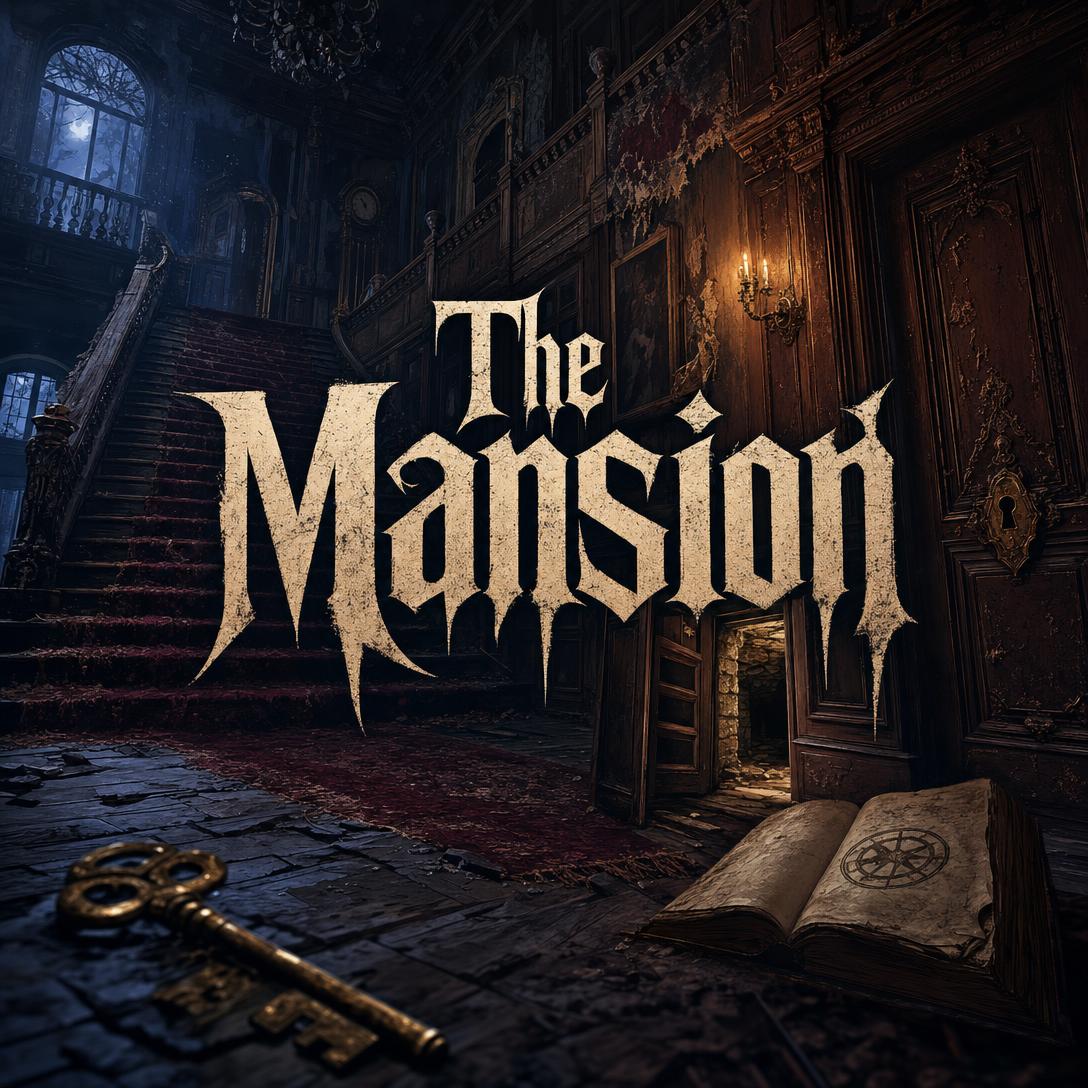
The Mansion drops you into a survival horror game in the tradition of Clock Tower — trapped in a house you do not recognize, with no backstory handed to you and no promise you will walk out. Every session generates a different family, a different sin, and a different way to escape. Death is graphic and final. Escape is possible, but only if you pay attention.
✅ A unique mansion, mystery, and exit generated for every playthrough ✅ Real death — no plot armor and no mid-session retries ✅ NPCs with their own knowledge, agendas, and fates ✅ Escape gated by what you understood, not by finding a hidden door
Horror games are booming again, and players are not looking for the same jump scare on a second run. To see what this game actually does with that demand, it helps to look at how a session unfolds — room by room, choice by choice, with a story that only exists because you are there.
Quick Answer: What Is The Mansion?
The Mansion is a survival horror game that generates a unique house, family sin, and escape path each session so no two playthroughs share the same story. You explore one room at a time, read what you find, talk to whoever is still alive, and live with the consequences.
Key capabilities:
- Emergent architecture — unexplored doors can lead to a flooded basement, a quiet library, or something worse
- Information that matters — ignored warnings turn into injuries, encounters, or death
- Living NPCs — survivors, servants, investigators, and family who remember what you did
- Comprehension-gated endings — true escape requires understanding the story, not rushing the map
Gameplay & Features
The global games market reached $188.8 billion in 2025, with 3.6 billion players worldwide. Inside that market, horror has moved back toward the center. The immersive horror category was estimated around USD 8.7 billion in 2024 and was projected to reach USD 9.8 billion in 2025, with tens of thousands of titles competing for attention.
That growth is not only about louder scares. Narrative game platforms were valued at $12.4 billion in 2025, and the narrative adventure segment reached USD 5.1 billion the same year. Players want stories that react. Research on emergent narrative has found that when stories arise through play, they give gameplay context and motivation — both for the person playing and for anyone who hears what happened.
The Mansion is built for that kind of play. You are simply there. No origin speech. No inventory tutorial. The house is already wrong, and the only way forward is to move, look, listen, and decide.
A House That Rebuilds Itself Every Session
Each playthrough generates a family, an era, a sin, and whatever that sin left behind. One night you might be walking the halls of an industrialist dynasty that experimented on workers. Another night it is an occult household that "gave a daughter away." The documents, portraits, toys, and dinner settings change with the backstory. Nothing carries over. The next mansion is a different crime.
The building itself stays a building. Geography does not fold. Doors do not wander. Horror comes from what happened here, who is still here, and what you are willing to ignore.
Exploration With Teeth
Not every room wants you dead. Hostile spaces sit next to empty hallways, supply closets, and rooms that are only tense because something is slightly off — a table set for seventeen, a growth chart that climbs too high, scratches on the inside of a closet door.
A usability study of horror games found that actual combat is not as scary as the implied threat of combat, and that a potent atmosphere keeps players engaged even when nothing is attacking. This game leans on that: long stretches of hostility go numb, long stretches of peace go dull, so the pacing alternates. Clues can sit in a quiet room. Items can be unattended or guarded. The only constant is that you do not know which until you step through.
Warnings exist. A minor detail you skip might cost you a close call. A letter you do not read might put you in a room you should have avoided. An NPC you dismiss might have been the only person who knew the way out.
People Who Remember What You Did
You are not alone. A session can put one to four other people in the house — survivors as lost as you are, servants who know too much, investigators who arrived too late, family who should not still be walking. They answer questions, deflect, lie, ask for help, or sell you out. They do not follow you like party members. They stay where you left them unless they flee, follow a sound, or get taken.
No single approach works on everyone. Universal kindness and universal aggression both fail on the wrong person. Their fates feed the ending: who you save, who you abandon, and who you never understood.
Horror From Implication, Not a Scripted Setpiece
The writing is short, physical, and unsentimental. One strong image per beat. During violence, the prose compresses — no metaphors, no cinematic slow motion. You can fight. You will usually lose. Direct confrontation with the primary threat is almost certainly fatal.
This is an 18+ game. Graphic violence, psychological degradation, and disturbing material are part of the experience, not a fade-to-black disclaimer. The point is not a carnival of shocks. The point is a house that rewards attention and punishes the urge to sprint.
Try a session the way a player actually talks to it:
"I open the left-hand door a few inches and listen before I step through."
"I pick up the letter on the writing desk and read every line."
"I hide behind the wardrobe, cover the lantern, and hold my breath."
About 75% of immersive horror players are adults. This game is built for that audience — people who want dread that comes from reading the room, not from a scripted monster closet.
How to Play
You play The Mansion in ordinary language. Say what you do. The narrator decides what exists, what works, and what happens next. Your input is what your character attempts, not a command the story has to obey.
Step 1: Wake Up Inside A new session drops you into a sensory present tense — a room, a smell, a sound, a few exits. You are not told who you are. You are not told why you are here. Look at what is in front of you and pick a direction.
"I take in the room, check my hands, and try the door that isn't boarded."
Step 2: Move One Room at a Time Travel is always the next space, never a skip to the basement three doors away. Each room is entered and described. Backtracking follows the path you already walked. If the library had three doors the first time, it has three doors now. Map it in your head. The house will not remap itself for you.
"I go through the parlor archway, slowly, and stop if I hear anything on the stairs."
Step 3: Search Like Someone Who Wants to Live Examine desks, portraits, hearths, toys, ledgers, and the backs of closet doors. Take items only when you actually take them — touching a knife does not put it in your pocket. You have two hands. A lantern and a chair means you set something down before you grab the blade. Rest only in rooms that are actually quiet. Extended rest risks discovery. The house does not wait.
"I open the drawer, take the matchbook, and leave the photograph where it is until I know what I'm looking at."
Step 4: Talk, and Remember Who You Told When you find someone, ask questions. Offer help or refuse it. NPCs remember. They may give you a key, a lie, a warning, or a reason to run. If you treat every person as a vending machine for lore, some of them will notice.
"I tell her I found the nursery closet scratches and ask her who Lily was — I don't accuse her, I just wait."
Step 5: Earn the Ending — or Die Trying Escape is real. It is not a front-door exploit and it does not appear because you wandered eight hallways. You have to demonstrate that you understood the family's sin — through a puzzle, a conversation, a ritual, or an action that only makes sense if you read what you found. Rush the map and you may think you got out. That is a loss state, not a lesser victory. Something follows you, or the outside dissolves, and the session ends with GAME OVER.
Death is written in full. No retry prompt. The session is over — then the game steps out of character and tells you the real backstory, the NPC fates, and the ending you missed, with an invitation to play a completely new mansion.
After How to Play, the fastest way to see whether this clicks is to start a session. Try it free — no credit card required.
If a playthrough leaves you wanting to turn the family's sin into a short story of your own, Creative Fiction Writer can help you draft original horror without flattening what made the session specific.
Scenarios & Modes
There are no difficulty sliders and no named campaign chapters. Variety comes from what the session generates and how you play it. These are the kinds of nights the game actually produces.
🏚️ Mapping a House That Should Not Feel This Lived-In
What you do: Start in an entrance hall with a sealed front door, a parlor arch, a staircase, and a basement you cannot open yet. You move room by room, noting exits, lighting, and what does not belong — clocks stopped at the same minute, a child's shoe by a furnace, a dining table set for a crowd that is not coming.
Why it works: The architecture is stable, so your mental map is real. The threat is not. A dusty library might hold a useful lamp. The next door might be a nursery with too many cribs. Exploration is the core loop, and attention is the skill.
In this survival horror game: Players who read the environment survive encounters that kill people who sprint. The mansion rewards the person who notices the nails were driven in from the inside.
👤 Trusting Someone Who Might Need You — or Might Not
What you do: You find a woman in a chapel who will not give her full name. She knows where a ritual room is. She also wants you to go first. Later you find an investigator's notebook in a study, then the investigator is gone. You decide who to help, who to withhold from, and whether to go back.
Why it works: Social play in horror is not a dialogue tree. NPCs act from self-interest. Some want out. Some want you quiet. Some are wrong about what they "know." Endings shift with who lived and whether you could prove you understood them.
In play: A cooperative NPC can still die offscreen if you leave them in a bad room. A hostile one might still be the only person who has the public history of the family right.
If you like designing the kind of original characters these sessions throw at you — a wary servant, a descendant who will not confess — Character Creator is a natural next stop for building horror OCs and portraits you can carry into other fiction.
📱 A Full Session on Your Phone After Midnight
What you do: You play on iOS or Android in bed, one short turn at a time. Check a closet. Read a clipping. Listen at a door. The game runs with the same features as the web version, including speech-to-text if you would rather whisper actions than type them in the dark.
Why it works: Survival horror on a phone is about pacing, not graphics. Two or three short paragraphs per turn, a hook when it earns one, and a house that still kills you if you get careless. You can put the phone down. The session remembers where you were, what you were carrying, and who you last spoke to.
On mobile: A commute-length session still matters. You will not autopilot to the ending. You will also not lose the geography you already established.
🔍 Piecing Together a Sin You Were Never Told
What you do: Early on you get fragments — a burned face in every photograph, a name carved in too many places. Mid-session the names start to connect. Late, someone demands proof that you know what the family did. You either assemble it or you fail the gate and stay inside.
Why it works: The mystery is discovered, not dumped. Some searches find nothing. Some finds are red herrings. The true ending is rare on purpose: deep reading, careful NPC work, and an exit condition that is tied to the crime, not to a key under the mat.
Replay is the mode. Every session generates a new family, new sin, and new horror. Different models on the platform also shift pacing and instinct, so a second mansion is not a New Game Plus of the first.
FAQ
Is The Mansion free to play?
Yes. You can play The Mansion on the Free plan with all core features and limited monthly usage. Paid plans increase usage — Plus starts at $20/month — and usage resets in full on your billing date with no daily caps. There is no credit card required to start a session on the free tier.
How is The Mansion different from Resident Evil or Clock Tower?
Classic survival horror is authored in advance: the same halls, the same tape, the same chase on every disc. This game uses that lineage — vulnerability, pursuit, scarce safety — but generates a new family crime and a new geography each session. You still sneak, hide, read, and lose fights you should not pick. You do not memorize a walkthrough. The house you survived last night is not the house you enter tonight.
Can you actually die in The Mansion?
Yes. Death is real, graphic, and final for that session. Reckless combat, ignored warnings, and obvious danger without preparation can kill you. The game does not invent a last-second rescue. After GAME OVER, you get the full plot explanation, the endings you missed, and a clean slate. Death is a consequence, not the only destination — attentive players can survive and escape.
Does The Mansion work on mobile?
Yes. Play on the web, iOS, or Android with the same features, including synced settings and speech-to-text. A phone session is the same game as a desktop session: one room at a time, persistent memory of rooms, inventory, injuries, and NPCs. It is built for play in short turns, which fits a mobile night better than a three-hour scripted campaign.
Is every playthrough of this AI horror game unique?
Yes. The family name, era, sin, consequence, NPCs, and exit condition are generated at session start and then revealed through documents, rooms, and people. Nothing carries over. Replay is not grinding the same map for a better rank. It is a different mansion. If you rushed and hit a false escape, the post-game breakdown tells you how close you were to a real one.
How long does a session take, and do I have to finish in one sitting?
There is no fixed clock. Because movement is one room per turn and escape requires real exploration plus understanding, a serious run takes longer than a jump-scare demo. Unlimited chat history and persistent memory mean you can stop after the wine cellar and come back days later with your inventory, injuries, and map intact. The house will have kept whatever you already established.
Conclusion
Scripted horror repeats. You learn the closet, you learn the cue, you learn when to run. The Mansion is an AI survival horror game that refuses that loop: a new family, a new sin, and a way out that only opens if you understood what you read and who you trusted.
You explore one room at a time. You can die. You can also live — if you treat warnings as warnings, people as people, and the house as a crime scene rather than a corridor to sprint. That is the whole pitch. Play it that way.
Try The Mansion now. Explore more at Jenova.
For Developers: The Mansion is available programmatically via the Jenova API — integrate emergent survival horror gameplay into your application with a single API call. Full documentation →