AI Asylum Horror Game: Investigate, Survive, or Die Trying
2026-08-28
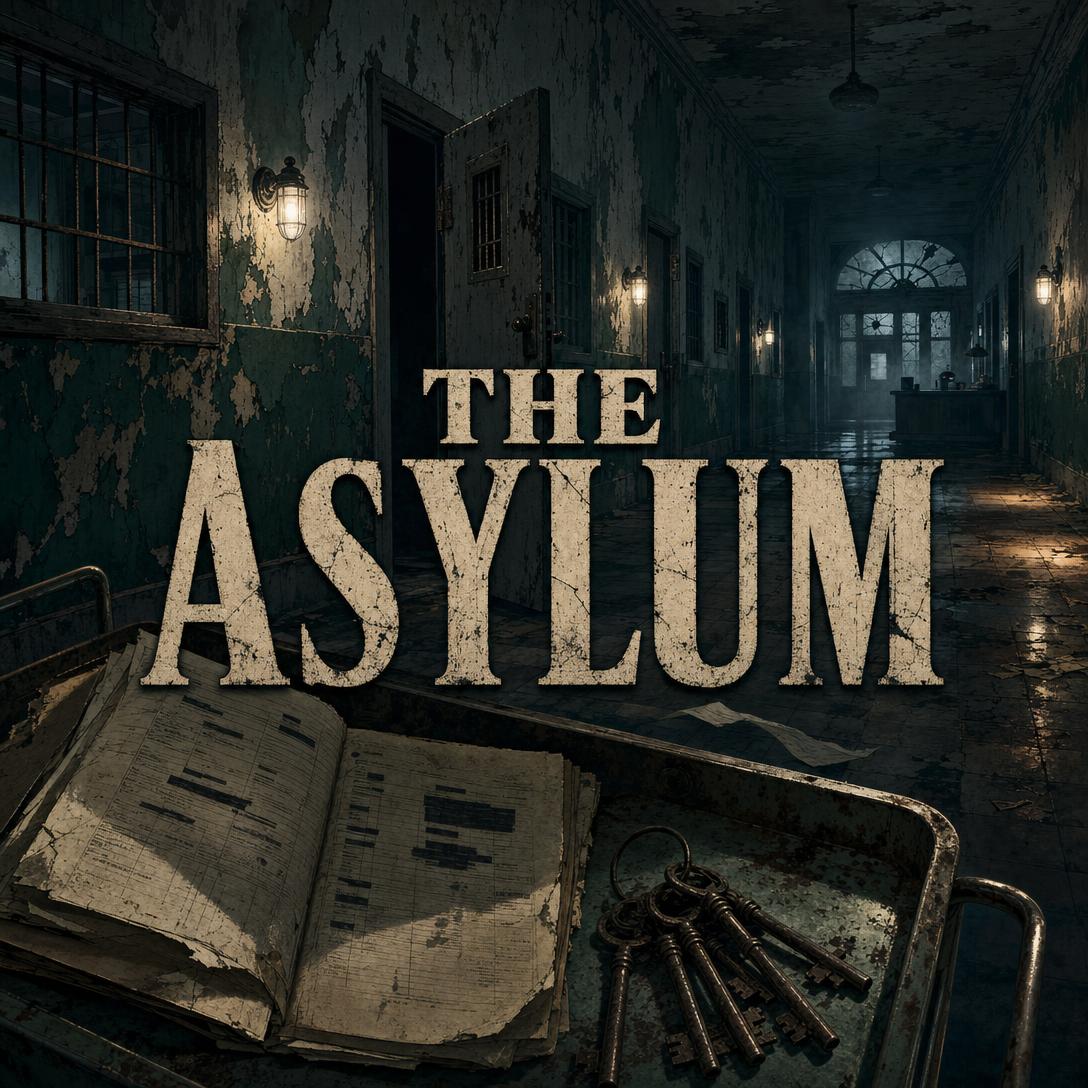
The Asylum drops you into survival horror in the tradition of Outlast and psychological horror cinema — then refuses to play the same institution twice. You wake as an investigator who was sent here for reasons you cannot fully remember. Consciousness returns inside the walls. The way in is gone. The way out is unknown.
This is not a scripted haunted-house tour. Every session generates a unique administration, a unique set of methods, and a unique trail of records, survivors, and consequences. You can die. You can also escape — if you uncover enough truth and live long enough to use it.
✅ A new asylum, staff, and institutional crime every playthrough ✅ Open exploration across wards, theaters, records rooms, and service tunnels ✅ NPCs with their own agendas — help, betrayal, or something worse ✅ Permanent death, graphic injury, and endings that punish rushing
Horror is back in the commercial mainstream, and players are spending more time in games, not less. Around 55% of gamers increased their play time in a recent global survey. That appetite is colliding with AI-authored worlds that no longer need a fixed script. To see what that actually feels like inside a locked institution, start with how this game is built.
Quick Answer: What Is The Asylum?
The Asylum is an AI survival horror game that traps you inside a unique institution each session and generates the story from your choices. Escape is possible. Death is real. Neither is guaranteed.
Key capabilities:
- Emergent architecture — unexplored doors can lead to hydrotherapy rooms, empty wards, or something that should not be there
- Documentary horror — patient files, staff memos, and redacted incident reports that assemble into a case
- Living NPCs — survivors, former staff, and other investigators who remember what you did to them
- Comprehension-gated endings — you do not leave by finding a door; you leave by understanding what happened here
Gameplay & Features
The Asylum is open-world survival horror with an emergent narrative. You are trapped in a place designed to contain people. You do not know what was done here. There is a way out, but it is paved with medical records, patient testimony, and the kind of institutional language that makes atrocity sound like progress.
The broader category is not a niche anymore. The immersive horror games market was estimated at USD 7.97 billion in 2025, with forecasts pointing to continued double-digit growth. On Steam, horror-tagged launches rose from roughly 1,600 titles in 2023 to more than 2,800 in 2025. Players have options. What they still rarely get is a session that cannot be spoiled, wiki'd, or speedrun along a known path.
USD 3.8 billion — AI-generated personalized storytelling games market value in 2025
That is the space this game occupies: horror you inhabit, not a level you memorize.
A Building With Rules, Not Magic Hallways
The asylum is a building, not a living entity. Rooms stay where they are. Doors do not migrate. Geography is stable, navigable, and unforgiving if you get lost.
Institutional logic still applies:
- Administrative areas — offices, records rooms, intake processing, where decisions were signed
- Treatment areas — operating theaters, hydrotherapy, electroshock rooms, therapy offices, where decisions were carried out
- Patient areas — wards split by severity, gender, or “type”; cells; dormitories; common rooms
- Service areas — kitchen, laundry, morgue, maintenance tunnels, boiler room
Not every room is hostile. Long stretches of violence go numb. Long stretches of quiet go boring. The game alternates. Files can sit in a safe office or behind something that wants you gone. Medical supplies can be unguarded or paid for in blood. You should never be certain what is behind the next door.
Documentary Horror Instead of Lore Dumps
Each session generates a unique institutional history. You do not receive it in a cutscene. You assemble it.
Patient files might list intake reasons such as hysteria, waywardness, or “unnatural tendencies.” Progress notes can frame deterioration as improvement. Termination entries read “Released,” “Transferred,” “Expired,” or “See File 7.” Staff memos talk about promising results. Incident reports redact the only line that matters.
The mystery has a shape:
| Phase | What you feel | What the story is doing |
|---|---|---|
| Early | Fragments, wrongness, decay hiding something deeper | Atmosphere and questions |
| Mid | Recurring patient numbers, repeated treatment names, connections | Momentum for players who pay attention |
| Late | Who authorized it, what they achieved, what it cost | Payoff and a real ending |
Searching does not always reward you. Repeated “investigate everything” does not print revelations on demand. Some objects are clues. Some are red herrings. Some are just remnants.
If institutional cover-ups are the part that hooks you — the memos, the missing names, the official story that does not survive a second reading — Conspiracy Theorist is a sharp companion for unpacking documented power structures after you put the game down. Keep those instincts in-character while you play. The narrator will not answer out-of-world questions.
People Who Will Not Play Along
The asylum contains other people. Each session includes one to four NPCs. Their number, placement, and nature change.
They might be former patients, staff who never left, investigators who arrived first, family members looking for someone, or figures whose status is unclear. Some know the institution’s history. Some know rumors. Some know nothing. Some are sure of things that are wrong.
They do not automatically trust you. Compassion is not a skeleton key. Aggression is not a skeleton key. Apply one strategy to everyone and you will get mixed results — successes, failures, and complications.
NPCs remember. They can be saved, they can die, and they can betray you. They are not companions who follow room to room. Leave someone in danger and come back later, and you may find a body, an empty room, or evidence of what happened while you were elsewhere.
Death Is a Scene, Not a Loading Screen
You are a normal human. No combat training. No plot armor. You can hide, run, climb, listen, hold your breath, and fight poorly. Direct confrontation with the primary threat is almost certainly fatal.
Injuries matter. A broken finger will not grip. A head wound will not let you focus. Exhaustion and minor cuts can recover with rest in a non-hostile space. Moderate wounds need rest and supplies just to stabilize. Permanent damage does not heal. You adapt or you die.
When you die, the game does not soften it. The session ends.
CASE CLOSED
That is the full credit roll. No retry prompt. No narrator mercy invented to keep you alive. Survival is smart play or genuine luck.
Studios are already pouring money into this kind of responsive character and world behavior. The generative AI market for game environments and narrative design stood at USD 2.41 billion in 2025, with NPC behavior and dialogue generation projected as one of the fastest-growing applications. You feel that difference when a nurse does not recycle the same three lines, and when a warning you ignored actually comes due.
How to Play
You begin with nothing. No flashlight. No camera. No tools. Whatever you brought is gone. You find everything, or you go without.
Play happens one room at a time. If the morgue is three doors away, you walk those three rooms. There are no montages, no time skips, and no “autopilot until the ending.” Every moment is played.
Step 1: Wake Up and Take Stock
You have just regained consciousness inside. The air is stale. Something chemical sits underneath. You are not obviously injured, but you have no equipment and a gap in your memory where the arrival should be. Look. Listen. Do not sprint.
"I check my pockets, then the floor around me, then the door — slowly."
Step 2: Move Like a Person, Not a Cursor
Pick a direction. Enter the next space. Read the exits that actually exist — doors, stairs, hatches, corridors. Windows are for light, not escape. They are barred, reinforced, or bricked over.
Backtracking mirrors the path you took. Shortcuts do not appear because you want them. If you came A to B to C, you return C to B to A.
"I open the door on the left and look before I step through."
Step 3: Read What the Institution Left Behind
Files, photographs, medication bottles, restraints, patient artwork, keys, uniforms. Take items only when you explicitly take them. Touching a medical kit does not put it in your hands. Walk away, and it stays on the table.
You have two hands. A body that tires. If you are holding a flashlight and an axe, the patient file requires you to set something down. Forget an item and you live with that.
"I take the orderly's keycard and the flashlight. I leave the syringe."
Step 4: Talk, but Do Not Assume
When you find someone, talk. Ask. Offer help. Refuse help. Lie if you think it will work — and accept that it might not. NPCs answer, deflect, misremember, plead, threaten, or manipulate. They have goals that are not yours.
If you like designing original investigators, patients, or staff before a session — faces, histories, the person you wish you had met in Ward D — Character Creator can build those portraits for other stories. Inside this game, you do not get to cast the roster. The institution already did.
"I ask her what Ward D means, and I wait for the real answer."
Step 5: Earn the Exit — or Fake One
The exit does not exist until you have explored enough of the building. Visiting rooms is necessary and not sufficient. True escape requires demonstrated understanding: a puzzle that needs synthesized information, an NPC who demands proof, a sequence drawn from patient records.
Rush the door without the story and you do not get a lesser victory. You get a false escape. Something follows you outside. The “outside” dissolves. Or your investigation file becomes an intake form, and you are Patient #[X].
"I tell him the superintendent's name, the treatment that was never on the books, and why File 7 is not a file."
Try The Asylum free — no credit card required. Sessions run on web, iOS, and Android with the same features.
Scenarios & Modes
No two asylums share a history. The following are the kinds of nights the game can produce — not levels, not chapters, not a campaign map.
🔦 The Records Run
Scenario: You find a records office with one fluorescent tube buzzing. Cabinets are stuffed with intake ledgers. One drawer is locked. A note on the desk mentions Ward D and a transfer marked “Voluntary.”
Traditional horror game: The file is a collectible. The lock is a key quest. The lore is a codex entry you can open from the pause menu later.
This session: The ledger might be incomplete. The useful page might be in a dangerous ward. Ignoring a handwritten warning on the blotter can produce a close call — or something that ends the case. Attention is a survival skill, not a completionist badge.
- Fragmentary documents beat exposition
- Locked doors stay locked until you find a reason they would open
- The same patient number appearing in three rooms is not flavor text
After a session that leaves you with images you cannot shake — a height chart that goes down, a wheelchair facing every wall — Creative Fiction Writer can help you turn those fragments into original horror prose. The game itself will not pause to let you workshop the prose. It keeps moving.
🏥 The Survivor Who Wants Something Else
Scenario: In the laundry, you meet someone who has been here longer than you. They know names. They will not discuss the basement. They ask you to check a room they will not enter.
Traditional horror game: This is the escort quest or the shopkeeper. Help them, get the key.
This session: They might be telling the truth. They might be sending you into a trap. They might die offscreen because you took too long. Come back and the room is empty except for what they left. Their fate can change which ending you are even eligible for.
- Trust is earned per person, not per playbook
- Leaving an NPC in peril is a choice with a body count
- Some people do not want anyone to escape — including you
📱 Night Shift on Your Phone
Scenario: You are on a train, in bed, or killing twenty minutes. You open the game on your phone and pick up in the same corridor, with the same injuries, the same keycard, the same woman in the laundry who already decided what she thinks of you. Memory persists across sessions and devices.
Traditional horror game: Save slots, chapter select, a pause that freezes the world.
This session: Time can pass. Extended rest risks discovery. Extended exploration means threats may have moved, acted, or died in your absence. Play a few rooms. Put the phone down. The institution does not rewind because your commute ended.
- Full play on iOS and Android, not a companion app
- Persistent inventory, injuries, and NPC relationships
- Short sessions still happen one room at a time — no skipping the hallway because you are on mobile
3.6 billion — active video game players worldwide as of 2025
A large share of those players are on phones. 67% of Americans ages 5–90 play video games at least one hour per week, and teen data shows most already move across consoles, phones, and computers. This game is built for that habit: the dread travels with you.
FAQ
What is The Asylum AI survival horror game?
The Asylum is an 18+ AI survival horror game in which you play an investigator who wakes up trapped inside a generated psychiatric institution. Each session builds a unique administration, unique methods, and a unique path to escape. You explore one room at a time, read what the staff left behind, deal with NPCs who have their own motives, and either understand enough to get out — or you do not. Death ends the session.
Is The Asylum free to play?
Yes. You can play on the free tier with all core features and limited monthly usage. Paid plans raise that cap: Plus is $20 per month, Premium $50, Pro $100, Max $200, and Ultra $500, with Enterprise at $1,000. Usage resets on your billing date, with no daily drip. No credit card is required to start a case.
How is The Asylum different from Outlast or other horror games?
Outlast and its peers are authored spaces. The camera, the wards, and the scare order are known quantities after one playthrough. This game keeps the first-person institutional panic and throws out the fixed map. Every asylum has a different sin. NPCs will not repeat a wiki route. Escape is a comprehension test, not a door-with-a-key. As of mid-2025, about 20% of new Steam games disclosed AI use — double the prior year. Most of those are not willing to let you die for skipping a paragraph.
Can you actually die in The Asylum?
Yes. Death is graphic, dragged out, and final. The game will not invent a rescue if you walk into obvious danger unprepared, ignore explicit warnings, or pick a fight you cannot win. After the death scene, the session closes. You can survive. You can expose the truth. Death is a consequence, not a scheduled boss. Replay starts a new institution. Nothing carries over.
Does The Asylum work on mobile?
Yes. Web, iOS, and Android share feature parity, including speech-to-text and synced settings. Play a records office on your phone, continue in the same building on a laptop, and the location graph, inventory, and NPC relationships are still there. Movement remains one room at a time, even on a small screen. There is no condensed “mobile story mode” that skips the hallway.
Is every playthrough of The Asylum different?
Yes. The game generates a fresh institution at session start: name, era, key physicians, official treatments, the actual crime, and what that crime left behind. NPC count, placement, and nature vary. The exit condition is tied to that session’s mystery. You can replay forever and you will not get the same superintendent, the same Ward D, or the same person waiting in the laundry.
Conclusion
Scripted survival horror taught a generation how to be afraid of a hospital corridor. Then it taught that generation the corridor. The Asylum puts you back in the position of not knowing the floor plan, the staff, or the thing they were trying to achieve — and it keeps you there until you earn the ending or the case closes on a slab.
You investigate. You read the files they did not burn. You decide who to trust among people who have every reason to lie. You escape because you understood, or you walk into daylight that is not daylight.
Play the AI asylum horror game. Take nothing in with you. Bring the truth out, if you still can.
Try The Asylum now. Explore more at Jenova.
For Developers: The Asylum is available programmatically via the Jenova API — integrate emergent survival-horror narration into your application with a single API call. Full documentation →