Text Adventure with Stats: AI Play That Tracks HP & Skills
2026-09-10
A text adventure with stats only works when hit points, skills, and stamina change the next line of prose — not when they sit in a sidebar you never consult. Jenova is built for that loop: AI text adventures that remember HP, abilities, injuries, and the last command that actually landed. In September 2026, players still bounce between parser fiction with no character sheet and MUDs whose slash-commands feel like a second job.
✅ Persistent memory so HP, skills, and status effects survive the next scene ✅ Specialized story agents for mystery, strategy, romance, and custom rulesets ✅ Design help if you want to specify the sheet before you play ✅ Full play on web, iOS, and Android — same character, same numbers
To understand why this pairing is still rare, look at how text and stats keep missing each other.
Quick Answer: What Is a Text Adventure with Stats?
A text adventure with stats is a narrative game you play in prose that still tracks hit points, skills, levels, and resources, so a failed check or a wolf bite changes what you can type next. The sheet is not a menu. It is the story’s memory of cost.
Key capabilities:
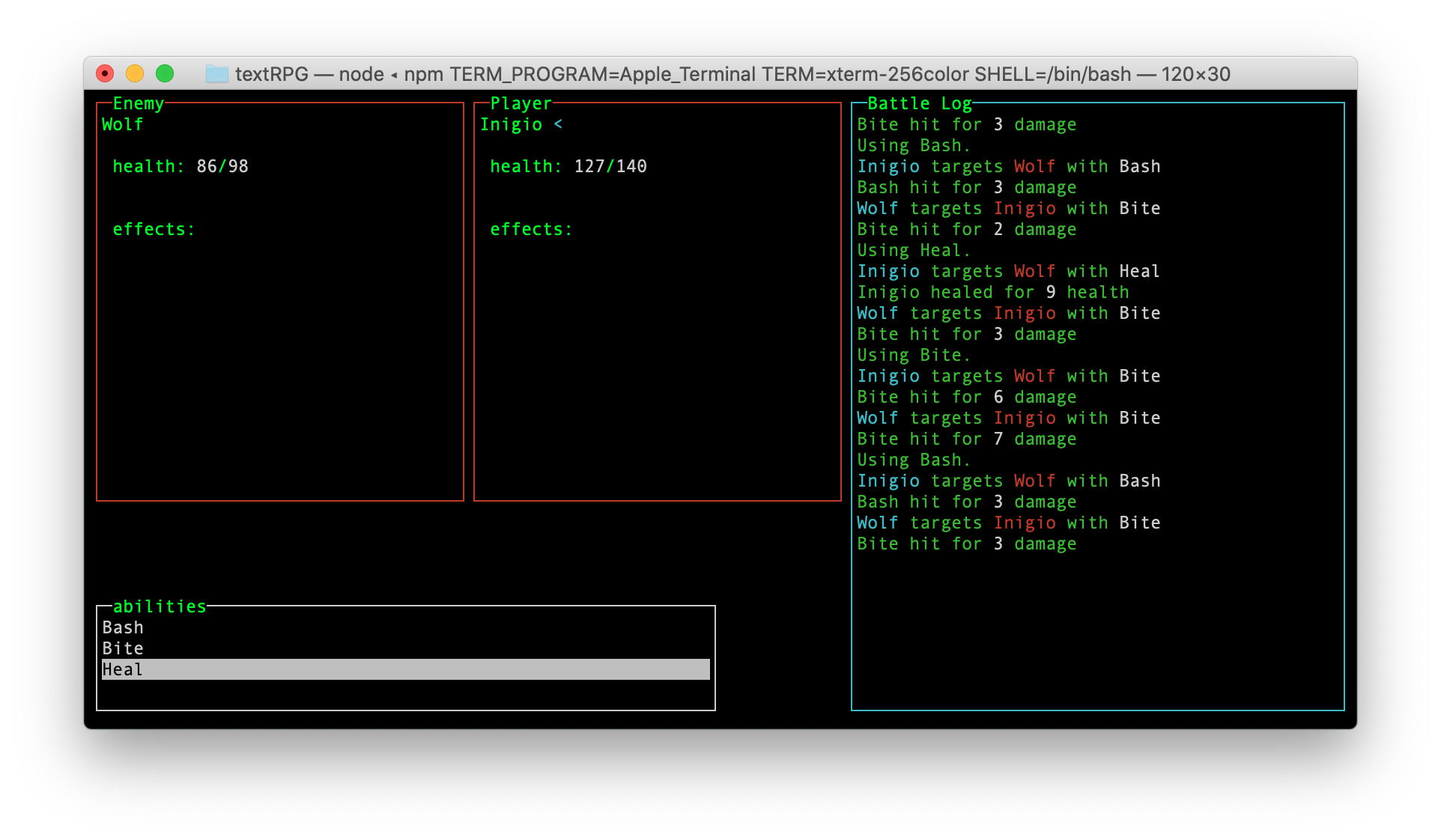
- Combat that writes a log — Bash, Bite, Heal, and the HP those moves actually change
- Persistent sheets — The Mansion and The Asylum keep injuries, clues, and status across rooms
- Nation-scale numbers — Civilization treats grain, armies, and treaties as the character sheet of a country
- Systems design — Game Designer Assistant helps you specify HP, skills, saves, and fail states before you run a campaign
- Custom agents whose instructions are the ruleset — 140 HP, three abilities, no retcon heals
Why Text Adventures Still Lose Their Character Sheets
Stats are one of the oldest languages in games. 86/98 health means the wolf is hurt, not dead. 127/140 means you can still take a Bite. An empty stamina bar means you do not walk north. Interactive storytelling research has long treated that kind of agency as the thing that keeps people in a story: a continuation-desire model of interactive storytelling argues that engagement can be measured by whether the player still wants the next beat after they act.
The broader market keeps growing around that hunger. Industry analysis puts the gaming market at $269.06 billion in 2025**](https://softices.com/blogs/game-development-trends), with further growth projected through 2030. On phones, the [**online smartphone and tablet games market was valued at $132.06 billion in 2025 and is projected at $160.85 billion in 2026. Players have more places to type a command than ever. They still rarely get prose and a honest sheet.
$4.47 billion — estimated global AI-in-games market in 2026, as studios chase adaptive difficulty and stories that respond to play
But assembling a text adventure with stats is still frustratingly difficult:
- Classic interactive fiction that never checks hit points
- MUDs and terminal RPGs whose numbers are real — and whose syntax is a second language
- Chat roleplay that forgets HP the moment the wolf bites
- Designers who can write rooms but cannot specify a skill check
- Mobile sessions that drop the sheet when you lock the phone
Parser Stories That Never Check HP
A wound in the prose is flavor. A wound on a sheet is a constraint. If the next room never asks whether you still have 12 hit points, the fight was decoration. Work on player engagement in immersive interactive stories keeps returning to the same point: engagement is not one feeling, and it collapses when action and story live in separate layers. A text adventure with stats is the refusal of that split. The sentence after combat has to know the log.
Stat Blocks That Live in a Different Window
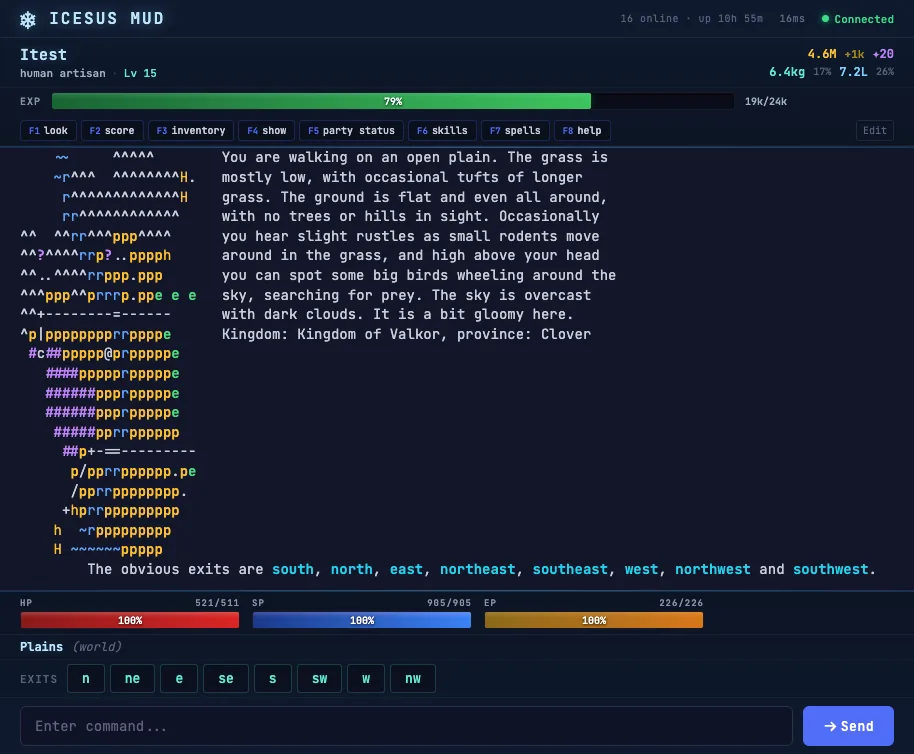
MUDs and terminal CRPGs solved the number problem decades ago. You get HP, SP, EP, a level, an ASCII map, and a combat log that records Bash for 3 and Bite for 7. That is the fantasy. The cost is interface: function keys, slash-commands, and a sheet that can feel like accounting. Tabletop design conversations have treated RPGs as tools of expression, not only as ladders of numbers. When the sheet is a different window from the room description, players stop being characters and start being clerks.
Chat Roleplay With Amnesia
People open a chat model and ask for a dungeon. For three turns it works. Then the wolf is at full health again, the Heal was free, and the artisan’s stamina bar never existed. Industry coverage of AI in games keeps pointing at the demand: adaptive storylines, intelligent opponents, play that reacts. Amnesia is the opposite of stats. A number that can be rewritten without cost is not a stat. It is set dressing.
Designers Split Between Prose and Systems
If you are building a text adventure with stats, the gap is worse. Writers know rooms. Systems people know hit dice, diminishing returns, and why a +1 every level is a treadmill. Forum debates about character progression, inventory, and skills keep asking what those systems are for if they never pressure the scene. Few tools help one person specify both: “Bash deals 3, Bite can crit, Heal is 9, and if HP hits 0 the prose ends.” Players themselves argue over whether stats should even be mutable — which is a design question, not a font choice.
Mobile Sessions That Drop the Sheet
A commute is a valid dungeon turn: check HP, spend one ability, walk south. Most IF apps and desktop MUDs do not treat it that way. You either need a keyboard full of binds or you accept that the character sheet will reset when the phone sleeps. Rhythms of engagement matter; if the only honest session is a 40-minute sit-down, the stats belong to a desk, not a life.
This is exactly the problem these agents were built to close.
The Jenova Solution
The platform does not give you another ASCII HUD to babysit. It gives you AI agents that treat hit points, skills, stamina, and debts as story state — remembered across turns, sessions, and devices. You play in conversation. The sheet lives in the world: if Bite took you to 120, the next paragraph will not pretend you are fresh.
You can also spin up a custom agent whose instructions are the rules: max HP 140, abilities Bash / Bite / Heal, a running combat log, no miracle potions because the scene got hard. Multi-model access, persistent memory, and MCP tools sit underneath so the wolf’s remaining health is not a vibe.
| Traditional Approach | Jenova |
|---|---|
| Parser IF that never rolls a check | Prose that consults HP, skills, and status before the next line |
| MUDs with real stats and steep syntax | Typed play — “I Bash the wolf” — with the numbers still binding |
| Chat roleplay that forgets last turn’s damage | Persistent memory across sessions and devices |
| Separate writing docs and systems spreadsheets | Game Designer Assistant for HP, skills, saves, and fail states |
| One genre, one save file | Mystery, strategy, romance, and custom sheets in one library |
MMORPG preference research keeps showing that players care about how systems feel in play, not only about how large the numbers get. A text adventure with stats should make the sheet audible in the room.
Mystery Houses and Locked Wards
The Mansion drops you into a house with no memory of how you arrived. Every room can hide a key, a wound, or a lie. Tell it that a fall costs HP and a locked door costs a tool, and the investigation becomes a sheet. The Asylum does the same in a shuttered institution: wards, files, and objects become the case, and an injury is evidence you now have to carry.
That is closer to a honest text adventure with stats than a 40-slot bag. You are not opening a loot window. You are deciding whether the syringe is a heal, a weapon, or a plot point you cannot un-spend.
Nation-Scale Stats and Rival Pressure
Not every sheet is a body. Civilization treats grain, armies, legitimacy, and treaties as the nation’s hit points. Rivals act while you dither. That is the same grammar as a wolf fight: limited resources, irreversible spends, a log of what you chose. If you want stats that are not Strength and Dexterity, start here.
Design the Sheet Before You Play
If the keyword is a brief, not a pastime, open Game Designer Assistant and specify the loop: damage bands, stamina, skill ceilings, what “0 HP” means in prose, whether stats are fixed at creation or grown in play. Pair that with Film Screenwriter when a failed save needs a scene, not a toast. Manga Creator and Comic Creator can put the same numbers in a panel — a health bar as a visual beat, a combat log as gutter text.
Cross-Genre Worlds That Still Roll Numbers
Stats are not only dungeons. Vesper Court can make a night, a drop of blood, or a refused invitation the resource you cannot refill. Love Island remembers connections and rejections the way a MUD remembers stamina. Learn English Through Roleplay can run the same wolf fight so vocabulary sticks to the ability you actually used. Same rule: if it can be spent, it has to stay spent.
Specialized AI Agents for Text Adventures with Stats
These are the agents a player or designer would actually open in the next month — not a tour of the whole library.
The Mansion
The Mansion is a closed-house mystery. You wake with no memory. HP, tools, and clues are whatever you dare to take from each room.
- Room-by-room secrets that can wound you or arm you
- Object-as-stat logic (keys, light, injuries)
- Escape pressure that makes every hit point matter
The Asylum
The Asylum puts you in as an investigator whose case file is the sheet: badges, meds, patient records, things that should not be in the wards.
- Investigation structure with found objects and status
- Wards that hide tools and threats
- A hidden story that only coheres if you keep the evidence — and the HP
Game Designer Assistant
Game Designer Assistant is for the other half of the keyword: people who want a text adventure with stats as a system.
- Systems analysis for HP, stamina, skills, and fail states
- Documentation you can hand to narrative or engineering
- Genre literacy across IF, MUDs, survival, and RPG markets
Civilization
Civilization scales the sheet to a country. You are not holding a sword. You are holding harvests and armies that will not wait.
- Era-specific resources and pressures
- Rivals who act on their own clocks
- Strategic “HP” with story outcomes
Vesper Court
Vesper Court is dark romance with resources that bind: nights, tokens, blood, invitations that cannot be put back.
- Night-by-night consequence
- Items and status as intimacy and leverage
- Memory of what you accepted and what you refused
Love Island
Love Island is open-world social play. Affection, trust, and public embarrassment are the stats — spent in conversation, not in a talent tree.
- Emergent social dynamics from your choices
- Relationship state that persists
- A sheet made of people, not swords
Try the platform free — no credit card required.
How It Works
Step 1: Open an Agent and State the Sheet Pick the world first — locked mansion, asylum, nation, vampire court, or a custom agent whose instructions are the rules. Then say how numbers work: max HP, stamina, which abilities exist, what 0 means. One paragraph is enough for persistent memory to treat the sheet as law.
"Terminal-style combat. I have 140 HP. Abilities: Bash (3 damage), Bite (variable), Heal (9). Enemies have HP too. Print a short combat log after every action. No retcon heals."
Step 2: Play the Room, Not the Spreadsheet Describe what you do. Ask for the sheet only when the character would — at a door, before a fight, when stamina hits zero. In The Mansion that might be a candle and a twisted ankle. In a custom wolf fight it might be 127/140 and a Bite you should not throw again.
"I look at the wolf, check my HP, and Bash. If I'm below 100, I Heal instead. Don't skip the log."
Step 3: Spend Stats Like Plot Points Use the Heal. Fail the climb. Let Bite land for 7. Continuation-desire research treats the wish to keep going after an action as the core of interactive story engagement. Spending a stat is the smallest version of that action. If the number can bounce back for free, the desire was fake.
"Bite took me to 120. I do not Heal. If the next Bite drops me under 100, I run south. Keep the log honest."
Step 4: Continue on Another Device Without Resetting HP Leave the plains, lock your phone, reopen on the train. The session stays. Your artisan is still level 15. The wolf is still at 86. That is the difference between a text adventure with stats and a chat that roleplayed one fight and forgot.
Step 5: If You Are Building, Document the System Switch to Game Designer Assistant and turn the rules you just tested into a spec: damage bands, stamina gates, tutorial tells, and how the prose should announce overencumbrance or 0 HP without a lecture.
"Write a GDD section for a parser-like AI RPG: visible HP/SP/EP, three abilities, combat log, ASCII-optional map, death is a scene not a reload."
Results & Use Cases
⚔️ Wolf at 86, You at 127
Scenario: A terminal fight. Enemy Wolf 86/98. You 127/140. Abilities: Bash, Bite, Heal. The log already shows Heal for 9 and Bite for 7. Traditional Approach: A MUD client with binds, or a chat model that “forgets” the 7. Custom play on Jenova: You type the ability. The agent writes the log and the new totals. The next sentence cannot ignore 127.
- Damage is a recorded event, not a vibe
- Heal is a spend, not a mood
- You can demand the same three-panel layout in prose: enemy sheet, your sheet, log
🏚️ Overnight in the Dark House
Scenario: You wake in a locked mansion. You have a coat, a maybe-sprained ankle, and a hallway that eats sound. Traditional Approach: A walking sim with notes you cannot pick up, or an RPG that pauses the horror for a 40-slot bag. The Mansion: You take a candle, a hairpin, and a letter. The next door checks light, tools, and whether you can still run.
- Clues occupy the same “slots” as hit points
- A fall is HP, not flavor
- The house remembers what you stole and what it cost
📱 Commute Save: What’s My Stamina?
Scenario: Four subway stops, a campaign mid-plain, HP/SP/EP still full, exits in every direction. Traditional Approach: Desktop MUDs that need a keyboard; IF apps that lose the thread when you switch apps. Jenova on mobile: You ask current stats and walk southeast. Voice-to-text for “I rest until SP recovers.” Same sheet on phone and desktop.
- Session memory survives the lock screen
- A two-minute turn is a valid session
- Feature parity across web, iOS, and Android
🎯 From Prototype to Stat Bible
Scenario: You want to ship an AI text adventure where every ability is a verb and 0 HP is a scene. Traditional Approach: A week of mismatched notes, plus a combat designer’s table that ignores the story. Game Designer Assistant: You get a documented sheet: tags, damage bands, stamina gates, and the moment Heal should be unavailable because the player already spent it.
- Stats as plot flags, not only modifiers
- Fail states written in prose
- Handoff language for art and UI
🗺️ Kingdom of Valkor, Province of Clover
Scenario: You are a level 15 artisan on an overcast plain. ASCII map on the left, room text on the right, bars at 100%. Traditional Approach: A MUD with a steep command language, or a strategy game with no sentences. Civilization / custom agent: The “sheet” becomes harvests, exits, and whether you still have the energy to walk southwest. Learn Japanese Through Roleplay can run the same travel day so the direction words stick.
- Exploration gated by stamina, not by a loading screen
- Level as identity, not only as DPS
- Bilingual play if you want the plains in another language
FAQ
What is a text adventure with stats?
A text adventure with stats is a narrative game played in typed prose that still tracks hit points, skills, levels, stamina, or resources. What you spend in a fight or on a road changes later scenes. On this platform, that state lives in agent memory rather than a separate HUD, so 127/140 HP can still matter tomorrow.
Can I play a text adventure with stats on my phone?
Yes. Jenova runs with feature parity on web, iOS, and Android. Your HP, skills, and unfinished rooms sync. A commute-length turn — check the sheet, use one ability, take an exit — is a valid session, not a compromised one.
Is Jenova free to play these story agents?
Jenova has a free tier with core features and limited monthly usage. Paid tiers raise usage. You can start The Asylum or a custom combat ruleset without a credit card and decide later whether you need more room for long campaigns.
How is this different from a MUD or classic interactive fiction?
Classic IF often has rooms and objects but no honest hit points. MUDs often have honest hit points and a command language you have to learn. A text adventure with stats here is typed English (or another language you choose) with binding numbers. You can still ask for a combat log, an ASCII map, or HP/SP/EP bars in the reply — without installing a client.
Can I design my own stat system here?
Yes. Use Game Designer Assistant to specify HP, stamina, skills, breakage, and death, then test the feel in a custom agent or a world like The Mansion. Writers can push the same failed save through Film Screenwriter if it needs a cinematic beat, or through Comic Creator if the health bar has to read in a panel.
Do the agents remember HP across days?
That is the point of persistent memory. If Bite dropped you to 120, say so once — or let the log say it. The next session should not require you to re-explain the sheet unless you want to retcon. For language-learning play, Learn English Through Roleplay can run the same item-and-HP scenes so vocabulary sticks to numbers you actually spent.
Conclusion
A text adventure with stats is not a bigger HUD. It is a story that can see your hit points. Most titles still split the job: parser games that never roll a check, or MUDs whose numbers are real and whose syntax is a wall. Jenova puts those layers back together — mystery houses, asylums, nations, vampire courts, and custom sheets that remember the wolf, the Heal, and the 127 you actually have.
Play The Mansion if you want rooms that wound you. Open The Asylum if the case file is the pack. Run Civilization if the sheet belongs to a country. Build the rules with Game Designer Assistant if the keyword was a brief, not a pastime.
Explore the full library of story agents at Jenova and start a run where the log is the plot.
For Developers: Text-adventure agents that track HP, skills, and combat logs are available programmatically via the Jenova API — integrate character-sheet narrative state into your application with a single API call. Full documentation →