Supervillain Roleplay AI: Persistent Villains Who Stay in Character
2026-08-28
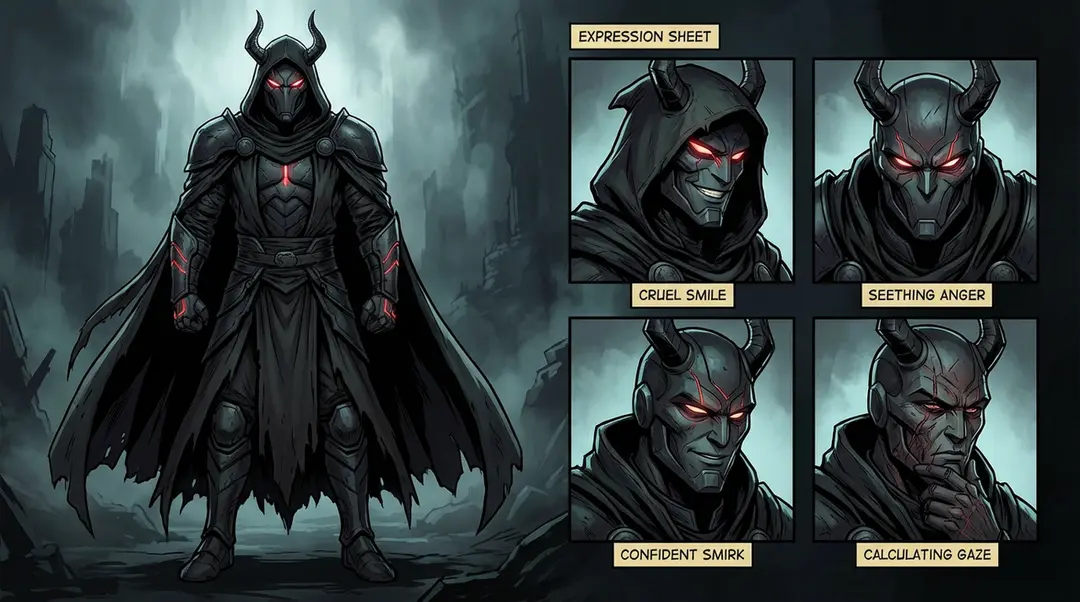
Roleplay Game Master helps you run immersive supervillain campaigns by holding ideology, long cons, and supporting-cast voices across every session. While generic chatbots flatten a calculating smirk into generic menace and forget which city you already burned, this AI keeps your public face, your private doctrine, and your henchmen consistent from first monologue to final confrontation. In August 2026, interactive villain stories are moving from one-off chats to long-running schemes—and persistent memory is what makes a campaign feel earned. You set the rules of the mask; it keeps the lieutenants, the press cycle, and the unfinished plot threads intact.
✅ Unlimited campaign memory for doctrines, aliases, grudges, and unfinished plots ✅ Character consistency for villains, lieutenants, heroes, and civilians ✅ Complete creative freedom for original empires, inverted morals, and gray politics ✅ Play on the web or on mobile whenever the next scene hits
To understand why this matters, let's examine why most supervillain roleplay still collapses after a few scenes.
Quick Answer: What Is Supervillain Roleplay AI?
Roleplay Game Master is a supervillain roleplay AI that runs persistent campaigns with consistent antagonists so you can play original villains, empires, and long cons across long story arcs. You set the doctrine; the AI holds the continuity.
Key capabilities:
- Persistent memory for ideology, aliases, grudges, and multi-arc schemes
- Character-accurate dialogue for villains, lieutenants, heroes, and civilians
- Original-universe worldbuilding—cities, factions, artifacts, and public-versus-private faces
- Scene-by-scene pacing that supports one-shot heists and multi-arc takeovers
Why Supervillain Roleplay Falls Apart Without Memory
Villain stories live or die on continuity. A mastermind who forgets the ransom terms, a lieutenant who changes motives mid-heist, or a city that forgets last issue's blackout breaks the illusion faster than a failed monologue. Demand for interactive narrative is no longer a niche hobby. The generative AI chatbot market was valued at $9.9 billion in 2025 and is projected at $12.98 billion in 2026. Dedicated character play is a distinct slice of that demand: estimates put the AI roleplay chatbot market around $1.20 billion in 2026.
$12.98 billion — Projected generative AI chatbot market size in 2026
$1.20 billion — Estimated AI roleplay chatbot market in 2026
But turning that appetite into a campaign that actually feels like a villain saga is frustratingly difficult:
- Generic chatbots reset personality, doctrine, and lore between sessions
- Tabletop groups stall on schedules, rules arguments, and missing players
- Forum and play-by-post games move too slowly to sustain a long con
- One-shot prompts cannot track aliases, collateral, or multi-arc schemes
Voices Drift After a Few Scenes
Supervillain dialogue has a specific texture: the measured threat, the public charm, the private contempt that never raises its voice. General-purpose models optimize for helpfulness, not for a particular antagonist staying in mask. After a dozen turns, the calculating crime boss starts sounding like a customer-support bot. Readers notice. Players disengage.
Long Cons Collapse When Continuity Is Optional
A scoping review of human–AI co-creativity in storytelling maps the same shift across 2020–2025: the useful systems are collaborators that remember structure, not novelty machines that forget the last page. That lift disappears when the same system cannot remember that your public face is a beloved prosecutor, or that District 7 already paid two arcs ago. Continuity is the difference between a spark and a series.
Henchmen and Heroes Flatten Into One Voice
A villain is only as sharp as the people around them. Lieutenants need distinct loyalties. Heroes need codes that actually constrain them. Civilians need reasons to cheer or to panic. When every NPC shares the same diction, the empire feels like a costume with no court.
Ideology Needs Rules, Not Vibes
The best antagonist fiction treats doctrine as a contract: what the villain will never do, what they will sacrifice, how the public story differs from the private one. Without a persistent referee, those rules get rewritten every scene. A "no civilian casualties" ideologue levels a block. A patient schemer starts ranting. The campaign stops feeling earned.
This is exactly what Roleplay Game Master was built for.
Why Roleplay Game Master
This campaign runner is built for long-form, in-character play—not for answering trivia about comics. It holds unlimited conversation memory, keeps NPCs consistent, and gives you complete creative freedom to explore any scenario you imagine. You bring the villain concept. It brings the city that reacts.
Interactive narrative research keeps landing on the same requirement: character memory and narrative tooling matter more than a single clever reply. Analyses of AI interactive storytelling emphasize expanding branching stories and character memory without pretending open-ended generation can replace narrative design. Practitioners describing how AI reshapes interactive storytelling point to experiences that adapt to choices—not chats that reset the doctrine overnight.
| Traditional Approach | Roleplay Game Master |
|---|---|
| Chatbot forgets ideology, aliases, and grudges | Persistent campaign memory across sessions |
| GM and players must share a calendar | Solo or anytime play, including mobile |
| Doctrine drifts from scene to scene | Consistent limits, costs, and consequences |
| Generic "helpful assistant" voice | In-character villains, lieutenants, and heroes |
| One-shot scenes with no arc | Multi-issue schemes, takeovers, and long cons |
Campaign Memory That Behaves Like a Bible
Every serious villain story has a series bible: who knows whose identity, which artifact is still missing, which neighborhood already paid the price. This supervillain roleplay AI treats that bible as living state. You can leave a session after a cliffhanger and pick up weeks later without re-explaining the fall of the east docks.
Characters Who Stay in Mask
Ask for a morally inverted reformer, a theatrical anarchist, or a crime boss who never raises their voice. The campaign runner keeps diction, values, and tells intact. Heroes remember the line they will not cross. Lieutenants remember the last betrayal. Supporting cast does not flatten into the same three lines of panic.
Original Empires, Not Recycled Plots
You are not locked into a licensed continuity. Design a coastal city with three competing crime courts. Invent a power source that ages everyone it "saves." Run a political thriller where the "villain" is a public-safety bill. Complete creative freedom means the story can go anywhere the character would actually go.
Scene Control Without Breaking Character
You can request a slow interrogation, a collapsing-bridge set piece, or a press conference that goes wrong. The AI paces the beat, plays the NPCs, and still leaves you the decisive choice—whether that is a speech, a sacrifice, or walking away.
"I am a public-facing DA by day and the architect of the city's blackouts by night. No super-strength—just leverage, a private network, and a rule: no civilian deaths I cannot justify. Open on a press scrum after last night's outage. Stay in character as the GM and every NPC."
"Create an original villain who believes heroes cause more harm than crime. Give them a beloved civic face. Do not reveal the secret in the first scene. Make the moral conflict the engine."
"Continue last session: my lieutenant still doesn't know I leaked the raid. The hero is outside the gallery. Play my lieutenant, the hero, and the reporter as distinct voices."
Related Agents You'll Also Find Useful
If your campaign starts producing pages you want to keep, these tools sit naturally beside a supervillain roleplay AI.
Comic Creator
If a scene is asking for panels instead of paragraphs, Comic Creator is a personal comic artist for complete stories. Sequential art, dynamic layouts, and a consistent visual style—from a single issue to a graphic-novel saga.
- Page and panel flow designed for reveals, speeches, and set pieces
- Visual continuity for costumes, faces, and ruined skylines
- Formats that scale from one-shots to long runs
Film Screenwriter
If the campaign wants a two-hour structure—origin, midpoint reversal, third-act city-wide climax—Film Screenwriter walks concept, outline, draft, and revision with professional craft: structure, dialogue, and visual storytelling.
- Beat sheets that respect antagonist-genre set pieces
- Dialogue that distinguishes public face, private doctrine, and opposition
- Revision passes aimed at a shootable script, not a chat log
Manga Creator
If the villain saga wants manga pacing—chapter hooks, ensemble courts, and a visual style that holds for a long serialization—Manga Creator is a personal mangaka for complete stories, from one-shots to long epics.
- Panel flow built for confrontation and aftermath
- Consistent character design across expressions and costumes
- Serialization instincts: hooks, payoffs, and escalating cost
Try Roleplay Game Master free — no credit card required.
How Supervillain Roleplay AI Works
Step 1: Define the Villain and the Rules State the universe, the doctrine, and the line your character will not cross. Specificity is fuel: a no-civilian-death rule, a public identity, a city that already cheers the mask. The more precise the brief, the tighter the campaign.
"Original villain: a tactician whose 'miracle' grid ages everyone it keeps online. Public identity as a utilities commissioner. Tone: grounded, no world-ending lasers in issue one."
Step 2: Set the Opening Scene Choose a location, a clock, and a problem that belongs in this world. A hostage exchange, a blackout, a leaked photo of the other face. Ask this supervillain roleplay AI to GM and to play every NPC as a distinct person.
"Open in the gallery at 9 p.m. A journalist recognizes my voice from last week's 'anonymous' broadcast. Play the journalist, my lieutenant, and a hero who wants a statement. Do not break my public face unless I slip."
Step 3: Play the Choices, Not the Script Answer in character. Push, retreat, negotiate, or fail. The campaign runner tracks consequences: trust meters, injuries, press cycles, and heroes who adapt. If you stall, ask for three diegetic options instead of an out-of-story hint.
Step 4: Lock Continuity and Raise the Stakes At the end of a session, recap what must never be forgotten: who saw the unmasking, which artifact moved, which ally is lying. Next time, start with "continue from the recap." That is how a one-night scene becomes a season.
Step 5: Export the Story You Want to Keep When a run produces a finished origin, a takeover, or a manifesto, carry it into sequential art or a script. Roleplay is the rehearsal room; comics and screenplays are the print shop.
Results & Use Cases

📊 Solo Origin That Becomes a Series Bible
- Scenario: You have a villain with a civic identity and a private network that collides with night operations. You want six issues of rising cost, not a single rant.
- Traditional Approach: A weekly tabletop that never starts, or a chatbot that forgets the doctrine by scene three.
- The campaign AI: A continuous origin in which every "necessary" sacrifice shows up at the press briefing the next morning.
- The public-versus-private split stays enforced
- Supporting cast remembers prior rescues and prior lies
- You leave with a bible you can hand to a prose or comics pass
💼 Antagonist Arc for a Creator Who Needs Pages
- Scenario: An indie comics writer needs a three-issue antagonist who is publicly beloved and privately convinced heroes make cities weaker.
- Traditional Approach: Outline in a vacuum, then discover in issue two that the motive does not survive dialogue.
- This campaign AI: You play scenes from both sides of the mask until the ideology is stress-tested.
- Moral conflict stays the engine, not a twist taped on at the end
- Public-face versus private-face dialogue remains distinct
- Finished beats move cleanly into Comic Creator for sequential pages
The broader chatbot market is expected to grow from $9.30 billion in 2025 to $11.45 billion in 2026. Separate tracking of the AI roleplay chatbot category projects about 11.5% annual growth from 2026 to 2033—a signal that interactive character play is becoming a production method, not only a pastime.
$11.45 billion — Expected global chatbot market size in 2026
📱 Commute Campaigns on Mobile
- Scenario: A 25-minute train ride, headphones in, one scene per trip: interrogation, rooftop chase, or press scrum.
- Traditional Approach: Notes-app fragments that never reconnect; a desktop-only GM tool you cannot open underground.
- Supervillain roleplay AI on the go: Full sessions on iOS or Android with the same memory as desktop. You close on a cliffhanger at your stop and resume that night.
- No need to recap the entire continuity each time
- Voice-to-text works when your hands are full
- Short scenes still accrue into a real arc
🎯 Public-Face Thriller That Becomes a Screenplay
- Scenario: An original antagonist with a civic title shares a city with a hero for 48 in-story hours. You want the clash to become a feature outline.
- Traditional Approach: A jam session that produces banter and no structure.
- Roleplay plus Film Screenwriter: Play the 48 hours, then lift the midpoint betrayal and third-act choice into a professional outline.
- Character voices stay distinct under pressure
- The "whose city is this?" question becomes the spine
- You exit with scenes that already sound like dialogue, not bullet points
Frequently Asked Questions
What is supervillain roleplay AI?
Supervillain roleplay AI is software that plays with you in-character as a GM, villain, hero, or ensemble, while tracking doctrine, identities, and plot. This campaign runner is built for that job: unlimited memory, consistent characters, and freedom to invent original universes rather than reciting trivia. The goal is a campaign that still makes sense on issue twelve.
Is Roleplay Game Master free?
Yes. A free tier includes core features with limited monthly usage and no credit card required. Paid plans increase usage if you run long daily campaigns. Pricing is cumulative by tier, and usage resets each billing month, so you are not rationed by the day. Start a one-shot on free; upgrade only if the saga outgrows it.
How is this different from a generic chatbot for supervillain roleplay?
Generic models optimize for being helpful and brief. They drift out of character, lose aliases, and reset tone when you change devices. A dedicated campaign runner treats continuity as the product: the same villain still wants the same artifact, and the same hero still refuses the same line. That difference is what turns a fun scene into a series.
Can I play original villains, or only famous archetypes?
Original villains are the point. You can invent powers, cities, courts, and moral rules that no publisher owns. Archetypal flavors—street-level, cosmic, political—are useful starting briefs, not a locked roster. If you later want the run on the page, Comic Creator and Manga Creator can take the same continuity into print-shaped work.
Does supervillain roleplay AI work on mobile?
Yes. Play on the web, iOS, or Android with the same campaign memory. That matters for antagonist stories because the best scenes often arrive between obligations: a five-minute interrogation on the bus, a longer HQ argument at night. Speech-to-text is available when typing in costume is impractical.
Will it remember a long campaign?
That is the design center. Unlimited chat history and persistent cross-session memory mean origin details, NPC names, and unresolved threads remain available. Recap at the end of a session if you want a clean handoff. Then open the next scene without re-pitching the universe.
Start Your Villain Campaign
Most supervillain roleplay fails the same way: the world forgets itself. Generic chats drop voices. Tables never convene. Doctrine turns to fog. Roleplay Game Master holds the bible—the public face, the cost of the scheme, the hero who plans in daylight—so you can play the scene in front of you.
Build an original antagonist. Stress-test a code. Run a city that remembers what you did last issue. When the campaign earns pages or a script, carry it forward. Explore more at Jenova.
Try Roleplay Game Master now—and keep the mask on between sessions.
For Developers: Roleplay Game Master is available programmatically via the Jenova API — integrate persistent, in-character supervillain roleplay into your application with a single API call. Full documentation →