Story Maker AI with Pictures: Create Visual Stories Using AI (May 2026)
2026-05-06
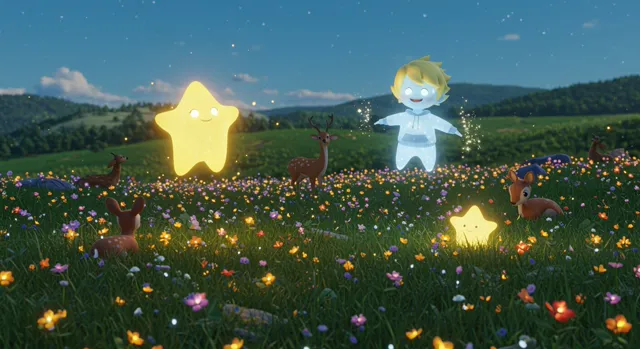
The idea sounds simple: type a story idea, get back a complete narrative with pictures that match. In May 2026, dozens of tools claim to do this — and almost none of them actually deliver both halves well.
The AI writing assistant market has grown from $1.75 billion in 2024 to a [projected $10.3 billion by 2032](https://medium.com/@vicki-larson/best-ai-story-generator-10-tools-i-tested-in-2026-real-results-inside-55e9b920bcb8), and 51% of people now use AI to help them write. But when writers search for a story maker AI with pictures, they're looking for something more specific — a tool that generates prose and visuals that stay consistent across scenes, characters, and chapters. That's where most platforms break apart: one tool writes the text, another generates images, and neither knows what the other is doing.
Jenova was built to solve exactly this problem — a platform where specialized AI agents handle narrative writing, visual creation, and sequential storytelling within the same ecosystem, with persistent memory that keeps characters, settings, and art styles consistent from the first page to the last.
Quick Answer: What Is a Story Maker AI with Pictures?
A story maker AI with pictures is an AI-powered tool that generates both written narratives and accompanying illustrations — creating complete visual stories from text prompts alone.
- 📖 Full narrative creation — concept, characters, plot, and polished prose with the Creative Fiction Writer
- 🖼️ Consistent visual storytelling — sequential art with maintained character design via the Manga Creator
- 🎨 Custom illustrations — scene-specific images, character portraits, and world-building visuals with the Graphic Designer
- 🧠 Cross-session memory — every character detail, visual reference, and plot thread tracked indefinitely
The Problem: Why Most Story Maker AI Tools Can't Handle Pictures
The demand for AI-powered visual storytelling is real — and accelerating. The AI Story Generator Tool Market is projected to grow at 8.8% CAGR between 2026 and 2033, while the AI text-to-image generator market is expected to reach $3.07 billion by 2035 at a 20.4% CAGR](https://www.insightaceanalytic.com/report/ai-text-to-image-generator-market/1842). The adjacent [AI-Generated Interactive Storybook market was valued at $3.2 billion in 2025, projected to reach $18.7 billion by 2034.
But more tools and more money haven't solved the fundamental problems.
The Disconnected Pipeline Problem
Most story maker AI with pictures workflows require bouncing between separate tools — one for writing, another for image generation. ChatGPT writes a scene; Midjourney generates an image. The image doesn't match the scene's description. The character looks different in every frame. You spend more time managing the gap between tools than creating the story.
Visual Consistency Collapses Across Scenes
AI image generation tools produce stunning individual images — but consistency across a sequence is a different problem entirely. As Mark Jones documented in his analysis of AI image generation pitfalls, common problems include extra limbs on characters, inconsistent lighting and perspective, mismatched styles between images, and the AI's fundamental inability to maintain a character's appearance from one generation to the next. For a story with pictures, these aren't minor annoyances — they break the reader's immersion.
The Editing Paradox
63% of surveyed writers report spending more time editing AI output than writing original content. — Elorites Content, Impact of Generative AI on Content Writing Industry, 2026
That statistic covers text alone. Add pictures to the equation and the editing burden multiplies — now you're correcting prose and regenerating images that don't match your characters, settings, or mood. The same survey found that 69% of respondents reported a noticeable decline in average content quality since AI tools became mainstream, because models trained on similar datasets produce structurally identical outputs.
Memory Ceilings Kill Multi-Scene Stories
A story with pictures requires more context than text alone — character descriptions, visual style guides, setting details, and narrative continuity all need to persist across every scene. Metamandrill's comprehensive 2026 comparison found that most AI story generators operate within 2,000 to 8,000 tokens of context — far too little for a visual story where every scene needs to reference what came before. When your AI forgets what the protagonist looks like by scene three, the pictures become meaningless.
While tools like ChatGPT and Sudowrite excel at text generation, and Midjourney or DALL-E produce individual images, none of them were designed to do both within a single, memory-persistent workflow. Jenova's agent architecture bridges that gap — specialized agents for writing, visual creation, and sequential art that share context within the same platform.
Why Jenova Is Built for Visual Story Making
The distinction matters: Jenova isn't a single tool trying to do everything. It's a platform of specialized AI agents, each expert in their domain, that work within the same ecosystem — sharing context, memory, and creative direction.
| Capability | Typical Story Maker AI | Jenova's Agent Ecosystem |
|---|---|---|
| Story creation | One-click generation or basic prompts | Full narrative collaboration via Creative Fiction Writer |
| Image generation | Separate tool, no story context | Integrated visual agents with narrative awareness |
| Character consistency | New appearance every generation | Persistent memory tracks visual references across sessions |
| Sequential art | Not available | Complete panel-by-panel creation via Manga Creator |
| Memory | 2K–8K tokens; forgets between scenes | Unlimited cross-session memory for text and visual continuity |
| Model access | Single fixed model | GPT-5.4, Claude Opus 4.6, Gemini 3.1 Pro Preview — switch per session |
| Cost to start | Paywalled or sharply limited | Free tier with all core features — no credit card required |
Narrative Intelligence, Not Just Text Generation
The Creative Fiction Writer doesn't produce paragraphs on command. It thinks in story architecture — character arcs, planted details, thematic resonance, and the cause-and-effect chains that make narrative feel real. As SidekickWriter's 2026 analysis argued, "simple chatbots are fine for emails, but they fail when you need a cohesive narrative."
When you're creating a story with pictures, this structural awareness becomes even more critical. Every visual scene needs to serve the narrative — and the Creative Fiction Writer ensures every scene description carries the detail an image generator needs.
Visual Consistency Through Persistent Memory
This is where Jenova's architecture directly addresses the biggest pain point in AI visual storytelling. When you describe a character's appearance in session one, that description persists. When you reference a setting's color palette in chapter two, it's still there in chapter ten. The Manga Creator and Creative Fiction Writer share the same memory backbone — so the prose and the pictures stay aligned.
Three Creative Modes for Visual Story Development
The Creative Fiction Writer operates in three modes that map directly to visual story production:
"I want to create a children's picture book about a fox who collects lost things from the forest floor. Each spread should pair a short paragraph with an illustration. The fox should be small, red-orange with a white-tipped tail, wearing a tiny green satchel. The style should feel like watercolor — soft edges, muted earth tones, lots of negative space."
"Write the scene where Kira sees the floating city for the first time. I need the description to be visual enough that I can generate a consistent illustration — include her clothing, the time of day, the architecture style, and where she's standing relative to the city."
"Review the last three scenes and flag any visual inconsistencies — does the lighting match the time of day I established? Is Kira wearing the same coat? Does the city's architecture stay consistent with the description from chapter one?"
Specialized AI Agents for Visual Storytelling
Manga Creator
Your complete visual storytelling partner — from one-shots to 200+ page serialized epics. The Manga Creator produces sequential art with consistent character design, panel flow optimized for visual pacing, and the ability to maintain art style across an entire project. For story makers who think in images as much as words, this is the most direct path from concept to visual narrative.
- 🖼️ Consistent character art across scenes, chapters, and volumes
- 📐 Panel layout and composition optimized for narrative rhythm
- 📚 Supports single-page experiments to graphic novel–length projects
Comic Creator
Western comic book art — bold linework, dynamic compositions, and industry-standard page layouts. The Comic Creator handles everything from single issues to full graphic novels, with the visual punch and sequential logic that the format demands.
- 🎨 Bold, dynamic art styles from noir to superhero to indie
- 📖 Full sequential layouts with gutters, splash pages, and spread compositions
- ✏️ Character consistency maintained across issues and arcs
Webtoon Creator
Mobile-first vertical scroll storytelling — the format that's reshaping how visual stories are consumed. The Webtoon Creator builds episodes with scroll-native rhythm, full-color consistency, and the cliffhanger pacing that keeps readers swiping.
- 📱 Vertical scroll format optimized for mobile reading
- 🎯 Episode hooks and pacing calibrated for serialized release
- 🎨 Full-color consistency maintained across episodes and seasons
Graphic Designer
For story makers who need individual illustrations rather than sequential art — character portraits, world maps, scene-setting visuals, and cover art. The Graphic Designer produces standalone images that match your narrative's visual identity.
- 🖌️ Character design, world-building visuals, and scene illustrations
- 📐 Style matching across multiple images for visual coherence
- 🎨 Branding, cover art, and promotional visuals for published stories
How It Works: From Idea to Illustrated Story
Here's a step-by-step walkthrough of creating a visual story with pictures using Jenova's agent ecosystem.
Step 1: Start with the Story
Open the Creative Fiction Writer and describe what you want to create — genre, format, audience, mood. You don't need a complete outline. A premise, a character, or even a single image is enough:
"I want to write an illustrated short story for young adults. It's about a girl who finds a door in the back of a library that opens into a version of the city where every building is made of books. Tone should be magical realism — grounded emotions, surreal setting. I need the text and image descriptions to work together."
Step 2: Build Characters with Visual Anchors
The Creative Fiction Writer develops characters with enough visual specificity to maintain consistency across generated images. Physical descriptions, clothing, distinguishing features, and emotional body language are all tracked in persistent memory:
"Mira is 17, East Asian, with shoulder-length black hair that she pushes behind her left ear when she's nervous. She wears a faded olive army jacket over a white t-shirt, dark jeans, and beaten-up Converse. She has a small scar on her right eyebrow from a childhood fall. Her resting expression looks like she's about to say something sarcastic but decided against it."
Step 3: Write Scene-by-Scene with Visual Descriptions
Each scene is crafted with dual purpose — prose that reads well and visual descriptions detailed enough for image generation. The Creative Fiction Writer outputs both narrative text and image direction:
"Write the scene where Mira first steps through the door. The prose should be 200–300 words. After the prose, give me a visual description for the illustration — camera angle, lighting, Mira's position in frame, the architecture of the book-city visible through the doorway."
Step 4: Generate the Pictures
Take the visual descriptions to the Manga Creator, Comic Creator, or Graphic Designer — depending on your format. The character details and visual style established in Step 2 carry over. You can also use Jenova's @mention feature to bring a visual agent into the same conversation, giving it full context.
Step 5: Iterate and Refine
Revise any element without starting over. Change the lighting in a scene. Adjust a character's expression. Rewrite dialogue while keeping the visual composition. The persistent memory ensures nothing is lost between revisions.
Step 6: Export and Publish
Download completed pages as PDF, Word, or image files directly from the chat. Compile chapters, arrange spreads, and export a publication-ready document.
Results & Use Cases
📖 The Children's Book Creator
Scenario: A parent wants to create a personalized bedtime storybook for their child — with their child as the main character, illustrated in a consistent storybook style across 15 pages.
Traditional approach: Write the story in Google Docs → generate individual images in DALL-E → realize the child character looks different on every page → spend hours trying to prompt consistency → give up and use stock illustrations that don't match the story.
With Jenova: Describe the child's appearance once to the Creative Fiction Writer. Write the story with visual scene descriptions. Use the Graphic Designer to generate illustrations with the character reference locked in persistent memory. The child looks the same on page 1 and page 15.
💼 The Indie Webtoon Creator
Scenario: An aspiring creator wants to publish a serialized webtoon on a platform like LINE or Tapas — but can't draw. They have a complete story outline, character bios, and world-building notes. They need consistent art across 20+ episodes.
Traditional approach: Commission an artist (expensive and slow) → or use an image generator episode by episode (characters look different every time) → abandon the project after three episodes of visual inconsistency.
With Jenova: Build the narrative with the Creative Fiction Writer, then produce episodes with the Webtoon Creator. Character designs, color palettes, and art style are established in the first session and maintained across every subsequent episode. Publish on a weekly schedule without visual drift.
📱 The Social Media Storyteller
Scenario: A content creator wants to tell short illustrated stories on Instagram — 5-panel visual narratives with a consistent character and art style that builds a recognizable brand across posts.
Traditional approach: Design in Canva → realize Canva's templates can't maintain character consistency → switch to Midjourney → get beautiful but inconsistent results → spend 3 hours per post instead of 30 minutes.
With Jenova: Write micro-narratives with the Creative Fiction Writer, generate visual panels with the Manga Creator or Comic Creator, and maintain the same character design and art style across every post. Build a visual brand that followers recognize instantly.
📊 The Educator Building Visual Lessons
Scenario: A teacher wants to create illustrated history stories for middle school students — visual narratives that make historical events engaging and memorable. Each unit needs 5-8 illustrated scenes with consistent character designs for historical figures.
Traditional approach: Search for stock images that vaguely match → pair them with text that doesn't quite align → students notice the visual inconsistencies and lose engagement.
With Jenova: Develop historically grounded narratives with the Creative Fiction Writer's built-in research capability, generate period-appropriate illustrations with the Graphic Designer, and produce a cohesive visual learning experience that holds student attention.
FAQ
What is a story maker AI with pictures?
A story maker AI with pictures is a tool that generates both written narrative and accompanying illustrations from text prompts. Unlike text-only generators, it produces visual stories where prose and images work together. On Jenova, the Creative Fiction Writer handles narrative creation while agents like the Manga Creator and Graphic Designer produce consistent visuals — all connected by persistent memory.
Can AI keep characters looking the same across multiple pictures?
Visual consistency is the biggest challenge in AI-generated story illustrations. Most standalone image generators produce a new interpretation of a character with every generation. Jenova's persistent memory system tracks character descriptions, visual references, and art style specifications across sessions — so agents reference the same details every time they generate an image, significantly reducing visual drift.
Is there a free story maker AI with pictures?
Most AI story tools impose significant limits on free tiers — Metamandrill's 2026 analysis found that meaningful generation typically requires $10–$25/month subscriptions. Jenova's free tier includes access to the Creative Fiction Writer, visual creation agents, persistent memory, and multi-model access — no credit card required.
What formats can I create with a story maker AI with pictures?
Jenova's agent ecosystem supports children's picture books, manga, comic books, webtoons, illustrated short stories, visual novels, social media story series, and educational visual narratives. Different agents specialize in different formats — the Manga Creator for sequential panel art, the Webtoon Creator for vertical-scroll mobile stories, and the Graphic Designer for standalone illustrations.
Which AI model is best for visual story creation?
Different models bring different strengths. Claude Opus 4.6 excels at emotionally nuanced character descriptions that translate well to visual prompts. GPT-5.4 handles complex multi-scene plotting and detailed visual direction. Gemini 3.1 Pro Preview manages long-context work for series-level continuity. On Jenova, you can switch between all of them mid-project without losing context.
Can I publish or sell stories created with a story maker AI with pictures?
You own the content you create on Jenova. However, the legal landscape around AI-generated content — particularly images — is evolving. For commercial publication, many creators use AI-generated images as references or drafts that inform final artwork. Jenova's agents can produce publication-ready content, but creators should stay informed about copyright standards in their specific market and jurisdiction.
Conclusion
The gap between "AI that writes stories" and "AI that makes stories with pictures" is where most tools — and most creators — get stuck. In May 2026, with the AI story generator market growing at 8.8% CAGR and the text-to-image market projected to reach $3.07 billion by 2035, the tools exist — but they exist in silos. One app writes. Another draws. Neither remembers what the other did.
A real story maker AI with pictures needs narrative intelligence and visual consistency working together — characters who look the same across scenes, prose that informs the art, and memory that holds every detail from the first page to the last. That's what Jenova's agent ecosystem delivers: the Creative Fiction Writer for narrative craft, the Manga Creator for sequential visual storytelling, and a platform architecture where every agent shares the same persistent memory.
Try the Creative Fiction Writer now and start building the visual story you've been imagining. Or explore the full agent library at Jenova to see what's possible when AI is built for storytelling — not just text generation.