Story Game with Inventory: AI Item-Driven Narrative Play
2026-09-10
A story game with inventory only works when the objects in your pack change the plot — not when they sit in a grid until you vendor them. Jenova is built for that kind of play: AI narrative adventures that remember what you picked up, what you dropped, and what those items cost you. In September 2026, players still bounce between inventory-heavy RPGs with thin plots and choice games that forget the key in your pocket.
✅ Persistent memory so clues, tools, and status effects stay in the story ✅ Specialized story agents for mystery, survival, romance, and strategy ✅ Design help if you want to build the item system yourself ✅ Full play on web, iOS, and Android — same story, same pack
To understand why this pairing is still rare, look at how inventory and story keep missing each other in most games.
Quick Answer: What Is a Story Game with Inventory?
A story game with inventory is a narrative adventure that tracks items, equipment, and status as part of the plot, so what you carry changes what you can do next. The pack is not a menu. It is the story's memory of your choices.
Key capabilities:
- Item-driven scenes — keys, notes, medicine, and weapons open (or close) paths
- Persistent carry-over — Roleplay Game Master remembers loot, injuries, and debts across sessions
- Mystery investigation — The Mansion treats every room as a cache of secrets you can take with you
- Systems design — Game Designer Assistant helps you specify weight, slots, and item-as-plot rules
- Cross-genre worlds — romance, strategy, and horror agents that keep objects in play
Why Most Story Games Still Fail at Inventory
Inventory is one of the oldest languages in games. A lantern means you can enter the dark. An empty bag means you cannot. A first-aid kit you spent on someone else means you cannot spend it on yourself. Research on interactive narrative keeps finding the same pattern: when players can act on a story, they feel it more. A 2026 Frontiers study on interactive data storytelling found that an interactive game format produced significantly higher emotional engagement than a non-interactive version of the same content.
Higher captivation, control, discovery, and exploration — interactive agency versus a non-interactive walkthrough of the same story
Storytelling in games has moved from backdrop to a central gameplay element that drives engagement. But accessing that combination — a story that cares what you are holding — is still frustratingly difficult:
- Linear adventures that ignore the object you just found
- RPG inventories that stall the plot with sorting, weight, and vendor loops
- Choice games that reset as if your pockets were empty
- Designers who can write scenes but cannot specify item rules
- Mobile sessions that drop context the moment you lock the phone
Linear Stories That Ignore What You Carry
A flashlight in the prose is flavor. A flashlight in a story game with inventory is a decision. If the text never checks whether you still have batteries, the object was decoration. Players notice. Comparative work on game storytelling shows that once narrative sits at the center of play, engagement rises because actions and story stop living in separate layers. An item that never comes back is a broken promise.
Inventory Screens That Bury the Plot
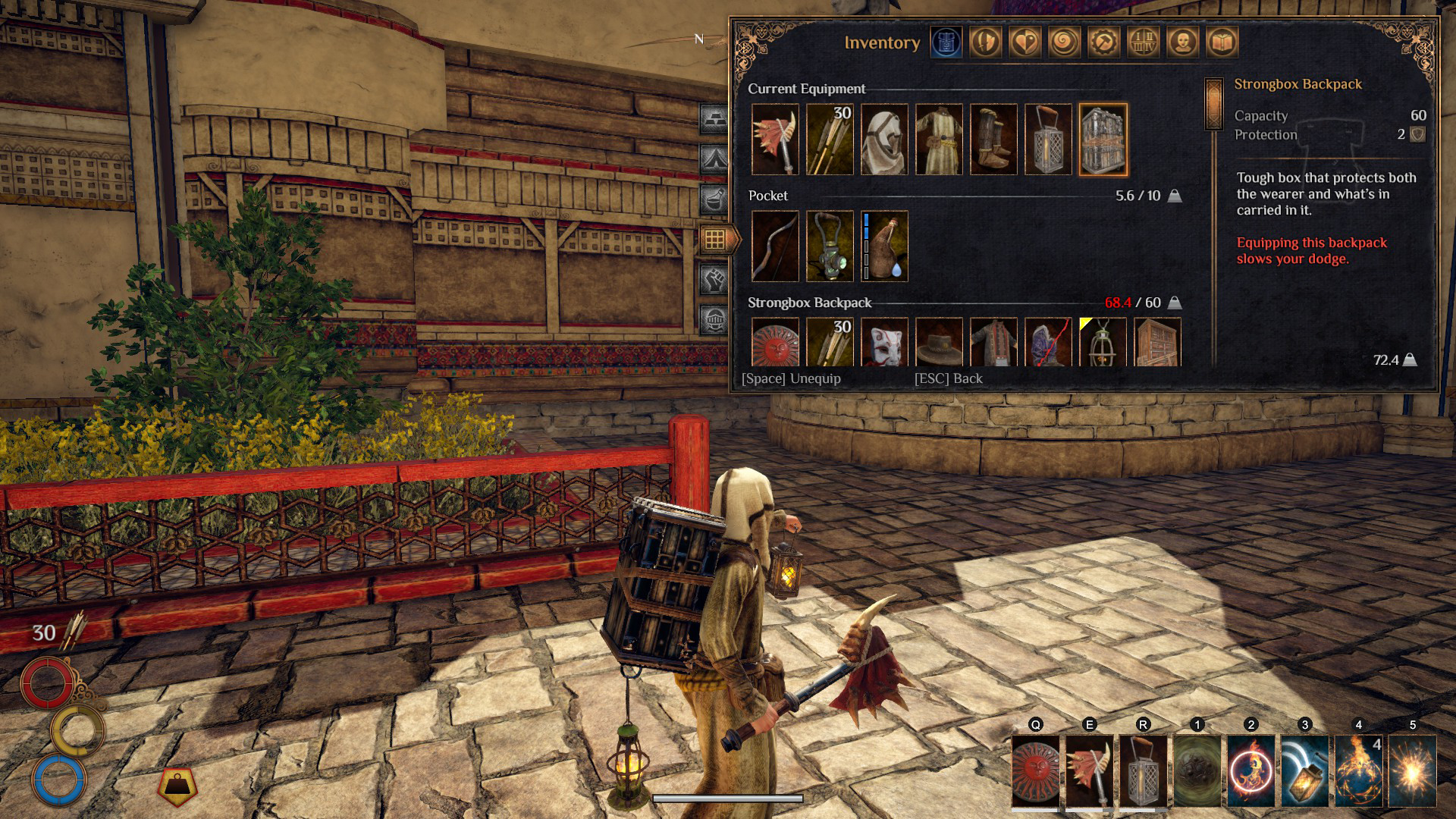
Classic CRPGs taught a generation that “inventory” means a grid, a weight cap, and a warning that you are too loaded to dodge. That tension can be excellent — overencumbrance is a story about greed — but the interface often becomes the game. You stop being a character and start being a warehouse clerk. Classic design writing has long argued that a pure climb in resources is a scoreboard wearing fiction, not a plot with setbacks, recovery, and change. A good story game with inventory uses weight and slots as pressure, not as busywork.
Choice Games with Amnesia
Interactive fiction and visual-novel markets keep expanding because people want to be in the story. Adjacent narrative-game research has valued the galgame segment at USD 5.73 billion in 2025, with long-run growth projected through the next decade. Many of those titles track flags and affection, not a physical pack. You can romance a character and still have the game forget you pocketed the only key. That amnesia is the opposite of inventory: the world does not remember your hands.
Designers Stuck Stitching Systems Together
If you are building the game, the gap is worse. Writers know scenes. Systems designers know stacks, durability, and crafting. Few tools help one person specify both: “this locket opens the east wing, but only if the player did not sell it in chapter two.” Industry commentary on immersive adventure experiences treats them as a fast-growing slice of play — which raises the bar for anyone trying to ship a coherent item-and-story loop without a full studio.
This is exactly what Jenova was built for.
The Jenova Solution
Jenova does not give you another Tetris backpack UI. It gives you AI agents that treat objects, clues, injuries, and debts as story state — remembered across turns, sessions, and devices. You play in conversation. The inventory lives in the world: if you used the last bandage on a stranger, the agent will not hand you a miracle kit in the next room.
| Traditional Approach | Jenova |
|---|---|
| Story games that never check your pockets | Agents that remember items, clues, and status as plot |
| RPG inventories that stall the scene | Item pressure inside the scene — no vendor-loop detour |
| Choice games that forget last night's loot | Persistent memory across sessions and devices |
| Separate writing tools and systems docs | Game Designer Assistant for item rules, weight, and payoffs |
| One genre, one save file | Mystery, romance, strategy, and custom roleplay in one library |
Narrative design, as practitioners describe it, is about how the whole game feels — the emotions, the choices, and the moments that stay. Item state is how those moments become physical.
Mystery and Survival Play
The Mansion drops you into a house with no memory of how you arrived. Every room can hide a key, a letter, a weapon, or a lie. The Asylum does the same in a shuttered institution: wards, files, and objects become the investigation. You are not opening a loot window. You are deciding whether the syringe is evidence, a tool, or a threat.
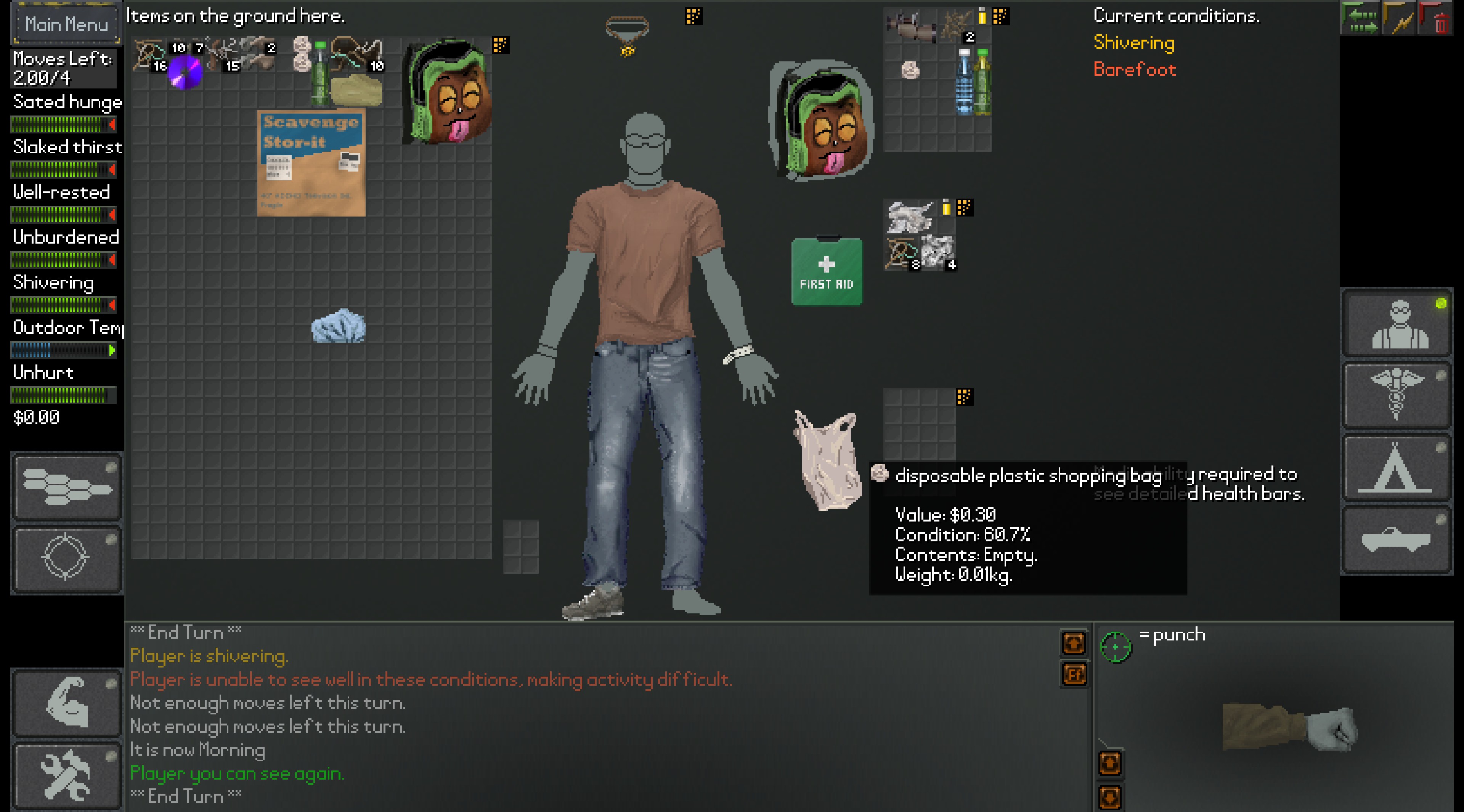
Survival logic belongs here too. The screenshot language of shivering, empty bags, and spent move points is the same language these agents can hold in prose: you are cold, you have no shoes, the first-aid kit is on the ground, and morning is coming. That is inventory as weather, not as spreadsheet.
Persistent Inventory Through Memory
Roleplay Game Master is the closest thing to a living story game with inventory: unlimited memory, consistent characters, and complete freedom to run encumbrance, crafting, cursed objects, or a single matchbook that matters for twenty scenes. Tell it the rules once. It will not “forget” the rusted key because the chapter ended.
That persistence is what most chat adventures lack. A study of mobile-game preferences found students ranking narrative, interactivity, and the game system among the elements they care about most. Memory is how interactivity stops being a one-shot choice and becomes a pack you live with.
Design the Item System Itself
If your search is “story game with inventory” because you want to make one, start with Game Designer Assistant. It brainstorms, pressure-tests systems, and documents genre-aware rules: slot limits, identification, breaking, trading, and the moment an item should stop being loot and start being a character.
Pair that with Film Screenwriter when an object needs a dramatic function (Chekhov’s gun, planted in act one), or Manga Creator and Comic Creator when the pack has to read clearly in a panel — a locket in close-up, a bag tearing, a hotbar of desperate tools.
Cross-Genre Worlds That Still Track Objects
Inventory is not only dungeons. Civilization treats grain, armies, and treaties as the nation’s pack. Vesper Court can make a ring, a letter, or a drop of blood the object that changes a night. College Life and Love Island remember gifts, screenshots, and the jacket you lent someone. K-Pop Producer tracks trainees, budgets, and reputations the way a survival game tracks rations. Same grammar: limited resources, irreversible spends, story consequences.
Specialized AI Agents for Story Games with Inventory
These agents are the ones a player or designer would actually open in the next month — not a tour of the whole library.
Roleplay Game Master
Roleplay Game Master runs any inventory-driven campaign you can describe: dungeon crawl with weight, heist with a duffel of tools, winter survival with calories and wet clothes.
- Unlimited memory so loot and injuries persist
- Character consistency for NPCs who notice what you are carrying
- Full freedom to set encumbrance, identification, and item rarity
The Mansion
The Mansion is a closed-house mystery. You wake with no memory. The inventory is whatever you dare to take from each room.
- Room-by-room secrets that can be carried forward
- Object-as-clue logic (keys, notes, photographs)
- Escape-or-die pressure that makes every slot matter
The Asylum
The Asylum puts you in as an investigator whose case file is the pack: badges, meds, patient records, things that should not be in the wards.
- Investigation structure with found objects
- Wards that hide tools and threats
- A hidden story that only coheres if you keep the evidence
Game Designer Assistant
Game Designer Assistant is for the other half of the keyword: people who want a story game with inventory as a system.
- Systems analysis for weight, slots, durability, and crafting
- Documentation you can hand to art, narrative, or engineering
- Genre literacy across adventure, survival, and RPG markets
Civilization
Civilization scales inventory to a country. You are not holding a shopping bag. You are holding harvests, alliances, and armies that will not wait.
- Era-specific resources and pressures
- Rivals who act while you dither
- Strategic “pack management” with story outcomes
Vesper Court
Vesper Court is dark romance with objects that bind: tokens, letters, blood, invitations that cannot be put back.
- Night-by-night consequence
- Items as intimacy and leverage
- Memory of what you accepted and what you refused
Try Jenova free — no credit card required.
How It Works
Step 1: Open a Story Agent and State the Inventory Rules Pick the world first — mystery house, asylum, sandbox roleplay, or a nation. Then tell the agent how items work: weight, slots, identification, what happens when you are overencumbered. One paragraph of rules is enough for Roleplay Game Master to treat your pack as law.
"Hardcore survival. Weight limit 12 kg. Wet clothes cause shivering. Food spoils. If I drop an item, it stays in that room unless someone else takes it."
Step 2: Play the Scene, Not the Spreadsheet Describe what you do. The agent tracks the bag. Ask to look in your pack only when the character would — at a door, before a fight, when the temperature drops. In The Mansion, that might be a brass key and a torn photograph. In survival play, it might be an empty shopping bag and a first-aid kit you have not used yet.
"I search the kitchen without making noise. If I find a knife or canned food, I take only what I can hide in my coat."
Step 3: Spend Items Like Plot Points Use the bandage. Give away the letter. Sell the ring you were supposed to keep. The Frontiers experiment found that people who could decide inside a story reported more stress, curiosity, and empathy — they used first-person language because the outcome felt like theirs. Spending an item is the smallest version of that agency.
"I use the last morphine on the stranger. If I get hurt later, I live with it. Don't hand me another dose because the scene got hard."
Step 4: Continue on Another Device Without Resetting the Pack Leave the house, lock your phone, reopen on the train. Jenova keeps the session. Your wet boots are still wet. The key is still in the lining of your coat. That is the difference between a story game with inventory and a chat that roleplays one scene and forgets.
Step 5: If You Are Building, Document the System Switch to Game Designer Assistant and turn the rules you just tested into a spec: item tags, fail states, tutorial tells, and how the UI should teach overencumbrance without a lecture.
"Write an inventory GDD section for a narrative survival game: 8 slots, no grid tetris, every item has a story flag, overencumbrance slows dialogue options."
Results & Use Cases
🔦 Overnight in the Dark House
Scenario: You wake in a locked mansion. You have a coat, no shoes, and a hallway that eats sound. Traditional Approach: A walking sim with notes you cannot pick up, or an RPG that pauses the horror for a 40-slot bag. The Mansion: You take a candle, a hairpin, and a letter that names someone you do not remember. The next door checks those objects.
- Clues occupy the same “slots” as tools
- Using the hairpin on the wrong lock can break it
- The house remembers what you stole
🥶 Survival Morning with Nothing in the Bag
Scenario: You are shivering, barefoot, out of moves, staring at a disposable bag and a first-aid kit on the ground. Traditional Approach: A survival sim with a UI novel of condition bars, or a story game that never models cold. Roleplay Game Master: The empty bag is a character beat. Taking the kit costs time you do not have. Morning arrives anyway.
- Status (cold, hunger, light) is inventory
- Ground items stay where you left them
- Spending the kit on yourself versus an NPC is the plot
📱 Commute Save: What’s in My Pack?
Scenario: You have four stops on the subway and a campaign mid-heist. Traditional Approach: Console RPGs that need a 20-minute inventory sort; IF apps that lose the thread when you switch apps. Jenova on mobile: You ask what you are carrying. The agent lists the glass cutter, the fake badge, and the fact that the cutter is chipped. You spend one item before your stop.
- Session memory survives the lock screen
- Voice-to-text for “I stash the badge in the plant”
- Same pack on phone and desktop
🎯 From Prototype to Item Bible
Scenario: You want to ship an adventure where every object is a verb. Traditional Approach: A week of mismatched notes in a wiki, plus a combat designer’s loot table that ignores the story. Game Designer Assistant: You get a documented inventory: tags, weights, story flags, and the moment the strongbox backpack should slow a dodge because the player got greedy.
- Item-as-plot rules, not only stats
- Overencumbrance as a readable cost
- Handoff language for art and UI
🎬 Object-First Visual Story
Scenario: You are outlining a comic or manga in which a backpack is the protagonist. Traditional Approach: Script in one tool, item list in another, panels that forget the lantern existed. Comic Creator / Manga Creator: The lantern, the torn bag, and the overstuffed box get panel space and continuity. Children's Book Creator can do the gentler version: a lost button that returns in the last spread.
- Visual continuity for carried objects
- Page-turn payoffs for “we still have the key”
- Inventory that reads in a still image
FAQ
What is a story game with inventory?
A story game with inventory is a narrative adventure where items, equipment, and status are part of the plot. What you pick up, drop, or spend changes later scenes. On Jenova, that state lives in agent memory rather than a separate loot screen, so a key, a debt, or a wet coat can still matter tomorrow.
Can I play a story game with inventory on my phone?
Yes. Jenova runs with feature parity on web, iOS, and Android. Your pack, injuries, and unfinished scenes sync. A commute-length turn — check the bag, use one item, close the door — is a valid session, not a compromised one.
Is Jenova free to play these story agents?
Jenova has a free tier with core features and limited monthly usage. Paid tiers raise usage. You can start The Asylum or a custom roleplay without a credit card and decide later whether you need more room for long campaigns.
How is this different from a regular RPG inventory?
Most RPG inventories are warehouses: sort, weigh, vendor, repeat. A story game with inventory on Jenova treats objects as scenes waiting to happen. There is no requirement to tetris a grid. The cost of carrying too much can still exist — as slower choices, louder footsteps, or a dodge you cannot make — without pausing the story for bookkeeping.
Can I design my own story game with inventory here?
Yes. Use Game Designer Assistant to specify slots, flags, breakage, and economy, then test the feel in Roleplay Game Master. Writers can push the same objects through Film Screenwriter if a planted item needs a cinematic payoff.
Do the agents remember items across days?
That is the point of persistent memory. If you hid a letter in a copy of a book, say so once. The next session should not require you to re-explain the pack unless you want to retcon. For language-learning play, Learn English Through Roleplay can even run item-heavy scenes so vocabulary sticks to objects you actually carried.
Conclusion
A story game with inventory is not a bigger bag. It is a story that can see your hands. Most titles still split the job: RPGs that drown the plot in loot, or choice games that never check your pockets. Jenova puts those layers back together — mystery houses, asylums, nations, vampire courts, and sandbox campaigns that remember the candle, the key, and the kit you did not use.
Play The Mansion if you want objects as clues. Open Roleplay Game Master if you want weight, weather, and loot that stays where you dropped it. Build the rules with Game Designer Assistant if the keyword was a brief, not a pastime.
Explore the full library of story agents at Jenova and start a run where the pack is the plot.
For Developers: Every agent in this article is available programmatically via the Jenova API — build AI-powered story features, including item-aware narrative state, into your application with a single integration. Full documentation →