Speed Dating Game AI: Practice Fast Conversations That Land
2026-09-01
Jenova turns speed dating into a game you can actually practice — timed rounds, reactive characters, and notes you can use before you sit down at a real event. While swipe culture still trains you to delay, edit, and ghost, a speed dating game AI puts you on a clock with someone who answers back. In September 2026, that gap is wider than it looks: dating apps keep expanding the pool while shrinking the rehearsal, and the first live minutes still decide whether a match becomes a second conversation.
✅ Run unlimited timed rounds with characters who react, stall, and change tone ✅ Practice openers, recoveries, and clean exits under a clock ✅ Get direct notes on pacing, questions, and how you come across ✅ Pair conversation drills with planning, etiquette, and nerves work
To understand why a speed dating game AI is useful, it helps to look at what the live format actually punishes.
Quick Answer: What Is a Speed Dating Game AI?
A speed dating game AI is a practice environment that runs timed, multi-round conversations so you can rehearse openers, recoveries, and exits before a real event. It plays the other person, keeps the clock honest, and tells you what landed.
Key capabilities:
- Timed rounds that mimic the pressure of a real rotation
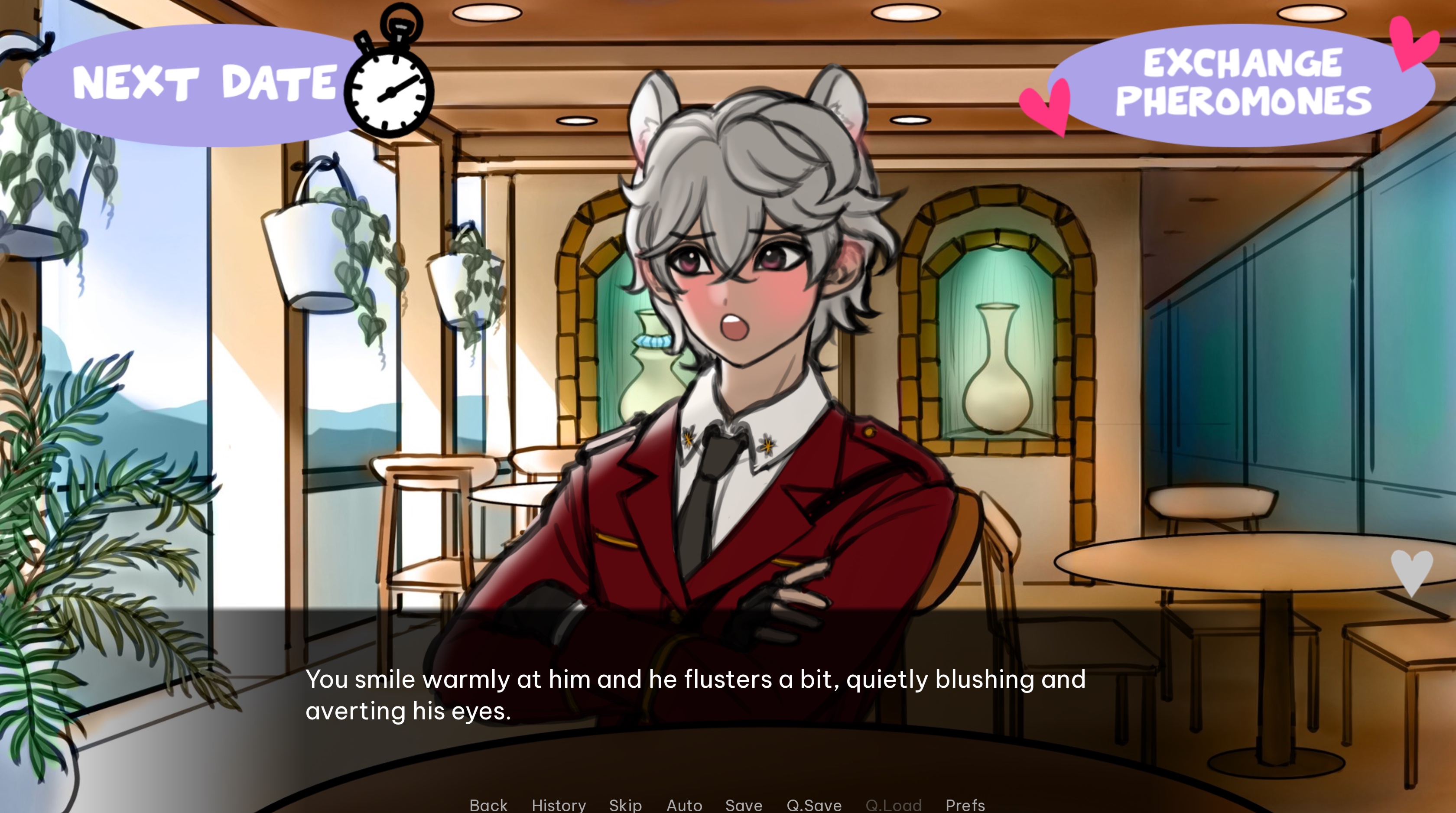
- Visual-novel-style roleplay that talks back instead of following a fixed tree
- Conversation coaching from Dating App Advisor for openers, follow-ups, and first-date language
- Scene work with Acting Coach so you stay present instead of reciting a bio
- Event logistics, etiquette, and outfit checks so the night around the rounds is not improvised
Why Live Rounds Still Punish Unrehearsed Talk
Speed dating compresses a first impression into a few minutes. You do not get an edit button. You do not get a second take with the same person. Apps made introductions cheap; they did not make short, live conversation easier.
Research on mobile dating helps explain the hangover. A 2024 longitudinal study found dating-app users experiencing burnout across the board over three months — exhaustion, cynicism, and a sense that nothing you do is working. A meta-analysis covering about 26,000 people across 17 years found app users reported worse psychological health than non-users, including anxiety and loneliness. That is a poor warmup for a room full of timed tables.
But turning matches — or event tickets — into good live minutes is frustratingly difficult:
- The clock kills the scripts you memorized in the shower
- App chat trains delay and editing; speed dating rewards follow-ups and silence
- Dating-sim games feel like practice until the dialogue tree runs out
- Anxiety steals attention, so you perform instead of noticing the person
- You get almost no usable feedback after a real night, only a private replay
The clock is the opponent
A speed dating round is closer to a short interview than to a dinner. You have to open, notice, recover from a dead topic, and close — without turning the table into a résumé dump. People who “know what they would say” still freeze when the other person answers in three words. That is not a personality flaw. It is a missing rep.
Apps train the wrong muscle
Swipe interfaces reward short, delayed, editable lines. Speed dating rewards the opposite: spoken follow-ups, stories that leave room, and comfort with a pause. Qualitative research on mobile-online-dating fatigue describes acceleration, parallel dating, and non-commitment as platform defaults — habits that make a five-minute face-to-face feel strangely effortful. One estimate puts severe dating-app burnout symptoms at 14% of users. Even if you are not in that group, the muscle memory of the feed does not transfer to a live round.
Finite dating sims are not rehearsal
AI dating games are often framed as interactive romantic visual novels — generated characters, branching lines, a next-date button. That format is useful for mood and curiosity. It is weaker as practice when every path was already written, every blush was flagged in advance, and the character cannot punish a rambling answer. A speed dating game AI is only useful if the other side can stall, misunderstand you, or lose interest for a reason you can actually fix.
Anxiety shrinks the round
The Anxiety and Depression Association of America describes a familiar loop: rumination starts before you arrive (“Will they like me?”), then crowds out the person in front of you. Dating anxiety is also tied to fear of being rejected and of rejecting someone else. In a long dinner you can recover. In a timed round, one self-monitoring spiral can eat the whole clock. Social anxiety in romantic settings makes the same minutes feel higher-stakes than they are — which is exactly when a private, low-cost simulator helps.
Real events give you almost no coaching
After a live night you usually get a yes/no list and a 48-hour replay. You rarely get a precise note: you stacked questions, you over-explained your job, you never suggested a next step. Friends are too nice or too harsh. A game with no recap is entertainment. Practice needs a short, ruthless debrief.
This is exactly what Jenova was built for.
The Jenova Solution
Jenova is not a single dating-sim skin. It is a set of specialized agents you can chain into a speed-dating night: conversation under a clock, scene work, logistics, etiquette, and nerves. You set the round. The agents stay in role, remember what you already said, and tell you what to change before the next rotation.
| Traditional Approach | Jenova |
|---|---|
| One live event as the only rehearsal | Unlimited timed rounds you can rerun the same evening |
| Dating sims with fixed dialogue trees | Characters who react to what you actually said |
| Advice listicles and “10 questions to ask” | Feedback on your pacing, questions, and recovery |
| Friends who are too nice or too harsh | Direct notes you can use on the next round |
| Swipe chat you can edit for ten minutes | Spoken, timed, uneditable practice |
Conversation under a clock
Dating App Advisor is the closest thing to a dedicated speed-dating coach on the platform: profile language if you still need it, conversation mastery if you already have matches, and first-date guidance when the round has to become a plan. You brief who you are meeting, how long the rotation is, and what you freeze on. It plays the other person and interrupts when you interview them.
Public Speaking Coach treats the round as a timed audience: opener, one story, one question, a clean close. That is useful when your problem is not “what to say” but “I dump my whole biography in 90 seconds.” Sales Coach is the unsentimental version of the same drill — role-play under time pressure, then a note on whether you sounded curious or like a pitch.
Visual-novel roleplay that does not run out of tree
A speed dating game AI should feel like a scene, not a FAQ. Acting Coach runs improv and scene work: you stay in the cafe, you take the blush and the silence as information, and you recover without breaking character. That maps cleanly onto the visual-novel loop in the screenshots — next date, read the reaction, choose whether to push or ease off.
If you date in English as a second language, Learn English Through Roleplay puts idioms and small talk inside the same timed scene so the language is not a second performance on top of the date.
The night around the rounds
Conversation is the fear. Logistics still decide whether you arrive able to talk. Date Planner builds the evening around intent: a low-pressure mixer, a structured speed-dating hall, a backup if the room is loud. Etiquette Coach covers the unwritten rules — arrivals, phones, how you leave a table that is not a match, how you ask for a number without turning it into a speech.
Fashion Consultant and Beauty Consultant are the 90-minute problems people overthink the afternoon of: dress for the venue and for a version of yourself you can sit still in. Comfort shows up as better listening. Costume shows up as fidgeting.
Specialized lanes and the ask at the end
Alpha Male Dating Coach is the direct, in-person track — openers, attraction, and what to do when the rotation is face-to-face instead of an app thread. High Value Dating Advisor is the narrower brief: vetting, access, and how you present when the room is status-heavy. Negotiation Coach is the last 30 seconds of a good round — suggesting a second meeting without a vague “we should do this again.”
Nerves between rotations
A speed dating game AI that never talks about your body is incomplete. Personal Therapist is for the rumination that starts in the lobby and continues on the walk home — not as a substitute for clinical care, as a place to separate “I was awkward” from “I am unlovable.” Meditation Guide is the two-minute reset between rounds: attention back on the next table, not on the last one.
Specialized AI Agents for Speed Dating Practice
If you only need one thread, start here. These are the agents most people would actually open in the same week as an event.
Dating App Advisor
Use this when the round is a conversation problem. You describe the format (eight minutes, standing mixer, app-to-event hybrid), the other person’s known details, and the habit you want to kill. It stays in character, then gives you a short list instead of a pep talk.
- Role-plays reserved, chatty, and distracted partners in the same night
- Flags stacked questions, résumé answers, and missing closes
- Turns a good round into a specific follow-up text, not “had a nice time”
Date Planner
Use this when you already know you can talk and still arrive underprepared. Speed dating is a venue problem as much as a charm problem: noise, lighting, how you handle the gap between rotations, where you go if two people both want a longer drink after.
- Builds a plan around a goal (low-pressure practice vs. a real ticketed event)
- Researches local options and a backup if the first room is unusable
- Keeps budget, neighborhood, and how well you already know people in the same brief
Acting Coach
Use this when you go stiff the moment it is live. Scripts collapse. Improv does not. Scene work is how you practice taking a blush, a silence, or a subject change as a cue instead of a verdict.
- Runs cafe and mixer scenes without skipping the boring minutes
- Trains recovery when the other person is not playing along
- Useful if you “know your lines” and still sound reciting
Public Speaking Coach
Use this when your issue is delivery under a timer. A speed dating round is a micro-audience: one person, one clock, no slides. Anxiety management and Q&A prep transfer more cleanly than another list of icebreakers.
- Structures an opener, one story, and a close that fits the round
- Simulates a cool or distracted listener so you do not only practice easy rooms
- Gives notes on pace and filler instead of personality judgments
Etiquette Coach
Use this for the minutes people skip in their heads and then fumble: how you sit down, what you do with your phone, how you leave a table that is not a match, how you handle a host who is rushing the rotation.
- Cultural briefings when the event is not in your usual social lane
- Phrasing for awkward logistics (they brought a friend, the bill appears, you need to go)
- Repair language if you already fumbled a previous round
Alpha Male Dating Coach
Use this when the event is in-person approach, not app chat. Timed tables punish hesitation and also punish a hard sell. The useful version of this coach is a drill partner for openers and calibration, not a speech about status.
- Practices cold openers that fit a mixer, not a street corner
- Distinguishes curiosity from interrogation
- Useful when you have the ticket and no recent live reps
Try Jenova free — no credit card required.
How It Works
Step 1: Brief the round like you would brief a friend Give the facts that change the scene: format, round length, three things you know about the other person, and the habit that shows up when you are nervous. “Be my date” is too vague. “You are the third table, you answer in short sentences, and I interrupt when I like someone” is usable.
"Run a 6-minute speed dating round. You're a graphic designer who hates job talk. Stop me if I interview you or fill every silence."
Step 2: Stay in the scene through the dull minute Do not skip to the highlight-reel story. The minute that kills real rounds is the first lull, the water sip, the host calling time. Ask the agent to stay seated until the clock is done.
"Don't skip ahead. Make me sit in a 10-second silence and recover without stacking another question."
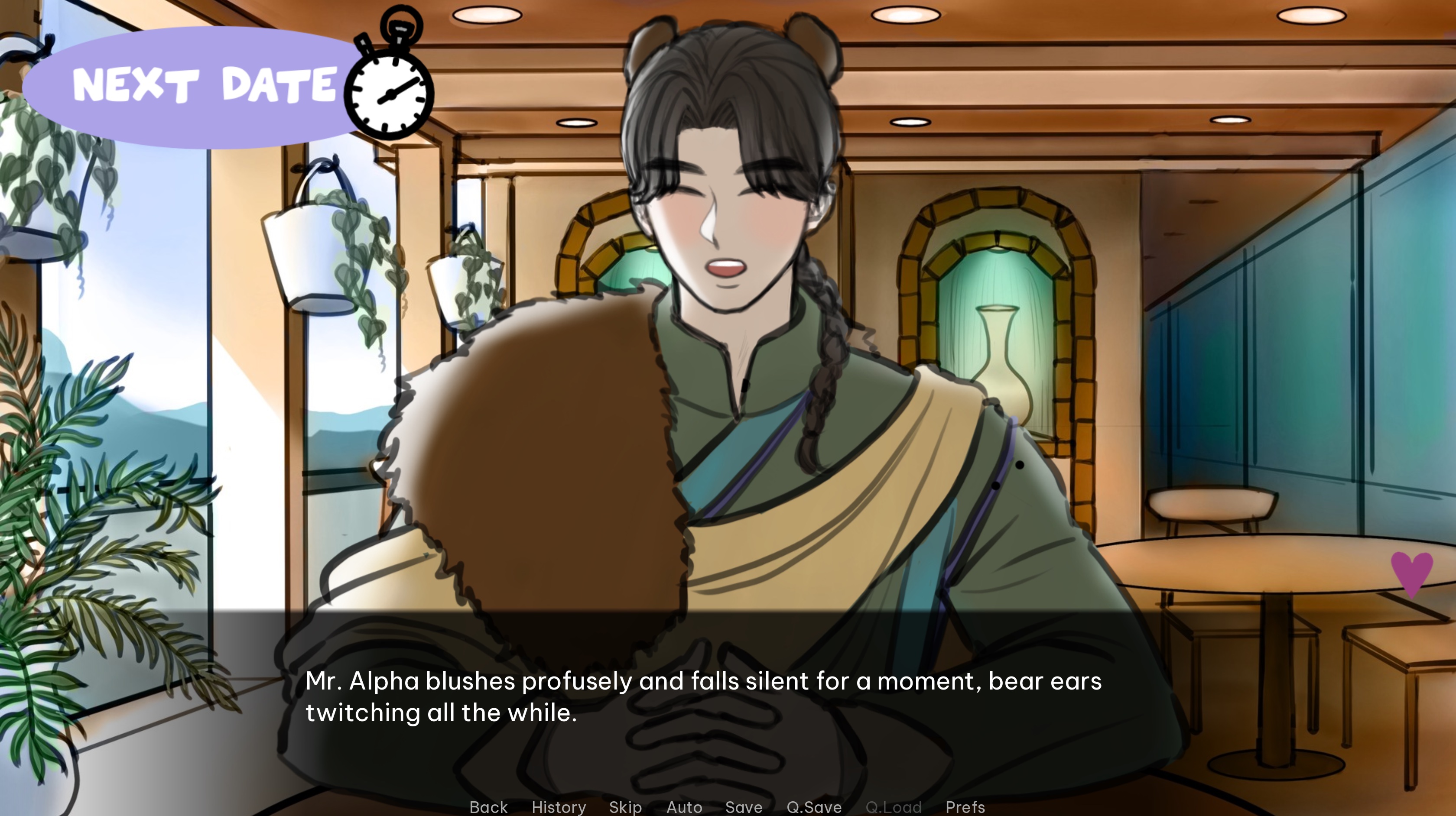
That next-date loop is the point of a speed dating game AI: you read the reaction, you choose whether to ease off, and you rotate. Practice the blush and the silence here so you do not treat them as emergencies in the room.
Step 3: Demand a three-item recap After the round, ask for only three things: what made you easy to talk to, what made you hard to talk to, and one replacement line for the weakest moment. Long recaps feel productive and change nothing.
"Grade the round. Then rewrite my answer to 'What do you do?' so it invites a conversation instead of a résumé."
Step 4: Rotate personalities on purpose If the first partner was friendly, ask for reserved, distracted, or intense. Confidence from an easy simulation does not transfer. Confidence from recovering a dead conversation does. Chain Dating App Advisor for the talk and Date Planner for where you would actually take a yes.
"Same event, next table: you are polite but already thinking about someone else. I have four minutes. Help me leave a clean impression without chasing."
Step 5: Rehearse the edges of the night Practice the day-of confirmation, the “I’m running six minutes late” text, the between-round reset, and the follow-up that names one specific moment. A strong table can still die in the 12 hours around it. Use Meditation Guide for a two-minute attention reset if you are still in the last conversation when the next one starts.
"Draft two follow-ups: one if I want a drink after the event, one if I don't. Warm, specific, no 'nice to meet you' filler."
Results & Use Cases
📊 Night-before reps for a ticketed speed dating event
- Scenario: You bought a ticket. You have not had a live first meeting in months. You can feel yourself about to over-talk your job.
- Traditional Approach: Reread icebreaker lists, overthink clothes, and hope the first table is easy. Many people never even convert app matches into meetings — one millennial survey found only 29% had met a Tinder match in person.
- Jenova: You run four tables the night before — easy, quiet, distracted, intense — and walk in with recovery moves instead of a memorized bio.
- Stories stay short enough to leave room
- You already practiced ending on time
- You know how you will suggest a longer conversation if the round goes well
💼 Recover from swipe fatigue without quitting dating
- Scenario: The apps feel like a second job. You still want practice, not another hour of profiles blending together.
- Traditional Approach: Delete, wait two weeks, reinstall, repeat — the cycle Arizona State’s Liesel Sharabi describes as users cycling on and off without getting what they came for.
- Dating App Advisor: You take the pressure off the feed and put it on timed scenes. If the question is bigger than “what do I say at table three,” Personal Therapist is the better next conversation.
- Practice without treating strangers as disposable reps
- You notice when you are cynical before you take it into a real room
- The game stays a drill, not a substitute for meeting people
📱 Last-minute drill in a rideshare
- Scenario: You are 12 minutes from the venue, heart rate up, about to over-explain your job.
- Traditional Approach: Scroll the event page again and arrive more in your head than in the room.
- Public Speaking Coach: On your phone, a five-minute drill: one opener tied to the event, one question that is not “How was your week?”, one way to admit you are a bit nervous without making it their problem.
- Works on mobile the same way it works at a desk
- Short enough to finish before you tip the driver
- Leaves you with a single intention (be curious) instead of ten talking points
🎯 Turn a good table into a second meeting
- Scenario: Two rounds actually clicked. You now want to replay every joke and delay the follow-up until it is weird.
- Traditional Approach: Group-chat forensics for 36 hours, then a bland “nice meeting you.”
- Negotiation Coach: You practice the ask until it is one clear plan plus one alternative. Date Planner turns that intent into a specific spot. Beauty Consultant is optional and only if the next meeting has a different dress code — do not let wardrobe eat the text you still need to send.
- The invitation sounds like a decision, not a committee
- You send it while the night is still a shared memory
- You have language ready if they are slower to reply than you are
FAQ
What is a speed dating game AI?
A speed dating game AI is a practice environment for timed, multi-round conversations — openers, pacing, silence, and exits — before you do them with people who count. On Jenova, that usually means roleplay plus a short recap, not a high-score dating sim. You set the clock and the personality. The agent stays in the scene and then tells you what worked. It is closer to a practice interview than to reading tips.
Is Jenova free to use for speed dating practice?
Yes. You can use the platform on a free plan with no credit card required. Paid plans increase usage if you want longer or more frequent sessions. For most people, a few focused rounds before a real event are enough. If you are only rehearsing one ticketed night, start free and see whether the feedback is specific enough to change what you do at the table.
How is a speed dating game AI different from a regular dating sim?
Traditional visual novels and dating sims run on pre-written trees. They are good at mood and weak at punishing a rambling answer. A speed dating game AI has to talk back, change tone, and remember what you already said. Acting Coach is for staying in the scene. Dating App Advisor is for whether the scene would work on a real date. Neither will manufacture chemistry. Both will make rust less likely to block it.
Can a speed dating game AI help with dating anxiety?
It can reduce the part of anxiety that comes from uncertainty and lack of reps. Clinicians already recommend low-stakes practice for that reason. Simulation is a private version of the same idea: you feel the awkwardness, recover, and notice that the pause was survivable. It will not treat clinical social anxiety on its own. If rumination is running your week, pair drills with the present-focused approach in ADAA’s dating-anxiety guidance — curiosity about them, not a running score of you.
Does this work on mobile?
Yes. You can run a full role-play at a desk or a five-minute drill on your phone on the way there. Mobile is often the more useful mode: that is when nerves spike and you need one opener, not a manifesto. Voice input works well because speed dating is spoken. If you only type, you may still sound polished on screen and rushed out loud.
How accurate is practicing speed dating with AI?
It is accurate as rehearsal, not as a prediction of whether a specific person will like you. The value is motor memory and language: you have already said your job in 20 seconds, already recovered from a dead topic, already asked for a second meeting without a speech. No simulator can tell you if there will be chemistry. It can make sure chemistry is not blocked by rust, rambling, or a freeze you could have practiced through.
Walk In Practiced, Not Perfect
Speed dating goes wrong less often from a bad room than from an unrehearsed five minutes. Apps created more introductions; they did not create more live reps. A speed dating game AI closes that gap: you run the round, take the notes, rotate, and show up able to notice the person in front of you instead of the script in your head.
Start with Dating App Advisor for the talk, Date Planner for the night around it, and Acting Coach if you go stiff the moment it is live. Explore the full agent library at Jenova.
For Developers: Every agent in this article is available programmatically via the Jenova API — integrate timed conversation practice and dating-coach workflows into your application with a single API call. Full documentation →