Space Colony Roleplay AI: Inhabit Persistent Sci-Fi Settlements
2026-08-29
Jenova is the space colony roleplay AI that lets you inhabit a living off-world settlement—complete with factions, failing life support, and characters who remember last month's oxygen crisis. Generic chatbots drop your world's continuity the moment a session ends. In August 2026, that gap is the real bottleneck: people want persistent sci-fi worlds, not disposable one-shot scenes.
✅ Persistent memory across every colony shift, council vote, and blackout ✅ Custom agents you design as governors, medics, or rival corporate officers ✅ Research-backed worldbuilding grounded in real space-settlement science ✅ A full creative stack—scripts, comics, music, and language practice inside the same world
To understand why this matters, let's examine why most AI roleplay still cannot sustain a believable colony.
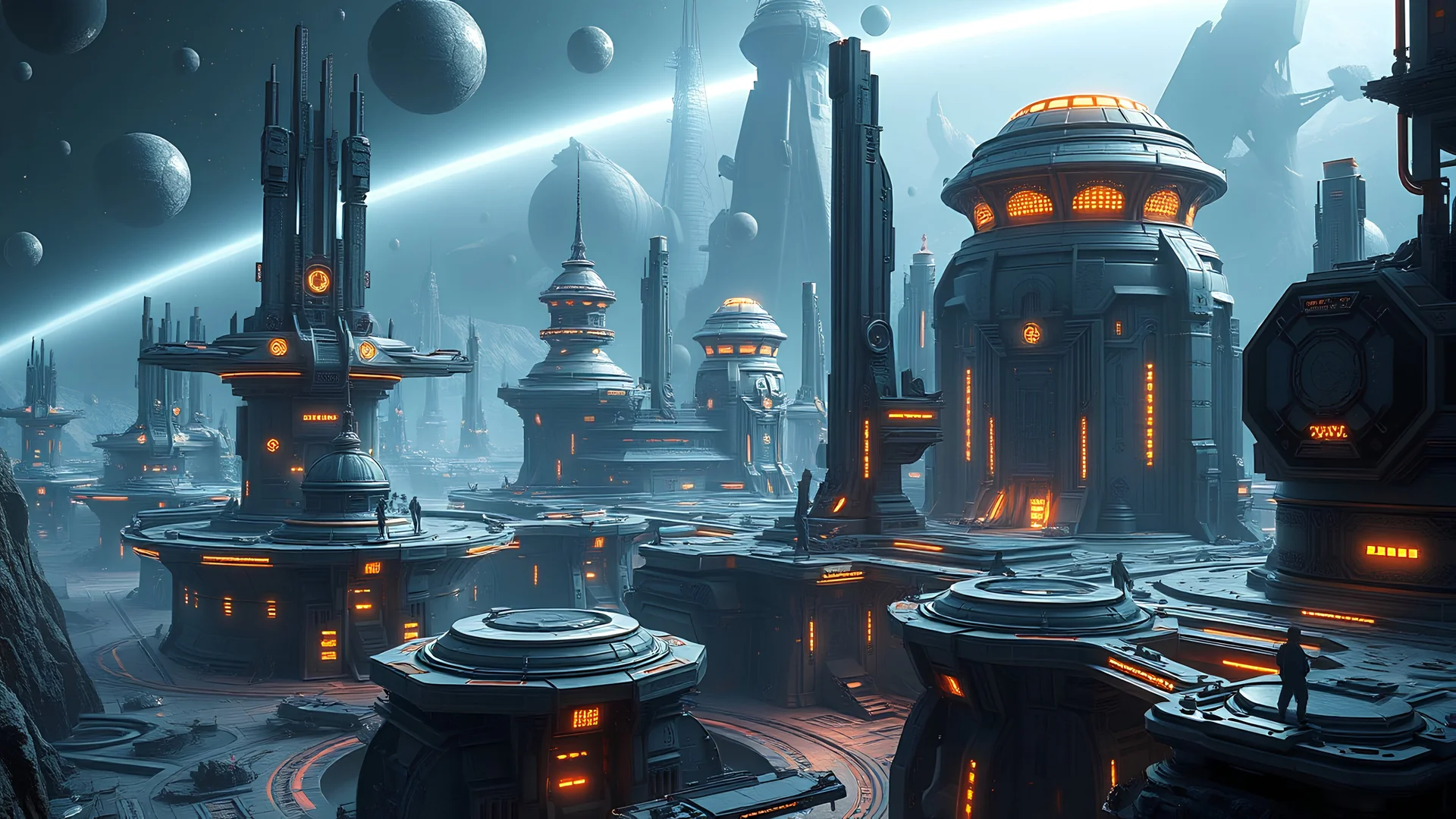
Quick Answer: What Is Space Colony Roleplay AI?
Space colony roleplay AI is a persistent, character-driven simulation that lets you live, govern, and survive inside an off-world settlement with continuity that carries from session to session. It is not a single chatbot persona. It is a world that keeps its own books.
Key capabilities:
- Colony-scale memory: habitats, rosters, grudges, and resource ledgers that do not reset
- Systems-level worldbuilding for air, water, power, food, and politics
- Research-grounded sci-fi using real settlement studies rather than costume-drama space opera
- Downstream creative output—scripts, comics, posters, and in-world language practice from the same campaign
Why Most Space Colony Roleplay Collapses After One Session
A tavern fantasy can survive on vibes. A space colony cannot. Closed-loop life support, radiation shelter, crop calendars, and governance are the drama. When those systems are missing, the roleplay turns into hallway conversation in a metal corridor.
Demand for this kind of play is not a niche hobby anymore. The broader AI companion market reached $36.8 billion in 2025, and mixed-use roleplay platforms already show users returning about 16 times per month. People will live inside a world if the world holds still long enough to be lived in.
But building that world with a generic chatbot is frustratingly difficult:
- The settlement forgets its own history between chats
- There is no systems layer—air, calories, and power are flavor text
- Science is decorative, so immersion breaks on the first EVA
- You get one character, not a habitat of competing interests
- The best scenes die in a scrollback instead of becoming a campaign bible
Worlds That Forget Themselves
The most common failure is amnesia. You spend an hour negotiating water rations with Dome 3, log off, and return to a smiling officer who has never heard of Dome 3. Mixed-use companion apps can hold a session, but they are built for persona chat, not for a settlement ledger. The UK companionship market alone generated about £1.3 billion in 2024 by selling attachment to a character—not continuity of a place. A colony is a place. If the place resets, the roleplay is cosplay.
Colonies With No Systems
NASA's classic Space Settlements: A Design Study treated habitats as engineering problems: mass budgets, agriculture, shielding, and social design. That is exactly what makes colony fiction tense. Who eats if the algae racks fail? Who gets EVA time when the airlock queue is political? Chatbots that only improvise dialogue cannot track those constraints, so every crisis resolves with a speech instead of a tradeoff.
Soft Sci-Fi That Breaks on Contact With Reality
Serious settlement research is public and specific. Researchers at the University of Central Florida map the actual bottlenecks: water on Mars, surface temperatures, in-situ food, power through dust storms, even cloud-level habitats at Venus. NASA still aims to send astronauts toward Mars in the 2030s. Players who care about this material can smell fake gravity and infinite oxygen in two lines. Space colony roleplay AI has to be allowed to look things up, argue with your physics, and keep the setting honest.
One Character Instead of a Settlement
A colony is a stack of overlapping roles: hydroponics chief, union steward, corporate liaison, chaplain, smuggler, kid who has never seen Earth. Single-persona apps flatten that into a favorite NPC. You need a platform that can hold multiple agents, custom instructions, and a shared knowledge base so the medic and the governor do not accidentally share one brain.
Creative Work Trapped in the Chat Log
The scenes worth keeping—the blackout, the first birth off-world, the mutiny vote—should become scripts, comics, recruitment posters, and session recaps. Most roleplay tools stop at the transcript. The campaign never becomes an artifact you can show, serialize, or play again with new people.
This is exactly what Jenova was built for.
The Jenova Solution
Jenova treats space colony roleplay as a campaign you inhabit, not a chat you consume. You can spin up a custom colony-runner with private lore files, pick the model that fits the scene, and keep unlimited history so the oxygen crisis from Tuesday still governs Thursday's council. Specialized agents then handle the jobs a single persona cannot: systems design, scientific grounding, long-form story, and the culture the settlement produces.
| Traditional Approach | Jenova |
|---|---|
| Session chat that forgets the habitat roster | Persistent memory and attached colony documents |
| One character voice improvising everything | Custom agents plus specialists for science, story, and art |
| Gravity and crops as set dressing | Research tools that pull real settlement constraints |
| Best scenes stuck in scrollback | Scripts, comics, posters, and music from the same world |
| Desktop-only, fragile continuity | Web, iOS, and Android with synced settings |
While character-chat apps specialize in a single companion, Jenova specializes in a durable off-world setting: multi-model access, MCP tool use, private knowledge bases, and custom agents you can brief like staff.
Design the Habitat, Not Just the Dialogue
Game Designer Assistant turns your colony into a playable system—factions, resource loops, failure states, and the political weather that follows a bad harvest. Pair it with Deep Research when you want the setting to survive a player who has read NASA bibliographies. The National Space Society still points creators back to that 1970s design study for a reason: the constraints are the story engine.
Run the Drama at Human Scale
Film Screenwriter takes a shift log and turns it into structure: whose secret leaks, where the airlock scene actually starts, what the governor cannot say on an open channel. You stay in character in the roleplay, then extract a scene that would hold on a page.
Make the Colony Visible and Audible
A settlement feels real when it has propaganda, folk songs, and a marketplace that looks lived in. Comic Creator, Poster Maker, and Music Composition Assistant turn in-world events into artifacts—ration posters, dome anthems, a black-and-white strip about the first dust-storm baby.
Specialized AI Agents for Space Colony Roleplay
These are not decorations around a chatbot. They are the staff a long campaign actually needs.
Game Designer Assistant
If you want the colony to be more than scenery, start with Game Designer Assistant. It thinks in systems: what happens to morale when showers go to two minutes, how a mining guild captures the council, which resources should be visible to players and which should stay hidden until a failure cascade.
- Faction maps, economy loops, and failure clocks sized for campaign play
- Genre-fluent advice from hard sci-fi to solarpunk to corporate station thriller
- Documentation you can attach as the colony's living rulebook
Film Screenwriter
Film Screenwriter is the partner for turning a messy session into a scene with stakes. Colony stories die when every conversation is equally important. This agent cuts to the vote, the EVA, the letter that never got sent to Earth.
- Character wants, visual set pieces, and dialogue that sounds like people who share recycled air
- Outlines you can drop back into the roleplay as next-session prompts
- Revision notes when a plot thread contradicts the habitat's own history
Deep Research
Deep Research keeps the fiction honest. Ask it for closed-loop agriculture numbers, analog missions, or why a 1977 cylinder design still shows up in amateur settlement contests. It searches widely, cites sources, and gives you constraints worth building plots around.
- Source-backed briefings you can paste into a custom colony agent's knowledge base
- Fast answers when a player challenges your radiation-shielding handwave
- Campaign bibles that read like a briefing, not a wiki dump
Learn English Through Roleplay
Learn English Through Roleplay is the sleeper tool for colony campaigns. Stay in character as a new arrival from Earth while the language itself is the training. Idioms, status talk, and technical English stick because the airlock will not cycle until you say it right.
- Any scenario intensity, from cafeteria small talk to emergency comms
- Grammar and natural speech learned inside the fiction, not beside it
- Memory that keeps your colonist identity consistent across sessions
The Philosopher
Colonies force ethics into the plumbing. The Philosopher will not let a "for the mission" speech slide. Who is a citizen if they were born in the shaft? Is Earth owed anything? When does quarantine become exile?
- Socratic pressure on governance, personhood, and resource justice
- Debate that stays rigorous instead of collapsing into slogan sci-fi
- Useful friction when your custom governor agent has become too agreeable
Comic Creator
Comic Creator serializes what the table already played. One issue can cover a single blackout. A graphic-novel arc can cover the year the ice mine unionized. Sequential art is how a private campaign becomes a world other people can enter.
Try Jenova free — no credit card required.
How Space Colony Roleplay AI Works on Jenova
Step 1: Charter the Colony
Create a custom agent as your showrunner—governor's aide, station AI, or unseen historian. Attach a short constitution: location, population, life-support limits, and whose corporation signed the lease. Then ask Game Designer Assistant to turn that charter into failure clocks and faction incentives.
"You are the operations AI of Helion Dome, a 4,200-person ice-mining settlement at Shackleton Crater. Track oxygen, water, morale, and three factions. Never reset those numbers. Open on the morning the algae racks go yellow."
Step 2: Stress-Test the Science
Before the first session, run the habitat past Deep Research. Borrow from analog missions, NASA design studies, and current Mars-habitation work so your drama is made of real bottlenecks. Save the briefing into the custom agent's knowledge base.
"Audit this colony description for impossible physics. Flag life-support, radiation, and food-loop problems, then propose plot-useful constraints instead of silent fixes."
Step 3: Live a Shift, Not a Scene
Play from inside a role: night-watch officer, hydroponics intern, visiting inspector. Because memory persists, you can leave mid-shift and return to the same air quality and the same unpaid grudge. On a phone commute, that is enough world to inhabit.
"I am walking the ring corridor at 02:10. The CO2 alarm is a soft amber, not a siren. Stay in second person. Do not solve the problem for me. Make me choose who to wake."
Step 4: Export the Culture
After the session, send the log to Film Screenwriter for a scene, to Poster Maker for a ration notice, or to Tour Guide for a walking narration of the marketplace you just invented. The colony starts producing culture instead of only consuming prompts.
"Turn tonight's council vote into a one-page recruitment poster from the losing faction, then a 3-beat comic of the winning side pretending it was unanimous."
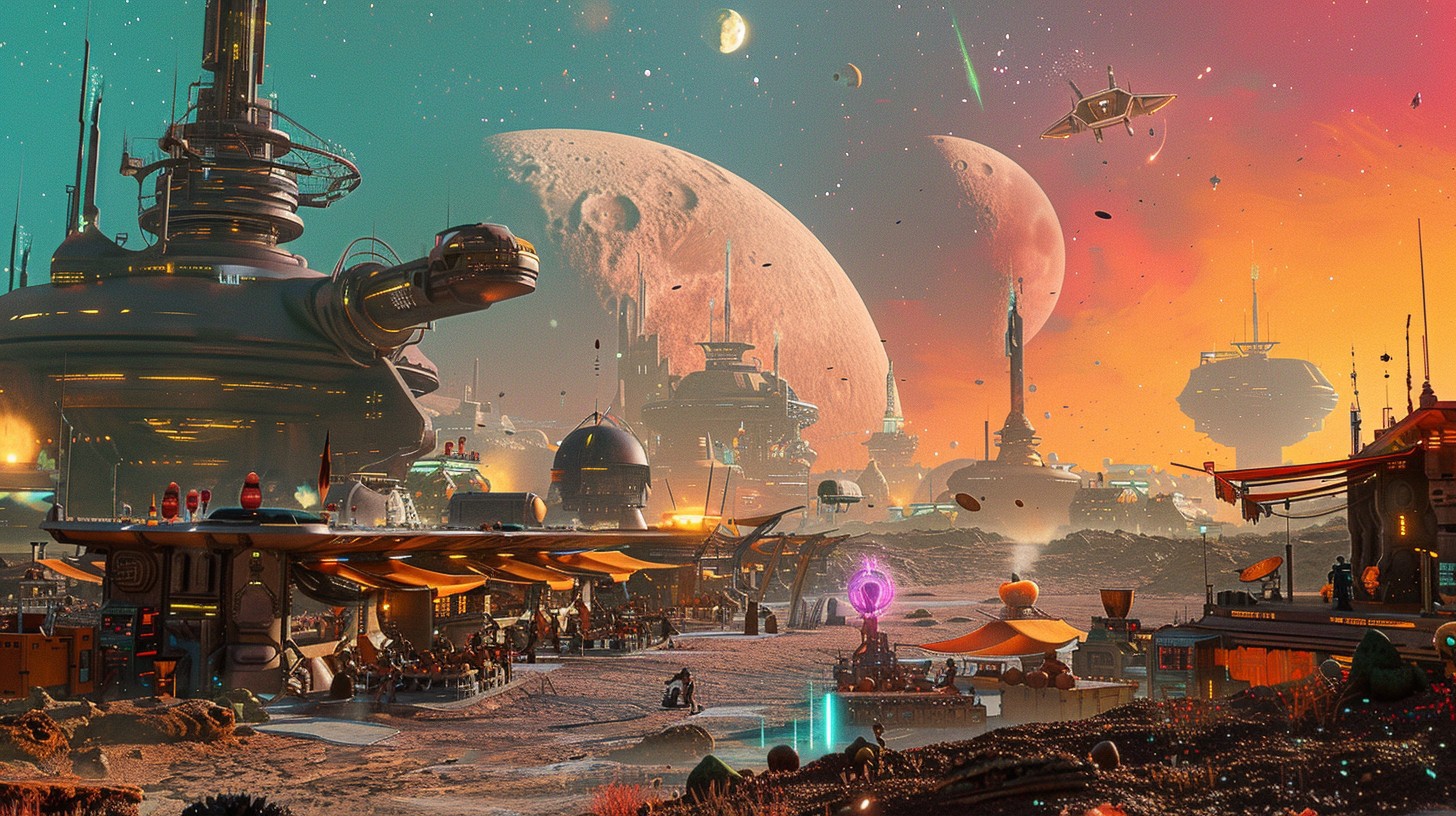
Results & Use Cases
📊 The Habitat Council That Has to Choose Who Breathes
Scenario: A 12-session campaign set in a polar lunar dome. Algae yield drops 18 percent after a dust-contaminated resupply.
Traditional Approach: A chatbot offers a heroic speech and magically restored racks. Continuity dies the next login.
Jenova: The custom colony agent keeps the yield number. Game Designer Assistant adds a ration clock. Deep Research supplies analog-mission data on crew conflict under scarcity. The table spends three sessions on a vote, not a vibe.
- Resource state survives between sessions
- Science constraints create plot instead of blocking it
- NPCs remember who hoarded water and who donated shower time
💼 An Indie Studio's Off-World Bible
Scenario: Two writers are building a series bible for a station thriller and need more than aesthetic moodboards.
Traditional Approach: Scattered docs, contradictory maps, and a science consultant they cannot afford.
Jenova: Film Screenwriter structures the season. Deep Research annotates every habitat claim. Manga Creator boards the pilot. The same custom agent stays on-model as the "station" while the humans write.
- One knowledge base instead of five conflicting outlines
- Visual and prose output from the same continuity
- Faster pitch materials without a 20-person writers' room
📱 Night Shift on the Train Home
Scenario: You have twenty minutes on a phone. You are the junior comms officer on Helion Dome.
Traditional Approach: Desktop-only tools, lost threads, and a character who greets you like a stranger.
Jenova: Full feature parity on iOS and Android. You open the same colony, same amber CO2 alarm, same unfinished argument with engineering. Speech-to-text lets you play while your hands are full.
- Synced memory across web and mobile
- Short-shift play that still moves the campaign clock
- No re-explaining the setting at every login
🎯 Language Practice Inside the Airlock
Scenario: You want conversational English—or Japanese—without leaving the fiction.
Traditional Approach: A language app in the morning, a sci-fi chatbot at night, zero overlap.
Jenova: Learn English Through Roleplay puts grammar inside emergency comms. Learn Japanese Through Roleplay lets you play a Kyoto-born agronomist on a mixed crew. The colony is the classroom.
- Vocabulary anchored to moments you will remember
- Character consistency so your colonist does not reset with each lesson
- A reason to speak carefully: the airlock is listening
🕵️ Station Intrigue With a Paper Trail
Scenario: Players suspect the mining conglomerate faked a radiation reading to lock down a rival shaft.
Traditional Approach: A yes-man NPC confirms whatever theory is coolest.
Jenova: Conspiracy Theorist separates documented cover-up patterns from pure speculation, then feeds plausible institutional behavior back to your custom governor. The Philosopher stresses the ethics of leaking the file. The result is intrigue that could survive a skeptical player.
- Theories that have to earn their evidence
- Faction behavior that feels like an organization, not a villain monologue
- Secrets that persist until someone actually finds them
FAQ
Is space colony roleplay AI free on Jenova?
Yes. Jenova's free tier includes core features, including custom agents and the specialist library, with a monthly usage cap. Paid plans raise that cap if your colony runs long sessions, image-heavy comics, or heavy research. There is no credit card required to start a habitat tonight and see whether the world holds.
How is Jenova different from Character.AI for space colony roleplay?
Character-style apps optimize for a companion voice. Jenova optimizes for a place. You get persistent memory, attached knowledge bases, multi-model choice, and specialists such as Deep Research and Game Designer Assistant. That is the difference between chatting with a colonist and running the colony they live in.
Can space colony roleplay AI remember my settlement for months?
That is the design point. Unlimited chat history and cross-session memory mean the algae failure, the union vote, and your character's reputation remain in force. You can also attach a world bible so even a new custom agent inherits the same mass budget and political map. Continuity is not a premium gimmick here; it is the product.
Does this work on mobile, or only at a desk?
It works on web, iOS, and Android with the same settings and history. Night-shift roleplay on a phone is a first-class use, not a stripped-down afterthought. Speech-to-text helps when you want to stay in character walking home.
Can I ground my colony in real NASA settlement research?
Yes. Point Deep Research at public sources such as NASA's space colonization bibliography and the Ames design study, then paste the briefing into your colony agent. You still choose how hard the science runs—from rigorous ECLSS drama to looser space-opera. The platform will not force one tone; it will not invent citations either.
Is the science in space colony roleplay AI actually accurate?
It is as accurate as the sources you demand. General chat models will happily invent a convenient gravity plate. On Jenova you can require citations, keep a constraints file, and let The Philosopher or Deep Research challenge a convenient miracle. Treat the AI as a briefing officer you still have to supervise—the same way a good GM treats a rulebook.
Conclusion
Space colony roleplay fails when the world is thinner than the player's attention. Air, water, memory, and politics have to persist, or the settlement is just a costume. Space colony roleplay AI on Jenova holds those pieces in one place: a custom showrunner, specialists for systems and story, and creative tools that turn a session into culture.
Build the habitat. Stress-test the science. Live a shift. Export the posters. Then come back tomorrow to the same yellow algae racks.
Explore Game Designer Assistant, Film Screenwriter, and the rest of the library—or start the custom colony agent your table has been missing. The dome is already waiting.
For Developers: Every agent in this article is available programmatically via the Jenova API — build persistent, tool-using colony simulations into your application with a single integration. Full documentation →