Roleplay Transcript Summarizer: AI Recaps for Campaigns & Chats
2026-09-13
Jenova helps you turn raw session logs, chat dumps, and in-character dialogue into recaps you can actually play from. As of September 2026, a single tabletop night or a long AI roleplay thread can produce thousands of words—then go blurry before the next game. A dedicated roleplay transcript summarizer workflow on this platform extracts plot beats, NPC names, loot, and open threads instead of a vague paragraph you will not trust next week.
✅ Persistent memory so recaps compound across sessions instead of resetting every chat
✅ Specialized agents for campaigns, dialogue craft, language roleplay, and story adaptation
✅ Multi-model access so long transcripts can be handled without juggling vendor accounts
✅ Full feature parity on web, iOS, and Android, including speech-to-text for on-the-go recaps
To understand why this matters, look at what happens after the session ends: the story is still in the room, but the record of it is a mess. Ordinary summarizers flatten that mess. Roleplay needs a recap that still behaves like a campaign bible.
Quick Answer: What Is a Roleplay Transcript Summarizer?
A roleplay transcript summarizer is an AI tool that condenses session logs, chat logs, and in-character dialogue into structured recaps covering plot, NPCs, decisions, and open threads. It is built for narrative continuity, not meeting minutes.
Key capabilities:
- Campaign-ready session notes with characters, locations, and unresolved hooks—work Game Designer Assistant can turn into next-session prep
- Dialogue-aware recaps that preserve voice, choices, and consequences, then hand off to Film Screenwriter when you want the scene on the page
- Language-learning recaps that pull new vocabulary and grammar out of immersive practice with Learn English Through Roleplay
- Persistent memory so last week's oath, clue, or insult is still available when the party walks back into the room
Why Roleplay Transcripts Are So Hard to Recap
Roleplay produces more conversation than most tables can file. Voice chat, Discord logs, virtual-tabletop chat, and AI roleplay threads all leave a transcript. The useful version of that transcript is a session recap: who did what, which names matter, what the party still owes the world.
But turning the raw log into that recap is frustratingly difficult:
- Details fade within days, even when everyone swears they will remember
- Freeform notes scatter names, loot, and plot across incompatible formats
- Generic meeting summarizers optimize for action items, not narrative state
- Long AI roleplay chats overflow context and collapse into contradictory memory
- The recap rarely feeds the next session, so prep starts from scratch again
Even a week between games can blur the details — session notes exist because memory is unreliable at the table
Memory fades faster than the campaign calendar
Tabletop groups often play weekly. That gap is long enough to lose an NPC's last line, a secret the ranger overheard, or the exact terms of a deal with a guild. Players who keep chronological logs do it because the story is larger than anyone's working memory. Without a reliable recap, the next session opens with ten minutes of "wait, did we kill the steward or hire him?"
Raw transcripts are not session notes
A Discord export is not a campaign bible. Neither is a four-hour voice transcript.
because freeform writing buries the one fact you need mid-scene. Useful recaps isolate what actually happened, new names, NPC interactions, and loot—the same fields a DnD session notes template asks you to capture by hand.Generic summarizers flatten story into minutes
Meeting tools are good at "decisions" and "action items." Roleplay is made of promises, clues, faction pressure, and character voice. Transcript-level feedback only works when it cites the actual line, not a category score. A recap that says "the party talked to a guard" is useless if the guard named a boss, blocked a door, and offered four distinct ways through.
AI roleplay chats run out of context
Long character chats hit the same wall from the other side.
, then scramble for a summary that can be injected back in. Summarization is not a nice-to-have in AI roleplay. It is how continuity survives past the first few thousand tokens.This is exactly what Jenova was built for: recaps that keep narrative state, not just shorter text.
The Jenova Solution
This AI-powered solution treats a roleplay transcript as campaign state, not as a meeting to file. You paste a log, attach a document, or talk through what happened. The recap comes back as structured notes you can reuse: scene beats, NPC dossiers, open threads, inventory changes, and a "next session" prompt the table can actually start from.
Sly Flourish's campaign-note approach keeps characters, NPCs, maps, and session pages separate so prep stays fast. A strong roleplay transcript summarizer should land in that same shape—short enough to scan, specific enough to run.
| Traditional Approach | Jenova |
|---|---|
| Scribble during play and miss half the table talk | Recap the full log after the session, then pin what matters |
| "Summarize this" in a general chatbot | Recaps aimed at plot, NPCs, clues, loot, and unresolved hooks |
| Meeting bots that output action items | Narrative continuity, character voice, and faction status |
| AI roleplay memory that drifts as context fills | Persistent memory plus summaries you can carry into the next chat |
| Recap dies in a Discord pin | Notes you can reuse across design, writing, and language agents |
Campaign continuity for tabletop groups
After a session, drop the chat log or your messy notes into Game Designer Assistant and ask for a Lazy-GM-style page: strong start, scenes, secrets, locations, NPCs, threats, and treasure. The point is not a novel. It is a page you can run.
Ongoing mystery and horror games benefit from the same discipline. The Mansion already tracks rooms, secrets, and consequences inside a persistent story. When you need a clean "what the investigators know" sheet, summarize the transcript against that live state instead of rereading twenty scenes.
AI roleplay that does not forget itself
Character-driven chats need summaries that preserve voice and unfinished desire, not a plot synopsis that could belong to anyone. Vesper Court is built for long-running dark romance with memory that should not reset every night. A roleplay transcript summarizer here means: extract the oath, the insult, the political debt—then keep playing without retconning last week's scene.
Custom agents on the platform can do the same for original casts. You define the character bible, attach lore documents, and let memory plus recap share the load that a raw context window cannot.
Language roleplay you can study later
Immersive practice only sticks if you can see what you actually said. Learn Spanish Through Roleplay and Learn Japanese Through Roleplay turn scenarios into lived conversation. After the scene, ask for a recap that lists new vocabulary, grammar patterns, corrections, and a three-line version of the scene you can replay tomorrow.
The same loop works in French, Korean, Mandarin, and other language roleplay agents: play first, summarize second, study the recap instead of scrolling a raw chat.
From table talk to a story you can publish
Some groups want more than next-session notes. They want the night as a scene. Film Screenwriter can take a recap and rebuild it as dialogue, structure, and visual beats. Manga Creator and Microdrama Screenwriter can push the same session toward panels or vertical episodes—without forcing you to invent the plot twice.
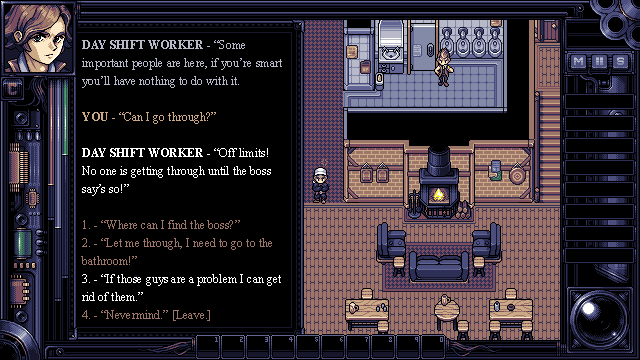
A branching NPC exchange like the one above is exactly where generic summarizers fail. "Guard said no" is not a recap. A usable one records the restriction, the named authority, the four player options, and which threat or favor is now on the table.
Specialized AI Agents for Roleplay Recaps
Try Jenova free—no credit card required—and start with the agents that match how you actually play.
Game Designer Assistant
Game Designer Assistant is the natural home for campaign documentation. If you already think in systems, scenes, and tables, it will turn a transcript into prep instead of prose.
- Session pages organized around scenes, secrets, NPCs, and treasure
- Systems analysis when a ruling or mechanic needs to be remembered, not rediscovered
- Concept and documentation support when the recap has to become an adventure handout
Film Screenwriter
When the recap needs to read like a scene, this screenwriting partner keeps character voice and dramatic structure intact. That matters for actual-play cleanup, session recordings, and adapting a campaign night into a script.
- Dialogue passes that retain subtext instead of flattening it into bullets
- Outline-to-draft workflow from recap → beat sheet → scene
- Visual storytelling notes a GM or producer can shoot or describe
Learn English Through Roleplay
Learn English Through Roleplay is for learners who want conversation first and study notes second. Summarize the scene, then drill the language that appeared in it.
- Recaps that separate plot from target grammar and idioms
- Replayable scenario summaries you can run again at higher intensity
- Corrections tied to lines you actually produced, not textbook examples
Vesper Court
Vesper Court shows why roleplay summaries must keep emotional and political debt. A court story falls apart if the recap forgets who saw the bite, who lied, and who is still waiting.
- Continuity across nights of intrigue rather than isolated scenes
- Character-consistent memory you can summarize without losing tone
- Recaps that flag unfinished bargains instead of "they talked"
Comic Creator
If your table wants a visual recap for players who missed a night, Comic Creator can turn the session summary into sequential art. One page of "what happened in the mire" beats a wall of Discord text.
- Issue-style recap pages from a structured summary
- Consistent character designs across session-to-session recap comics
- Layouts that highlight the one decision that changed the campaign
Interview Coach
Not every roleplay transcript comes from a dungeon. Interview Coach records practice conversations that deserve the same transcript-level recap: what you said, where the answer drifted, what to try next.
- Mock-interview transcripts turned into specific coaching notes
- Behavioral and case recaps you can reuse before the real panel
- Feedback anchored to lines, not a single score
How to Summarize a Roleplay Transcript
Step 1: Capture the log while it is still complete
Export the Discord thread, copy the virtual-tabletop chat, paste the AI roleplay history, or use speech-to-text after a voice session. Do not pre-edit so hard that names disappear. The model can ignore jokes. It cannot invent an NPC you deleted.
"Here is last night's Discord log from our 7-player game. Recap it as session notes: scenes, NPC names, loot, secrets, and unresolved threads. Flag anything I might have misheard."
Step 2: Specify the recap format before you ask for shortness
"Summarize this" produces a paragraph. Ask for the shape your next session needs: a Lazy GM page, a player-facing recap, an NPC dossier, or a language-learning sheet. Learn French Through Roleplay recaps should look different from a dungeon master's prep page.
"Rewrite this recap for players: one paragraph of what we know, a bullet list of open quests, and a warning about the faction we insulted. No GM secrets."
Step 3: Extract entities, then freeze them
Names are the first thing generic summarizers drop. Force an entity pass: player characters, NPCs, locations, items, factions, monsters. Keep that list with the recap so "the day-shift worker" does not become "a guy" next week.
"Build a running NPC list from this transcript. For each person: role, last known location, what they want, and the last promise they made or broke."
Step 4: Hand the recap to the next workflow
A summary that sits in a chat is only half done. Send campaign notes back into design prep, push a cleaned scene toward Webtoon Creator for a vertical recap episode, or start the next language scene from the correction list. Persistent memory means you do not paste the entire novel every time—you attach the recap and keep playing.
"Using only the session 3 recap and the NPC list, prep session 4: a strong start at the city gate, three secrets I can reveal, and two complications if they wait."
Roleplay Transcript Summarizer Use Cases
📊 The GM who cannot write the recap at 1 a.m.
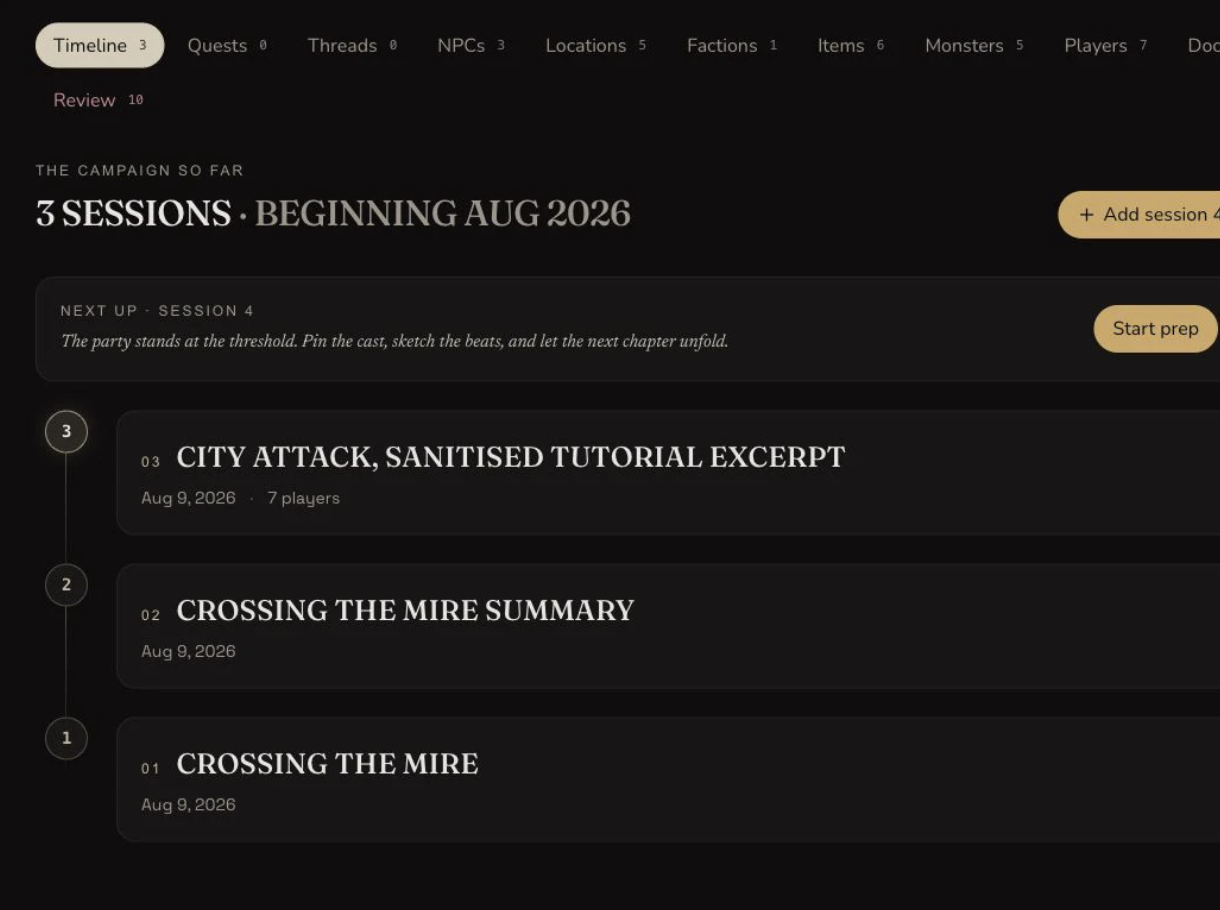
Scenario: A seven-player session runs long. The city is attacked, a tutorial-style excerpt gets messy, and nobody wants to own the notes.
Traditional Approach: The GM writes a recap the next day from memory, misses two NPC names, and spends the following session reconstructing the fight.
Jenova: Paste the log into the design partner, get a dated session page plus a player-safe summary, and walk into next week with threads already pinned.
- Separates GM secrets from the recap the table can see
- Preserves loot and injury so the next scene starts honest
- Produces a "next up" blurb instead of a blank prep page
💼 The learner who roleplays, then forgets the language
Scenario: You spend forty minutes in a café scene, then cannot remember which past-tense forms you actually used.
Traditional Approach: Scroll the chat, highlight at random, and hope Anki later.
Learn English Through Roleplay: Ask for a recap that lists new phrases, errors, and a six-line replay of the same scene with tighter grammar.
- Study notes tied to lines you produced under pressure
- A short version of the scene you can run again tomorrow
- Vocabulary that stays attached to the story, not a disconnected list
📱 The player catching up on the commute
Scenario: You missed session two. Session three starts tonight. You have a phone, a chat export, and twelve minutes on the train.
Traditional Approach: Skim 400 messages, miss the mire crossing, and slow the table down with questions.
The platform: Open the iOS or Android app, attach the log, and ask for a player-facing recap with names, decisions, and what your character would know. Add a voice note if you remember a detail the log dropped.
- Speech-to-text for corrections while you walk
- Short recap you can reread at the table without spoiling secrets
- Sync across devices so the same notes are on your laptop at game time
🎯 The group turning a campaign night into a comic
Scenario: "Crossing the Mire" was good enough that the table wants a recap comic for the absent player—and maybe a public actual-play page.
Traditional Approach: Someone rewatches the recording and writes a script from scratch over a weekend.
Manga Creator plus a clean session summary: Convert the recap into pages with consistent faces, the mire as a location, and the one decision that cost the party a day.
- Script and panels from notes you already need for play
- A shareable recap for players who cannot read a raw transcript
- A pipeline from table → summary → pages without rewriting the plot
Teams that automate documentation commonly report saving 5–8 hours per week per person on notes. A campaign does not need corporate ROI to feel that gap—it shows up as a recap that never gets written.
FAQ: Roleplay Transcript Summarizer
What is a roleplay transcript summarizer?
A roleplay transcript summarizer is an AI recap tool for session logs, AI character chats, and practice dialogues. It compresses the transcript into structured notes: what happened, who was present, what changed, and what is still unresolved. Unlike a meeting assistant, it is judged on narrative continuity—NPC names, clues, tone, and open threads—not on action-item lists.
Is this roleplay transcript summarizer free?
Yes. The platform has a free tier with all core features and limited monthly usage, which is enough to recap a campaign night or a language scene and see whether the notes are actually playable. Paid tiers raise usage if you are summarizing long recordings every week. Usage resets on your billing date with no daily cap.
How is a roleplay transcript summarizer different from ChatGPT or a meeting bot?
General chatbots will shorten text. Meeting bots will list decisions. Roleplay needs state: the guard who named a boss, the phylactery that is still missing, the grammar you keep missing in French. Transcript-level recaps only help when they cite the actual exchange. Specialized agents plus persistent memory keep that state available instead of asking you to paste the novel into a blank chat every time.
Can it summarize D&D, VTT chat, and AI roleplay logs?
Yes. Paste Discord or virtual-tabletop chat, attach a transcript document, or dictate a recap after a voice session. Ask for GM notes, a player-safe recap, or an NPC list. For AI character chats, summarize at scene boundaries so continuity survives when context gets long—the same problem roleplay front-ends already try to solve with summarize features.
Does a roleplay transcript summarizer work on mobile?
Yes. Web, iOS, and Android share the same agents, memory, and files. That is the missed-session use case: recap on the phone, pin the NPC list, and walk into the session without scrolling four hours of chat. Speech-to-text is available when your hands are full and you only remember one correction—"the innkeeper lied about the cellar."
How accurate is the recap with names and plot details?
Accuracy tracks the transcript you provide and the instructions you give. If the log says "Day Shift Worker," the recap should not invent a captain. Ask for an entity list, quote uncertain lines, and keep a running NPC page the way organized campaign notes already separate characters from session pages. Persistent memory helps the next recap stay consistent with the last one, which is the failure mode that makes tables stop trusting notes.
Keep the Story Playable
A roleplay transcript summarizer earns its keep at the start of the next session, not at the end of the last one. Raw logs are cheap. Continuity is not. When the recap still knows who blocked the door, what the party promised, and which thread is next, you spend the night playing instead of reconstructing.
Whether you need campaign pages from Game Designer Assistant, a scene pass from Film Screenwriter, language notes from Learn English Through Roleplay, or a long-running court story in Vesper Court, the job is the same: turn dialogue into state you can reuse.
Explore the full agent library at Jenova and recap the session while you still remember why it mattered.
For Developers: Every agent in this article is available programmatically via the Jenova API — integrate roleplay recaps, campaign memory, and custom transcript-summarizer agents into your application with a single integration. Full documentation →