Roleplay Scenario Generator: AI Worlds, Plots & Characters
2026-09-10
Jenova helps you generate roleplay scenarios on demand — setting, stakes, NPCs, and branching choices included — so you start playing instead of outlining. As of September 2026, tabletop groups, solo players, language learners, and writers still hit the same wall: a blank page where the story should already be moving. A roleplay scenario generator on this platform turns a one-line premise into a living scene, then keeps characters consistent for as long as you stay in the world.
- ✅ Instant premises, conflict maps, and NPC voices from a single prompt
- ✅ Persistent memory so allies, villains, and plot threads do not reset mid-arc
- ✅ The same library for games, language immersion, screenwriting, and professional drills
- ✅ Free to try, with full feature parity on web, iOS, and Android
To understand why that combination matters, it helps to look at why most scenario tools stall after the first paragraph — and what it takes to keep a story interactive.
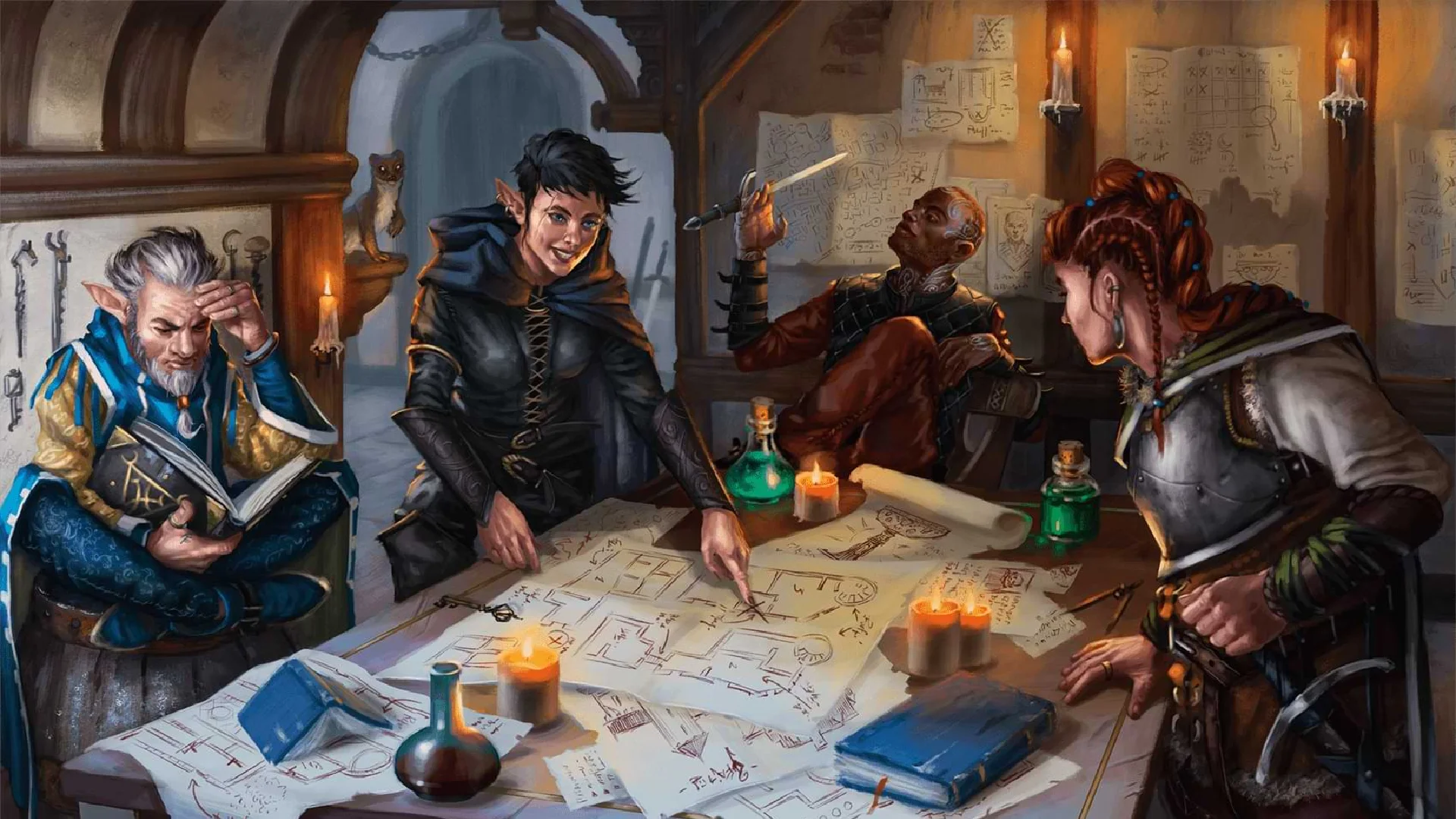
Quick Answer: What Is a Roleplay Scenario Generator?
A roleplay scenario generator is an AI system that invents interactive scenes, characters, and branching choices so you can play, practice, or write without hours of prep. It does not stop at a one-shot blurb. The useful versions keep the world coherent as you act.
Key capabilities:
- Open-ended play with Roleplay Game Master — unlimited memory and stable character voices
- Ready-made worlds you can drop into tonight, from haunted mansions to island romances
- Language immersion where every scenario is also a conversation lesson
- Professional drills that simulate interviews, negotiations, and sales calls
- Creative partners that expand a generated scene into a screenplay, manga, or novel chapter
Why Most Roleplay Scenarios Never Leave the Notes App
Demand for interactive stories is not a niche hobby. Industry research put the [**global RPG games market at $26.97 billion in 2025**](https://www.businessresearchinsights.com/market-reports/rpg-games-market-120903), with a projected climb toward $104.1 billion by 2034. Adults now drive a large share of that spend — about 58.4% of RPG spending in North America and Europe according to 2025 survey data. Parallel to that, the AI roleplay chatbot market was estimated at roughly $1.20 billion in 2026.
People want to be in the story. But getting there is still frustratingly difficult:
- Game masters spend hours on prep before anyone rolls a die
- Chatbots forget names, grudges, and geography after a few scenes
- Branching plots collapse into a linear script the moment a player improvises
- Finding a table, a GM, and a shared night remains a scheduling puzzle
- One-shot generators dump a premise and leave you to do the hard work
Hours of Prep Before Anyone Plays
Traditional tabletop play has a slow start. As Mythcreants notes, a game master must do hours of prep, and players must build complicated characters, which makes it hard to change plans or welcome a friend who does not know the rules. One analysis of the “forever GM” role puts it bluntly: a good GM does roughly forty jobs at once — worldbuilder, rules referee, encounter designer, and improv actor for dozens of NPCs in a single evening.
That load is why so many campaigns stall before session two. A Sly Flourish community poll found 58% of respondents had trouble running D&D games regularly. Another poll on campaign endings found 26% almost never reach a satisfying conclusion and 21% rarely do. The bottleneck is not imagination. It is production time.
Characters That Forget Who They Are
A scenario only works if the innkeeper still hates you next week. Generic chat tools treat every message as a fresh prompt, so continuity depends on you pasting recaps. Villains lose their motive. Romance threads reset. The dungeon map rearranges itself. Players stop trusting the world, and trust is the whole product.
Branching Plots That Collapse Into Linear Scripts
Interactive fiction is a web of choices, not a paragraph with three buttons. The diagram below is the kind of structure a real scenario needs: multiple valid replies, failure states, combat forks, and delayed payoffs.
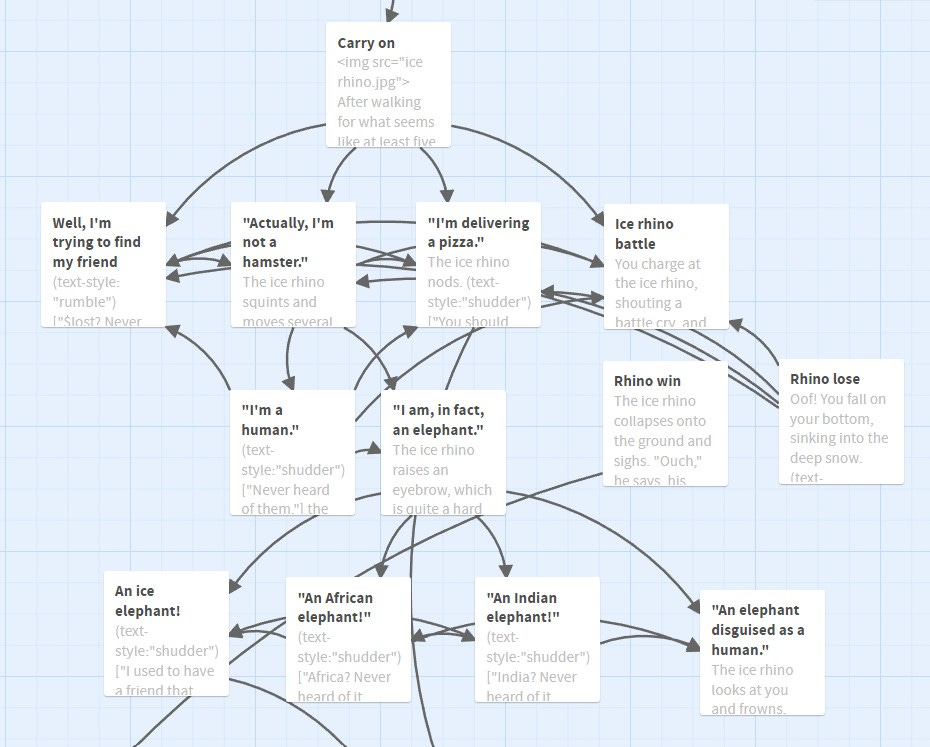
Most “generators” output a blurb and a list of tropes. They do not track what you said to the ice rhino three turns ago. The moment you leave the rails, the story shrugs and offers another generic corridor.
No Table, No Partners, No Session Tonight
Scheduling five adults is harder than writing a dungeon. Solo players want a GM who never cancels. Language learners want a scene partner at 11 p.m. Writers want to pressure-test dialogue without waiting for a critique group. If the tool requires a full party, it is not a generator — it is a calendar problem.
Generators That Spit Out One-Shots and Stop
Random tables and prompt packs are useful for a seed. They are not a session. You still have to invent NPC voices, improvise consequences, and remember last month’s betrayal. The gap between “here is a tavern” and “here is a living campaign” is where most tools quietly exit.
This is exactly what Jenova was built for.
The Jenova Solution
Jenova treats scenario generation as an ongoing performance, not a one-time text dump. You describe the tone, the constraints, and the first image in your head. Specialized agents then run the table: they invent the opening, play every supporting character, remember your choices, and fork the plot when you do something unexpected.
| Traditional Approach | Jenova |
|---|---|
| Hours of GM notes, maps, and NPC sheets | A playable scene from a short prompt |
| Chatbots that forget continuity | Persistent memory across sessions |
| Random tables that stop at the seed | Agents that run the whole encounter |
| One genre, one format | Games, language practice, writing, and professional drills on one platform |
| Desktop-only prep tools | Same agents on web, iOS, and Android |
A 2026 poll of RPG GMs and players found that 30% already use generative AI to prepare or play. The difference is not whether you use a model. It is whether the tool can hold a world together. While some chat platforms have added structured, choose-your-own-adventure Stories formats, Jenova is built around specialist agents with unlimited conversation history, private knowledge bases, and the freedom to go off-script without losing the thread.
Open Worlds and Instant Game Masters
Roleplay Game Master is the closest thing to a always-available table. You name a genre — sword-and-sorcery heist, quiet cosmic horror, political intrigue in a rain-soaked port — and it generates the opening situation, then stays in character for every NPC. Unlimited memory means the lockpick you failed in chapter one can still matter in chapter six.
When you want a boxed premise instead of a blank cosmos, The Mansion drops you into an amnesia mystery with rooms that hide secrets, and The Asylum puts you on an investigation that has already gone wrong. Both are scenario generators in the strict sense: they create the world, the pressure, and the next beat as you move.
Language Scenes You Can Actually Speak In
A roleplay scenario is also the fastest language drill that does not feel like a drill. Learn English Through Roleplay builds any scene at any intensity so idioms and grammar attach to moments, not flashcards. Learn Japanese Through Roleplay and Learn Spanish Through Roleplay work the same way: you pick the setting, the agent holds character, and every reply is practice you will remember because the stakes felt real.
From Generated Scene to Finished Story
Writers use the same loop in reverse. Generate the encounter, then harvest it. Film Screenwriter takes a played scene and turns it into structure, dialogue, and visual storytelling for a screenplay. Writing Assistant adapts the same material into prose that sounds like you. Manga Creator translates the beats into panels, page turns, and a consistent visual style — useful when your generated dungeon crawl wants to become a one-shot or a long serial.
Professional Roleplay Without a Training Budget
Not every scenario is a dragon. Interview Coach generates behavioral, case, and technical interviews and then plays the other side of the table. Negotiation Coach runs salary talks and deal simulations with a live counterpart who will not leak your practice answers. Sales Coach builds role-play drills across B2B, retail, and e-commerce so you can fail cheaply before the real call.
Specialized AI Agents for Roleplay Scenarios
The library is not a single generator with a theme dropdown. It is a set of specialists you would actually open in the next month if you need a scene tonight.
The Mansion
The Mansion is a ready-to-run mystery: you wake with no memory of how you arrived, and every room can be the last. Use it when you want a complete scenario without worldbuilding from scratch.
- Atmospheric, room-by-room exploration that reacts to your searches
- Secrets that stay consistent as you backtrack
- A solo-friendly loop that does not need a human GM
Love Island
Love Island generates an open-world romance with eight strangers and social dynamics that emerge from your choices. It is a scenario engine for relationship drama rather than combat maps.
- Emergent alliances, rejections, and shifting social weather
- Replayable premises — different opening moves produce different seasons
- Useful reference for writers studying ensemble casts
K-Pop Producer
K-Pop Producer drops you into a 60-day debut gauntlet: trainee selection, power dynamics, and career-shaping calls. It shows how a tight time box and a clear role make a generated scenario feel like a campaign, not a chat.
- High-pressure choices with delayed consequences
- Ensemble NPCs who remember how you treated them
- A finite arc if you want a story that actually ends
Prompt Generator
Prompt Generator is the meta-tool: it crafts high-quality prompts for text, image, music, and video models when you want to seed a new world, a character portrait, or a soundtrack before you enter play. Pair it with any of the agents above when the first image in your head is still fuzzy.
- Collaborative refinement instead of one-shot prompt dumps
- Coverage across text and visual models
- A practical bridge between “idea” and “playable scene”
Public Speaking Coach
Public Speaking Coach generates the audience, the occasion, and the hostile Q&A. If your “roleplay scenario” is a keynote, a wedding toast, or a board update, this is the generator that plays the room.
- Speech drafting plus delivery notes
- Simulated audiences that ask unhelpful questions
- Anxiety-management guidance tied to the specific event
Try Jenova free — no credit card required.
How It Works
Step 1: Name the Scenario You Actually Want Open Roleplay Game Master — or a themed world if you prefer a boxed start — and state genre, tone, constraints, and whose eyes we are in. Specific beats beat vague vibes. “A three-room heist in a floating archive, no gore, the guard is my former mentor” will outperform “do a fantasy.”
"Start a no-combat mystery in a rain-soaked port. I am a disgraced cartographer. The first scene is a locked lighthouse with a map that does not match the coastline."
Step 2: Play the Opening, Then Push Off the Rails The agent generates the room, the NPC, and the first decision. Do something the prompt did not mention. Persistent memory is the test: if the world absorbs your improvisation and keeps its own logic, you have a generator, not a script.
"I pocket the mismatched map, bribe the apprentice instead of picking the lock, and ask what the mentor used to call the reef."
Step 3: Pin Continuity You Care About Call out names, debts, and physical details you want preserved. Attach notes or documents if you have a homebrew setting. The same session can later move to Writing Assistant if you want the played scene as prose, or to a language agent if you want to replay it in another tongue.
"From now on, the apprentice is called Sera, she is left-handed, and she thinks I still work for the admiralty. Do not reset that."
Step 4: Branch on Purpose Ask for two or three plausible next scenes, pick one, and commit. This is how you get the flowchart effect — genuine forks — without drawing the graph yourself. If you are practicing for work, swap the fantasy beat for a mock interview or a negotiation and keep the same discipline: one clear role, one live counterpart, consequences that stick.
"Give me three next scenes: Sera double-crosses me, the mentor arrives early, or the lighthouse lamp signals a ship that should not exist. Run the mentor option."
Step 5: Capture the Session Before It Evaporates When the scene lands, ask for a recap, an NPC dossier, or a hook for next time. Writers can hand the recap to Film Screenwriter. Language learners can request a correction pass on the lines they spoke. GMs can lift the encounter into a weekend table session with humans.
Results and Use Cases
🎲 Solo Tabletop When the Group Cancels
Scenario: Your Friday game falls through. You still want a two-hour dungeon with a real decision tree, not a mobile auto-battler.
Traditional Approach: Scramble for a one-page dungeon, invent three NPC voices, and hope you remember the trap you put in room two. Prep often eats the evening you meant to play.
Roleplay Game Master: You describe the constraints and play immediately. The agent holds the map, the monsters, and the consequences.
- Zero scheduling overhead
- Combat, stealth, and talk solutions all remain valid
- Recap at the end becomes next week’s hook if the group returns
💼 Interview Drill on a Commute
Scenario: You have a panel interview in 36 hours and no colleague free to run mock questions.
Traditional Approach: Reread your résumé, guess at behavioral prompts, and hope the real panel is kind.
Interview Coach: It generates a panel, plays each interviewer, and gives blunt notes on structure and filler. Pair a follow-up with Negotiation Coach if the next scenario is the offer conversation.
- Realistic interruptions and follow-ups, not a static question list
- Feedback tied to the job you named
- Repeatable until the answers feel boring — which is the point
📱 Language Scene on Your Phone
Scenario: You are on a train, you have twelve minutes, and textbooks are not going to happen.
Traditional Approach: A flashcard app, a podcast, and no speaking.
Learn French Through Roleplay: You start a bakery argument, a border interview, or a quiet dinner, entirely on iOS or Android. Speech-to-text lets you answer out loud. The agent stays in character and still corrects you.
- Vocabulary stuck to a moment, not a list
- Full feature parity with desktop
- Swap to Spanish or Japanese agents without changing the habit
🎬 Writer’s Room From a Played Scene
Scenario: You have a heist beat that worked in play and a blank screenplay.
Traditional Approach: Transcribe from memory, lose the funny line, and spend a weekend forcing structure onto improvisation.
Jenova: Replay or recap with the game master, then hand the beat to Film Screenwriter for outline and dialogue craft, or to Manga Creator if the same scene wants panels instead of sluglines. Comic Creator covers sequential art if you need a Western comics page instead of manga pacing.
- The fun line survives because the session was already dialogue
- Structure arrives after play, not before
- One generated scenario feeds multiple formats
FAQ
What is the best roleplay scenario generator for tabletop and solo play?
For open-ended worlds, Roleplay Game Master is the default: you bring a premise, it runs NPCs, pacing, and consequences with memory that does not wipe. If you want a finished premise instead of a blank cosmos, start in The Mansion or The Asylum and branch from there. The right choice is the one that matches how much worldbuilding you still want to do yourself.
Is a Jenova roleplay scenario generator free?
Yes. The free tier includes core features with limited monthly usage. Paid plans raise usage — Plus at $20/month, Premium at $50, and higher tiers for heavier play — without daily caps. Usage resets on your billing date. You can test a full scene before you decide whether you need more ceiling.
How is this different from a random plot generator or a generic chatbot?
Random tables give you a seed. Generic chatbots give you a scene that forgets itself. Jenova agents are built for long-running play: persistent memory, specialist instructions, and the option to attach your own setting notes. You can also move the same story into writing, language practice, or interview drills without exporting a transcript into five other apps.
Can I use a roleplay scenario generator to practice a real conversation?
Yes. Interview Coach, Negotiation Coach, Sales Coach, and Public Speaking Coach all generate the other side of a high-stakes conversation and stay in role. Language agents do the same for travel, work, and social scenes in the target language. Treat them like a rehearsal room: specific situation, live counterpart, notes after.
Does it work on mobile, or do I need a desktop for long scenarios?
It works on web, iOS, and Android with the same agents and synced settings. Solo dungeons, language scenes, and mock interviews are all viable on a phone, including with speech-to-text. Long campaigns benefit from a keyboard, but nothing about the generator is desktop-only.
Will the characters stay consistent across sessions?
That is the design goal. Agents keep unlimited chat history and persistent memory, so a mentor’s grudge, a map discrepancy, or a trainee you snubbed can still matter later. You can reinforce continuity by naming the facts you care about. If you need a hard reset, start a new thread; if you need a saga, stay in the same one.
Start the Scene Instead of Planning It
A roleplay scenario generator is only worth using if it survives contact with a player. The old stack — hours of GM notes, fragile chatbots, and random tables that stop at the seed — still produces more outlines than sessions. Jenova’s answer is a set of specialists that invent the opening, play every other chair at the table, and remember what you did.
Whether you need Roleplay Game Master for a campaign that should not die between Fridays, a language scene you can speak on the train, or a professional drill before tomorrow’s panel, the loop is the same: name the situation, play off the rails, keep the facts that matter. Explore the full agent library at Jenova and generate the next scene while the idea is still hot.
For Developers: Every agent in this article is available programmatically via the Jenova API — build AI-powered roleplay, tutoring, or coaching features into your application with a single integration. Full documentation →