Roleplay Recap Generator: AI Campaign Recaps After Every Session
2026-09-13
Jenova is a roleplay recap generator that turns scattered session notes into a living campaign log—who died, which quest closed, what the party still owes the guild, and the cliffhanger waiting on the beach. As of September 2026, tables still lose entire plot threads because the recap was never written, or because a chatbot invented a different last session. This AI platform records what happened, keeps it consistent, and hands you a recap the table will actually hear.
- ✅ Turn raw notes, chat logs, and voice dumps into structured session recaps
- ✅ Persistent memory so NPCs, quests, and deaths do not reset between games
- ✅ Attach maps, journals, and handouts as a private knowledge base
- ✅ Recap and keep playing on web, iOS, or Android with full feature parity
To understand why a dedicated recap workflow matters, look at the gap between sessions—the days when details fade, Discord pins multiply, and nobody can agree whether the blacksmith still has the book.
Quick Answer: What Is a Roleplay Recap Generator?
A roleplay recap generator is an AI campaign tool that converts session notes into a structured recap—quests, NPCs, locations, and cliffhangers—so the next game starts in canon. It is not a highlight card. It is a living log the table can query.
Key capabilities:
- Rebuild last session as a short, television-style previously-on
- Track quest status, NPC deaths, faction standing, and unresolved hooks
- Keep player spotlight visible so the recap names people, not only plot
- Continue the story in-character with Roleplay Game Master
- Export a shareable document the group can read before they sit down
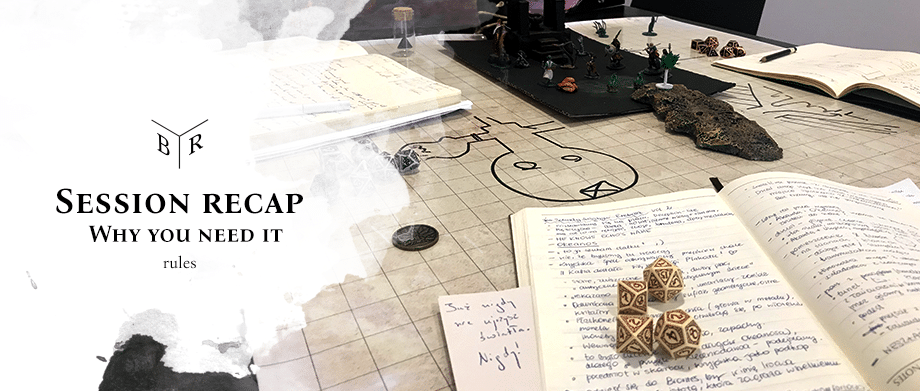
Why Session Recaps Fall Apart Between Games
Tabletop play is a large, growing hobby, not a niche that can afford sloppy continuity. Industry estimates put the global TTRPG market at $2.41 billion in 2026**](https://www.businessresearchinsights.com/market-reports/tabletop-role-playing-game-ttrpg-market-110856), with a long-range path toward several times that size. Broader tabletop gaming is larger still: one [**2025 valuation of $19.6 billion and another 2026 figure of $21.43 billion describe a market where groups expect serialized stories, not one-shot amnesia.
Demand is not the bottleneck. Memory is.
$2.41 billion — Estimated global tabletop RPG market size in 2026
But accessing a reliable “what happened last time” is frustratingly difficult:
- Sessions end late, so the recap is skipped or left as three illegible bullets
- Notes scatter across chat logs, photos of the battle map, and whoever “was going to write it up”
- Generic chatbots invent a new version of the fight, the deal, and the dead NPC
- Players debate the plan again because the recap never restated the cliffhanger
- Campaigns stall when nobody can find the one fact that would start the scene
Recaps Get Treated as Optional Theater
A strong recap is not flavor. PhD20 argues that recaps are the unsung transition into play—a ritual that moves the group out of real-world chatter and into the story—yet many referees gloss over them, defer to a volunteer, or skip them entirely. Roleplaying Tips makes the same operational point: without a clear signal that the game has started, half the table is still talking about work while someone else has already begun to roleplay.
When the recap is improvised from a tired memory, it becomes an event log. “You fought, you met someone, you made a deal.” That is not a previously-on. It does not name who had the spotlight, which promise is still unpaid, or why the next scene cannot wait.
The Week Between Sessions Erases the Wrong Details
Johnn Four’s advice is to write recap bullets immediately at session end, while the facts are still sharp. Most groups do the opposite. They pack dice, argue about food, and tell themselves they will write it tomorrow.
Tomorrow, the important things have already been replaced by the loud things. The crit is remembered. The quiet fact—that the town guard will not work with unknowns, that the book left the tavern, that the bandit cell should now scatter—is gone. The Angry GM describes the recap as information management: you emphasize some events and leave others in shadow so tonight’s session has a shape. If you never wrote the list, you cannot choose.
Post-session summaries also keep people in the story between games. A group that only remembers at the table is a group that arrives cold.
Notes Exist. Canon Does Not.
Homebrew campaigns accumulate locations, organisations, creatures, and quests faster than a notebook can stay honest. One week the journal says the party stopped at the tavern before Westridge. The next week someone is sure they never left Black Hollow. A wiki helps only if someone updates it after every session. Most people do not.
That is why
: a recap shows not only what happened, but what the table treated as important. A pile of timestamps is not that. A campaign planner screenshot is not that either, unless the entries stay in force when you ask a new question.Generic AI Makes the Continuity Problem Worse
By 2025 and 2026, purpose-built AI game tools had already moved past “just prompt a chatbot” toward platforms with campaign memory, because a language model’s working window cannot hold a campaign. The number-one failure mode is familiar: the companion who died two sessions ago walks into the room. The quest marked complete is offered again. The book is in two places.
A roleplay recap generator that cannot remember is a second source of contradiction. You then spend the opening of the next game arguing with your own notes. Before You Roll’s case for better recaps is simple: they fill gaps and put the story back in one place. Stateless chat cannot do that job.
This is exactly what Jenova was built for.
The Jenova Solution
Jenova treats a recap as campaign infrastructure, not a blog post you might write if you have energy. You dump what you remember—or what you recorded. Specialist agents shape it into prose, structure, and player-facing artifacts. Persistent memory and optional document uploads keep the next recap honest about the last one.
| Traditional Approach | Jenova |
|---|---|
| Illegible end-of-night bullets | Structured recap with quests, NPCs, and open hooks |
| Twenty minutes of “what happened last time?” | A previously-on ready before anyone sits |
| A chatbot that forgets who holds the book | Memory plus attached journals, maps, and handouts |
| Plot-only summaries that erase player spotlight | Recaps that name characters, goals, and outcomes |
| A wiki that dies when the campaign pauses | Unlimited history you can query months later |
| Desktop-only campaign bibles | Same recap tools on web, iOS, and Android |
Narrative Recaps That Sound Like Television
PhD20’s standard is the television recap: short, selective, and aimed at tonight’s episode, not a full transcript. Film Screenwriter is built for that muscle—outline, character, visual storytelling, and revision. Ask it to retell the swamp fight only if the cult comes back. Ask it to open on the deal with the witch if the trinket is tonight’s problem.
Microdrama Screenwriter is the right partner when your campaign is serialized on purpose: episode hooks, delayed reveals, and a closing line that makes the next session feel already in motion. Roleplaying Tips warns against intention regression—the party agreed on a plan, then the real-world gap made them debate it again. A recap that ends on the current vector is how you stop that stall.
Journals, Quests, and Facts That Stay True
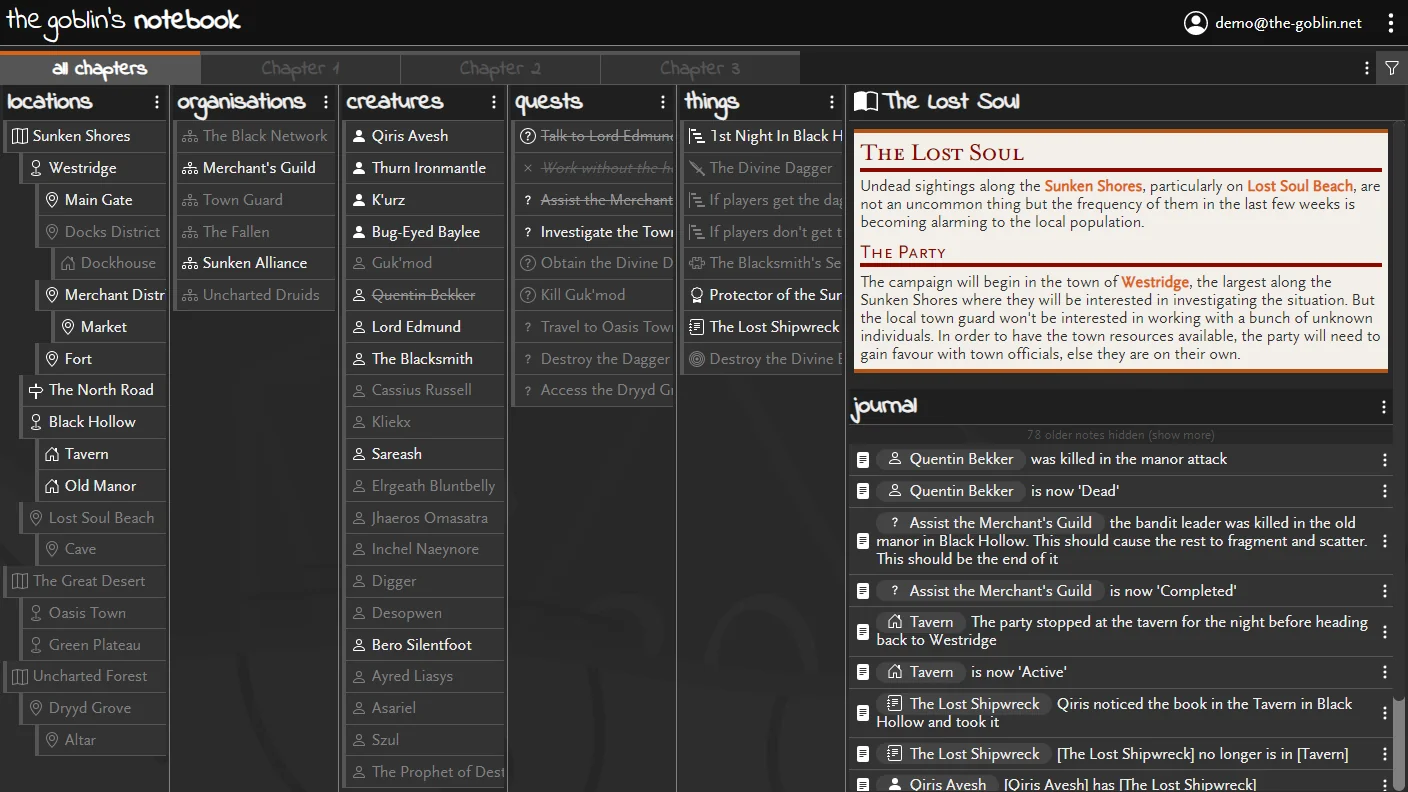
A recap generator has to do more than write pretty paragraphs. It has to know that Quentin Bekker is dead, that the Merchant’s Guild job is complete, and that the book is no longer in the tavern. That is a database of play, not a vibe.
Attach your existing notes. Then keep using the same thread. PDF Doc Generator turns the surviving canon into a document players can search during the week. The Philosopher is useful when the table needs the recap to mean something: what vow was broken, what rule the world just revealed, what the party is now responsible for.
Visual Recaps People Will Actually Open
Many players will not read a wall of text in Discord. They will look at a page.
Manga Creator and Comic Creator lock the look of a scene—the manor attack, the beach with the wrong kind of tide, the way the town guard stands when they refuse to help. Poster Maker produces in-world objects from the recap: a guild notice, a death bill, a warning about undead on the shore. Those artifacts belong in the log because they are how the world tells the story back to the players.
Social Media Content Generator is the practical layer for actual-play groups that already recap in public. The same facts, a voice that matches the table, no accidental spoilers if you tell it what is table-only.
Recap, Then Keep Playing
A recap that cannot survive contact with play is unfinished. Roleplay Game Master continues the campaign with persistent character consistency, so the recap is not a dead document. The Mansion is a pressure test: walk into a hostile space and see whether last session’s secrets still exist. If the house does not remember the body in the manor, the recap missed.
Music Composition Assistant covers the ritual PhD20 recommends—a theme that means the recap is starting. Public Speaking Coach helps the referee who hates performing the previously-on: shorter sentences, a named spotlight for each player, a landing on the choice at their feet.
Specialized AI Agents for Roleplay Recaps
A roleplay recap generator is only as good as the specialists behind each layer of the log. These are the agents a referee or solo player would actually open before the next session.
Roleplay Game Master
If you also need to keep playing in the same world, this is the agent that treats last session as fact.
- Unlimited conversation memory so the recap and the next scene share a canon
- Character consistency when an NPC should still be grieving, furious, or gone
- Full creative freedom to pick up the cliffhanger instead of rebuilding the planet
Film Screenwriter
Use it when the recap has to work like a previously-on, not a police report.
- Selective detail aimed at the coming session
- Character-first beats so each player hears their name
- Revision passes that cut the beholder fight if it no longer matters
PDF Doc Generator
When the recap is stable, the table still needs a file.
- Gazetteer formatting instead of a raw chat transcript
- Tables for quest status, NPC state, and open questions
- A shareable log that does not depend on anyone’s message history
Microdrama Screenwriter
Campaigns are seasons whether you admit it or not.
- Cold opens and payoffs that make the recap feel like episode structure
- Cliffhangers that restate the current vector so the plan does not dissolve
- Short, serial chapters for groups that recap in writing every week
Manga Creator
Some recaps should be pages.
- A single sequence for the manor attack or the beach sighting
- Costume and location continuity so later recaps match the first
- A version of events players will look at on a phone
Try Jenova free — no credit card required.
How It Works: From Raw Notes to a Living Recap
Step 1: Dump the Session While It Is Still True Open Jenova and paste bullets, a voice transcript, or a messy paragraph. Name the table, the system if it matters, and the facts that must not move. One ugly list is better than a polished lie.
"Four-hour D&D session. Westridge start. Undead sightings on Lost Soul Beach. Quentin Bekker died in the manor attack. Merchant’s Guild job completed. Qiris Avesh took a book from the Black Hollow tavern. End on the party deciding whether to work with the town guard."
Step 2: Force Structure, Not Vibes Ask for the same columns a campaign journal actually uses: locations touched, organisations involved, creatures named, quests changed, and a short journal. Demand status language—Active, Completed, Dead—so the recap cannot hide behind adjectives.
"Turn these notes into a recap log with Locations, Organisations, Creatures, Quests, and Journal. Mark Quentin Bekker as dead. Mark Assist the Merchant’s Guild as completed. Record that The Lost Shipwreck is no longer in the tavern."
Step 3: Rewrite as a Previously-On Hand the structured log to Film Screenwriter. Require player names at the start of beats, a short runtime, and a final line that puts the current choice on the table. Cut anything that will not matter tonight.
"Write a 150-word television recap. Spotlight each PC once. Do not mention side loot. End on the town guard’s distrust and the beach problem, then freeze. No new lore."
Step 4: Stress-Test the Canon in Play Continue in Roleplay Game Master or walk a hostile interior in The Mansion. If an NPC contradicts the recap, the recap wins until you deliberately amend it. That is the difference between a generator and a new improvisation.
"Play the cleric who pulled the book. The guard will not help unknowns. Bekker is dead. If I contradict the recap, correct me in character and quote the log."
Step 5: Freeze, Share, and Keep the Thread Compile the version that survived. Attach the journal and map as knowledge. Export a clean copy with PDF Doc Generator for the group chat. Next week, start from this thread—do not open a blank chat and hope.
Results and Use Cases
📊 Sunday-Night Recap Before Tuesday’s Game
- Scenario: The session ended at midnight. The referee has work in the morning and a table in 48 hours. Players will ask what happened to the merchant job.
- Traditional Approach: Three cryptic bullets, a photo of the map, and a 15-minute argument at session start.
- Jenova: A structured log plus a 150-word previously-on that names the dead NPC, the completed quest, and the live cliffhanger.
- Recap written while the facts are still cheap to recover
- Spotlight check before the next session’s prep
- A file you can drop in the group chat without apology
💼 Rotating GMs and a Shared Campaign Bible
- Scenario: A West Marches-style group swaps referees. Each one inherits someone else’s unfinished sentences.
- Traditional Approach: A wiki that lags two sessions behind and a Discord pin that still lists a dead man as a contact.
- PDF Doc Generator with Film Screenwriter: One recap format every referee can extend, with status lines a successor can trust.
- Quest states that survive a GM handoff
- Organisation standing that does not reset to “neutral”
- Less retconning when the next person opens the book
📱 Mobile Recap on the Way to the Table
- Scenario: The referee is on a train with a phone, not a laptop. Session starts in 40 minutes. Someone asks in chat whether the book is still in the tavern.
- Traditional Approach: Scroll screenshots, guess, and create a continuity error the table will keep.
- Jenova on iOS or Android: Query the same recap you built on desktop. Speech-to-text captures a ruling while you walk. Settings sync, so the custom lorekeeper is the same device to device.
- Full feature parity—no mobile-lite campaign log
- An answer before you sit down, not after initiative
- A recap you can read aloud without opening five apps
🎯 Solo Roleplay That Does Not Forget Last Month
- Scenario: A solo player runs a long saga with an AI referee and cannot keep pasting a 2,000-token dump every night.
- Traditional Approach: The model forgets the manor attack. The dead walk. The completed guild job returns as a hook.
- Roleplay Game Master: Store the recap as memory plus attached sources, then play the next scene as if the journal were true.
- Choices that still matter on session forty
- Factions that remember who they already paid
- A campaign that accumulates history instead of generating a new one
FAQ
What is the best roleplay recap generator for a long campaign?
The best roleplay recap generator is the one that stores canon, not just prose. Jenova combines specialist agents for narrative recaps, documents, and continued play with persistent memory and optional knowledge bases, so a death, a completed quest, and a moved object stay in force when you ask a new question. If your group plays across weeks, that continuity is the product.
Is Jenova free to use as an AI recap tool?
Yes. Jenova has a free tier with core features and limited monthly usage, with no credit card required to start. Paid plans increase usage: Plus is $20/month, Premium $50, Pro $100, Max $200, Ultra $500, and Enterprise $1,000, with usage resetting on the billing date. Tables that attach large journals and run long campaigns typically move up a tier when they outgrow the free allowance.
How is a roleplay recap generator different from ChatGPT or a recap card?
A generic model can summarize a scene. It will not reliably remember that Bekker is dead, the guild job is done, and the book left the tavern unless you re-paste the world every time. Recap cards are useful highlight reels. Jenova is built around agents, memory, and private documents, so the recap is a system you return to. Roleplay Game Master can then continue from that log instead of starting a new fiction.
Can I use a roleplay recap generator on my phone?
Yes. Jenova offers full feature parity across web, iOS, and Android, including synced settings and speech-to-text. That matters because recaps are often written in the leftover minutes after a session, not at a desk. If you cannot check quest status on the way to the table, the log is not finished.
Can it track quests, NPC deaths, and cliffhangers together?
That is the intended workflow. Dump the messy notes, force status fields, then let Film Screenwriter turn the log into a previously-on that ends on the live choice. The point of a recap generator is not three disconnected summaries. It is one canon the next scene has to obey.
Will my campaign notes be used to train public AI models?
Jenova states that user data is not used to train public AI models, is encrypted in transit and at rest, and is not sold or shared with advertisers. For a campaign log, that policy is part of the tool. A recap is often the only complete record of a game that exists nowhere else.
Conclusion
A roleplay recap generator is not a novelty summary. It is how a campaign survives the week, the argument at session start, and the next unexpected question. Handwritten bullets fade. Wikis lag. Stateless chatbots improvise a new last session. Tables spend their first twenty minutes recovering facts they already paid for with four hours of play.
Jenova gives you a different loop: dump the night while it is still true, structure the journal, rewrite a previously-on the table will hear, play a scene that tries to break the log, then freeze what survived. Film Screenwriter holds the episode voice. PDF Doc Generator holds the file. Roleplay Game Master holds the next hour.
If you need recaps that name the dead, close the quest, and leave the cliffhanger where you left it, start with Jenova and keep the campaign in one place.
For Developers: The recap, roleplay, and document agents in this article are available programmatically via the Jenova API — integrate session recaps, persistent campaign logs, and scene-ready continuations into your application with a single integration. Full documentation →