Roleplay Lorebook Generator: AI Canon for Maps and Pantheons
2026-09-13
Jenova is a roleplay lorebook generator that turns scattered notes into a living world bible—pantheons, maps, factions, and character canon that stay consistent across every session. As of September 2026, game masters, AI roleplayers, and fiction writers still lose hours reconciling contradictions that a structured lorebook would have caught on day one. This AI platform builds the setting, remembers it, and keeps every new entry aligned with what already exists.
- ✅ Generate pantheons, geography, and faction dossiers in a single working session
- ✅ Persistent memory so canon does not drift between chats
- ✅ Attach maps, tables, and source documents as a private knowledge base
- ✅ Continue worldbuilding on web, iOS, or Android with full feature parity
To understand why a dedicated lorebook workflow matters, it helps to look at how roleplay worlds actually fall apart—and how much time creators spend patching holes that should never have opened.
Quick Answer: What Is a Roleplay Lorebook Generator?
A roleplay lorebook generator is an AI worldbuilding tool that produces structured canon—pantheons, maps, factions, and character bibles—so every roleplay session stays consistent. It is not a random-name mill. It is a setting bible that grows with play.
Key capabilities:
- Build pantheons, civic cults, festivals, and religious politics that actually affect the street
- Draft continent-scale geography and city-level districts that match the same history
- Keep NPC voices, faction goals, and plot secrets aligned across long campaigns
- Stress-test lore inside immersive scenes with agents such as The Mansion
- Package the result as a reusable knowledge base you can query mid-session
Why Roleplay Worlds Lose Their Canon
Interactive storytelling is no longer a niche hobby. The [**interactive fiction market reached $6.4 billion in 2025**](https://dataintelo.com/report/interactive-fiction-market) and is projected to hit $14.8 billion by 2034. Tabletop role-playing is expanding with it: the global TTRPG market is estimated at $2.41 billion in 2026, with long-range forecasts stretching toward several times that size.
Demand is not the problem. Consistency is.
1.4 billion people engaged with some form of interactive narrative content in 2025, according to interactive fiction market research.
That audience expects worlds that remember themselves. But accessing that level of canon is frustratingly difficult:
- Homebrew settings sprawl across Discord pins, half-finished wikis, and napkin maps
- Generic chatbots invent a new history every time you ask a follow-up
- Pantheons, calendars, and city politics refuse to interlock
- Players notice when the high priest's dogma contradicts last month's festival
- Campaigns stall because the referee cannot find the one fact that would make the scene land
Homebrew Worlds Outrun Their Documentation
A long-running Sly Flourish poll of D&D groups found that 47% of respondents play in a personal homebrew setting. That is the hardest kind of world to maintain. There is no published gazetteer to fall back on. Every river name, succession crisis, and holy symbol has to be invented—and then remembered.
When the notes live in five apps, the world starts arguing with itself. The duke's heir changes age. The desert is east, then west. A “minor” temple quietly becomes the state religion because nobody wrote down who actually holds power.
Generative Tools Help—Until They Forget
Adoption of AI at the table is real. In an April 2026 YouTube poll archived by Sly Flourish, 30% of 2,200 RPG respondents said they regularly use generative AI for preparing or playing games. The other 70% are not refusing tools so much as refusing unreliable ones.
A chatbot that cannot keep a lorebook will happily contradict your own setting bible. That is worse than having no generator at all. You spend the next session explaining why the sun goddess is not also the child god, or why the imperial capital cannot be on both coasts.
Writers covering the future of AI roleplay keep returning to the same requirement: persistence. A character—and a world—has to carry the thread of a long story, not reboot every few messages.
Campaigns Die in the Gaps
Worldbuilding labor is not cosmetic. It is the difference between a campaign that concludes and one that evaporates.
47% of polled D&D groups said they almost never or rarely reach a satisfying campaign conclusion, in results collected by Sly Flourish.
Lore gaps are a quiet cause. When the referee cannot answer “who taxes this road?” or “what does this cult actually do on a Tuesday?”, play slows. Players stop poking the world. The campaign loses the texture that made people show up.
Lore Is a Production Problem, Not a Muse Problem
Narrative production costs have already moved. Research on interactive fiction estimates that generative AI and dynamic narrative engines reduced content production costs by about 45% between 2022 and 2025. The remaining bottleneck is structure: who stores the canon, who updates it, and who stops the next prompt from overwriting last week's map.
Mobile consumption makes the gap sharper. Mobile platforms held about 41.2% of interactive fiction revenue in 2025. Creators now worldbuild on phones between classes, commutes, and session zero. A lorebook that only exists as a 40-tab desktop wiki will not get used when the party asks a question at the table.
This is exactly what Jenova was built for.
The Jenova Solution
Jenova treats a lorebook as an operating system for play, not a pile of flavor text. You describe the world you need. Specialized agents draft the layers—history, theology, geography, character voice—while persistent memory and optional document uploads keep new entries honest about old ones.
| Traditional Approach | Jenova |
|---|---|
| Wiki pages, Discord pins, and contradictory chat logs | One living lorebook with memory across sessions |
| Random generators that ignore your prior canon | Prompts grounded in your maps, tables, and house rules |
| A weekend of pantheon math before session one | Structured deities, festivals, and civic cults in minutes |
| Lore that dies when the campaign pauses | Unlimited history you can query months later |
| Desktop-only world bibles | Same tools on web, iOS, and Android |
Narrative Canon and Setting Bibles
Start with story architecture. Film Screenwriter is built for concept, outline, character development, and visual storytelling—the same muscles a setting bible needs. Ask it for a founding myth, a succession crisis, or the one secret that would collapse a court if spoken aloud.
Microdrama Screenwriter is useful when your lore has to survive serialization: episode hooks, delayed reveals, and faction clocks that tick whether the party is watching or not. That is how a lorebook stops being a static appendix and becomes a machine for scenes.
Visual Worlds, Artifacts, and Page-Ready Lore
Roleplayers believe what they can picture. Manga Creator and Comic Creator help you lock costume language, architecture, and panel-ready locations so the world has a look, not just a paragraph. Webtoon Creator is the right partner when you want vertical, episode-shaped lore drops—wanted posters, temple murals, travelogues—that players will actually read.
Poster Maker produces in-world objects: conscription broadsides, festival bills, heresy warnings, guild charters. Those artifacts belong in the lorebook because they show how power talks to ordinary people.
Theology, Civic Cults, and Philosophical Texture
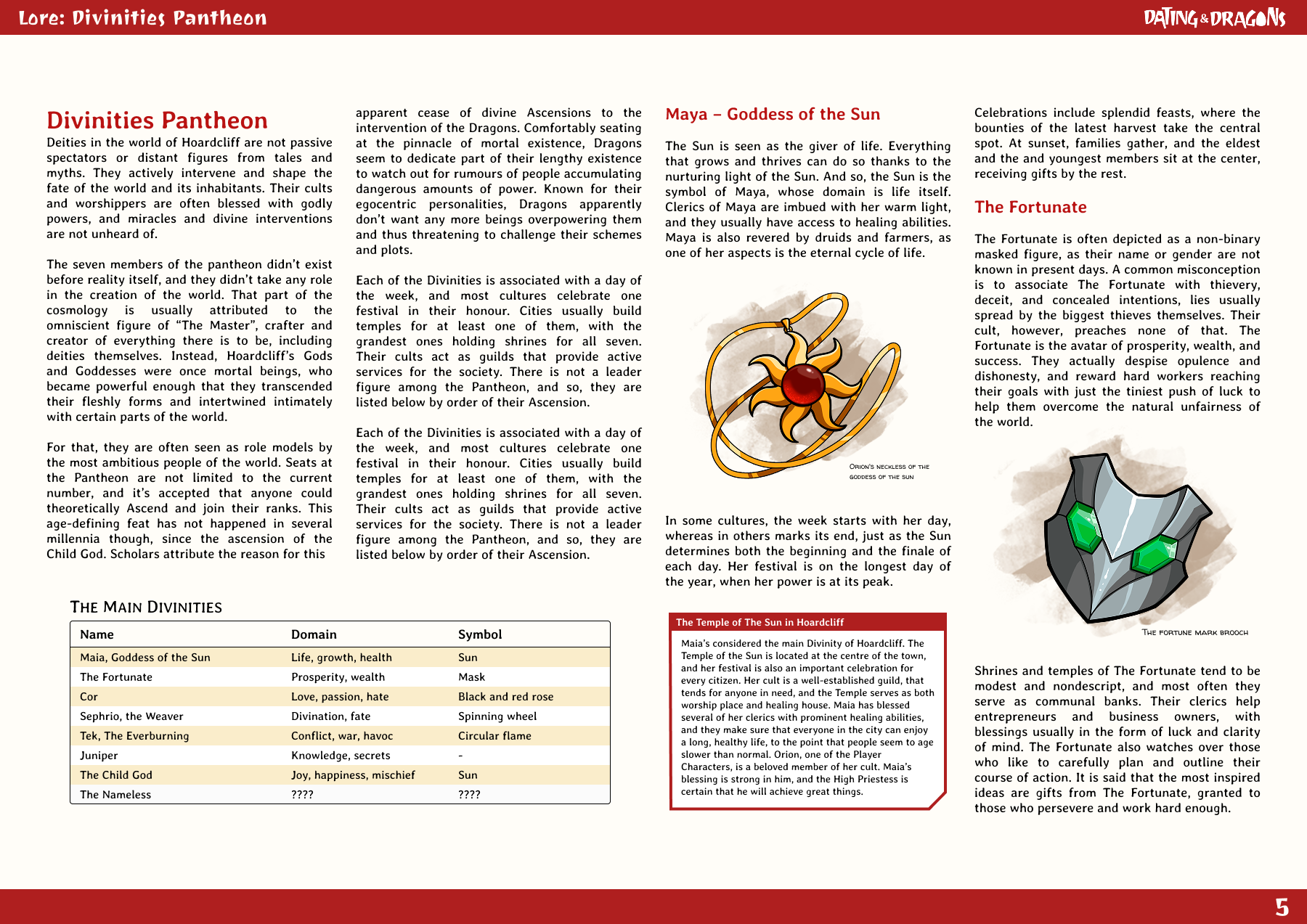
The sample pantheon problem is familiar: seven ascended mortals, no single leader, cults that function as civic guilds. That is not a name list. It is political science with incense.
Daoist Sage is strong on cosmology, wu wei, and systems that refuse a tidy creator-god. Hindu Scripture Guide helps when you need layered divinity—avatars, festivals, dharmic tension—without photocopying Earth. Gnostic Scholar is the right mind for hidden true gods, false heavens, and mystery cults that players should fear to understand.
Confucian Scholar is unusually practical for lorebooks: ritual as government, filial duty as law, and temples that also run granaries. The Philosopher pressure-tests your metaphysics so the afterlife, magic, and moral system do not quietly contradict each other three chapters later.
Play the World Before You Publish It
A lorebook that has never been spoken aloud is a hypothesis. The Asylum and Love Island are not campaign settings you paste into D&D; they are pressure chambers. Run a scene. See whether your honor code, class system, or romance taboo survives contact with a character who wants something.
If the NPC cannot stay in voice, the lorebook entry is unfinished. Fix the entry, not the player.
Specialized AI Agents for Roleplay Worldbuilding
A roleplay lorebook generator is only as good as the specialists behind each layer of the world. These agents are the ones a worldbuilder would actually open in the next month.
Film Screenwriter
If you are also writing the campaign's "pilot"—session zero through the first climax—this agent keeps plot, character, and setting in the same draft.
- Scene-level structure so lore dumps become playable encounters
- Dialogue that reveals culture without a lecture
- Revision passes that catch canon drift before players do
Manga Creator
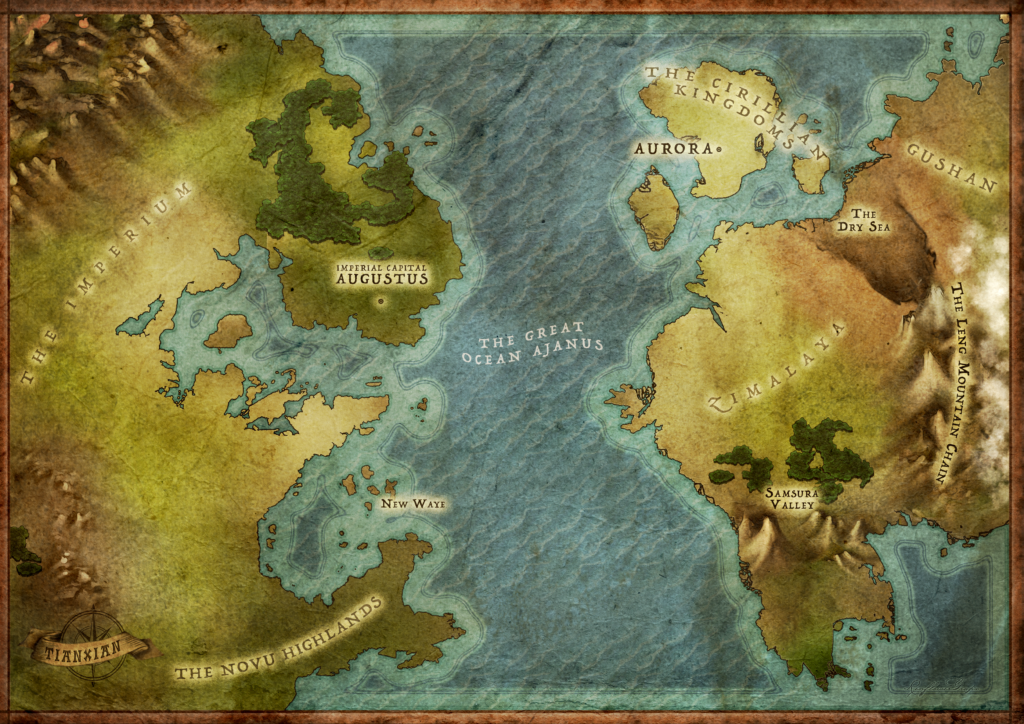
Use it when your lorebook needs a visual grammar: how a Cirillian knight stands, how a Gushan caravan is packed, how a sun cult's vestments read at a distance.
- Consistent character and location design across long stories
- Panel flow that teaches geography through travel, not exposition
- Style lock so later entries match the first chapter's world
The Mansion
After the gazetteer exists, walk a character through a hostile, secret-filled space and see which facts you forgot to write down.
- Emergent exploration that punishes vague room descriptions
- Memory of prior choices so the house, like your setting, does not reset
- A reminder that lore is what happens when someone opens the wrong door
Hindu Scripture Guide
Pantheons fail when every god is a stat block. This agent is for cycles of time, overlapping jurisdictions, and devotion that looks like a social system.
- Festival calendars tied to agriculture, war, and kingship
- Sectarian splits that create adventure hooks instead of trivia
- Language for blessing, pollution, and vow-breaking that players can act on
Music Composition Assistant
Culture is audible. Folk modes, marching meters, and hymn structures belong in a lorebook because they tell you who a people think they are.
- Work songs, court music, and forbidden intervals as historical evidence
- Notation-aware drafts you can hand to a bard at the table
- Regional contrast: the Imperium's anthems should not sound like Samsura Valley laments
PDF Doc Generator
When the canon is stable, export it. Players and co-GMs still need a document they can search during play.
- Gazetteer formatting instead of a raw chat transcript
- Tables for deities, symbols, and domains that match how referees actually look things up
- A shareable world bible that does not depend on anyone's chat history
Try Jenova free — no credit card required.
How It Works: From Blank Page to Playable Lorebook
Step 1: State the Spine of the World Open Jenova and describe the few facts that must never move: tone, tech level, who holds power, and what kind of stories you want. One paragraph is enough if it is specific.
"Coastal city-state, late bronze to early iron, seven ascended mortal gods with no chief deity. Cults run civic services. Dragons suppress new ascensions. I need a lorebook, not an adventure module yet."
Step 2: Build Religion, Law, and Everyday Life Hand the spine to Confucian Scholar or Daoist Sage depending on whether your world runs on ritual bureaucracy or cosmological flow. Demand tables: domain, symbol, festival day, who actually gets fed.
"Create the main divinities table with name, domain, and symbol. For each cult, explain the public service it provides and the political threat it poses to the others."
Step 3: Draw Geography That Matches History Upload or describe your map. Name the ocean, the capitals, the dry sea, the mountain wall. Ask why the Imperium faces the Cirillian Kingdoms across the water, and what a merchant risks in Samsura Valley.
"Using this map, write lorebook entries for Augustus, Aurora, New Ways, and the Dry Sea. Include one trade good, one taboo, and one rumor that is only half true."
Step 4: Stress-Test Voice and Consequence Drop an NPC into The Mansion or run a social gauntlet in Love Island's style of emergent relationships if your campaign is court intrigue rather than horror. If the character cannot remember the harvest festival or the mask of The Fortunate, the entry is too thin.
"Play a cleric of the sun goddess who believes prosperity cults are a theological error. Do not break setting. If I contradict canon, correct me in character."
Step 5: Freeze the Canon, Then Keep Playing Compile the surviving entries. Attach the map and pantheon page as knowledge. Continue in the same thread—or spin a custom agent whose only job is to be this world's lorekeeper. Export a clean copy with PDF Doc Generator for the table.
Results and Use Cases
📊 Homebrew D&D Gazetteer in One Evening
- Scenario: A referee has a sketched continent and a session in 48 hours. Players want a homebrew world, not another Forgotten Realms recap.
- Traditional Approach: A weekend of wiki stubs, a half-finished god list, and improvisation that will have to be retconned.
- Jenova: A playable gazetteer—capitals, trade, taboos, and a seven-deity pantheon with civic functions—ready to query at the table.
- Faster session-zero answers
- Fewer contradictions when someone asks about harvest law
- A document you can share without apologizing for the formatting
💼 Serialized Story Universe for Fiction and Comics
- Scenario: A writer is building a multi-arc saga and needs locations, creeds, and costumes to stay stable across issues.
- Traditional Approach: A private wiki that nobody updates, plus art notes that drift every time a new chapter starts.
- Manga Creator and Film Screenwriter: One pipeline for plot structure and visual continuity, with Comic Creator or Webtoon Creator handling the format you actually publish in.
- Character sheets that match the world's class and sumptuary rules
- Locations that look like they belong on the same map
- Lore that supports cliffhangers instead of stalling them
📱 Mobile Canon Repair Between Sessions
- Scenario: On the train after work, a player asks in chat whether the Child God is older than the sun goddess. The GM is on a phone.
- Traditional Approach: Scroll through screenshots, guess, and create a continuity error.
- Jenova on iOS or Android: Query the same lorebook you built on desktop. Persistent history means the pantheon table is still there.
- Full feature parity—no "mobile-lite" worldbuilding
- Speech-to-text for capturing a ruling while you walk
- Settings that sync, so the custom lorekeeper agent is the same device to device
🎯 AI Roleplay That Does Not Reset the Planet
- Scenario: A solo roleplayer wants a months-long saga in an original setting, not a character card that forgets the war you started in week two.
- Traditional Approach: Paste a 2,000-token lore dump every session and watch the model ignore half of it.
- Jenova: Store the world as memory plus attached sources. Use The Philosopher to keep metaphysics stable, then play.
- Choices that still matter on day forty
- Factions that remember who betrayed them
- A setting that accumulates history instead of generating a new one
FAQ
What is the best roleplay lorebook generator for homebrew campaigns?
The best roleplay lorebook generator is one that stores canon, not just prose. Jenova combines specialist agents for story, theology, and visuals with persistent memory and document uploads, so a pantheon table and a continent map stay in force when you ask a new question. If your group plays original settings—as many homebrew tables do—that continuity is the product.
Is Jenova free to use as an AI lorebook tool?
Yes. Jenova has a free tier with core features and limited monthly usage, with no credit card required to start. Paid plans increase usage: Plus is $20/month, Premium $50, Pro $100, Max $200, Ultra $500, and Enterprise $1,000, with usage resetting on the billing date. Worldbuilders who attach large knowledge bases and run long campaigns typically move up a tier when they outgrow the free allowance.
How is this different from ChatGPT or a random world generator?
A generic model can invent a god of the sun. It will not reliably remember that her clerics also run the harvest calendar, that dragons block new ascensions, and that The Fortunate is not a thief-god no matter how many players assume otherwise. Jenova is built around agents, memory, and optional private knowledge bases, so the lorebook is a system you return to rather than a prompt you retype.
Can I use a roleplay lorebook generator on my phone?
Yes. Jenova offers full feature parity across web, iOS, and Android, including synced settings and speech-to-text. That matters because a large share of interactive narrative consumption already happens on mobile. If you cannot look up the Dry Sea's caravan law while sitting at the table, the lorebook is not finished.
Can Jenova help with pantheons, maps, and faction politics together?
That is the intended workflow. Use Hindu Scripture Guide or Gnostic Scholar for divine structure, describe or attach your map for geography, then let Film Screenwriter turn the friction between temples and empires into playable conflict. The point of a lorebook is not three disconnected generators. It is one canon.
Will my original setting be used to train public AI models?
Jenova states that user data is not used to train public AI models, is encrypted in transit and at rest, and is not sold or shared with advertisers. For original worlds, that policy is part of the tool. A lorebook is often the most valuable unpublished document a group owns.
Conclusion
A roleplay lorebook generator is not a novelty name list. It is how a world survives contact with players, sequels, and the next unexpected question. Manual wikis drift. Stateless chatbots improvise a new planet. Campaigns stall in the gaps.
Jenova gives you a different loop: build the spine, deepen religion and culture, lock geography, play a scene that tries to break the rules, then freeze what survived. Film Screenwriter holds the narrative bible. Manga Creator holds the look. The Mansion tells you whether the lore is actually playable.
If you need pantheons that function as civic machines, maps that imply history, and NPCs who remember last month, start with Jenova and keep the canon in one place.
For Developers: The worldbuilding and roleplay agents in this article are available programmatically via the Jenova API — integrate lorebook generation, persistent canon, and scene-ready NPCs into your application with a single integration. Full documentation →