Roleplay Conflict Generator: AI Stakes for Tabletop Campaigns
2026-09-13
Game Designer Assistant helps you generate roleplay conflict by turning your NPCs, factions, and last-session facts into rival goals the table has to resolve tonight. While most campaigns stall when the only tension left is another hallway fight, this AI provides playable interpersonal, political, and moral stakes that survive player interrogation.
As of September 2026, GMs, Discord roleplayers, and indie narrative designers still spend scarce prep hours hunting for drama that feels earned. Demand for interactive story keeps rising, but a roleplay conflict generator is only useful if it respects continuity instead of dumping a random butcher, ghost, or curse onto the map.
✅ Conflicts built from your existing cast and last recap ✅ Social, political, and moral stakes — not only combat ✅ Forced choices with fallout that changes the next scene ✅ Prompt-to-playable beat in one conversation
To understand why this matters, let's examine the gap between a story objective and a playable conflict. Players do not remember the night they killed the warlord on schedule. They remember the night two allies both needed the same ship, the oath that forbade the obvious rescue, and the dialogue choice that could not be unsaid. Random generators list villains. Tables need incompatible wants.
Quick Answer: What Is a Roleplay Conflict Generator?
Game Designer Assistant is a roleplay conflict generator that turns your NPCs, factions, and last recap into rival goals, forced choices, and session-ready drama the same night. It designs wants, pressure, and fallout — not a random villain name.
Key capabilities:
- Conflicts derived from who already wants what in your world
- Social, political, informational, and violent pressure — not combat-only heat
- Choices that change the next scene, not flavor text on the same road
- Documentation you can drop into a recap, handout, or branching outline
Why Most Roleplay Conflict Falls Flat
Interactive story is not a niche hobby mood. The [interactive storytelling platform market was valued at $4.8 billion in 2025](https://dataintelo.com/report/interactive-storytelling-platform-market) and is projected to reach $14.6 billion by 2034. Tables, text RPs, and narrative games are all chasing the same feeling: a decision that cannot be undone with a shrug.
13.2% CAGR — Forecast growth for interactive storytelling platforms through 2034
That growth does not make Thursday-night prep easier. A shortage of skilled narrative designers already constrains professional production. At your table, you are the narrative designer — and you still have maps, NPCs, and snacks to handle.
But inventing conflict that actually plays is frustratingly difficult:
- Combat default — every stall becomes another fight because fights are easy to run
- Random villain tables that ignore last session's facts
- False choices that reconverge so hard nobody's decision mattered
- "Clever" secrets that punish players for believing what you told them
Up to 38% — Engagement lift reported in 2025 by interactive platforms with embedded AI
Objectives are not conflicts
A University of Illinois write-up on homebrew RPG design draws a line most generators miss: destroying the One Ring is not a conflict; knowing how much to trust Sméagol is. The objective is the destination. The conflict is the incompatible want, the missing fact, the social knife, or the fight you cannot skip. If your "generator" only names a monster, you still have to invent the reason the party cannot walk around it.
Violence eats the clock
Violence remains a mainstay of RPG play partly because it comes with rules, damage tracks, and a clear end state. Social tension, missing information, and contests of skill are harder to improvise, so they get cut when prep runs out. Designers who want conflict resolution beyond combat keep running into the same production problem: you need incentives, resources, and NPCs who can withhold what only they can give. That is design work, not a roll on a gothic prompt chart.
Random mix-and-match is not a scene
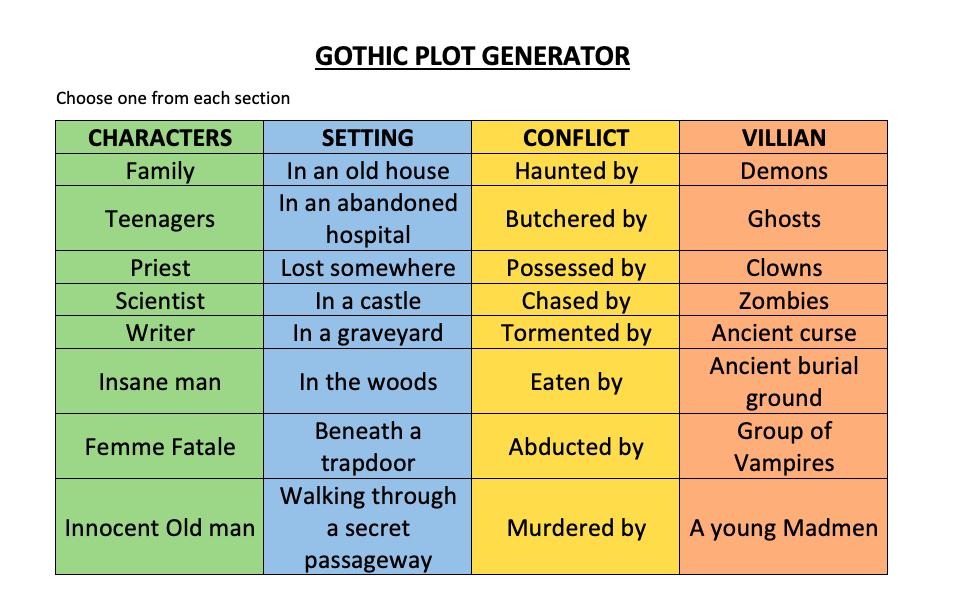
Pick "Priest" + "abandoned hospital" + "possessed by" + "clowns" and you have a pitch, not a session. The table already has a paladin who used Divine Sense, a Discord log where the innkeeper paid in church silver, and a player who will immediately test the new pressure. Players rarely enjoy a reveal that they were acting on misinformation for a dozen sessions. A usable roleplay conflict generator has to hold both shock and the facts already on the table.
This is exactly what Game Designer Assistant was built for.
Why Game Designer Assistant Works as a Conflict Engine
Treat this AI design partner as a specialist sitting behind the screen with you, not as a slot machine for villains. You feed it the world bible, who the party trusts, and the beat that currently has only one road out. It brainstorms incompatible goals, pressure that uses your existing cast, and documentation you can run without rewriting the campaign.
Meaningful choices pull at players because they force a look inward — loyalty versus gold, comfort versus a joke that lands wrong, the shipwreck you cannot undo. Those choices give the experience weight only when both results can contribute to the story. The gap is production. You need several canon-safe conflicts before the session, not one shocking sentence after it starts.
| Traditional Approach | Game Designer Assistant |
|---|---|
| Roll on a character / setting / villain table | Conflicts derived from your NPCs and last recap |
| Default to another combat when prep is thin | Social, political, informational, and violent pressure on demand |
| Shock first, continuity later | Wants, tells, and fallout that survive player interrogation |
| Choices that reconverge in the next room | Decisions tagged as rerouting vs. ending-defining |
| Hours of outlining after work | A playable beat you can run tonight |
Four conflict classes that actually play
A useful generator does not only shout "add conflict." It picks a lever. RPG design writing often sorts playable pressure into social tension, missing information, contests of skill, and violence — a practical menu when you are staring at a blank session slot.
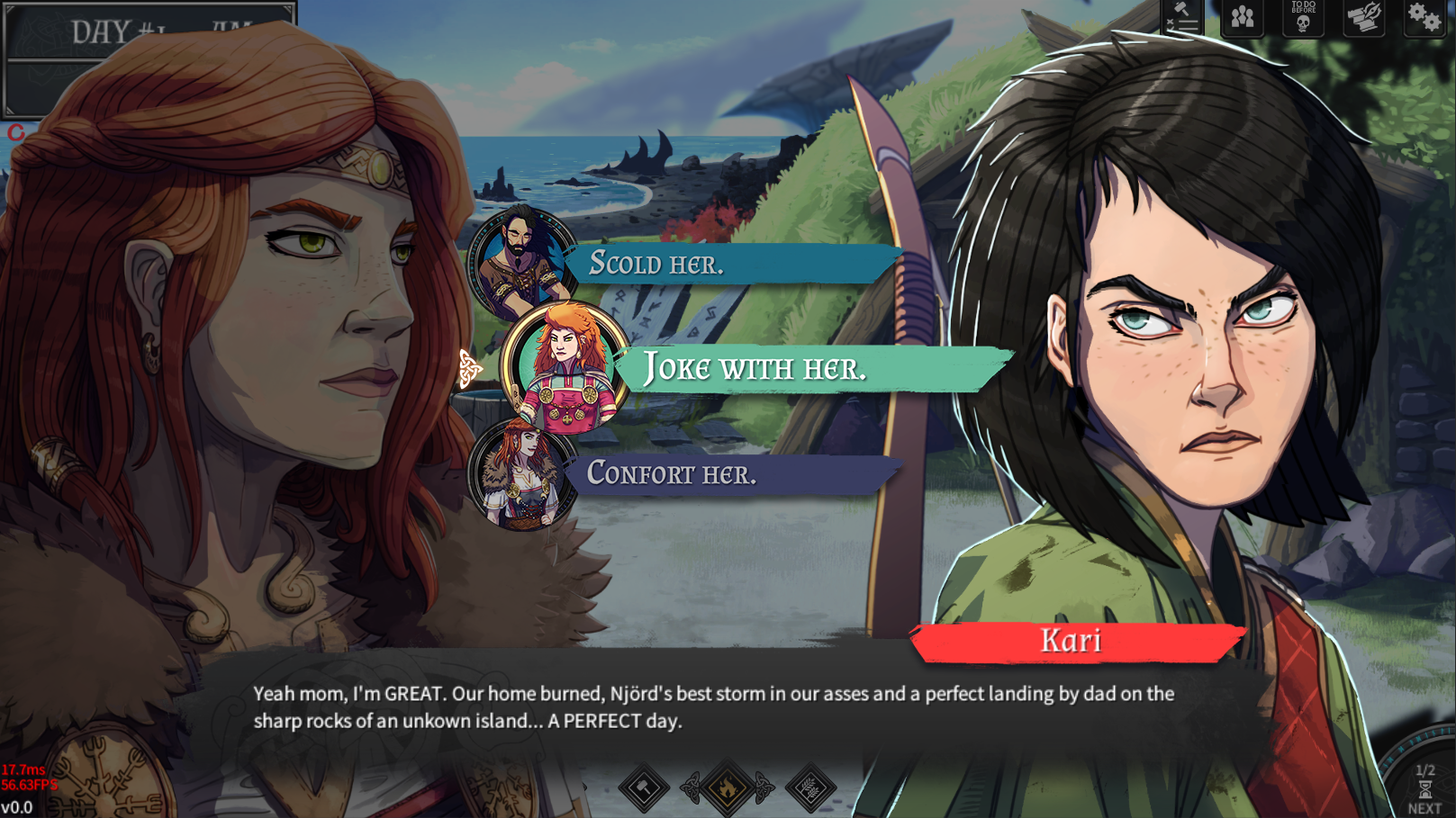
Social tension. Two people the party needs cannot both get what they want. The captain will sail at dawn. The healer will not leave the wounded. Comfort her, scold her, or joke — each line changes who boards. Social conflict dies if only the GM knows the misunderstanding; keep players in the loop and let characters struggle.
Missing information. The facts on the table are true and incomplete. The tax collector did pay the goblins. The question is which church minted the silver. Fun decision points stay meaningful, discernible, and open-ended: two doors, two rooms, clues on both forks — never "wrong, guess again."
Contests of skill. Use them when success and failure help the story. A locked ledger that explodes on a fumble is a brick wall. A ledger that opens on a success or smears a name on a failure is a scene.
Violence. Keep it when talking is exhausted or talking is the trap. The fight should still be a decision: who you protect, what you break, which witness leaves the room.
Internal conflict is a second engine
Character-driven design treats internal conflict as incompatible goals inside one PC. The oath versus the town. The cover identity versus the person who recognizes the scar. If one goal wins, the other bleeds. Ask the generator for that split on a specific character, then set stakes the way conflict-in-play notes recommend: who wants what, what happens if nobody moves, how the scene ends.
"Here's my campaign bible and last session recap. The party trusts Captain Rheme and Sister Veyra. Both need the last seaworthy ship. Give me four roleplay conflicts that use that shortage. Tag each as social, informational, skill, or violence, and list the choice the table cannot postpone."
"I run a slow-burn text RP. Chemistry is high. Stakes are air. Generate three interpersonal conflicts that keep the romance intact, ban amnesia and secret twins, and force a next-post decision."
"Stress-test this conflict: only one dose of antivenom. What would careful players already have noticed? What breaks if the ranger tracked the snake to the questgiver's cellar?"
When you need the confrontation written as dialogue rather than as a design brief, Writing Assistant can take the chosen pressure and turn it into a scene the other writer — or the table — can actually play.
Related Agents You'll Also Find Useful
If you are building a campaign, a serialized RP, or a branching game, these tools sit one step upstream or downstream of the conflict itself.
Roleplay Game Master
Once you have the stakes, you still have to run them — the look across the table, the NPC who will not yield, the reply that cannot be unsaid. This partner is built for immersive roleplay with persistent character consistency, so you can playtest a conflict before Thursday or run a solo rehearsal of the hard conversation.
- Holds NPC voice under pressure
- Lets you walk the three dialogue options before you put them in front of players
- Useful for text RP and oneshot stress-tests
Writing Assistant
A conflict brief is not yet a scene. This writing partner adapts to your format and voice — recap prose, Discord posts, or a boxed-text read-aloud — and will cut speeches that should have been behavior.
- Turns rival goals into a confrontation with an entrance, a turn, and a button
- Matches the tone of your existing logs
- Flags reveals that play better as a glance than as a monologue
Machiavelli Mentor
Political tables stall when every faction is "evil" and none of them have an invoice. This strategist maps power, incentives, and multi-move campaigns — the same work a GM does when two allies both need the ship.
- Decodes who benefits if the party does nothing
- Builds negotiation frames that are not "roll Persuasion or fight"
- Useful when the conflict is a vote, a ledger, or a succession
Try Game Designer Assistant free — no credit card required.
How to Generate Roleplay Conflict in Four Steps
Step 1: Dump the wants, not the vibe
Open your campaign design partner and paste the facts: who the party trusts, what each named NPC still needs, and the beat that currently has only one road out. Specificity is the whole product. "Make it tense" produces a storm. "Sister Veyra will not leave the wounded, and the tide leaves at dawn" produces a scene.
"Setting: coastal city-state. Last session the party saved Councilor Rheme from poisoning. They believe the vintner did it. I need a conflict that makes the poisoning true but puts two allies in each other's way. Do not contradict the leftover vial they already tested."
Step 2: Name the class you will allow
Tell it which pressure you will run — social, informational, skill, violence, internal — and which you will not. If your table is fight-fatigued, ban another skirmish. If divine magic has been reliable for eight sessions, "the gods were fake" is not a conflict; it is a retcon.
"Allow social and informational conflict only. Ban dream sequences, secret twins, and 'it was a simulation.' The paladin's player is invested in the oath being real. Give me incompatible goals, not a new monster."
Step 3: Demand a choice, not a mood
For every candidate, require three outputs: the sentence you can say at the table, the resource only one side can grant, and the decision it creates next. If the only fallout is "everyone gasps," discard it. Two doors should lead into two different rooms — and both results should be able to help the story.
"For each conflict, give me: 1) each party's want in one line, 2) what happens if the PCs delay, 3) three player moves and how the world answers each, 4) whether this reroutes the quest or defines the campaign ending."
Step 4: Stress-test against your smartest player
Ask what breaks. Divine Sense, a Speak with Dead from two weeks ago, a screenshot in the Discord RP, the map you already handed out. Then pick one conflict and write the first three lines of the scene. If you need the confrontation in finished prose, hand the brief to your writing partner before you print the handout.
Results & Use Cases
📊 Mid-campaign tabletop stall
Scenario: Your Saturday group has outmaneuvered the "bandit warlord" plot. They expect a siege. You have four hours and no siege.
Traditional Approach: Panic-skim a module, or stall with a tavern brawl that wastes a night.
Game Designer Assistant: You paste the recap. It offers a social-informational conflict: the warlord has been paying the "bandits" to keep trade on his road. The siege is optional. The real session is a ledger, a hostage who does not want rescue, and a vote at the table.
- Preserves player competence (they did beat the warlord's plan)
- Creates a political decision instead of another combat
- Gives you a rival who can survive and come back with better incentives
If the next scene is a negotiation rather than a speech, Machiavelli Mentor can sketch who actually collects if the party walks away.
💼 Long-running text roleplay
Scenario: A Discord romance RP has gone kind. Chemistry is high. Stakes are air.
Traditional Approach: A sudden betrayal that ignores six months of logs and blows up trust between writers.
This conflict generator: You constrain it — no amnesia, no secret twin, keep the romance intact. It returns an internal-plus-social bind: the city curfew is not a law, it is a binding. The love interest already walks at night because they are part of the lock. The conflict becomes "do we break the city to be free," not "I lied about my job."
- Respects the other writer's character
- Uses existing scenes as pressure, not as a gotcha
- Hands you a next-post hook instead of a rant
Pair the confrontation post with Roleplay Game Master if you want to rehearse the other character's replies before you hit send.
📱 Oneshot prep on a phone
Scenario: You agreed to run a two-hour survival oneshot tomorrow. You are on a train. You have a shipwreck, a mother, a daughter, and three first names.
Traditional Approach: Recycle the same haunted-house beats or cancel.
The design partner: Voice or type the constraint: one island, three NPCs, one conflict that recontextualizes the landing. It builds a social fork (scold her, joke with her, comfort her) plus a resource bind (the last dry tinder is in the wreck she does not want opened).
- Entire loop works on iOS and Android
- You leave the train with a choice menu and two wants
- Players get a complete story, not a half-dungeon
🎯 Branching game or visual novel
Scenario: You are prototyping a short VN. Every path currently dies in the same boss fight.
Traditional Approach: Duplicate scenes and change the flavor text. Players notice. Meaningful choice research keeps returning to downstream effects — a pick that does not change the world is decoration.
Game Designer Assistant: You ask for two defining branches and one fake branch to cut. It keeps the boss, changes why the boss cannot stand down, and tells you which player choice should lock the ending. Then you can draft the actual lines with your writing partner so the new information is a decision, not a wall of narration.
- Cuts wasted writing before you draw it
- Makes NG+ worth running
- Aligns with how interactive platforms now lean on AI to personalize branches
FAQ
What is a roleplay conflict generator?
A roleplay conflict generator is a tool that proposes playable pressure for tabletop games, text RP, and branching narratives — then shows how that pressure changes the next decision. Game Designer Assistant is built for that job: it reads your canon, offers social, informational, skill, violent, or internal conflict, and stress-tests the beat against what players already know so the scene feels earned.
Is Game Designer Assistant free?
Yes. You can use it on the free tier with no credit card. Paid plans raise monthly usage if you run long campaign bibles, many branches, or daily prep. Start on free, paste one recap, and see whether the first four conflicts are already better than another hallway fight.
Can this generate D&D, Pathfinder, and non-combat conflict?
Yes. System math is optional context, not a requirement. Paste the fiction — oaths, factions, what the party proved — and specify the rules that would contradict a beat (Divine Sense, a successful Insight check, a prophecy already read aloud). If you want pressure beyond combat, say so in the prompt and ban another skirmish. System-neutral text RP works the same way: logs in, constraints in, playable bind out.
How is this different from a gothic plot table or a generic chatbot?
A random table optimizes for a surprising combination. A generic chatbot optimizes for a surprising sentence. This specialist optimizes for a surprising structure. You get incompatible wants, a resource only one side can grant, and a choice that changes the next scene — not "priest, hospital, clowns." While a general model can list tropes, the writing partner and this design assistant stay in craft mode: setup, pressure, fallout, and the line an NPC can actually say.
Does a roleplay conflict generator work on mobile?
Yes. Full feature parity across web, iOS, and Android means you can generate a oneshot bind on a commute and run it the same night. Speech-to-text helps when your hands are full of minis or you are walking through the grocery store dictating last session's recap.
Will the conflicts stay consistent with my world's canon?
They stay consistent to the degree you paste canon and name the bans. The model cannot remember a binder you never uploaded. Attach the bible, list sacred facts ("the queen is dead and the party has the body"), and ask for a contradiction check. If the scene needs finished dialogue, generate that with your writing partner so the confrontation sounds like it belonged in last week's log.
Conclusion
Stale campaigns rarely lack villains. They lack conflicts that honor what the table has already proven. A roleplay conflict generator is only useful if it can set incompatible wants, survive interrogation, and force a new decision — the same standard branching stories use when two doors must lead into two different rooms.
Game Designer Assistant does that work with you: dump the wants, pick the class, demand a choice, cut the cheap heat. Use it for Thursday-night D&D, a Discord slow burn, a train-ride oneshot, or a visual novel that needs paths worth replaying.
Try Game Designer Assistant now. Explore more at Jenova.
For Developers: Game Designer Assistant is available programmatically via the Jenova API — integrate campaign-aware roleplay conflict generation into your application with a single API call. Full documentation →