Restaurant Management Simulator AI: Practice Kitchen Ops Risk-Free
2026-08-31
A restaurant management simulator AI lets you rehearse purchasing, menu costing, labor charts, and service recovery before a real ticket prints. Live kitchens punish every over-order and every understaffed Friday. In August 2026, Jenova gives owners, culinary students, and general managers a practical rehearsal loop: kitchen coaching, beverage program design, and business modeling you can run as often as the P&L demands.
- ✅ Rehearse purchasing, par levels, and food-cost calls before you cut a PO
- ✅ Stress-test menus, wine lists, and barista workflows with specialist coaches
- ✅ Model labor, cash flow, and marketing without hiring a consulting team
- ✅ Practice on web, iOS, or Android with the same conversation history
To understand why that loop matters, look at the gap between a trillion-dollar dining market and how little room most kitchens have to learn on the job. Food cost, turnover, and first-year mistakes still punish operators who only get one opening night.
Quick Answer: What Is Restaurant Management Simulator AI?
A restaurant management simulator AI is a training environment that recreates purchasing, menu engineering, labor, and service so operators can practice decisions without real food cost or guest risk. Culinary games, tabletops, and AI-facilitated roleplay all sit in this category.
Key capabilities:
- Inventory drills that force trade-offs among freshness, cash, and 86'd items
- Technique-first menu work with Master Chef Coach
- P&L, staffing, and opening-plan modeling with Business Co-Pilot
- Beverage, nutrition, and brand coaches that sit beside the kitchen — not in a separate app
The Problem: Why Most Operators Still Learn on Live Tickets
The U.S. restaurant industry is large enough to look stable from the outside. The National Restaurant Association projects nationwide sales of $1.55 trillion, with operators still adding jobs and investing in tools that raise productivity. That scale hides how thin the learning budget is inside a single four-wall P&L.
$1.55 trillion — Projected U.S. restaurant industry sales
Food is not a rounding error. The Association notes that food costs represent 28% to 35% of restaurant sales, and that preventing pre-consumer waste is one of the few levers that hits both margin and reputation.
**$8** — [Approximate cost savings restaurants can realize for every $1 invested in food-waste reduction](https://restaurant.org/education-and-resources/resource-library/working-to-reduce-food-waste/)
Labor is the other half of prime cost. Oracle NetSuite reports that 70% of operators have openings that are tough to fill, while 45% say they do not have enough employees to support demand. Full-service payrolls have still not fully recovered: as of mid-2026, full-service restaurant employment remained 183,000 jobs, or 3.2%, below pre-pandemic readings.
But practicing like a real operator is frustratingly difficult:
- Opening night is an expensive classroom — product, payroll, and reviews all land at once
- Walk-in waste and over-ordering quietly erase the food-cost target
- High turnover means the person you trained in March may not be on the line in June
- Cooking games teach atmosphere, not your recipes, vendor prices, or labor laws
- Consultants, culinary school, and one-off training days rarely fit a Tuesday prep list
Opening Night Is a Terrible Classroom
A new concept has to get the menu, the ticket time, the par sheet, and the guest promise right in the same week. There is no dress rehearsal that uses your actual recipes and your actual cash. Culinary students face a related gap: lectures explain costing, then the first live service punishes every missed yield. Research on restaurant startup training in virtual simulations found that learners do gain decision-making insight from simulated operations — and that they can tell the difference among theory, a virtual kitchen, and the real floor. The constraint is access. Most independent operators cannot stand up a custom metaverse or a consulting engagement before they sign a lease.
Food Cost Dies in the Walk-In
Commercial kitchens typically waste 4% to 10% of the food they purchase, often from spoilage, over-production, and weak tracking. In the U.S., about 84.3% of unused restaurant food is thrown away, with only a thin slice recycled or donated. The National Restaurant Association is blunt: tracking what you throw away can cut food costs 2% to 6%, and the work starts with inventory, production planning, and demand — not a motivational poster in the dish pit.
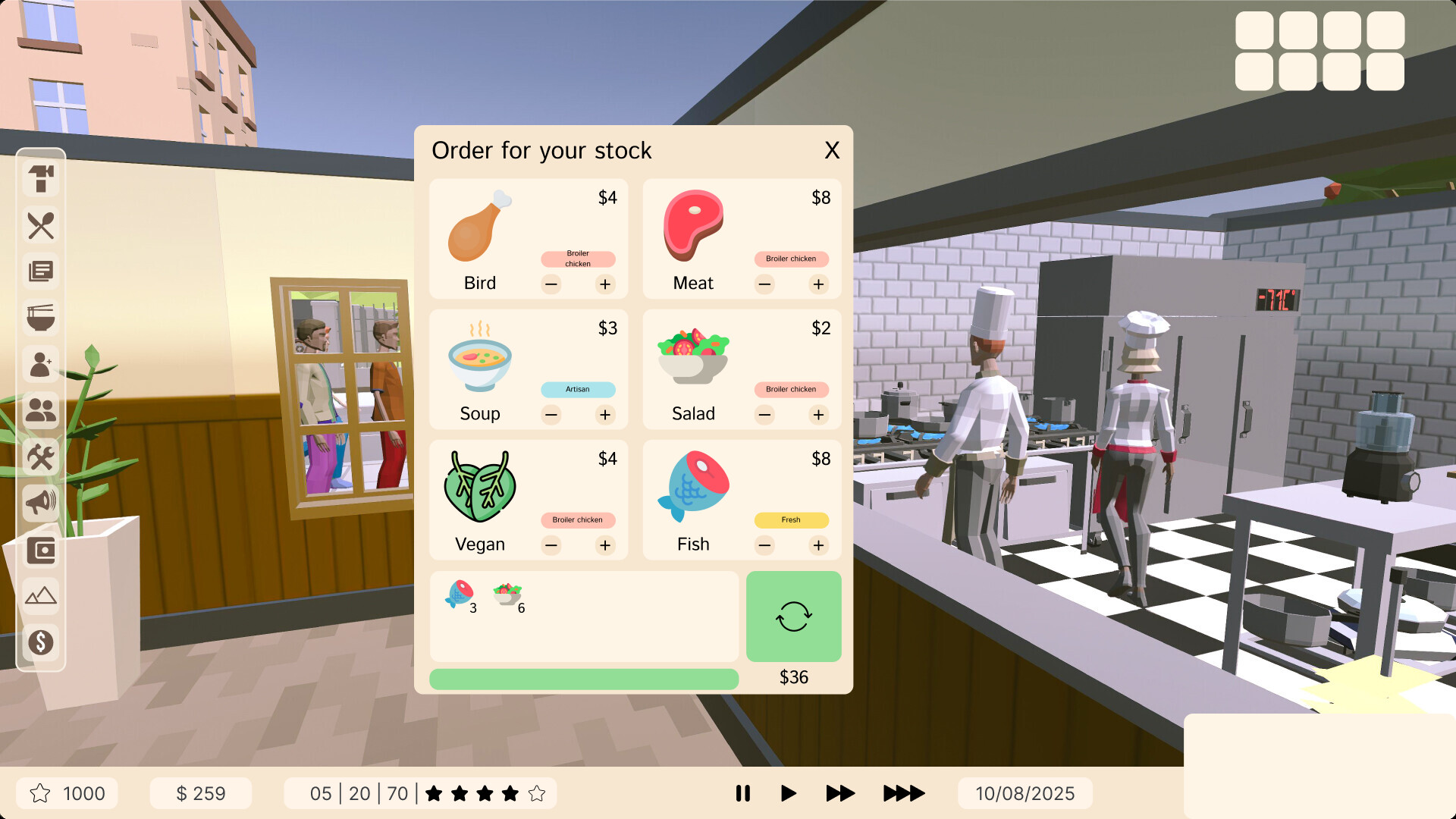
That is a simulation problem as much as a software problem. If a GM never rehearses a $36 stock order against a slow Tuesday, the first time they see the trade-off is when the fish is already in the pan.
Labor Is Scarce and Expensive to Train
When 70% of operators cannot fill seats on the schedule, training has to happen faster than a 12-week onboarding binder. New cooks still need knife work, station setup, and allergy protocols. New managers still need a floor plan for a 86'd protein, a no-show dishwasher, and a reviewer in the window. Live shadowing is the gold standard. It is also the method most kitchens can least afford to repeat when the person you trained leaves.
Nine in ten restaurants have fewer than 50 employees. That is not a team with a dedicated L&D department. It is a GM writing prep lists on a phone between lunch and dinner.
Video-Game Sims Stop at Atmosphere
Titles in the chef-life and restaurant-tycoon lane are useful for feel: ticket flow, station chaos, the satisfaction of a plated tart. They cannot ingest your recipe book, your local produce list, or last month's waste log. A National Restaurant Association primer on AI is clear about the real use cases — demand forecasting, inventory, menu planning, and staff support — and equally clear about the limit: models do not replace judgment, hospitality, or a manager who can read a room. A canned game is entertainment. A restaurant management simulator AI is only valuable if it argues with your numbers.
Consultants and Culinary School Don't Fit a Tuesday Shift
Serious help exists. Culinary programs, beverage certifications, and operations consultants all work. They are also slow, costly, and hard to pull into a 20-minute gap before doors. Operators told the Association they want technology that raises efficiency and guest connection without adding another system nobody opens. The missing piece is a rehearsal you can run between services, attach a recipe PDF to, and repeat when the menu changes.
This is exactly what Jenova was built for.
The Jenova Solution
Jenova is not a single canned restaurant game. It is a platform of expert agents you can assemble into a restaurant management simulator AI tailored to your concept, your recipes, and your constraints. You attach a menu and a vendor list, run the shift in conversation, then push the lessons into a prep sheet, a costing table, or a rewritten SOP — on a laptop or a phone.
| Traditional Approach | Jenova |
|---|---|
| Learn on live tickets and spoiled product | Rehearse POs, menus, and shifts before you spend |
| Culinary school or a multi-week consultant | Specialist coaches on demand, same thread |
| Fixed-recipe cooking game | Your recipes, your prices, your dietary rules |
| One training day per season | Repeatable drills after every menu change |
| FOH, BOH, and back office in separate tools | Kitchen, bar, finance, and marketing together |
Kitchen, Menu, and Production
Treat the drill like a working service, not a quiz. Master Chef Coach is technique-first: yields, doneness, sauce work, station flow, and the difference between a home cook's "fold in the cheese" and a line that has to fire eight covers. Pair it with Meal Planner when the problem is production — batching, prep calendars, and grocery logic that maps cleanly onto a restaurant par sheet.
Dietary constraints belong in the same rehearsal. Personal Nutritionist helps you specify allergen paths, calorie ranges, and menu language so a "vegan" or "gluten-free" card is an operational choice, not a last-minute 86.
"Here is my six-item opening menu and yesterday's $36 stock order. Rebuild the par sheet for 40 covers, flag what will spoil by Thursday, and tell me which dish I should 86 first if fish runs late."
Beverage Programs That Match the Kitchen
A restaurant is not only the pass. Bartender Coach covers cocktail specs, batching, and service tempo. Wine Connoisseur builds pairings and a by-the-glass list that does not fight the food cost. If coffee is a profit center — or a liability — Master Barista Coach drills extraction, milk technique, and equipment choices the way a serious cafe actually trains.
Those sessions are the FOH half of a restaurant management simulator AI: the same night the kitchen is firing salmon, the bar is batching a house spritz and the espresso bar is drowning in a 9 a.m. rush.
Numbers, Contracts, and the Opening Plan
Business Co-Pilot is the operations partner: financial modeling, staffing logic, vendor choices, and the ugly questions (prime cost, break-even covers, what happens if lunch never materializes). Personal Financial Advisor is the right seat when the decision is personal cash, debt, or whether the owner's savings should fund a build-out. For leases, vendor agreements, and "what does this clause actually say," Legal & Contract Advisor helps you read the document — it is research and explanation, not a law firm, and it will not replace counsel at signing.
Brand, Hiring, and the Guest Promise
Marketing Strategist turns a concept into a channel plan: who the guest is, what the first 90 days of awareness should cost, and which offers actually fill Tuesday. Name Generator and Graphic Designer sit at the front of that work when you still need a name, a plate photo style, and a menu layout that cooks can read under heat lamps.
Hiring is its own simulation. Interview Coach runs mock interviews for sous chefs, floor managers, and bar leads so you stop hiring on vibe and start hiring on scenarios — a 86'd protein, a complaint at table 12, a no-show on Saturday.
Specialized AI Agents for Restaurant Management Simulation
The agents below are the ones an operator, culinary student, or beverage lead would plausibly open within a month of deciding to rehearse a concept instead of gambling on opening week.
Master Chef Coach
If you need a kitchen rehearsal this week, start here. The coach is built for technique, timing, and craft across traditions — useful whether you are writing a tasting menu or tightening a three-item lunch.
- Station-level guidance (yields, doneness, sauce, plating) instead of generic "cook until done"
- Menu critiques that name cost, ticket time, and skill gap — not just flavor
- Persistent memory so yesterday's over-reduced jus still matters in today's specials meeting
Business Co-Pilot
Use this when the output is a business, not a recipe. Opening plans, labor models, and "can this concept survive a 10% food-cost miss" belong here.
- Financial modeling and operating plans you can argue with, not a static template
- Vendor, staffing, and compliance questions in the same thread as the menu
- A chief-of-staff posture: it will push back when the covers assumption is fantasy
Meal Planner
Production is where food cost is won. This agent turns covers, dietary rules, and a budget into prep calendars and shopping lists — the civilian version of a restaurant prep sheet, and a strong starting point for par levels.
- Batching and leftover logic that maps onto specials and family meal
- Grocery lists you can drop into a vendor order
- Household-to-restaurant translation: same discipline, bigger volume
Bartender Coach
If alcohol is more than an afterthought, simulate the bar as a station. Specs, batching, garnish mise, and service sequence are trainable — and cheaper to fail in chat than on a Friday night.
- Menu engineering for cocktails that do not fight kitchen ticket times
- Technique and tool guidance for a build-out or a pop-up bar
- Service recovery scripts when a drink comes back
Marketing Strategist
A full dining room is an operations problem and a demand problem. This agent is the CMO seat: positioning, channel mix, and a 90-day plan that matches a small independent budget.
- Guest persona work tied to actual menu and price
- Launch and slow-night tactics that do not depend on a national media buy
- Research-backed planning instead of posting specials into the void
Interview Coach
Turnover makes every hire expensive. Run the interview as a scenario test before you hand someone the keys to the walk-in.
- Behavioral and situational mocks for BOH, FOH, and salaried leads
- Scorecards you can reuse across a hiring weekend
- Honest feedback on whether your questions actually predict the job
Try Jenova free — no credit card required.
How It Works
Step 1: Scope the Concept, the Constraints, and the Score Name the restaurant, the service style, and what "good" looks like. Attach a draft menu, a vendor price list, or last week's waste notes so the simulator argues with your documents rather than a generic bistro.
"I am opening a 40-seat coastal cafe. Food-cost target 30%, two cooks, one barista. Here is my six-item menu. Score me on waste and ticket time, not Instagram plating."
Step 2: Build the Inventory and Production Plan Ask Meal Planner for a week of prep that matches covers and shelf life. Push the result into CSV Generator if you want a par sheet you can open in a spreadsheet. Challenge every line that will not survive Thursday.
"Convert this prep plan into a par sheet with unit cost, order quantity, and a spoilage flag. Assume fish is $8/unit and salad $2/unit, cash on hand $259."
Step 3: Run Service in Role Open Master Chef Coach for the line, Bartender Coach or Master Barista Coach for FOH beverage, and play one role at a time. Require closed-loop calls. Pause only to capture decisions, not to debate theory.
"I am the expo. It is Saturday 7:40. You are sauté, grill, and the floor manager. Two salmon 86, a vegan table of four just sat, and a reviewer is at 12. Do not give me omniscient information my stations would not have."
Step 4: Cost, Staff, and Rewrite the Plan Hand the same night to Business Co-Pilot. Demand a hotwash: food cost vs. target, labor hours vs. covers, which dish to drop, which hire to make. Rewrite the SOP while the failures are still visible.
"Write an after-action on tonight. Flag every 86, every overtime hour, and every menu item whose contribution margin cannot survive a 5% vendor increase."
Step 5: Raise the Difficulty and Repeat Rerun the same service with a no-show, a produce short, or a gluten-free surge. Frequency beats spectacle. Simulation-based restaurant training research is useful here: people learn from the gap between the plan and the virtual floor. Your job is to close that gap before guests do it for you.
Results & Use Cases
🧾 First-Restaurant Concept Test
- Scenario: A chef-owner has a six-item seafood-and-vegetable menu, a tight cash position, and a lease decision in three weeks. They need to know whether the concept survives 40 covers, not whether the tart photographs well.
- Traditional Approach: Soft-open on real product and hope the food cost lands; or pay a consultant for a static pro forma.
- Jenova: Run purchasing and service in Master Chef Coach, then pressure-test break-even with Business Co-Pilot. Name the room with Name Generator if the brand is still a placeholder.
- Fail on paper before you fail on protein
- Leaves a written par sheet and a labor assumption you can take to a lender
- Keeps culinary craft and P&L in the same week of work
📦 Inventory Night Without the Dumpster
- Scenario: A GM has $259 in the till, a $36 draft order (bird, meat, soup, salad, vegan, fish), and a history of throwing away unused product — the pattern Fourth documents across U.S. restaurants.
- Traditional Approach: Order "what we always order," then compost the rest. The Association's own guidance says measurement has to come first.
- Jenova: Rehearse the PO against covers and shelf life with Meal Planner, export a tracking sheet with CSV Generator, and only then cut the real order.
- Makes the 4–10% waste band visible before the truck arrives
- Connects culinary preference ("fresh fish") to cash
- Produces a repeatable Tuesday checklist, not a one-off lecture
🍽️ Menu Engineering and Culinary Drills
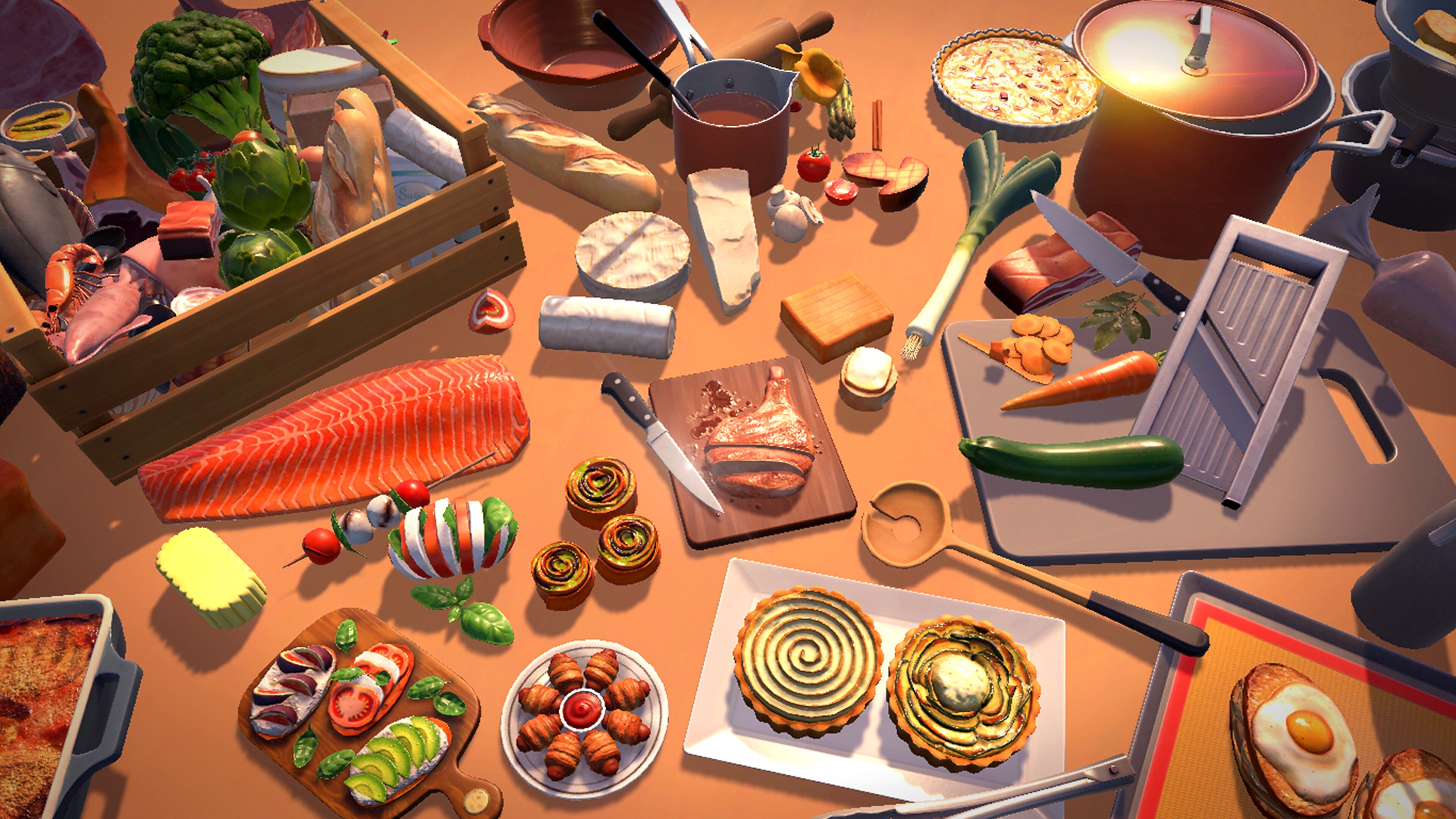
- Scenario: A culinary student or sous chef must turn a board of salmon, produce, pastry, and proteins into a four-course that a two-person line can actually fire.
- Traditional Approach: School kitchen once a week, or YouTube plating with no costing.
- Jenova: Master Chef Coach for technique and ticket time; Personal Nutritionist for allergen and dietary cards; Wine Connoisseur for a pairing list that does not inflate pour cost.
- Trains craft and cost in the same pass
- Surfaces dishes that look beautiful and die on a Saturday board
- Builds language for pre-shift that the floor can actually use
📱 GM Running a Shift From a Phone
- Scenario: The general manager is off-site — prepping a second location, stuck in traffic, covering a child's game — when the Saturday board breaks. They need a 15-minute tabletop with the expo, the bar, and a guest-facing message.
- Traditional Approach: Wait until the post-shift debrief, after the one-star review is already live.
- Jenova: On iOS or Android, run a compressed drill. Pull a guest note from Email Writer, a hiring screen from Interview Coach if the no-show is becoming a pattern, and a slow-night offer from Marketing Strategist.
- Same memory and documents as the desktop session
- Usable in a car, a hotel, or the alley behind the dumpster
- Produces talking points the floor manager can read aloud immediately
Examining these patterns shows a consistent result: the teams that improve are the ones that drill the handoffs — prep to line, line to bar, bar to P&L — not only the recipes.
FAQ
What is restaurant management simulator AI?
Restaurant management simulator AI is a structured rehearsal of restaurant work — purchasing, prep, service, beverage, labor, and guest recovery — in which you make timed decisions, spend limited cash, and see consequences without wasting product or burning a real review. Formats include cooking video games, classroom simulations, and AI-facilitated coaching on Jenova. The useful output is a better par sheet and a calmer Saturday, not a high score.
Is Jenova free to use for restaurant drills?
Yes. Jenova offers a free tier with core features and limited usage, plus paid tiers if you run longer or more frequent simulations. You can attach a short menu, complete a purchasing drill, and rewrite a prep list without a credit card. Multi-hour opening plans or large recipe decks may need a higher usage tier.
How is this different from a restaurant video game?
A chef-life or tycoon game teaches atmosphere, timing, and the feeling of a pass. A restaurant management simulator AI on Jenova uses your recipes, your prices, and your constraints. The Association's AI overview puts the practical work in forecasting, inventory, and menu planning — and notes that models still lack human judgment. Use a game for fun. Use Jenova when the next mistake costs salmon.
Can I run a restaurant management simulator on my phone?
Yes. Jenova is built for web, iOS, and Android with synced history, so a GM can run injects from a phone and pick up the same thread on a laptop in the office. Voice input helps when your hands are full. It is a rehearsal tool, not a POS, inventory system, or health-department log, and it should never replace those records.
Can this replace culinary school, food-handler certification, or restaurant software?
No. Jenova does not confer a degree, a food-handler card, alcohol service certification, or health-department approval. It does not ring in tickets or count the walk-in. Treat it as a rehearsal and design environment. Formal programs, live stages, and your POS remain the standard for operational competence. The honest use is to arrive at those tools already fluent in your own plan.
Can Master Chef Coach design a menu my kitchen can actually fire?
Master Chef Coach is built to teach technique and critique menus against craft — yields, timing, and station skill. It gets more accurate when you attach recipes, equipment, and headcount. It will not magically know your local vendor's salmon price unless you provide it. Pair it with Business Co-Pilot for costing and Meal Planner for production so the menu that tastes good also survives a 40-cover Saturday.
Conclusion
Restaurant margins still leave almost no room to learn on live product. A restaurant management simulator AI closes part of that gap by letting operators rehearse purchasing, menus, labor, and service until the plan is muscle memory — then rewrite the plan while the failures are still cheap.
Jenova puts that loop in one place: kitchen coaching, beverage programs, opening-plan math, and hiring drills you can run between services. Start with a single stock order. Attach the real menu. Raise the difficulty on the next run.
Try Master Chef Coach for the next menu meeting, pressure-test the P&L with Business Co-Pilot, and lock production with Meal Planner. Explore the full agent library at Jenova.
For Developers: Every agent in this article is available programmatically via the Jenova API — build AI-powered kitchen drills, inventory coaches, or custom restaurant simulators into your application with a single integration. Full documentation →