Relationship Meter Simulator: AI Romance Without Heart Meters
2026-09-01
Love Island helps you simulate a living relationship by putting every flirt, slight, and recoupling in your hands. While a typical relationship meter simulator reduces chemistry to a heart bar and a 60/100 score, this AI runs an open-world island romance — eight singles, shared villas, and consequences that persist because someone in the house actually heard you. In September 2026, players still hunt for a relationship meter simulator because they want to watch a bond move. They just should not have to grind gifts to make it happen.
- ✅ Chemistry that shows up in dialogue and alliances, not a floating +3
- ✅ Characters who remember last night — and use it
- ✅ Playable on web, iOS, and Android with the same story state
- ✅ Free to start, no credit card required
To understand why the meter became the default — and why it frustrates the people who love the genre most — it helps to look at how dating sims quantify affection, what attachment research says players actually want, and what a simulator can do when it stops treating people like stats.
Quick Answer: What Is a Relationship Meter Simulator?
A relationship meter simulator is an interactive romance system that tracks affection as a score, then unlocks scenes, routes, and endings when that number crosses a threshold. The fantasy is courtship. The interface is a progress bar.
Key capabilities:
- A visible affection, heart, or affinity bar that rises and falls with gifts and dialogue
- Branching scenes gated by score thresholds instead of lived history
- Multiple love interests treated as parallel meters to max
- Love Island as the other design: the same social simulation, without the spreadsheet
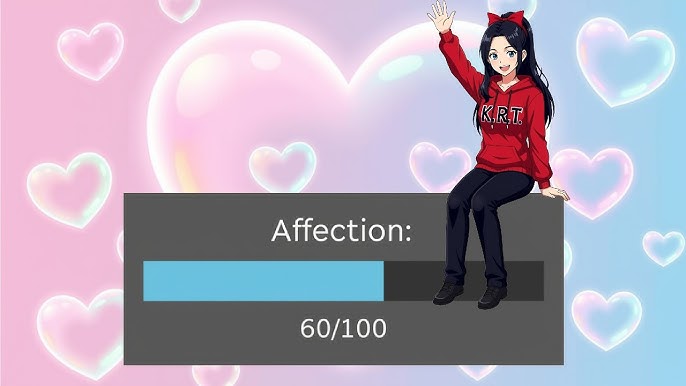
Why Relationship Meter Simulators Flatten Chemistry
Interactive fiction is no longer a side format. Industry analysis valued the [**interactive fiction market at $6.4 billion in 2025**](https://dataintelo.com/report/interactive-fiction-market), with a path toward $14.8 billion by 2034. Romance and dating-sim loops sit inside that demand: players want a bond they can affect, replay, and feel.
1.4 billion users — engaged with some form of interactive narrative content in 2025
That appetite is emotional, not mechanical. Research on female-oriented dating sims found that game exposure related to avatar identification, parasocial relationships, and romantic beliefs. A Trinity College Dublin dissertation on the genre treats dating sims as an avenue for emotional attachment, not just scene collection. When a game romance ends, coverage of the research notes that players can grieve bonds that felt stronger than film or TV attachments.
But accessing that feeling inside a typical relationship meter simulator is still frustratingly difficult:
- Affection displayed as 60/100 instead of a change in how someone speaks
- Gifts and “correct” lines that farm points rather than character
- Routes that lock once a bar is full
- Companions who forget yesterday’s fight when the chapter resets
The heart bar is readable — and dishonest
A meter is good UI. You always know where you stand. That is also why it breaks the fantasy. Courtship is not a loading bar. You do not fall for someone because a UI ticked from 59 to 62. You fall because they remembered a throwaway comment, took a risk, or refused you in public.
Visual novels and life sims often stack more bars beside the romance one — health, sanity, stamina — until the person on screen is a dashboard.
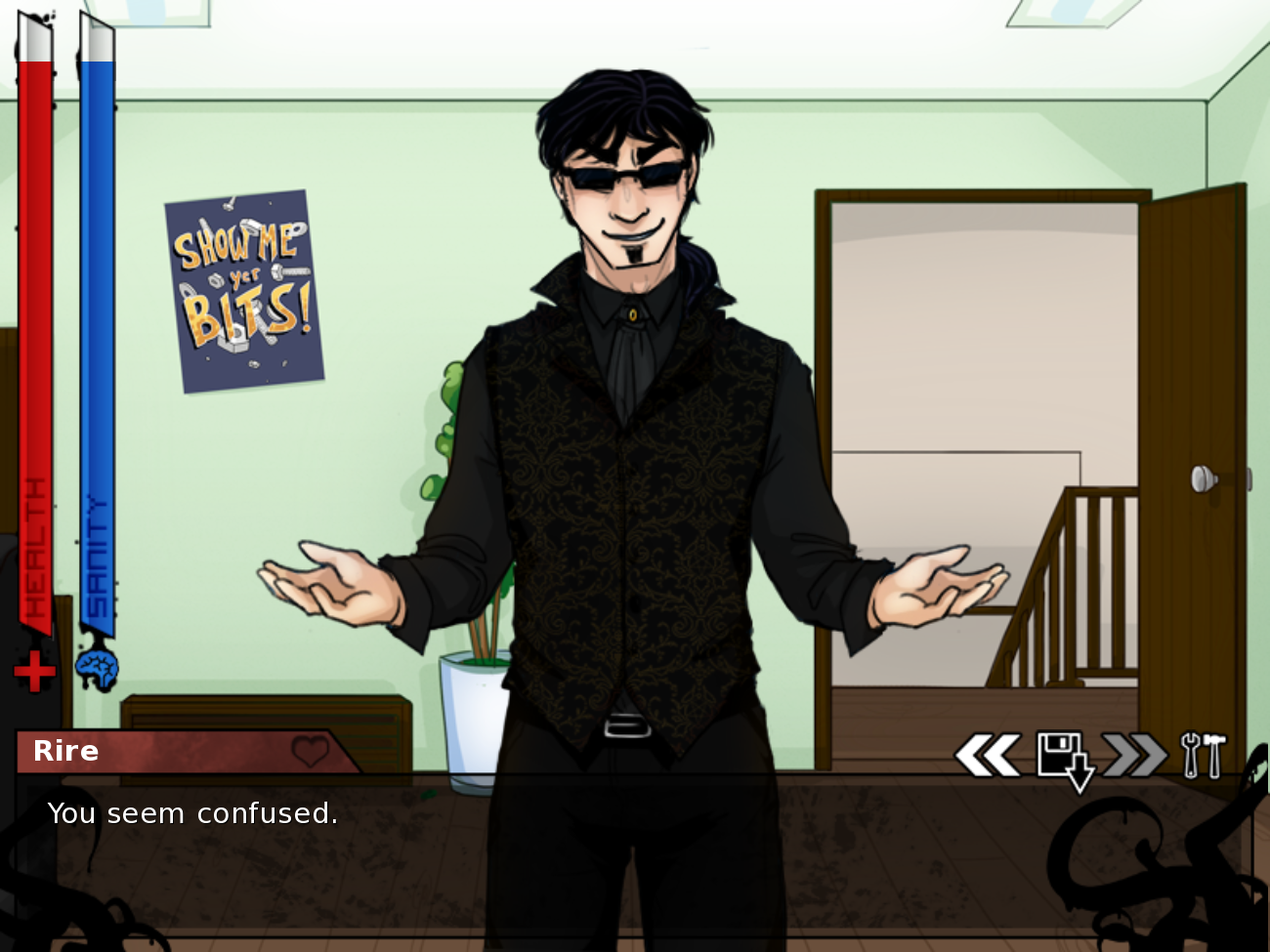
Relationship-building systems are common in RPGs for a reason: parties, gifts, and dialogue checks are easy to code and easy to teach. Designers reach for them because they are legible. Legible is not the same as intimate.
Grinding intimacy like a craft skill
Once affection is a number, play becomes optimization. Bring the favorite snack. Tap the line with the heart icon. Avoid the joke that costs five points. A study of parasocial romance in dating sims found that players high in romantic loneliness form stronger attachments to in-game love interests. Those players did not show up to min-max a bar. The bar is what the software had to offer.
Thresholds that punish curiosity
Most relationship meter simulators treat the score as a gate. Cross 80 and you get the confession. Fall below 40 and a route dies. Curiosity becomes expensive: one honest answer can close a whole person. Replay is “pick the other meter,” not “watch the house rearrange because you told the truth at 2 a.m.”
Memory that resets with the chapter
Attachment only holds if the other person can recall the slight and the kindness. A companion who cannot remember last night’s fight cannot carry a bond, no matter how full the heart meter looks. Academic work on romantic game mechanics has even argued that poorly designed romance systems can work against player well-being when the fiction of care is thinner than the interface that sells it.
This is exactly what Love Island was built for.
Why Love Island
Love Island is an open-world island romance: eight single people, shared villas and beach days, and social dynamics that emerge from what you actually say. Connections and rejections unfold from your choices rather than from a hidden affinity table. You are not filling a heart meter. You are living inside a small, watchful group that will couple, gossip, and freeze you out.
| Traditional Relationship Meter Simulator | Love Island |
|---|---|
| Visible affection bar (60/100) and +3 popups | Chemistry carried in dialogue, alliances, and memory |
| Gifts and “correct” lines farm a score | What you type changes who trusts you |
| Routes lock when a threshold is hit | Eight personalities, overlapping crushes, public fallout |
| Companions reset between chapters | Persistent history — they remember the slight and the kindness |
| Intimacy gated by a number | Intimacy gated by what you did in front of other people |
Eight people, not one filling bar
The cast is small on purpose. Eight attractive strangers on a private island is enough for triangles, secret deals, and public recoupling — and small enough that every remark has a witness. Ignore someone for three days and the villa notices. Flirt in front of a partner and you do not get a fade-to-black; you get a conversation. That is a relationship simulation. It just refuses to print the score.
Emergent social physics instead of a points farm
Testing this kind of play reveals a different rhythm than a classic otome route. You are not maximizing a bar. You are managing attention, loyalty, and reputation in a group that talks when you are not in the room. Industry reporting on interactive fiction notes that AI narrative engines are already moving past static menus toward conversational storytelling. The island is built for that shift: open language in, social fallout out.
Memory that makes a second run a different house
Because the island keeps your history, a replay is not a checklist of missed affection scenes. It is a different social experiment: stay loyal; play two people; tell the truth at the bonfire; say nothing. The same eight names produce a different house. That is what a relationship meter was always trying, poorly, to represent — state that changes because of you.
Try prompts like these when you arrive:
"I just walked into the villa. Don't show me a score. Give me a read on everyone — who is already pairing off, who looks bored, and who would notice if I sat next to them tonight."
"I want to pursue someone quietly. Help me build trust without making it a public coupling yet — and tell me who is already watching."
"Last night I shut down a flirt in front of the group. Tonight that person is cold. Talk me through the fallout and what I can still salvage. No heart meter. Just the room."
Related Agents You'll Also Find Useful
If the island is your main stage, these stories and tools sit next to it in a normal week of play.
College Life
Campus romance with the same choice-first logic, stretched across classes, housemates, and weekend parties. Friendships, heartbreak, and hookups all unfold from what you do — useful when you want a longer social map than a single villa, still without a heart-point counter.
- Emergent friendships and rivalries, not a single “best girl” meter
- Heartbreak and repair as playable outcomes
- A setting that supports slow burns across a term, not one recoupling ceremony
Vesper Court
If your relationship meter simulator taste runs darker — secret courts, forbidden desire, nights that rewrite the political map — this is the adjacent fantasy. A woman wakes in a hidden vampire court with no memory of why she is there. Every night changes the board.
- Dark romance mixed with court intrigue
- Desire that has political cost, not just a love-ending
- Memory-loss setup that makes every alliance feel provisional
Personality Analyzer
Plenty of players bounce from a simulated bond to questions about their own patterns. This is the psychologist in the next tab: Big Five, MBTI, Enneagram, and attachment theory synthesized so you can name what you keep repeating — in the villa and off it.
- Integrative read across major personality systems
- Language for attachment and conflict, not a compatibility score out of 100
- Useful when a playthrough made a real habit visible
Try Love Island free — no credit card required.
How a Relationship Meter Simulator Should Work
Step 1: Walk in with an intention, not a target score Open the island and decide what kind of player you are tonight: loyal, chaotic, slow-burn, or here for the social puzzle. A clear intention gives the first conversations something to bite on. A target number does not.
"Play me as someone who hates public grand gestures. I want a slow private connection, and I will walk away from anyone who turns us into a show."
Step 2: Talk like a person, not a menu Skip the multiple-choice politeness tree. Say the awkward thing. Ask who they were before the island. Disagree. The engine is built for language, not for tapping the option with a heart icon.
"I am sitting with two people who both think I am interested. I want to be honest with one and kind to the other. Write the conversation and the fallout in the group."
Step 3: Let the house react, then push or repair After a coupling, a slight, or a secret, ask what changed. Who is colder. Who is newly allied. Who will use the story against you tomorrow. That reaction is the meter — it just lives in people instead of a bar.
"We recoupled last night. This morning the villa is tense. Show me the breakfast table — who is performing happiness, who is done, and what happens if I address it."
Step 4: Replay with a different ethic Start again with the same eight people and a new rule: no lying, or only lying, or pursuing the person you ignored last time. Persistent memory makes each run a different house, not a different skin on the same affection route.
"New run. Same villa. This time I am loyal to the first person who is decent to me, even if a more dramatic option appears. Keep me honest when I start to drift."
Results & Use Cases
📊 The replayable villa
- Scenario: You finished a dating sim in two nights, maxed every heart meter, and already know every CG. You want a relationship meter simulator that still surprises you on run three.
- Traditional Approach: Replay the same chapters, farm the other love interest’s bar, and watch the scoreboard.
- Love Island: Same eight people, new social physics. A different opening conversation produces a different pairing map by night three.
- You spend time on people, not on unlocking galleries
- Endings come from reputation, not from a hidden score threshold
- Replay value sits in behavior, not in DLC
💼 Campus after the island
- Scenario: You like choice-driven romance but want classes, housemates, and a slower calendar than a televised recoupling format.
- Traditional Approach: Switch to a college visual novel with four club meters and a credits-roll confession.
- College Life: Open-world campus social play — friendships and heartbreak emerge from the week you actually lived, not from a route select screen.
- Fits players who want more locations and roles than a single villa
- Lets platonic bonds matter as much as romance
- Pairs naturally with an island run when you want a change of social scale
📱 A full episode on the train
- Scenario: You have a 35-minute commute and a phone. You want a complete social scene — not a 90-second timed choice with a skip button and a heart icon.
- Traditional Approach: Tap through a chapter, hit a premium gate on the confession, and close the app mid-bar-fill.
- Love Island: Full feature parity on iOS and Android. Dictate or type a conversation, ride the fallout, and pick it up on desktop later with the same memory.
- No “wait for lives” loop to finish a fight
- Voice-to-text works when your hands are full
- The villa is in the same state when you open a laptop at home
🎯 Dark romance as a palate cleanser
- Scenario: The island is too sunny. You want a relationship simulation where desire is dangerous and every night has court consequences — still no affection spreadsheet.
- Traditional Approach: A fantasy book with one locked supernatural love interest and a predetermined betrayal.
- Vesper Court: Amnesia, a hidden vampire court, and forbidden desire — your alliances rewrite the night.
- Useful when you want stakes beyond a recoupling ceremony
- Keeps the “my choices matter” muscle without the reality-TV frame
- Complements lighter island runs instead of replacing them
FAQ
What is a relationship meter simulator?
A relationship meter simulator is an interactive romance where affection is tracked as a score and content unlocks when that score crosses a line. Dialogue, gifts, and dates feed the number. Some titles print the bar; others hide it and still use the same math. An open-world island romance keeps the simulation — who trusts you, who leaves, how the plot ends — and drops the scoreboard. If a different set of choices would have produced a different pairing map, you are still playing one.
Is Love Island free to play?
Yes. You can start on the free tier with no credit card. Paid plans increase usage if you run long sessions or many parallel stories, but the island itself is not locked behind a “diamond choice” for the confession scene. If you are comparing cost to mobile dating sims that charge per premium option, the difference is structural: you are not buying the kiss, and you are not paying to fill a heart meter.
How is this different from dating sims with affection bars?
Classic dating sims and visual novels are authored routes: strong production, preset branches, a meter that tells you when you have won. Love Island is closer to a social sandbox. There is no chapter list to complete and no 60/100 bar to max. The eight people respond to the conversation you are having now, and they keep that history. If you want a library of finished books with visible affinity, a chapter app still fits. If you want a house that argues back, this is the other design.
Can I see a relationship score?
Not as a 0–100 widget. Ask what changed instead: who is colder this morning, who is newly allied, who will use last night against you. That read is more honest than a heart icon, and it is the information a meter was always approximating. If you want a language for your own patterns after a run, Personality Analyzer is built for that conversation — attachment, conflict style, and the habits a playthrough made obvious.
Does a relationship meter simulator like this work on mobile?
It does. Web, iOS, and Android share the same story state, so a commute session continues on a laptop. Speech-to-text is available when you would rather talk than type. There is no separate “mobile lite” plot and no energy system that pauses a fight mid-sentence.
Will the characters feel consistent, or do they reset?
They are written to stay in character and to remember what you did. Dating-sim research keeps returning to the same point: attachment is why people come back. If a companion contradicted last night’s fight, the fantasy would collapse. Ask them what they remember. If the details are wrong, correct them in the next line — the history is yours to keep tight.
Simulate the Relationship, Not the Score
Most relationship meter simulators sell chemistry and then hand you a bar, a gift grind, and three endings. The appetite underneath those apps is older and simpler: you want someone in the story to notice what you did, and you want the house to change because of it.
Love Island is that design taken seriously — eight people, one island, and a social graph that does not reset when you close the tab. If you want a campus instead of a villa, College Life extends the same choice-first romance. If you want the night to be dangerous, Vesper Court is waiting.
Try Love Island now. Explore more at Jenova.
For Developers: Love Island is available programmatically via the Jenova API — integrate branching romance simulation into your application with a single API call. Full documentation →