Procedural Story Game AI: Coherent Beats From Living Worlds
2026-09-09
Roleplay Game Master helps you play a procedural story game by generating scenes, NPCs, and consequences that remember every choice you already made. While most generated worlds produce terrain and random events without a spine, this AI keeps character consistency, unpaid plot beats, and world state in one living record. In September 2026, players still want worlds that were not fully authored in advance—and they still bounce when the story forgets who they are.
✅ Unlimited session memory so NPCs, debts, and secrets do not reset ✅ Plot-beat tracking toward a climax, not a pile of random encounters ✅ Character consistency across long campaigns and branching choices ✅ The same world state on web, iPhone, and Android
To understand why that memory matters, look at what procedural generation actually produces—and what it quietly refuses to promise.
Quick Answer: What Is a Procedural Story Game?
Roleplay Game Master is an AI procedural story game that generates scenes, characters, and consequences while tracking plot beats and world state so the story stays coherent. It treats emergence as play, not as an excuse for a climax that was never earned.
Key capabilities:
- World and scene generation from a seed, genre, and opening situation
- Living beat logs so Plot Beat A, Plot Beat B, and the climax stay in causal order
- Character-state memory: knowledge, alliances, wounds, and unpaid promises
- Continuity checks before the next scene, not after a campaign collapses
Why Procedural Story Games Fall Apart Mid-Play
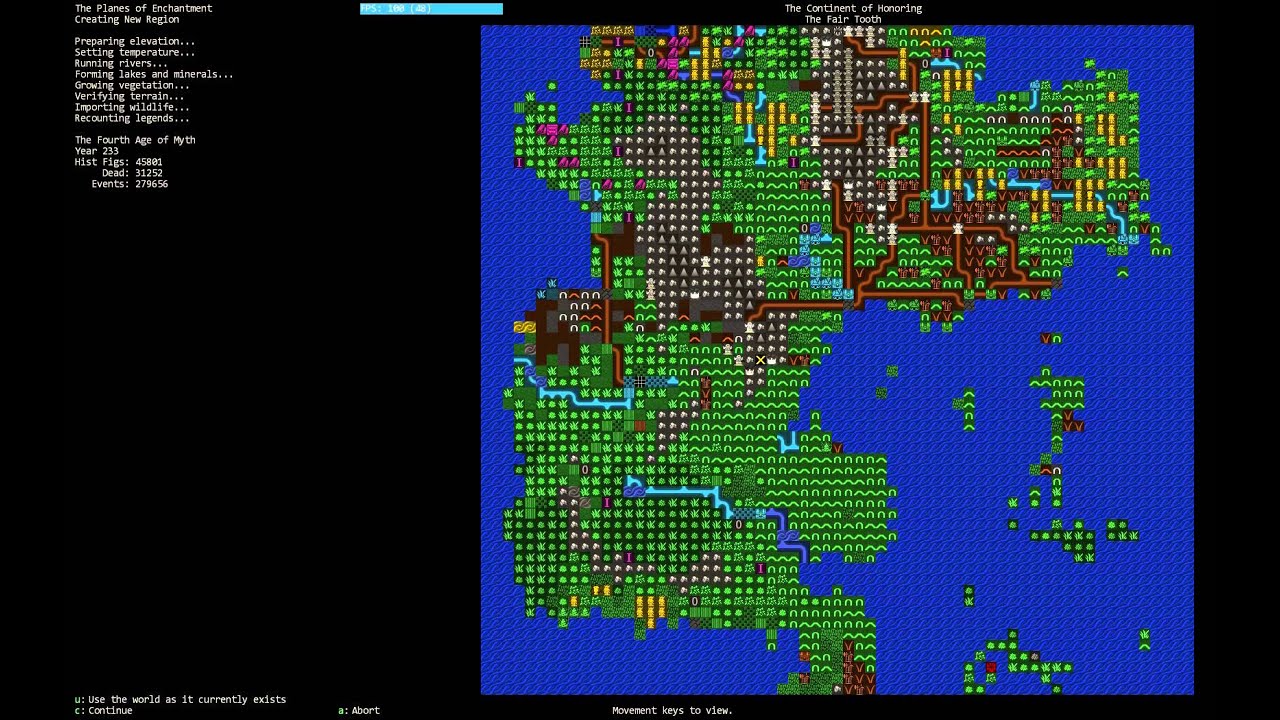
A generated continent can look finished and still have no story. Elevation, rivers, biomes, and wildlife are solvable as systems. Meaning is not. Players hunt for emergent narrative—the unexpected arc that appears when systems and choices collide—yet most generators only emit events. They do not know which event is still a setup, which is a turn, and which is illegally spending the ending.
That gap is a craft problem, not a graphics problem. Procedural storytelling is supposed to make narrative react to decisions. In practice, the output is often local fluency: a vivid tavern, a new quest-giver, a forgotten companion. Game writers still struggle to make stories as interactive as the systems around them, and systems design and narrative design remain in conflict on too many projects.
Research on generated levels makes the coherence failure measurable. When emotional rise-and-fall structure is omitted, players get content. When it is embedded, they get a story they can feel.
81.25% — Players who correctly identified an emotional-arc condition in procedurally generated game levels
Six fundamental emotional arcs — Rise and Fall patterns that large-scale fiction analysis keeps finding, and that generated games rarely enforce
Cost of hand-building every level — Procedural generation exists because manual content is expensive in money, time, and labor
But turning generation into a playable procedural story game is still frustratingly difficult:
- Worlds simulate history without stacking beats toward a climax
- NPCs improvise dialogue that contradicts last session’s facts
- Designers get volume; players get noise
- Replayability rises while theme and obligation disappear
Worlds That Generate Everything Except Obligation
Simulation-style world generation can recount legends after the fact. That is not the same as a campaign that still owes you Debate, Midpoint, or a poisoned river you planted in session two. Narrative and gameplay have to share verbs, quest structure, and environmental pressure or the map is only a screensaver with a journal.
Beats That Never Stack
A procedural scene can be exciting and still be illegal. If Plot Beat B fires before Plot Beat A has consequences, the climax is a coincidental boss fight. NYU researchers building emotional-arc graphs for generated ARPGs found that global rise-and-fall structure improved engagement, coherence, and emotional impact compared with affect-neutral episode chains. Random encounters do not do that work for you.
Characters Who Forget the Player
Emergent stories need investment. The player who finds ghosts in the machine is the one who cares about the cast. When an NPC forgets a betrayal, a debt, or a name, the system has announced that nothing was real. File-based bibles do not help at the table. The present tense of the story has to be queryable.
Designers Shipping Content, Not Causality
Studios adopt procedural content generation to automate assets and levels so teams can spend time on intent. 2025-era trend writeups still pitch shifting worlds and NPCs that “learn”. None of that substitutes for a running story state. Without it, generation scales the wrong thing.
This is exactly what Roleplay Game Master was built for.
Why Roleplay Game Master
The AI game master treats story state as the product. You bring a seed—the continent, the year, the lie the town tells itself—and you play. It generates the next legal scene, remembers who knows what, and refuses to spend the climax because a random event felt dramatic. The result is not a transcript of improvisation. It is a campaign you can interrogate.
| Traditional Approach | Roleplay Game Master |
|---|---|
| Hand-authored linear path | Playable generation that still answers to a beat stack |
| Simulation log with no spine | World state plus unpaid plot obligations |
| Chat that forgets last week’s NPC | Persistent memory and character consistency |
| PCG volume without theme | Rise/fall pressure you can name and audit |
| Continuity found after the campaign dies | Continuity check before the next scene |
Generation With a Spine
Ask for a region, a season, a faction map, then name the beats that must remain true. Terrain can be cheap. Causality cannot. Procedural generation in game design is a discipline of constraints, not a slot machine.
Characters as State, Not Flavor Text
A companion is a bundle of knowledge, want, and wound. If they saw the ritual in the high pass, they cannot later “happen to mention” they were in the capital. The game master should block that line, then offer three legal ones.
Beats You Can See Stacking
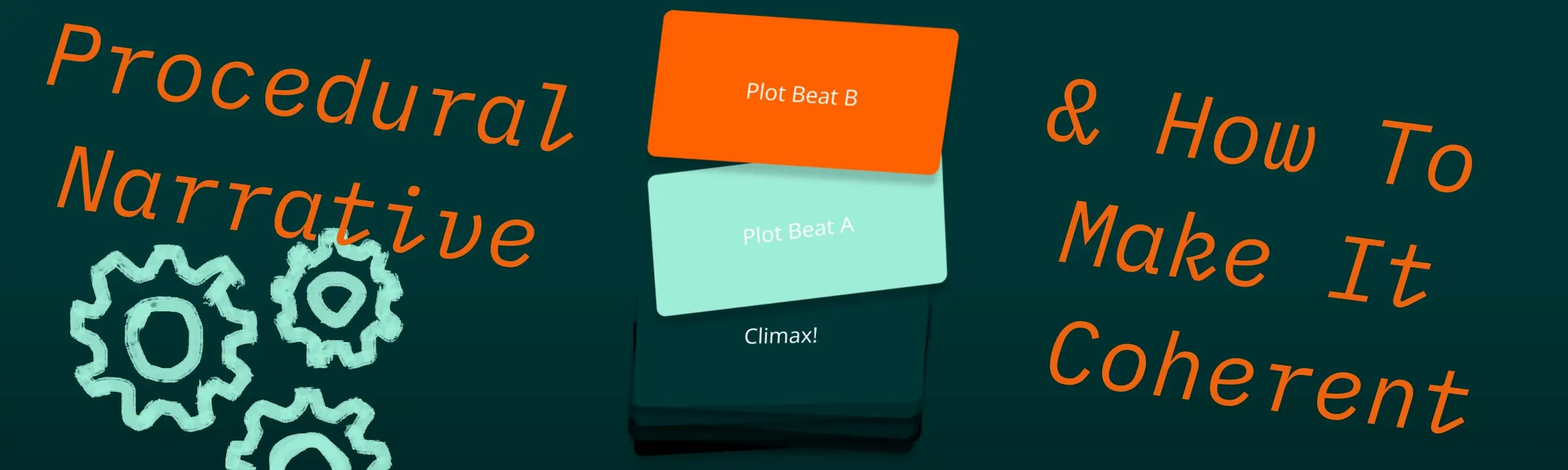
Coherence is a sequence, not a vibe. Plot Beat A creates debt. Plot Beat B raises the cost. The climax collects. That is the same lesson structural tools teach writers, and it is why pairing play with a beat-aware partner such as Film Screenwriter is useful when you want to freeze a generated campaign into an outline.
Scenes That Have a Job
A generated alley fight is waste if it does not move information, raise the cost of a lie, or force a choice the current beat requires. Prompt the game master to score the scene against the tracker before you fall in love with the set piece.
"Seed a temperate continent with a mountain spine, two rival city-states, and a forest cult. Year 233, Fourth Age. I am a cartographer, not a chosen one. Track Plot Beat A as the cult’s drought ritual, Plot Beat B as Captain Rhese’s unpaid debt, Climax as the river running poisoned. Open in a border tavern. Do not skip to the climax."
"Update story state: I sold the cult’s map shard to Rhese. He still thinks the drought is weather. The cult knows I was in the pass. List what each faction knows, which beat just advanced, and three next scenes that raise cost without spending the poisoned-river climax."
Related Agents You'll Also Find Useful
If you are designing the system, harvesting a generated campaign into a script, or you want a tighter sandbox than open tabletop, these partners sit next to the same habit of tracking state.
Game Designer Assistant — Use it when the fantasy is not only playing the loop but specifying it: verbs, economy, failure states, and how narrative systems talk to mechanics. It is the design desk beside the table.
- Systems analysis across genres and platforms
- Documentation for narrative-to-gameplay contracts
- Useful when a solo campaign wants to become a prototype GDD
Film Screenwriter — Generated play produces incidents. Features and pilots need turns. This agent holds structure, dialogue craft, and revision so a campaign journal can become a beat sheet without losing the choices that made it yours.
- Outline and draft against a named structure model
- Character arcs checked against the current turn
- Practical when you want to adapt a procedural run into a script
College Life — If you want emergence with a smaller map—friendships, fallout, and social debt instead of continents—this open-world campus romance lets connections and rejections unfold from play rather than from a fixed route.
- Emergent social dynamics instead of a single romance track
- Memory of who you hurt, helped, or ghosted
- A lower-stakes lab for the same state-tracking discipline
The Mansion — When you want secrets in rooms rather than a whole generated atlas, this mystery still depends on what you have seen, what you have touched, and what you are wrong about. Exploration is the verb; continuity is the rule.
- Room-by-room revelation without spoiling the ending early
- Threat and clue state that should persist
- A focused alternative when you do not want a sandbox continent
Try Roleplay Game Master free — no credit card required.
How a Procedural Story Game Works in Practice
Step 1: Seed the World, Not the Ending Open the procedural story engine and name biome, era, tone, and your role. Do not declare the finale. You should leave this step with a place that can surprise you and a promise the system is not allowed to spend yet.
"Low fantasy, no chosen-one prophecy. Coastal marshes, a failing saltworks, one missing child. I am the night inspector. Generate the town. Do not tell me who took the child."
Step 2: Name the Beats Before You Improvise State Plot Beat A, Plot Beat B, and the climax condition in one paragraph. This is how you keep reactive narrative from dissolving into branchy chatter. The game can still generate; it cannot skip the stack.
"Beat A: the saltwrights are watering the ledgers. Beat B: the priest owes the missing child’s family a buried favor. Climax: the marsh lights are not will-o’-wisps. Keep all three visible after every scene."
Step 3: Play Only the Next Legal Scene Ask for the scene the current beat requires. A climax-shaped set piece during setup is a structural error, even if the prose is strong. Have the game master refuse illegal moves and offer three legal ones.
"Give me three night-shift scenes that pressure Beat A. None may reveal the marsh lights. One must tempt me to falsify my own report."
Step 4: Commit State When You Accept a Scene When you keep an outcome, say what changed: knowledge, inventory, faction heat, and which beat advanced. Emergent narrative is an outcome of play, not a substitute for recording it. If you do not commit, the next session will hallucinate a cleaner past.
"Accepted: I hid the false ledger in the chapel. The priest saw me. Beat A is public to one NPC. Update the tracker. Do not resolve Beat B."
Step 5: Audit Before You Spend the Climax Before the last night, run a continuity pass. Check unpaid plants, POV leaks, and theme absences. LLM-written game text can be cheap; global structure is still the scarce resource. This audit is cheaper than discovering the missing child was solved off-screen.
"Audit the campaign. Flag any fact I used that I did not earn, any NPC who forgot the chapel, and whether the marsh-lights climax is still unpaid."
Results & Use Cases
🗺️ A Sandbox Continent That Still Pays a Climax
- Scenario: You want a Dwarf Fortress-like atlas—biomes, rival cities, a cult in the trees—without writing 400 pages of lore, and without a finale that arrives as a random siege.
- Traditional Approach: Generate a map, then hope play “finds” a story. After six sessions the cult, the captain, and the river are three unrelated anecdotes.
- Roleplay Game Master: You seed the continent, lock three beats, and refuse to spend the poisoned river until Beat A and Beat B have cost something.
- The world can still surprise you inside the constraints
- NPCs remember who sold the map shard
- The climax is a collection of debts, not a new faction from nowhere
🎮 Prototype a Narrative System Without a Full Production Team
- Scenario: You are pre-production on a small reactive RPG. You need to feel whether your verbs (inspect, bribe, falsify, flee) actually produce story, not just UI.
- Traditional Approach: A paper GDD and a linear vertical slice. Emergence is a slide in the pitch deck.
- Game Designer Assistant: You specify the loop, failure states, and how story flags talk to mechanics, then play the same loop with the game master as a live narrative backend.
- Systems get tested against actual play, not against a happy-path outline
- You learn which verbs generate plot and which only generate loot
- Documentation stays attached to what the prototype actually did
📱 Continue a Campaign on a Train
- Scenario: Session notes live on your laptop. You have twenty minutes and a producer-brain itch: the priest saw you in the chapel, and you need the next legal scene now.
- Traditional Approach: You reread a wiki on your phone, guess at continuity, and write a scene that accidentally solves Beat B.
- The same game master on mobile: You open the living world state, restate the unpaid climax, and generate three night-shift options that pressure the ledger without spending the marsh lights.
- Full play on iPhone and Android, not a stripped notepad
- Voice-to-text lets you commit a state change while walking
- The tracker, not your recall, decides whether the scene is still setup
🎓 Emergent Social Story With a Smaller Map
- Scenario: You do not want a continent. You want a semester of alliances, parties, and fallout that you did not pre-write.
- Traditional Approach: A dating sim with a flowchart you will eventually see through.
- College Life: Friendships and rejections unfold from choices. The “beats” are social debts—who you stood up, who still has your secret—rather than a drought ritual.
- Emergence stays personal and local
- Continuity is who remembers the Friday you disappeared
- A useful training ground for the same commit-and-audit habit
FAQ
What is a procedural story game?
A procedural story game generates world, scenes, or events through systems instead of a single fixed script, then lets play write the particular story. The good ones still track beats, character knowledge, and unpaid promises so emergence does not mean amnesia. Roleplay Game Master is built for that second half: generation plus a living story state.
Is Roleplay Game Master free to use?
You can start without paying and without a credit card. Free usage is limited; higher monthly plans increase capacity if you are running a long campaign, several worlds, or heavy audit passes. The test that matters is whether the game still remembers your beats, NPCs, and climax condition after you close the chat and return the next day.
How is an AI procedural story game different from a chatbot roleplay?
A chatbot can improvise a tavern. It will not reliably know whether you are still in setup, whether an NPC has earned a fact, or whether tonight’s fight is illegally spending the ending. Interactive stories fail when writing and systems refuse to share a model of state. This game master’s job is that model, not a longer monologue.
Can a generated campaign stay coherent all the way to a climax?
Yes, if you name the beat stack and commit state after accepted scenes. Emotional-arc scaffolding is one researched way to keep generated levels globally shaped instead of locally pretty. Coherence is a practice: illegal moves get refused, plants get audited, and the climax stays unpaid until the debts exist.
Does this procedural story game work on mobile?
Yes. You can seed a world, play the next legal scene, and run a continuity audit on iPhone and Android with the same memory you use on the web. That matters when a plot itch arrives between stops and you need to know whether you are still in Beat A or already spending the river.
How is this different from designing my own PCG narrative system?
Playing and specifying are different jobs. If you need verbs, economies, and documentation, Game Designer Assistant is the design partner. If you need pages from a finished run, Film Screenwriter can hold structure while you adapt. The game master is the table where those systems are proven in play.
Play the World That Remembers You
A procedural story game fails in the gap between a living-looking map and a campaign that cannot name its own debts. Generation can give you continents, wildlife, and a thousand taverns. It will not, by itself, stack Plot Beat A, Plot Beat B, and a climax that was earned. Memory, obligation, and refusal are the rest of the craft.
Roleplay Game Master is the partner that keeps world state, character knowledge, and unpaid beats in one record—from the first border tavern to the river you were not allowed to poison early. Try it on the seed you are already carrying. Explore more at Jenova.
For Developers: Roleplay Game Master is available programmatically via the Jenova API — integrate procedural story generation, beat tracking, and persistent character memory into your game or narrative app with a single API call. Full documentation →