Post Apocalyptic Roleplay AI: Adaptive Wasteland Adventures
2026-08-27
Roleplay Game Master helps you run a living wasteland campaign by remembering every settlement, ration count, and betrayal across unlimited sessions. While generic chatbots drop your faction politics and flatten every survivor into the same voice, this post apocalyptic roleplay AI keeps NPCs consistent and lets consequences compound the way a dedicated game master would.
As of August 2026, players who want Fallout-scale improvisation without waiting on a weekly table finally have a partner built for long-form survival stories.
You set the collapse — nuclear winter, fungal bloom, convoy deserts, drowned cities — and the AI runs weather, scarcity, scavengers, and the moral cost of every choice.
- ✅ Unlimited campaign memory that persists across sessions
- ✅ Character consistency for companions, warlords, and rival factions
- ✅ Complete creative freedom over setting, tone, and intensity
- ✅ The same campaign on web, iOS, and Android
To understand why that matters, it helps to look at what actually breaks when you try to roleplay the end of the world with a forgetful chatbot — and what tabletop groups have always needed from a great GM.
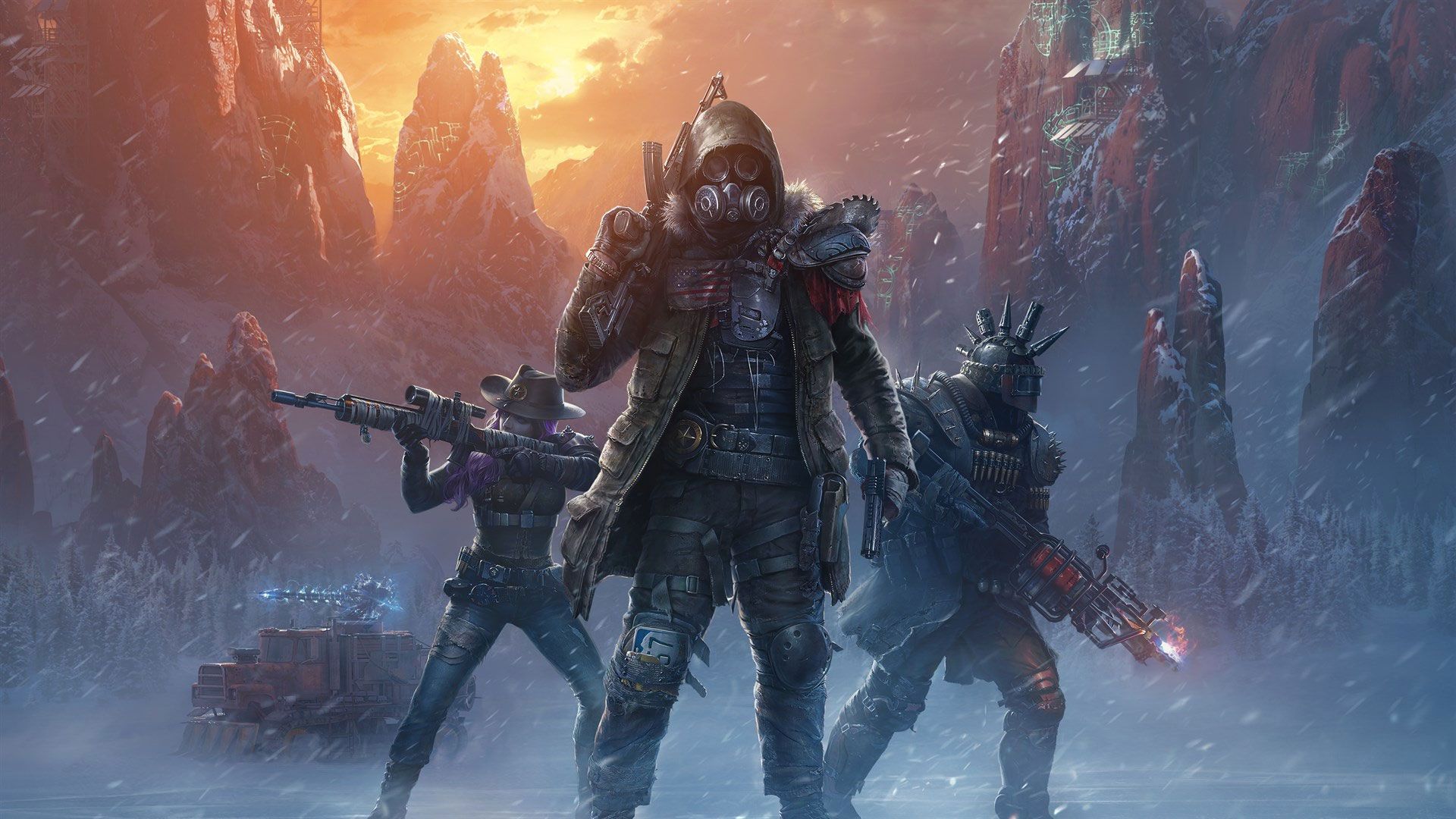
Quick Answer: What Is Post Apocalyptic Roleplay AI?
Post apocalyptic roleplay AI is an interactive game master that runs persistent wasteland campaigns, keeps characters consistent, and lets every choice reshape the ruins around you. You describe a survivor, a settlement, or a last-ditch raid — the AI plays the world.
Key capabilities:
- Long-running campaigns that remember locations, inventories, and NPC histories
- Distinct voices for raiders, medics, traders, and faction leaders
- Dynamic scenes that react to scarcity, weather, injury, and reputation
- Solo play that still feels like a table: exploration, combat, bargaining, and aftermath
The Problem With Wasteland Roleplay Today
Demand for roleplay is not a niche hobby. An empirical study of more than 100 trillion tokens found that creative roleplay is one of the largest real-world uses of large language models, and that nearly 60% of roleplay traffic maps to games and roleplaying games rather than casual chat.
The broader appetite for imagined worlds is just as strong at the table:
$2.41 billion — Estimated global tabletop RPG market size in 2026
$28.6 billion — Role-playing games market value in 2025, spanning digital and tabletop play
Players want living worlds. Getting one that survives more than a single session is frustratingly difficult:
- Generic chatbots forget who died, who you spared, and which well is poisoned
- NPCs drift out of character after a few thousand words
- Scarcity, radiation, and reputation rarely stay internally consistent
- Human GMs are scarce, schedules collide, and campaigns stall between sessions
Memory Collapse Kills the Campaign
Post-apocalyptic fiction lives on continuity. If the settlement you fortified last week is a blank field today, the story stops being a campaign and becomes a series of disconnected scenes. General-purpose assistants are built for short answers, not for tracking water stores, ammo, and a companion's limp across weeks of play.
Characters That Will Not Stay Themselves
A warlord who executes deserters should not turn into a helpful quest-giver because the model "wanted to be nice." Stanford's CRAFT program notes that AI can help with idea generation and story form — but authenticity and voice still break when the system has no durable character model. In a wasteland, voice is the world.
Worlds Without Weight
The genre depends on trade-offs: food versus bullets, mercy versus safety, the settlement versus the road. Tools that reset tone every message cannot simulate winter, infection, or a reputation that precedes you into the next town.
The Table You Cannot Convene
Finding a human GM who will run a grim, long-form survival game on your schedule is the oldest bottleneck in the hobby. Mixed-use roleplay platforms retain users far more strongly than shallow chat — Ada Lovelace Institute research found mixed-use creative roleplay products averaging about 16 return visits per month — because people want ongoing stories, not one-off scenes. Most tools still fail to deliver a GM who remembers the campaign.
This is exactly what Roleplay Game Master was built for.
Why Roleplay Game Master
Roleplay Game Master is a dedicated immersive roleplay partner: unlimited memory, stable characters, and full creative freedom over any scenario you can describe. It is not a writing prompt bolted onto a general chatbot. It is the game master for the campaign you actually want to play — including nuclear winters, convoy roads, quarantine zones, and drowned coastlines.
Research on interactive storytelling describes the same shift players already feel at the keyboard: characters that feel specific, and plots that bend when you choose the cruel option, the kind option, or the stupid-but-human one.
| Traditional Approach | Roleplay Game Master |
|---|---|
| Weekly table, cancelled when one player is busy | Solo or duet campaigns that pick up the moment you return |
| Chatbots that forget your settlement and your debts | Unlimited memory across sessions and story arcs |
| NPCs that reset personality mid-scene | Character consistency for factions, companions, and antagonists |
| Pre-written modules that railroad the ending | Complete creative freedom over setting, tone, and content |
| Notes scattered across docs, maps, and Discord | The campaign state lives in the conversation itself |
A Wasteland That Remembers
Describe a gas-mask scavenger with a bad knee and a stolen radio, then leave for three days. When you return, the radio still crackles with the same pirate frequency, the knee still slows you on stairs, and the trader you cheated still refuses to deal. Continuity is the product.
Characters With Agendas
Companions argue. Raider captains hold grudges. A child NPC who watched you loot a clinic will not treat you like a hero next session. That pressure is what makes post-apocalyptic stories feel earned instead of decorative.
Any Collapse You Can Name
Nuclear exchange, slow climate failure, bioweapon winter, machine uprising, or a quiet world where the lights simply never came back — you define the rules of scarcity and the AI plays inside them. Tone can be pulp convoy action, literary grit, or horror. You are not locked into one licensed map.
Play It Like a Table, Not a Form
You can write in first person, third person, or script format. You can ask for a scene, a skill check, a rumor table, or a hard cut to two weeks later. The GM adapts to how you like to play rather than forcing a single interface.
"I am a former paramedic holed up in a snowbound radio tower. Fuel is gone, my neighbor's cough is getting worse, and someone is repeating our emergency broadcast back to us with the words in the wrong order. Run the next night."
"Three factions want the last working desalination plant. I am the unaligned mechanic they all need. Play each envoy in a distinct voice and make every deal cost something I cannot replace."
"Skip two months. Winter broke the south wall. Show me who died, what we ate, and who now thinks I am the reason."
Related Agents You'll Also Find Useful
If your wasteland sessions are only one part of a bigger creative habit, these agents sit naturally next to a long campaign.
The Mansion
When you want a closed, high-pressure space instead of an open map, The Mansion drops you into a house that will not explain itself. Every room is a secret; every shadow can end the run.
- Memory-driven exploration that reacts to what you have already seen
- Clue density suited to investigative, survival-horror pacing
- A strong palate cleanser between open-world wasteland arcs
The Asylum
The Asylum puts you on-site as an investigator in a shuttered institution where the records, the staff, and the building disagree. Use it when your post-apocalyptic story needs a contained mystery — a quarantine hospital, a pre-war lab, a bunker that should have been empty.
- Ward-by-ward secrets that reward careful note-taking
- Tone control from procedural investigation to full horror
- Character-stable NPCs who may not be telling the truth
Film Screenwriter
Finished a campaign beat that wants to become a short film or feature? Film Screenwriter takes the same collapse — the convoy, the clinic, the last radio tower — and turns it into structure, scene, and dialogue that can leave the chat.
- Concept through outline, draft, and revision
- Visual storytelling and character work grounded in craft
- A path from play session to screenplay without losing the tone you earned
Comic Creator
If you think in panels — rust, snow, gas masks, the silhouette of a ruined plant — Comic Creator helps you sequentialize the campaign: issue-length stories, graphic-novel arcs, and layouts that match the grit of the world.
- Sequential art and dynamic page design
- Style consistency from one-shots to long sagas
- A way to freeze a favorite session as something you can reread
Try Roleplay Game Master free — no credit card required — then branch into a mansion mystery, a screenplay, or a comic when the campaign demands a second form.
How It Works
Step 1: State the Collapse and Your Place in It Open a session and name the disaster, the region, and who you are. Specificity is fuel: the more concrete the ruins, the sharper the improvisation.
"Year twelve after the coastal bombs. I am a 19-year-old courier on the frozen lake between two rival ice-fishing towns. I carry insulin and I cannot afford to pick a side."
Step 2: Set Tone, Stakes, and Hard Limits Tell the game master how dark you want the world, whether you want dice-like uncertainty, and what you do not want on the table. A good wasteland still needs a safety rail you control.
"Gritty and consequential, not gore-for-gore. Track food, warmth, and reputation. Ask before introducing harm to children. I want moral pressure, not shock for its own sake."
Step 3: Play the Scene — Then Let Time Pass Write actions, not essays. Bargain, sneak, confess, or run. When a chapter lands, skip days or seasons and demand a status report. Persistence is the point: the GM should know what the skip cost you.
"I offer the last of the antibiotics to the raider captain's sister and walk away without waiting for thanks. Two weeks later, what has that rumor done to my name on the road?"
Step 4: Keep Recurring People Recurring Name your companions and enemies. Ask the AI to replay them with the same tells — a cough, a catchphrase, a missing finger. Correct drift immediately; the model will hold the line once you mark it.
"Kara still won't make eye contact after the bridge. She counts her shots out loud. Do not make her suddenly cheerful."
Step 5: Continue on the Device You Have The same campaign follows you. Start a siege on a laptop, resolve the parley on your phone in line at the store, and pick up the aftermath on a tablet that night. Feature parity across web, iOS, and Android means the wasteland does not live on one screen.
Results & Use Cases
📊 Solo Fallout-Style Sandbox Without a Module
Scenario: You want an open map — ruined highways, rival towns, a beast in the reservoir — and you do not have four friends who can meet Thursdays.
Traditional Approach: Buy a boxed campaign, wait for a GM, or restart a chatbot every time it forgets your ally died in session two.
Roleplay Game Master: You get a persistent sandbox. Settlements remember your trades. Factions update their wanted posters. A stupid raid in week one still haunts week six.
- No scheduling tax
- Continuity that makes exploration feel like a campaign, not a prompt
- Freedom to mash tones: western convoy, quiet literary collapse, or high-octane raider war
💼 From Campaign Notes to a Wasteland Screenplay
Scenario: Your sessions keep producing a character you cannot stop thinking about — a medic who sells hope she does not have.
Traditional Approach: Stare at a blank outline, then try to reverse-engineer three acts from Discord logs.
Film Screenwriter: You import the campaign's spine — the clinic, the radio lie, the winter — and build a feature or short with professional structure while the GM remains the place you still play.
- Separate play from craft without losing the world
- Dialogue that can survive outside the chat
- A concrete path if the story wants an audience
📱 The Commute Raid
Scenario: You have twelve minutes on a bus and a siege that stalled last night at the gate.
Traditional Approach: Laptops only, or a notes app full of "wait until I get home."
Roleplay Game Master on mobile: Thumb out a parley, a sneak, or a brutal retreat. Speech-to-text works when your hands are cold. The gate is still the gate when you sit down at a desk later.
- Full campaign continuity on iOS and Android
- Short scenes that still change the map
- No "we'll pick this up when I have a keyboard" dead air
🎯 Closed-Site Horror Inside the Larger Collapse
Scenario: Your open wasteland needs a bottle episode — a pre-war lab, a quarantine ward, a mansion the bombs somehow missed.
Traditional Approach: Pause the campaign and write a dungeon that never quite matches the tone you already established.
The Asylum or The Mansion: Run the contained mystery with the same appetite for secrets and consistency, then return to the road with new scars the main campaign can inherit.
- Investigative pacing when the map gets too wide
- NPCs and rooms that stay dangerous
- A clean way to change scale without abandoning the collapse
FAQ
What is the best post apocalyptic roleplay AI for long campaigns?
The best fit is a dedicated game master with durable memory and character consistency, not a general chatbot you have to remind who lived. Roleplay Game Master is built for that: unlimited history, stable NPCs, and any collapse you describe. If you need the story to remember a poisoned well three weeks later, that persistence is the requirement — not a nicer prose style in a vacuum.
Is post apocalyptic roleplay AI free to use?
Yes. Jenova offers a free tier with core features and limited monthly usage, which is enough to test a full wasteland premise. Paid tiers increase usage — Plus is $20/month for 30× the free allotment, with higher plans available if you run multiple long campaigns. Usage resets on your billing date with no daily caps. No credit card is required to start.
How is this different from ChatGPT for wasteland roleplay?
General assistants optimize for short, helpful answers. They drift on personality, drop inventory, and smooth over cruelty or scarcity because agreeableness is the default. A post apocalyptic roleplay AI that is actually a game master holds grudges, tracks winter, and will let a bad plan fail. You spend the session playing, not restating the bible of your world.
Can I run Fallout, Mad Max, or original settings?
Yes. You can invoke the texture of a known wasteland — desert convoys, vault remnants, fungal cities — or invent a collapse with its own physics. Original settings often play better because you define the rules of food, fuel, and law. Ask for pulp, horror, or quiet realism; the GM follows the brief you set in the first messages.
Does it work on mobile, and will my campaign follow me?
Yes. Web, iOS, and Android share feature parity and settings, so a siege you start on a laptop can resolve on a phone. Speech-to-text helps when you cannot type. The campaign's memory is the point of the product, not a desktop-only extra.
Will my wasteland stories be used to train public models?
No. Jenova does not use your data to train public AI models. Conversations are encrypted in transit and at rest and are not sold to advertisers. For a genre where you may write violence, grief, and ugly bargains, that boundary is part of whether the tool is safe to use honestly.
Conclusion
Post-apocalyptic stories fail when the world forgets itself. Generic chatbots drop the dead, flatten the living, and turn scarcity into set dressing. A dedicated post apocalyptic roleplay AI — one that remembers, stays in character, and lets you dictate the collapse — is the difference between a fun scene and a campaign you return to for months.
Roleplay Game Master is that partner: unlimited memory, consistent people, and total freedom over the ruins you want to inhabit. Play the convoy. Hold the clinic. Bargain badly and live with it.
When the session wants another shape, carry the same instinct into a mansion mystery, a quarantine investigation, a screenplay, or a comic. Explore more at Jenova.
Try Roleplay Game Master now — the wasteland will still be there tomorrow, and it will remember what you did today.
For Developers: Roleplay Game Master is available programmatically via the Jenova API — integrate persistent, character-consistent wasteland roleplay into your application with a single API call. Full documentation →