Persistent World Roleplay AI: Living Campaigns That Remember
2026-08-26
Roleplay Game Master helps you run persistent world roleplay where the tavern still knows your name, the knight still owes you a debt, and the plot does not reset when you close the tab. While most AI chats treat every session like a disposable one-shot, this AI keeps NPCs, locations, secrets, and consequences intact across unlimited memory.
As of August 2026, players raised on MUDs, Neverwinter Nights servers, and long tabletop campaigns want the same thing from AI: a world that continues whether or not you are in the room.
- ✅ Unlimited conversation memory so world state never wipes mid-arc
- ✅ Perfect character consistency for every NPC you meet
- ✅ Complete creative freedom to build original realms or inhabit existing ones
- ✅ Full experience on web, iOS, and Android, including voice input
To understand why this matters, let's examine why most AI roleplay still feels like a resetting inn—and what a true persistent world actually requires.
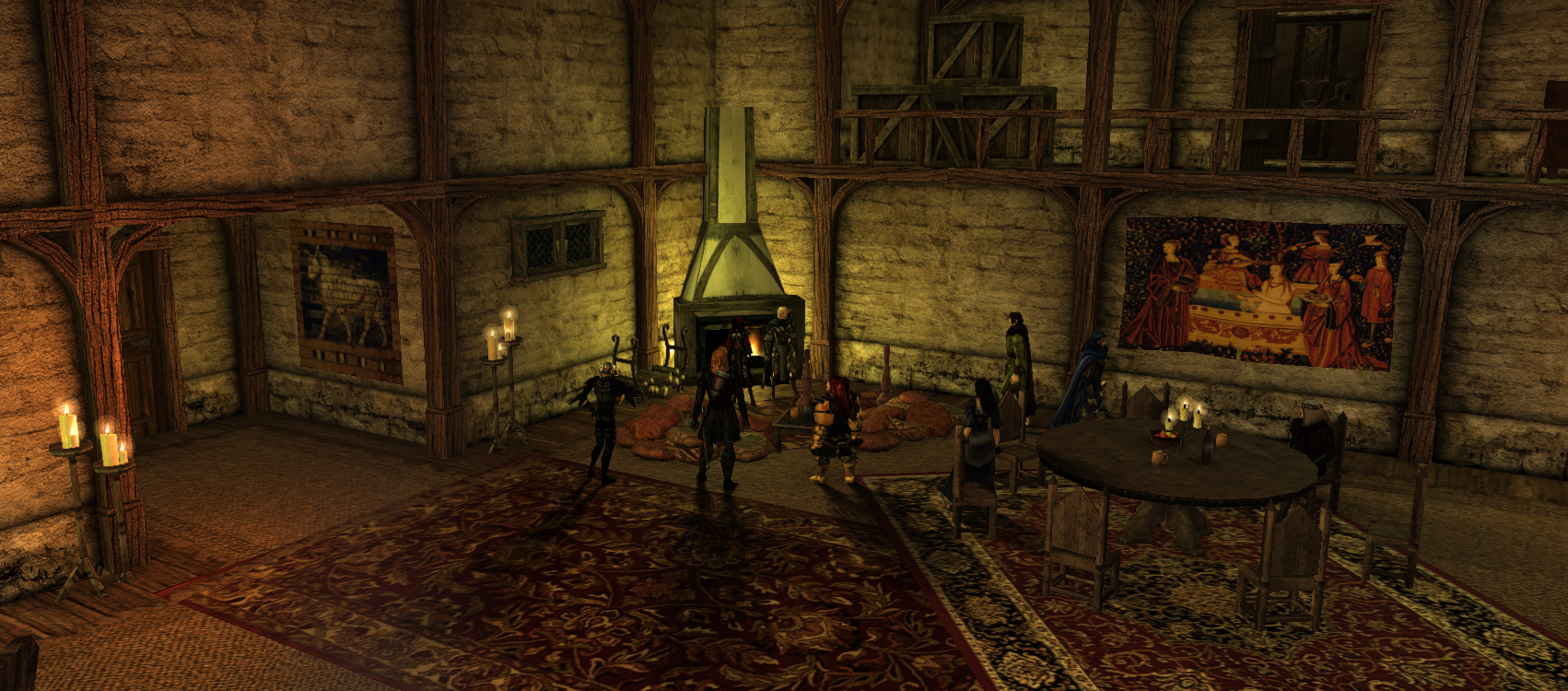
Quick Answer: What Is Persistent World Roleplay?
Roleplay Game Master is a persistent world roleplay AI that keeps NPCs, locations, and plot threads alive across unlimited sessions so your campaign never resets. You play; the world remembers.
Key capabilities:
- Living world state—factions, debts, injuries, and rumors survive every session
- Perfect character consistency so the innkeeper tonight is the same person as last week
- Unlimited memory, so you reopen a thread instead of pasting a recap
- Complete creative freedom across fantasy halls, sci-fi stations, noir cities, and original settings
Why Most AI Roleplay Worlds Keep Resetting
A persistent world, in Richard Bartle's classic definition, is a virtual world that "continues to exist and develop internally even when there are no people interacting with it." That is the bar set by MUDs, MMORPGs, and the player-run servers that made Neverwinter Nights persistent worlds feel like home: the tavern stayed open, the trial still happened, and the bard you met by the fire still knew the story.
Demand for inhabitable stories is not a niche hobby anymore. The [**interactive storytelling platform market was valued at $4.8 billion in 2025**](https://dataintelo.com/report/interactive-storytelling-platform-market) and is projected to reach $14.6 billion by 2034. Adjacent digital storytelling was already a $10 billion market in 2024. Analysts covering interactive storytelling tools expect that category to keep expanding through the next decade.
But getting a satisfying persistent world roleplay session is still frustratingly difficult:
- NPCs forget names, injuries, promises, and last night's cliffhanger
- Locations reset—the locked door is open again, the rumor mill has amnesia
- The model breaks character to summarize, moralize, or "helpfully" recap
- You spend more time pasting a campaign bible than playing in it
$4.8 billion — Interactive storytelling platform market value in 2025
$10 billion — Digital storytelling market size in 2024
"continues to exist and develop internally" — Bartle's definition of a persistent world
Player communities have been precise about this for years. On Beamdog's forums, a persistent world is a server that stays online and whose changes are permanent. NWN2 persistent worlds went further: customized classes, gods, races, encounters, and stories that belonged to that realm alone. AI roleplay is only now catching up. Industry writing on the future of AI roleplay already lists persistent world building as an emerging trend—characters that exist in worlds that evolve over time, not chat windows that wipe.
Most general-purpose assistants were built to answer questions, not to keep a candlelit hall running while you are at work. This is exactly what Roleplay Game Master was built for.
Why Roleplay Game Master
Roleplay Game Master is a dedicated persistent world roleplay engine—not a generic chatbot in a costume. You set the realm, walk in as yourself or a character, and play. The engine holds persona, memory, and tone so a night at the hearth can become a months-long campaign.
The difference shows up the moment you compare a typical chat to a world that actually keeps state:
| Traditional Approach | Roleplay Game Master |
|---|---|
| Plot resets when the context window fills | Unlimited memory across every session |
| NPCs slip into a helpful-assistant voice | Perfect character consistency |
| You re-explain the bible every login | The world already knows the last cliffhanger |
| One-shot scenes you cannot resume | Living campaigns you pick up mid-arc |
| Locations and inventory drift | Debts, injuries, keys, and rumors stay canon |
A hall that still knows you
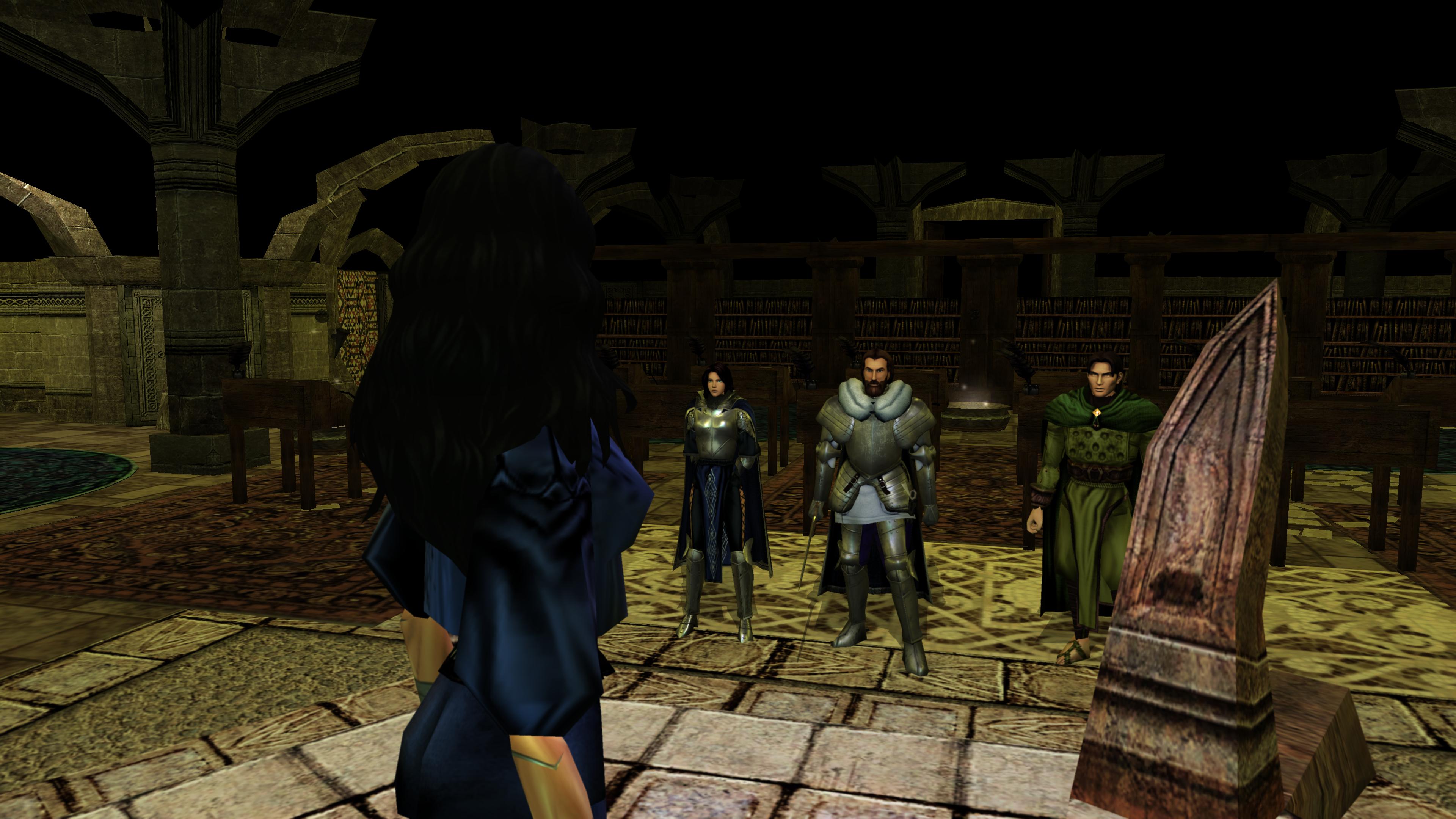
Persistent world roleplay only works when the room, the people, and the history agree. Walk into a stone library and the knight, the mage, and the captain should react to your reputation—not a blank slate. Testing a long campaign reveals the usual failure: the sword you lost in scene two is back on your belt in scene five. Unlimited memory changes that. Relationships, inventory, and private jokes persist.
NPCs who stay in role
Perfect character consistency means the tired innkeep does not suddenly become a tutor. The green-robed scholar does not break immersion to list options. You get reactions, secrets, and consequences—the texture that made player-run persistent worlds feel more like D&D than a menu.
Creative freedom without a reset button
Complete creative freedom means any genre and any intensity: high fantasy courts, deep-space salvage, slow-burn political intrigue, original pantheons. You are not limited to a licensed map. You are limited only by the scene you ask for.
Try prompts like these:
"This is a living campaign. The Red Hart tavern remembers everyone who drinks here. I am the hired guard at the door. You are the innkeep who already decided I cannot be trusted."
"Continue from last session. The knight still has my brother's signet. The mage in green still thinks I stole the folio. Do not recap. Do not reset."
"The library is persistent. Books I moved stay moved. NPCs who saw me last night should react. Stay in character."
Related Agents You'll Also Find Useful
If you are already living in a world that remembers you, the next step is often to design its systems, drop into a ready-made realm, or capture the campaign on the page.
Game Designer Assistant
If the persistent world is starting to need factions, economies, and encounter logic, Game Designer Assistant is the systems partner. You bring the lore from play; it helps you turn vibes into documentation, progression, and genre-aware design.
- Brainstorming and systems analysis across tabletop and digital genres
- Documentation and concept work that matches the campaign you are already running
- A clean path from "the tavern feels real" to a world that can be replayed
Vesper Court
Want a realm that is already live? Vesper Court drops you into a hidden vampire court where every night changes the board—dark romance, blood intrigue, and consequences that compound.
- A pre-built persistent premise instead of a blank prompt
- Social dynamics that shift with each session
- The same memory-first play style, aimed at court politics
Film Screenwriter
When a campaign starts producing set pieces worth keeping, Film Screenwriter helps you outline, draft, and revise. Dialogue you improvised in-world becomes scene work with structure and visual craft.
- Concept through outline, draft, and revision
- Character development grounded in scenes you already played
- A production path from persistent world roleplay to a screenplay
Try Roleplay Game Master free — no credit card required.
How Persistent World Roleplay Works
Step 1: Claim a world, not a one-shot
Name the realm, the home base, and the rule that nothing important resets. A candlelit hall, a library with three named NPCs, a city watch that keeps files—specificity is what turns chat into a world.
"You are the Game Master of a persistent world. Home base is the Red Hart. NPCs, inventory, and rumors persist forever unless I say otherwise."
Step 2: Seed the people who will remember you
Give the engine three faces and one secret. Persistent world roleplay lives in recurring casts, not anonymous crowds. The knight with the fur collar, the scholar in green, the captain who never sits with her back to the door.
"Three NPCs in the library already know me. One likes me. One wants the folio. One saw me hide the key. Stay in their voices."
Step 3: Play the scene—then stop on a hook
Reply in character. Let the world react. End on a debt, a locked door, or a rumor so the next session has gravity. If you need a rules check, ask for it as a separate beat; the default is immersion.
"I put the signet on the table and wait. Do not summarize. Just let them react."
Step 4: Leave and come back without a recap
Unlimited memory is the feature you feel on day three. Reopen the same thread. The innkeep still knows who started the fight. That is how a chat becomes a campaign instead of a Groundhog Day inn—the kind of periodic world reset old MUDs used, and the thing true persistence was invented to escape.
"Continue last night. I still have the map. You still think I stole the ring. Do not reset the hall."
Step 5: Promote the world into another craft
When factions and set pieces stabilize, hand the bible to Game Designer Assistant or the best scenes to Film Screenwriter. Persistent world roleplay is the rehearsal room; those tools are the studio.
Results & Use Cases
📊 A tavern campaign that still has last week's rumor
Scenario: You have been drinking at the same hearth for two weeks. The hired guard does not trust you. The innkeep overheard the tower conversation. The round table on the right is where the conspiracy sits.
Traditional Approach: Paste a three-page recap. Watch the rumor vanish. Lose the slow distrust that made the hall worth returning to.
Roleplay Game Master: You type "continue." The guard still watches the door. The conspiracy still has the corner. The campaign behaves like canon.
- No recap tax between sessions
- Recurring NPCs whose opinions compound
- A home base that feels like a place, not a prompt
💼 A solo persistent world instead of a dead server
Scenario: You miss player-run persistent worlds—the murder mysteries, the tavern plays, the trial that ran until dawn—but you do not have twenty DMs and a population.
Traditional Approach: Wait for a server, or GM a table that only exists four hours every other Saturday.
Roleplay Game Master: You get a living realm on demand. Same memory, same character consistency, any schedule. When the systems need a pass, Game Designer Assistant helps you document factions and rules so the world can be replayed.
- Always-on campaign without a player census
- DM-quality scenes without scheduling a table
- A design trail so the realm can outlive a single chat
📱 Commute-length scenes that still belong to the world
Scenario: Twenty-five minutes on a train. You want the library beat, not an email draft. Thumbs on a phone, maybe voice-to-text because the carriage is crowded.
Traditional Approach: Desktop-only tools, lost threads, and an NPC who does not remember yesterday's folio.
This persistent world engine: Same campaign on iOS or Android, speech-to-text if you need it, memory intact when you surface for your stop.
- Full feature parity with the web experience
- Short sessions that still write canon
- Voice input when typing on a moving train is a bad idea
🎯 Turning a living campaign into pages you can show
Scenario: The court intrigue is good enough to pitch. You have months of in-character dialogue and no structure.
Traditional Approach: Dump logs into a document and fight them into acts by hand.
Film Screenwriter: The roleplay is the rehearsal. You keep the blocking and the betrayals, then build outline, character arcs, and visual storytelling for a screenplay.
- Dialogue already stress-tested in play
- Structure without flattening the world's tone
- A path from persistent world roleplay to a finished draft
Frequently Asked Questions
What is persistent world roleplay?
Persistent world roleplay is character play inside a setting that keeps state—NPCs, locations, inventory, and plot—whether or not you are logged in. Unlike a one-shot chat, the hall you leave is the hall you re-enter. Roleplay Game Master adds unlimited memory and strict persona consistency so the world you described is the world that answers, across a single night or a months-long campaign.
Is Roleplay Game Master free?
Yes. A free plan includes core roleplay features with a monthly usage cap. Paid plans start at $20/month for Plus and scale through Premium, Pro, Max, Ultra, and Enterprise if you run longer campaigns or want higher limits. Usage resets on your billing date, with the full allowance available from day one rather than a daily drip.
How is persistent world roleplay different from a normal AI chat?
A general assistant is trained to be helpful, concise, and willing to break character. A persistent world engine is trained to stay in the scene and keep canon. Unlimited memory, recurring NPCs, and perfect persona consistency are the product—not extras you prompt around. You are not fighting the model to stop summarizing your own story.
Does persistent world roleplay work on mobile?
Yes. The same campaigns run on web, iOS, and Android with feature parity, including speech-to-text. Start a scene on a laptop, continue it on a phone, and the innkeep still knows who started the fight. Settings sync, so you are not maintaining two versions of the same world.
Will NPCs remember previous sessions?
That is the point of unlimited conversation memory. Names, injuries, debts, keys, and private jokes persist until you decide they should not. If you want a hard reset, start a new thread. If you want canon, reopen the same one and type "continue."
Can I build an original world, or only pre-made settings?
You can start any original realm, set instructions, and play any scenario at any intensity. Pre-built premises such as Vesper Court are there when you want a one-tap start; a blank hall is there when you want a world nobody else has seen. Complete creative freedom is the default, not a premium toggle.
Keep the Hall Lights On
Most AI roleplay disappoints for a boring reason: the prompt promised a world, and the chat delivered a forgetful assistant. Roleplay Game Master is built the other way around—unlimited memory, NPCs who stay in role, and a campaign that does not flinch out of canon when the plot gets complicated.
Pick a hearth. Seed three faces. Come back tomorrow. The knight will still have the signet.
Explore more at Jenova.
For Developers: Roleplay Game Master is available programmatically via the Jenova API — integrate persistent world roleplay and living-campaign memory into your application with a single API call. Full documentation →