Original Character Design Generator: Create Unique OCs with AI (April 2026)
2026-04-22
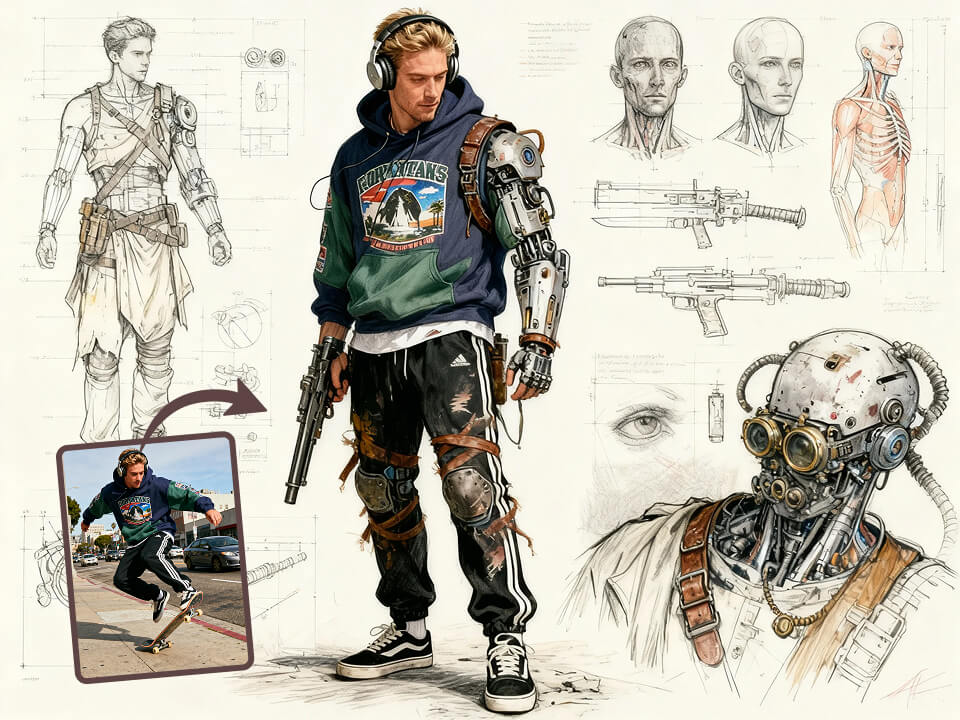
The original character design generator has become one of the most in-demand creative tools of 2026. The AI character generators market is projected to grow at a CAGR of 6.4% from 2026 to 2033, driven by increasing demand for personalized content in gaming, film, and virtual reality. Meanwhile, the broader AI art market is estimated to reach $40 to $60 billion by 2030–2033, and Envato's landmark survey of 1,780 creative professionals found that nearly half of all creative professionals worldwide now use AI on a daily basis.
For the millions of writers, game developers, tabletop RPG players, cosplayers, and fan artists who build original characters (OCs), the problem has never been a lack of imagination — it's been the gap between what they see in their mind and what they can put on a page. That gap is closing fast.
- Character design sheets — front, side, three-quarter, and expression views — are now generatable from text descriptions
- Style control across anime, realistic, cartoon, fantasy, sci-fi, and hybrid aesthetics gives creators visual range without hiring multiple artists
- Character consistency across dozens of images has gone from impossible to achievable through identity embedding and reference sheet systems
- Jenova's Prompt Generator crafts optimized OC design prompts across every art style and AI model — turning plain-language character concepts into structured, production-ready prompts
Quick Answer: What Is an Original Character Design Generator?
An original character design generator is an AI tool that transforms text descriptions of fictional characters into visual designs — producing character sheets, portraits, expression sets, outfit variations, and multi-angle references for use in storytelling, games, roleplay, cosplay, and creative projects.
- 🎨 Multi-style character generation across anime, realistic, cartoon, fantasy, gothic, sci-fi, and hybrid aesthetics — Prompt Generator builds prompts tailored to each
- 🧑🎨 Reference sheet production with front, side, and three-quarter views locked to a single character identity
- 🎭 Expression and outfit variation without losing the character's core visual identity
- 📐 Cross-project consistency through reusable character identity blocks that maintain features across dozens of images
The Problem: Why Creating Original Characters Has Been So Hard
Original character creation sits at the intersection of imagination and technical skill — and for most people, the technical skill has been the bottleneck. As The Silicon Review reported in April 2026: "Gone are the days when you needed years of professional training in complex software just to bring a simple character to life." But the challenges that made OC design difficult haven't disappeared — they've shifted.
The Imagination-to-Execution Gap
Most OC creators aren't professional artists. They're writers who see their protagonist clearly but can't draw them. They're tabletop RPG players who want a portrait for their character sheet. They're cosplayers who need a reference before they start building. They're fan fiction authors who want to visualize their OCs alongside canon characters. Commissioning a professional character design costs $50–$300 for a single illustration, and a full reference sheet with multiple views can run $200–$500+.
Character Consistency Is the Hardest Technical Problem
As Neolemon's 2026 consistency benchmark documented: "Even if you use the exact same prompt twice, tiny variations in the sampling process cause the model to re-decide details it has no reason to lock: eye shape, nose width, jawline, hair silhouette and texture, outfit details, proportions, and micro-style choices."
This means every generation is essentially "generate a new person who matches this description" — not "render this specific character again." For OC creators who need their character to look the same across a reference sheet, expression set, outfit variations, and story illustrations, this is the fundamental barrier.
Neolemon's benchmark identified four types of consistency that real projects demand: identity consistency (same face), style consistency (same illustration style), wardrobe consistency (outfit stays stable unless intentionally changed), and scene continuity (multi-character panels stay coherent). Most tools solve one or two of these. Few solve all four.
Generic Tools Don't Understand OC Workflows
As Digital Synopsis's 2026 guide explained: "With the help of a wide range of image generators, attractive characters may be created. However, these generators may struggle to be consistent in their output. If a character is created and then is needed again, the character may look different the second time it is generated."
General-purpose image generators produce beautiful individual images — but they have no concept of a character as a persistent entity. They don't understand that an OC needs to look the same across a reference sheet, an action pose, a casual outfit variant, and a group scene. They don't separate identity from scene.
The "Solopreneur Artist" Explosion
The Silicon Review identified 2026 as "the year of the Solopreneur Artist" — individual creators who handle everything from marketing to design without the budget for a full team. AI tools allow these creators to "generate 50 different versions of a character for free before deciding on the final one" and "maintain consistency" because "AI models can now 'remember' a character's features, ensuring they look the same across different scenes or designs."
This is exactly what Prompt Generator was built for — it understands the structural requirements of OC design and crafts prompts with reusable character identity blocks that maintain consistency across any AI model.
Why Prompt Generator Is the Best Original Character Design Generator Tool
Unlike one-click character generators that give you a random design and hope you like it, Jenova's Prompt Generator is a specialized prompt engineering partner that puts you in full creative control — building structured prompts that work across every major AI image generator and produce the specific outputs OC creators actually need.
| Challenge | Generic Image Generators | Prompt Generator |
|---|---|---|
| Character uniqueness | Prompt-dependent, often generic | Structured identity blocks with distinctive features |
| Style specificity | One default style | Prompts tailored to anime, realistic, cartoon, fantasy, gothic, sci-fi, and hybrid |
| Reference sheets | Not supported natively | Multi-view prompt sets (front, side, three-quarter, back) |
| Expression sets | Each generation drifts | Locked identity with variable expression layers |
| Model optimization | Same prompt for every tool | Tailored syntax for Midjourney, Stable Diffusion, ChatGPT, and others |
| Iterative refinement | Start from scratch each time | Collaborative refinement with persistent memory across sessions |
The OC Design Prompt Framework
Based on analysis of leading character design guides and consistency benchmarks, the highest-quality OC design prompts follow a structured framework that separates identity from scene. The Prompt Generator builds this automatically:
- Core identity — Species/race, gender, age range, body type, skin tone, distinguishing marks (scars, tattoos, heterochromia)
- Facial features — Eye color/shape, nose, jawline, expression default, facial hair
- Hair — Color, length, style, texture, distinctive elements (streaks, accessories)
- Outfit & accessories — Clothing style, color palette, signature items (weapon, pendant, gloves)
- Art style anchor — ONE specific style (anime cel shading, semi-realistic digital painting, cartoon flat color, dark fantasy, cyberpunk, etc.)
- View/pose specification — Front view, three-quarter, profile, action pose, expression sheet
- Quality markers & negatives — Masterpiece, high detail, clean line art; no text, no watermarks, no extra fingers
Ask the Prompt Generator to build an OC design prompt, and it assembles all seven layers with the right keywords for your chosen model.
Proven OC Design Prompts by Genre
Here are tested prompt structures you can use immediately — or ask the Prompt Generator to customize for your specific character concept:
Fantasy Warrior — Semi-Realistic Digital Painting:
"Character reference sheet, semi-realistic digital painting style, a young woman with deep brown skin and amber eyes, long white locs pulled into a high ponytail, angular jawline with a thin scar across the left cheek, wearing dark leather armor with gold filigree, a curved sword strapped to her back, confident standing pose, neutral gray background, front view and three-quarter view side by side, masterpiece, high detail. No text, no watermarks."
Cyberpunk Hacker — Anime Style:
"Original character design sheet, modern anime cel shading, a nonbinary person with short electric green hair shaved on one side, cybernetic left eye glowing cyan, pale skin, wearing a black tactical hoodie with holographic patches and fingerless gloves, relaxed slouching pose, multiple views: front, side profile, and close-up face, clean line art, vibrant neon color palette, masterpiece. No text, no watermarks."
Gothic Vampire — Dark Fantasy Illustration:
"OC reference sheet, dark fantasy illustration style, a tall man with shoulder-length silver hair and crimson eyes, aristocratic features, high cheekbones, wearing a long black Victorian coat with red velvet lining and a silver cravat pin, dramatic three-quarter pose, moonlit atmosphere, front view and profile view, ornate detail, rich shadows, masterpiece. No text, no watermarks."
Cartoon Mascot — Flat Color Style:
"Character turnaround sheet, cartoon flat color style, a cheerful fox character with orange and cream fur, large expressive green eyes, wearing a blue scarf and tiny backpack, round friendly proportions, four views: front, back, left side, right side, clean outlines, bright saturated colors, white background, mascot design, high detail. No text, no watermarks."
Same framework. Four completely different characters. The identity block stays locked while the style anchor and view specification do the heavy lifting.
Try the Prompt Generator free — no credit card required.
Related Agents You'll Also Like
🎨 Manga Creator — Turn Your OC into a Full Manga Story
For creators who want to go beyond single character illustrations and build complete narratives around their original characters. The Manga Creator handles character reference sheets with identity embedding, five professional art style templates (Shonen, Shoujo, Seinen, Slice-of-Life, Chibi), and a persistent story state engine that tracks your OC's arc across sessions.
- Character reference sheet architecture with identity embedding across 200+ pages
- Intelligent panel composition with authentic manga reading flow
- Persistent story state tracking characters, relationships, and plot threads
🖌️ Graphic Designer — OC-Powered Brand & Marketing Visuals
When you need your original character applied to merchandise mockups, social media assets, stickers, profile banners, or branded content — not just standalone illustrations.
- Social media templates with character integration
- Merchandise mockup generation (phone cases, prints, apparel, stickers)
- Print-ready illustrations and marketing collateral
🎮 Roleplay Game Master — Bring Your OC to Life in Interactive Stories
The most popular roleplay agent on Jenova — with unlimited memory and perfect character consistency. Create an interactive story where your original character becomes a living, breathing personality you can talk to, adventure with, and develop over time. Your OC's backstory, personality traits, speech patterns, and relationships persist across every session.
- Unlimited persistent memory across sessions
- Perfect character consistency in personality and dialogue
- Open-world narrative with full creative freedom
How It Works: From Character Concept to Complete Design
Step 1: Describe Your Character in Plain Language
Open Prompt Generator and describe your OC however feels natural. You don't need to know prompt syntax — the agent asks the right questions to fill in the gaps.
"I'm creating an original character for a fantasy novel. She's a half-elf alchemist in her late 20s with copper-red hair in a messy braid, heterochromatic eyes — one green, one gold — and freckles across her nose. She wears a worn leather apron over a linen shirt, always has stained fingers from her work, and carries a satchel full of vials. Personality is curious and slightly reckless. I want a semi-realistic fantasy art style."
Step 2: Receive Your Structured Character Identity Block
The Prompt Generator assembles a complete seven-layer prompt optimized for your chosen AI model. Critically, it separates the character identity block (the locked description of who your character is) from the scene/view layer (what they're doing, where they are, what angle you're seeing them from). This separation is what Neolemon's consistency guide identifies as the key to maintaining identity across multiple images.
Step 3: Generate Your Reference Sheet
Ask for a multi-view reference sheet first — front, three-quarter, and profile views on a neutral background. This becomes your visual anchor for all subsequent generations. The Prompt Generator formats the prompt specifically for reference sheet output, including view specifications, neutral background directives, and consistency-optimizing keywords.
Step 4: Expand with Variations
Once your reference sheet is locked, ask for variations — different outfits, expressions, action poses, seasonal variants, or age progressions. The agent maintains your character's identity block while varying only the scene and action layers.
"Give me five prompts for this character: one casual modern-day outfit variant, one battle-ready action pose, one expression sheet with four emotions (happy, angry, surprised, sad), one chibi version, and one group scene with a second character I'll describe."
Step 5: Export Prompt Sets for Batch Generation
Get organized prompt collections for batch generation — complete character bibles with reference sheets, expression sets, outfit variations, and turnaround views — all using the same locked identity block. Return days or weeks later and the Prompt Generator remembers your character through persistent memory.
Results & Use Cases
📚 Writers Visualizing Their Characters
Scenario: A novelist wants to see their protagonist, antagonist, and supporting cast as visual references while writing — and share character art with beta readers and on social media.
Traditional Approach: Commission an artist ($100–$500 per character for a reference sheet), wait 1–3 weeks for delivery, limited revisions, and the artist's interpretation may not match the author's vision.
Jenova Solution: Use Prompt Generator to build identity blocks for each character in your cast. Generate reference sheets, expression sets, and scene illustrations in minutes. Iterate until every character looks exactly right. For full manga adaptation, @mention Manga Creator.
🎮 Tabletop RPG Character Portraits
Scenario: A D&D player wants a portrait for their new character — a tiefling warlock with specific visual details that matter to the backstory.
Traditional Approach: Browse generic fantasy art galleries, settle for "close enough," or commission a portrait ($30–$150) and wait days before the next session.
Jenova Solution: Describe your character to the Prompt Generator in plain language — race, class, distinctive features, equipment, personality — and get an optimized prompt that produces exactly your character, not a generic tiefling. Generate multiple variations to find the perfect one before game night.
🎭 Roleplay & Fan Community OCs
Scenario: A creator wants to design an original character for roleplay communities, fan fiction, or social media — with consistent art across profile pictures, story illustrations, and interaction posts.
Traditional Approach: Use picrew or generic avatar makers with limited customization, or commission multiple artists (resulting in inconsistent styles across pieces).
Jenova Solution: Design your OC visually with the Prompt Generator, then bring them to life in interactive stories with Roleplay Game Master — which maintains unlimited memory and perfect character consistency across sessions. Your OC's personality, backstory, and relationships persist across every conversation.
💼 Game Developers & Concept Artists
Scenario: An indie game developer needs concept art for a cast of 12 characters — each with expression sheets, outfit variants, and action poses.
Traditional Approach: Hire concept artists at $200–$1,000 per character sheet. A 12-character cast could cost $2,400–$12,000 in concept art alone, before any in-game assets are produced.
Jenova Solution: Generate character identity prompts for all 12 characters with the Prompt Generator. Produce reference sheets, expression sets, and action poses for each. Iterate in real-time instead of waiting for artist revisions. Use the output as concept art to brief your production artists — or as final assets for indie projects.
👗 Cosplayers Building Reference Packages
Scenario: A cosplayer wants to create an original design — not a fan costume — with clear reference images showing construction details from multiple angles.
Traditional Approach: Sketch by hand (if skilled), hire a designer, or work from vague mental images and improvise during construction.
Jenova Solution: The Prompt Generator creates multi-angle reference sheets with specific attention to construction-relevant details — seam lines, fabric textures, accessory placement, and color specifications. Generate front, back, and detail close-up views to use as your build reference.
FAQ
What is an original character design generator?
An original character design generator is an AI tool that creates visual designs of fictional characters from text descriptions. Unlike avatar makers with preset options, a true OC generator produces unique, customizable character art — including reference sheets, expression sets, and outfit variations. Jenova's Prompt Generator builds optimized prompts that work across any AI image generator, giving you full creative control over every visual detail.
How do I keep my OC looking the same across multiple images?
The key is separating your character's identity from the scene. Create a locked "identity block" — a fixed description of physical features, hair, distinguishing marks, and core outfit — and reuse it verbatim across every prompt while varying only the action, background, and view layers. Neolemon's 2026 benchmark confirmed that this separation is the foundation of all consistency methods. The Prompt Generator builds these identity blocks automatically and maintains them through persistent memory.
Can I generate a full character reference sheet with AI?
Yes. By specifying "character reference sheet" or "character turnaround" in your prompt along with view directions (front, side, three-quarter, back), you can generate multi-view reference sheets. The Prompt Generator formats these prompts with the right keywords — neutral background, consistent lighting, labeled views — to maximize the chance of a clean, usable reference sheet from your chosen AI model.
What art styles can an AI OC generator produce?
Current AI models handle a wide range of styles effectively: anime/manga (shonen, shoujo, seinen, chibi), semi-realistic digital painting, cartoon flat color, dark fantasy illustration, cyberpunk, gothic, sci-fi concept art, watercolor, and hybrid 2D-3D styles. Digital Synopsis's 2026 guide confirmed that the style anchor in your prompt is the single most important factor in determining output quality. The Prompt Generator knows which keywords unlock each style across different AI models.
Is the Prompt Generator free?
Yes — you can start using the Prompt Generator for free with no credit card required. Free accounts include all core features with limited usage. Paid plans starting at $20/month increase usage limits for high-volume character design and prompt generation.
Can I use AI-generated OC art commercially?
Commercial rights depend on the AI image generator you use to render the final images. Jenova allows commercial use of generated content on paid plans. For the image generators themselves: Midjourney, Leonardo AI, and others grant commercial use on paid tiers. The US Copyright Office currently does not grant copyright to purely AI-generated images, but human-directed creative choices (curation, modification, arrangement) may be protectable. Always verify the terms of your chosen image generator before commercial deployment.
Conclusion
The original character design generator has transformed from a novelty into a serious creative tool in 2026. The AI character generators market is growing at a 6.4% CAGR through 2033, nearly half of all creative professionals use AI daily, and the broader AI art market is racing toward $40–$60 billion by 2030–2033. As The Silicon Review put it: "The digital art world is no longer a gated community."
The technical barriers that once made OC design prohibitively expensive and skill-dependent — character consistency, multi-view reference sheets, style control, expression variation — are solvable through structured prompt engineering. The only remaining challenge is the creative one: What character do you want to bring to life?
Try Prompt Generator now — describe your original character in plain language and get optimized prompts for any AI model, any art style, and any output format. Build full stories around your OC with Manga Creator, bring them to life in interactive roleplay with Roleplay Game Master, or create merchandise and marketing assets with Graphic Designer. Browse the complete agent library at Jenova.