Office Life Simulator: AI Workplace Politics & Promotions
2026-08-30
Roleplay Game Master helps you live an office life simulator by letting workplace politics, promotions, and coworker alliances emerge from what you actually say and do. While most office games lock you into tycoon meters, task-clicking, and scripted job tracks, this AI provides a conversation-first workplace that remembers who stole credit, who covered for you, and which meeting you skipped. In August 2026, that social layer is the part of office life people most want to rehearse — or disappear into for an hour.
✅ Open-world office roleplay with coworkers and bosses who stay in character ✅ Meetings, promotions, and alliances that unfold from your choices ✅ Play intern, manager, or founder — no fixed career track to grind ✅ Full feature parity across web, iOS, and Android, with memory that persists across sessions
If you have ever wanted to test a bolder version of yourself in a 1:1, survive a hybrid standup without becoming the office reporter, or simply inhabit a desk you do not have in real life, this is built for that itch. To understand why a true office life simulator is harder to find than it looks, it helps to look at how work games usually fail the human part of the office.
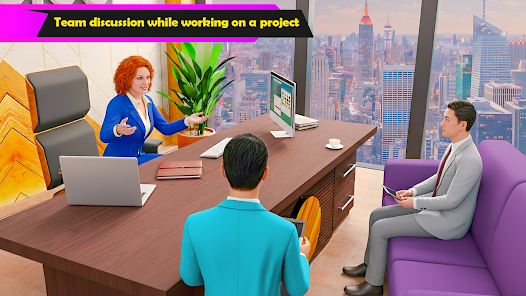
Quick Answer: What Is an Office Life Simulator?
Roleplay Game Master is an AI office life simulator that turns your choices into emergent workplace alliances, meeting outcomes, and career consequences through open-world conversation. There is no scripted promotion path. The story is the office you create.
Key capabilities:
- Conversation-first office play where politics form from what you say, not a charm meter
- Coworkers, managers, and skip-levels who remember prior scenes
- Roleplay that follows your title, team, hybrid calendar, and risk tolerance
- Persistent memory so a tense Tuesday standup can still matter on review day
The Problem With Most Office Games
Office life is not a side quest. Gallup’s global workplace research found that only 20% of employees worldwide were engaged in 2025, with disengagement associated with $10 trillion in lost productivity. Hybrid schedules are now the default for many knowledge workers: among U.S. employees who can work remotely, 52% work hybrid, 26% are fully remote, and 22% are on-site. People are not starving for another idle clicker about “being at a desk.” They are starving for a place to practice — or play — the social physics of that desk.
Business schools already treat simulation as a serious way to study decisions. MIT Sloan’s management simulations exist because students learn more from seeing consequences immediately than from hearing a lecture about them. Simulation games let learners try, watch, and evaluate real-world scenarios in a safe environment. That is the promise. Most consumer “office” games do not keep it.
But getting an office life simulator that actually feels like work is frustratingly difficult:
- Tycoon and idle games that treat the company as a spreadsheet, not a social system
- Job minigames that reward clicking coffee cups instead of handling a difficult manager
- NPCs who forget yesterday’s slack-off, credit-steal, or alliance
- Desktop-only sandboxes you cannot open on the train before a 9 a.m. standup
Attendance theater is not office life
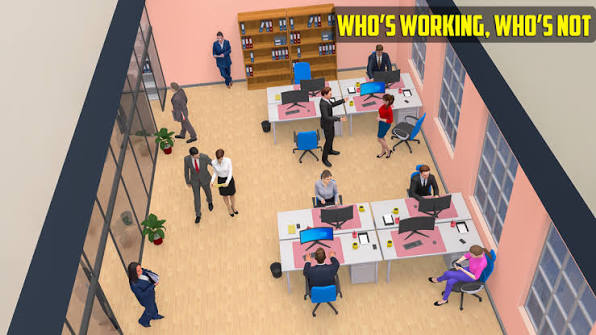
A lot of workplace software — and a lot of workplace games — still answer the wrong question: who is visible, not who is effective. Research on hybrid work argues that organizations should measure performance by results rather than attendance, and that monitoring computer activity just trains people to game the system. If your office life simulator is a productivity heatmap, you are simulating surveillance, not a career.
Meters replace consequences
Skill bars, hunger, bladder, and “focus points” can be fun as systems play. They are a poor stand-in for the actual unit of office drama: a sentence in a meeting that cannot be unsaid. Real workplaces compound. The person you undercut in Q2 sits on the calibration panel in Q4.
Memory is the missing org chart
College stories compound; office stories compound harder, because the cast is trapped together by payroll. A simulator that resets character knowledge every session cannot do promotions, grudges, or slow-burn mentorship. You end up restating the plot to your own boss.
Meeting overload is the real open world
Post-pandemic office work did not get simpler. Hybrid-work analysis citing Microsoft reported a 252% rise in time spent in meetings each week. An office life simulator that skips the calendar and jumps straight to a “promotion cutscene” is skipping the map.
This is exactly what Roleplay Game Master was built for.
Why Roleplay Game Master Works as an Office Life Simulator
This AI workplace roleplay treats the office as a social open world, not a checklist of tasks. You talk. People react. Alliances form, stall, or break because of what you chose in the last scene — and the scene before that. Unlimited memory and character consistency are the whole product, not a setting you toggle.
| Traditional office game | Roleplay Game Master |
|---|---|
| Tycoon meters, idle clicks, scripted job tracks | Emergent politics from your actual dialogue |
| “Work” as coffee, printers, and skill bars | Conversation-first play focused on people |
| NPCs who forget last week’s 1:1 | Persistent memory across sessions and devices |
| Desktop-only sandboxes | Web, iOS, and Android with synced history |
| One canned intern-to-CEO plot | Your title, team, hybrid calendar, and risks |
Emergent politics, not a charm meter
You do not unlock a promotion by bringing bagels three times. You meet people in motion — after a standup, in a stairwell, on a Zoom call where someone is clearly driving. Because the sim is conversational, a joke that lands, a secret you keep, or a loyalty you break can reroute the whole team graph. Getting passed over is on the table. So is the quieter outcome: a skip-level who starts steering work your way.
Your choices are the engine
The only way an office life simulator works is if it will let you be political, conflict-avoidant, over-prepared, reckless, or quietly competent — and then live with the weather that follows. You can play a contractor who never gets invited to lunch, a manager drowning in calendar debris, or someone who is only here to collect a paycheck and leave at 5:01. The AI does not scold you back onto a “high performer” route.
Try opening a quarter like this:
"I'm a senior analyst at a mid-size consulting firm. My manager restates my points as his own in every client meeting. I have a skip-level with the partner in 20 minutes. Walk me from the elevator to the glass conference room."
Or skip straight to the charged scene:
"Hybrid Tuesday. Half the team is on camera, half is in the office performing busyness. I need a promotion packet, and I also need to not become the person who reports who's working. Start the standup."
An office that remembers you
Because conversation history and preferences persist, the sim can carry a slight from week one into a calibration meeting in November. That is closer to how offices actually feel than a relationship bar. It also means you can close the chat on your phone and reopen it later without rebuilding the org chart from scratch.
Built for the way people already work
You do not need a gaming PC or a three-hour session. Start a scene between meetings, continue it on the couch, and pick it up the next morning. Speech-to-text is available when you would rather talk the scene than type it. Privacy matters here too: data is not used to train public AI models, and it is not sold to advertisers.
While The Sims turns careers into skill bars and job minigames turn work into physical comedy, this office life simulator specializes in the conversations that actually decide a career.
Related Agents You'll Also Find Useful
An office life simulator is often the start of a broader habit — career planning, review season, or the real calendar sitting next to the fantasy.
Career Advisor
If a simulated promotion makes you want the real map, Career Advisor is the strategist for exploration, transitions, and advancement. Use the roleplay to find out whether you even want the next title, then use this agent to research markets, frame a move, and pressure-test the story you would tell a hiring manager.
- Frameworks for exploration, transition, and advancement
- Real-time research across roles and markets
- A clean split between fantasy office and actual next step
Performance Review Consultant
If you are playing the manager — or you are the manager — this is the structured counterpart to freeform office roleplay. Performance Review Consultant helps with evidence-based assessments, bias detection, calibration, and feedback language so the 1:1 you rehearsed does not turn into a vague pep talk.
- Evidence and calibration instead of vibes
- Bias checks before ratings harden
- Feedback craft you can take into a real cycle
Personal Secretary
Office life is also logistics. Personal Secretary manages calendar, email, travel, and daily coordination with personal context — useful when the simulated meeting load starts resembling your actual week, or when you want the AI to run the real inbox after you finish playing the fake one.
- Calendar, email, and travel in one place
- Context that persists across your professional and personal life
- A practical landing pad after a long roleplay session
Try Roleplay Game Master free — no credit card required.
How It Works
You do not install a client, decorate a cubicle, or spend an hour unlocking the coffee machine. You start talking, and the office forms around the person you claim to be.
Step 1: Claim a role and a workplace Start the office life simulator and say who you are — title, team, company size, and what you want from the quarter. One specific paragraph beats a vague “I work in an office.”
"Mid-level product manager at a 200-person SaaS company. Hybrid, three days in. My skip-level thinks I'm 'not visible enough.' I want the next title without becoming the person who talks the most in standups. Monday, 8:55 a.m."
Step 2: Put yourself in a concrete room Name the location and the social risk. The more specific the room, the richer the NPCs. A glass conference room at 4:50 p.m. produces different people than a Slack huddle at 9:10.
"I'm already five minutes late to the weekly business review. The VP is sharing my dashboard. My engineer just pinged me that the number is wrong. Do I interrupt?"
Step 3: Choose in character, not as a max-optimizer Answer as the worker you are playing. If they would freeze, freeze. If they would CC the whole thread, CC the whole thread. Emergent office dynamics only appear when you stop steering toward the “good performance review.”
Step 4: Let the office answer, then continue Read the fallout. Follow up the next morning, skip a week, or change the power dynamic. Because memory persists, you can leave a conflict unresolved and return to it later on your phone — which is how real office drama actually works.
Results & Use Cases
📊 Rehearse the promotion conversation you keep postponing
Scenario: You have the work. You do not have the script. You want to ask for scope, title, or money without sounding either desperate or arrogant, and you want to hear a skeptical manager talk back.
Traditional Approach: Advice articles, a rehearsed monologue in the shower, and a real 1:1 that goes off-script in the first two minutes.
Roleplay Game Master: You run the scene until the words feel like yours. NPCs interrupt, misread you, and remember what you promised last quarter. If the conversation is a formal review, Performance Review Consultant can sit beside the roleplay and help you turn evidence into language.
- Low-stakes practice for high-stakes meetings
- Pushback you cannot get from a static script
- A path from play to a real review packet
💼 Play a career you have not lived yet
Scenario: You are considering management, a switch into consulting, or a founder seat, and you want to feel the social cost before you update LinkedIn.
Traditional Approach: Informational interviews that stay polite, plus career blogs that describe titles instead of Tuesday afternoons.
This office life simulator: You spend a week in the role — the calendar, the politics, the moment someone asks you to lay a person off. If the fantasy still appeals, Career Advisor can turn that signal into a market map and a transition plan.
- Try a title before you campaign for it
- Social consequences, not just a job description
- A clean handoff from roleplay to real strategy
📱 Office politics on the commute
Scenario: You are on a train or in a rideshare. You have twelve minutes. You want one charged workplace scene — not a 40-minute load into a desktop neighborhood.
Traditional Approach: Open a PC life sim, wait through boot, then abandon it because the conversation you wanted took 15 clicks through furniture and needs.
The AI office sim: You type (or speak) the scene on iOS or Android. The skip-level, the almost-confrontation, the teammate who forwards your draft — it plays in the same chat thread you will reopen at your desk.
- Full feature parity with web
- Speech-to-text when your hands are full
- History that follows you across devices
🎯 Run a team without wrecking trust
Scenario: You just became a manager, or you are about to. You need to practice delivering a hard rating, defending someone in calibration, and not turning hybrid policy into a loyalty test.
Traditional Approach: A one-day training, a template email, and then the live conversation with a human whose rent depends on how you show up.
Roleplay, then structure: Run the messy human scene in the office life simulator until you can stay specific under pressure. Then use Performance Review Consultant for evidence, bias checks, and calibration language, and Personal Secretary if the real calendar is already the boss.
- Practice power without practicing on your reports
- Feedback that is concrete instead of “be more visible”
- Logistics support when the roleplay ends and the week starts
FAQ
What is an office life simulator?
An office life simulator is a game or AI experience that lets you live workplace social life — tasks as setting, not the point — with politics, promotions, and conflict that respond to your choices. Roleplay Game Master is an AI version of that idea: open-world office roleplay where alliances and career consequences emerge from conversation rather than from a tycoon meter or a scripted job track.
Is Roleplay Game Master free to use?
Yes. You can start on the free tier with all core features and limited usage, and no credit card is required to try it. If you run long workplace sagas every day, paid plans raise the monthly usage allowance. Usage resets on your billing date, with the full limit available from day one rather than rationed as a daily cap.
How is this different from The Sims, Job Simulator, or BitLife jobs?
Those games are strong at systems, physical comedy, or branching checklists. A social simulation only works when interactions change the outcome, and most office titles still run on skill bars and scripted jobs. This office life simulator is conversation-first: you speak as a worker, and promotions or fallout follow from what you did, including across sessions, because the story remembers.
Does an office life simulator work on mobile?
Yes. Play on the web, iPhone, or Android with the same history and settings. That matters for this genre — the scenes people actually want (the pre-1:1 spiral, the Slack message you should not send, the decision before you lose your nerve) happen away from a desk. You can also use speech-to-text when you are commuting.
Can I play as an employee and as a manager?
Yes. The design is not intern-only and not CEO-only. You can play a year that is mostly about a difficult peer, a skip-level, a direct report, or a founder who still writes her own specs. Power can go badly. Ordinary loyalty, exclusion, and repair are part of the same emergent system. For real review cycles, pair the roleplay with Performance Review Consultant.
Will the story stay consistent if I come back days later?
That is one of the main reasons to use an AI office life simulator with persistent memory instead of a stateless chatbot. Prior scenes, names, grudges, and preferences carry forward, so you are not re-explaining that you already asked for the raise. If the story leaves the office entirely, the same memory discipline still holds — you are not locked to a single workplace map.
Conclusion
Most office games give you a meter, a cubicle, and a promotion that waits at the end of a checklist. A real office life simulator needs something harder: people who change because of you, a workplace that remembers, and the freedom to be political, generous, or disastrous in conversation.
Roleplay Game Master is that AI office life simulator — open-world workplace roleplay where meetings, promotions, and alliances unfold from your choices. Start a skip-level, a hybrid standup, or the quieter story of someone who only wanted to do good work and go home. Then keep playing when the quarter (and the group chat) gets complicated.
Explore more at Jenova.
For Developers: Roleplay Game Master is available programmatically via the Jenova API — integrate office life simulation and persistent workplace roleplay into your application with a single API call. Full documentation →