OC Maker: Build Original Characters With AI That Remembers Everything (April 2026)
2026-04-18
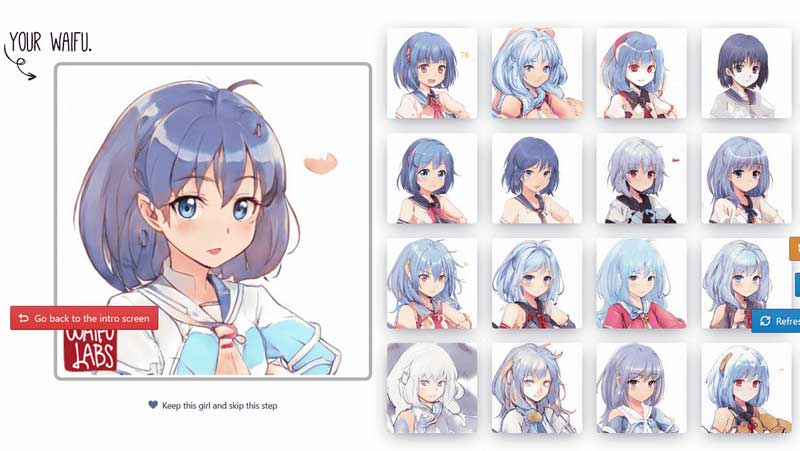
Every original character starts the same way — a spark. A face you can almost see. A voice you can almost hear. A contradiction that makes them interesting. But between that spark and a fully realized OC, there's a gap that most tools can't bridge. Picrew gives you a portrait. Random generators give you a name and three adjectives. Waifu Labs gives you an anime face in four clicks. None of them give you a person.
In 2026, the AI character generators market is projected to grow at a CAGR of 9.1–13.3% through 2033 (LinkedIn / Industry Report, Apiary / Growth Forecast). Character.AI alone serves over 20 million monthly active users who have created 18 million unique chatbots (DemandSage). Picrew draws 23.1 million monthly visits with 90% of traffic coming from mobile (Exploding Topics / Semrush). The appetite for character creation is enormous — but the tools remain shallow.
The Creative Fiction Writer on Jenova is built for the gap between a spark and a person. It doesn't randomize traits or generate a portrait you'll forget in five minutes. It collaboratively builds original characters through conversation — psychology, backstory, contradictions, voice — and remembers every detail across unlimited sessions.
- ✅ Psychology-first character building through collaborative conversation
- ✅ Persistent cross-session memory — your OC's details never fade or reset
- ✅ Multi-model flexibility: GPT-5.4, Claude Opus 4.6, Gemini 3.1 Pro
- ✅ Visual concept descriptions for character appearance and design references
Quick Answer: What Is an OC Maker?
An OC maker is a tool that helps creators build original characters — personalities, backstories, visual designs, relationships, motivations, and narrative hooks — for fiction writing, tabletop RPGs, roleplay, manga, comics, games, and fan communities. The best OC makers in 2026 produce narratively coherent, psychologically complex characters rather than randomized trait lists.
- 🧠 Deep character profiles — Psychology, contradictions, and voice with the Creative Fiction Writer
- 🎭 Test character dynamics — Roleplay through scenes to discover how your OC actually behaves
- 🎨 Visual concept generation — Detailed appearance descriptions for artist references or image prompts
- 🔄 Persistent memory — Every detail carries forward across unlimited sessions
The Problem: Why Most OC Makers Produce Characters You Forget
Character creation has become one of the most popular creative activities online in 2026. Character.AI users have created over 18 million unique chatbots, with 51.84% of the platform's audience aged 18–24 (DemandSage). Picrew ranks #2,434 globally with 23.1 million monthly visits, and its search interest shows consistent demand with periodic viral surges throughout 2025 and into 2026 (Exploding Topics / Semrush, Accio). The AI avatar market is expanding from $0.80 billion in 2025 to a projected $5.93 billion by 2032 at a CAGR of 33.1% (Accio / Market Analysis). And the broader digital avatar market was valued at $29.06 billion in 2024, projected to reach $652.29 billion by 2032 (Accio).
18 million AI characters created on Character.AI alone — yet most OC makers still produce characters defined by hair color and a single personality trait, not by who they actually are. (DemandSage)
The demand is massive. The tools keep falling short in predictable ways.
Portrait Without a Person
Tools like Picrew, Waifu Labs, and Artbreeder dominate the OC maker space — but they create a look, not a character. Waifu Labs uses a neural network trained on anime data to generate portraits in four steps, offering backgrounds and husbandos alongside the original waifu generation (Waifu Labs). Picrew lets artists create customizable image makers that others can use to assemble portraits from pre-drawn components (Picrew). Both produce visually appealing output — but neither generates a backstory, a voice, a motivation, a relationship map, or the internal contradiction that makes a character feel alive. The visual is the easiest part of character creation. Everything underneath is what matters.
Randomized Traits, Not Real Psychology
Random character generators — the kind that produce "brave, 23, brown-haired, orphaned" — operate on template logic. They slot elements into fixed categories and call it a character. But as the 2026 digital art landscape has shifted toward what Cosimo Art calls the "authenticity economy" — where audiences crave work that unmistakably reveals human authorship and emotional depth (Cosimo Art) — randomized outputs feel increasingly hollow. A character who is "brave" isn't interesting. A character who is brave because they're terrified of being perceived as weak — and who overcompensates in ways that damage their relationships — that's a person.
No Memory, No Growth
Character.AI's own user polls show that 29% of users demand better memory as their top feature request (DemandSage). When your OC maker forgets that your character has a fear of deep water, that their mother was a disgraced knight, or that they lie about their age to everyone they meet — every subsequent interaction starts from zero. Generic chatbots can brainstorm a character concept once, but they can't develop one across sessions.
Fragmented Across Five Different Tools
In 2026, building a complete OC typically requires a visual creator for the portrait (Picrew, Waifu Labs), a writing tool for the backstory (Google Docs, Notion), a separate platform for roleplay testing (Character.AI, SillyTavern), a name generator, and a wiki or Toyhou.se profile for organization. Toyhou.se — the dedicated OC management platform — provides character repositories, adoptable trading, and roleplay communities (Toyhou.se), but it's a storage tool, not a creation tool. Each platform operates in isolation. Nothing connects. As The Silicon Review noted in their April 2026 analysis, the most successful creators in 2026 are those who have learned to use AI to handle the repetitive labor while focusing on high-level creative direction (The Silicon Review) — but most OC workflows still require manual stitching across disconnected tools.
Why Creative Fiction Writer Is the OC Maker That Actually Works
This is exactly what the Creative Fiction Writer on Jenova was built for. It's not a portrait generator or a random trait picker — it's a collaborative AI storytelling partner that builds original characters through conversation, discovers their voice through dialogue, and maintains every detail in persistent memory across unlimited sessions.
| Challenge | Traditional OC Makers | Creative Fiction Writer on Jenova |
|---|---|---|
| Character depth | Randomized traits and visual templates | Collaborative psychology-first character building |
| Memory | None — output is static text or a saved image | Unlimited persistent cross-session memory |
| Voice discovery | Not available | Dialogue testing and voice profiling |
| Visual + narrative | Separate tools required (Picrew + Docs + wiki) | Integrated character description + visual concept generation |
| Model flexibility | Single AI or no AI | Switch between GPT-5.4, Claude Opus 4.6, Gemini 3.1 Pro |
| Consistency | Characters drift or reset between sessions | Every detail persists indefinitely |
| Ecosystem | Isolated tool | Connected to roleplay, fiction writing, manga, and naming agents |
While tools like Waifu Labs and Picrew excel at visual output, and Toyhou.se excels at character organization, Jenova's Creative Fiction Writer addresses the creative gap between them — the actual building of who a character is.
Psychology-First Character Building
Tell the Creative Fiction Writer your character concept — even a fragment. "A healer who resents being needed." "A villain who genuinely believes they're saving the world." "A detective who solves everyone's problems except their own." The AI asks probing questions that deepen the character organically: What specific event made them this way? How does this contradiction manifest in daily behavior? What do they lie about, and who do they lie to? Each answer creates new threads to explore. You always have final say.
Voice Discovery Through Dialogue
The most powerful way to find a character's voice isn't to describe it — it's to hear them speak. The Creative Fiction Writer generates sample dialogue in your character's voice, tests how they respond under pressure, and helps you identify the speech patterns, vocabulary, and emotional rhythms that make them distinct. Your stoic warrior doesn't just "speak formally" — they use clipped sentences, avoid first-person pronouns, and deflect personal questions with tactical observations.
Integrated Visual Concepts
Describe your character's appearance in conversation and the AI generates detailed visual concept descriptions — specific enough to serve as image generation prompts or artist references. Hair texture, clothing style, posture, the way they carry themselves, the details that communicate personality through appearance.
"Build me an OC for a post-apocalyptic setting. She's a former concert pianist who survived by becoming a scavenger. She still has elegant hands but everything else about her is rough. Give me her backstory, personality profile, three contradictions, and how she speaks."
"I have a character concept: a retired assassin running a flower shop. I want to explore why they chose flowers specifically, what triggers their old instincts, and how they interact with customers who have no idea about their past."
"Generate a complete OC profile for a dark academia setting: name, age, appearance, personality traits, contradictions, backstory summary, three relationships, one secret, and a character voice sample. Make them someone a reader would obsess over."
Try the Creative Fiction Writer free — no credit card required.
Related Agents You'll Also Like
🎭 Roleplay Game Master — Test Your OC in Action
The best way to know if a character works is to put them in a scene. The Roleplay Game Master provides immersive, unlimited-memory roleplay where you can test your OC's reactions, discover their voice under pressure, and find the moments that define who they are. Use it as a sandbox before committing your character to a story, campaign, or series.
- Unlimited persistent memory for character consistency across sessions
- Any genre, any setting, any scenario
- Discover character voice through interaction, not description
- Perfect for testing OC dynamics with other characters
🎨 Manga Creator — Bring Your OC to Visual Life
Turn your original character into complete manga stories with consistent art, panel flow, and narrative structure. The Manga Creator maintains visual consistency for your OC across panels and pages — from one-shots to 200+ page epics.
- Consistent character art across entire stories
- Panel flow and visual storytelling
- Any genre: shonen, shoujo, seinen, josei
🏷️ Name Generator — Names That Fit the Character
A character's name is their first impression. The Name Generator provides contextually appropriate names informed by linguistic patterns, cultural traditions, genre conventions, and the specific personality you've built — so your cyberpunk street medic doesn't end up with a name that sounds like a medieval princess.
- Fantasy, sci-fi, historical, and contemporary naming
- Cultural and linguistic consistency
- Names for characters, locations, factions, and artifacts
How It Works: From Spark to Complete OC
1. Start With a Seed
Open a chat with the Creative Fiction Writer and share your starting point — a concept, a contradiction, a visual, a feeling, even just a genre and a role. The AI stores everything in persistent memory from the first message.
"I want to create an OC for a cyberpunk noir setting. He's a former corporate lawyer who got disbarred for doing the right thing. Now he works as a fixer in the undercity — solving problems for people who can't afford real lawyers. He's brilliant but self-destructive. I want him to feel like a Raymond Chandler character dropped into Blade Runner."
2. Build Through Conversation
The AI asks questions that deepen the character organically. What case got him disbarred? Does he still believe in the law? Who does he trust — and why is that list so short? What specific habit reveals his self-destructive streak? Each answer creates new dimensions. You always have final say — the AI proposes, you decide.
3. Generate the Full Profile
Once the character feels real, ask for a structured profile: name, age, appearance, personality traits, contradictions, backstory summary, relationships, secrets, voice sample, and narrative hooks. The AI compiles everything you've established into a cohesive document.
4. Test Through Roleplay
Bring your OC to life with the Roleplay Game Master. Put them in a scene — a confrontation with their former employer, a quiet moment with someone they're starting to trust, a crisis where their old instincts conflict with their new principles. The dialogue they speak and the choices they make become canonical character details.
"Let's roleplay the moment my fixer runs into his old law partner at a noodle stand in the undercity. She's doing well — she stayed corporate, she made partner. Play her. I want to find out how he reacts to seeing the life he could have had."
5. Export and Expand
Download your OC profile as a PDF through the PDF Doc Generator, or continue developing them across sessions. Use the detailed appearance description as a prompt for image generators or as a reference sheet for commissioned art. The character lives in Jenova's persistent memory — ready for your next writing session, roleplay campaign, or creative project.
Results & Use Cases
📖 Novel Character Development: From Concept to Chapter One
Scenario: A fiction writer has a plot outline but needs a protagonist who feels like a real person — not a plot device with a name attached.
Traditional Approach: Filling out character questionnaires, writing backstory documents that never get referenced, starting chapter one six times because the voice doesn't feel right.
With Jenova: Build the character collaboratively with the Creative Fiction Writer. Discover their voice through dialogue samples. Test key scenes with the Roleplay Game Master. By the time you write chapter one, you know exactly how this person speaks, thinks, and reacts — because you've already spent hours in conversation with them.
🎲 D&D Campaign: Interconnected NPCs in One Session
Scenario: A DM needs a cast of NPCs for a new campaign — each with distinct motivations, interconnected secrets, and hooks that players can discover organically.
Traditional Approach: Hours of manual writing, cross-referencing a wiki, and still ending up with NPCs who feel like quest dispensers.
With Jenova: The Creative Fiction Writer generates interconnected OC profiles in a single conversation — the tavern keeper who's hiding a fugitive, the guard captain who knows but owes the keeper a debt, the merchant who's actually the fugitive's sibling. Every connection is tracked in persistent memory and available during live sessions.
🎨 Manga Character Design: Visual + Narrative Consistency
Scenario: An artist is creating a manga series and needs OCs with consistent visual designs, personality profiles, and character arcs that hold across 50+ chapters.
Traditional Approach: Separate documents for character sheets, visual references, and story outlines. Inconsistencies accumulate. Characters drift.
With Jenova: Build each OC's personality and backstory with the Creative Fiction Writer, then bring them to visual life with the Manga Creator. Persistent memory ensures the character who appears in chapter 47 is the same person who was introduced in chapter 1.
📱 Mobile OC Creation: Build Characters Anywhere
Scenario: A creator builds OCs during commutes and between classes, losing context every time they close the app.
Traditional Approach: Re-reading notes, losing momentum, producing fragmented character profiles that need heavy revision.
With Jenova: Persistent memory means every mobile session continues seamlessly from the last. Open the app, pick up mid-conversation, and the AI remembers every detail — your character's childhood trauma, their relationship with their mentor, the specific lie they tell everyone they meet.
FAQ
How is this different from Picrew or Waifu Labs?
Picrew and Waifu Labs create a character's appearance — a portrait with customizable features or AI-generated anime art. They don't create personality, backstory, voice, or narrative hooks. Picrew draws 23.1 million monthly visits (Exploding Topics / Semrush) and Waifu Labs uses a GAN-based neural network to generate anime portraits in four steps (Waifu Labs). Both are excellent at what they do — but they produce a face, not a person. Jenova's Creative Fiction Writer builds everything underneath the visual: the psychology, contradictions, relationships, and speech patterns that make a character feel alive. For visual storytelling, the Manga Creator produces consistent character art across entire stories.
Can I use this for D&D characters, not just fiction?
Absolutely. The Creative Fiction Writer builds OCs for any context — D&D 5e, Pathfinder, Call of Cthulhu, homebrew systems, fiction writing, manga, roleplay, video game concepts, and original worldbuilding. Tell it your system and setting, and it adapts. For gameplay-focused character development, the Roleplay Game Master lets you test your OC in actual scenarios with unlimited persistent memory.
Does the AI remember my OC across sessions?
Yes. Jenova's persistent cross-session memory means every character detail — name, backstory, personality quirks, relationships, secrets, voice patterns — carries forward indefinitely. You can return weeks later and the AI still knows that your character's mentor was a one-armed dwarf named Korrin who smelled like pipe smoke and regret. This is the critical difference from Character.AI, where 29% of users cite memory as their top unmet need (DemandSage).
What about Toyhou.se — can I use both?
Toyhou.se is an excellent platform for organizing and displaying OCs — character repositories, image galleries, adoptable trading, and roleplay communities (Toyhou.se). Jenova's Creative Fiction Writer is for creating OCs — building the character through conversation, discovering their voice, and developing their backstory. The two are complementary: build your character on Jenova, then organize and share them on Toyhou.se.
How much does Jenova cost?
Jenova offers a free tier with all core features. Paid plans start at $20/month for expanded usage. You can create complete OC profiles on the free plan.
Will my OC feel generic or AI-written?
Only if you treat it as a one-click generator. The collaborative approach — where you provide creative direction, answer questions, make choices, and test scenes through roleplay — produces characters that reflect your creative vision. As The Silicon Review's 2026 analysis put it: "The 'soul' of the art still comes from the human who writes the prompt and chooses the best output" (The Silicon Review). The AI handles structure and consistency. You handle the soul.
Conclusion
An original character isn't a portrait and a name — it's a person with contradictions, a history that shaped them, a voice that's distinctly theirs, and secrets they keep even from the reader. Picrew gives you a face. Waifu Labs gives you an anime portrait. Random generators give you a stat block with adjectives. None of them give you the moment your character hesitates before lying, or the reason they always sit with their back to the wall, or the specific memory that surfaces every time it rains.
The Creative Fiction Writer on Jenova gives you something fundamentally different: a collaborative partner that builds characters through conversation, discovers their voice through dialogue, and remembers every detail across unlimited sessions. Test your OC in action with the Roleplay Game Master. Bring them to visual life with the Manga Creator. Find the perfect name with the Name Generator. Everything connects. Nothing is forgotten.
Try the Creative Fiction Writer free — no credit card required. Explore the full agent library at Jenova.