NovelAI Alternative: AI Fiction, Roleplay & Manga in One Place
2026-10-15
Writers searching for a NovelAI alternative usually want three things NovelAI doesn't fully provide: more creative range, more flexible pricing, and a workflow that follows them across devices. Jenova meets those needs with a library of specialized AI agents for fiction drafting, long-running roleplay, screenwriting, and manga and webtoon creation. Each agent is built for a specific creative format rather than a single aesthetic.
As of October 2026, creators no longer have to choose between a strong prose tool and a strong visual tool, or juggle several subscriptions to cover both. Jenova keeps your story world, characters, and drafts connected in one persistent workspace.
- ✅ Dedicated agents for novels, roleplay, screenplays, microdramas, manga, comics, and webtoons
- ✅ Persistent cross-session memory and unlimited chat history, so your lore stays intact
- ✅ Access to models from OpenAI, Anthropic, Google, DeepSeek, xAI, and more, with no vendor lock-in
- ✅ Free tier available, with full feature parity on web, iOS, and Android
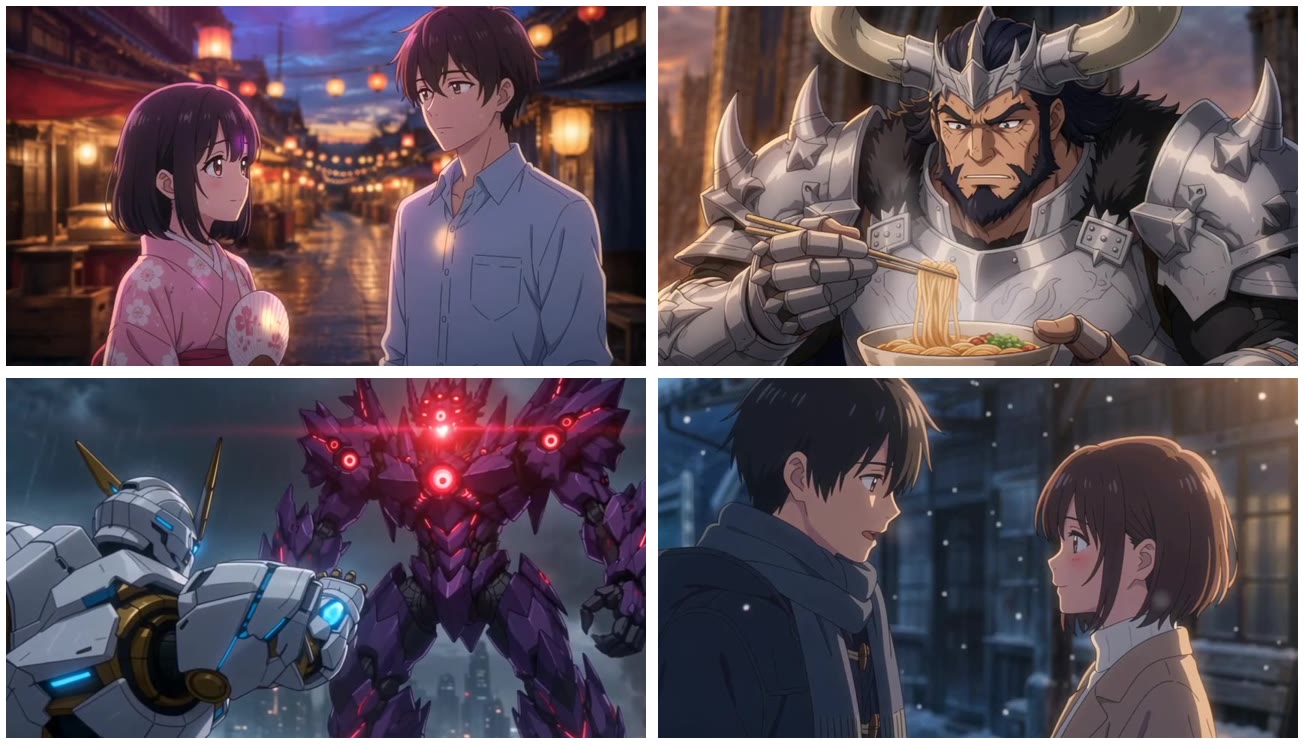
Slice-of-life romance, comedic fantasy, mecha action, and winter drama call for different tones, pacing, and visual languages. A strong NovelAI alternative should handle all of them without forcing your story into one house style. To understand why so many writers are looking beyond NovelAI, it helps to start with the friction points creators report most often.
Quick Answer: What Is the Best NovelAI Alternative?
A NovelAI alternative is an AI creative platform that replaces or extends NovelAI's anime-focused storytelling and image generation. Jenova covers fiction drafting, persistent-memory roleplay, scripts, and manga or webtoon creation in one app across web and mobile.
Key capabilities:
- Long-form fiction drafting with research support and editorial feedback across any genre
- Immersive roleplay with unlimited memory and consistent characters
- Visual storytelling through manga, comic, and webtoon creation with a consistent art style
- Multi-model access and custom agents built on your own story bible
Why Writers Look for a NovelAI Alternative
NovelAI built its reputation by pairing AI storytelling with anime-style image generation. According to Jotform's NovelAI review, it launched in 2021 and became popular with manga artists, visual-novel developers, and RPG creators. Meanwhile, the broader AI writing market has grown well beyond that niche:
**$3.40 billion**: [Projected global AI writing assistant software market in 2026, forecast to reach $20.78 billion by 2034](https://www.fortunebusinessinsights.com/ai-writing-assistant-software-market-111184)
25% CAGR: Projected annual growth of the AI writing assistant software market through 2035
More options have created higher expectations. But finding one tool that handles serious fiction, interactive play, and visuals well is surprisingly hard:
- Narrow aesthetic focus: NovelAI's visuals are optimized for anime styles.
- Rigid pricing: NovelAI uses a subscription-only model with no free tier.
- Desktop-bound workflows: NovelAI offers no native mobile app.
- Memory and consistency drift: Many tools lose track of details across long manuscripts.
- Tool sprawl: Writers stitch together separate apps for prose, roleplay, scripts, and art.
Narrow Aesthetic Focus
Jotform's analysis lists "narrow focus on anime aesthetics" as one of NovelAI's main drawbacks. That focus is a strength if you only write anime-inspired fiction. It becomes a constraint when your project is a grimdark epic, a literary thriller, or a Western-style graphic novel. Writers who move between genres need a tool that adapts to the project.
Subscription-Only Pricing
The same review notes that NovelAI is subscription-only. It also identifies affordability as a top reason people look for alternatives. For hobbyists testing whether AI fits their process, paying before writing a single scene is a real barrier.
No Native Mobile App
Many writers draft in fragments: dialogue on a commute, a plot fix at 1 a.m., a character sketch during lunch. Jotform flags NovelAI's lack of a native mobile app as a limitation. For a tool meant to capture ideas as they come, that gap matters.
Memory and Consistency Over Long Projects
Continuity is the hardest problem in AI-assisted fiction. One widely discussed post on
argues that AI is "bad at outlining, expanding ideas, remembering details and plotting." Competitors now market directly against this weakness. Novarrium, for example, frames its list around tools that "actually handle full novels" with character consistency.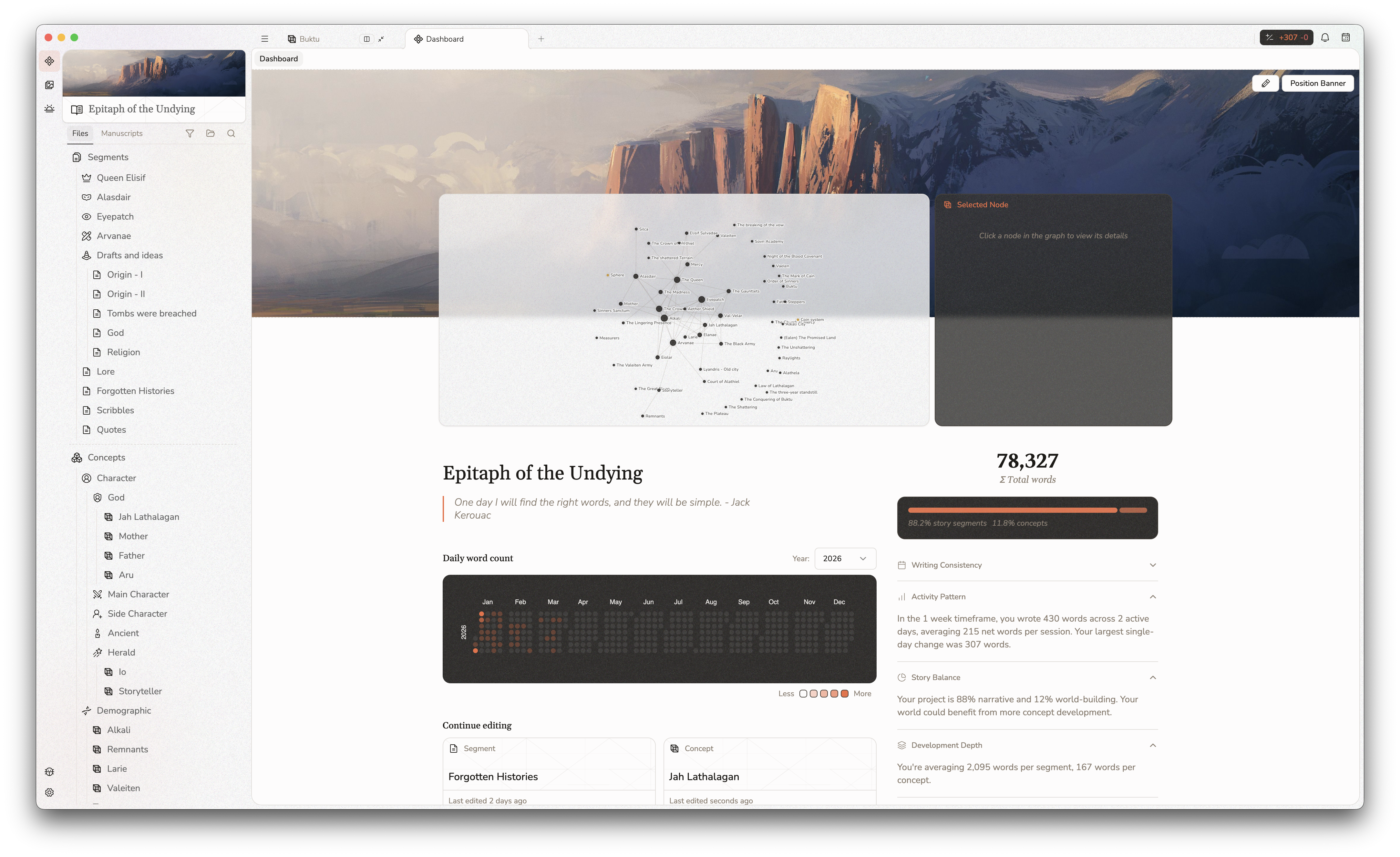
A manuscript of 78,000+ words, organized into lore files, character profiles, and dozens of linked story nodes, is exactly where generic AI writers break down. Gods, heralds, factions, and forgotten histories all need to stay consistent from chapter one to the epilogue.
Tool Sprawl
Power users often patch these gaps together themselves. In an
, one writer describes pairing OpenRouter with Novelcrafter and names Novelcrafter and Sudowrite as NovelAI's main competitors. Roundups such as Dunia's list split the market even further into roleplay apps, writing assistants, and character chat tools. The result is multiple logins, multiple bills, and lore copied by hand between apps.Where NovelAI still shines: To be fair, Jotform credits NovelAI with high-fidelity anime visuals, granular narrative control, and a privacy-focused design that includes encryption for private projects. If anime image generation is your only need, a dedicated anime art generator may serve you well. Writers who need more than one format are the ones best served by switching.
This is exactly the fragmentation Jenova was built to solve.
The Jenova Solution
Jenova takes a different approach from single-purpose writing apps. It does not offer one general model with a story mode. Instead, it provides specialized agents, each designed for a specific creative format, and connects them with shared infrastructure: persistent memory, multi-model access, document uploads, and tool integrations.
| Traditional Approach | Jenova |
|---|---|
| Visuals optimized mainly for anime aesthetics | Genre-flexible agents for prose, scripts, manga, comics, and webtoons |
| Subscription required before you start | Free tier with all core features; paid plans from $20/month |
| No native mobile app | Full feature parity across web, iOS, and Android |
| Re-pasting lore into every session | Persistent cross-session memory plus attachable knowledge bases |
| Stitching a model router onto a separate writing app | Models from OpenAI, Anthropic, Google, DeepSeek, and xAI in one account |
| Separate tools for roleplay, scripts, and art | Dedicated agents for each format, all in one place |
How Jenova compares with other popular options:
- Sudowrite: Jotform praises Sudowrite for "highly creative storytelling assistance" but lists limited visual tools as a drawback. Jenova pairs prose agents with dedicated visual storytelling agents.
- AI Dungeon: Jotform notes that AI Dungeon offers strong roleplay interactivity but is "not ideal for factual or structured writing." Jenova keeps open-ended roleplay and structured manuscript work as separate, purpose-built experiences.
Long-Form Fiction and Novel Drafting
Creative Fiction Writer is a storytelling partner for original fiction in any genre. It researches to make your worlds feel authentic, gives editorial feedback, and helps you move from first draft to polished manuscript. You set the voice, POV, and tone, and it works within those choices rather than defaulting to a generic house style.
"Here's my magic system and the three factions of the Remnants. Draft chapter 12 from Io's POV, keeping the herald's secret hidden until the final line."
Interactive Roleplay and Story Games
Roleplay Game Master delivers immersive roleplay with unlimited memory, consistent characters, and complete creative freedom to explore any scenario. Readers who enjoy structured interactive fiction can also try Love Island, an open-world romance in which relationships unfold based on your choices.
"Start a dark fantasy campaign. I'm an exiled cartographer who just found a map to a city that shouldn't exist."
Manga and Visual Storytelling
For creators who came to NovelAI for visuals, Manga Creator acts as a personal mangaka. It handles panel flow, visual storytelling, and consistent art styles, from one-shots to serialized epics of 200+ pages. It covers anime-adjacent creative needs while also handling the structure of a complete story.
Screenwriting for Film
Novelists adapting their work can turn to Film Screenwriter, which supports concept, outline, draft, and revision. It focuses on structure, dialogue, and visual storytelling craft.
Platform Capabilities Behind Every Agent
- Multi-model access: Switch between the latest models from OpenAI, Anthropic, Google, DeepSeek, and xAI without managing separate accounts.
- Persistent memory: Agents remember your preferences, past sessions, and long-running projects.
- Knowledge bases: Attach your series bible, character sheets, or earlier chapters so responses stay grounded in your canon.
- Tool integration (MCP): Use built-in Google Search, Google Scholar, YouTube, and Notion for worldbuilding research and organizing notes.
- Custom agents: Build your own writing companion in minutes with custom instructions, a preferred model, and a private knowledge base.
Specialized AI Agents for Fiction, Roleplay, and Visual Stories
For Novelists and Short Fiction Writers
Creative Fiction Writer This agent is a strong fit for writers who outgrew NovelAI's story mode and need help with structure, pacing, and revision across an entire manuscript. It researches settings for authenticity and gives honest editorial notes, not just more text.
- Drafts in any genre, from cozy mystery to epic fantasy
- Researches historical, cultural, and technical details for authentic worlds
- Supports the full arc from first draft to final manuscript
For Interactive Fiction Fans
Roleplay Game Master This agent is built for the campaigns and character-driven sessions many NovelAI users enjoy. Unlimited memory means a betrayal set up in week one can pay off in week ten.
- Maintains consistent characters across very long sessions
- Gives you complete creative freedom over scenario and tone
- Adapts the world in response to your choices
For Visual Storytellers
Manga Creator This agent turns story ideas into complete manga, combining script, panel layout, and consistent art in one workflow.
- Plans panel flow and pacing for visual storytelling
- Keeps character designs and art style consistent across pages
- Scales from one-shots to serialized epics of 200+ pages
Comic Creator This agent is built for Western-style sequential art, an aesthetic that anime-focused tools rarely serve well. It handles dynamic layouts and bold visual styles.
- Produces single issues or full graphic novel arcs
- Composes dynamic page layouts for action and drama
- Supports a range of bold, non-anime visual styles
For Writers Who Use Multiple AI Tools
Prompt Generator This agent writes high-quality prompts for text, image, music, and video AI models. It is useful if you also generate cover art, character portraits, or soundtrack ideas in other tools.
- Crafts detailed image prompts for character and scene art
- Refines prompts collaboratively until they match your vision
- Works across text, image, music, and video models
Try Jenova free. No credit card required.
How to Switch From NovelAI to Jenova
Step 1: Choose the Agent That Matches Your Format Start with the agent designed for your project: fiction drafting for novels, game mastering for roleplay, or manga creation for visual stories. Matching the agent to the format gives you better structure and feedback than a general-purpose chat model.
"I'm writing a 90,000-word epic fantasy with four POV characters. Help me plan the structure for act two."
Step 2: Upload Your Story Bible and Existing Chapters Attach your lore documents, character profiles, and finished chapters so the agent works from your canon. If you're moving over from NovelAI, export your lorebook and story text first, then upload them as reference material.
"Here are my character profiles and the first eight chapters. Summarize the unresolved plot threads before we continue."
Step 3: Draft and Revise Scene by Scene Ask for full scenes, alternative versions, or line-level edits, and give specific feedback on voice and pacing. Persistent memory carries your preferences forward, so you don't need to repeat style notes every session.
"Rewrite this confrontation so Alasdair stays calm while Queen Elisif loses her temper. Cut it to about 800 words."
Step 4: Add Visuals When the Story Needs Them Switch to a visual agent to create character sheets, manga panels, or webtoon episodes based on the same story. This keeps prose and art in one workspace instead of spread across separate apps.
"Design a character sheet for the Herald: tall, ash-gray robes, a mask with no eye holes, carrying a ledger chained to her wrist."
Step 5: Continue on Any Device Pick up your project on your phone, tablet, or laptop. Settings and history sync automatically, and speech-to-text lets you dictate dialogue when typing isn't practical.
Real-World Use Cases
📖 Finishing an Epic Fantasy Manuscript
Scenario: A novelist is 60,000 words into a fantasy series with a pantheon of gods, three factions, and several timelines.
Traditional Approach: Pasting lore excerpts into every session, rereading old chapters to check facts, and tracking contradictions in a separate spreadsheet.
Jenova: The writer attaches the series bible once and drafts new chapters with an agent that remembers prior sessions and flags continuity conflicts.
- Less time spent re-establishing context
- Fewer continuity errors across timelines
- Editorial notes on pacing and character arcs, not just new prose
🎲 Running a Months-Long Roleplay Campaign
Scenario: A roleplay fan wants a single dark-fantasy campaign to evolve over dozens of sessions.
Traditional Approach: Character personalities drift, side characters vanish, and earlier plot hooks are forgotten after a few hundred messages.
Jenova: Unlimited memory and consistent characters keep the world stable. Choices from early sessions continue to shape later events.
- Stable character voices across long arcs
- Earlier plot threads pay off naturally
- Full creative control over tone and scenario
📱 Pitching a Webtoon During the Commute
Scenario: An aspiring creator wants to develop a vertical-scroll romance series but only has free time on the train.
Traditional Approach: Waiting until they can sit down at a desktop with design software.
Jenova: On the iOS or Android app, Webtoon Creator helps plan episode hooks, vertical scroll rhythm, and full-color visual consistency in short sessions.
- Ideas captured as they come, with voice dictation
- Episode structure built for mobile readers
- Projects sync seamlessly to desktop
🎬 Adapting a Novel Into a Vertical Microdrama
Scenario: An indie author wants to adapt a finished romance novel for short-form vertical video platforms.
Traditional Approach: Learning a new screenplay format from scratch or hiring a script consultant.
Jenova: Microdrama Screenwriter breaks the novel into seasons of 60–100 episodes, with a cliffhanger in each episode and paywall-aware pacing.
- Turns existing IP into a new format
- Builds structure designed around episode-level hooks
- Keeps dialogue tight for short runtimes
Frequently Asked Questions
Is there a free NovelAI alternative?
Yes. Jenova offers a free tier that includes all core features with limited usage, so you can test fiction, roleplay, and visual agents before paying. NovelAI, by contrast, is subscription-only according to Jotform. If you need more capacity, Jenova's paid plans start at $20 per month. Usage resets monthly with no daily caps, so your full allowance is available from day one.
What is the best NovelAI alternative for roleplay?
For long-running interactive stories, Roleplay Game Master is designed specifically for immersive roleplay. It offers unlimited memory, consistent characters, and complete creative freedom over scenarios. Unlike general chatbots, it keeps track of earlier plot hooks and character traits across very long sessions, which helps sustain campaigns over weeks or months.
Can a NovelAI alternative create anime and manga art?
Yes. If anime-style visuals drew you to NovelAI, Manga Creator covers both the art and the storytelling, including panel flow, pacing, and consistent character designs. It handles everything from one-shots to serialized stories of 200+ pages. For non-anime styles, dedicated comic and webtoon agents cover Western sequential art and vertical-scroll formats.
Does Jenova work on mobile?
Yes. Jenova offers full feature parity across web, iOS, and Android, and settings and chat history sync automatically between devices. It also includes speech-to-text for dictating dialogue or plot notes. This contrasts with NovelAI, which reviewers note lacks a native mobile app. That makes Jenova practical for writers who draft in short sessions throughout the day.
Is my writing private on Jenova?
Your data is never used to train public AI models. It is encrypted in transit and at rest, and it is never sold or shared with advertisers. For novelists working on unpublished manuscripts, this means drafts, story bibles, and roleplay sessions stay private while you continue to benefit from persistent memory across sessions.
Which AI models can I use?
Jenova provides access to the latest models from OpenAI, Anthropic, Google, DeepSeek, xAI, and others through a single account. Paid plans include custom model selection, so you can choose one model for lyrical prose and another for tight plotting. You can switch freely without managing separate subscriptions or routing services.
Conclusion
NovelAI helped popularize AI-assisted storytelling, but its anime-centric focus, subscription-only pricing, and lack of a mobile app leave many writers looking for more. The best NovelAI alternative is not a single replacement model. It is a connected workspace where your novel, your roleplay campaigns, and your visual stories share the same memory and canon.
Jenova provides that workspace. Draft and revise full manuscripts with Creative Fiction Writer, turn chapters into panels with Manga Creator, and polish blurbs, query letters, or newsletters with Writing Assistant. All of it runs on whichever leading model suits the scene. Whether you need an AI writing tool for fiction, an AI roleplay platform with lasting memory, or a manga generator that understands story structure, you can start for free.
Explore the full agent library at Jenova.
For Developers: Every agent in this article is available programmatically via the Jenova API. Build AI fiction, roleplay, and visual storytelling features into your application with a single integration. Full documentation →