Narrative Puzzle Game AI: Design Story Puzzles That Feel Fair
2026-09-09
Game Designer Assistant helps you design a narrative puzzle game where every clue is also a story beat. While moon-logic riddles and disconnected lock-and-key chores break immersion, this AI maps information, space, and character so the solve feels inevitable in hindsight.
As of September 2026, players judge story-driven puzzles by whether the world taught them how to think — not by how many combination locks you hid in drawers.
✅ Ties clues to character, space, and plot instead of arbitrary gates ✅ Stress-tests moon logic, soft locks, and missing signposts ✅ Documents knowledge states, red herrings, and fair aha moments ✅ Works for exploration mysteries, room escapes, and mobile story puzzles
To understand why this matters, look at how players actually fail. They rarely quit a hard puzzle. They quit a puzzle that never taught the rule it later demands.
Quick Answer: What Is Narrative Puzzle Game AI?
Narrative puzzle game AI is a design partner that turns story, space, and clues into solvable systems so players reach authored aha moments without moon logic. It is a thinking tool for designers, not a generator of random riddles.
Key capabilities:
- Clue graphs that track what the player knows, not only what they carry
- Environmental storytelling that doubles as puzzle evidence
- Fairness passes for signposting, red herrings, and one-way knowledge gates
- Prototype briefs you can playtest before you build the room
- Design docs writers, artists, and engineers can share
The Problem With Puzzles That Ignore the Story
Narrative puzzle games live or die on a single promise: if you pay attention to the world, the world will make sense. Break that promise and players stop reading the fiction. They start hunting for the designer's hidden homework.
Academic work on interactive stories keeps returning to the same fault line. Virtual environments must balance the player's agency with the author's structure, and that balance usually costs exponential branching effort if you try to author every path by hand. A puzzle is a compressed version of that problem. One wrong gate, and agency collapses into a search for the intended object.
A 2025 empirical study of narrative time and player agency in loop-driven games shows how structure and choice collide when time, memory, and retry rules are part of the story. Narrative puzzles inherit the same collision. The clue you hid in a journal is also a pacing device. The lock you placed on a door is also a spoiler wall.
That number matters because of how teams use the tools. Among those users, research and brainstorming is the most common task at 81%, with prototyping far behind asset generation. Designers need help thinking, not a slot machine of riddles.
But turning that thinking into a coherent narrative puzzle is frustratingly difficult:
- Clues that live in the UI instead of the world
- Puzzles that pause the plot until a unrelated minigame is cleared
- Knowledge that resets on death, reload, or a missed inspect prompt
- Mobile sessions that strand the player mid-deduction
Puzzle games sit at the intersection of cognitive engagement and casual accessibility. That is a commercial advantage and a design trap. If the story is flavor text around a grid, players will skip the story. If the puzzle is homework around a cutscene, they will look up the answer.
This is exactly the problem a dedicated game design partner was built to solve.
Why Game Designer Assistant
Game Designer Assistant treats your puzzle plan as a story system, not a list of locks. You describe tone, player knowledge, spaces, and the question each scene should ask. It returns clue maps, fairness notes, and the edge cases playtesters usually find after you have already built the room.
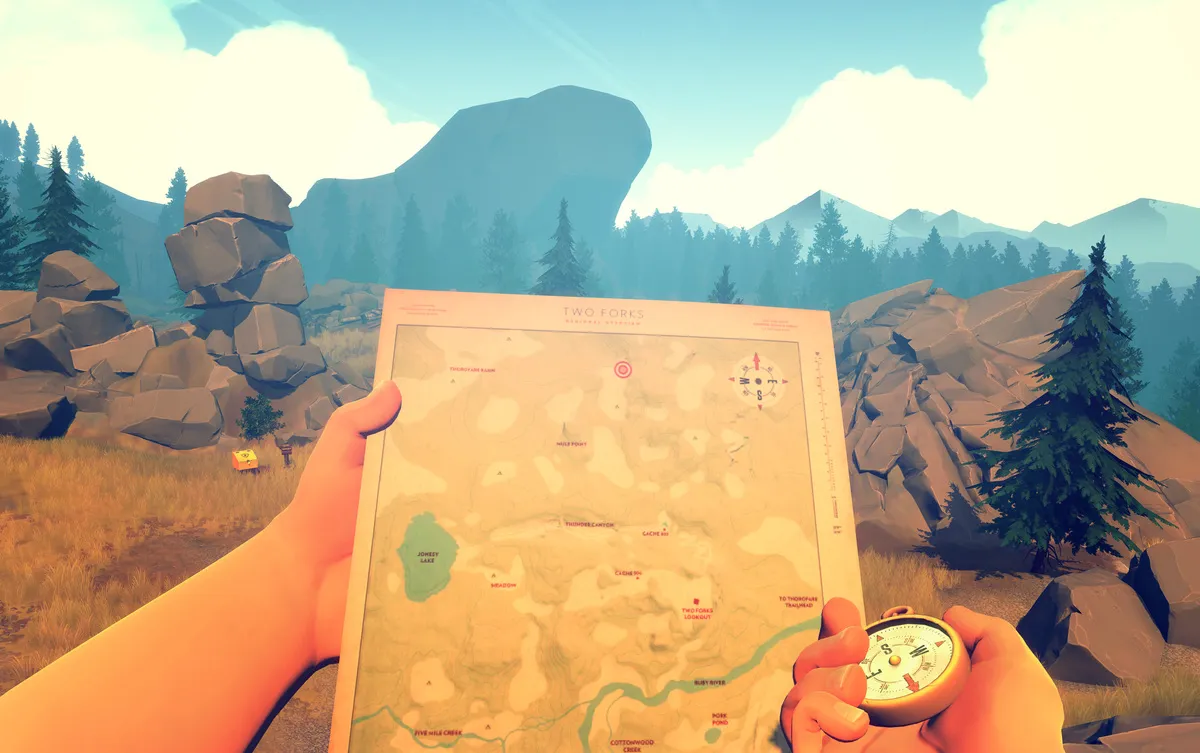
A topographic map in the player's hands is not decoration. It is a diegetic interface: landmarks, compass bearings, and the gap between what the paper claims and what the ridge actually shows. The assistant helps you specify what the player can read — journals, wear patterns, radio chatter, mural damage — so evidence and fiction agree.
| Traditional Approach | Game Designer Assistant |
|---|---|
| Place a lock, then invent a key | Start from a story question, then design the evidence |
| Flavor text after the puzzle | Clues that are character, history, and space |
| Moon logic found in playtests | Fairness pass before greybox |
| Spreadsheet of item IDs | Knowledge-state graph: known, suspected, disproved |
| One difficulty for all sessions | Short-session and deep-run variants of the same mystery |
Clues as Story, Not Inventory
The best narrative puzzles do not ask "do you have the item?" They ask "did you understand the person who lived here?" A burned map, a mislabeled trail, or a compass that disagrees with the sun is a scene. The assistant forces you to name the fiction of each clue before you name the mechanic.
Knowledge State Is the Real Inventory
Items lie. Memory does not have to. A robust design tracks what the player has witnessed, inferred, and wrongly assumed. That is how you avoid the classic failure: a character explains a secret the player already proved, or a door stays locked after the player has already done the thinking.
Fairness You Can Defend in a Postmortem
Moon logic is not "hard." It is unpublished rules. The assistant will ask what taught the rule, where a false trail is planted, and what happens if the player solves the story out of spatial order. You leave with a keep/cut list for red herrings — the difference between a mystery and a prank.
"Design a wilderness mystery where the map is slightly wrong. The player has a compass, radio notes, and three named landmarks. List diegetic clues, the intended deduction order, and two false trails that still feel in-character."
"Turn this betrayal scene into a desk puzzle: letters, a stamped timetable, and a photograph. The solve should reveal who lied, without a UI highlight. Flag any step that requires out-of-world knowledge."
"Our mobile story-puzzle has eight-minute sessions. Propose knowledge checkpoints so a commute does not strand the player mid-cipher, and a recap card that does not spoil the next aha."
Related Agents You'll Also Find Useful
If you are building a narrative puzzle game, you are also writing reveals, staging props, and deciding what the camera (or the panel) is allowed to hide. These agents sit next to that work.
Film Screenwriter
If the puzzle keeps interrupting the scene, Film Screenwriter can treat deductions as dramatic turns — setup, midpoint reversal, and the quiet beat after the lock opens.
- Aligns clue reveals with act structure and character want
- Rewrites dialogue so exposition is evidence, not a lecture
- Flags cutscenes that steal the player's aha moment
Comic Creator
Environmental puzzles are sequential art with extra steps. Comic Creator helps you board a room the way a page is boarded: what is visible, what is cropped, what the eye hits first.
- Plans inspect-order and visual hierarchy for clue props
- Keeps journals, murals, and signage in one visual language
- Tests whether a silent panel still "reads" as a puzzle step
Manga Creator
For hand-drawn mysteries, vertical reveals, and page-turn deductions, Manga Creator is the right partner for panel rhythm — the comic equivalent of a well-paced inspect loop.
- Times the page-turn to the aha, not the cliffhanger alone
- Maintains character acting so suspects stay readable
- Helps design in-world documents that look authored, not templated
Try Game Designer Assistant free — no credit card required.
How It Works
Step 1: Capture the Mystery Question
Open the assistant and state the game as a question the player should be able to answer at the end — not as a list of mechanics. Name the tone, the diegetic tools (map, radio, notebook), and what "fair" means in this world.
"First-person wilderness story. The puzzle is reading the land against a park map that predates a fire. Tone is lonely, not horror. Players should never need a wiki to finish the main mystery."
Step 2: Brainstorm Evidence, Not Locks
List characters, spaces, and documents. Ask for a clue graph: taught rule, supporting evidence, optional lore, and forbidden out-of-world knowledge. This is where most teams discover they designed a lock with no teacher.
"Suspects: the lookout, the missing hiker, the radio dispatcher. Evidence must be diegetic. No colored outlines. Include one clue that is only true if you compare two locations."
Step 3: Prototype a Playable Deduction
Request a paper-playable version: inspect order, failure reactions, and what the world says if the player is early, late, or wrong. You want to test the thinking, not the shaders.
"Write a 15-minute tabletop prototype of the lookout-tower mystery. I will play it with two designers. Include a scoring sheet for 'felt fair' vs 'felt like homework.'"
Step 4: Iterate With Playtest Language
Feed back the exact phrases testers used — "I didn't know I could compare those," "the radio spoiled it," "I solved it and the cutscene explained it again." The assistant should convert that into signposting, recap rules, and cut lines.
"Three testers solved the map error but missed the dispatcher lie. Do not add a new item. Propose two environmental reinforcements and one line of radio chatter to cut."
Step 5: Ship the Design Doc, Not Just the Idea
Turn the loop into a short GDD section: knowledge flags, inspectables, fail-forward states, mobile recap rules, and a "never spoil this beat" list for cinematics. That is what the rest of the team builds.
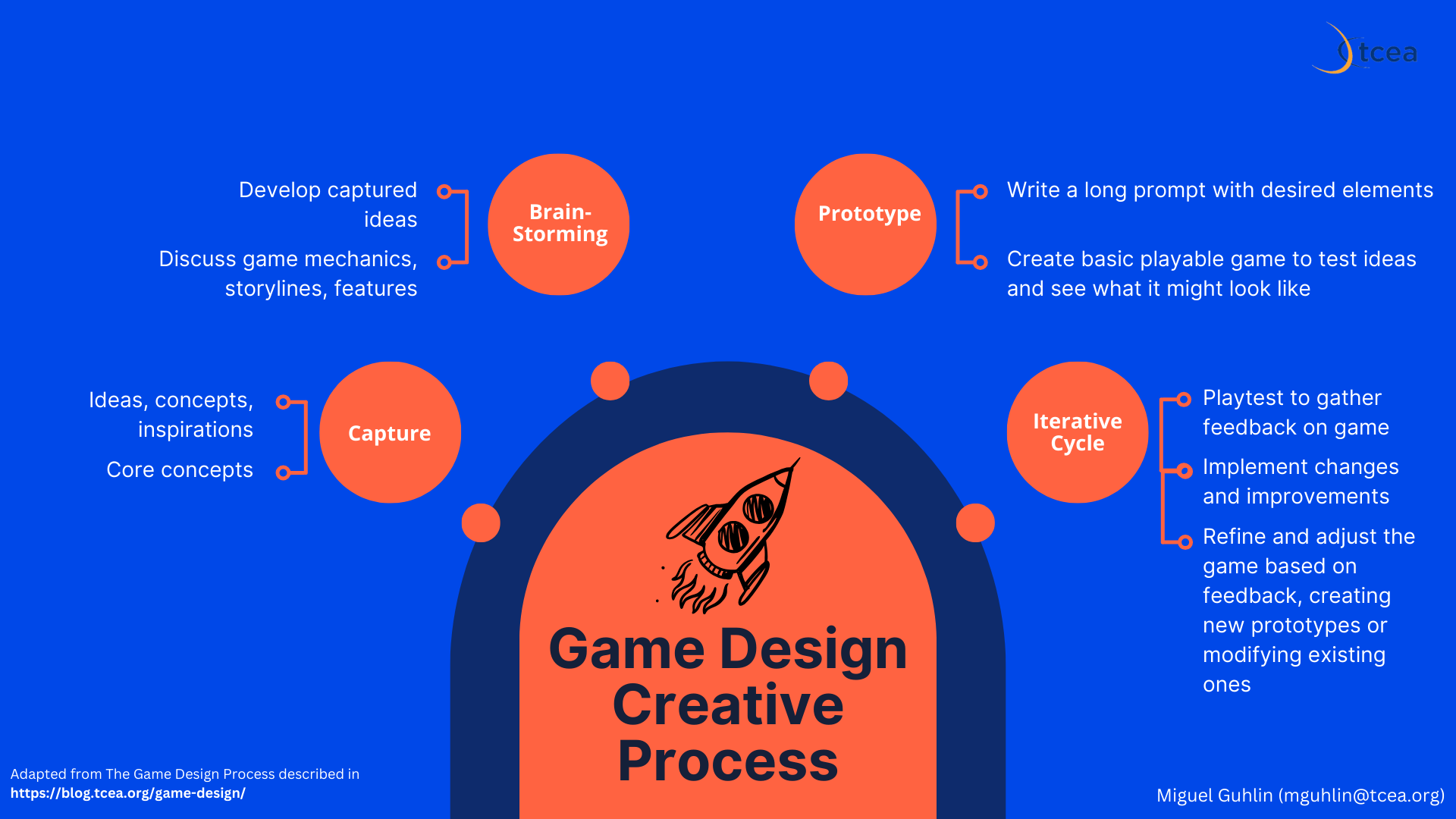
The capture → brainstorm → prototype → iterate loop is not ceremony. Narrative puzzles rot when you skip the paper prototype and discover in alpha that nobody can see the clue you placed behind a door they need the clue to open.
Results & Use Cases
🗺️ Exploration Mystery With a Lying Map
- Scenario: You are designing a lookout-season story. The player holds a map and compass. The central puzzle is that the official cartography is older than a fire, a landslide, or a renamed trail.
- Traditional Approach: A GPS marker and a quest ping. The landscape becomes a loading screen between radio calls. Players never compare paper to ridge.
- Game Designer Assistant: You get a deduction ladder: mismatched lake shape, a compass bearing that cannot match the sun, a lookout log that uses the old name. The aha is geographic, then personal.
- The map is a puzzle object, not a UI overlay
- Radio chatter can hint without narrating the answer
- Pair with Film Screenwriter so the lookout's voice is evidence, not a quest giver
🔐 Desk Mystery That Is Also the Plot
- Scenario: A character has been lying. The proof is on a desk: envelopes, a timetable, a photograph cropped too tightly. Combat is not the point. Reading is.
- Traditional Approach: Highlight the correct prop. Players click the glowing object, skip the letters, and wait for the cutscene to explain the twist they were supposed to earn.
- The design partner: Inspect order, visual hierarchy, and a rule that the cinematic may not restate a deduction the player already voiced. Optional: board the desk as panels with Comic Creator so artists know what must be readable at first glance.
- The twist is earned, not delivered
- Red herrings stay in-character
- Writers and environment artists share one evidence list
📱 Mobile Story Puzzle for a Commute
- Scenario: A cipher-and-chat mystery on phones. Average session is one subway ride. Players close the app mid-decode. Narrative-driven puzzle play on mobile only works if the mystery respects interruption.
- Traditional Approach: Chapter-end saves only. Commuters replay the same riddle. Reviews mention "I lost my place in the thinking."
- Game Designer Assistant: Knowledge checkpoints at each deduction, not each room. A recap card restores facts, not answers. Fail-forward on a missed cipher so story flags survive a dropped connection.
- Quit-to-home is a legal pause in the mystery
- Optional manga-style recap pages via Manga Creator for the next-session cold open
- You can audit the loop on the phone you will ship to
🧠 Research Puzzle That Stays Human
- Scenario: Your indie team wants AI in preproduction — research, brainstorming, paper prototypes — without generating the in-game text or art players will judge as hollow. That matches how many studios already work: ideation first, authored content second. GDC respondents who use these tools most often use them for research, brainstorming, coding help, and prototyping, not for replacing the writers in the credits.
- Traditional Approach: A general chatbot dumps ten riddle ideas, three of which require knowing an Earth fact the fictional world never taught.
- This AI: Every proposed puzzle must cite an in-world teacher. Out-of-world trivia gets flagged. You keep authorship; you spend less time on dead-end lock ideas.
- Faster greybox, same voice
- Fairness documented before implementation
- Designers stay in the loop instead of outsourcing taste
FAQ
What is narrative puzzle game AI?
Narrative puzzle game AI is a design assistant that helps you structure story-driven puzzles — clue graphs, environmental evidence, knowledge flags, and fairness rules — so players can solve mysteries using the world you authored. It is not a random riddle generator. Used well, it shortens the path from mystery question to playable prototype while leaving final text, art, and voice in human hands.
How do you design narrative puzzles that feel fair?
Start from the question the player should answer, then list every in-world teacher of the rule. Place evidence in space and character, not in the HUD. Allow wrong theories that still make sense. Never require a fact the fiction did not offer. A dedicated game design partner can run that pass and output a document artists and engineers can implement.
Is Game Designer Assistant free?
Yes. You can use it on Jenova's free plan with core features and limited usage. Paid tiers increase usage if you are iterating a full GDD. No credit card is required to start, which is enough to prototype a clue graph, a paper playtest, and a mobile recap rule in one sitting.
Can this AI help with environmental storytelling puzzles?
Yes. Describe the space, the diegetic tools, and what must be readable without a prompt. The assistant will propose inspect order, false trails, and comparisons across locations — the "map versus ridge" class of puzzle. For visual staging, bring the same brief to Comic Creator so the room boards like a page.
How is this different from a generic chatbot for puzzle ideas?
Generic prompts optimize for novelty. Narrative puzzles optimize for teachability. This workflow asks what the world already showed, what knowledge persists across sessions, and which cinematics would steal the aha. That is closer to a design review than a brainstorm dump — and it matches why many developers already use AI for research and prototyping rather than finished assets.
Does Game Designer Assistant work on mobile?
Yes. Full feature parity across web, iOS, and Android means you can test commute-length mystery sessions on the device your players will use. That is the right place to catch a cipher that cannot be paused, or a recap that spoils the next deduction.
Conclusion
A narrative puzzle game is a contract: pay attention, and the world will add up. Players will forgive a tough deduction. They will not forgive a clue the fiction never taught, a cutscene that explains the thought they just had, or a lock that exists only because a level needed a gate.
Game Designer Assistant turns that contract into a design you can ship: evidence instead of inventory, knowledge instead of guesswork, and puzzles that are the story rather than a pause in it. Use it to place the map error, the desk that accuses someone, and the quiet aha that makes the next ridge feel authored.
Try Game Designer Assistant now. Explore more at Jenova.
For Developers: Game Designer Assistant is available programmatically via the Jenova API — integrate narrative puzzle game AI into your design tooling with a single API call. Full documentation →