Multi-Chapter Text Adventure AI: Campaigns That Remember You
2026-09-17
A multi-chapter text adventure AI is only worth playing if chapter five still knows what you hid in chapter one. Jenova is built for that kind of campaign: persistent memory, dedicated story worlds, and a game master that does not rewrite your canon overnight. In September 2026, players are done with one-shot chatbot sessions that forget the dagger, the debt, and the name of the person you refused to save.
✅ Unlimited conversation history so later chapters can quote earlier ones ✅ Genre-ready campaigns — mansions, courts, campuses, empires, and custom prompts ✅ A roleplay game master designed for long-form continuity and character consistency ✅ The same campaign state on web, iOS, and Android
To understand why this matters, look at how most AI text adventures collapse after the first sitting — and why chapters need memory architecture, not a longer prompt.
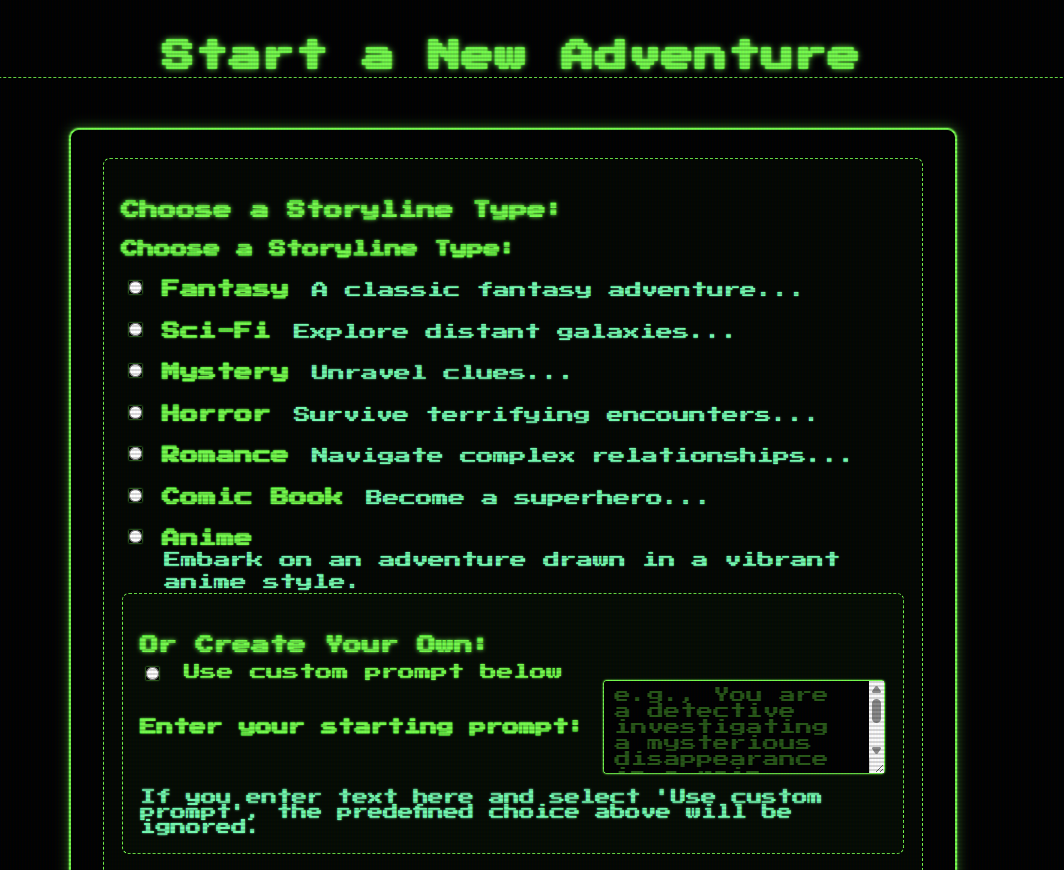
Quick Answer: What Is Multi-Chapter Text Adventure AI?
A multi-chapter text adventure AI is a narrative engine that continues a campaign across sequential chapters while remembering characters, locations, and player choices. Unlike a one-shot chatbot, it treats the story as durable state — so returning tomorrow is a new chapter, not a new book.
Key capabilities:
- Open-ended campaigns with Roleplay Game Master, which holds unlimited memory and character consistency
- Structured mystery chapters in The Mansion, where rooms and secrets stay known once found
- Long-horizon sagas in Civilization, where treaties and rivalries outlast a single scene
- Episodic social stories in College Life, where last week’s lie is still on the record
Why Multi-Chapter Text Adventures Fall Apart
Players already know what they want: a story they co-author, with chapters that accumulate. An AI text adventure is a game where you and a model tell a story together — not a menu of three buttons. Research on how story choices affect a player’s sense of agency treats that feeling as something you earn when later events still honor earlier decisions.
The market around that demand is not small. The AI in game development market is projected at about $4.14 billion in 2026, with forecasts stretching toward much larger figures by 2035. Studios are already wiring models into production: Unity’s 2026 Game Development Report found 73% of polled studios using AI tools for back-end development and planning.
But turning that into a campaign you can live in for weeks is frustratingly difficult:
- Chat sessions that improvise brilliantly, then forget the plot overnight
- Classic parser adventures that are finite, brittle, and hostile to improvisation
- Context windows that drown chapter one under chapter twelve’s chatter
- Authoring tools that map branches but cannot play them as a living book
- Mobile sessions that pause mid-scene and resume as a stranger
$4.14 billion — Projected global AI in game development market size in 2026
One-Shot Chatbots That Rewrite Canon
A linear prompt-to-output loop is a scene generator, not a campaign engine. You describe a forest. You get a forest. You return the next night and the forest has a different king. Interactive storytelling in games is supposed to give the player a world they can inhabit, not a clip they can watch. If the narrator cannot keep a ledger, every chapter is a reboot wearing the same genre costume.
Finite Adventures That Cannot Improvise
Parser classics and tightly written Twine pieces can be exquisite — and they still end when the graph ends. Designers on interactive fiction forums have explored generative models as sub-tasks inside authored scenes, which is an honest admission: you want the world’s rules to hold, and you also want the prose to flex. A multi-chapter text adventure AI that only recites a script is a book. One that only riffs is a slot machine.
Context Windows That Drown the Plot
Long chats look like memory until the model starts summarizing you into mush. Names blur. Timelines fold. The villain you spared becomes a bartender. Production systems that survive this do not rely on “just paste more transcript.” They separate reasoning, acting, and observing — then route work so one scene does not pollute the whole campaign.
Chapter Tools That Do Not Play
Writers can outline a twelve-chapter mystery in a spreadsheet and still have no one to run it. Narrative design is a craft of story worlds and interactive environments, not a pile of flavor text. If your “AI adventure” cannot sit in the chair as game master — tracking inventory, grudges, and unfinished quests — you do not have chapters. You have files.
Sessions That Break When You Stand Up
Text adventures thrive in stolen minutes. If closing the phone wipes social debt, the format is fighting how people actually read. Continuity across devices is not a convenience feature. It is the difference between a serial and a sketch.
This is exactly what Jenova was built for.
The Jenova Solution
Jenova does not hand you a single transcript window and hope the model behaves. It gives you story agents with persistent memory, unlimited chat history, and worlds that keep running after you look away. You pick a campaign — or brief a game master. You speak in natural language. The agent holds the chapter ledger: who is alive, what is known, which door you left unlatched.
| Traditional Approach | Jenova |
|---|---|
| One-shot chatbot that resets tone every session | Persistent memory and unlimited history across chapters |
| Finite authored graph you exhaust in a weekend | Ongoing worlds plus custom agents you can brief yourself |
| Context-window soup where early facts drown | Agents that treat prior play as campaign state |
| Separate notes app to remember your own canon | The story itself is the save file |
| Desktop-only parser or a phone app with amnesia | Full feature parity on web, iOS, and Android |
While AI Dungeon popularized open-ended AI text adventures, it is still a general improvisation surface. Some apps now advertise memory across chapters and series because players asked for it. Jenova specializes in dedicated story agents — not a single narrator wearing every mask — with multi-model access, private knowledge bases, and campaigns that are built as products rather than prompts.
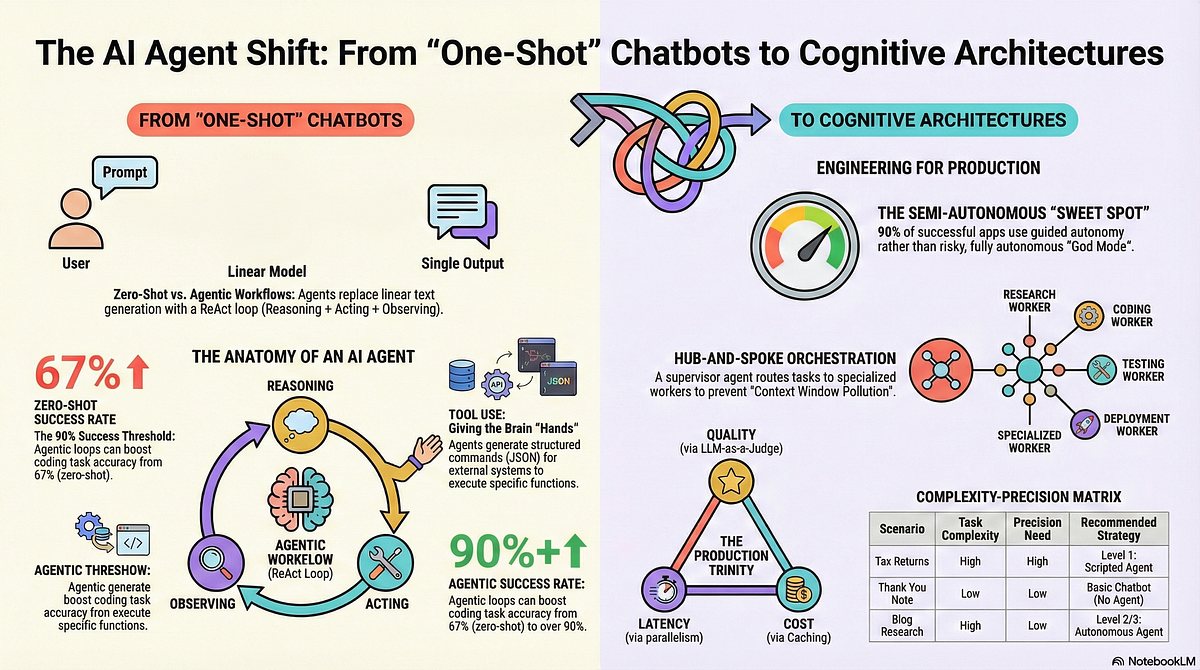
That diagram is the design argument in one frame. Linear “prompt in, paragraph out” is a one-shot chatbot. A campaign needs a cognitive loop: reason about the world state, act (narrate, move a rival, lock a door), observe what you just did, and keep going. Hub-and-spoke orchestration is how you stop one romantic subplot from overwriting the murder timeline. AI writing and character work are already showing up in studio pipelines; the missing piece for players is an agent that will still be the same book tomorrow.
Open-Ended Campaigns With a Real Game Master
If you want infinite chapters in any genre, start with Roleplay Game Master. It is built for immersive roleplay with unlimited memory and character consistency — the two failure points that kill long text adventures. You are not begging a general chatbot to “please remember my elf.” You are in a campaign that is allowed to stay weird, specific, and unfinished.
Mystery and Horror That Keep a Case File
A mansion crawl is only multi-chapter if the house notices. The Mansion drops you into rooms that hide secrets; pry a drawer in chapter two and chapter six should not pretend you were careful. The Asylum sends you in as an investigator after something already went wrong. Ward by ward, the hidden story should depend on which files you read — not on a single “good ending” flag.
Serial Lives: Campus, Villa, Court
Some campaigns are calendars. College Life runs friendships and fallout from what you actually did, week after week. Love Island compresses that into a villa where couplings are outcomes, not recaps. Vesper Court pushes the same ledger into dark romance: a forgotten arrival, a court that hunts weakness, nights that do not rewind.
Strategy Sagas and Career Arcs
Not every chapter is a corridor. Civilization lets you rule a nation while rivals pursue their own ambitions — alliances shift whether you log in or not. K-Pop Producer is a sixty-day debut gauntlet: trainees, power dynamics, and careers that change because of yesterday’s call. Those are chapters measured in weeks, which is what a multi-chapter text adventure AI should feel like when the map is political rather than cartographic.
Build the Book, Then Run It
If you are here to author the campaign, Game Designer Assistant is the workbench: systems analysis, documentation, and genre craft before you write ten endings you cannot support. Children's Book Creator handles spread-by-spread chapter books with consistent art and page-turn structure. Manga Creator is the serialized-epic lane — one-shots to long-running continuity. Microdrama Screenwriter thinks in 60–100 episode seasons, cliffhangers, and the discipline of coming back tomorrow.
Interactive stories are not only entertainment. Choice-based interactive storytelling has been studied for engagement and learning outcomes, and interactive narrative is associated with stronger emotional response and skills beyond passive media. A campaign engine that remembers is how those benefits survive past the tutorial.
Specialized AI Agents for Multi-Chapter Text Adventures
If you want to play tonight, pick a world. If you want to ship a serial, pick a design partner. These agents sit on that spectrum.
Roleplay Game Master — The Campaign That Does Not Blink
Roleplay Game Master is the closest thing to a table that never packs up. Unlimited memory, character consistency, and complete creative freedom mean you can run fantasy, noir, or something you invented in a sentence — then keep running it.
- Characters who do not swap personalities between sittings
- Room to play any scenario without a three-button wheel
- A single continuity instead of a new novel every message
The Mansion — Chapters as Rooms
Waking with no memory is a classic hook. It becomes a multi-chapter text adventure when the house is a database of your trespasses. Try the mansion mystery if you want locked rooms, unreliable spaces, and a finale that depends on what you dared to open.
- Clues that stay “known” once found
- Risk in lingering versus fleeing
- Escape and truth as competing through-lines
Game Designer Assistant — The Tracker as a Design Bible
Play is one job. Building a chapter map that will not collapse is another. Game Designer Assistant helps you specify gates, fail states, reconvergence, and player-facing feedback so “this will matter later” is a testable claim.
- Systems analysis before you write unsupportable endings
- Documentation you can hand to artists and writers
- Genre-aware advice across adventure, sim, and RPG hybrids
Vesper Court — Tone-Locked Nights
Vesper Court is night-by-night vampire intrigue. Generic roleplay dies here. The campaign should remember whether you were devout, reckless, or complicit — because the court only feels expensive when it refuses to forget.
- Desire and politics on the same consequence chain
- A reason to stay in one continuity
- Chapters that change the temperature of the room
Children's Book Creator — Literal Chapters
Not every multi-chapter adventure is grimdark. Children's Book Creator builds illustrated stories spread by spread, from board books to chapter books, with consistent art and read-aloud text. If your “campaign” is a book a child can return to, this is the production floor.
- Page-turn structure instead of endless scroll
- Character and style continuity across chapters
- Text and image as one serial object
Try Jenova free — no credit card required.
How It Works
Step 1: Pick a Campaign, Not a Blank Chat
Open Jenova and start a story agent whose premise already implies chapters — a mansion, a court, a campus, an empire — or brief your game master with a world that must last. You are not asking “write fiction.” You are entering a state machine that speaks in scenes.
"Start a multi-chapter text adventure: I am a cartographer hired to map a city that rearranges at midnight. Keep a chapter list, and never reset the street names I have already recorded."
Step 2: Play in Natural Language
There is no required dialogue wheel. Say what you do, what you withhold, and what you are willing to risk. Specificity is what later chapters store.
"I help the injured courier, then copy the unopened letter. If someone asks, I will not pretend I didn't."
Step 3: Close the Chapter on Purpose
Ask for a break that behaves like a book: a recap, a hanging thread, a title for the next installment. Then leave. The test of a multi-chapter text adventure AI is what happens when you are gone.
"End chapter four on the locked conservatory. Next session, do not re-explain who I am. Open on the frost inside the glass."
Step 4: Resume on Your Phone Without Resetting Canon
Continue the same thread on iOS or Android. Feature parity and synced history mean the commute chapter is still the campaign, not a spin-off. If the world cannot greet you as the person who stole the letter, you chose the wrong engine.
Step 5: If You Are Building, Specify the Serial
Hand your design partner a chapter map: recaps, locks, and payoffs. Require a consequence table, not just vibe.
"Design a twelve-chapter mystery. Accusing the gardener in chapter three must lock the greenhouse ending. Give me the lock list and the recap each chapter owes the next."
Results & Use Cases
📊 A Custom Campaign That Survives the Weekend
- Scenario: You want a long fantasy serial with a party of four, a stolen reliquary, and a narrator who will not recast your rogue as a paladin.
- Traditional Approach: A general chatbot plus a notes doc. Monday’s session contradicts Saturday’s map.
- Roleplay Game Master: The reliquary stays stolen, the rogue stays compromised, and chapter nine can still cite the innkeeper’s price.
Benefits:
- Character consistency across sittings
- Improvisation inside a stable canon
- Replay as a different campaign, not a repaired one
💼 An Empire That Collects Your Treaties
- Scenario: You seize a port to feed a famine, knowing a neighbor claimed it by marriage.
- Traditional Approach: A 4X campaign plus a wiki, because the story DLC does not read your diplomacy log.
- Civilization: The famine, the marriage claim, and the occupation sit in one memory. The next envoy does not need a briefing from you.
Benefits:
- Strategy and story share a database
- Rivals act on old grievances
- Chapters measured in years, not cutscenes
📱 A Mansion Run on the Train Home
- Scenario: Twenty minutes, headphones, one wing of a house you do not trust.
- Traditional Approach: Console adventures that pause poorly, or an AI chat that forgets which key you pocketed.
- The mansion investigation: You search a study, take a key, and close the app. Tomorrow the house still knows which key is missing.
Benefits:
- True mobile continuity
- Short sessions that still compound
- Horror that depends on your curiosity
🎯 A Studio That Needs Chapters Before Art
- Scenario: An indie team wants a serial “choices matter” pitch without writing 400 dead-end pages.
- Traditional Approach: A Twine snarl nobody can QA, then silent reconvergence to hit a ship date.
- Game Designer Assistant: You get a node map, lock list, and test plan. Pair it with Children's Book Creator or Manga Creator when the serial has to exist as pages, not only prose.
Benefits:
- Chapter design as documentation
- Fewer fake branches
- A campaign you can explain without a tooltip lie
🎤 A Debut Arc With a Clock
- Scenario: You want a career story with a hard calendar — sixty days to debut a group, not an endless jam session.
- Traditional Approach: Open-ended roleplay that never forces a comeback stage or a contract crisis.
- K-Pop Producer: Days tick. Trainees remember how you voted. The finale is a consequence of the calendar, not a vibe.
Benefits:
- Time as a chapter structure
- NPCs with careers, not catchphrases
- A reason to log in tomorrow
FAQ
What is a multi-chapter text adventure AI?
It is a narrative game that stores your campaign as state and reads that state when it writes the next chapter. The ledger can be a relationship map, a clue file, a diplomatic history, or all three. If later scenes cannot change when the ledger changes, you have flavor text, not chapters.
Is Jenova free to play these campaigns?
Yes. Jenova has a free tier with core features and limited usage, then paid plans if you need more volume, custom model selection, or higher caps. You can start a story agent without a credit card and decide whether the memory layer is worth upgrading once a campaign is actually in motion.
How is a multi-chapter text adventure AI different from AI Dungeon?
AI Dungeon is an open-ended improvisation game — a single surface for many worlds. Jenova runs dedicated story agents with persistent memory. You can still invent a setting with Roleplay Game Master, or drop into a mansion, a court, or an empire that already knows what kind of book it is. The difference is campaign architecture, not a prettier paragraph.
Can it remember previous chapters?
That is the requirement. Persistent memory and unlimited conversation history are how chapter five quotes chapter one. You should still test it: jump time, change rooms, and refuse to restate the plot. If the world cannot, you are in a one-shot chatbot, not a serial.
Can I build my own multi-chapter adventure?
Yes. Use Game Designer Assistant to specify chapter locks and recaps, then play the loop with a story agent — or produce the serial as a chapter book, manga, or microdrama season. Studios are already using AI in planning and back-end work; you still have to define what the ledger is allowed to remember.
Does multi-chapter text adventure AI work on mobile?
Jenova is built for web, iOS, and Android with synced settings and full conversation history. Text adventures already fit stolen minutes. A campaign that dies when you leave Wi-Fi is not a campaign.
Keep Playing After the First Chapter
Most AI stories ask you to care, then quietly discard the evidence. A multi-chapter text adventure AI does the opposite: it keeps the letter you copied, the port you seized, the key you pocketed, and it writes the next installment from there.
Jenova is where that serial lives — in a game master that will not recast your party, in a mansion that notices your hands, in an empire that collects treaties, and in a design agent that refuses to call a merge a twist. If you want chapters you can plan around, stop collecting one-shot scenes and start keeping state.
Explore the full story library at Jenova.
For Developers: Every story agent in this article is available programmatically via the Jenova API — integrate multi-chapter text adventures, persistent campaign memory, and custom game-master agents into your application with a single API call. Full documentation →