Medieval Roleplay AI: Run Solo Campaigns and Rule Kingdoms
2026-08-27
Jenova gives you medieval roleplay AI that never needs a full table, a shared calendar, or a dungeon master on standby. In August 2026, players who want tavern bargains, feudal politics, and long-running quests can step into a world that remembers every oath, grudge, and rumor's source.
- ✅ Persistent memory across sessions, so your campaign does not reset overnight
- ✅ Specialized agents for ruling, writing, research, and in-character conversation
- ✅ Kingdom-scale strategy and character-scale scenes in one place
- ✅ Historical grounding plus full creative freedom for high fantasy
To understand why this matters, it helps to look at what solo players, writers, and history-minded fans actually lose when a medieval world cannot stay consistent.
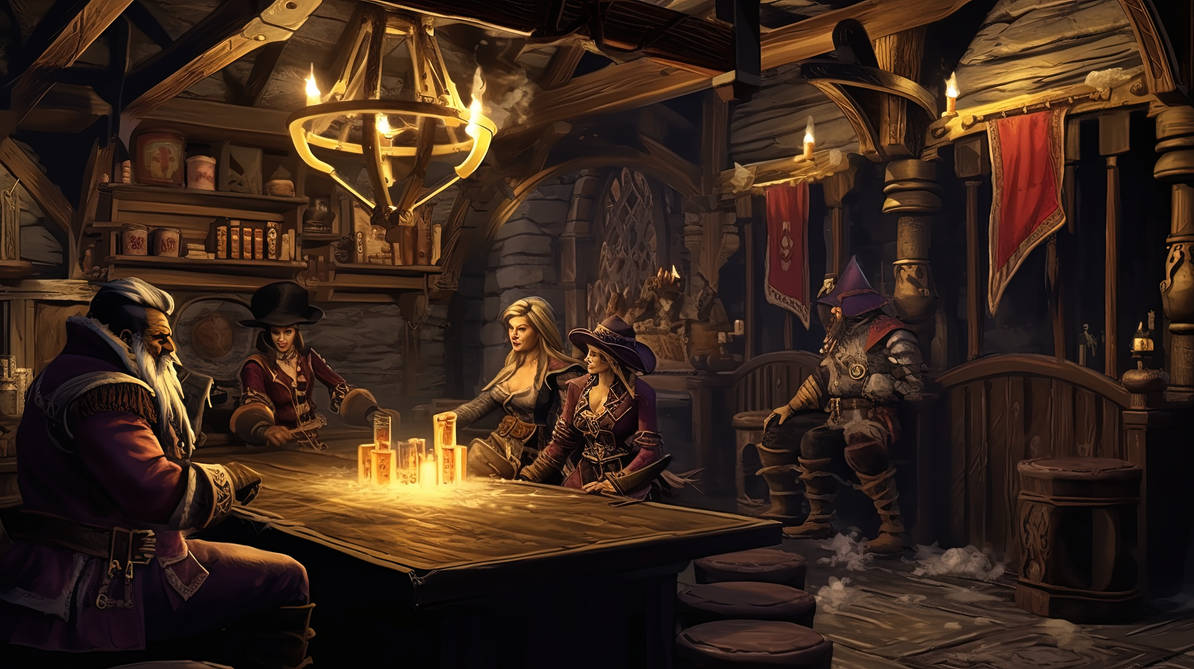
Quick Answer: What Is Medieval Roleplay AI?
Medieval roleplay AI is an interactive storytelling tool that lets you inhabit knights, rulers, and wanderers in a living feudal world that responds to your choices in real time. It replaces the missing table with agents that keep lore, characters, and consequences intact.
Key capabilities:
- Rule a realm across an era you choose with Civilization
- Design classes, factions, and systems with a dedicated game design partner
- Play in-character scenes through immersive English roleplay
- Map court intrigue and succession crises with a strategic advisor
The Problem With Medieval Roleplay Today
Demand for character-driven AI is no longer a niche hobby. Industry trackers reported that Character.AI drew more than 165.8 million visits in a single recent month, with six-month averages above 185 million. The broader AI-in-games market was already estimated at USD 3.28 billion in 2024, with forecasts stretching into the tens of billions as studios chase worlds that feel alive.
But getting a good medieval campaign out of that boom is still frustratingly difficult:
- Weekly tables collapse when one player travels or the dungeon master burns out
- Generic chatbots forget your house sigil, your wounded squire, and last session's treaty
- Character apps optimize for short chats, not multi-month sandboxes
- Filters and weak world logic break sieges, succession wars, and morally grey quests
- Building a historically flavored setting from scratch can take longer than playing it
USD 3.28 billion — Estimated global AI in gaming market in 2024
The missing table
Tabletop campaigns die from logistics more often than from bad dice. Finding five adults who can commit to the same evening, week after week, is a scheduling problem dressed up as a hobby. Solo play used to mean published gamebooks or talking to yourself in a notebook. Neither gives you a steward who argues about grain tariffs or a rival duke who remembers you slighted him at the feast.
Chat that cannot hold a chronicle
A medieval story lives in continuity. If the miller's daughter vanished in session two, she cannot cheerfully pour ale in session five. Most general-purpose chat tools treat every message as a fresh prompt. They will invent a new high king, contradict your map, and lose the thread of a blood feud that should have defined the whole year.
Character platforms built for snippets, not campaigns
Popular character apps proved that people want to talk to personas. They did not prove those personas can run a living feudal simulation. A large safety study of 16 AI character platforms found an average unsafe response rate of 65.1%, against 17.7% for baseline models. That gap matters in two directions at once: some tools over-block the violence and intrigue a war story needs, while others fail basic guardrails. Neither extreme is a trustworthy dungeon master.
65.1% — Average unsafe response rate across 16 AI character platforms in a 5,000-question benchmark
Worldbuilding that never reaches session one
A convincing medieval sandbox needs more than a tavern name. You want succession law, coinage, monastic orders, harvest calendars, and the gossip network that actually moves news. Writers already feel the pressure: an Authors Guild survey found 23% of writers using generative AI in their process. The bottleneck is not ideas. It is keeping lore, tone, and cause-and-effect in one coherent realm.
Player expectations moved faster than the tools
Studios feel the same shift. A Google Cloud survey found 90% of game developers already using AI in their workflows, and 89% said AI is changing what players expect. GDC's industry snapshot put generative AI in the toolkit of one in three developers. Players now arrive assuming NPCs have memory and factions have agendas. A chatbot that smiles and forgets is no longer enough.
This is exactly what Jenova was built for.
The Jenova Solution
Jenova treats medieval roleplay as a full workflow, not a single chat window. You can rule a nation, rehearse a court scene, research a real dynasty, and turn last night's session into a screenplay or comic — without stitching five unrelated apps together.
| Traditional Approach | Jenova |
|---|---|
| Wait for a weekly table | Play any hour, any length, on web or mobile |
| Generic chatbot forgets lore | Persistent memory across sessions and long campaigns |
| One character bot for every genre | Specialized agents for ruling, design, intrigue, and prose |
| Hours of unsupported worldbuilding | Research, systems design, and writing partners on call |
| Filters that flatten war and politics | Game and creative agents built for conflict, not small talk |
Play the realm, not just a persona
Civilization puts you on the throne. You choose an era, rule a nation, and watch rivals chase their own ambitions while alliances shift and wars erupt whether you are ready or not. That is the closest thing to living inside a medieval chronicle: you are not waiting for a scripted quest marker, you are governing.
When you want the scene at ground level — the oath in the chapel, the haggle in the market, the confession after the raid — Learn English Through Roleplay runs immersive scenarios of any intensity. You stay in character. The language, idiom, and social temperature of the moment do the teaching and the play at the same time.
Design the campaign you actually want to inhabit
Game Designer Assistant is the session-zero partner most solo players never get. Brainstorm factions, stress-test a class system, document your setting, and think through how a hex-crawl or domain-management loop should feel before you waste three nights on a broken economy.
For texture that survives a history buff's scrutiny, Deep Research synthesizes hundreds of sources with inline citations, and Antique Expert supplies the material culture — reliquaries, coin hoards, armor, and the stories objects carry. Art Advisor can talk illuminated manuscripts, Romanesque sculpture, and court portraiture when you need the realm to look like it belongs in its century.
Intrigue that has a theory of power
Medieval stories stall when every NPC is either a saint or a cartoon villain. Machiavelli Mentor maps power, decodes incentives, and sketches multi-move campaigns. Use it in-world as a ruthless chancellor, or out-of-world as the brain that helps you design a believable war of succession.
Turn play into a finished work
A campaign that only lives in chat is easy to lose. Film Screenwriter can take a messy session log and find structure, dialogue, and visual set pieces. Comic Creator turns the same beats into sequential art. Music Composition Assistant writes the hymn, the drinking song, or the march you hear when the banners go up.
You can also build a custom agent in minutes — a tavern keeper, a hedge witch, a marching-orders marshal — with your own instructions, preferred model, and private lore bible. The library keeps expanding; the point is not a fixed roster, it is a realm that stays yours.
Specialized AI Agents for Medieval Roleplay
These are the agents a medieval player or writer is most likely to open in the first month.
Civilization — sit the throne
Civilization is the hero loop for anyone who wants medieval roleplay at kingdom scale. You pick the era, you set policy, and the world refuses to pause while you think.
- Rivals pursue independent ambitions, so the map is never a static backdrop
- Alliances and wars emerge from play rather than from a pre-written module
- Long-running political memory, not a reset every time you close the tab
If you have ever wanted to be the crown instead of a murder-hobo passing through, start here.
Game Designer Assistant — build the rules of the realm
Game Designer Assistant sits beside you at session zero. It is not a player character. It is the designer who helps you decide whether your campaign is a domain game, a pilgrimage, a border war, or a sandbox city.
- Systems analysis so your feudal levies and harvest rules do not collapse in play
- Documentation that keeps house rules, NPCs, and calendars in one place
- Genre fluency from tabletop to digital, so you can steal structures that already work
Machiavelli Mentor — the chancellor in the shadows
Machiavelli Mentor is for court politics, not tavern brawls. Bring it a succession crisis, a restless baron, or a marriage treaty and it will tell you who actually holds the knife.
- Power mapping across houses, clergy, guilds, and foreign courts
- Negotiation tactics you can play at the table or fold into NPC behavior
- Multi-move campaign architecture for wars that last more than one scene
Learn English Through Roleplay — live the scene
Learn English Through Roleplay is how you walk into the inn. Any scenario, any intensity — a coronation oath, a plague-year confession, a night raid that goes wrong.
- Character-consistent conversation instead of narrator summaries
- Idiom and register that shift with court, camp, and gutter
- Scenes you can replay until the moment feels true
If your campaign leans Angevin or crusader-era, Learn French Through Roleplay does the same work in the language of many real medieval courts.
Try Jenova free — no credit card required.
How It Works
Step 1: Choose your seat at the table Open Jenova and decide the scale of tonight's play. Throne and taxes belong in Civilization. A single charged conversation belongs in roleplay. A new ruleset or map belongs with the design assistant.
"I am a landless knight arriving at a border keep at dusk. The steward suspects I am a spy. Stay in scene."
Step 2: Bind the world with a few hard facts Name the realm, the year, the faith, and three facts that cannot change — the true heir is missing, winter grain is short, the river fords are watched. Ask Game Designer Assistant to turn those facts into a playable frame rather than a wiki dump.
"Give me a domain-play loop for a minor marcher lord: seasonal actions, three neighboring threats, and what happens if I ignore the harvest."
Step 3: Play the hour you actually have Stay in character. Make one consequential choice. Let rivals move off-screen. Persistent memory means you can stop after twelve minutes on a phone and resume the same grudge tomorrow.
"I refuse the bishop's tithe in front of the market. Show me who smiles, who leaves, and who writes a letter that night."
Step 4: Enrich, then return When the story needs bone and sinew, pull research or a writing pass. Deep Research can brief you on real medieval siege practice; the screenwriter can lift your session into a scene with a button on the next door.
"Based on historical marcher-lord custom, what would a realistic reprisal look like if I hang a cattle thief who is also a cousin of the neighboring baron?"

Results & Use Cases
🎲 Solo campaign when the group falls through
- Scenario: Your Friday table has three cancellations. You still want to spend the evening in the same border war you have been playing for months.
- Traditional Approach: Cancel, reread old notes, or run a one-shot that throws away continuity.
- Jenova: Resume the same realm in Civilization, then drop into a ground-level scene through roleplay without recruiting a replacement player.
- You keep political memory, NPC grudges, and the map
- You play for twenty minutes or three hours
- You do not owe anyone a recap email
🏰 Succession crisis as a domain game
- Scenario: You want to play the winter after a king's death, when every banner is a maybe.
- Traditional Approach: A published module with a fixed villain, or a chatbot that crowns a new monarch every prompt.
- Jenova: Let Machiavelli Mentor sketch the incentive map, then rule the crisis in Civilization as rivals pursue their own claims.
- Houses have reasons, not alignment labels
- Wars and marriages can both be rational
- The chronicle stays consistent across weeks
📜 Session log to screenplay or comic
- Scenario: Last month's campaign produced a better story than your draft novel, but it lives in chat history.
- Traditional Approach: Stare at a transcript and try to reverse-engineer acts, or hire a writer you cannot afford.
- Jenova: Hand the beats to Film Screenwriter for structure and dialogue, or to Comic Creator for a graphic-novel pass.
- Character voices stay distinct
- Visual set pieces (the ford, the feast, the scaffold) get explicit staging
- You leave with pages, not just memories
📱 Tavern scene on the train
- Scenario: You have a twelve-minute commute and a knight who still owes a debt in the capital.
- Traditional Approach: Mobile character apps that reset tone, forget names, or steer every scene toward small talk.
- Jenova: Open the iOS or Android app, stay in scene with Learn English Through Roleplay, and pick up the same debt tomorrow. Feature parity with web means your lore file and memory travel with you.
- Speech-to-text if your hands are full
- No need to recap the plot each time
- Short sessions still move the chronicle
FAQ
What is medieval roleplay AI?
Medieval roleplay AI is software that lets you play or write inside a feudal, chivalric, or dark-ages world that reacts to your choices. On Jenova that can mean ruling a nation, staying in character at a keep gate, or designing the campaign's rules — not just chatting with a knight-shaped persona.
Is Jenova free to use for medieval roleplay?
Yes. Jenova has a free tier with core features and limited monthly usage, and paid plans if you need more headroom. You can start a campaign without a credit card. Check current plan details in the product menu when you subscribe.
How is this different from Character.AI or a generic chatbot?
Character chat apps are built for persona conversation. Jenova is built for end-to-end work: persistent memory, specialized agents, custom instructions, and private knowledge bases. You can still talk to a tavern keeper. You can also run the kingdom that tavern sits in, research the period, and turn the session into a script.
Can I play medieval roleplay AI on mobile?
Yes. Jenova runs with full feature parity on web, iOS, and Android, including speech-to-text. A commute-length scene is a normal session, not a stripped-down demo.
Does the AI remember my campaign between sessions?
Persistent memory and unlimited chat history are part of the platform. Agents can remember preferences, past work, and long-running projects, which is the difference between a one-night inn scene and a chronicle.
Can I create my own knight, dungeon master, or court NPC?
Yes. You can create a custom agent in minutes with your own instructions, preferred model providers, private lore documents, and tool setup. That is the practical way to get a house-ruled marshal or a setting-specific chronicler without waiting for someone else to publish one.
Conclusion
Medieval roleplay fails in the gaps: the cancelled table, the chatbot with no memory, the setting bible you never finish. Jenova closes those gaps with agents that rule, converse, intrigue, research, and write inside the same realm.
Sit the throne in Civilization, pressure-test the rules with Game Designer Assistant, and play the human scenes through roleplay that does not drop your plot on the floor. When the court turns ugly, bring in Machiavelli Mentor.
Explore the full agent library at Jenova and start the campaign you have been waiting to schedule.
For Developers: Every agent in this article is available programmatically via the Jenova API — build AI-powered medieval roleplay, chronicle, or kingdom-sim features into your application with a single integration. Full documentation →