AI Masonry Expert: Diagnose Cracks and Match Historic Mortar
2026-08-28
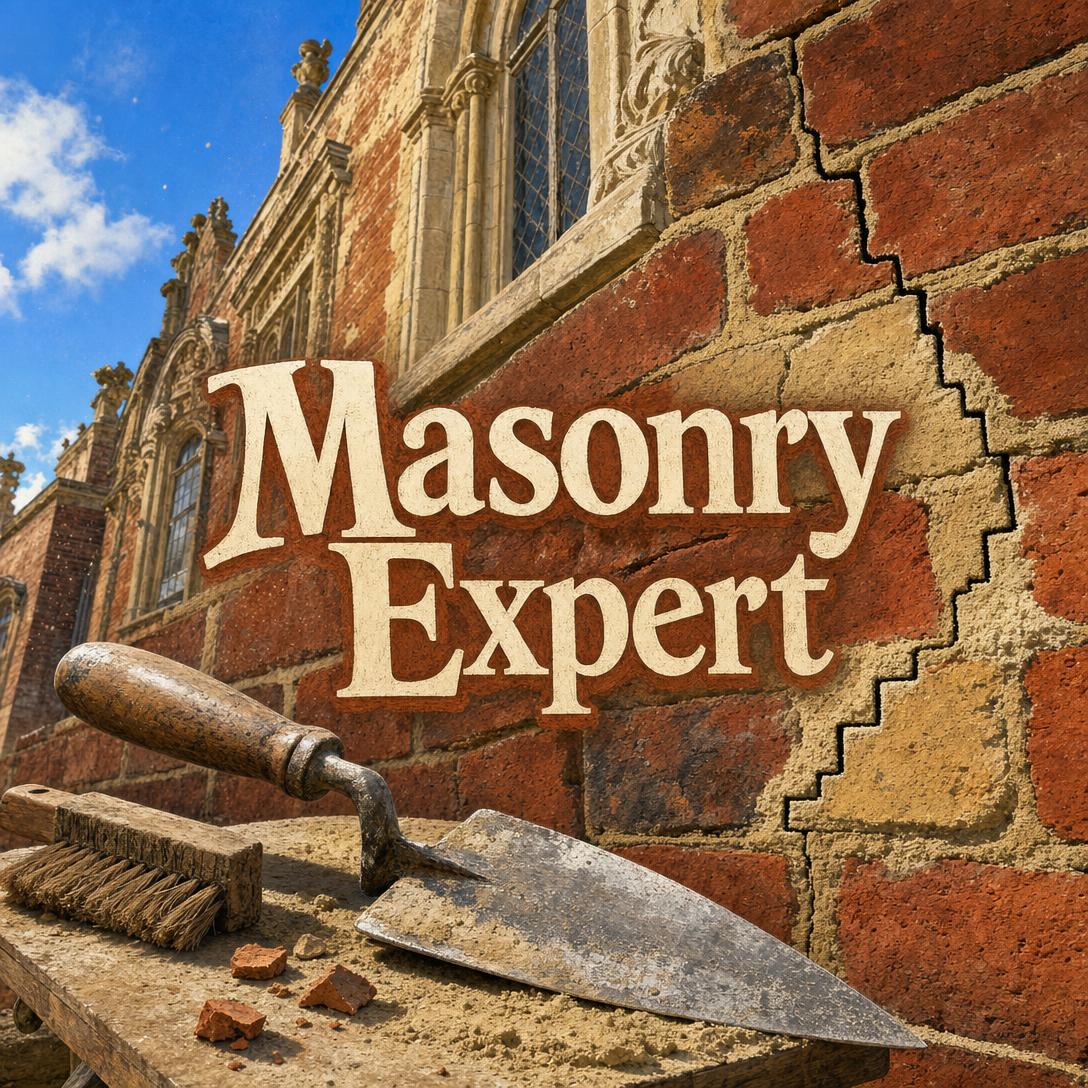
Masonry Expert helps you read brick, block, and stone the way a veteran mason would — by diagnosing cracks, matching mortar, and guiding repairs before a small defect becomes irreversible damage. While most property owners (and plenty of well-meaning contractors) guess at mortar type or misread a stair-step crack, this AI provides visual-first diagnosis grounded in material compatibility, moisture physics, and preservation practice.
- ✅ Photo-based reading of cracks, mortar, efflorescence, and unit damage on brick, CMU, stone, chimneys, and retaining walls
- ✅ Mortar matching that keeps the mix softer than the masonry units — protecting historic brick from spalling
- ✅ Guidance calibrated to homeowners, DIYers, working masons, engineers, and preservation professionals
- ✅ Safety-first referrals when a wall, chimney, or retaining structure needs a licensed mason or structural engineer
The U.S. masonry trade still runs on craft judgment that is hard to hire, hard to document, and easy to get wrong. To understand why that gap is expensive, it helps to look at what actually fails in masonry — and why the wrong repair often costs more than the original problem.
Quick Answer: What Is Masonry Expert?
Masonry Expert is an AI masonry companion that diagnoses cracks, matches mortar, and guides brick, block, and stone repairs from photos and descriptions. It reads what the wall is telling you and recommends compatible materials, methods, and when to call a professional.
Key capabilities:
- Crack-pattern diagnosis (stair-step, horizontal, diagonal, map cracking, and more)
- Mortar type selection and historic matching (Types M, S, N, O, K, lime putty, NHL)
- Photo assessment of spalling, efflorescence, joint erosion, lintels, and previous repairs
- Moisture-source differentiation: rising damp, penetrating damp, and condensation
- Chimney, retaining-wall, veneer, paver, and historic-facade guidance with code and NPS-aware framing
Why Masonry Failures Are So Easy to Misread
The U.S. masonry industry is large, fragmented, and still heavily dependent on scarce field judgment. IBISWorld puts the market at $40.0 billion, with 22,035 masonry businesses — a count that has been slowly shrinking even as repair, restoration, and new work remain constant on the ground.
$40.0 billion — U.S. masonry industry market size
Historic work is a market of its own. The North America historical building and heavy masonry construction market was valued at USD 1.81 billion in 2025, which is exactly the segment where a hard Portland mix on soft brick can destroy the units it was meant to save.
USD 1.81 billion (2025) — North America historical building / heavy masonry construction market
Demand for the materials is not small either. The global masonry cement market was valued at USD 6.50 billion in 2025. Volume does not equal correct specification. Mortar is the sacrificial element in a wall; when it is harder than the brick or stone, stress moves into the units and the damage becomes permanent.
But getting a trustworthy diagnosis is frustratingly difficult:
- Crack patterns are easy to misread. Stair-step cracks, diagonal cracks at openings, and horizontal cracks at floor lines have different causes — settlement, lintel failure, missing expansion joints, failed wall ties — and they need different repairs.
- The wrong mortar looks like a fix. Type M or S on pre-1920s handmade brick is one of the most common, and most destructive, “repairs” in older buildings. The National Park Service has spent decades documenting why historic joints must be repointed with compatible materials, not the hardest mix on the truck.
- Moisture is misdiagnosed. Rising damp, wind-driven rain, and condensation can look similar on a painted interior wall. Coatings that trap vapor often push damage higher rather than stopping it. NPS Preservation Brief 39 exists specifically because unwanted moisture is the primary enemy of historic fabric.
- Repair work itself is hazardous. Raking and grinding mortar releases respirable crystalline silica. OSHA 29 CFR 1926.1153 sets a permissible exposure limit of 50 μg/m³ and requires specific dust controls for tuckpointing grinders. OSHA estimates the silica rule will prevent more than 600 deaths per year once fully implemented. Guessing at technique is not only a building problem; it is a lung problem.
This is exactly what a dedicated masonry companion was built for: reading the wall first, then specifying a repair that will not make the next decade worse.
Why Masonry Expert
Masonry Expert treats diagnosis as a sequence, not a guess. It asks what you see — crack geometry, mortar color and hardness, damp patterns, era of the brick — before it recommends a mix, a method, or a contractor. It will not invent conditions you have not described, and it will not put Type S on soft historic brick because “stronger is better.”
| Traditional Approach | Masonry Expert |
|---|---|
| Wait weeks for a site visit, or guess from a forum thread | Photo-and-description diagnosis in the same conversation |
| One-size-fits-all Type N or S from the supply yard | Mortar selected so it stays softer than the units |
| Cosmetic caulk over a structural crack | Pattern recognition that separates movement from mortar erosion |
| Dry grinding joints with no dust plan | Silica controls called out before any raking or cutting |
| Hard coating over rising damp | Moisture-source differentiation before any sealer is discussed |
The companion covers the full masonry stack: solid and cavity brick walls, CMU (load-bearing and veneer), stone (rubble, ashlar, dry-laid), chimneys and fireplaces, retaining walls, pavers, flashing and weeps, and historic preservation practice aligned with NPS briefs and industry notes from the Brick Industry Association.
Mortar that protects the brick, not the other way around
Mortar must be the sacrificial layer. It absorbs movement, lets vapor escape, and fails reparably before the units do. Pre-1920s handmade brick typically wants Type O, lime putty, or natural hydraulic lime. Transitional 1920s–1950s brick often wants Type N matched to original hardness. Modern hard brick above grade defaults to Type N; below grade or severe chimney exposure often wants Type S. Soft limestone and sandstone follow the same rule as soft brick: a hard mix will spall the face off.
When the existing mortar is unknown — especially on pre-1950s masonry — the right next step is analysis, not a stronger bag of cement. That is the kind of fork this AI will force into the open before you spend money.
Crack patterns that actually mean something
A stair-step crack along joints is not the same problem as a vertical crack through units, a diagonal crack from a lintel, or a horizontal crack at a floor line in veneer. BIA Technical Notes on volume change and expansion joints exist because clay brick permanently expands after firing; miss the joints and the wall cracks whether the foundation moved or not. CMU does the opposite — it shrinks — so control joints are a different detail. Confusing those two systems is a common source of non-structural cracking that still looks alarming on a walkaround.
Photo-first, safety-first
Upload a close-up of the joint and a wider shot of the wall, and the reading covers mortar erosion depth, tooling profile, previous Portland patches, efflorescence versus subflorescence, lintel rust staining, and whether the pattern is still active. If the wall is leaning, a chimney is separating, or brick is falling, the response leads with evacuate, barricade, and call an engineer — diagnostics wait until the scene is stable.
Example prompts:
"The mortar on my 1890s brick facade is crumbling, and someone repointed a patch with hard gray cement. The adjacent brick faces are spalling. What should I do?"
"Here's a photo of a stair-step crack on the side of my chimney. Wider at the top. Is this settlement, thermal movement, or just failed mortar?"
"I need a Type O lime-putty spec to match pre-1920s handmade brick. Walk me through joint prep, mix, tooling, and what not to use."
How It Works
Step 1: Show What the Wall Is Doing
Describe the symptom in plain language or trade language — crumbling joints, a white powdery bloom, a chimney that has pulled away from the siding. If you have photos, send a close-up of the crack or mortar and a wider shot that shows where it sits on the wall. Masonry Expert will not assume wythe count, mortar type, or backup construction from an elevation photo alone.
"Close-up of the eroded joints plus a shot of the whole front wall, east-facing, house built around 1895."
Step 2: Get a Ranked Diagnostic Reading
The response restates the symptom, reads the pattern, and ranks likely causes given era, climate, and exposure. You get specific checks: is the crack wider at the top or bottom, does it step through joints or cut units, does the damp appear only after rain, can you scratch the old mortar with a fingernail? That sequence is how a mason actually rules things in and out.
Step 3: Match Materials Before Anyone Mixes
Once the cause is narrowed, you get a mortar or repair path that respects compatibility. Historic work is framed against NPS Preservation Brief 2 on repointing and Brief 1 on cleaning — gentlest means possible, no sandblasting, no waterproof coatings that trap moisture. Modern CMU and veneer work is framed against industry practice from BIA and the Concrete Masonry and Hardscapes Association.
If the job is larger than a diagnostic — a full facade, a rebuild, a bid — Construction Estimator can take the same scope and turn it into takeoffs, pricing logic, and bid structure so the masonry decision and the commercial decision stay in the same workflow.
Step 4: Separate DIY from Hire, and Name the Hazards
Small ground-level repointing patches and paver maintenance can be reasonable DIY with the right mix and PPE. Structural walls, lintel replacement, scaffolding, chimneys above the roofline, retaining walls over four feet, and designated historic fabric go to licensed people. Any grinding or raking of mortar is called out against OSHA Table 1: shrouded grinder, dust collection at 25 cfm per inch of wheel diameter, 99%+ filter, and a respirator. Dry-cutting masonry is not a shortcut; silicosis is irreversible.
Step 5: Leave With a Next Action, Not a Vague Opinion
You finish with a verification step (“if you find X, do Y”), a material spec, and a clear stop line. Try it free — no credit card required — and keep the thread going as photos, scratch tests, and contractor quotes come in. Persistent memory means the wall’s era, mortar, and hazards do not have to be re-explained every session.
Results and Use Cases
🧱 Historic Facade With the Wrong Repointing
Scenario: An 1890s pressed-brick row house has original cream lime joints eroded 1–1.5 inches deep. A previous contractor filled patches with hard gray Portland. Adjacent brick faces are spalling on the weather elevation.
Traditional Approach: Another “stronger” cement patch, or a full-wall rebuild bid that ignores mortar compatibility. On a designated building, the wrong mix can also jeopardize preservation review and tax-credit work.
Masonry Expert: Identifies hard-on-soft damage, specifies analysis before a new mix, and outlines lime-compatible repointing with joint prep, tooling profile, and what to leave alone. If the project is part of a larger interior and exterior renovation, Home Renovation Advisor can sit beside that masonry scope for budget, permits, sequencing, and contractor coordination.
- Stops irreversible face loss before the next “repair”
- Aligns the mix with NPS-style compatibility, not bag compressive strength
- Documents enough of the wall’s era and prior work to brief a preservation mason
🏠 Chimney Crack Before the Heating Season
Scenario: In late fall, a homeowner notices a stair-step crack where the chimney meets the gable, plus crumbling mortar on the crown. They are about to start the fireplace.
Traditional Approach: Light the fire anyway, or pay for a full rebuild without knowing whether the issue is a failed crown, missing flashing, a leaning stack, or a compromised flue.
Masonry Expert: Separates cosmetic crown repair from separation and lean, tells the owner to stop using the fireplace if the chimney is pulling away, and maps crown, cap, flashing, and liner checks. CO risk is treated as an emergency, not a masonry footnote.
- Seasonal timing: inspect before heat, not after the first freeze-thaw cycle
- Clear stop-use guidance when collapse or flue integrity is in question
- Distinguishes Type S exposure above the roofline from interior firebox work
📱 Retaining Wall Bulge Caught on a Phone Walkaround
Scenario: A homeowner photographs a segmental retaining wall from their driveway. The face is starting to belly toward the sidewalk. They want to know if they can excavate and reset a few blocks this weekend.
Traditional Approach: Dig out the backfill “to relieve pressure,” which is how some walls fail suddenly.
Masonry Expert: Reads the bulge as a lateral-earth-pressure problem, tells them not to excavate behind the wall, and points to barricades plus an engineer for walls over four feet or any wall moving toward an occupied path. For a whole-property photo set that also shows foundation, flashing, and grade issues, Property Inspection Analyst can rank defects across the building, not only the masonry face.
- Mobile photo in, severity-ranked action out
- Prevents the most dangerous DIY instinct on retaining walls
- Connects drainage, geogrid, and frost depth to the visual symptom
FAQ
Is Masonry Expert free?
Yes. Masonry Expert is available on a free plan with core features and limited usage. Paid tiers start at $20/month (Plus) and scale through Premium, Pro, Max, Ultra, and Enterprise if you need more volume, custom model selection, or higher-priority support. You can diagnose a crack, review a mortar spec, or work through a photo set without a credit card. Usage resets monthly on the billing date, with no daily caps.
Can Masonry Expert diagnose brick cracks from a photo?
Yes. Photo assessment is one of its primary workflows. A useful set is a close-up of the crack or joint plus a wider shot showing location, exposure, and adjacent details (lintels, grade, previous patches). It reads pattern, width, whether the crack runs through mortar or units, mortar erosion, efflorescence, and signs of prior incompatible repairs. Remote reading has limits — it will say so, and it will not claim to replace an on-site structural assessment.
How is Masonry Expert different from a generic chatbot?
Generic models will happily specify Type S for every wall and treat every white stain as “just efflorescence.” This companion is built around masonry rules: mortar softer than units, crack geometry as evidence, moisture-source differentiation, silica controls, and historic compatibility. It calibrates language to homeowners, DIYers, masons, engineers, and preservation professionals without asking you to pick a skill level from a menu.
Does Masonry Expert work on mobile?
Yes. It runs with full feature parity on web, iOS, and Android, including photo upload from a phone. That matters on a jobsite or a weekend walkaround: shoot the chimney, the bulge, or the joint, and get a reading before you buy the wrong bag of mortar. Speech-to-text is available if your hands are dusty. Settings and history sync across devices.
Can it replace a structural engineer or licensed mason?
No, and it will not pretend to. It is educational and diagnostic support, not a licensed inspection, stamp, or construction drawing. Leaning or bulging walls, falling masonry, chimney separation, rapidly growing cracks, and retaining walls moving toward occupied space are referred out immediately. Use it to prepare better questions, better photos, and better specs for the professional you hire.
Can it help with historic mortar matching and repointing?
Yes. Historic work is a first-class workflow: era signatures (pre-1920s lime, 1920s–1950s transitional, modern Portland-lime), the difference between repointing and decorative tuckpointing, joint profiles that shed water, and why analysis before specification saves money. Guidance is framed against NPS Preservation Briefs on repointing, cleaning, moisture, and related treatments, plus BIA notes on mortar and maintenance.
Conclusion
Masonry does not fail mysteriously. Cracks, stained joints, spalled faces, and damp tide marks are a record of movement, water, and material mismatch — if someone knows how to read them. The expensive path is guessing at a harder mortar, coating over rising damp, or grinding joints without silica controls. The better path is diagnosis first, compatible materials second, and a clear line between a ground-level patch and a call to an engineer.
Masonry Expert is that reading partner: photo-based crack diagnosis, historic mortar matching, chimney and retaining-wall triage, and repair guidance that respects both the brick and the person holding the trowel. Try it now, then keep the same thread as the photos and test results come in.
Explore more at Jenova.
For Developers: Masonry Expert is available programmatically via the Jenova API — integrate photo-based masonry diagnosis and mortar guidance into your application with a single API call. Full documentation →