Kingdom Management Simulator AI: Rule Courts That Remember
2026-08-30
Civilization helps you rule a living nation by simulating rivals, courts, and crises that keep moving when you look away. While boxed strategy titles freeze the realm into menus, cooldowns, and scripted events, this AI provides a kingdom management simulator where advisors argue, borders shift, and a bad harvest does not wait for your next click.
✅ Rivals with their own ambitions — alliances, wars, and betrayals included ✅ Court, tax, and succession play without a DLC checklist ✅ Unlimited memory so decrees, grudges, and treaties persist ✅ Full play on web, iOS, and Android with synced history
To understand why this matters, let's examine the gap between map-and-menu kingdom games and what players actually want from a kingdom management simulator AI in August 2026.
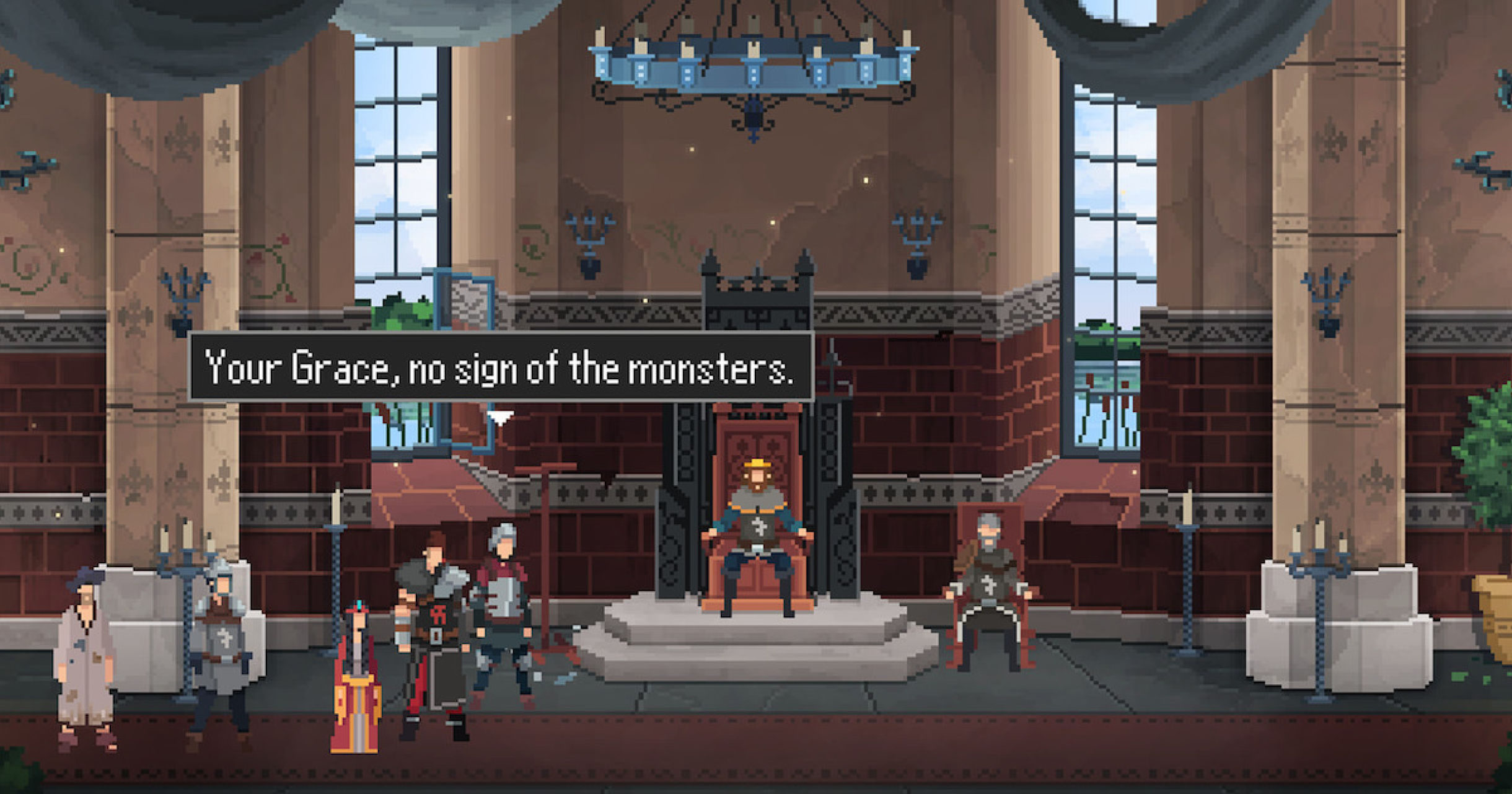
Quick Answer: What Is a Kingdom Management Simulator?
A kingdom management simulator is a strategy tool that lets you rule a realm — court, taxes, war, and succession — and watch those choices compound over time. An AI version drops the frozen map and plays the nation as a living story.
Key capabilities:
- Persistent realm memory so last season's famine still shapes this season's court
- Rivals and advisors who pursue their own goals instead of waiting on your turn
- Open-ended scenarios — medieval succession, coastal city-states, colonial pressure, court intrigue
- Short mobile council sessions or long evening campaigns without losing continuity
The Problem With Traditional Kingdom Management Games
Players who hunt for a
usually want two things at once: the weight of ruling, and a story that does not feel like a spreadsheet. That demand sits inside a much larger market. Industry analysis puts the **online simulation games market at $10.53 billion in 2026**](https://www.mordorintelligence.com/industry-reports/global-online-simulation-games-market), on track for [$19.47 billion by 2031 at a 13.09% CAGR.The same research found mobile already held 59.40% of online simulation volume in 2025. Construction and management sims are a named segment of that market — which is why so many players bounce between grand strategy, city-builders, and narrative court games looking for one throne that does all three.
But sitting on that throne is still frustratingly difficult:
- Maps that pause the world until you click End Turn
- Advisors who recycle the same petition after a few seasons
- War, tax, and intrigue split across three genres and three save files
- DLC gates for cultures, religions, and succession laws
- Sessions too heavy for a phone, too shallow for a campaign
Strategy Without a Court That Talks Back
Quantic Foundry's gamer motivation work, built on data from over 1.75 million players, keeps returning to clusters such as mastery (strategy and challenge) and fantasy/story. Kingdom players sit on that seam: they want hard tradeoffs and a realm that feels inhabited. Research summarizing the Gamer Motivation Profile groups Strategy and Challenge under Mastery — the itch to outthink a system. A court that only offers five dialogue buttons cannot feed that itch for long.
The World Waits, Then It Forgets
Turn-based 4X and many grand-strategy titles are honest about the pause. You plan, you click, the AI takes a beat. That is excellent for tactics. It is a poor model of a kingdom. Harvests, plagues, pretenders, and neighboring dukes do not queue behind your attention. RPG designers have said the same thing about kingdom-management campaigns: the realm has to keep throwing up challenges without burying the player. Most digital thrones fail one of those two tests.
Menus Instead of Rule
Tax policy becomes a slider. War becomes a stack of units. Succession becomes a tooltip. None of that is illegitimate — it is just incomplete. Players asking for narrative kingdom management on public forums want petitions, marriages, famines, and ugly compromises in the same session, not a diplomacy screen that reads like a spreadsheet with flags.
Continuity Breaks When You Put the Realm Down
A kingdom is a long object. Close the laptop, open your phone on the commute, pick up three days later — and the steward should still know why the eastern road is closed. Traditional saves do not travel well. Mods conflict. Cloud slots fill. A kingdom management simulator that forgets last week's revolt is just another chat that reset.
This is exactly what Civilization was built for.
Why Civilization
Civilization treats your realm as a nation in motion, not a map waiting for orders. You choose an era, name the throne, and rule. Every rival pursues its own ambitions. Alliances shift. Wars erupt. The world does not wait for you — which is the difference between managing a pause menu and managing a kingdom.
You are not waiting on a studio pack for "royal court" or "plague season." If you can describe the realm, the realm can live it.
| Traditional Approach | Civilization |
|---|---|
| World paused until End Turn | Rivals act on their own clocks |
| Recycled advisor petitions | Open-ended court that remembers context |
| DLC for cultures, laws, and crises | Any era, succession, or disaster you can describe |
| War, tax, and story split across genres | One throne for policy, intrigue, and campaign |
| Saves tied to one device or mod stack | Persistent history across web and mobile |
A Nation That Keeps Moving
The design center is simple: you rule, others want things. A neighboring prince will not idle because you were reading grain reports. That pressure is what makes tax, conscription, and marriage feel like policy instead of chores.
Court, Not Just a Map
Decrees need faces. A kingdom management simulator only works if the steward, the general, the priest, and the pretender sound like different people — and still sound like themselves twenty sessions later. Unlimited memory is how a throwaway insult in year two becomes a civil war in year nine.
Any Era, Any Shape of Power
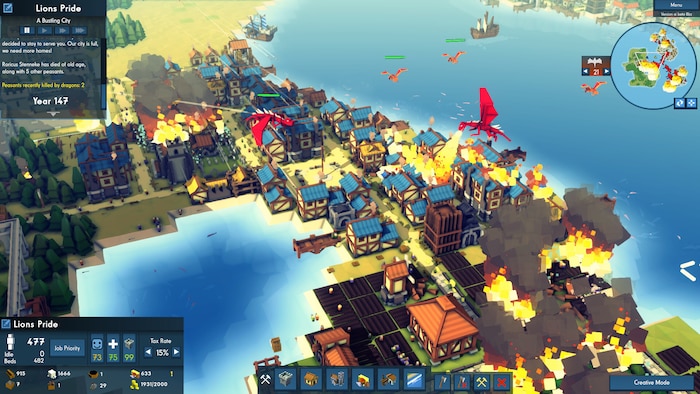
High medieval succession. A bronze-age city-state. An island kingdom watching dragons on the horizon. A merchant republic that pretends it is not a throne. You set the rules of physics, magic, and morality. The AI plays inside them.
Start With Rule, Not With a Tutorial Island
There is no forty-minute tech tree before the first hard choice. You write a prompt, and the court is already in session — a bad harvest, a missing patrol, a cousin who smiled too long at the queen. If you want those people to have distinct inner lives before they speak, Personality Analyzer can lock attachment style, temperament, and conflict patterns so advisors do not blur together.
Example openings:
"Start a medieval kingdom management simulator. I am Queen Isolde, 29, two years on the throne. The eastern baron withheld grain. The chancellor wants a tax on salt. Play the morning court. Do not decide for me. Rivals should want things I have not heard yet."
"Coastal city-state, low fantasy, year 147. Population is restless, tax rate is already high, and something is burning the docks. I play the elected prince. Give me petitions, numbers, and bad options. No chosen-one prophecy."
"Four-way succession crisis. I play the middle son with the army. My sister has the clergy. My brother has the capital. Keep everyone's voice distinct and remember every secret."
Related Agents You'll Also Find Useful
If you are building a realm, these agents slot into the same week of play — court scenes, rival psychology, and the systems underneath the throne.
Roleplay Game Master
Civilization is the nation-scale engine. When you want to step off the throne and into a single corridor — a spy in the wine cellar, a wedding that is also a coup, a night ride to the border — Roleplay Game Master runs that scene with unlimited memory and character consistency, then you carry the outcome back to the realm.
- Open-ended scenarios with no genre lock
- Characters who stay consistent across long sagas
- Scene-level play that feeds the next council meeting
Personality Analyzer
Kingdom conflict only lands when people want incompatible things. Before a long campaign, run your monarch, heir, and two or three rivals through a personality pass and lock those patterns into the sim.
- Integrative profiles instead of a single alignment label
- Relationship patterns you can play out at the council table
- Traits that stay stable when the plot gets loud
Game Designer Assistant
If the joy is not only ruling but designing the machine — tax formulas, famine clocks, faction meters, how a dragon attack should hit jobs and morale — this is the systems desk beside the throne. Sketch the rules here, then play them in Civilization instead of leaving them as notes.
- Systems analysis across strategy and simulation genres
- Documentation you can paste into a campaign bible
- Concept help when you want your house rules to actually bite
Try Civilization free — no credit card required.
How It Works
Step 1: Claim the Throne
Open Civilization and state the format up front: era, who you play, how much the world may act without you, and what is off-limits. Specificity here is what keeps a kingdom management simulator from drifting into generic fantasy adventure.
"You are the kingdom management simulator. I play King Aldren, 44. Low fantasy, no dark lord. Time passes in seasons unless I say otherwise. Neighboring realms act even when I am dealing with taxes. Ask me what I decree; do not auto-win my wars."
Step 2: Staff the Court (and the Map)
Name the heir, the chancellor, the general, one rival abroad, and one problem at home. Describe the land in a paragraph — not a province list, a feeling. A salt coast with thin walls plays differently than a highland kingdom with one pass. If advisors should clash by temperament, sketch them first, then drop the short version into the throne room.
"Realm: river capital, two poor harvests, a mercenary company we cannot afford to dismiss. Rival: Duchess Maera of the west, patient, better at letters than I am. Tension: my brother commands the northern forts and has not written in a month."
Step 3: Rule in Sessions, Not in Summaries
Ask for a single council, a siege week, a winter, a public execution that might backfire. Session-by-session play is how memory compounds. Skip "fast forward twenty years" until the current crisis has texture. Studios already use generative AI to build worlds and assets — 62% reported doing so — because players notice when the next event is a reskin. Your job is the opposite: make this winter expensive.
"Play the salt-tax petition. Three speakers, conflicting numbers, a crowd outside. Stay in the hall until I leave it. If I raise the tax, show me who smiles."
Step 4: Let the World Punish Delay
When you are ready, skip a season and demand consequences. Restate what must not be forgotten. Unlimited memory helps, but a one-line canon recap at a time skip keeps the realm sharp — the same discipline tabletop kingdom campaigns use, minus the index cards.
"Time skip: one winter. We paid the mercenaries. We did not relieve the east. Maera sent grain to our starving towns with her banners on the carts. Continue at the first thaw. Keep all prior oaths."
Step 5: Continue on Phone or Desktop
Pick up the same throne on iOS or Android during a commute, then continue on the web at night. History stays attached to the realm, so the kingdom does not reset because you changed screens. That matches how simulation audiences actually play: mobile already dominates volume, and short sessions still need long memory.
Results & Use Cases
📊 Generational Medieval Throne
Scenario: You want a multi-decade house — a weak first king, a ruthless queen, an heir who remembers every slight.
Traditional Approach: A grand-strategy title plus several expansions, a wiki tab for succession law, and a save you are afraid to overwrite. The court DLC still talks like a menu.
Civilization: You start at a coronation, a famine, or a disputed will and play forward. Rivals keep their voices. Treaties persist. When the child takes the crown, they still sound like the person you raised in the shadow of it.
- No pack purchase to unlock "royal court" or "plague"
- Time skips you control instead of a year-ticker you babysit
- Room for the unglamorous scenes games skip: grain ledgers, ugly pardons, a funeral that is also a vote
💼 Crisis Week: City on Fire, Court Still in Session
Scenario: A coastal settlement is burning. Dragons, rebels, or a rival's "accident" — you still have to set the tax rate, assign labor, and face the hall.
Traditional Approach: A city-builder disaster layer plus a separate diplomacy game. Population is a number. The petition about the dead is a quest marker.
Civilization: One session holds the fire and the politics. You choose who gets water, who gets blamed, and whether the mini-map's panic becomes a purge or a rebuilding levy. If you want the people in that hall to want incompatible things, sketch them with Personality Analyzer first.
- Jobs, morale, and rumor in the same scene as the flames
- Advisors who remember who you sacrificed last crisis
- A realm that changes after a bad week, not just a modifier
📱 Commute-Length Council
Scenario: You have twelve minutes on your phone. You still want to sit the throne — not micro a stack of spearmen.
Traditional Approach: Mobile strategy games that gate decrees behind energy, ads, or a city that forgets you if the app sleeps. Simulation spending is already mobile-heavy; the fantasy of rule is not well served by a stamina bar.
Civilization on mobile: One petition per ride. The baron is still lying. The salt tax is still poisonous. The leftover argument is still on the table when you open the chat after dinner.
- Session-flexible play that matches how people actually use phones
- No energy wall in the middle of a succession fight
- Continuity that survives the lock screen
🎯 From House Rules to a Playable Machine
Scenario: You do not only want to rule a kingdom. You want famine to hit on a clock you designed, factions to break at thresholds you named, and a dragon raid to cost jobs the way you think it should.
Traditional Approach: A design doc that never gets played, or a mod that breaks on the next patch.
Game Designer Assistant + the throne: Spec the systems with Game Designer Assistant, then run them as table rules inside Civilization so the model has to obey your economy, not a studio's.
- Design in the morning, rule with those rules at night
- Documentation you can reuse across campaigns
- A test realm instead of an unplayed spreadsheet
FAQ
What is a kingdom management simulator AI?
A kingdom management simulator AI is a conversational strategy system that models a realm — court, economy, war, and rivals — and responds as that world. Unlike a traditional strategy game, it is not limited to a map layer or a petition wheel. The value is memory and motion: the nation you taxed last month is still the nation that remembers it today.
How is Civilization different from Crusader Kings or a 4X title?
Those games are visual strategy sandboxes. You click characters, move armies, and watch a clock. Civilization is a story-first kingdom management simulator: you describe the throne and the era, then live inside decrees with rivals who do not wait for your turn. You will not get a 3D map. You will get policy, intrigue, and campaigns that packaged interaction menus still split across genres and DLC.
Can I simulate taxes, war, succession, and disasters in one campaign?
Yes. State the era, the tone, and which systems must stay in play. Ask for numbers when you want numbers, and for petitions when you want faces. Character consistency is the point of the agent — a chancellor can become a traitor without becoming a stranger, which is the core fantasy of long kingdom play.
Is a kingdom management simulator AI free to use?
You can start on a free plan with core features and limited usage. If you run long campaigns or daily councils, paid tiers raise usage limits. Plus is $20/month for 30× free usage; higher tiers scale from there. No credit card is required to try it. Usage resets monthly on your billing date.
Does it work on mobile?
Yes. Web, iOS, and Android have feature parity, including speech-to-text if you want to hear a petition hands-free. Kingdom stories are the kind of play that fits a phone: one tax fight on the bus, one war council before you sleep.
Will the realm forget details between sessions?
The design center is unlimited chat history and persistent memory, so preferences, past decrees, and long-running plots can carry forward. For best results, pin a short realm bible (names, borders, oaths, succession) at major time skips. That is the same discipline long-form game masters use, minus the note cards. Research on AI-driven NPCs keeps pointing at the same requirement: characters have to learn, adapt, and remember, or the kingdom goes hollow.
Conclusion
Packaged strategy games taught a generation to care about virtual thrones. They also trained us to accept paused worlds, paywalled courts, and saves that do not travel. A kingdom management simulator AI flips the order: rule first, catalog never required, memory and rival ambition as the main mechanics.
Civilization is the place to run that realm — taxes, wars, marriages, famines, the cousin who has not written, the city that is still on fire. You claim the era. It keeps the nation moving.
Try it with one bad morning court. If the baron still wants the same thing on Thursday, you have a kingdom worth keeping.
Explore more at Jenova.
For Developers: Civilization is available programmatically via the Jenova API — integrate persistent kingdom management simulation into your application with a single API call. Full documentation →