Isekai Roleplay AI: Persistent Campaigns in Another World
2026-08-28
Roleplay Game Master helps you play an isekai roleplay AI campaign by remembering every class, skill, NPC, and reincarnation beat across unlimited sessions. While generic chatbots drop party names and rewrite your world's rules, this AI keeps characters consistent and leaves the story in your hands. As of August 2026, players use it to wake at a summoning circle, inherit a villainess route, or invent an otherworld from scratch — without a human GM.
✅ Unlimited campaign memory that never resets mid-arc ✅ Party members, guild staff, and royals who stay in character ✅ Any otherworld — summoning, reincarnation, villainess, or original ✅ Full sessions on web, iOS, and Android
To understand why this matters, consider the gap between watching another-world anime and actually living inside one. Scheduling a table is hard. Teaching a general chatbot your skill tree is harder. A dedicated isekai roleplay AI closes that gap.
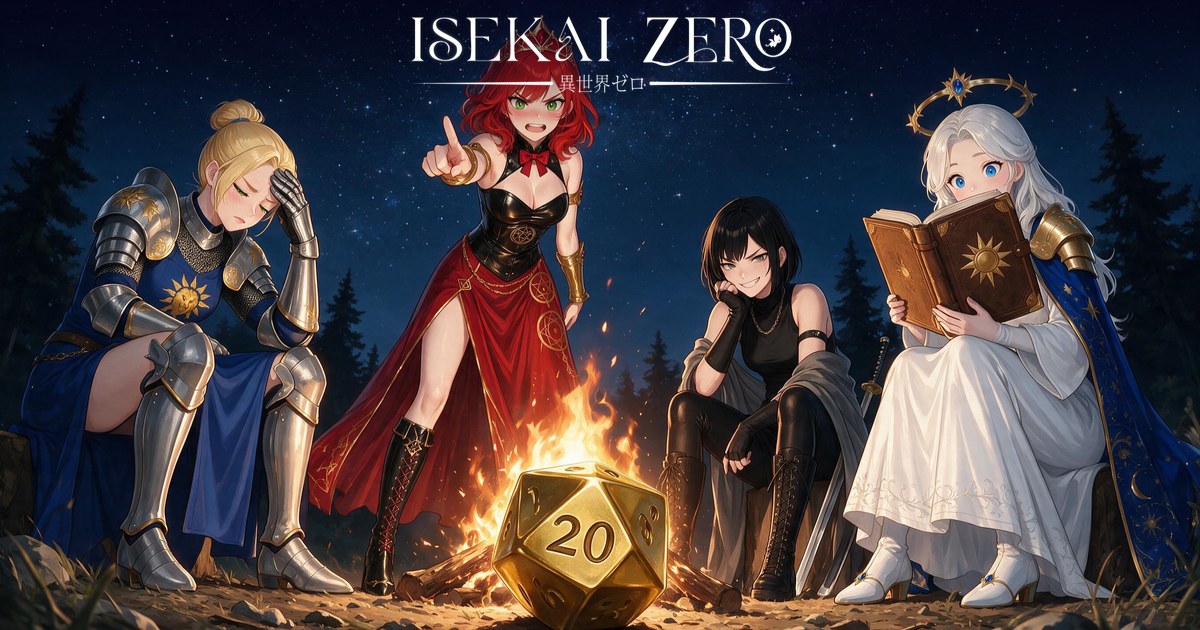
Quick Answer: What Is Isekai Roleplay AI?
Roleplay Game Master is an isekai roleplay AI that runs persistent, character-consistent campaigns in another world so you can reincarnate, adventure, and keep playing without a human GM. You describe the otherworld, the class, and the arrival. It runs the rest.
Key capabilities:
- Persistent memory across a whole saga, not a single dungeon
- Character-consistent companions, villains, guild staff, and royals
- Support for summoned-hero, reincarnation, villainess, and original settings
- Creative freedom to play epic, tragic, political, or slice-of-life stories
The Problem With Isekai Roleplay Today
Isekai is no longer a niche corner of anime. It is one of the medium's most reliable engines of demand, and the hunger to inhabit those worlds now outruns the tools most players have.
More than half of all isekai in the medium's history have aired since 2020, and U.S. market analysis flags isekai and fantasy as a leading genre surge. The global anime market was valued at $37.7 billion in 2025](https://www.grandviewresearch.com/industry-analysis/anime-market). On the play side, the [role-playing games sub-sector still earned $20.2 billion in 2022, and over 55% of consumers engage with tabletop RPGs as gaming culture grows.
Watching another world is easy. Playing one that stays internally consistent is not.
But accessing that kind of play is frustratingly difficult:
- Finding a GM who will run your otherworld, not a published module
- Keeping classes, skills, titles, and status screens from contradicting themselves
- Holding a party, guild, and royal court in character across weeks of play
- Sitting down when no table is free — on a commute, late at night, or solo
Custom Otherworlds Rarely Get a Human GM
A strong isekai table needs someone who can track a skill tree, a kingdom's succession crisis, and the exact wording of the summoning contract. That person is rare. Even eager groups stall when work, exams, or time zones collide. The audience is there — adults aged 18–35 account for roughly 46.8% to 54% of role-playing market revenue — but logistics often win.
Generic Chatbots Break Game Logic Fast
A general assistant can imitate a guild-counter scene. It struggles to remember that your healer already burned her once-a-day miracle, that the duke's daughter flagged your villainess route, or that the "cheat skill" has a cost you established on day one. Isekai punishes sloppy continuity. One recycled dungeon, one forgotten class restriction, and the world feels fake.
Solo Players Have Nowhere to Take a Long Saga
Plenty of people want to be the summoned hero, not organize the group. Solo play should mean a campaign that grows — a reincarnation that accumulates consequences, a party that remembers who saved whom, a kingdom that changes when you refuse the throne. Without durable memory, you get a one-shot that evaporates when the tab closes.
Idea Tools Are Not Game Masters
Players already mix AI into story work. The National Literacy Trust found that 66.5% of young people aged 13 to 18 used generative AI in 2025, and 19.3% of those users asked it to turn ideas into a story. The missing piece is not brainstorming names for a magic sword. It is a GM that can stay inside the otherworld for as long as you want to play.
This is exactly what Roleplay Game Master was built for.
Why Roleplay Game Master
Roleplay Game Master is built for immersive roleplay with unlimited memory and perfect character consistency. You are not prompting a chatbot to "act isekai." You are entering a campaign that can remember your class, your debts, and the precise way a companion speaks after a wipe.
Research on interactive narrative points in the same direction: AI is already used to create lifelike characters and stories that adapt to user choices. The difference here is specialization. This AI is not a writing assistant that happens to roleplay. It is a game master that happens to know how to hold a world.
While a general chatbot can improvise a tavern scene, it is not designed to retain a multi-session campaign bible. This isekai roleplay AI specializes in continuity: skills, titles, route flags, and consequences that carry forward.
| Traditional Approach | Roleplay Game Master |
|---|---|
| Wait days or weeks for a human GM | Start an otherworld campaign in one message |
| Recap lore every session so nobody forgets | Unlimited memory across the entire saga |
| NPCs drift out of character or reuse the same voice | Character-consistent party, court, and villains |
| Bound to one published setting or module | Any isekai premise, fusion world, or original cosmos |
| Play only when the table can meet | Continue on phone, tablet, or desktop |
Persistent Memory for Long Reincarnation Arcs
Isekai stories are engines of callback. The skill you unlocked in session one should still have the same limitation in session twelve. A slight against a guild receptionist should change how every request feels. Unlimited memory makes those payoffs possible instead of accidental.
Character Consistency That Respects the Party
The stoic tank should not suddenly sound like a trickster. The court mage should not forget the binding she placed on you. The childhood friend from your past life should still carry that knowledge like a secret, not a gag. Perfect character consistency is what keeps an otherworld feeling like a place rather than a costume party of interchangeable NPCs.
Complete Creative Freedom Across Isekai Types
You can run a classic hero summoning, a quiet reincarnation into a frontier village, a villainess route with social combat, a dungeon-core story, or a world you invented on the train. The AI does not force a single ruleset or a single tone. Overpowered, underpowered, political, romantic, or horror-tinged — the campaign follows the story you want.
Play Without Assembling a Table
You do not need four friends, a rules encyclopedia, and a free Saturday. Describe the arrival. Step into the scene. Continue later from the same living world.
"You are the Game Master. I was a burned-out office worker reincarnated as the fourth prince of a declining border kingdom. The court thinks I am useless. I have a status screen only I can see. Stay consistent with the class and skill rules I set, keep every named NPC in character, and let my choices change the succession."
Related Agents You'll Also Find Useful
If your campaign starts producing images, systems, and plot you want to keep, these agents extend the same otherworld work into other forms.
Manga Creator
If you want to turn a session into sequential art, Manga Creator can stage the summoning, the first dungeon wipe, or the quiet inn scene as a complete manga.
- Visual storytelling, panel flow, and consistent art direction
- Support from one-shots to long serialized epics
- A natural next step when an isekai roleplay produces scenes that deserve a page, not just a recap
Webtoon Creator
If you prefer vertical scroll, episode hooks, and a mobile-first look — especially for villainess or romance-leaning isekai — Webtoon Creator can carry the same world into a short series or a long saga.
- Vertical rhythm and full-color consistency
- Episode structure that fits commute-sized reading
- Strong fit for court intrigue, route flags, and slow-burn reincarnation plots
Game Designer Assistant
If your otherworld needs a real skill tree, class balance, or dungeon loop before you play it, Game Designer Assistant helps you design the system so the campaign has rules worth remembering.
- Systems analysis and documentation across genres
- Useful when you want levels, titles, and cheats to stay internally consistent
- Pair it with play: design the rules, then inhabit them
Try this isekai roleplay AI free — no credit card required.
How It Works
Step 1: Name the Otherworld and the Arrival Tell the AI game master how you got there and what is already broken in that world. Specificity is fuel: the goddess who botched the summoning, the villainess body you woke inside, the dungeon that appeared over your hometown.
"Run an isekai campaign. I was summoned with two classmates. They got hero titles. I got 'Porter.' Do not modernize the court. Let the class system be unfair on purpose."
Step 2: Create a Character With a Cost Heroes in isekai are defined by the thing that will cost them. A cheat skill with a hidden price, a reincarnated memory you cannot admit, a royal title that paints a target on you — give the GM a person, not a stat block, and it will build pressure around that flaw.
"I am a reincarnated strategist in a weak merchant's body. I remember my last life but I cannot fight. I want to survive the war without becoming the kingdom's villain."
Step 3: Play the Opening Scene in Character Answer as your hero. Ask questions in-world. Bargain, flee, pray, or lie. The GM will bring in omens, NPCs, and consequences instead of pausing for a rules lecture unless you want one.
"I open the status screen in the alley behind the guild. If the skill is cursed, I want to feel that in the scene — don't just tell me a number went down."
Step 4: Continue Across Sessions Without Recapping Everything Because memory persists, you can drop back in days later: "Continue from the gate inspection." The campaign should still know who is owed a life, which noble is hostile, and which prophecy you only half-understood.
Step 5: Spin the Best Scenes Into Other Work When a session produces a set-piece worth keeping, carry it into manga, a webtoon, or a documented game system. The play remains the source. The other agents help you publish the otherworld in another form.
Results & Use Cases
🗡️ Run a Multi-Session Summoned-Hero Campaign Solo
Scenario: You want a long campaign with a consistent class system, a party that remembers every bad call, and a kingdom that actually changes when you refuse the hero's script.
Traditional Approach: Recruit a GM fluent in isekai tropes, then protect a weekly slot for months. If anyone flakes, the summoning stalls.
This isekai roleplay AI: You open with a premise — three classmates summoned, one unfair class, a church that needs a symbol — and play whenever you have thirty minutes.
- Classes and skills stay distinct instead of blending into generic magic
- Party members remain recognizable from session to session
- You can ask for closer fidelity to light-novel tone or a grimmer political register
📱 Play a Villainess Route on Your Phone
Scenario: You have a commute and a half-built idea about waking in a doomed noblewoman's body a year before the execution ending. No table, no dice bag, no audience.
Traditional Approach: Notes in a phone doc, then hope you remember which capture target you already offended.
The dedicated GM: Speak or type the scene on iOS or Android. The route flags, the maid who knows too much, and the original heroine's first appearance are still there when you reopen the campaign.
- Fits fragmented time better than a three-hour session
- Character voices stay stable even if you play in ten-minute bursts
- Easy to resume with "continue from the garden confrontation"
🎨 Turn a Dungeon Arc Into Manga
Scenario: A session through a labyrinth produces a visual sequence — a status screen at the worst moment, a companion's sacrifice, a boss that should not still be standing — and you want pages, not just chat logs.
Traditional Approach: Write a summary, then try to brief an artist on every skill name and beat.
Manga Creator: Lift the strongest scenes from play and stage them as sequential art with a consistent look. For vertical, commute-first chapters, Webtoon Creator is the better fit.
- Preserves the class logic you established in-character
- Makes a solo campaign shareable without dumping a transcript
- Works as a recap artifact before the next floor
🧩 Design the Otherworld's Rules, Then Inhabit Them
Scenario: You care as much about the system as the story — unique classes, title evolution, dungeon loops — and you do not want the GM improvising a new economy every scene.
Traditional Approach: A wiki nobody updates, then a campaign that ignores its own rules.
Game Designer Assistant: Document the skill tree and class constraints first. Then return to play with those rules as the campaign bible.
- Fewer contradictions when a "unique skill" suddenly has a cousin
- Clearer stakes when levels, titles, and costs actually mean something
- A world that can later become a game, a manga, or both
FAQ
What is the best isekai roleplay AI for solo campaigns?
A strong isekai roleplay AI needs more than fluent prose. It needs durable memory, character-consistent companions, and freedom to follow your choices. Roleplay Game Master is built for that combination, so a summoned-hero saga or a villainess route can continue across sessions instead of resetting every time you open a new chat.
Is Roleplay Game Master free?
Yes. You can start on the free tier with no credit card. Paid plans increase usage if you run long daily campaigns. For most players, the right test is a single otherworld premise played for a week — not a feature checklist.
How is this different from ChatGPT for isekai roleplay?
General chatbots can improvise a guild scene. They are not specialized for unlimited campaign memory or perfect character consistency. This AI is a game master first: it holds the class system, the grudges, and the voices of the party while you play. Use a general assistant to brainstorm skill names. Use a dedicated GM to inhabit the world.
Can isekai roleplay AI handle summoning, reincarnation, and villainess stories?
Yes. You can request a classic hero summoning, a quiet reincarnation, a villainess social campaign, a dungeon-core premise, or a cosmology you invented. The more precise your opening brief — tone, taboos, how status screens work, and which tropes to privilege — the more the campaign will feel specific rather than generic fantasy.
Does it work on mobile?
Yes. You can play on web, iOS, and Android, which is what makes a commute-sized court scene or a late-night dungeon floor realistic. Speech-to-text is useful when you want to answer in character without typing a full invocation.
Will it stay consistent with my class and skill rules?
It can follow the system you specify, including class restrictions, skill costs, and title conditions. It can also improvise when you ask for a softer, story-first game. For the cleanest results, state the rules in the first message: what a status screen can show, what a unique skill cannot do, and what should never be hand-waved for spectacle.
Conclusion
Isekai roleplay fails in ordinary tools for ordinary reasons: no GM, no memory, no continuity, no way to play when the table cannot meet. An isekai roleplay AI that holds character, class, and consequence changes the shape of the hobby. You can run the summoning, the reincarnation, the villainess route, or the otherworld you designed, and still recognize the world when you return.
Roleplay Game Master is the dedicated game master for that work — persistent, in-character, and open to any scenario you want to inhabit. Try it with one precise premise tonight. Explore more at Jenova.
For Developers: Roleplay Game Master is available programmatically via the Jenova API — integrate persistent isekai roleplay into your application with a single API call. Full documentation →