Isekai AI Adventure: Play Unlimited Portal Fantasy Worlds With AI (May 2026)
2026-05-18
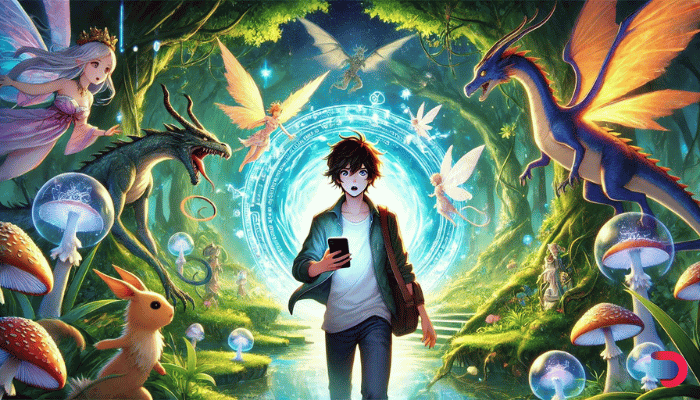
You die. You open your eyes. You're not in your bedroom anymore — you're standing in a forest that shouldn't exist, with a status screen floating in front of your face, a skill you didn't choose, and a world that's waiting to see what you do next. That's the isekai premise, and in 2026, it's the most dominant narrative framework in Japanese entertainment — and one of the fastest-growing obsessions in global fiction.
Isekai was the top manga genre among both male and female readers in 2025, according to NTT Solmare's Comic C'moA platform — one of Japan's largest digital manga services (AUTOMATON). In 2026, the genre's commercial dominance is accelerating: Japanese publisher TO Books revised its earnings forecast upward after isekai anime adaptations like The Water Magician and A Gentle Noble's Vacation Recommendation drove "stronger-than-expected" content sales, with ordinary profit projections jumping to 1.87 billion yen — a 35.5% growth rate (CBR). The U.S. anime market is experiencing a parallel "surge in popularity of isekai and fantasy genres" driving growth projected through 2030 (GlobeNewswire). Meanwhile, the AI roleplay chatbot market is valued at $1.2 billion in 2026** and projected to reach **$8.92 billion by 2033 (Skywork).
The audience has never been bigger. The desire to live inside an isekai story — not just watch one — has never been stronger. But the tools haven't caught up. You can binge fifty isekai anime in a season, but you can't be the protagonist. You can read a thousand web novels, but you can't make the choices. Until now.
Jenova's Roleplay Game Master is the isekai AI adventure engine built for this exact fantasy: unlimited persistent memory, adaptive NPCs with their own agendas, full status-screen RPG mechanics, and a world that remembers every decision you make across sessions — whether you reincarnated as a slime, a villainess, an overpowered sword saint, or the weakest adventurer in the guild who's about to break every rule the system was built on.
Quick Answer: What Is an Isekai AI Adventure?
An isekai AI adventure is an AI-powered interactive experience where you play as a character transported, reincarnated, or summoned into another world — with the AI serving as the narrator, world engine, and every NPC in the story, generating adaptive content in real time based on your choices.
- Live your own portal fantasy with full RPG mechanics and persistent world state using the Roleplay Game Master
- Explore mystery-isekai hybrids where awakening in an unknown place is the premise in The Mansion and The Asylum
- Write isekai fiction — web novels, light novel drafts, and serialized stories — with the Creative Fiction Writer
- Visualize your isekai world with consistent character art using the Manga Creator
The Problem: Why Isekai Fans Can't Actually Live Their Fantasy
The isekai genre is built on a single, intoxicating promise: you wake up in another world and everything is different. The problem is that every existing medium delivers this promise to you as a spectator — never as the protagonist.
Anime and Manga Are Passive — You Watch Someone Else's Adventure
You've seen Rimuru build a nation, watched Naofumi fight a rigged system, followed Bookworm's Myne climb from illness to power. But you never got to make the choices. The isekai appeal isn't just the world — it's the agency. It's the fantasy of being the one who decides whether to join the hero's party or start a rival guild, whether to use the cheat skill for conquest or open a bakery. Passive media gives you the world. It never gives you the wheel.
Text-Based Isekai Games Reset Every Session
General-purpose AI chatbots can start an isekai adventure in seconds — "you wake up in a fantasy world with a mysterious skill" — and lose the thread within an hour. Your character sheet evaporates. The guild master who gave you your first quest doesn't remember you exist. The rival adventurer you antagonized in session one has been completely wiped from memory by session two.
As documented across AI roleplay analysis in 2026: general-purpose chatbots "don't track hit points, spell slots, initiative order, or any mechanical state" and have "no memory between sessions at all" — making sustained isekai campaigns structurally impossible (AIDungeonMaster.ai).
For a genre defined by progression — leveling up, building relationships, accumulating power over dozens of chapters — memory loss is disqualifying.
Status Screens Need Actual Systems Behind Them
The isekai genre runs on RPG mechanics: levels, stats, skills, inventories, class systems, evolution paths, skill trees, and party management. A protagonist who's "Level 1 with the weakest skill in the world" needs the AI to actually track that they're Level 1, remember what the skill does, calculate when they level up, and apply consistent rules to combat and progression. General chatbots produce the aesthetics of game mechanics — they'll describe a status screen — but they don't maintain the systems. Your stats change randomly between scenes. Skills that were established as weak suddenly become powerful with no explanation. The immersion breaks because nothing under the surface is real.
Nobody Builds Your Isekai — They Build Theirs
Every isekai fan has their version: the specific power system they'd want, the type of world they'd inhabit, the character archetype they'd play. Some want the classic overpowered hero. Some want the slow-burn weakest-to-strongest arc. Some want the villainess reincarnation. Some want isekai without combat — a peaceful life running an inn in a fantasy village, cooking meals with ingredients that don't exist on Earth. The genre's sub-varieties are nearly infinite, but every existing interactive tool forces you into someone else's template.
Why Roleplay Game Master Is the Best Isekai AI Adventure Engine
This is exactly what Roleplay Game Master was built for.
Unlike general chatbots that treat isekai as a creative writing prompt, or text adventure games that offer branching paths but no persistence, the Roleplay Game Master is a specialized immersive fiction engine designed for the exact demands isekai adventures place on a system: RPG mechanics tracking, persistent world state, unlimited NPC memory, character progression, and the narrative intelligence to sustain a story across dozens — or hundreds — of sessions.
| Challenge | General AI Chatbots | Text Adventure Games (AI Dungeon, etc.) | Roleplay Game Master |
|---|---|---|---|
| World memory | Single session only | Limited "world info" entries | Unlimited persistent memory across all sessions |
| RPG mechanics | Aesthetic only — no tracking | Basic, inconsistent | Tracks stats, levels, skills, inventory, and progression |
| NPC consistency | Forgets NPCs after a few scenes | Limited character retention | Perfect NPC fidelity — guilds, rivals, allies remember you indefinitely |
| Character progression | Random, contradictory | Superficial | Consistent leveling, skill evolution, and power scaling |
| Genre flexibility | Any (but shallow) | Fantasy-focused | Any isekai sub-genre: overpowered hero, villainess, slow life, dark fantasy, cultivation, LitRPG |
| Model flexibility | Locked to one model | Locked to one model | GPT-5.4, Claude Opus 4.6, Gemini 3.1 Pro Preview |
Persistent Memory That Spans Entire Isekai Arcs
The Roleplay Game Master doesn't just remember your character — it remembers the entire world you've built together. The village elder who sheltered you in session one. The demon lord's lieutenant you spared in session eight. The merchant who overcharged you in session twelve and still smirks about it. The party member who betrayed you in session twenty — and the faction they joined afterward. Every relationship, every quest thread, every grudge, every act of kindness persists across unlimited sessions.
This is what transforms an AI isekai from a novelty into a genuine experience. When the blacksmith who forged your first sword shows up forty sessions later, struggling against a monster you've long since outgrown, and asks for help with the same quiet dignity they showed you when you were nobody — that's a narrative moment that only persistent memory can produce.
Real RPG Systems, Not RPG Theater
Define your power system once — levels, stats, skills, evolution conditions, class progression — and the AI tracks it consistently. Your Level 3 character with the [Appraisal] skill and 42 HP doesn't randomly become Level 15 in the next scene. Combat resolves based on your established stats. Skill acquisition follows the rules you've defined. Your inventory persists. When you find a legendary weapon in a dungeon, it stays in your inventory until you sell it, lose it, or break it — not until the AI forgets it exists.
Want a LitRPG system with detailed status screens? Define one. Want a soft magic system where power scales with emotional state? Define that instead. Want a cultivation system with qi levels, meridians, and breakthrough tribulations? The AI adapts to whatever power framework makes your isekai feel right.
Every Isekai Sub-Genre, Your Way
The isekai genre in 2026 has diversified far beyond "hero summoned to defeat demon lord." TO Books' earnings surge came from titles spanning villainess isekai, slow-life fantasy, and non-combat reincarnation — and industry observers note that isekai's popularity has "transcended the gender boundary" (CBR). The Roleplay Game Master handles all of them:
- Overpowered protagonist: You reincarnate with a god-tier skill and the AI generates a world that challenges you politically, emotionally, and morally — even when nothing can challenge you physically
- Weakest-to-strongest: Start with the worst skill in the system and earn every level through strategic thinking and the AI's fair-but-challenging encounter design
- Villainess reincarnation: You wake up as the antagonist of an otome game and need to avoid your doom ending while navigating court politics, capture targets, and a heroine who's supposed to replace you
- Slow life / isekai inn: No combat. You run a fantasy bakery, brew potions in a cottage, or farm impossible crops — and the AI generates villagers, seasons, festivals, and the quiet drama of building a life in another world
- Dark fantasy: Berserk meets isekai. Brutal world, limited resources, moral ambiguity, and survival mechanics that make every decision feel like it costs something
- Cultivation / xianxia: Qi cultivation with breakthrough stages, sect politics, heavenly tribulations, and the slow ascent from mortal to immortal
Multi-Model Creative Flexibility
Different isekai moments demand different AI strengths. Claude Opus 4.6 excels at character-driven scenes — the quiet conversation with a party member by the campfire, the moment the villainess realizes she genuinely cares about the capture target she was supposed to avoid. GPT-5.4 delivers sharp combat narration and complex multi-character encounters with precise mechanical tracking. Gemini 3.1 Pro Preview handles the sprawling world-building and lore consistency that epic isekai campaigns demand. Switch between models mid-adventure without losing a single stat, relationship, or quest thread.
Competitor Context
AI Dungeon pioneered AI text adventures and remains widely used, but it "was built as a general interactive fiction platform" without native support for the RPG mechanics, progression systems, and persistent NPC tracking that isekai demands (AIDungeonMaster.ai). Character.AI offers massive character libraries including anime personas, but enforces strict content filters that limit narrative freedom and locks users to a single model with no persistent memory between sessions. An AI-generated isekai novel even won AlphaPolis's Grand Prize and Reader's Choice awards in 2025 — demonstrating that AI can produce isekai content compelling enough to beat human entries — before being disqualified under updated guidelines (AUTOMATON). The Roleplay Game Master bridges what these tools can't: frontier model access, unlimited persistent memory, real RPG system tracking, and the narrative depth to sustain an isekai campaign that runs for months.
Example Prompts for Isekai AI Adventures
"I died and reincarnated in a fantasy world as a Level 1 human with the skill [Structural Analysis] — considered the weakest appraisal-type skill. I can see the composition and weakness of any object I examine, but everyone thinks it's useless. Start me in the adventurer's guild registration hall. I have no money, no weapon, and no party. The guild receptionist is skeptical. Track my stats: HP 28, MP 15, STR 8, DEX 12, INT 14, WIS 11, LCK 7. Use a D&D-inspired system with modifications for skill evolution."
"I've been reincarnated as the villainess in a romance novel — Duchess Seraphina Blackthorn, age 17, engaged to the crown prince who's destined to fall in love with the commoner heroine and condemn me at the graduation ball in three years. I remember the entire plot. I need to avoid my doom ending without alerting anyone that I have future knowledge. Start at the academy entrance ceremony. Make the capture targets distinct — the prince is cold and politically calculating, the knight captain is earnest and protective, the mage prodigy is suspicious and observant. Track my 'doom flags' as a hidden variable."
"I want a slow-life isekai. I died of overwork and was reborn in a peaceful fantasy village with the skill [Perfect Temperature Control] — I can set the exact temperature of anything I touch. No demon lords. No world-ending threats. I want to open a bathhouse in a medieval fantasy town. Generate the village, the villagers, the local economy, and the seasonal events. Make it cozy but give the NPCs real problems I can help with. Track my bathhouse's reputation, finances, and customer satisfaction."
Start your isekai adventure with Roleplay Game Master free — no credit card required.
Related Agents You'll Also Like
The Mansion
The isekai premise stripped to its most unsettling core: you wake up in a place you don't recognize, with no memory of how you arrived, surrounded by people who may or may not be telling you the truth. The Mansion plays like a mystery-horror isekai — exploration reveals clues, trust-building with inhabitants unlocks hidden narrative paths, and your choices determine which of multiple endings you reach. For isekai fans who want the "transported to another world" premise without the power fantasy — where survival depends on observation, not stats.
- AI-driven tension that escalates based on your exploration patterns
- Multiple endings determined by discovery depth and relationship choices
- Environmental storytelling through objects, architecture, and atmospheric detail
The Asylum
Dark isekai energy distilled into psychological horror. You're inside a shuttered psychiatric institution that shouldn't still be operating. The corridors shift. The staff are wrong. The other patients remember things about you that you don't. For isekai fans who love the "something is deeply wrong with this world" trope — the unsettling cousin of the portal fantasy where the portal went somewhere it shouldn't have.
- Psychological horror mechanics with escalating dread and unreliable narration
- Investigation-driven progression rewarding careful observation
- Persistent world state that tracks every disturbance you've caused
Creative Fiction Writer
For isekai fans who want to write their adventure, not just play it. The Creative Fiction Writer is purpose-built for long-form serialized fiction — web novel chapters, light novel drafts, and the branching narrative architecture that isekai stories demand. Persistent memory maintains your power system, character voices, world rules, and plot threads across hundreds of thousands of words. The same agent that was identified as the ideal AI visual novel maker handles the narrative backbone of isekai fiction with the same structural intelligence.
- Persistent memory across sessions for power systems, world rules, and character evolution
- Web novel chapter formatting with cliffhanger pacing and serialization rhythm
- Multi-model flexibility — use different models for action sequences vs. character drama
Manga Creator
Visualize your isekai protagonist, their party, the world's monsters, and the key moments of your adventure. The Manga Creator produces character reference sheets with identity embedding for visual consistency — so your reincarnated villainess looks the same in the academy ballroom scene as she does in the dungeon escape fifty sessions later.
- Character reference sheet architecture with identity embedding for consistent designs
- Panel-by-panel scene illustration for key adventure moments
- Multiple art styles from anime to manhwa to light novel illustration
How It Works: Starting Your Isekai AI Adventure
Here's the complete workflow for launching and sustaining an isekai adventure using the Roleplay Game Master — from your first reincarnation to your hundredth session.
1. Define your isekai premise and power system.
Start by telling the AI what kind of isekai you want: the sub-genre, the world type, your character concept, and the rules of the power system. The more specific you are, the more the AI can build a world that challenges and rewards you within a consistent framework.
"I want a cultivation isekai set in a world inspired by Chinese xianxia novels. I died and my soul was transferred into the body of the weakest disciple in the Cloudsplit Sect. The cultivation system has nine major realms, each with three sub-stages. I'm at Qi Condensation Stage 1. The sect has a tournament in six months. My rival is a genius at Stage 7. I need to find a way to bridge that gap or I'll be expelled. Track my cultivation progress, qi reserves, martial techniques, and sect reputation."
Upload a world document — power system rules, faction descriptions, key NPCs — as a knowledge base attachment for the AI to reference across every session.
2. Experience the reincarnation.
The AI generates your arrival in the new world — the moment of death, the transition, the first sight of the unfamiliar sky. This is the defining scene of every isekai, and the Roleplay Game Master treats it with the narrative weight it deserves. Your character's emotional state, their confusion or excitement, their first interaction with the new world's inhabitants — all of it establishes the tone for everything that follows.
"I collapse in a wheat field. A farmer's daughter finds me. She's never seen clothes like mine. I can't read the language on the signpost behind her, but somehow I understand her speech. And there's a translucent blue window hovering at the edge of my vision that only I can see."
3. Explore, quest, and progress.
From here, it's pure interactive fiction. Talk to NPCs. Accept quests. Fight monsters. Negotiate with merchants. Join or betray factions. Every action carries consequences the AI tracks and weaves into future scenes. Your reputation with the adventurer's guild changes based on your behavior. The monsters you spared might return. The party member whose life you saved remembers — and so does the one whose rival you defeated.
"I want to investigate the abandoned mine the guild warned me about. I'll use [Structural Analysis] on the mine entrance before going in — I want to know if the supports are stable and if there's anything unusual about the rock composition."
The AI doesn't just narrate the result — it considers your skill level, the mine's lore-consistent properties, whether anything has been living in the mine, and what your analysis reveals that a normal adventurer would miss.
4. Level up and evolve.
Character progression follows the rules you established. The AI tracks your experience, applies level-up gains consistently, and generates skill evolution events when conditions are met. When your [Structural Analysis] evolves into [Material Dominion] at Level 15 because you've analyzed over 500 unique materials, the progression feels earned — because it was tracked, not improvised.
5. Return across sessions — the world remembers everything.
Close the chat, come back days or weeks later. Your stats, your inventory, your quest progress, your NPC relationships, your faction standing, your rivals' schemes, and your party's dynamics are all exactly where you left them. Session fifty picks up where session forty-nine ended. The isekai world persists because the AI's memory does.
6. Switch AI models for different narrative demands.
Use Claude Opus 4.6 for the emotional scene where your character confronts the memories of their previous life. Switch to GPT-5.4 for the complex boss encounter where three party members are fighting simultaneously and you need precise mechanical tracking. Use Gemini 3.1 Pro Preview for sessions that explore deep world lore and need massive context for political faction dynamics. Your entire world carries over across every model change.
Results & Use Cases
⚔️ The Overpowered Protagonist: 50 Sessions of Empire Building
Scenario: An isekai fan wants the classic power fantasy — reincarnated with a broken skill, rising from nobody to world power — but with genuine consequences, political complexity, and NPCs who react realistically to someone disrupting the power balance.
Traditional approach: Watch Overlord or Reincarnated as a Slime. Enjoy the premise. Wish they could make the decisions themselves.
With Roleplay Game Master: Reincarnate with an overpowered skill — [Absolute Command], which forces any being below your level to obey a single order. The AI generates a world that responds realistically: kingdoms send assassins, the church declares you a heretic, a rival hero is summoned to stop you, and the people you've commanded begin forming a resistance. Being overpowered doesn't mean unchallenged — the challenges are political, moral, and emotional rather than physical. Fifty sessions in, you're running a nation, managing alliances, and discovering that the skill that made you powerful is slowly changing who you are.
👗 The Villainess Reincarnation: Rewriting the Script
Scenario: A player wants the villainess isekai experience — reborn as the antagonist of a romance novel, armed with plot knowledge, trying to avoid the doom ending while the story's narrative momentum keeps pulling them toward it.
Traditional approach: Read My Next Life as a Villainess or The Remarried Empress. Love the premise. Finish the series. Search for another one.
With Roleplay Game Master: The AI maintains the "original plot" as a background system — tracking doom flags, heroine events, and capture target affection levels. Your actions create divergences, but the narrative has inertia: the heroine is charming for a reason, the prince's suspicion of you has legitimate roots, and the other capture targets have their own agendas that don't revolve around saving you. Every session is a negotiation between the story the world was supposed to tell and the story you're trying to write instead. When you finally attend the graduation ball — the scene where the original Seraphina was condemned — everything you've done across dozens of sessions determines whether you walk out vindicated, exiled, or victorious.
🏡 The Slow Life: A Bathhouse in Another World
Scenario: A player doesn't want combat, quests, or world-saving. They want to run a fantasy bathhouse in a medieval village, build relationships with regulars, weather seasonal changes, and experience the quiet satisfaction of building something in a world that isn't their own.
Traditional approach: Play Stardew Valley. Enjoy the loop. Wish it had more narrative depth and AI-driven NPC personalities.
With Roleplay Game Master: The AI generates a village with a local economy, seasonal festivals, resident NPCs with their own lives and problems, and the slow rhythm of days passing. Your bathhouse grows through word of mouth. The grumpy blacksmith becomes a regular. The traveling merchant brings rare minerals from distant lands. A noble family visits and your reputation shifts. No combat — just the emergent drama of building a life among people the AI remembers across months of play. The skill [Perfect Temperature Control] turns out to have applications nobody expected — including the player.
📱 The Commute Adventurer: Twenty Minutes in the Dungeon
Scenario: An isekai fan has twenty minutes on a train and wants their adventure to progress meaningfully — not just consume time, but actually advance the story.
Traditional approach: Read an isekai web novel chapter on the phone. Passive consumption.
With Jenova on mobile: Open the ongoing isekai campaign. The full world state is already loaded — your stats, your party, the dungeon you entered last session. Fight through two rooms. Discover a hidden passage. Find an item that connects to the mystery your party's been tracking for weeks. Twenty minutes later, your adventure has actually advanced. Persistent memory means nothing is lost between mobile sessions.
📚 The Web Novel Author: Writing Isekai With AI
Scenario: A writer wants to produce serialized isekai fiction — weekly chapters with consistent world-building, character development, and the power-system complexity that the genre's readers demand.
Traditional approach: Write everything manually. Struggle to remember which skills the protagonist unlocked in chapter 12 versus chapter 37. Introduce continuity errors that readers catch immediately. Fall behind the posting schedule.
With Creative Fiction Writer: The agent's persistent memory maintains the entire power system, character roster, world lore, and plot threads across hundreds of thousands of words. Generate each chapter with full awareness of everything that's happened — no continuity errors, no forgotten skills, no NPCs whose backstories contradict themselves. An AI-generated isekai novel won AlphaPolis's Grand Prize in 2025 (AUTOMATON) — demonstrating that the genre's formula maps precisely to AI's strengths when paired with human creative direction.
FAQ
What is an isekai AI adventure?
An isekai AI adventure is an interactive experience where you play as a character who has been transported, reincarnated, or summoned into another world — with an AI agent serving as the narrator, world engine, and every NPC. Unlike passive isekai anime or novels, you make every decision: which quests to accept, which factions to join, how to use your skills, and how to navigate the world's social, political, and magical systems. Jenova's Roleplay Game Master maintains unlimited persistent memory across sessions, tracks RPG mechanics, and sustains complex isekai narratives that run for months.
Can the AI actually track RPG stats, levels, and skills?
Yes. Define your power system — levels, stats, skill trees, evolution conditions, inventory rules — and the Roleplay Game Master tracks everything consistently across sessions. Your Level 3 character doesn't randomly become Level 15. Skills evolve when conditions you established are met. Your inventory persists. Combat resolves based on your established stats, not improvised dice rolls. The AI tracks what general chatbots aesthetically imitate.
What isekai sub-genres can I play?
Any sub-genre the isekai umbrella covers: overpowered protagonist, weakest-to-strongest progression, villainess reincarnation, slow-life fantasy, dark fantasy, cultivation/xianxia, LitRPG with detailed status screens, isekai romance, isekai comedy, non-combat slice-of-life, and entirely original premises. Isekai was the top manga genre for both men and women in 2025 (AUTOMATON) — the genre's sub-variety is virtually unlimited, and the AI adapts to whatever version you want.
Will the AI remember my character between sessions?
Yes — this is the core differentiator. The Roleplay Game Master maintains persistent cross-session memory of your character sheet, NPC relationships, quest progress, faction standings, world events, inventory, and every decision you've made. Return days, weeks, or months later and your isekai world is exactly where you left it. The guild master remembers you. Your rival is still scheming. Your party member is still annoyed about that argument in session seven.
How is this different from AI Dungeon?
AI Dungeon pioneered AI text adventures but operates as a general interactive fiction platform without native isekai-specific architecture — it doesn't natively track RPG stats, maintain NPC consistency across sessions, or support the power-system progression that isekai narratives require. The Roleplay Game Master offers unlimited persistent memory, multi-model flexibility (GPT-5.4, Claude Opus 4.6, Gemini 3.1 Pro Preview), and the specialized RPG intelligence to sustain isekai adventures with the mechanical consistency the genre demands.
Is Jenova free for isekai adventures?
Jenova offers a free tier with all core features, including full access to the Roleplay Game Master, The Mansion, The Asylum, and the complete agent library. For extended sessions and higher usage limits, paid plans start at $20/month with no restrictions on which agents or AI models you can access. No credit card required to start.
Conclusion
Isekai is the most popular manga genre in Japan for both men and women, a commercial juggernaut driving 35.5% profit growth for publishers, and the dominant fantasy framework for a global audience that's still growing. The AI roleplay market is valued at $1.2 billion in 2026** and accelerating toward **$8.92 billion by 2033. The intersection of these two forces — the world's most popular fantasy genre and the world's fastest-growing interactive entertainment technology — is the isekai AI adventure.
But the experience only works if the AI can sustain it: tracking stats across sessions, maintaining NPC memories indefinitely, evolving your character's power system consistently, and generating a world that responds to your choices with the narrative intelligence the genre demands.
Roleplay Game Master delivers unlimited persistent memory, real RPG system tracking, multi-model flexibility across GPT-5.4, Claude Opus 4.6, and Gemini 3.1 Pro Preview, and support for every isekai sub-genre from overpowered hero to slow-life bathhouse to villainess doom avoidance. Explore mystery-isekai premises with The Mansion and The Asylum. Write serialized isekai fiction with the Creative Fiction Writer. Visualize your isekai world with the Manga Creator.
Try Roleplay Game Master free — no credit card required. Explore the full agent library at Jenova.